How Scripture Became Scripture
The Sacred Transmission: A Meditation on Divine Authority and the Mystical Experience

The Church as Custodian of the Word
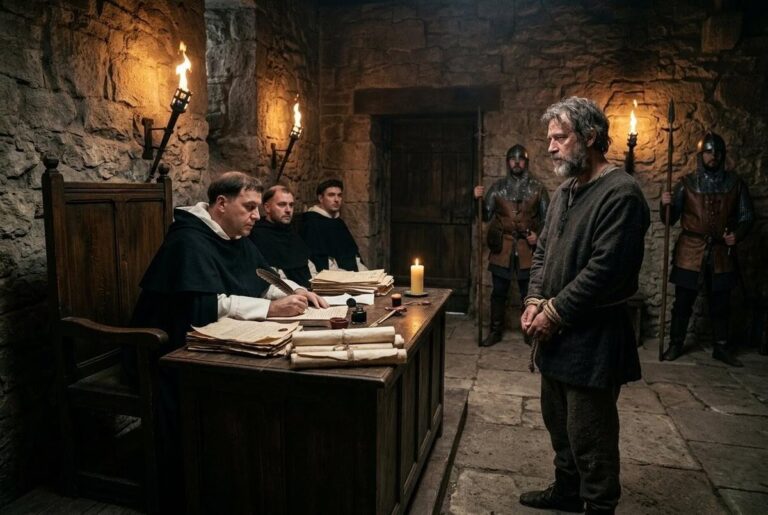
Many people remain unaware of how the Holy Bible found its way into our hands. We in the West owe these biblical texts to the Catholic Church, that religious institution which composed the books of the New Testament. What is seldom acknowledged is that even by the time of Christ, the Hebrew canon remained unsettled. The Jewish people did not finalise their canon until approximately 100 AD, at the Council of Jamnia, where they determined which scriptures would be deemed authoritative and subsequently preserved in the Masoretic Text, the earliest extant copy of which dates merely to the early tenth century AD.
As for the New Testament, its canon was not definitively established until 382 AD, at the Synod of Rome under Pope Damasus. Thus it was the Church or rather the Catholic Church that promulgated the Bible, presenting it to the faithful with the declaration: “We give you these scriptures upon our authority, and by the authority of the living tradition that has existed amongst us from the beginning, inspired by the Holy Spirit.”
Historically, then, one receives the Bible upon the Church’s say-so. The Catholic Church maintains, consequently, that the Church collectively, speaking under the direct guidance of the Holy Spirit holds the authority to interpret these biblical writings. One may accept this or leave it; that is the freedom of conscience. Yet we must recognise that the authority of the Bible cannot rest first and foremost upon the Bible itself. I myself might pen a scripture and declare within its pages that it is indeed the Word of God as revealed unto me, and you would be at perfect liberty to believe me or not.
The Universal Claim to Divine Revelation
Consider the Hindus, who believe with equal fervour that the Vedas are divinely revealed and inspired. The Muslims hold the Qur’an to be the direct word of Allah, revealed to the Prophet Muhammad ﷺ. Certain Buddhist traditions maintain that their sutras originate from a Buddhic, transcendent source. The Japanese Shinto practitioners believe their ancient texts, the Kojiki and Nihon Shoki, to be of divine origin. Who, then, shall serve as judge?
Should we attempt to argue which version of truth holds supremacy, we inevitably find ourselves in a paradox where the judge and the advocate are one and the same. One would scarcely accept such a circumstance in a court of law. If I declare, after careful consideration, that Jesus of Nazareth is the greatest being to have walked this earth, by what standards do I make this judgment? Obviously, by the moral and spiritual standards imparted to me through a Christian upbringing if raised in a Christian country.
There exists no impartial arbiter capable of deciding between all the world’s religions, for nearly every soul has been influenced, in one manner or another, by one of them. So when the Church proclaims the Bible to be true, it ultimately falls to you: will you believe the Church, or will you not? If none believed the Church, its lack of authority would become self-evident, for the people are ever the source of authority. As Alexis de Tocqueville observed, a people get the government they deserve.
The Question of Ultimate Authority
“But surely,” one might object, “God Himself is the authority.”
How might we demonstrate this? That remains your opinion. “Wait and see,” you may say. “The Day of Judgment approaches, and then you shall discover who holds true authority.”
Yet at this present moment, no evidence exists for such a Day of Judgment. Until such evidence manifests, it remains merely your opinion that this day shall come, supported only by the opinions of others who share your view, whose beliefs you have in turn adopted.
I do not deny anyone the right to hold such convictions. You may indeed believe the Bible to be literally true, that it was actually dictated by God to Moses, the prophets, and the apostles. That may be your opinion, and you are at liberty to hold it. I do not personally share this view.
I do believe, however, that there exists a sense in which the Bible is possibly divinely inspired, but by “inspiration”. I mean something utterly distinct from dictation, from receiving a verbatim message from an omniscient authority.

The Nature of True Inspiration
Inspiration, I contend, comes seldom in words. Indeed, take for example nearly all automatic writing you will have encountered, those messages purportedly received through psychic channels—comes out as rather thin. When a psychic attempts to articulate deep mysteries rather than simply telling you of your ailment or identifying your grandmother, the result tends toward the superficial. Psychically communicated philosophy never rivals philosophy that has been carefully considered and wrestled with through human intellect and experience.
Divine inspiration is not that manner of communication. Divine inspiration is, for example, to feel for reasons one cannot fully comprehend, a profound and unconditional love for one’s fellow beings. Divine inspiration is a wisdom so subtle and vast that it defies articulation, much like the mystical experience itself. A person who writes from such an experience could indeed be said to be divinely inspired.
Such inspiration might also come through dreams, through archetypal messages rising from the collective unconscious—channels through which the Holy Spirit may be understood to work. Yet because inspiration always passes through a human vessel, it remains liable to distortion.
I write these words to you now through the medium of written language, the only tool presently available to me for you to interpret this. Should there be limitation in these words, whatever truths I might convey will be constrained. My meaning may be obscured, my nuance lost, and you might mistake the essence of what I have written. So too with divine inspiration: whoever receives it must express it within the limits of their known vocabulary and by “vocabulary” I mean not merely English, Latin, Greek, Hebrew, or Sanskrit, but the entire conceptual framework available to them, the religious tradition in which they were formed.

The Prison of Inherited Belief
Here we must confront a matter rarely spoken aloud: the profound and often invisible power of religious indoctrination, particularly that wielded by the Catholic Church in countries such as Ireland. For centuries, the Church did not merely offer spiritual guidance, it constructed the very filtered lens through which reality itself was perceived. From the cradle to the grave, the Irish people were immersed in a world where Catholic doctrine was not one interpretation among many, but the unquestioned fabric of existence.
The Magdalene Laundries, the Mother and Baby Homes, the industrial schools—these were not just aberrations but the logical extension of a system that claimed absolute authority over body and soul. The 1937 Constitution, with its “special position” of the Catholic Church, enshrined this dominance in law. Until 1979, one could not purchase contraception; until 1995, divorce remained illegal; until 2018, the Eighth Amendment forced women to carry pregnancies regardless of circumstance. These were not merely political decisions, they were the fruits of a theological worldview that had penetrated so deeply into the culture of people that many could not distinguish between their own thoughts and the thoughts the Church had planted within them.
This is the subtlest form of captivity: when the prisoner no longer recognises the walls of their cell. The Irish child raised in such an environment absorbed not merely catechism, but a complete metaphysical framework, sin and salvation, guilt and redemption, the proper order of society, the very meaning of existence itself. To question these premises felt not like intellectual inquiry, but like moral treason, like a betrayal of one’s family, one’s community, one’s God.
When such a person experiences the mystical unity of all being, they have no language for it but the language they have been given. They cannot say Tat tvam asi “Thou art That” for they have never heard the words. They cannot speak of satori or kensho, of fana or baqa, of the unio mystica of the Christian contemplatives who themselves were often suspected of heresy. They have only the vocabulary of the parish, the idioms of the pulpit, the metaphors of a tradition that insists upon the absolute uniqueness of Jesus Christ and the subordinate position of all other spiritual paths.
Thus the mystic from rural Ireland, overwhelmed by the direct experience of divinity immanent in all things, can only cry out: “I am Jesus Christ!” not from delusion of grandeur, but from desperate necessity. It is the only name they possess for what they have become. The culture cannot receive this, for it has been taught that such claims are blasphemy, that such experiences are impossible outside the approved channels of sacrament and clerical mediation.
But consider: had this same soul been born in Varanasi, they might have recognised themselves in the Atman that is Brahman. Had they been born in Kyoto, they might have understood their experience as the flowering of innate Buddha-nature. Had they been born in Tehran, they might have spoken of fana fi Allah—annihilation in the Divine. The experience itself is universal; the interpretation is cultural, conditioned, circumscribed by the particular indoctrination of time, culture, religion and place.
The Catholic Church, in its centuries of dominance over Irish consciousness, did not merely teach doctrine, it colonised the imagination. It determined what was thinkable and what was unthinkable, what could be spoken and what must remain silent. Even now, in an ostensibly secular Ireland, the shadows of this conditioning linger in the guilt, the fear, the automatic deferral to authority, the difficulty many still face in trusting their own direct experience of the sacred.
To recognise this is not to condemn the Church in its entirety, there is profound beauty in its contemplative traditions, in its liturgy, in its social teachings. But it is to insist upon honesty: that what presents itself as eternal truth is often historical accident, that what claims to be divine revelation is frequently human construction, and that the authority to interpret scripture rests ultimately not with any institution, but with the individual conscience illuminated by direct experience.
The Problem of Religious Language
Consider: had you been raised in the Catholic tradition, emerging from rural Ireland with no knowledge beyond the Christianity of your village, and you were granted a mystical experience of the sort where one suddenly discovers unity with the Divine, you might well stand and declare, “I am Jesus Christ.” Many have done precisely this.
Our culture cannot permit such a claim. There was only one Jesus Christ, and Scripture declares that upon His return, He shall appear in the heavens with legions of angels—there will be no doubt. You are merely old Seán O’Doherty that we’ve known since childhood; you do not descend from the clouds in glory. When Jesus claimed divinity, none believed Him, and you do not believe again. One cannot answer this argument.
Yet this man speaks thus because he attempts to express what has happened to him in terms of a religious language circumscribed entirely by the Catholic Holy Bible. He has never read the Upanishads, never studied the Diamond Sutra, never encountered the Tibetan Book of the Dead, the I Ching, or the Tao Te Ching. Therefore, there is no other vocabulary available to him.
Had he read the Upanishads, he would have encountered no difficulty—nor would his culture have objected. For the Upanishads declare: Tat tvam asi—”Thou art That.” We are all incarnations of the Divine.
The Mystical Experience Across Traditions
My own understanding is this: Jesus of Nazareth was a human being—like the Buddha, like Sri Ramakrishna, like Ramana Maharshi, who early in life experienced what we call cosmic consciousness. One need belong to no particular religion to receive this experience; it may strike anyone, at any time, in any place. Undoubtedly, some among you have tasted it in greater or lesser degree. It manifests across all cultures, all continents.
When it strikes, you know. Sometimes it follows long years of meditation and spiritual discipline; sometimes it arrives for reasons no one can determine—politely we call it the grace of God. There comes an overwhelming conviction that you have mistaken your identity. What I thought was merely Audrey Smith from County Galway—whom I know to be something of a performance, a character in life’s drama—proves to be but the surface. I am an expression of an eternal… something-or-other. The Tao that can be named is not the eternal Tao; the name of God was taboo among the Hebrews: I AM.
Suddenly, one understands precisely why everything is as it is. It becomes perfectly clear. Furthermore, one feels no longer any boundary between what one does and what happens to one. Everything occurring feels like one’s own doing—just as with breathing. Is your breathing voluntary or involuntary? Do you do it, or does it happen to you? You can feel it both ways. But you feel everything like breathing, and it is not as though you have become a puppet. There is no longer any separation. It is simply the Great Happening.
If you possess the name in your background, you will say this happening is God, the will of God, the doing of God. If you lack that word, you may say with the Chinese that it is the flowing of the Tao. If you are Hindu, you may say it is the lila of Brahman—lila meaning the divine play, the creative illusion, the cosmic drama.

The Vision of Divine Unity
One can well understand how those to whom this happens feel genuinely inspired, for there often accompanies it an extraordinarily warm feeling—seeing the Divine in every pair of eyes. When Kabir, the great Hindu-Muslim mystic, grew very old, he would look about at people and ask, “To whom shall I preach?” For he saw the Beloved in all eyes.
Each person, in their own peculiar manner, plays an essential part in this colossal cosmic drama. The mystic recognises that we are all, in our essence, manifestations of the One—expressions of that which cannot be named, yet which underlies all names, all forms, all sacred scriptures. The Bible, then, becomes not the sole repository of truth, but one voice in the great chorus of human attempts to articulate the ineffable.
Footnote: For Further Reading
For those souls drawn to explore these mysteries more deeply, the following texts offer gateways into the contemplative traditions discussed herein:
On Christian Mysticism:
- The Cloud of Unknowing (Anonymous, 14th century)
- The Interior Castle by St. Teresa of Ávila
- The Collected Works of St. John of the Cross
On Eastern Mystical Traditions:
- The Upanishads (translated by Eknath Easwaran or Juan Mascaró)
- The Bhagavad Gita (translated by Stephen Mitchell)
- The Tao Te Ching by Lao Tzu (translated by Ursula K. Le Guin or Stephen Mitchell)
- The Dhammapada (translated by Eknath Easwaran)
On Comparative Mysticism and Cosmic Consciousness:
- Cosmic Consciousness by Richard Maurice Bucke (1901)
- The Perennial Philosophy by Aldous Huxley
- Mysticism: A Study in the Nature and Development of Spiritual Consciousness by Evelyn Underhill
- The Varieties of Religious Experience by William James
On Religious Indoctrination and Irish History:
- The Magdalene Sisters: My Story by Martha Coakley
- The Body and Society: Men, Women, and Sexual Renunciation in Early Christianity by Peter Brown
- The Pope’s Children: The Irish Economic Elite and the Catholic Church by David McWilliams
- Goodbye to Catholic Ireland by Mary Kenny