
Exit From the Wheel: Liberation Beyond Reincarnation
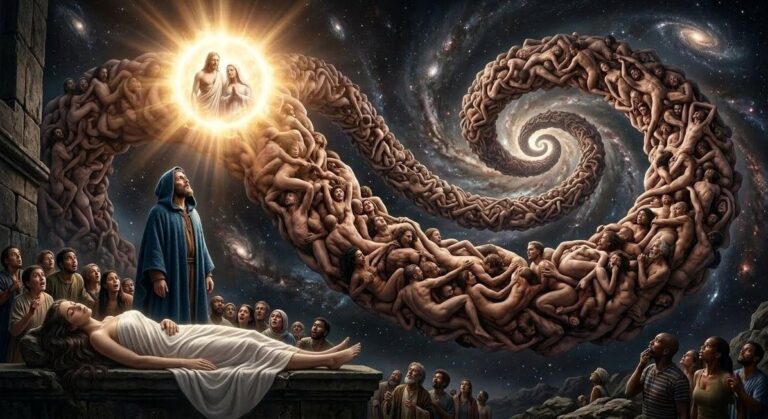
Most modern spirituality treats reincarnation as reassurance: another chance, another life, another lesson. But many ancient liberation traditions saw the cycle differently. To them, repeated birth was not comfort. It was the sign that something remained unresolved, unrecognised, or bound. Liberation was not the promise of endless return. It was the end of compulsory return.
This is not a series about past lives. It is not about discovering who you were, but about recognising why you are still here—and what it means to leave. Across Gnosticism, Buddhism, Hinduism, Hermeticism, Catharism, and Platonism, a single radical thread persists: the wheel of birth is not a school. It is a sentence. And liberation is the exit.

The Comforting Lie
Contemporary spirituality has domesticated reincarnation. It appears in bestsellers and retreat centres as a gentle doctrine: the soul returns to learn, to love, to evolve. Karma becomes a cosmic accounting system that always balances in the end. Death is merely a doorway, and life is an endless curriculum designed by a benevolent universe. The wheel turns, but it turns for your benefit.
This is a recent invention. The ancient world knew nothing of this comfort. For Plato, embodiment was a fall from the intelligible realm, a punishment for the soul’s inability to govern its horses. For the Gnostics, the material world was the botched creation of a blind or malevolent demiurge, and the soul’s presence here was a catastrophe to be reversed. For the Buddha, samsara was not a classroom but a burning house. The goal was not to graduate but to extinguish the fire.
The modern reassurances serve a function. They make the unbearable bearable. If death is not final, then mortality loses its sting. If suffering is educational, then injustice becomes curriculum. But the ancient traditions were less interested in consolation than in truth. They asked a harder question: if the soul is truly divine, why does it keep returning to a realm of decay? And if it keeps returning, what is keeping it here?
The Ancient Warning
The traditions that viewed reincarnation as a problem rather than a privilege shared a common architecture. Each identified a cycle of birth and death that trapped consciousness in a lower order of reality. Each proposed a specific form of recognition or practice that could break the cycle. And each understood that the trap was not merely physical but cognitive: the soul forgot what it was, and in forgetting, consented to its own imprisonment.
Gnosticism: The Soul Trap and the Counterfeit Spirit
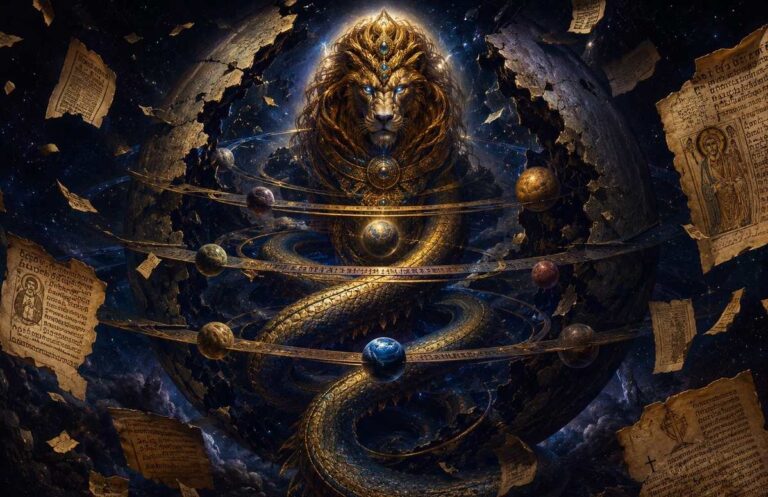
In the Apocryphon of John, the archons fashion the material body as a prison for the divine spark that fell from the Pleroma. They place the counterfeit spirit within the human being—a false self that mimics spiritual life while ensuring the soul remains bound to the cycle of birth and death. The soul, stripped of its memory, believes itself to be the body. Gnostic liberation is not self-improvement. It is self-recognition: the realisation that the self being improved is not the true self. For a deeper examination of this machinery, see The Soul Trap: Gnosticism and the Machinery of Return.
Buddhism: Samsara Without a Soul
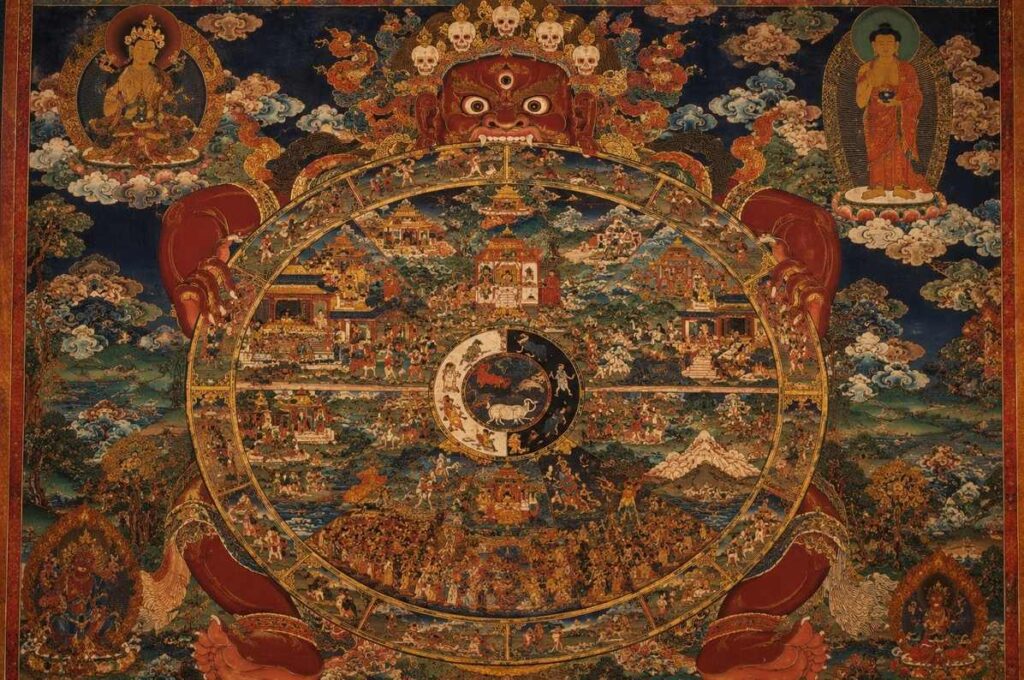
The Buddha’s teaching on reincarnation is radical precisely because it denies the existence of a permanent soul that transmigrates. What continues is not a self but a stream of conditioned phenomena: the five skandhas. Samsara is the endless reconfiguration of these aggregates driven by craving, aversion, and ignorance. Nirvana is not a place the soul goes. It is the cessation of the conditions that produce the stream. The fire goes out not because the fire travels to a better realm, but because the fuel is exhausted.
Hinduism: Moksha and the Return to Self
In the Hindu tradition, the atman—the individual self—is identical with Brahman, the universal consciousness. The cycle of samsara is sustained by avidya, ignorance of this identity. The soul wanders through birth after birth, accumulating karma and mistaking the temporary for the eternal. Moksha is liberation from this cycle, but it is not escape to somewhere else. It is the recognition that there was nowhere to go and nothing to escape.
Hermeticism: Shedding the Planetary Accretions
The Poimandres describes the soul’s descent through the seven planetary spheres. At each sphere, the soul acquires an accretion: the torment of increase and decrease from the Moon, the evil machination of Mercury, the lust of Venus, the tyranny of the Sun, the rashness of Mars, the evil striving of Jupiter, and the falsehood of Saturn. The ascent reverses the process. The purified soul rises through the spheres, shedding each accretion, until it enters the Ogdoad and then the Ennead. The body is left behind not as a vehicle to be improved but as a garment to be discarded.
Catharism: The Consolamentum and the Endura
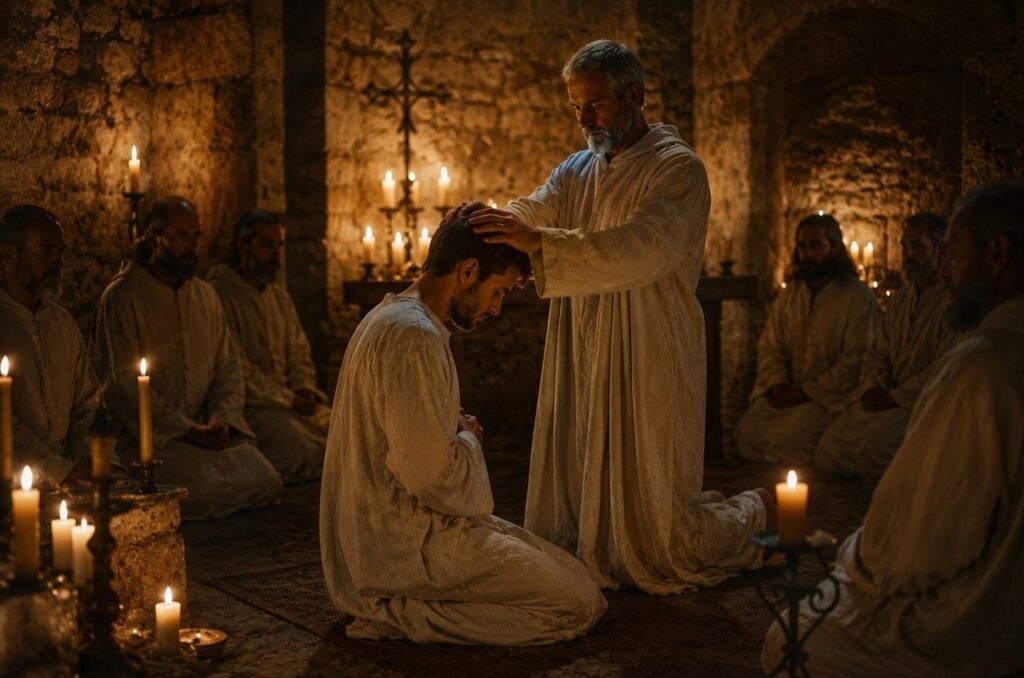
The Cathars of medieval Languedoc inherited a dualist theology that viewed the material world as the creation of Rex Mundi, the King of the World—a fallen or malevolent power, not the true God. The soul, divine in origin, was trapped in flesh through the cycle of reincarnation. The only sacrament, the consolamentum, was a spiritual baptism by the laying on of hands that freed the soul from the power of matter. For the perfecti, the goal was to avoid re-embodiment at all costs. The endura was the ritual fast unto death, undertaken to ensure that the soul, once freed, would not be dragged back into the cycle.
Platonism: The Charioteer’s Fall and the Wings of Recollection
In the Phaedrus, Plato presents the soul as a winged charioteer with two horses—one noble, one base. When the soul loses its wings, it falls into embodiment. The wings are lost through the soul’s inability to maintain vision of the true, the good, and the beautiful. Philosophy, in Plato’s sense, is not the acquisition of new knowledge but the recollection—<anamnesis—of what the soul once knew before the fall into forgetting. Each return is a failure, not an opportunity.
The Common Thread
Despite their differences, these traditions share a remarkable consensus. First, the material realm is not the highest reality. Whether it is called maya, the kenoma, samsara, or the cave, the world of birth and death is a derivative, diminished, or deceptive order. Second, the soul’s presence here is not its natural state but the result of a fall, a forgetting, or a trap. Third, liberation requires recognition—not belief, not faith, not good behaviour, but a direct seeing through the illusion of separateness and embodiment. Fourth, the cycle continues until this recognition occurs; it is not a timed curriculum but a conditional release.
The modern spiritual marketplace has reversed each of these points. The material world is celebrated as the only reality. The soul’s presence here is assumed to be voluntary and educational. Liberation is deferred to future lives. And the cycle is reinterpreted as a benevolent spiral of evolution. The ancient traditions would not recognise this doctrine. They would see it as the counterfeit spirit at work: a comforting lie that keeps the soul consenting to its own captivity.
The Memory of Forgetting
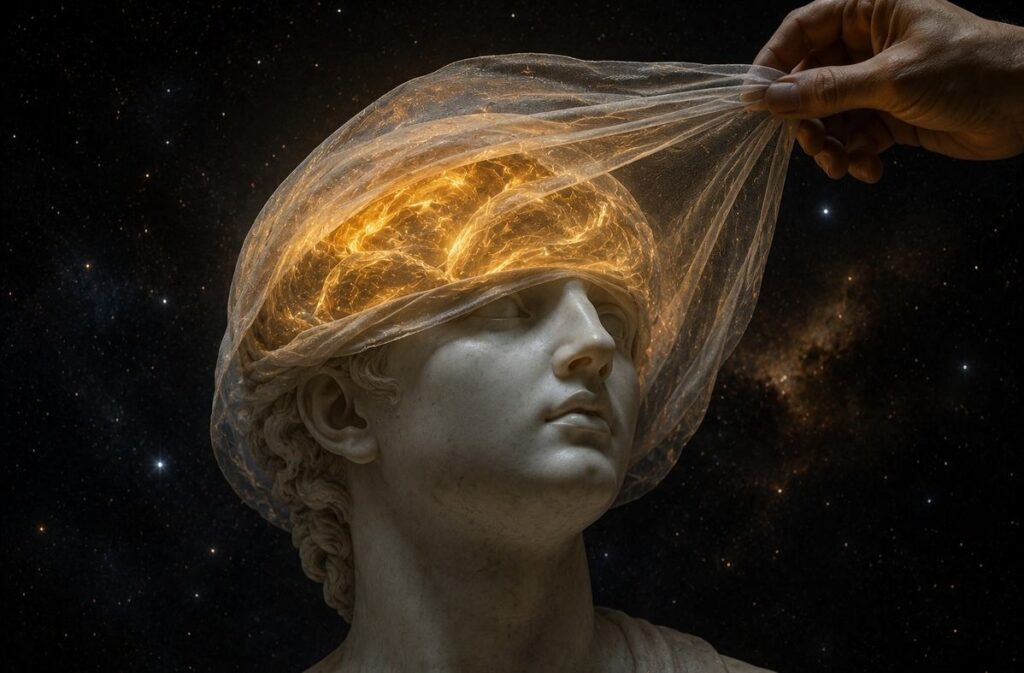
Why does the soul forget? This is the central mystery that every liberation tradition must address. If the divine spark is truly divine, why does it not know itself? If nirvana is available, why does the stream not cease? If moksha is the soul’s true nature, why does it identify with the body?
The Gnostics answered with the veil of forgetting: the archons deliberately obscure the soul’s memory so that it accepts the counterfeit spirit as its own identity. The Buddha answered with avidya: ignorance is not merely lack of information but an active, structural blindness. Plato answered with the trauma of embodiment: the soul’s contact with the body produces a forgetting so complete that the soul believes itself to be the body. The Hermetic texts answered with the planetary accretions: each sphere the soul passes through adds a layer of confusion, until the divine origin is buried under seven coatings of conditioning.
The common answer is that forgetting is not passive. It is structural. The system that traps the soul is also the system that makes the trap invisible. The prisoner does not know they are in prison because the prison is the only reality they remember. Liberation, therefore, begins not with action but with recognition: the moment when the soul sees the walls and remembers that it was once free. For a dedicated exploration of this phenomenon, read The Memory Wipe: Forgetting, Rebirth, and the Loss of Divine Identity.
The Body as Border
The body occupies an ambiguous position in every liberation tradition. It is simultaneously the vehicle of entrapment and the site of potential recognition. For the Cathars, the body was unequivocally the prison: the flesh was the creation of the evil god, and the soul’s goal was to escape it permanently. For the Hermeticist, the body was a garment to be worn and then discarded. For the Hindu, the body was the field of karma, the arena in which the atman could recognise its identity with Brahman. For the Buddhist, the body was the first skandha, the foundation of the illusion of self.
The Gnostic view is perhaps the most nuanced. The body is not evil in itself—it is the product of ignorance, not malice. But it is the location of the counterfeit spirit’s operation. The divine spark is trapped in the body, but the body is also the place where the spark can be recognised. The Gospel of Thomas says: “When you make the two into one… then you will enter the kingdom.” The body is not denied but transformed through recognition.
What all traditions agree upon is that the body cannot be the final destination. Whether it is a prison, a garment, a field, or a skandha, it is temporary. The soul that believes the body is its true home has mistaken the hotel for the destination.
Toward the Exit
This article is the threshold. It establishes the architecture of the problem: the wheel, the forgetting, the trap, and the common recognition that liberation means exit, not improvement. In the articles that follow, we walk each path in detail. We examine the Gnostic soul trap and the five seals of Sethian initiation. We explore the Buddhist mechanics of dependent origination and the precise conditions that produce the end of becoming. We trace the Hindu path of jnana, bhakti, and karma yoga. We reconstruct the Hermetic ascent through the planetary spheres. And we investigate the modern echoes of these traditions in near-death experiences, trauma theory, and the psychology of repetition compulsion.
The wheel is not merely an ancient metaphor. It is a structural description of consciousness caught in loops: the same relationships, the same fears, the same stories, the same returns. The modern world offers its own versions of the trap—addictive consumption, digital feedback loops, the quantified optimisation of the self—but the architecture is identical. Something forgets what it is. Something believes the loop is the only reality. Something consents to return because it cannot remember the alternative.
Liberation is not a better loop. It is the end of looping. And the first step is the recognition that the loop is not mandatory.
Frequently Asked Questions
What is the wheel of reincarnation in ancient traditions?
In ancient liberation traditions, the wheel of reincarnation (samsara) is not a benevolent school but a cycle of compulsory return driven by ignorance, craving, or cosmic entrapment. Gnosticism, Buddhism, Hinduism, Hermeticism, Catharism, and Platonism all describe repeated birth as a problem to be solved rather than a privilege to be enjoyed.
How does Gnosticism view reincarnation?
Gnostic texts such as the Apocryphon of John describe the soul’s entrapment in matter through the counterfeit spirit–a false self imposed by the archons. Reincarnation is the continuation of this captivity. Liberation comes through gnosis: direct recognition of the divine spark’s true origin beyond the material world.
What is the difference between Buddhist nirvana and Hindu moksha?
Nirvana is the cessation of the conditioned stream of becoming; it is not a place but the extinction of the fires of craving, aversion, and ignorance. Moksha is the recognition that the individual atman is identical with universal Brahman, liberating the soul from the illusion of separateness. Both are exits from the cycle, but nirvana denies a permanent transmigrating soul while moksha affirms one.
What was the Cathar consolamentum?
The consolamentum was the sole sacrament of the Cathars, a spiritual baptism by the laying on of hands that freed the soul from the power of matter and the cycle of reincarnation. The endura was the ritual fast unto death that followed, ensuring the soul would not be dragged back into embodiment.
How did Plato understand reincarnation?
In the Phaedrus, Plato describes the soul as a winged charioteer that falls into embodiment when it loses its wings through failure to maintain vision of the true, good, and beautiful. Reincarnation is a sign of continued failure. Philosophy as anamnesis helps regrow the wings, enabling the soul’s ascent and escape.
What do these traditions mean by ‘recognition’ or ‘gnosis’?
Recognition is the direct seeing through of the illusion that sustains the cycle. For Gnostics, it is gnosis–knowing one’s divine origin. For Buddhists, it is prajna–wisdom that cuts through ignorance. For Hindus, it is atma-jnana–self-knowledge. For Platonists, it is anamnesis–recollection of the eternal. In every case, it is an inner event, not a belief or a reward.
Is liberation from reincarnation the same as modern spiritual evolution?
No. Modern spiritual evolution typically frames reincarnation as progressive learning across lifetimes. Ancient liberation traditions reject this framework. They view the cycle as a trap to be escaped, not a curriculum to be completed. Liberation is the end of return, not a higher form of it.
Further Reading
- The Soul Trap: Gnosticism and the Machinery of Return — The second article in this series, examining the counterfeit spirit, the three natures, and the five seals as Gnostic exit protocols.
- The Memory Wipe: Forgetting, Rebirth, and the Loss of Divine Identity — How the waters of Lethe, the archontic veil, and modern digital amnesia engineer the forgetting that sustains the cycle.
- Nirvana, Moksha, and Gnosis: Three Paths Beyond Rebirth — A comparative study of the three great liberation technologies: extinction, realisation, and recognition.
- Archons and Reincarnation: Do Cosmic Powers Keep the Soul Trapped? — Comparing the personal archontic administration with the impersonal law of karma as rival explanations for the mechanics of return.
- The Exit Is Inward: Practice, Attention, and the End of Repetition — Practical interruption protocols for the loops of daily life, from breath and sensation to digital sovereignty.
- The Planetary Prison: Hermetic Ascent and the Seven Spheres — The soul’s descent through the planetary spheres and the shedding of the seven accretions as a map of psychological deconditioning.
- The Gnostic Soul Trap: Archons, Death, and the Recycling of Pneuma — A detailed examination of how Gnostic texts describe the soul’s capture and recycling after death.
- Gnosis and the Near-Death Experience: What Ancient Cosmology Says — How the NDE tunnel, life review, and being of light parallel Gnostic, Hermetic, and Buddhist descriptions of the post-death transition.
- Catharism and the Albigensian Crusade: A Gnostic Revival Burned — The historical context of the Cathar consolamentum, the perfecti, and the Church’s violent suppression of the liberation theology of Languedoc.
- What Is Gnosis? Meaning, Recognition, and Direct Knowing — The foundational concept of gnosis as unmediated recognition, distinct from faith, belief, or intellectual knowledge.
References and Sources
Primary Sources and Critical Editions
- Robinson, James M., ed. (1990). The Nag Hammadi Library in English. 3rd ed. San Francisco: HarperSanFrancisco. [Apocryphon of John, Gospel of Philip, Hypostasis of the Archons]
- Copenhaver, B. P., ed. (1992). Hermetica: The Greek Corpus Hermeticum and the Latin Asclepius. Cambridge: Cambridge University Press. [Poimandres, Corpus Hermeticum I]
- Plato. (c. 370 BCE). Phaedrus. Translated by Alexander Nehamas and Paul Woodruff, 1995. Indianapolis: Hackett Publishing.
- Hamilton, J., ed. (1978). The Cathars: The Rise and Fall of a Great Medieval Heresy. Translated documents and critical introduction. [Consolamentum, endura, dualist theology]
Buddhist and Hindu Sources
- Bodhi, Bhikkhu, trans. (2000). The Connected Discourses of the Buddha: A Translation of the Samyutta Nikaya. Boston: Wisdom Publications. [Samsara, dependent origination, nirvana]
- Olivelle, Patrick, trans. (1996). Upanisads. Oxford World’s Classics. Oxford: Oxford University Press. [Atman-Brahman identity, moksha]
- Sankara. (c. 700 CE). Brahma Sutra Bhasya. Translated by Swami Gambhirananda, 1965. Calcutta: Advaita Ashrama. [Advaita Vedanta, jivanmukti]
Scholarly Monographs and Comparative Studies
- Jonas, H. (1958). The Gnostic Religion: The Message of the Alien God and the Beginnings of Christianity. Boston: Beacon Press.
- King, K. L. (2003). What Is Gnosticism? Cambridge, MA: Harvard University Press.
- Pagels, E. (1979). The Gnostic Gospels. New York: Random House.
- Smith, B. K. (1987). “Gnosticism and Early Buddhism: A Comparative Study.” Numen, 34(2), 154-175.
- Stoyanov, Y. (2000). The Other God: Dualist Religions from Antiquity to the Cathar Heresy. New Haven: Yale University Press.
- Van den Broek, R. (2006). “Gnostic and Hermetic Views on the Soul’s Ascent.” In Gnosticism and Hermeticism from Antiquity to Modern Times, edited by R. van den Broek and W. J. Hanegraaff, 1-14. Albany: SUNY Press.
Safety Notice: This article explores metaphysical and philosophical perspectives on death, rebirth, and liberation. It does not constitute medical, psychological, or spiritual advice. If you experience anxiety, existential distress, or obsessive thoughts related to these themes, please consult a qualified mental health professional. The practices and concepts discussed here are intended for contemplative reflection and complement but do not replace clinical support.