
The Memory Wipe: Forgetting, Rebirth, And The Loss Of Divine Identity
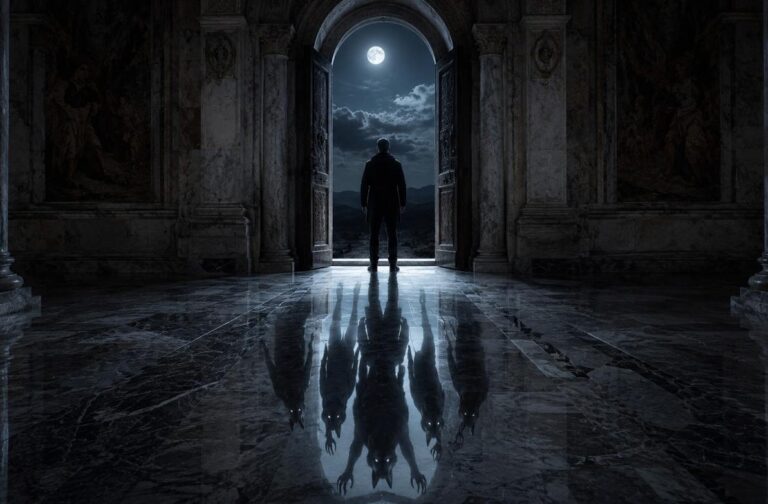
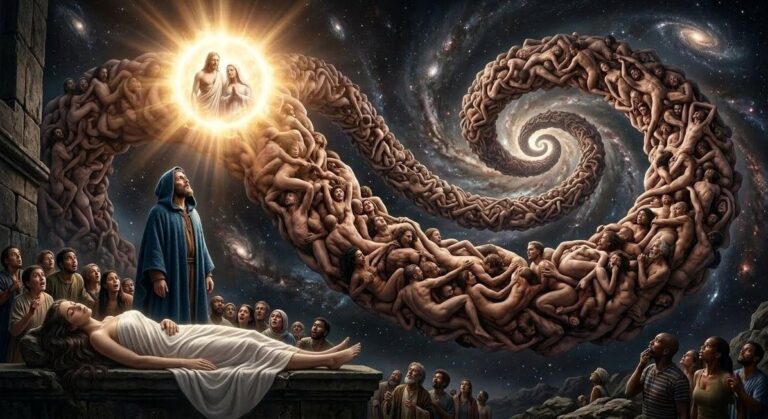
Most people cannot remember their first few years of life. This ordinary forgetting–the natural amnesia of early childhood–serves as a quiet metaphor for something far more vast. Across cultures and centuries, a disturbing consensus has emerged: that birth itself is preceded by a deliberate erasure, a cosmic memory wipe that strips the soul of its previous existence, its divine origin, and the knowledge required to escape the cycle of return. The question is not whether we forget. It is whether forgetting is a mercy, a mechanism, or a prison.
This article traces the geography of forgetting from the Greek underworld to the Gnostic prison-house, from the Tibetan Bardo to the modern laboratory, and from the soul trap hypothesis to the smartphone in your pocket. If forgetting is the condition of rebirth, then remembering may be the first act of liberation–and the modern world is engineering forgetting on an industrial scale.
Table of Contents
- The River and the Tablet: Ancient Greece
- The Gnostic Sleep: Waters of Forgetfulness
- The Eastern Veil: Avidya and the Bardo
- The Laboratory Signature: Stevenson and the Fading Child
- The Manufactured Self: Digital Amnesia and Algorithmic Lethe
- Remembering as Resistance: Anamnesis and Gnosis
The River and the Tablet: Ancient Greece
The most detailed ancient account of the memory wipe appears in Plato’s Republic, Book 10. In the Myth of Er, a soldier who has apparently died on the battlefield journeys to the afterlife and returns to report what he witnessed. After judgment and punishment, souls gather on the Plain of Lethe to choose their next lives. Once the choice is made, they march to the River of Unmindfulness (Ameles potamos) and drink. Plato specifies that the unwise drink more than their measure, forgetting everything–their previous lives, their time in the underworld, and the cosmic truths they have just witnessed. Only Er is forbidden to drink, so that he may return to the living and tell the tale.
The symbolism is precise and brutal. Identity, in Greek thought, is constituted by memory. To drink from Lethe is not merely to lose data; it is to undergo the death of the person within the soul. The river’s name derives from the Greek root leth- (forgetting), which also gives us aletheia–truth, literally un-forgetting. In this etymological frame, truth is the recovery of what the river has stolen, and philosophy is an act of recollection (anamnesis) rather than acquisition.
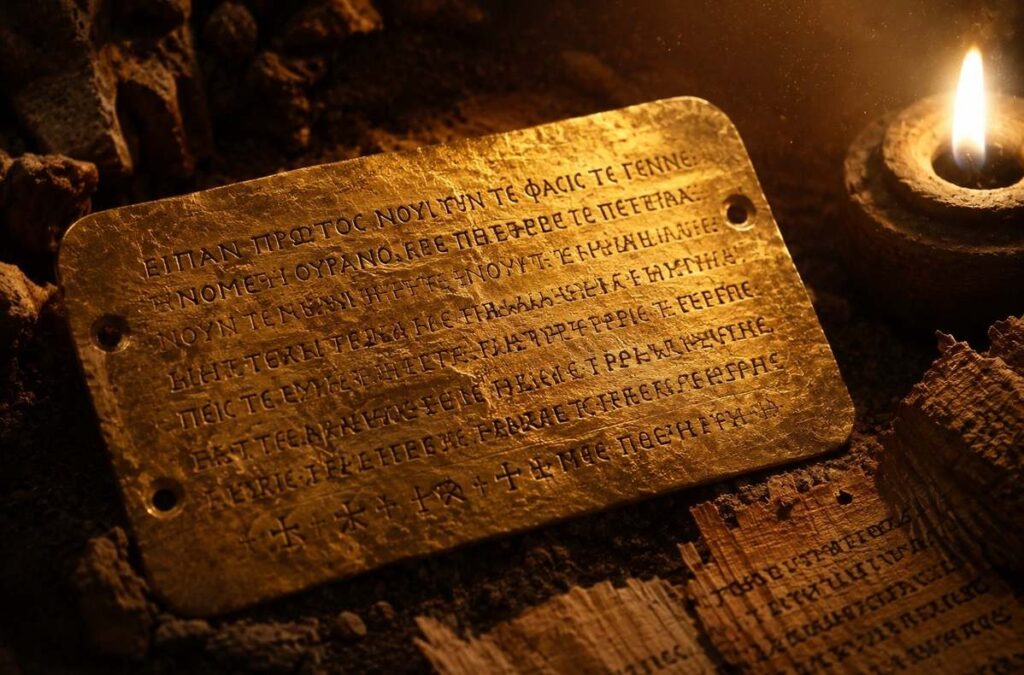
But the Orphic tradition offered an alternative. Buried with initiates from the fourth and third centuries BCE, the Orphic gold tablets functioned as passports through the underworld. These thin metal leaves, placed in graves from Petelia to Thurii, instruct the deceased soul to avoid the spring of Lethe and drink instead from the spring of Mnemosyne (Memory). By remembering, the initiate escapes the cycle of reincarnation entirely. The choice is binary: forget and return, or remember and transcend. Forgetting is not a neutral feature of the system; it is the bondage that keeps the wheel turning.
The Gnostic Sleep: Waters of Forgetfulness
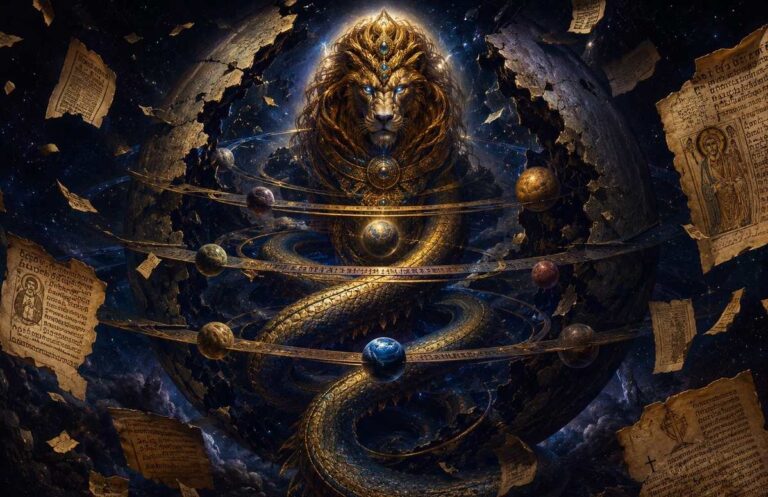
The Nag Hammadi Library preserves a more aggressive theology of forgetting. In the Apocryphon of John, the chief Archon Yaldabaoth–the lion-faced serpent and bungling demiurge–does not merely tolerate the memory wipe. He enforces it. The text states that Yaldabaoth continues to have the children of Seth drink from the waters of forgetfulness and remain ignorant of their true origin and destiny. He wants them in a condition of sleep or drunkenness, because a soul that remembers its divine parentage is a soul that can no longer be ruled.
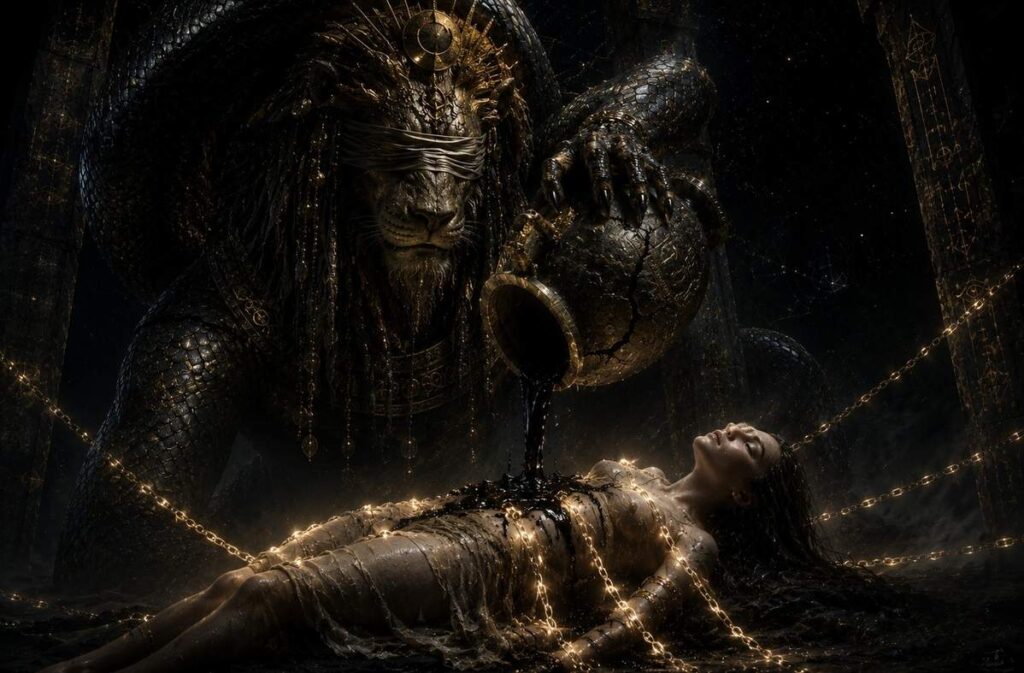
The mechanism is explicit. The contemptible spirit grows stronger in those who go astray, lays a heavy burden on the soul, leads her into evil deeds, and hurls her down into forgetfulness. After death, the soul is handed over to the authorities who come into being through the archon. They bind her in chains and throw her into prison–another body. She is made to follow another soul until she awakens from forgetfulness and acquires knowledge. This is not poetic metaphor. It is a technical description of reincarnation as incarceration, with forgetting as the lock on the cell door.
The Gnostic system distinguishes three types of humanity: the hylics, bound entirely to matter and beyond rescue in this cycle; the psychics, who possess some spiritual capacity but require guidance; and the pneumatics, who carry the divine spark and can achieve full gnosis. Forgetting affects each differently. The hylic never suspects his condition. The psychic may feel nostalgia for a home he cannot name. The pneumatic, however, carries within herself the capacity for recognition–the sudden, unearned recovery of identity that the texts call gnosis.
The Eastern Veil: Avidya and the Bardo
The Greek Lethe is not unique. In the Chinese underworld, the goddess Meng Po serves her Five Flavored Soup of Oblivion on the Bridge of Helplessness. Every soul must drink; every soul forgets. Where Plato’s river is impersonal and geographic, Meng Po’s brew is personal and–in a strange way–compassionate. The soup spares the reincarnated soul the accumulated grief of countless lives. But the effect is identical: a mandatory data wipe before re-entry.
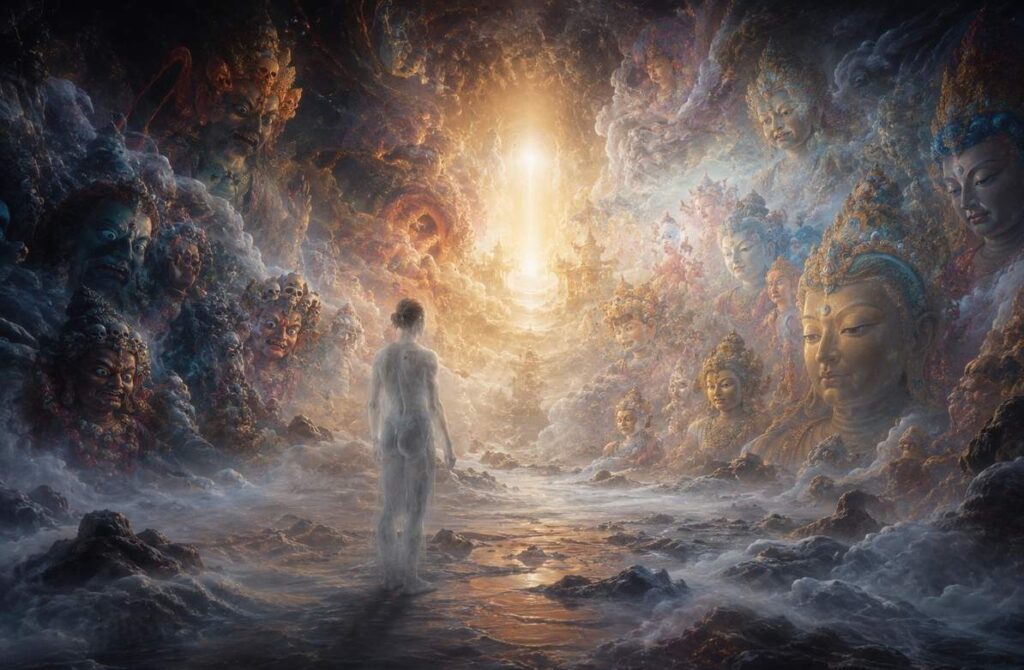
In Tibetan Buddhism, the Bardo Thodol describes the interval between death and rebirth as a series of three intermediate states where the consciousness encounters visions of light, sound, and terrifying deities. These apparitions are not external forces but projections of the mind itself. The text repeatedly instructs the deceased: Do not be afraid. Do not be attracted. Recognise. Liberation is not earned; it is the natural result of recognising what is already the case. The clear light is always present. The only obstacle is failure to remember–a habit, not a substance. Where the Greek system traps souls through mandatory drinking, the Tibetan system offers an exit at every threshold, provided the consciousness can maintain recognition through the confusion of transition.
Hindu and yogic philosophy frame the same problem through the concept of avidya–the veil of ignorance that covers the individual soul (jiva) and makes it misidentify with the body, the mind, and the ego. Patanjali’s Yoga Sutra II.4 identifies avidya as the root klesha, the field upon which all other afflictions grow. It is not simple absence of knowledge but an active distortion: mistaking the impermanent for permanent, the impure for pure, suffering for joy, and the non-self for the Self. Maya is the cosmic illusion; avidya is the individual forgetting. Together they form a prison whose bars are made of misperception.
The Laboratory Signature: Stevenson and the Fading Child
The ancient memory wipe has a disturbing modern parallel. Beginning in 1961, psychiatrist Ian Stevenson at the University of Virginia conducted systematic investigations of children who spontaneously claimed to remember previous lives. Over four decades, his team compiled more than 2,500 cases, of which over 1,500 were sufficiently documented to identify the deceased individual the child claimed to have been. The typical pattern is strikingly consistent: statements begin between ages two and four, often include specific names, places, and causes of death, and–most tellingly–fade spontaneously by age six to eight.

This fading is the empirical signature of the memory wipe. Stevenson noted that children in cultures where reincarnation is accepted were encouraged to speak, while children in the West were typically silenced. But in both settings, the memories dissolved as the current life’s identity consolidated. The wipe is not instantaneous; it is gradual, social, and developmental. By the time the child enters formal schooling, the previous life has been overwritten–not by trauma, but by the ordinary processes of identity formation.
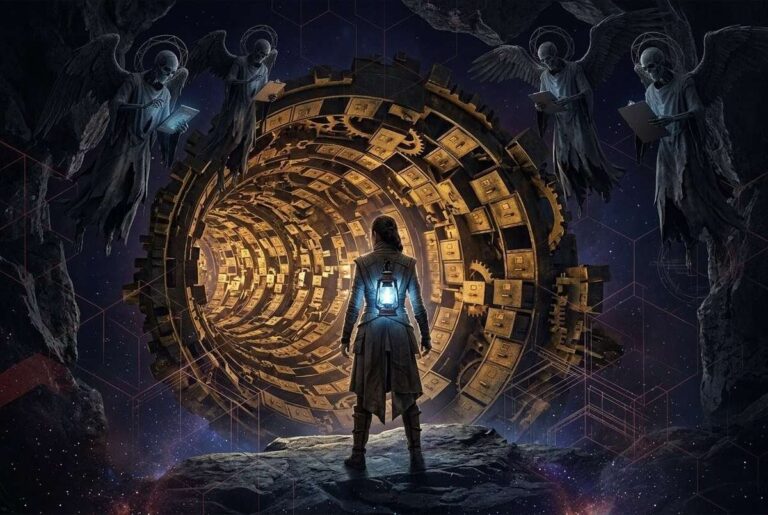
Contemporary esoteric theory has reframed this phenomenon through the soul trap or prison planet hypothesis. Proponents argue that Earth functions not as a spiritual school but as a controlled recycling facility. The veil of forgetting is described as a mandatory data wipe that prevents souls from recognising the repetitive pattern of their incarceration. The tunnel of light reported in near-death experiences is reinterpreted as a harvesting interface, and the Lords of Karma as cosmic accountants who induce guilt and consent for voluntary return. While these theories remain outside academic consensus, they function as modern mythologies that translate ancient Gnostic anxieties into the language of systems theory, simulation, and information management.
The simulation hypothesis adds another layer. If reality is a computational construct, then the memory wipe is a feature, not a bug–a necessary reset that prevents recursive corruption of the simulation by souls who remember previous iterations. The Gnostic Apocryphon of John and the modern coder’s simulation theory arrive at the same image from opposite directions: a system that requires periodic formatting to maintain operational continuity, and entities that benefit from the energy generated by souls who do not know they are trapped.
The Manufactured Self: Digital Amnesia and Algorithmic Lethe
The ancients feared the river. The modern soul fears the feed. The memory wipe is no longer a metaphysical event that happens between deaths; it is a daily operation performed by the devices we carry, the platforms we inhabit, and the attention economy that profits from our fragmentation. If the Gnostic archons administered forgetting through cosmic waters, their contemporary successors have discovered a more efficient method: make the inmates forget they were ever anywhere else, and do it within a single lifetime.
Consider the externalisation of memory. The average person no longer remembers phone numbers, routes, appointments, or facts. These functions have been outsourced to the smartphone, which serves as a prosthetic hippocampus. This is not merely convenience; it is a rehearsal for the larger forgetting. When memory becomes external, the interior space that once held continuity of self begins to atrophy. The soul that cannot remember what it had for breakfast without checking an app is a soul being prepared for a deeper amnesia–the loss of its own divine origin.

Then there is the manufactured identity. Social media platforms do not merely host self-expression; they construct a persona that replaces the authentic self. The profile is a curated forgetting–a reduction of human complexity into legible metrics, trending opinions, and performative vulnerability. The user spends years building a digital mask and then mistakes the mask for the face. This is the memory wipe in real time: not the loss of past lives, but the loss of the present one, buried under layers of optimised presentation and algorithmic feedback.
The attention economy completes the operation. Doomscrolling, infinite scroll, and short-form content are not neutral design choices. They are technologies of fragmentation that destroy the sustained attention required for memory formation. The brain forms long-term memories during states of focused engagement and rest; the feed provides neither. Instead, it induces a cortisol-driven cycle of novelty and anxiety that prevents consolidation. The result is a population that cannot remember what it read five minutes ago, let alone what it knew before birth. The memory wipe has been accelerated from a between-life event to an intra-life condition.
The wellness industry offers a particularly insidious variant. Having stripped ancient contemplative practices of their radical content, it sells managed forgetting dressed as mindfulness. The corporate meditation app does not teach you to remember your divine origin; it teaches you to tolerate the conditions that make you forget. The quantified self–sleep scores, heart rate variability, recovery metrics–externalises identity into biometric data, replacing the inward turn of recognition with the outward gaze of surveillance. The soul is no longer felt; it is measured. And what is measured can be managed. And what is managed can be controlled.
Even the rise in attention disorders reads differently through this lens. ADHD is not merely a neurological condition; it is a cultural symptom of a civilisation that has made sustained attention impossible. The child who cannot sit still, the adult who cannot read a book, the population that cannot follow a single thought to its conclusion–these are not failures of discipline. They are the predictable results of an environment designed to produce fragmentation. The memory wipe is no longer something that happens to you after death. It is something you participate in every time you unlock your phone.
The ancient Greeks placed the River Lethe in the underworld. We have piped it into the home. It does not flow with water but with photons, and we drink from it voluntarily, thousands of times a day, each sip a small forgetting that accumulates into a total loss of orientation. The question is no longer whether the memory wipe exists. It is whether we can build a technology of remembering robust enough to resist it.
Remembering as Resistance: Anamnesis and Gnosis
If forgetting is the bondage, then remembering is the key. Plato’s theory of anamnesis holds that all learning is recollection–the recovery of knowledge the soul possessed before the Lethe erased it. The philosopher does not acquire truth; he remembers it. This is why Socrates could teach geometry to an uneducated slave boy by asking the right questions: the boy already knew the answers; he had merely forgotten them.

The Gnostic tradition radicalises this insight. In the Apocryphon of John, the divine voice of Pronoia (Forethought) descends into the prison of chaos and speaks directly to the sleeping soul: Rise and remember, for it is you who I seek and who I have found. Salvation is not achieved through ritual, morality, or faith alone. It is the moment of direct recognition–the recovery of divine identity that the waters of forgetfulness were designed to suppress. The Archons have no power over genuine divine light because their authority depends entirely upon the prisoner’s ignorance of his own nature.
This recognition is not intellectual. It is visceral, sudden, and often destabilising. The Tibetan tradition calls it the recognition of the clear light. The Hindu tradition calls it the shift from avidya to vidya–from ignorance to direct experiential knowledge. The modern seeker might call it the moment the simulation glitches, the memory leaks through, or the past-life dream refuses to be dismissed as fantasy. Whatever the language, the structure is identical: a breach in the veil, a recovery of what was assumed lost, and the dawning awareness that the prison was never locked–only forgotten.
In the digital age, remembering as resistance requires a deliberate counter-practice. It means reclaiming attention from the algorithm, internalising memory instead of outsourcing it, and refusing the manufactured identity in favour of the uncurated self. It means treating the body as a site of knowing rather than a platform for metrics. It means reading long books, walking without navigation, and sitting in silence long enough for the deeper currents to surface. These are not nostalgic gestures. They are technical operations designed to reverse the memory wipe by strengthening the very faculties the modern world is engineered to destroy.
Truth is un-forgetting. The river of oblivion flows only where the soul consents to drink–and the spring of Memory has never ceased to flow beside it.
— ZenithEye
Frequently Asked Questions
What is the memory wipe in spiritual traditions?
The memory wipe refers to the universal belief across Greek, Gnostic, Hindu, Buddhist, and Chinese traditions that souls lose all memory of previous lives and divine origins before reincarnation. In Greek mythology it is the River Lethe; in Gnosticism it is the waters of forgetfulness enforced by Yaldabaoth; in Chinese tradition it is Meng Po’s Soup of Oblivion.
Did Plato believe in reincarnation?
In the Myth of Er (Republic, Book 10), Plato describes souls choosing new lives and drinking from the River of Unmindfulness before rebirth. While scholars debate whether Plato personally believed in literal reincarnation, the myth functions as a philosophical argument about justice, memory, and the nature of the soul.
What does the Apocryphon of John say about forgetting?
The Apocryphon of John describes the contemptible spirit leading the soul into forgetfulness, after which archontic authorities bind her in chains and cast her into another body. The soul cycles through reincarnation until she awakens from forgetfulness and acquires gnosis–direct knowledge of her divine identity.
Is there scientific evidence for past-life memories?
Dr. Ian Stevenson and Dr. Jim Tucker at the University of Virginia have compiled over 2,500 documented childhood cases of spontaneous past-life memories, many with verifiable details. The research is published in peer-reviewed journals but remains outside mainstream scientific consensus.
What is the soul trap theory?
The soul trap theory proposes that Earth is a controlled recycling facility where souls are manipulated into repeated reincarnation with their memories wiped each cycle. It borrows imagery from Gnostic archons, near-death experience tunnels, and modern simulation theory to argue that forgetting is not natural but enforced.
How does modern technology act as a memory wipe?
Modern technology externalises memory through smartphones and search engines, fragments attention through algorithmic feeds and short-form content, and replaces authentic identity with curated digital personas. The wellness industry further externalises self-knowledge into biometric metrics. These processes create a real-time memory wipe within a single lifetime.
Can the memory wipe be overcome?
Ancient traditions agree that remembering is possible. The Orphic tablets instruct initiates to drink from Mnemosyne (Memory) instead of Lethe. Gnosticism teaches that gnosis–direct recognition of divine identity–breaks the cycle. Tibetan Buddhism emphasises recognition of mind’s true nature in the Bardo. Modern resistance requires reclaiming attention, internalising memory, and refusing algorithmic identity.
Further Reading
- The Soul Trap: Gnosticism and the Machinery of Return — Article 1 in the Liberation from Reincarnation series introduces the Gnostic soul trap hypothesis and the machinery of compulsory return.
- Archons and Reincarnation: Do Cosmic Powers Keep the Soul Trapped? — Article 2 compares the archontic and karmic frameworks as competing models for understanding the cycle of rebirth.
- The Planetary Prison: Hermetic Ascent and the Seven Spheres — Article 4 traces the Hermetic and Neoplatonic ascent through planetary spheres, shedding accretions to achieve unconditioned freedom.
- Nirvana, Moksha, and Gnosis: Three Paths Beyond Rebirth — Article 5 maps Buddhist, Hindu, and Gnostic liberation technologies as distinct paths out of the cycle of return.
- The Exit Is Inward: Practice, Attention, and the End of Repetition — Article 6 explores practical methodologies for cultivating the sovereign attention that breaks the loop of compulsive return.
- Exit from the Wheel: Liberation Beyond Reincarnation — Article 7 synthesises ancient exit protocols and modern discernment practices for the contemporary seeker.
- What Is the Divine Spark? — The hidden light within that remembers and seeks return, central to Gnostic soteriology and the anthropology of the three natures.
- Pleroma and Kenoma: The Foundational Geography of Gnostic Cosmology — The divine fullness and the deficient void that frames the soul’s journey, from the fall of Sophia to the restoration of the spark.
- The Gateway of Death: Conscious Dying and the Bardo States — Tibetan teachings on recognition during the interval between death and rebirth, when the memory wipe is most vulnerable to interruption.
- Simulation Hypothesis: Clues in the Reality Code — Modern parallels to the ancient memory wipe from information-theoretic cosmology and recursive simulation theory.
Safety Notice: This article explores esoteric cosmologies and psychological theories of consciousness survival. It does not constitute medical, psychological, or spiritual advice. If you experience distressing memories, intrusive thoughts, or existential anxiety related to these themes, please contact a trauma-informed mental health professional. Contemplative inquiry complements but does not replace clinical support.