
The Dark Night: Depression or Transformation? Discerning the Difference
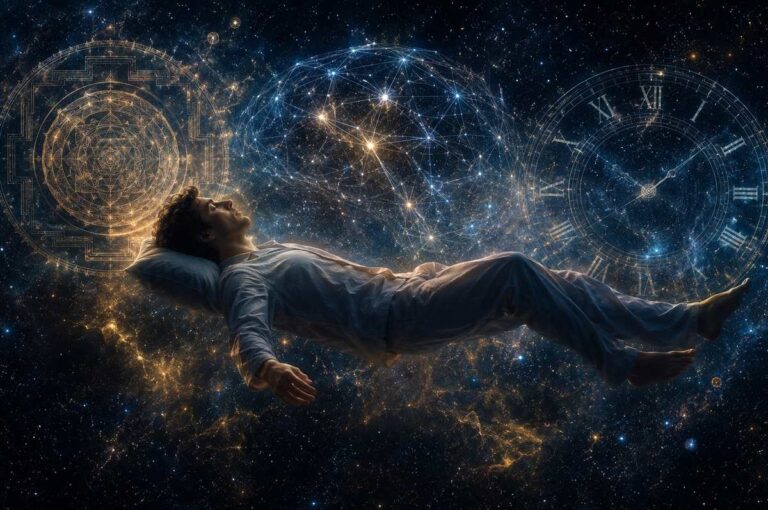
The joy has departed. The practice, once meaningful, is mechanical. The recognition, once vivid, is memory. The thread, once extended, is invisible. You continue–because stopping is unthinkable, because the commitment was made, because there is nothing else–but the continuation is dry. This is the dark night of the soul. The question is not how to escape it, but whether it is pathology requiring treatment or passage requiring endurance. The discernment is the practice.
St. John of the Cross, that sixteenth-century Spanish mystic and occasional poet, gave this darkness its name–<la noche oscura del alma–describing it not as punishment but as the necessary condition for divine union. Imprisoned by his own Carmelite brothers in 1577 for nine months in a cell barely six by ten feet, he composed the poem “En una noche oscura” from memory, having no pen or paper. The prose treatise Dark Night of the Soul followed in 1584–85, written at the request of Ana de Peñalosa, a wealthy patron who recognised that the little man’s suffering contained a map. Yet five centuries later, the diagnostic manuals of modern psychiatry describe something startlingly similar: major depressive disorder, characterised by anhedonia, psychomotor retardation, and the persistent sense of meaninglessness. The overlap is uncanny. The Archons delight in such confusions–convincing the traveller that their necessary purification is merely broken brain chemistry, or conversely, convincing the clinically depressed that their suffering is spiritual nobility.
The clinical framework sees depression. The symptoms match: anhedonia, the loss of pleasure; psychomotor retardation, the slowing of function; hopelessness, the sense of permanent deficit; suicidal ideation, sometimes, the thought that cessation would be relief. The diagnosis, applied, produces treatment. The treatment, effective, restores function. The thread, if it existed, is severed by serotonin reuptake inhibitors before its work is complete–or so the fear runs. But this fear itself requires examination. Does medication truly sever the thread, or does it merely repair the instrument so the music can continue?
The contemplative framework sees purification. The attachment, insufficiently seen through, is being burned away. The consolation, previously experienced as spiritual reward, is withdrawn to reveal the disinterested orientation–practice for its own sake, recognition without confirmation, the thread extended without feedback. The night is not absence. It is presence of a different order: the presence of absence, the fullness of emptiness, the luminous dark. Yet the night, if it is truly the dark night, does not destroy function. It refines it. The distinction is subtle, and the subtlety is where lives are saved or lost.
Table of Contents
- The Clinical Landscape
- The Neurobiology of Rumination
- The Contemplative Landscape
- Cross-Cultural Parallels
- The Navigation Protocol: Seven Discernment Questions
- The Integration Is the Transformation
- When Darkness Becomes Emergency
- The Thread Extended
- Frequently Asked Questions
- Further Reading
- References and Sources
The Clinical Landscape
The Architecture of Clinical Depression
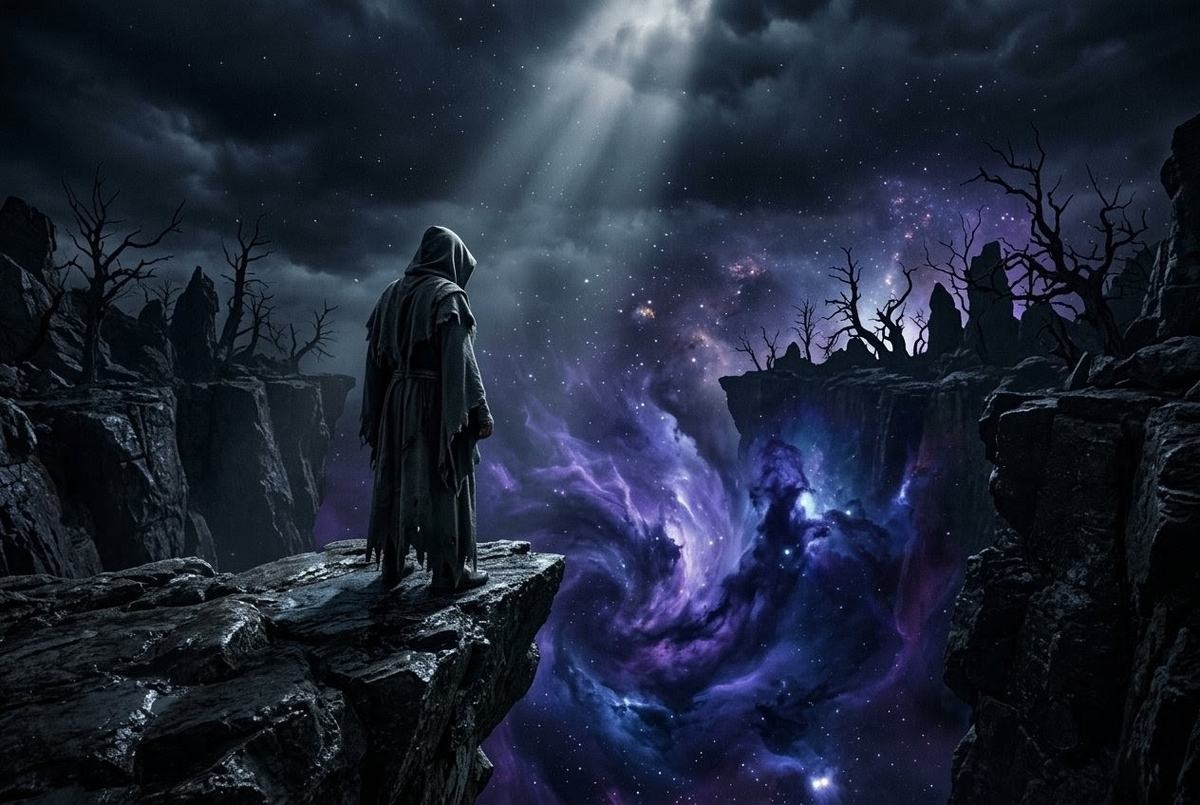
The depression is global. The function, impaired, affects all domains. Work, relationship, self-care–all deteriorate. The past, reviewed, produces only failure. The future, imagined, produces only dread. The present, endured, produces only pain. The self, assessed, is worthless. This is not selective darkness but total eclipse.
Neurobiologically, depression manifests as dysregulation in the prefrontal cortex and amygdala, with decreased connectivity between emotional and regulatory centres. The default mode network, rather than quieting into transcendence, becomes hyperactive–ruminating, looping, trapping the self in recursive narratives of defeat. The neurochemistry is depleted: serotonin, dopamine, and norepinephrine levels drop, creating the biological substrate of hopelessness. This is not the DMN reduction of mystical experience, but the DMN storm of entrapment. Meta-analytic evidence confirms that individuals with major depressive disorder show increased activation in DMN regions–particularly the medial prefrontal cortex and inferior parietal lobule–specifically when processing negative self-referential information. The correlation between DMN hyperactivation and trait rumination is robust and reproducible.
The depression is fixed. The state, persistent, does not vary with circumstance. The good news, received, produces no response. The achievement, accomplished, produces no satisfaction. The environment, changed, produces no improvement. The self is the problem, and the self is inescapable. Unlike the weather of the dark night, which shifts with practice and prayer, the weather of clinical depression remains stubbornly overcast. The sun does not penetrate; the clouds do not part.
The depression is alienating. The others, encountered, are burdens. The connection, attempted, fails. The isolation, preferred, deepens. The help, offered, is rejected. The self, disconnected, cannot be reached. Relationships fracture not because the practitioner is undergoing purification, but because the depressed mind cannot compute the worth of connection. The thread does not merely feel invisible; it feels fictitious.
The Neurobiology of Rumination
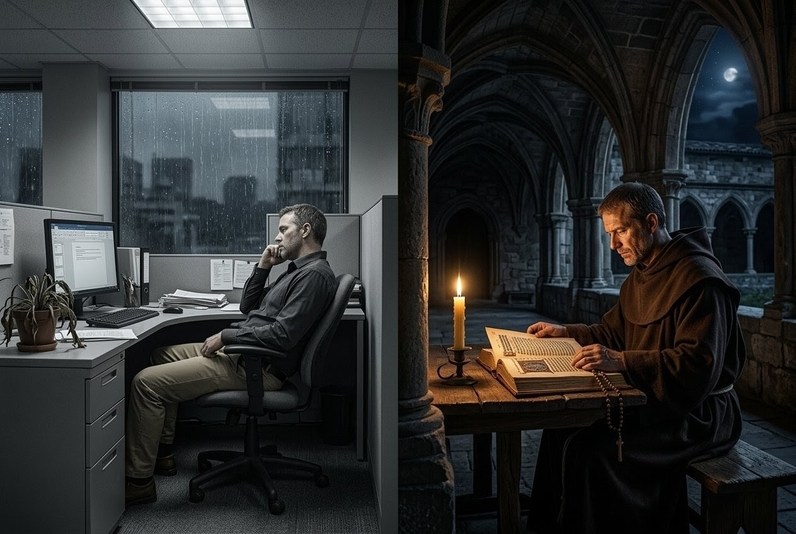
The default mode network (DMN) is a set of brain regions active during rest and self-referential thinking. In healthy function, it constructs the narrative self, reviews the past, and simulates the future. In depression, it becomes a prison. The subgenual prefrontal cortex, linked with social withdrawal and sadness, shows hyperconnectivity to the DMN. The salience network, which should modulate between internal reflection and external task engagement, fails to suppress DMN activity when action is required. The result is the familiar experience of being trapped in one’s own head, unable to redirect attention despite desperate effort.
In mystical experience, the opposite occurs. The DMN deactivates. Brewer and colleagues demonstrated in 2011 that experienced meditators show markedly reduced DMN activity during contemplative practice, accompanied by increased global connectivity across other networks. Psychedelic research confirms the same pattern: DMN disintegration correlates with ego dissolution and the subjective sense of boundarylessness. The brain does not become chaotic; it becomes flexible, redistributing cognitive authority from hierarchical self-monitoring to distributed, bottom-up awareness. The difference is direction: depression is the DMN turned inward and stuck; mysticism is the DMN released.
The Contemplative Landscape
The Phenomenology of the Dark Night
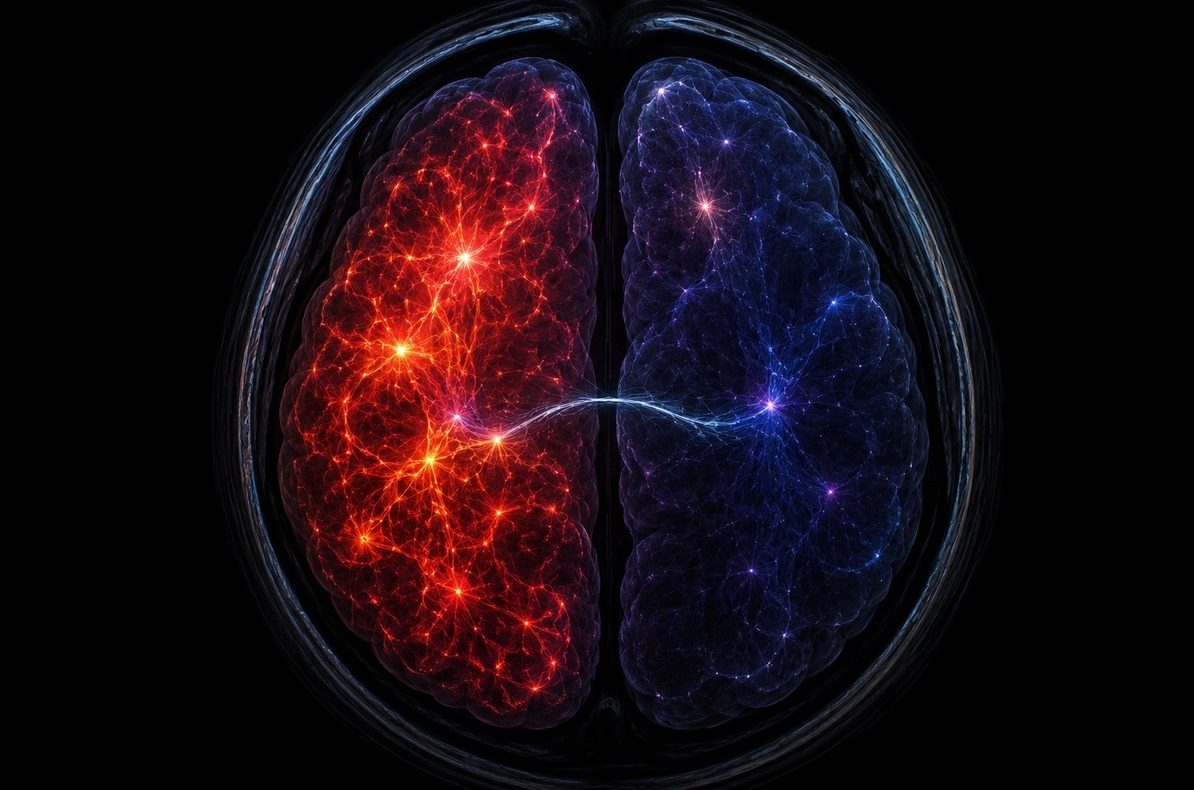
The dark night is specific. The function, impaired, is limited to the spiritual domain. Work continues. Relationship continues. The ordinary self, in ordinary matters, operates adequately. Only the special relationship–to practice, to recognition, to the thread–is affected. The withdrawal is targeted, like a surgeon’s scalpel rather than a bludgeon. The accountant still balances books; the parent still tends children; only the mystic cannot find God.
The dark night is purposeful. The suffering, intense, is not meaningless. The sense of being worked upon persists. The trust, though tested, is not destroyed. The commitment, though dry, is not abandoned. The night is ordeal, not chaos. Something is being accomplished, though invisible–like the fermentation of wine in darkened cellars, or the gestation of life in the opaque womb. There is direction, even when the compass spins. St. John of the Cross describes the soul passing “a long time, even years” in the intermediate state between the night of sense and the night of spirit, exercising itself in the state of proficients before the deeper purification begins.
The dark night is relational. The others, encountered, remain important. The connection, though changed, persists. The help, offered, is considered. The self, though transformed, is not abandoned. The isolation is interior, not social. The night is walked with others, even if unspoken. The practitioner may sit in silence beside friends, feeling the darkness, yet grateful for the company. The depressed individual cannot bear the presence of others; the dark night practitioner cannot bear the absence of meaning, yet remains capable of presence.
Historical Context: St. John of the Cross
Juan de Yepes y Álvarez, born in 1542, took the religious name Juan de la Cruz and became the principal theologian of Teresa of Avila’s Carmelite reform. His imprisonment in 1577 was not accidental persecution but the consequence of his insistence on contemplative prayer in an order that had grown comfortable with laxity. From that darkness he produced not despair but poetry–the Spiritual Canticle, the Dark Night, and The Living Flame of Love. His theology is not theory but commentary on lived experience, written first in verse and only later in prose at the request of nuns who needed the map.
St. John distinguishes two nights: the night of sense, in which sensory consolations are withdrawn, and the night of spirit, in which even spiritual consolations disappear. The first is common; the second is rare and more terrible. Both are necessary for divine union. The duration is not fixed. For some, weeks; for others, years; for St. Paul of the Cross in the eighteenth century, forty-five years. Mother Teresa’s darkness, documented in her private letters, lasted from 1948 almost until her death in 1997–perhaps the most extensive case on record. The night does not respect our timetable.
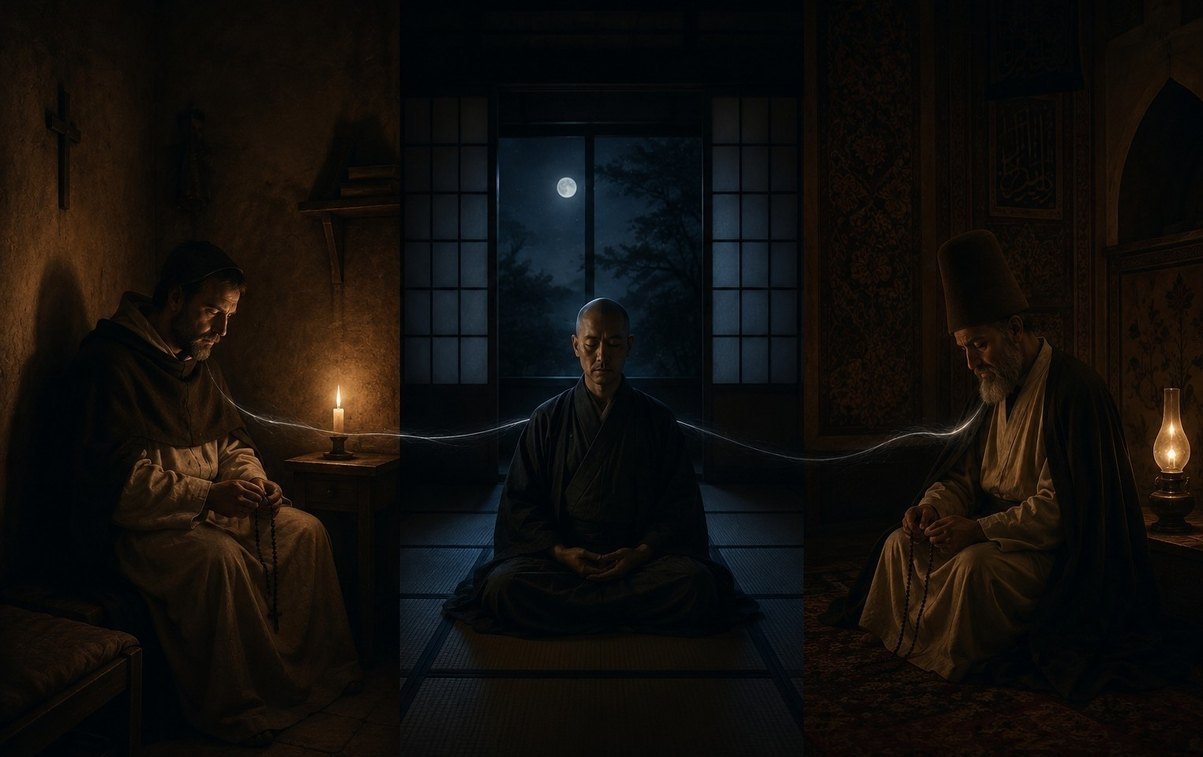
Cross-Cultural Parallels
The dark night is not exclusively Christian. Zen Buddhism describes the “great doubt” (daigi)–a period in which the practitioner loses all confidence in their understanding, their teacher, and the path itself. Dogen, the thirteenth-century founder of Soto Zen, wrote that “to study the way is to study the self; to study the self is to forget the self.” The forgetting is not gentle. It is the dark night by another name.
In Sufism, the concept of fana (annihilation) describes the dissolution of the ego-self in the presence of the Divine. The Persian poet Rumi, in his Mathnawi, describes the night of separation from the beloved as a fire that burns away all that is not love. The Sufi master Abu Yazid al-Bistami reportedly cried out, “Glory be to me!” in the extremity of his mystical union–a statement that scandalised the orthodox and revealed the ego’s final dissolution. The night of sense and spirit finds echoes in the maqamat (stations) of the Sufi path, where each advance is preceded by a stripping away.
Theravada Buddhism describes the “dukkha nanas” or “knowledges of suffering”–stages in insight meditation where the practitioner perceives the unsatisfactory nature of all conditioned phenomena with unbearable clarity. These stages are known to produce despair, disgust, and the desire to abandon practice. Experienced teachers recognise them as temporary and necessary, not as signs of failure. The map, once again, matches the territory.
The Navigation Protocol: Seven Discernment Questions
The practitioner, in darkness, cannot self-diagnose with certainty. The depression, spiritualised, is denied treatment. The dark night, medicalised, is suppressed before completion. The navigation requires both lenses–clinical and contemplative, external and interior, objective and subjective. Consider these seven questions as your diagnostic compass. They are heuristic tools for reflection, not a substitute for professional assessment.
- Is the impairment global or specific? If you cannot function at work, maintain hygiene, or relate to family, suspect depression. If only the meditation cushion feels like ashes, suspect the night.
- Does joy exist anywhere? The depressed find no pleasure in anything–food, music, touch, nature. The dark night practitioner may weep at beauty while feeling abandoned by the Divine.
- Is there a sense of being worked upon? Depression feels like decay; the dark night feels like purification, however painful. There is a telos, a direction, a sense that something is being accomplished.
- How do you relate to help? Depression rejects assistance; the dark night considers it, even if the consideration leads to refusal. The capacity to receive remains intact.
- What is the quality of self-assessment? Depression produces worthlessness; the dark night produces humility. They are not the same. One is a lie; the other is truth wearing sackcloth.
- Does the darkness vary with practice? The dark night often intensifies during contemplative exercise and eases in activity. Depression is constant, a weather system that does not move.
- Is there suicidal ideation? Any thought of self-harm moves the situation immediately into the clinical domain. The dark night does not desire death; it desires God. When death becomes desirable, this is depression, regardless of spiritual context.

The Integration Is the Transformation
The treatment, if needed, is not betrayal. The medication, if indicated, is not failure. The therapy, if engaged, is not superficial. The thread does not require suffering. The dark night, if depression, is not noble. The recovery, if achieved, extends the thread as surely as the night itself. To seek help is not to abandon the spiritual path; it is to recognise that the path includes the body, the brain, the chemistry that enables the soul’s work.
Gerald May, the psychiatrist and contemplative theologian, captured this precisely. In his book The Dark Night of the Soul, he notes that when accompanying people through dark-night experiences, he never felt the negativity and helplessness he often felt when working with depressed individuals. The depressed person, he observed, is embittered and wants immediate relief. The dark-night practitioner knows, on some level, that there is purpose to the pain. Kevin Culligan, a psychologist and Carmelite scholar, adds that the dark night seldom involves the morbid statements of abnormal guilt, self-loathing, and obsessive suicidal ideation that accompany serious depressive episodes. Thoughts of death in the dark night run toward “I long to die and be finished with life in this world so that I can be with God”–not “I want to destroy myself because I am worthless.”
The dark night, completed, produces disinterest–not the absence of interest but the absence of need for interest. The practice continues without reward. The recognition persists without confirmation. The thread extends without feedback. The self, purified of attachment to outcome, is available. This availability is the fruit: the capacity to act without calculation, to love without demand, to know without possession.
The availability is not depression. The depression is closed, fixed, hopeless. The availability is open, fluid, expectant without expectation. The night, survived, produces this availability. The night, medicalised prematurely, produces only the return to previous state–the attachment intact, the purification incomplete. Yet the night, endured without discernment, produces only the martyrdom of the untreated. The middle way is the only way: neither suppression nor romanticisation, but clear-eyed discernment followed by appropriate action.
The Archons delight in false dichotomies–either medication or meditation, either clinical or contemplative. The thread requires both. The brain is the instrument; the soul is the player. When the instrument is broken, repair it. When the player is learning, endure the dissonance.
When Darkness Becomes Emergency
The discernment is ongoing. The night, entered, must be monitored. The function, impaired beyond spiritual domain, indicates pathology. The ideation, emerging, indicates emergency. The thread does not require martyrdom. The transformation, genuine, preserves life. If you cannot distinguish whether your darkness is pathology or passage, treat it as pathology first. The dark night will wait; depression will not.
Seek immediate professional help if you experience: persistent suicidal thoughts, inability to care for basic needs, psychotic symptoms (hallucinations or delusions), or severe self-neglect. The dark night may feel like dying, but it does not seek death. When death becomes the solution, this is the depression speaking, and it must be answered with clinical intervention, not contemplative endurance.
In the United Kingdom, contact the Samaritans at 116 123 or NHS 111. In the United States, call or text 988 for the Suicide & Crisis Lifeline. These services are confidential, available 24 hours, and staffed by trained responders. There is no spiritual test that requires you to refuse help.

The Thread Extended
The dark night is not the thread. It is condition–the necessary darkness in which attachment is seen, in which consolation is withdrawn, in which practice becomes pure. The thread is direction. The direction, maintained through night, produces the transformation that night makes possible.
You walk in darkness. The question is not whether it will end. The question is whether it is your darkness–pathology to be treated–or the darkness–passage to be endured. The discernment is the practice. The practice continues. The thread continues regardless.
Frequently Asked Questions
How do I know if I’m experiencing the dark night of the soul or clinical depression?
The dark night is specific to spiritual practice while maintaining function in other life areas; depression is global, affecting work, relationships, and self-care. The dark night feels like purposeful purification with direction; depression feels like chaotic decay. Most importantly, depression involves worthlessness and often suicidal ideation, while the dark night involves humility and the desire for God rather than death.
Should I stop meditating if I think I’m in the dark night?
No, but modify your practice. Reduce intensity if experiencing distress, but maintain regularity. The dark night is not caused by meditation but revealed through it. Continue practice without attachment to results. If meditation worsens symptoms significantly or produces suicidal thoughts, stop and seek clinical assessment immediately.
Can medication help with the dark night of the soul?
Medication treats depression, not the dark night. However, if you cannot function in daily life or experience suicidal ideation, medication may be necessary regardless of spiritual context. The dark night can coexist with depression, and treating the latter may actually clarify the former. The thread does not require suffering; treatment is not spiritual failure.
How long does the dark night of the soul last?
The dark night varies by individual and tradition. St. John of the Cross described it lasting years for some. Unlike depression, which persists regardless of circumstances, the dark night shifts with spiritual practice and often follows a trajectory of deepening before resolution. If darkness persists beyond 12 months without variation, seek clinical evaluation.
Is the dark night necessary for spiritual awakening?
Many traditions describe necessary darkness or ‘undoing’ before integration, but the specific form varies. The dark night as described by St. John of the Cross is particular to certain contemplative Christian paths. Other traditions describe similar phenomena–zen ‘great doubt,’ Sufi ‘fana’–suggesting that some form of ego-death or consolation-withdrawal may be universal, though its specific manifestation differs.
What should I do if I have suicidal thoughts during spiritual practice?
Suicidal thoughts indicate clinical depression or emergency, not the dark night. The dark night desires God; depression desires cessation. If you experience suicidal ideation, seek immediate professional help–psychiatric evaluation, crisis services, or emergency services. Do not attempt to ‘meditate through’ suicidal thoughts. This is the boundary where contemplation ends and clinical intervention begins.
Can the dark night happen more than once?
Yes. Spiritual development is often cyclical rather than linear. Subsequent dark nights tend to be less global and terrifying than initial experiences, as the practitioner develops discernment and trust. Later ‘nights’ may focus on specific attachments or subtle ego structures rather than total consolation-withdrawal. Each cycle deepens availability and disinterest in reward.
Further Reading
- States of Knowing: What Happens When Consciousness No Longer Belongs to You — The full phenomenological map of non-ordinary states and their clinical correlates.
- Spiritual Emergency: When Transformation Becomes Crisis — When the dark night accelerates beyond the capacity for integration.
- The Physiology of Mystical Experience: What Actually Changes in the Brain — The neurobiology distinguishing spiritual states from pathology.
- The Transformation: What Actually Changes After Mystical Experience — The integration that follows darkness, whether clinical or contemplative.
- Psychosis and Mysticism: The Shared Territory — Where diagnostic discernment meets spiritual breakthrough at the extreme edges.
- Integration Practices After Peak Experience — Practical grounding techniques for stabilising awakening experiences.
- Default Mode Network Dissolution and the Self — Examines the neuroscience of ego dissolution and its parallels to Gnostic states of recognition.
- Against Spiritual Bypassing: The Refusal to Feel — A corrective for those who would use spiritual ideology to avoid necessary psychological work.
- The Stages of Integration: Immediate, Short-Term, and Long-Term — Maps the coagulation phase onto practical grounding after peak or dark experiences.
- Embodiment Practices: Grounding the Awakening — Why spiritual realisation requires somatic integration and how to anchor experience in the body.
References and Sources
The following sources represent the primary clinical, neuroscientific, and contemplative materials consulted in the preparation of this article.
Primary Contemplative and Mystical Texts
- St. John of the Cross. (c. 1578/1585). Dark Night of the Soul (Noche oscura del alma). Translated by E. Allison Peers. Image Books, 1959.
- St. John of the Cross. (c. 1578). The Spiritual Canticle (Cántico espiritual).
- Rumi, Jalal al-Din. (c. 1273). Mathnawi. Translated by R. A. Nicholson. Gibb Memorial Trust, 1925–40.
- Dogen. (1243). Genjo Koan. In Shobogenzo. Translated by Kazuaki Tanahashi. North Point Press, 1985.
Clinical and Psychological Sources
- May, Gerald G. (2004). The Dark Night of the Soul: A Psychiatrist Explores the Connection Between Darkness and Spiritual Growth. HarperSanFrancisco.
- Culligan, Kevin. (2002). “The Dark Night of the Soul.” In Carmelite Spirituality, edited by Keith J. Egan. Paulist Press.
- American Psychiatric Association. (2022). Diagnostic and Statistical Manual of Mental Disorders, 5th ed., text rev. (DSM-5-TR).
Neuroscience and DMN Research
- Brewer, J. A., et al. (2011). “Meditation experience is associated with differences in default mode network activity and connectivity.” Proceedings of the National Academy of Sciences, 108(50), 20254–20259.
- Zhou, H. X., et al. (2020). “Rumination and the default mode network: A meta-analysis.” Neuroscience & Biobehavioral Reviews, 116, 390–400.
- Hamilton, J. P., et al. (2015). “Default-mode and task-positive network activity in major depressive disorder: Implications for adaptive and maladaptive rumination.” Biological Psychiatry, 77(4), 255–262.
- Carhart-Harris, R. L., et al. (2014). “The entropic brain: A theory of conscious states informed by neuroimaging research with psychedelic drugs.” Frontiers in Human Neuroscience, 8, 20.
Biographical and Historical Sources
- Teresa, Mother. (2007). Mother Teresa: Come Be My Light. Edited by Brian Kolodiejchuk. Doubleday.
- Peers, E. Allison. (1946). Handbook to the Life and Times of St. Teresa and St. John of the Cross. Burns & Oates.
Safety Notice: This article explores the distinction between clinical depression and the contemplative dark night of the soul. It does not constitute medical, psychological, or spiritual advice. If you are experiencing suicidal thoughts, inability to care for basic needs, psychotic symptoms, or severe self-neglect, seek immediate professional help. The seven discernment questions provided are heuristic tools for reflection, not a substitute for clinical assessment. If you cannot determine whether your experience is pathology or passage, treat it as pathology first. Contemplative frameworks complement but do not replace psychiatric or psychotherapeutic treatment.