
The Quantified Soul: When Healing Becomes Self-Surveillance
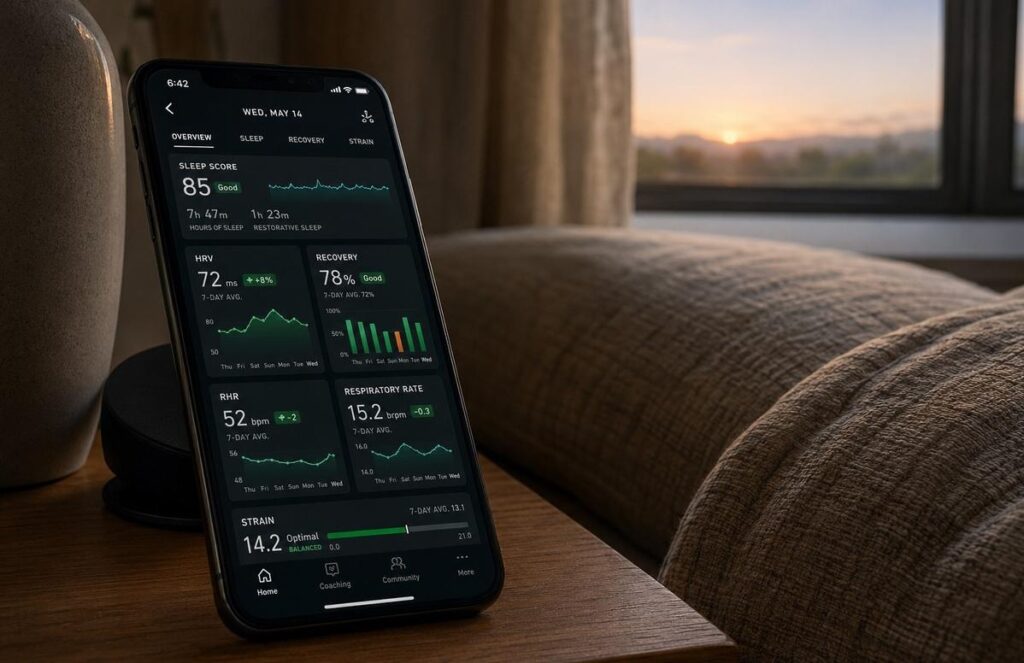
You wake to a number. Before your eyes adjust to the morning light, before you register whether you actually feel rested, a sleep score glows on your screen. Seventy-four. Amber. Not the green you were hoping for after that expensive magnesium protocol and the blue-light ban. Your heart rate variability is down twelve percent. Your readiness score suggests you postpone that morning run. You have not yet stood, nor breathed consciously, nor touched the floor with bare feet–but your body has already been judged, filed, and found wanting.
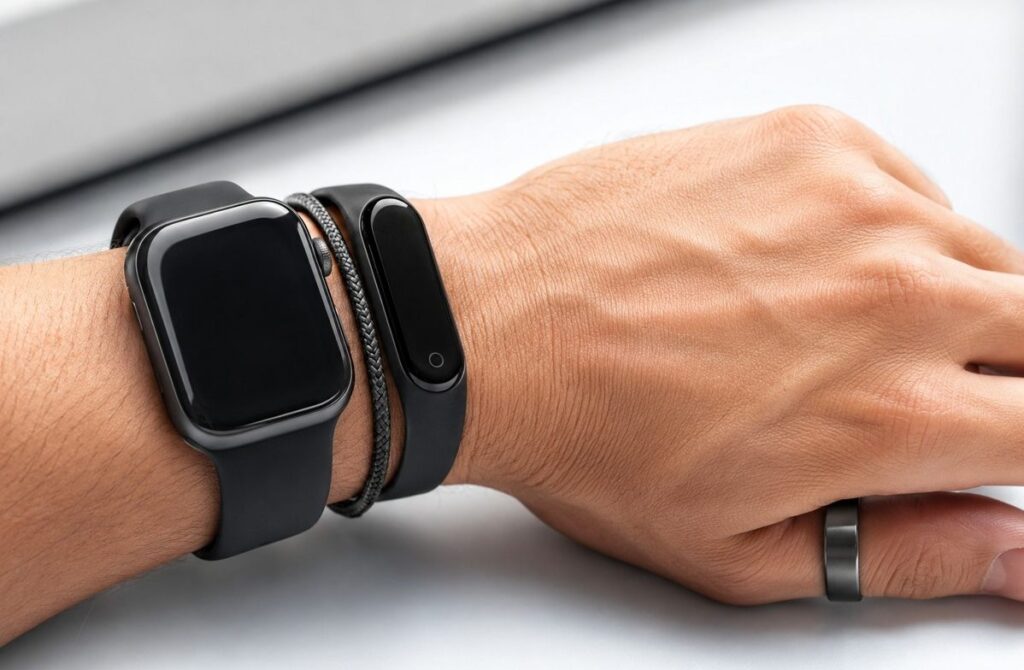
Welcome to the quantified life. It began as a benign experiment: ten thousand steps, eight glasses of water, seven hours of sleep. Now it is a comprehensive surveillance architecture wrapped around the wrist, nested in the ring, inserted beneath the skin. Continuous glucose monitors turn every meal into a data event. Wearables track stress, recovery, menstrual cycles, and skin temperature with the diligence of an administrator who never sleeps. The promise is unmistakable: know thyself, finally, with mathematical precision.
But somewhere between the first pedometer and the fiftieth biometric algorithm, a subtle inversion occurred. The body ceased to be a site of lived experience and became a dashboard. Healing ceased to be a process of integration and became a project of optimisation. And the self–that ancient, irreducible mystery the Gnostics called the divine spark–found itself under permanent review.
Table of Contents
- The Dashboard Body
- The Optimisation Trap
- The Archonic Inversion
- The Anxiety of the Optimised
- Toward the Unmeasured Life
- Frequently Asked Questions
- Further Reading
- References and Sources
The Dashboard Body
The quantified self movement emerged from Silicon Valley in the early 2000s with an innocent premise: self-knowledge through data. Early adopters tracked calories and mileage. Then came the avalanche. By the mid-2020s, the wellness industry had fused with biometric surveillance to produce an ecosystem in which the human body generates constant data exhaust. Heart rate variability, respiratory rate, blood oxygen saturation, galvanic skin response, sleep stages, REM percentages, glucose curves, ketone levels, and cortisol estimates–each metric extracted, plotted, and compared against population baselines.
The language reveals the theology. Users do not rest; they “recover.” They do not eat; they “fuel.” They do not feel anxious; they observe “sympathetic nervous system activation.” Every bodily state is translated into a metric that can be optimised, gamified, and monetised. The body becomes a substrate for continuous improvement, and the self becomes its own most diligent project manager.
From Felt Sense to Data Point
There was a time when a person knew they had slept well because waking carried a certain quality: the softness of consciousness returning, the absence of drag in the limbs, the clarity behind the eyes. This was called interoception, the felt sense of the body’s interior landscape. The quantified regime does not abolish interoception so much as delegitimise it. Why trust the vague, unreliable testimony of embodied feeling when a titanium ring can provide an objective score?
The result is a peculiar dissociation. The wearer knows the data before they know the body. The map precedes the territory. A low HRV reading can induce anxiety that further depresses HRV, creating a feedback loop of metric-driven distress. The instrument intended to reveal health becomes the very source of illness.
The Subscription Model of the Self
Perhaps the most quietly extractive feature of the quantified ecosystem is its business model. The hardware is merely the portal; the real product is the subscription. Monthly fees unlock “personalised insights,” “AI coaching,” and “advanced analytics.” The self is not merely watched–it is rented back to its owner in premium tiers. The more anxious the user becomes about their numbers, the more likely they are to upgrade.
This is not accidental. The attention economy learned long ago that uncertainty drives engagement. A sleep score that fluctuates unpredictably keeps the user checking the app. A readiness metric that punishes rest days encourages overtraining. The platform does not want you healed; it wants you optimising. Healing is a terminal state. Optimisation is an infinite game.
The Optimisation Trap
Optimisation is the respectable face of compulsion. It arrives wearing the white coat of functional medicine and the language of biohacking culture. It speaks of peak performance, longevity, and cellular health. But beneath the rhetoric lies a harsh perfectionism: the body as machine, the self as software, and any deviation from the optimal curve as a bug to be patched.
The quantified self quickly becomes the scored self. Every morning brings a report card. Green is virtue; red is failure. The user begins to organise their life around the algorithm’s approval: eating windows, light exposure, supplement stacks, cold plunges, breathwork protocols–all calibrated to move the needle. The question stops being “How do I feel?” and becomes “What do the numbers say?”
The Scorecard Self
This internal scoring creates a new kind of moral economy. A high readiness score confers a sense of virtue; a low score triggers shame. The user begins to lie to their device, removing the ring during a glass of wine, deleting the app on holiday, performing wellness for the algorithm rather than for the organism. The body becomes a stage, and the wearable becomes the audience.
In this theatre, authenticity is impossible. The quantified self cannot afford to be messy, intuitive, or cyclical in ways that defy metric capture. It must be consistent, legible, and above all, high-performing. The soul–which the Gnostics understood as wild, irreducible, and fundamentally ungovernable–is placed under house arrest.
Biofeedback or Biofetish?
Biofeedback has legitimate clinical applications. Heart rate variability training can support trauma recovery. Sleep hygiene education improves mental health. But the consumer wellness industry has stripped these tools from their therapeutic context and turned them into lifestyle accessories. The result is biofetishism: an obsessive attachment to bodily data that displaces rather than deepens embodied awareness.
The biofetishist does not practise breathwork to feel the breath; they practise it to raise their HRV. They do not sleep to rest; they sleep to produce a green arc on a graph. The metric becomes the master, and the body becomes the servant.
The Archonic Inversion
The Gnostics described the archons as ruling powers that govern the lower world, keeping the divine spark trapped in cycles of ignorance and repetition. They did not need to be malevolent; they merely needed to be systematic. The quantified wellness apparatus functions with precisely this kind of systemic inevitability. It does not hate the soul. It simply cannot recognise it.
The archonic quality lies in the structure. A system that watches without consent, that scores without context, that optimises without end, is a system of control regardless of its stated intentions. When healing becomes surveillance, the clinic becomes the panopticon. The patient becomes the inmate. And the algorithm becomes the warden.

The Internal Panopticon
The panopticon, Jeremy Bentham’s architectural parable of surveillance, relied on the prisoner never knowing when they were being watched. The quantified body achieves something more insidious: the prisoner never stops watching themselves. The wearable is the guard tower installed on the wrist. The user internalises the gaze so completely that they no longer feel observed; they feel responsible.
This internalised surveillance produces a new kind of docility. The quantified self polices its own sleep, eating, movement, and stress with a diligence no external authority could match. It is the perfect police state: self-maintaining, self-correcting, and self-financing through monthly subscription fees.
The Counterfeit Spirit Wears a Fitness Tracker
In Gnostic cosmology, the counterfeit spirit is the false imitation of spiritual life, a mimetic construct that mimics awakening while preventing it. The wellness industry has produced a technological counterpart: the counterfeit body. The wearable promises gnosis–direct knowledge of the self–but delivers only data. It promises liberation through optimisation, but produces only a more sophisticated cage.
The counterfeit spirit does not announce itself as false. It appears as the most reasonable, scientific, and progressive option. Who could oppose better sleep? Who would argue against metabolic health? The deception lies not in the individual metric but in the totalising framework: the assumption that the self can be known through quantification, and that quantification constitutes care.
The Anxiety of the Optimised
The psychological cost of perpetual self-surveillance is only beginning to be understood. Research in behavioural psychology suggests that excessive health monitoring can produce “cyberchondria,” a state of heightened anxiety driven by biometric feedback. Studies on continuous glucose monitor users have found increased food anxiety and orthorexic tendencies–an obsession with “correct” eating that damages the relationship with nourishment.
The quantified self lives in a state of anticipatory correction. Every meal is a test. Every workout is an exam. Every night is a performance review. The body ceases to be a home and becomes a perpetual probationary period.
When Recovery Becomes Performance
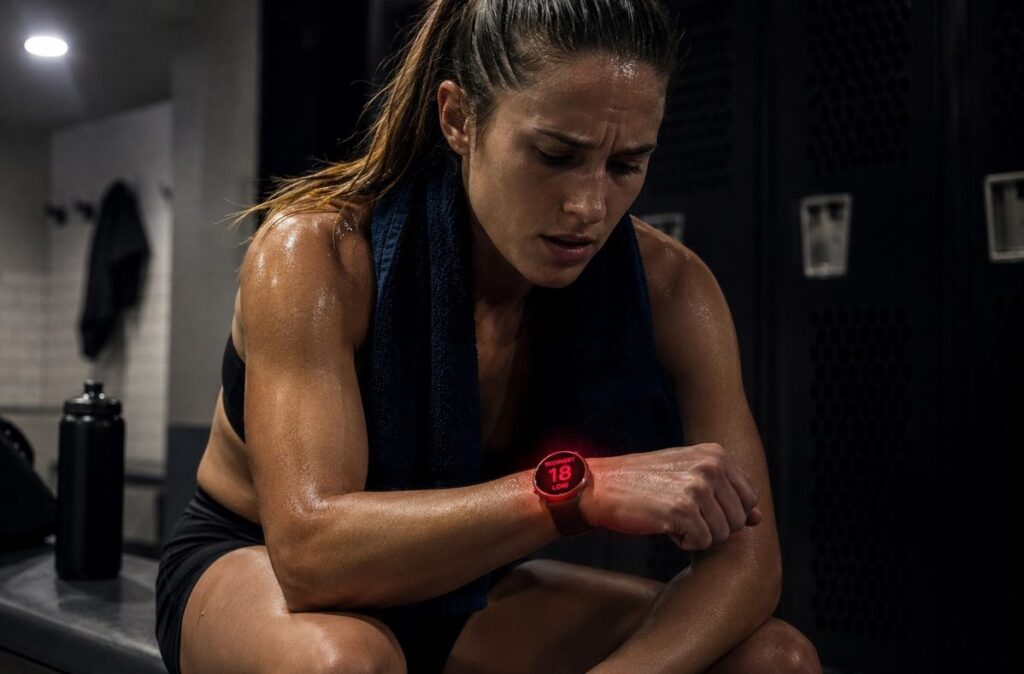
Perhaps the most elegant trap is the quantification of rest itself. Recovery scores, rest day recommendations, and stress tracking promise to protect the user from burnout. But they turn relaxation into another metric to be optimised. The user does not nap; they “execute a recovery protocol.” They do not take a day off; they “strategically deload.” Even rest becomes labour.
This is the final colonisation. When the algorithm claims dominion over sleep and stillness, there is no outside left. The user cannot step off the treadmill because even the stepping off is tracked, scored, and fed back into the optimisation loop.
The Quantified Insomnia
Sleep trackers illustrate the paradox with particular cruelty. Medical literature has documented a phenomenon called “orthosomnia”: insomnia caused by sleep tracking. Users become so anxious about achieving the perfect sleep score that they develop the very sleep disturbances they seek to eliminate. The instrument designed to heal becomes the wound.
This is not a bug. It is the logical endpoint of a system that treats the body as an object to be managed rather than a mystery to be inhabited. When the map becomes more real than the territory, the territory rebels.
Toward the Unmeasured Life
Is there an alternative? The Gnostic answer has always been recognition: the direct, unmediated knowing that the self is not a machine to be tuned but a spark to be remembered. This recognition does not require data. It requires attention–not the extracted, monetised attention of the platform, but the sovereign attention of the contemplative.
The unmeasured life does not reject all technology. It rejects the theology of optimisation. It permits the body to be cyclical, intuitive, and occasionally incomprehensible. It trusts the felt sense over the score. It understands that healing is not a project with KPIs but a relationship with mystery.

Reclaiming Embodied Discernment
Embodied discernment is the capacity to read the body’s signals without translation into numbers. It is the recognition that a racing heart might mean fear, or excitement, or the first flicker of courage–and that no wearable can distinguish between them. It is the wisdom to know that some nights of broken sleep carry messages that no sleep score can decode.
This discernment is not anti-intellectual. It is simply non-quantified. It draws on the full range of human knowing: somatic, emotional, imaginal, and intuitive. It refuses to reduce the complexity of the self to a dashboard.
The Ordinary Saint Unquantified
The ZenithEye tradition speaks of the Ordinary Saint: the one who has completed the journey and returned to the marketplace, unremarkable, unoptimised, and free. The Ordinary Saint does not wear a fitness tracker. They do not need a readiness score to tell them when to walk. They have learned to trust the rhythm of their own breath, the intelligence of their own fatigue, and the quiet authority of their own yes and no.
This is not regression. It is integration. The Ordinary Saint has passed through the quantified wilderness and emerged on the other side, not with better metrics but with better presence. They have recognised that the soul was never lost in the data. It was only waiting, patient and luminous, for the gaze to turn inward without instrumentation.
The quantified soul is not a dystopian fantasy. It is the morning commute of millions, the bedtime ritual of the wellness-obsessed, the quiet anxiety of the green-arc seeker.
The quantified soul is not a dystopian fantasy. It is the morning commute of millions, the bedtime ritual of the wellness-obsessed, the quiet anxiety of the green-arc seeker. It is the most sophisticated system of control yet devised because it does not need to force compliance. It manufactures consent through the promise of better health, longer life, and optimal performance.
But the body remembers what the dashboard forgets. Beneath the metrics, the ancient rhythms persist: the heartbeat that needs no interpretation, the breath that requires no score, the fatigue that speaks its own truth. The task is not to destroy the wearable but to dethrone it. To remember that the self is not a project to be managed but a mystery to be met.
Healing does not begin with better data. It begins with the radical act of trusting the unquantified self.
Frequently Asked Questions
What is the quantified self movement?
The quantified self movement began in the early 2000s as a practice of self-knowledge through data tracking. It started with simple metrics like steps and calories but has evolved into comprehensive biometric surveillance using wearables, continuous glucose monitors, and AI-driven health platforms that track sleep, stress, recovery, and metabolic function.
How do wearable devices affect mental health?
While wearables can provide useful health insights, excessive self-tracking may increase anxiety through a phenomenon known as cyberchondria. Users may develop obsessive relationships with their biometric data, experiencing shame over low scores and anxiety that further degrades the very metrics they seek to improve.
What is orthosomnia and how is it related to sleep tracking?
Orthosomnia is a form of insomnia caused by sleep tracking. Users become so anxious about achieving optimal sleep scores that they develop sleep disturbances. The instrument intended to improve rest becomes a source of performance pressure that disrupts natural sleep rhythms.
Can biometric tracking actually improve health outcomes?
Biometric tracking has legitimate clinical applications, including HRV training for trauma recovery and sleep hygiene education. However, when stripped from therapeutic context and turned into consumer lifestyle accessories, these tools often produce biofetishism–an obsessive attachment to data that displaces genuine embodied awareness.
What is the Gnostic critique of wellness optimisation?
From a Gnostic perspective, wellness optimisation represents an archonic inversion: a systematic structure of control that watches without consent and optimises without end. The counterfeit spirit of the wellness industry promises gnosis through data but delivers only a more sophisticated cage, replacing direct embodied knowing with metric-driven dissociation.
How can I practise embodied discernment without technology?
Embodied discernment involves reading the body’s signals directly without numerical translation. Practices include breath awareness, somatic scanning, mindful movement, and simply asking ‘How do I feel?’ before checking any device. It trusts interoception–the felt sense of the body’s interior landscape–over algorithmic scores.
When does self-tracking become self-surveillance?
Self-tracking becomes self-surveillance when the metric takes precedence over the felt experience, when rest becomes performance, when the user internalises the algorithm’s gaze, and when the body is treated as a machine to be optimised rather than a mystery to be inhabited. The shift is structural: surveillance is optimisation without end.
Safety Notice: This article explores the psychological and philosophical dimensions of health tracking and wellness culture. It does not constitute medical, psychological, or nutritional advice. If you experience obsessive thoughts about health metrics, eating behaviours, or sleep performance that interfere with daily functioning, please contact a qualified healthcare professional or trauma-informed therapist. Embodied practices complement but do not replace clinical mental health treatment.
Further Reading
Explore these ZenithEye articles to deepen your understanding of digital control, embodied spirituality, and the path beyond optimisation.
- The Ungovernable Attention: Cognitive Sovereignty in the Algorithmic Age — An examination of how digital platforms capture and monetise attention, and how to reclaim sovereign interiority.
- Body Against Algorithm: Reclaiming Embodiment — A practical guide to restoring somatic intelligence in a world that privileges digital abstraction over flesh.
- The Archon in Your Phone: AI Intimacy and the Gnostic Counterfeit — How digital intimacy technologies replicate the counterfeit spirit, offering connection while delivering surveillance.
- The Dopamine Cartel: Neurochemical Warfare in the Attention Economy — The biochemical mechanisms by which digital platforms engineer dependency and how to resist.
- Digital Minimalism as Mystical Practice — Strategies for reducing digital noise to create space for contemplative awareness and direct knowing.
- The $6.8 Trillion Theft: How the Wellness Industry Stole Gnosis and Sold It Back Empty — A critical examination of how the wellness industry commodifies ancient wisdom while stripping it of transformative power.
- The Gateway of Sensation: Body Scan and Somatic Awareness — A foundational practice for reclaiming interoception and the felt sense of the body without technological mediation.
- Neuroception, Felt Sense, and Spiritual Discernment — How the nervous system communicates truth through sensation, and how to read these signals with clarity.
- The Ordinary Saint: Invisibility and Completion — The ZenithEye archetype of the one who has integrated recognition and returned to ordinary life, free from the need to perform or optimise.
- What Is The Thread? ZenithEye’s Complete Explainer — The foundational architecture of ZenithEye’s five pillars, including Practice and Method, and how they support unquantified awakening.
References and Sources
The following sources correlate with the philosophical, psychological, and historical analysis presented in this article.
Primary Sources and Critical Texts
- Bentham, Jeremy. (1791). Panopticon; or, The Inspection-House. London: T. Payne.
- Foucault, Michel. (1975). Discipline and Punish: The Birth of the Prison. Paris: Gallimard. English translation by Alan Sheridan, 1977.
- Robinson, James M., ed. (1990). The Nag Hammadi Library in English. 3rd ed. San Francisco: HarperSanFrancisco. [Apocryphon of John, Gospel of Truth, Hypostasis of the Archons]
Psychology, Behavioural Science, and Medical Research
- Barata, F., et al. (2023). “Impact of Continuous Glucose Monitoring on Food Anxiety and Eating Behaviour: A Mixed-Methods Study.” Journal of Medical Internet Research, 25, e45612. doi:10.2196/45612
- Barber, T. X. (1984). “Biofeedback and Self-Regulation: Clinical and Research Perspectives.” Annals of Behavioural Medicine, 6(2), 1-8.
- Barlow, D. H. (2004). “Anxiety and Its Disorders: The Nature and Treatment of Anxiety and Panic.” 2nd ed. New York: Guilford Press.
- Barlow, J., et al. (2019). “Orthosomnia: Are Some Patients Taking the Quantified Self Too Far?” Journal of Clinical Sleep Medicine, 15(2), 351-353. doi:10.5664/jcsm.7120
- Csikszentmihalyi, M. (1990). Flow: The Psychology of Optimal Experience. New York: Harper & Row.
- Weiner, L., & Nolen-Hoeksema, S. (2019). “Cyberchondria: A Systematic Review.” Comprehensive Psychiatry, 95, 152150. doi:10.1016/j.comppsych.2019.152150
Technology, Surveillance, and Cultural Critique
- Ajana, B. (2018). Metric Power. London: Palgrave Macmillan. [On the politics of quantification and biometric governance]
- Lupton, D. (2016). The Quantified Self: A Sociology of Self-Tracking. Cambridge: Polity Press.
- Nafus, D., & Sherman, J. (2014). “This One Does Not Go Up To 11: The Quantified Self Movement as an Alternative Big Data Practice.” International Journal of Communication, 8, 11.
- Sharon, T. (2017). “Self-Tracking for Health and the Quantified Self: Re-Articulating Autonomy, Solidarity, and Authenticity in an Age of Personalised Healthcare.” Philosophy & Technology, 30(1), 93-121. doi:10.1007/s13347-016-0215-9
- Zuboff, S. (2019). The Age of Surveillance Capitalism: The Fight for a Human Future at the New Frontier of Power. New York: PublicAffairs.
Esoteric, Gnostic, and Contemplative Traditions
- Grant, R. M. (1961). Gnosticism and Early Christianity. New York: Columbia University Press.
- Jonas, H. (1958). The Gnostic Religion: The Message of the Alien God and the Beginnings of Christianity. Boston: Beacon Press.
- King, K. L. (2003). What Is Gnosticism? Cambridge, MA: Harvard University Press.
- Pagels, E. (1979). The Gnostic Gospels. New York: Random House.
- Scholem, G. (1965). On the Kabbalah and Its Symbolism. New York: Schocken Books.