

The Transformation – What Actually Changes After Mystical Experience
The experience ends. You return. The room is the same. The body is the same. The relationships are the same. Everything is identical except the centre from which you perceive it. And that centre has shifted–or dissolved–or been revealed as never having existed in the way you assumed.
The transformation is not the experience. The transformation is what happens after, when the experience is no longer happening and you must function anyway. Most descriptions stop at the threshold. The breakthrough. The awakening. The moment of recognition. These are dramatic. They are marketable. They are also the least important part of the process. What matters is the integration–the slow, uneven, often painful reconstitution of a life around a different axis. This is where the genuine article separates from the spiritual bypass. This is where damage accumulates or wisdom develops. This is where most fail.
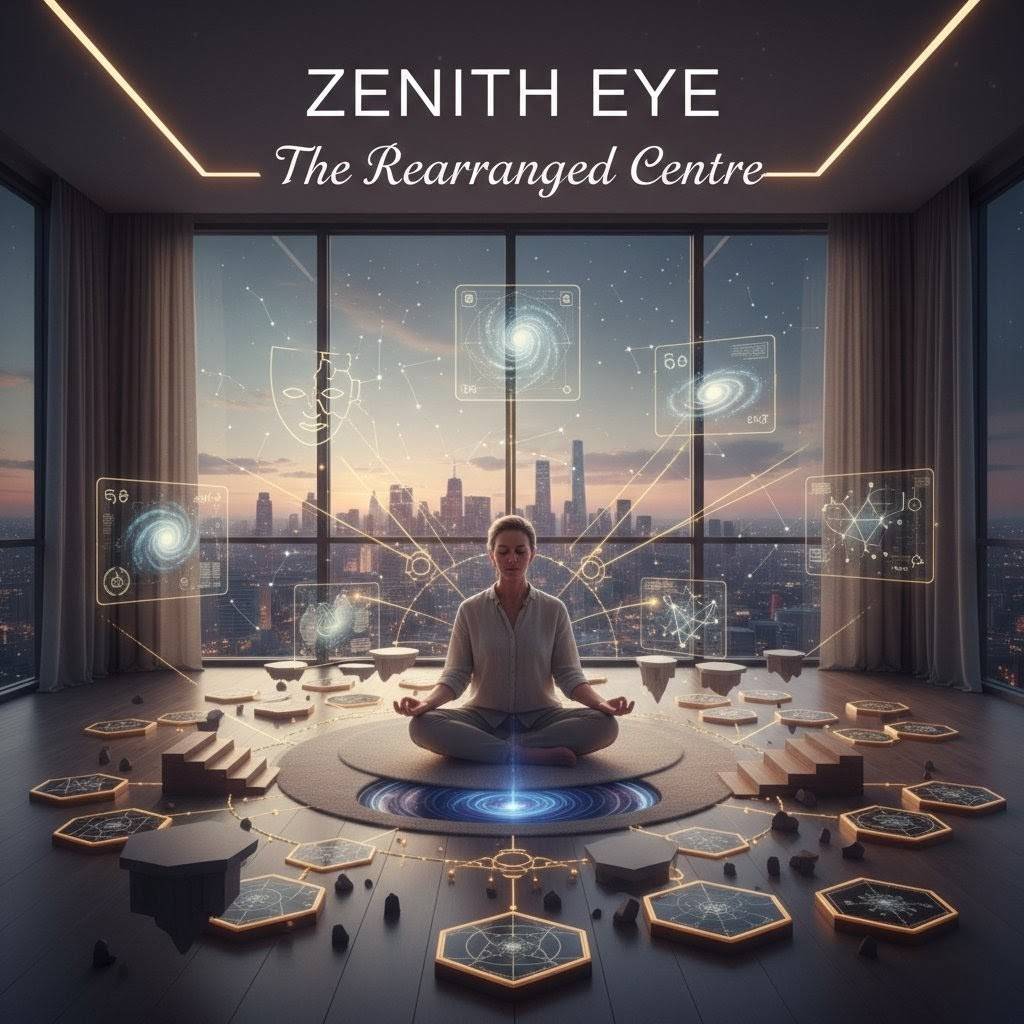
Table of Contents
- The Return and Its Discontents
- The Three Failures of Integration
- The Slow Reconstitution
- The Continuation of Practice
- The Final Invisibility
- Frequently Asked Questions
- Further Reading
- References and Sources
The Return and Its Discontents
You do not come back unchanged. You do not come back improved. You come back rearranged. The priorities that organised your existence–security, status, acquisition, reputation–have not been rejected. They have been defanged. They continue to operate, but they no longer compel. You can engage them or not. This sounds like freedom. It is also terrifying.
The return is not a homecoming. It is a relocation. The coordinates of meaning have shifted, but the geography of daily life remains identical. You must now navigate a world that has not changed using a compass that no longer points north. The disorientation is structural, not situational. It does not resolve with time because it is not a problem to be solved. It is a condition to be inhabited.

The Functional Complication
The body continues its requirements. Food. Shelter. Income. The transformation does not exempt you from these; it complicates them. The path that once provided meaning now provides only money. You continue because stopping would create problems you are not prepared to solve, not because the career itself matters. This is not depression; it is the presence of meaning elsewhere, in a domain the career cannot access.
The complication extends to every functional domain. Decisions that once required agonising deliberation now resolve themselves with disturbing clarity–not because the answers are simpler, but because the stakes have been renegotiated. What mattered desperately now matters moderately. What was invisible now dominates the field. The result is not inefficiency but a different kind of efficiency, one that the surrounding system may not recognise or reward.
Relational Restructuring
Connections formed on the basis of mutual need–emotional, social, economic–now feel thin. You no longer believe others have something you lack. The relationship must find a different basis or it will not survive the transition. This is not cruelty; it is structural mismatch. When the hunger that drove connection is satiated from within, the old contracts become unreadable.
Some relationships survive by transforming. Others dissolve because they cannot. The grief of these losses is real but peculiar: it is not the grief of rejection but the grief of translation. You are no longer speaking the same language, and no amount of goodwill can bridge a semantic divide. The kindness lies in releasing what cannot be maintained, not in pretending that the old terms still bind.
The Three Failures of Integration
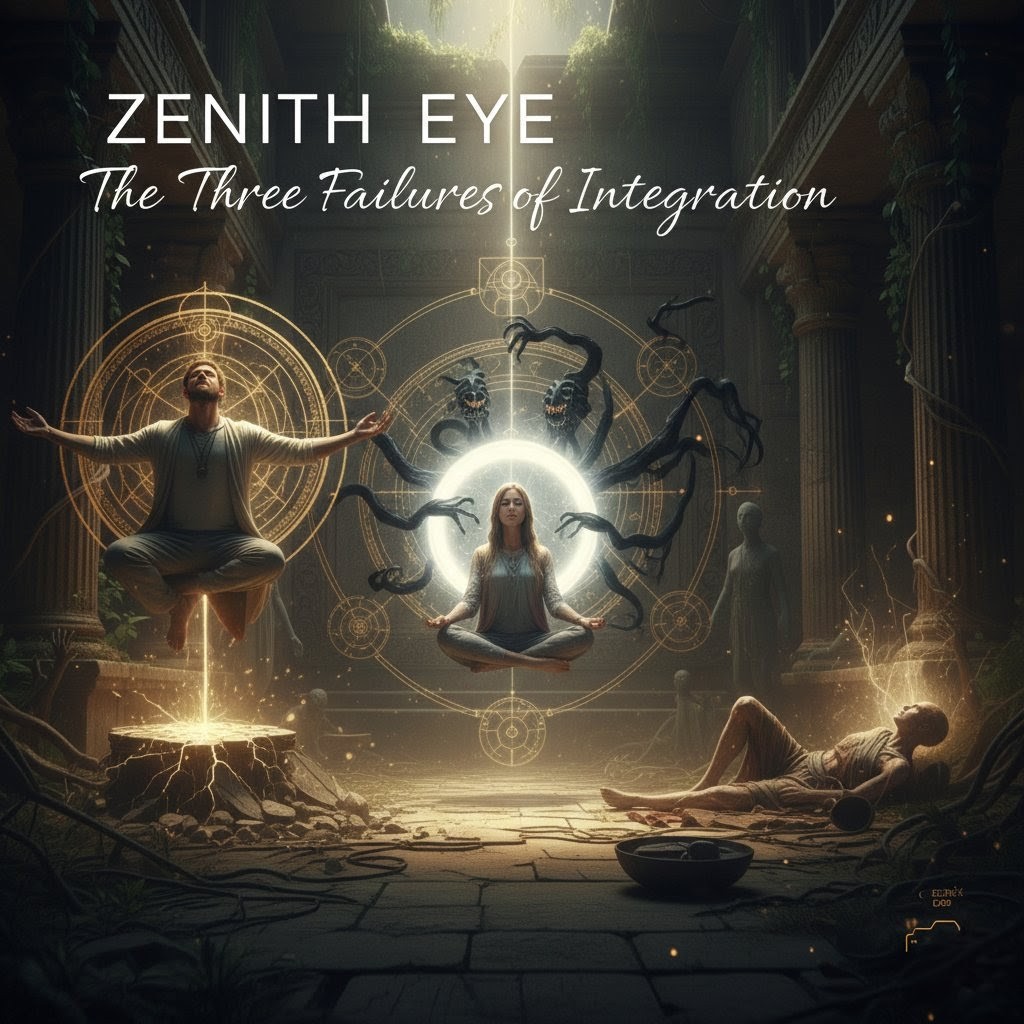
The transformation fails in predictable ways. Recognising them does not prevent them, but it may shorten their duration. These three failures–inflation, bypass, and abandonment–are not moral failings. They are structural vulnerabilities in the architecture of consciousness, well-documented across transpersonal psychology and contemplative traditions.
Spiritual Inflation
Description: The experience is interpreted as a personal attainment. The ego, rather than being dissolved by the encounter with the numinous, annexes it. The identity shifts from “seeker” to “finder,” from student to teacher, from ordinary person to chosen vessel.
Manifestation: The person becomes insufferable, using the vocabulary of transcendence to feed the ego. What was meant to dissolve the self becomes its new decoration. In Jungian terms, this is inflation–the expansion of the personality beyond its proper limits by identification with an archetype or the Self. Carl Jung warned that an inflated consciousness is “always egocentric and conscious of nothing but its own existence,” incapable of learning from the past or understanding contemporary events. The person may adopt titles, gather followers, or speak with unearned authority, all while remaining fundamentally untouched by the humility that genuine transformation demands.
Spiritual Bypass
Description: Using the experience to avoid unresolved psychological material. The transpersonal psychotherapist John Welwood, who coined the term spiritual bypassing, described it as the tendency to use spiritual ideas and practices to sidestep or avoid facing unresolved emotional issues, psychological wounds, and unfinished developmental tasks.
Manifestation: Trauma is declared “irrelevant” or “already healed by the light.” The “I” that claims to be beyond it is a facade, leading to profound instability. The bypasser becomes adept at spiritual language precisely because it substitutes for emotional literacy. When difficult feelings arise, they are met with mantras, metaphysical explanations, or premature forgiveness rather than the slower work of integration. The result is a person who appears enlightened but crumbles under relational pressure, whose equanimity is a performance rather than a capacity.
Abandonment of the Relative
Description: Dismissing the physical world as “mere illusion” or maya. The relative domain–bodies, relationships, responsibilities, the mess of incarnation–is treated as an obstacle to be transcended rather than the field in which transcendence must be embodied.
Manifestation: Neglect. The practitioner withdraws from work, family, and social obligations, claiming that worldly matters no longer concern them. This is not renunciation; it is dissociation wearing spiritual clothing. The body is starved, relationships are abandoned, and practical life collapses while the person maintains an internal narrative of advanced realisation. The traditions warn of this explicitly: the jivanmukta–the liberated person while living–continues to eat, work, and relate. Liberation is not exemption from life but the capacity to meet it without the contraction of self.

The Slow Reconstitution
If these failures are avoided–if the inflation is seen through, the bypass refused, and the relative embraced–what emerges is not dramatic. It is ordinary. The transformation does not make you special. It makes you available. The energy previously consumed by the maintenance of self–the narrative, the defence, the comparison–is now released.
The reconstitution takes years. Decades. There is no final state. The centre that was dissolved is not replaced by a new centre; it is replaced by process. You begin to recognise the self not as a thing, but as a function–a continuous arising in response to conditions. This is experienced as a profound relief. The burden of self-maintenance is substantial, and its weight is rarely recognised until it is removed.
You suffer without the additional suffering of why is this happening to me.
— The Slow Reconstitution
What remains is simply attention: the capacity to be present without the constant evaluation of “for me” or “against me.” The reconstitution is not linear. There are periods of clarity and periods of confusion, days when the old self reassembles with alarming competence and days when the new baseline feels like home. Over time, the ratio shifts. The old self becomes a costume worn for specific occasions rather than the permanent residence.

The Continuation of Practice
The experience does not end practice; it changes its character. Before, practice was a means to an end–a technique deployed to achieve a state, a method employed to reach a goal. After, practice is an expression of the system’s natural functioning. The meditation continues, but not to achieve. The study continues, but not to understand. The guide, if there was one, becomes a friend or fades away as the function of correction is internalised. The community becomes optional, and relationships continue on the basis of shared recognition rather than shared need.
This shift is disorienting for those who have structured their identity around practice. The spiritual athlete–the one who meditated longest, read most, sacrificed most–finds that the game has changed while they were still learning the rules. Achievement mentality, which served well in the preliminary stages, becomes the final obstacle. The practitioner must learn to practice without ambition, to sit without destination, to study without accumulation. This is harder than it sounds because the mind that has been trained to achieve does not willingly retire.
The Final Invisibility
The transformation, completed, is invisible. The person who has undergone it does not stand out. They may be more effective or more present, but there is no uniform presentation. The transformation does not produce a type; it produces individuals who no longer conform to type. They are not recognisable by dress, speech, or affiliation. They are recognisable, if at all, by a quality of attention–a way of being present that does not extract anything from the situation.
The question “Are you enlightened?” becomes unanswerable. Enlightenment is not a possession or an achievement. It is the recognition that there is no one to achieve it. This produces the end of identity production. The story of the person becomes thin. Optional. Sometimes useful, sometimes not. The biography that once required constant maintenance–the curriculum vitae of the self–is allowed to become threadbare. What remains is function without fiction, action without attribution.
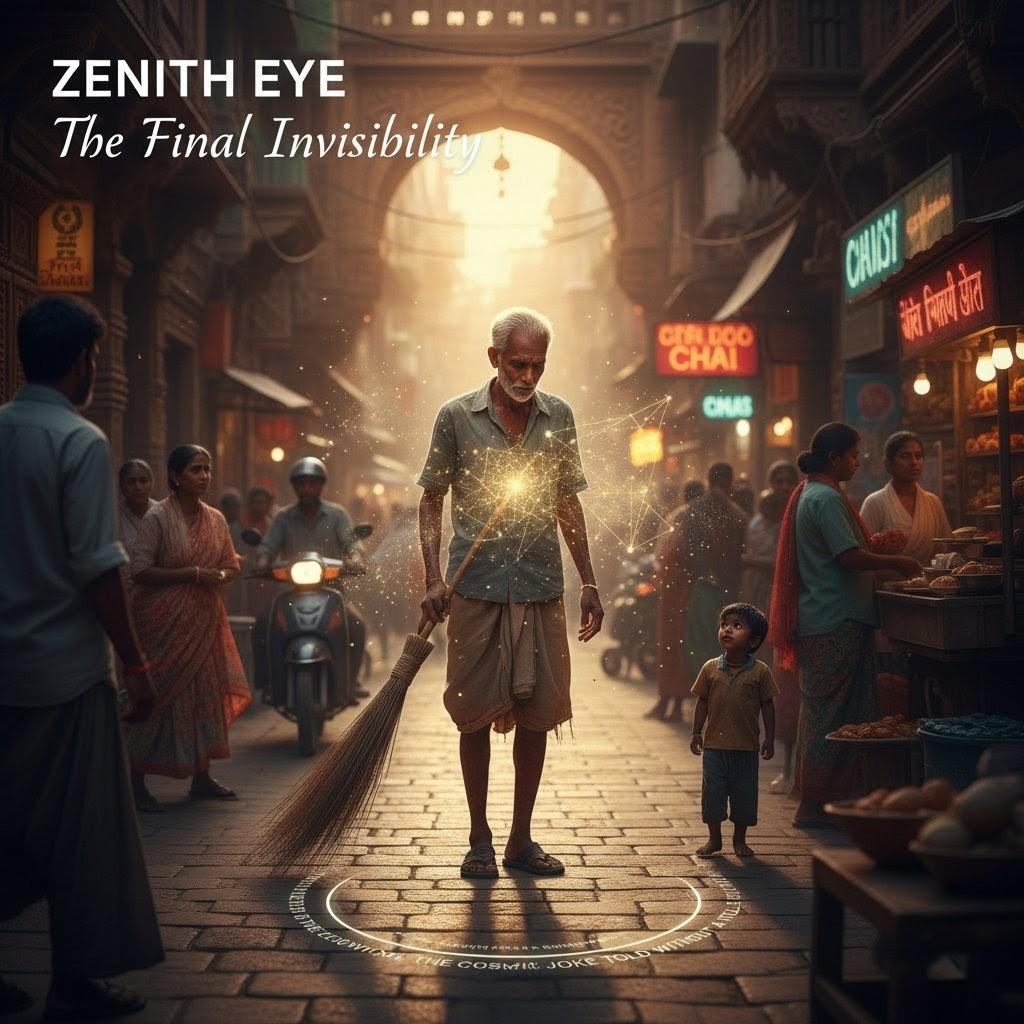
The thread continues. Not because it is transmitted. Because it is lived. The transformation is the side effect of no longer seeking goals. The life continues, lighter, unowned–the cosmic joke told without a teller. The rest is up to you. The living continues regardless.
The transformation, completed, is invisible. It produces individuals who no longer conform to type.
— The Final Invisibility
Continue Through The Thread
This article is one node in a wider route through ZenithEye’s living archive. If you want the larger map, continue through these reader paths.
- Start Here: A Reader’s Guide to ZenithEye — the clearest first route through the archive.
- The Thread and Five Pillars — the main map for hidden systems, sources, states and practice.
- Editorial Principles — how ZenithEye handles sources, interpretation, experience and symbolic reading.
- Browse All Articles — the full archive by discovery and date.
Frequently Asked Questions
What is the difference between a mystical experience and transformation?
The mystical experience is the event–the breakthrough, awakening, or moment of recognition. Transformation is what happens after, when the experience has ended and you must return to ordinary functioning. The experience is temporary; the transformation is the gradual, often years-long reconstitution of a life around a different axis of meaning. Most traditions agree that the experience is the beginning, not the end.
What is spiritual inflation and how does it happen after awakening?
Spiritual inflation is the ego’s annexation of the transcendent experience. Rather than being dissolved by the encounter with the numinous, the personality expands to claim it as a personal attainment. The identity shifts from seeker to finder, often producing grandiosity, unearned authority, and the use of spiritual vocabulary to feed the ego. Carl Jung identified inflation as identification with an archetype or the Self, producing an exaggerated sense of self-importance that is usually compensated by unconscious feelings of inferiority.
What is spiritual bypassing in the context of post-awakening integration?
Spiritual bypassing, a term coined by transpersonal psychotherapist John Welwood, is the tendency to use spiritual ideas and practices to sidestep unresolved emotional issues, psychological wounds, and unfinished developmental tasks. After awakening, it manifests as declaring trauma irrelevant, using mantras or metaphysical explanations to avoid difficult feelings, and maintaining a facade of equanimity that crumbles under relational pressure.
How long does post-mystical integration take?
There is no fixed timeline. Practitioners across contemplative traditions report that genuine integration takes years or decades, not weeks or months. The reconstitution is not linear; it involves periods of clarity and confusion, days when the old self reassembles with alarming competence and days when the new baseline feels stable. The process continues for the remainder of the lifetime, as the transformation becomes increasingly ordinary and invisible.
Why do relationships change after spiritual transformation?
Relationships formed on the basis of mutual need–emotional, social, or economic–often feel thin after transformation because the hunger that drove connection has been satiated from within. The relationship must find a new basis, typically shared recognition rather than shared need, or it will not survive the transition. This is structural mismatch, not personal rejection. Some relationships transform; others dissolve because the old contracts have become unreadable.
Does spiritual practice continue after awakening?
Yes, but its character changes fundamentally. Before awakening, practice is typically a means to an end–a technique deployed to achieve a state. After awakening, practice becomes an expression of the system’s natural functioning. Meditation continues, but not to achieve. Study continues, but not to understand. The spiritual athlete must learn to practice without ambition, to sit without destination, and to study without accumulation.
How can you recognise someone who has genuinely integrated a mystical experience?
Genuine integration tends toward invisibility. The person does not stand out by dress, speech, or affiliation. They are recognisable, if at all, by a quality of attention–a way of being present that does not extract anything from the situation. There is no uniform presentation. The transformation produces individuals who no longer conform to type, who have ceased the constant production of identity, and who can meet life without the contraction of self.
Further Reading
- Spiritual Inflation: How to Recognise It in Yourself Before It Destroys You — The trap of claiming transcendence as achievement, and how to deflate before the cosmos does it for you.
- Against Spiritual Bypassing: The Refusal to Feel — Why using spirituality to avoid psychological material is not liberation but deferred collapse.
- Integration Practices: What to Do After the Peak Experience — Stabilising, grounding, and embodying recognition in the weeks and months following breakthrough.
- The Ordinary Saint: Invisibility as Completion — When transformation becomes ordinary function and the specialness dissolves into availability.
- The Stages of Integration: Immediate, Short-Term & Long-Term — The realistic timeline of transformation across hours, months, and years.
- Return to Ordinary Life After Awakening: Navigating the Post-Experience Terrain — Practical guidance for functioning in the world when the centre has shifted.
- Embodiment Practices for Grounding Awakening: Why Spirituality Needs a Body — Essential somatic stabilisation for preventing the abandonment of the relative.
- Psychosis and Mysticism: Shared Territory, Divergent Paths — Clinical and contemplative perspectives on distinguishing breakthrough from breakdown.
- The Dark Night: Depression or Transformation? — Recognising the difference between pathological depression and the necessary dissolution of the old self.
- Community in Integration: Solitary vs. Supported Paths — Whether to walk the return alone or with others, and how to recognise genuine community.
References and Sources
The following sources are grouped by discipline for readers who wish to explore post-mystical integration across multiple frameworks.
Transpersonal Psychology and Integration Studies
- Welwood, J. (2000). Toward a Psychology of Awakening: Buddhism, Psychotherapy, and the Path of Personal and Spiritual Transformation. Shambhala. Coined the term “spiritual bypassing” and established the framework for integrating Western psychology with Eastern contemplative practice.
- Grof, S. and Grof, C. (eds.). (1989). Spiritual Emergency: When Personal Transformation Becomes a Crisis. Tarcher. Comprehensive framework for understanding the risks and potentials of non-ordinary states.
- Assagioli, R. (1965). Psychosynthesis: A Manual of Principles and Techniques. Hobbs, Dorman. On the stages of personal and spiritual development including disintegration and reintegration.
Jungian Psychology
- Jung, C. G. (1934-1939/1963). “The Relations between the Ego and the Unconscious.” In Collected Works, Vol. 7. Princeton University Press. On inflation as identification with archetypes and the Self.
- Jung, C. G. (1952). “Answer to Job.” In Collected Works, Vol. 11. Princeton University Press. On the dangers of unearned identification with the numinous.
- Sharp, D. (1991). Jung Lexicon: A Primer of Terms & Concepts. Inner City Books. Reference work on Jungian terminology including inflation, individuation, and the Self.
Contemplative and Mystical Traditions
- St. John of the Cross. (16th c.). The Dark Night of the Soul. On the necessary purification after initial spiritual experiences.
- Meister Eckhart. (13th-14th c.). Sermons on Gelassenheit (releasement) and the divine ground. On the dissolution of the will and the return to ordinary function.
- Ramana Maharshi. (20th c.). Talks with Sri Ramana Maharshi. On self-inquiry, the “I”-thought, and the natural state after recognition.
- Longchenpa. (14th c.). The Precious Treasury of the Basic Space of Phenomena (Choying Dzod). On the ground (gzhi) as spontaneous presence beyond attainment.
Safety Notice: This article explores the psychological, relational, and existential challenges that can follow mystical or non-ordinary experiences. It does not constitute medical, psychological, or spiritual instruction. If you are experiencing persistent depersonalisation, derealisation, inability to function in daily life, suicidal ideation, or relational breakdown following a peak experience, please contact a trauma-informed therapist, a transpersonal psychologist, or your general practitioner. Integration is a genuine and often difficult process; professional support can be essential. Spiritual practice complements but does not replace clinical mental health treatment.