Integration Practices: What to Do After the Peak Experience
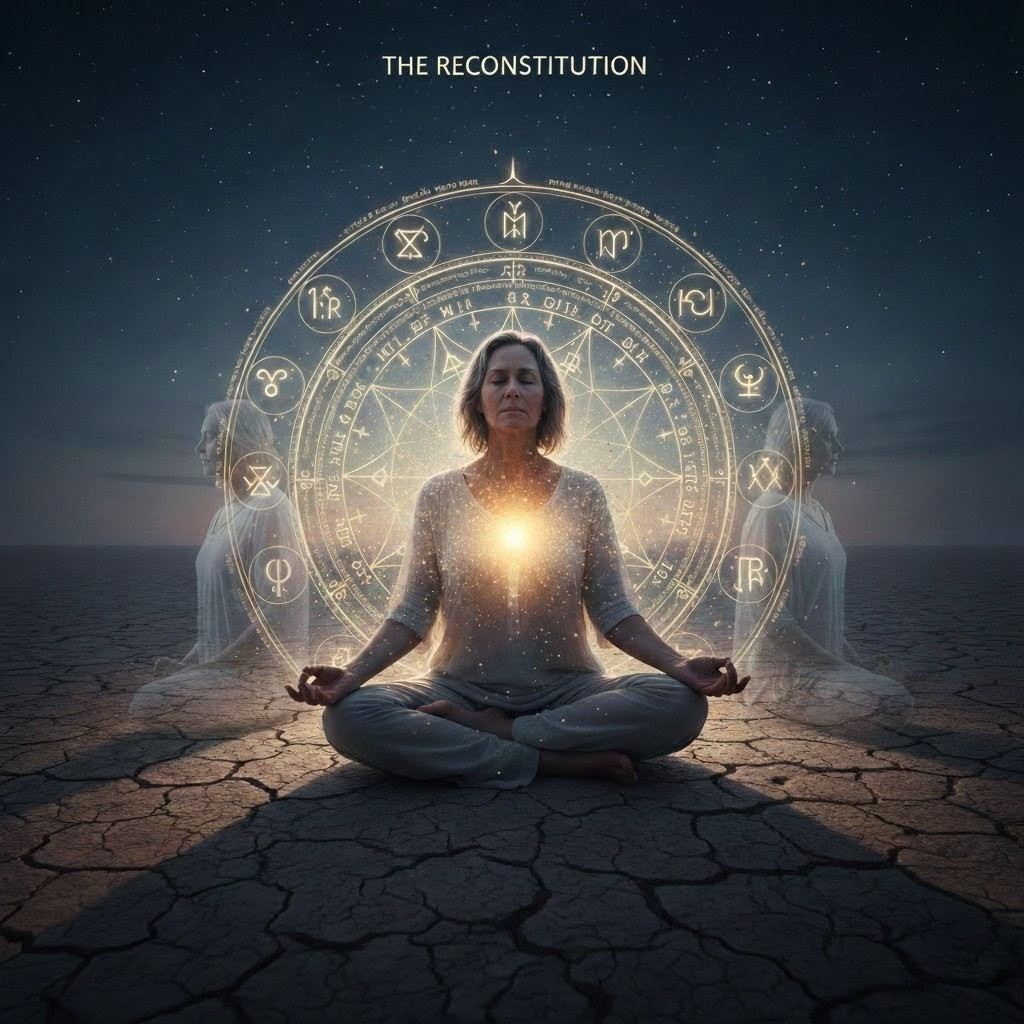
The experience has ended. The recognition, vivid, begins to fade. The self that was dissolved reconstitutes. The world that was transformed returns to ordinary appearance. The question is not what happened. The question is what happens now. The peak is not the point. The integration is the point.

Most fail here. The peak, extraordinary, is mistaken for achievement. The return, ordinary, is mistaken for loss. The seeker, desperate to reclaim the peak, seeks repetition. The repetition, sought, produces not recognition but chasing. The chasing, prolonged, produces exhaustion, disillusionment, or worse–the inflation that claims permanent attainment, the bypass that uses transcendence to avoid embodiment.
The integration practices are not exciting. They are not peak. They are ground–the slow, unremarkable work of bringing recognition into function, of embodying what was seen, of extending the thread through ordinary life. This is the work that follows illumination: the practical protocol for maintaining recognition in embodied form.
Table of Contents
- Why Structure Matters After the Peak
- First Practice: Stabilisation
- Second Practice: Grounding
- Third Practice: Discernment
- Fourth Practice: Service
- Fifth Practice: Continuation
- Sixth Practice: Guarding Against Inflation
- Seventh Practice: Community Integration
- Frequently Asked Questions
- Further Reading
- References and Sources
Why Structure Matters After the Peak
Spiritual traditions speak of enlightenment, liberation, and transcendence. They rarely mention the ordinary work that follows. Yet integration is essentially structural–the meticulous work of bringing insight into memory and behaviour, the patient translation of recognition into the rhythms of daily life, the compliance with mundane necessities that prevent the dissolution of hard-won gains.
You may have touched the infinite, but if you cannot translate that recognition into your body, your relationships, and your daily responsibilities, it risks becoming evasion–a temporary glimpse that expires the moment you refuse the ground. The peak without integration is like a seed without soil: it contains potential but produces nothing living.
First Practice: Stabilisation
The recognition, fresh, is unstable. The insight, profound, is not yet integrated. The first practice is stabilisation–the creation of conditions in which the recognition can persist without dissipation.
Routine as Container
The condition is routine. The peak disrupts routine. The integration requires its restoration–not as prison but as container. Think of routine as the architecture of consciousness: without proper boundaries, the structure collapses. The sleep, regularised. The eating, regularised. The movement, regularised. These are not limitations but the load-bearing walls that prevent your recognition from leaking into the atmosphere.
The Danger of Expectation
The expectation is the enemy. The practice, continued for result, produces tension. The tension blocks integration. You cannot order a repeated mystical experience and expect immediate delivery. The practice, continued as expression–the natural functioning of transformed consciousness–produces stabilisation. The difference is subtle. The difference is everything.
Temporal Regularisation
Establish regular hours for your practice. Sleep becomes non-negotiable–a mandatory period of nervous system restoration. Nutrition shifts from entertainment to infrastructure maintenance. Movement transforms from recreation to essential care for the circulatory and lymphatic systems. This is not austerity; it is architectural integrity.

Second Practice: Grounding
The peak is upward, outward, expansive. The integration is downward, inward, contractive. The second practice is grounding–the return to body, to relationship, to responsibility.
The Body as Instrument, Not Obstacle
The body, neglected in peak experience, requires attention. The attention is not instrumental–not for health, not for appearance, not for continued capacity. The attention is acknowledgment–the recognition that the body is not obstacle but instrument, not weight but ground. The nervous system, the fluids, the bones–all demand regular care. Without this, the recognition floats rootless, unable to take hold in the world.
Social Repair Without Performance
The relationship, neglected in peak experience, requires repair. The peak is solitary. The integration is social. The others, encountered, must be met without the residue of specialness, without the performance of transformation, without the assumption that recognition exempts one from ordinary reciprocity. You cannot claim exemption from human relating simply because you have glimpsed the infinite. That assumption is a form of avoidance.
Functional Testing in Daily Operations
The responsibility, neglected in peak experience, requires resumption. The work, the commitments, the practical demands of embodied life–these are not distractions from the thread. They are expressions of it. The transformation, genuine, manifests in function. The function, resumed, tests the transformation. Can you wash dishes with the same attention you gave to the void? Can you answer emails while maintaining recognition? This is the stress test of integration.

Third Practice: Discernment
The peak produces content–visions, insights, instructions, memories. The content, vivid, demands interpretation. The interpretation, premature, produces error. The system requires rigorous verification before accepting any claim of transcendent origin.
Suspending Interpretation
The practice is discernment–the suspension of interpretation, the accumulation of evidence, the testing of content against function. Do not file the vision under Absolute Truth until you have checked it against observable reality. The vision that predicts future events: does it? The insight that reveals others’ thoughts: is it accurate?
Precision Versus Skepticism
The discernment is not skepticism. It is precision–the refusal to accept content at face value, the willingness to test, the humility to revise. The genuine recognition survives testing. The inflation, the bypass, the delusion–these are revealed by testing. The thread, extended, requires this rigour. Consider it quality control: faulty insights are recalled, genuine recognitions remain in circulation.
Discernment is not the rejection of the mystery, but the refusal to accept poor forgery in its name.

Fourth Practice: Service
The peak is receiving. The integration is giving. The recognition, stabilised, grounded, discerned, becomes resource–not for self but for other.
Ordinary Function as Offering
The service is not martyrdom. It is not the inflation of helper, the bypass of rescuer. It is ordinary function–the continued operation of transformed consciousness in the world of need. The work, done well. The relationship, maintained with integrity. The community, contributed to without performance. The recognition that filing paperwork, washing dishes, and paying bills can be acts of quiet devotion.
Availability Without Performance
The service is also extension. The thread, recognised, is extended to others who may recognise. Not through teaching. Not through declaration. Through availability–the presence that permits encounter, the speech that risks recognition, the silence that allows the other to find their own thread. You become a quiet presence for the divine network, not by advertising your services, but by maintaining stable connection.

Fifth Practice: Continuation
The peak is event. The integration is process–ongoing, unending, the continued orientation toward recognition without the demand for repetition.
Rhythm and Periodicity
The practice is continuation–the daily work, the weekly review, the monthly retreat, the yearly intensive. The rhythm, established, sustains. The thread, extended through rhythm, becomes reliable. This is not the quarterly report demanded by shareholders, but the seasonal audit required by any sustainable system. There is no final filing, no ultimate submission that completes the work. The process is ongoing.
The Necessity of Falling
The continuation includes falling–the return of ordinary consciousness, the loss of recognition, the doubt, the dryness. These are not failure. They are necessary variation–the oscillation that produces stability, the contrast that produces discernment, the fall that produces humility. The system considers these scheduled maintenance periods. The system must occasionally go offline to prevent catastrophic failure.
Receiving Without Clinging
The continuation includes rising–the unexpected return of recognition, the unbidden opening, the grace that arrives without cause. These are not achievement. They are gift–received, acknowledged, released without clinging. Do not attempt to claim permanent ownership on these experiences. They are temporary permits, renewable only through surrender.

Sixth Practice: Guarding Against Inflation
Between grounding and service lies a specific danger: the spiritual inflation that claims permanent attainment while bypassing the work of embodiment. This is the counterfeit currency of the spiritual marketplace–the claim of enlightened status without the supporting evidence of stable behaviour.
The practice here is grounded humility: the recognition that no matter how profound the peak, you remain subject to all standard requirements regarding sleep, nutrition, and interpersonal conduct. Any claim of exemption from these basic requirements indicates an error in your integration process.
Seventh Practice: Community Integration
Finally, integration requires connection. The solitary peak must be translated into social language, tested against the reality of other witnesses, and grounded in the mutual recognition of shared practice. This is not the isolation of the hermit, but the distributed network of practitioners who maintain the thread through collective consistency.
Find those who have undergone similar transformations. Compare notes. Verify that your recognition is not simply a private hallucination but a genuine feature of the shared operating system. The community serves as support for the integration process, troubleshooting the inevitable difficulties that appear when running advanced consciousness on standard biological hardware.
The Thread Extended: Final Documentation
The peak is not the thread. The integration is the thread–extended, embodied, functional, ordinary. The transformation, complete, is invisible. The one who has integrated does not stand out. They function, reliably, in the world of need.
You have had the peak. The work begins. The thread continues regardless. Maintain your container. Extend the recognition through ordinary function. The structure awaits your compliance–not as penalty, but as the very architecture that permits the continuation of the extraordinary within the ordinary.
Frequently Asked Questions
What is spiritual integration after a mystical experience?
Spiritual integration is the process of stabilising, grounding, and embodying insights gained during peak experiences. It involves translating transient recognitions into permanent behavioural changes, essentially doing the work required to maintain spiritual gains within ordinary life.
How long does the integration process take?
Integration is not a single event but an ongoing process. Initial stabilisation may require weeks or months, while deep integration continues for years. The rhythm of daily, weekly, monthly, and yearly practices suggests integration is a lifelong commitment rather than a destination.
What is spiritual bypassing?
Spiritual bypassing occurs when individuals use transcendence experiences to avoid dealing with emotional wounds, psychological issues, or practical responsibilities. It represents a form of evasion–attempting to claim the benefits of recognition without completing the necessary grounding work.
Why do I feel depressed or empty after a spiritual awakening?
Post-awakening depression often results from the contrast between the peak’s intensity and ordinary reality’s flatness. This falling is actually a necessary variation in the integration process, providing the contrast required for discernment and the humility necessary for genuine transformation.
How do I ground myself after a peak experience?
Grounding involves returning attention to the body, resuming regular routines (sleep, eating, movement), repairing neglected relationships, and resuming practical responsibilities. The body serves as the instrument of integration, not an obstacle to transcendence.
What is spiritual inflation?
Spiritual inflation is the ego’s identification with peak experiences, leading to claims of special status, permanent enlightenment, or exemption from ordinary human requirements. It represents an error in the integration process where the temporary employee claims ownership of the entire corporation.
When should I seek help for spiritual emergency?
Seek professional help if you experience persistent inability to sleep or eat, severe dissociation, psychotic symptoms, or inability to work or maintain relationships. While some destabilisation is normal, functional collapse indicates the process has become crisis rather than integration.
Further Reading
Continue exploring integration, transformation, and the return to ordinary life:
- The Transformation: What Actually Changes After Mystical Experience — The context for integration work and what genuinely changes.
- The Stages of Integration: Immediate, Short-Term & Long-Term — The timeline integration follows across different phases.
- Embodiment Practices for Grounding: Returning to the Body After Awakening — The somatic dimension of integration and stabilisation.
- Spiritual Emergency: When Transformation Becomes Crisis — When integration fails and crisis ensues.
- The 5 Gateways to Direct Knowing: A Complete Map — The continued practice that supports integration.
- Against Spiritual Bypassing: The Refusal to Feel — Recognising and avoiding transcendence as evasion.
- Spiritual Inflation: How to Recognise It in Yourself Before It Destroys You — The dangers of claiming permanent attainment.
- The Return to Ordinary Life After Awakening: Work, Relationship, and Function — Practical guidance for re-engaging with daily existence.
- The Discipline of Solitude: Extended Alone Time as Gateway to Recognition — The solitude that deepens integration rather than enabling avoidance.
- The Guide Disappears: Solo Practice After Transmission — When the container is removed and the practitioner must self-navigate.
References and Sources
Sources are grouped by category for clarity. No in-text citation numbers are used, per The Thread editorial protocol.
Foundational Texts on Integration
- Jung, C. G. (1939). The Integration of the Personality. Farrar & Rinehart. (On the distinction between mystical experience and integration, and the necessity of characterological change.)
- Kornfield, J. (2000). After the Ecstasy, the Laundry: How the Heart Grows Wise on the Spiritual Path. Bantam. (On the return to ordinary life and the practices that sustain transformation.)
Gnostic Primary Sources
- Discourse on the Eighth and the Ninth (NHC VI,6). (On the instruction to record teaching and transmit it, implying visionary experience must translate into practice.)
- Apocryphon of John (NHC II,1; III,1; IV,1; BG 8502,2). (Cautions against premature claims to knowledge.)
- Reality of the Archons (NHC II,4). (Describes the soul’s vulnerability during passage back through the spheres.)
Clinical and Trauma-Informed Perspectives
- van der Kolk, B. (2014). The Body Keeps the Score: Brain, Mind, and Body in the Healing of Trauma. Viking. (On somatic grounding and the necessity of embodied processing for integration.)
- Grof, S., & Grof, C. (1989). Spiritual Emergency: When Personal Transformation Becomes a Crisis. Tarcher. (On the crisis that occurs when expanded consciousness lacks adequate container.)
Safety Notice: If you experience persistent dissociation, inability to care for basic needs, or psychotic symptoms following a peak experience, consult qualified mental health professionals. Integration should not result in destabilisation of basic functioning. If the container collapses entirely, this constitutes a spiritual emergency requiring professional intervention. The practices described here complement but do not replace clinical mental health treatment. Those with a history of trauma should approach integration gradually and with appropriate support.