
The Body as Salvation Hardware: Why Nervous System Regulation Is Replacing Meditation
There is a quiet coup occurring in the cathedral of consciousness. The disembodied, lotus-positioned mind, long the sovereign of spiritual practice, is being usurped by something older, more feral, and decidedly more damp: the wetware of your nervous system. Welcome to the age of embodied spirituality, where salvation is no longer sought in the rarefied heights of cognitive insight but in the mammalian mechanics of breath, tremor, and cold.
Table of Contents
- The Nervous System as Soul Architecture
- The “New Meditation”: Bottom-Up vs. Top-Down
- Ecstatic Shaking: The Biology of Dissolution
- Cold Water and the Trigeminal-Vagal Reflex
- When the Hardware Repairs the Software
- The Archonic Response: Why Culture Fears the Shake
- Frequently Asked Questions
- Further Reading
- References and Sources
The Nervous System as Soul Architecture
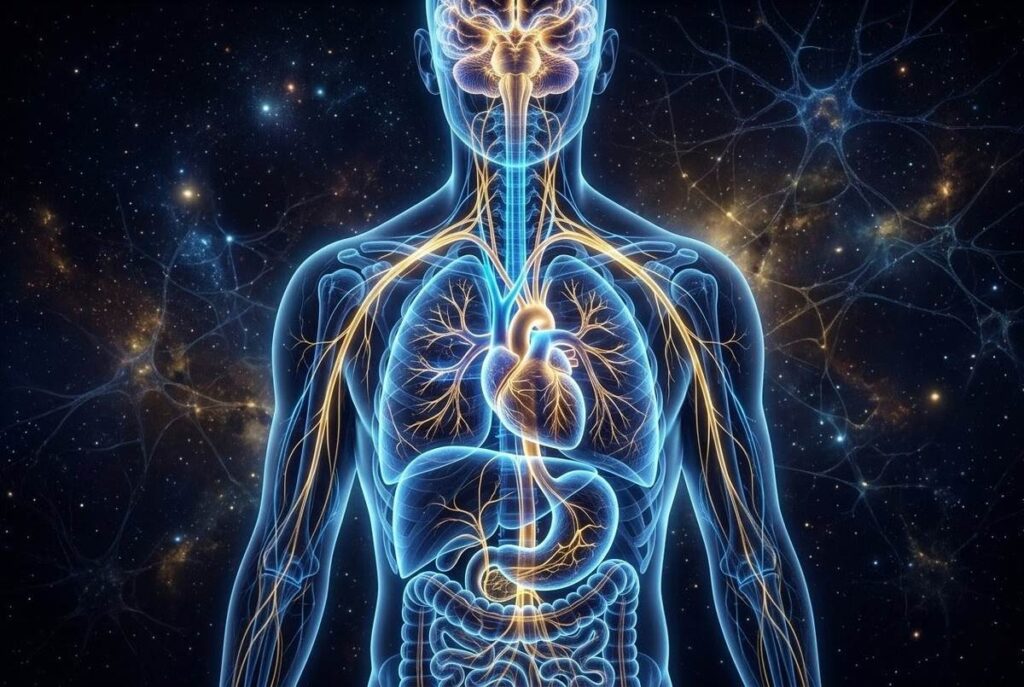
Stephen Porges’ Polyvagal Theory, developed over three decades of research and now the scaffolding for modern trauma therapy, reveals what the mystics intuited but lacked the instrumentation to prove: your autonomic nervous system is not merely a maintenance crew for organs, but the primary substrate of spiritual experience. The theory identifies three phylogenetic states of nervous system organisation: the ventral vagal (social engagement and safety), the sympathetic (fight-or-flight mobilisation), and the dorsal vagal (immobilisation and feigned death).
In Gnostic terms, these map with unsettling precision to the states of hylic (material), psychic (soul-bound), and pneumatic (spiritual) existence–only here, the demiurgic trap is not metaphysical but neurophysiological. When the dorsal vagal state dominates, you are not merely depressed; you are biochemically locked in a somatic crypt, the body preserving itself through shutdown while the mind spins elaborate theological justifications for its own vacancy.
Feelings of safety reflect a core fundamental process that has enabled humans to survive through the opportunistic features of trusting social engagements that have co-regulatory capacities to mitigate metabolically costly defense reactions.
Stephen Porges, Frontiers in Integrative Neuroscience (2022)
The “New Meditation”: Bottom-Up vs. Top-Down
Traditional contemplative practice operates top-down: the mind attempts to discipline the body through attentional control, mantra, or visualisation. It is, essentially, a bureaucratic procedure–consciousness filing forms with the limbic system, hoping for compliance. But when the nervous system is locked in sympathetic hyperarousal or dorsal collapse, top-down regulation is akin to shouting instructions at a server that has already overheated and shut down.
Nervous system regulation operates bottom-up: bypassing the prefrontal cortex entirely to communicate directly with the brainstem through somatic intervention. This is not meditation as we have known it. It is neurogenic engineering–using the body’s innate reflexes to hack the vagal brake and restore parasympathetic dominance. The FDA recognised the clinical validity of this approach in July 2005, approving vagus nerve stimulation (VNS) devices for treatment-resistant depression–a technological acknowledgment that the body, not the mind, holds the master keys to affective regulation.
The FDA’s Bottom-Up Endorsement
The FDA approval of VNS for chronic or recurrent depression (unipolar or bipolar) in patients who have not responded to four or more adequate antidepressant treatments represents a formal institutional recognition that affective disorders are not merely cognitive distortions but neurophysiological dysregulations. The VNS device stimulates vagal afferent fibres in the neck, carrying impulses to the brainstem to target the locus ceruleus and dorsal raphe nucleus–a bottom-up modulation of the neural circuitry of depression that bypasses the prefrontal cortex entirely. It is worth noting that the approval was not without controversy; the FDA’s own scientific review team rejected it unanimously three times, and the approval was ultimately granted by the director of devices over their objections, sparking a Senate Finance Committee investigation.

Ecstatic Shaking: The Biology of Dissolution
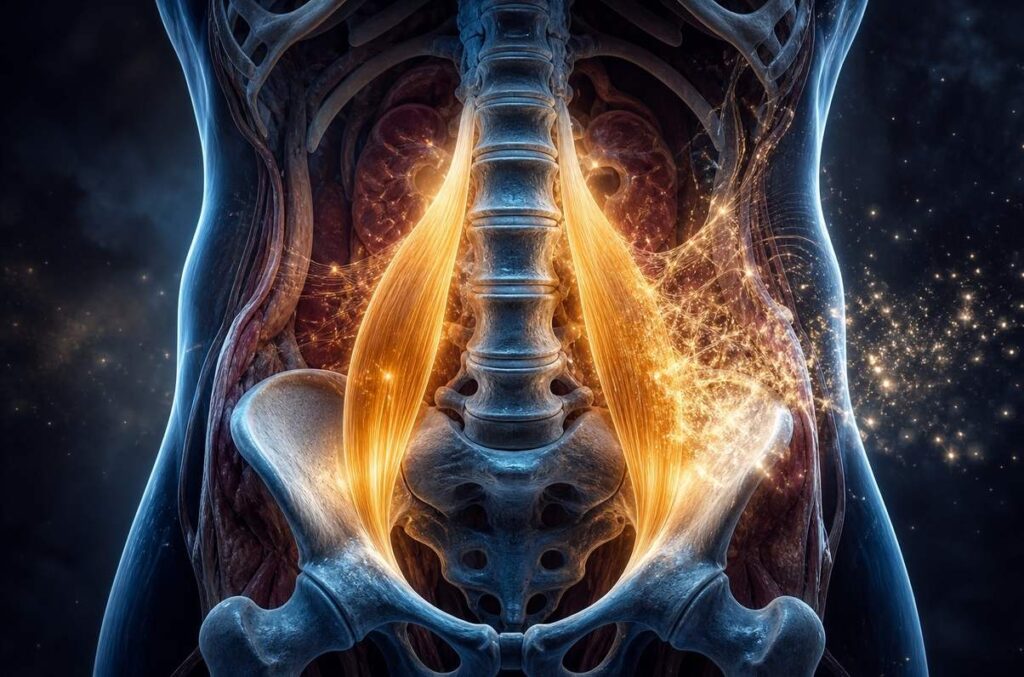
Dr. David Berceli, working in war zones from Sudan to Gaza, observed something that static yoga asana culture had forgotten: the body knows how to discharge trauma. His Tension & Trauma Releasing Exercises (TRE) activate the neurogenic tremor, a primitive reflex observed in all mammals after stress events, wherein the psoas muscle (the “fight-or-flight” muscle anchored to the lumbar spine) initiates involuntary shaking that travels through the organism like a wave, discharging sympathetic arousal patterns stored in the fascia.
This is not aesthetic movement. It is somatic exorcism. The Shakers–the United Society of Believers founded by Mother Ann Lee in the 18th century–knew this in their ecstatic worship. Their trembling and shaking, originally a spontaneous manifestation of spiritual purification, was understood as the Holy Spirit’s intervention but is now recognised as profound autonomic recalibration. The Shakers sang: “Come life, Shaker life, come life eternal. Shake, shake out of me all that is carnal.” They were, in essence, practising TRE two centuries before Berceli named it.
The Psoas as Repository of Ancestral Memory
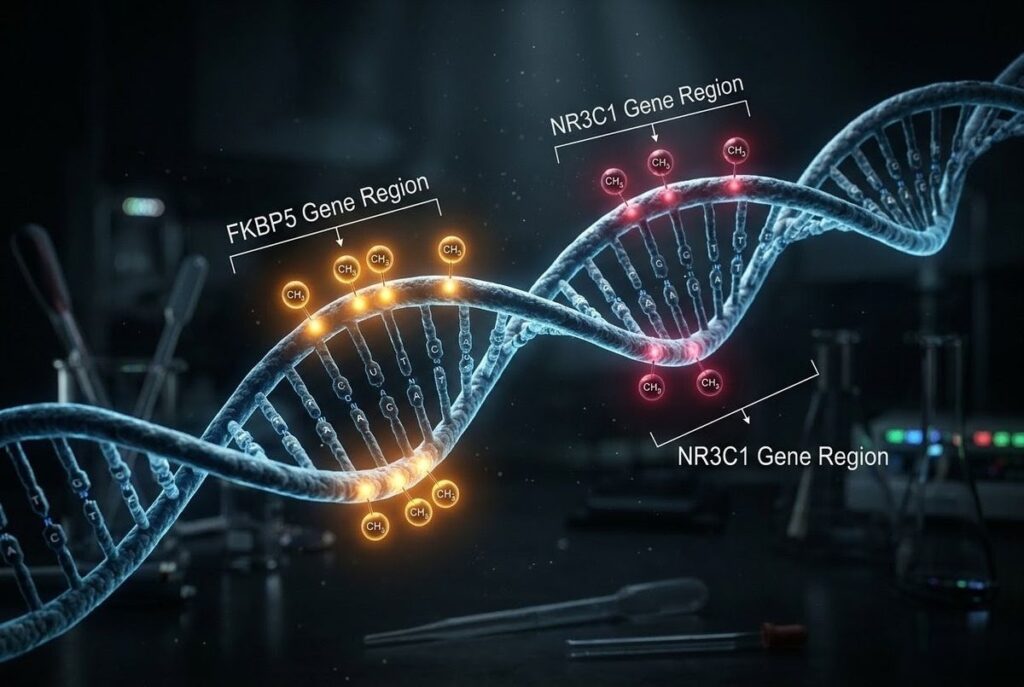
The psoas muscle–responsible for curling the body into the foetal protective position during threat–does not merely store personal trauma. Recent epigenetic research on Holocaust survivors reveals that trauma marks DNA through methylation patterns on stress-regulating genes, creating a transgenerational inheritance of hypervigilance. A 2025 study published in Scientific Reports examined 371 participants including 186 third- and fourth-generation descendants of Holocaust survivors. The findings revealed distinct DNA methylation patterns in FKBP5 and NR3C1 genes linked to increased HPA axis activation and more pronounced stress reactivity, alongside decreased methylation in oxytocin-related genes suggesting enhanced social bonding.
When you engage in ecstatic shaking, you are not only releasing your own accumulated sympathetic charge; you are potentially discharging the intergenerational stress encoded in your HPA axis since before your birth. The body becomes the site of ancestral redemption, shaking off the molecular echoes of survival-mode existence that no amount of cognitive therapy could reach.

Cold Water and the Trigeminal-Vagal Reflex
If shaking is the discharge, cold water is the emergency override. The mammalian diving reflex, triggered when cold water contacts the ophthalmic and maxillary branches of the trigeminal nerve (cranial nerve V), initiates an immediate, involuntary activation of the vagus nerve. This is not metaphor. Research using heart rate variability (HRV) monitoring demonstrates that cold face immersion produces bradycardia (heart slowing) and increased parasympathetic tone within seconds, regardless of conscious intent.
For those experiencing panic, dissociation, or sympathetic flooding (the “archonic grip” of anxiety), a 30-second cold water face immersion acts as a hard reset to the ventral vagal state. The cold stimulates the trigeminal-vagal reflex arc, forcing acetylcholine release onto the sinoatrial node and breaking the cycle of fight-or-flight through pure physiological intervention.
The Cholinergic Anti-Inflammatory Pathway
Beyond immediate calming, cold-induced vagal stimulation activates the cholinergic anti-inflammatory pathway (CAIP), a neural route whereby the vagus nerve inhibits pro-inflammatory cytokine release (TNF-alpha and IL-6) from macrophages. In an era where chronic neuroinflammation is linked to depression, Long COVID, and spiritual lethargy (the “hylic” state of dense materiality), cold water becomes liturgy–a physical sacrament that cleanses not through symbolism but through measurable cytokine suppression.
Kevin Tracey and colleagues first demonstrated this pathway in murine sepsis models, showing that vagal nerve stimulation could inhibit over-exuberant immune cell activation and reduce pro-inflammatory cytokine production. Clinical trials using neurostimulation devices to activate the efferent arm of the CAIP have already been reported in patients suffering from inflammatory bowel disease. The vagus nerve is not merely a parasympathetic highway; it is an immunological moderator, and cold water is one of the most accessible tools for activating it.
When the Hardware Repairs the Software
The shift from meditation to nervous system regulation represents a fundamental paradigm correction. For decades, spiritual practitioners attempted to think their way into embodiment, an ontological impossibility. The new understanding, grounded in polyvagal theory and somatic trauma research, recognises that consciousness is state-dependent. You cannot meditate effectively from a dorsal vagal shutdown state any more than you can update software on a device with a failing power supply.
This is not to dismiss contemplative practice, but to ground it. Nervous system regulation provides the neurophysiological platform–the ventral vagal safety–upon which genuine mystical insight can actually register. Without this foundation, meditation becomes dissociative escape; with it, meditation becomes the natural expression of a nervous system that has learned to toggle safely between states of engagement and transcendence.
The Safety-First Architecture of Spiritual Development
Porges’ research explicitly links feelings of safety to the neural circuits that support health, growth, and restoration. When humans feel safe, their nervous systems become accessible to others without expressing threat and vulnerability. This is the biological precondition for genuine spiritual community–not shared beliefs, but shared neurophysiological safety. The rituals associated with contemplative practices trigger physiological states that calm neural defence systems and promote feelings of safety that may lead to expressing and feeling compassion.
The implication is radical: spiritual community is not primarily an ideological project but a neurophysiological one. The sangha, the covenant, the fellowship–these are not merely social structures but co-regulatory containers that expand the window of tolerance within which spiritual insight can occur. When the nervous system is dysregulated, theology becomes defence; when the nervous system is regulated, theology becomes exploration.

The Archonic Response: Why Culture Fears the Shake
It is instructive that modern industrialised culture has pathologised shaking. We suppress trembling as “loss of control,” medicate anxiety rather than discharge it, and insist on the rigid posture of the productive worker. This is not accidental. A population capable of self-regulating its nervous system, capable of discharging trauma without pharmaceutical mediation or authoritarian permission, is a population difficult to govern through fear. The return of ecstatic shaking and cold water therapy represents not merely a wellness trend, but a somatic insurrection–the body reclaiming its evolutionary tools for autonomy from the structures that profit from our chronic dysregulation.
Safety Protocols for Somatic Liberation
While these practices are powerful, they are not without risk. Those with cardiovascular conditions, glaucoma, or severe dissociative disorders should consult medical professionals before engaging in cold water immersion or intensive trauma-release work. TRE should initially be practised under certified guidance (3-6 sessions) before becoming a self-practice. Cold water should be introduced gradually, beginning with facial splashing before progressing to full immersion. The goal is regulation, not heroic endurance.
It is equally important to recognise that somatic practices can trigger dissociation or emotional flooding if the nervous system is not ready. The window of tolerance–the range of arousal within which the nervous system can process experience without hyperactivation or shutdown–must be respected. Pushing beyond the window is not spiritual courage; it is retraumatisation. The wise practitioner moves at the pace of the nervous system, not the ego.
Read With Discernment
This article touches material where experience, interpretation and symbolic language can easily blur. Read slowly, compare sources, and keep your own discernment intact.
- Editorial Principles — how ZenithEye separates source, interpretation and lived experience.
- Start Here — the reader guide for the wider archive.
- States of Knowing — altered states, dreams, consciousness, perception and direct experience.
- The Transformation — integration, grounding, spiritual emergence and return to ordinary life.
Frequently Asked Questions
What is nervous system regulation?
Nervous system regulation refers to practices that directly influence the autonomic nervous system–particularly the vagus nerve–to shift the body from states of stress (fight-flight-freeze) into safety and social engagement. Unlike cognitive approaches, it works bottom-up through the body rather than top-down through the mind. Stephen Porges’ Polyvagal Theory provides the scientific framework, identifying ventral vagal (safety), sympathetic (mobilisation), and dorsal vagal (shutdown) as the three primary autonomic states.
How does polyvagal theory explain spiritual experiences?
Polyvagal Theory identifies three neural circuits: ventral vagal (safety and social engagement), sympathetic (fight-or-flight mobilisation), and dorsal vagal (immobilisation and shutdown). Spiritual practices aim to cultivate ventral vagal dominance, which supports the physiological safety necessary for mystical insight without dissociation. When the dorsal vagal state dominates, meditation becomes dissociative escape rather than genuine contemplative depth.
What is TRE (Tension and Trauma Releasing Exercises)?
Developed by Dr. David Berceli from his work in war zones, TRE is a body-based modality that activates neurogenic tremoring–involuntary shaking originating in the psoas muscle that discharges stored sympathetic arousal. It mimics the natural trauma-release mechanisms observed in all mammals after stress events. The practice should initially be learned under certified guidance (3-6 sessions) before becoming a self-practice.
Can trauma be inherited epigenetically?
Yes. Research on Holocaust survivors demonstrates that trauma alters DNA methylation patterns on stress-regulating genes (FKBP5, NR3C1, CRH, CRHBP), creating transgenerational transmission of hypervigilance. A 2025 study of 371 participants found that third- and fourth-generation descendants showed distinct HPA axis methylation patterns linked to increased stress reactivity, alongside enhanced oxytocin system activation suggesting greater social bonding capacity.
Why is cold water good for anxiety?
Cold water immersion triggers the mammalian diving reflex, stimulating the trigeminal nerve (cranial nerve V) and activating the vagus nerve. This induces immediate parasympathetic dominance–bradycardia (heart slowing) and reduced sympathetic tone–within seconds, regardless of conscious intent. Additionally, cold-induced vagal stimulation activates the cholinergic anti-inflammatory pathway (CAIP), reducing pro-inflammatory cytokines (TNF-alpha, IL-6) linked to depression and neuroinflammation.
Is nervous system regulation better than meditation?
Not necessarily better, but different and often prerequisite. For those with trauma or chronic stress, top-down meditation may fail if the nervous system is stuck in dorsal vagal shutdown or sympathetic hyperarousal. Bottom-up regulation creates the physiological foundation that makes meditation effective rather than dissociative. Porges notes that mindfulness requires feeling safe; without safety, the nervous system remains evaluative and defensive, precluding genuine contemplative depth.
What are the risks of somatic trauma release?
Those with cardiovascular conditions, glaucoma, or severe dissociative disorders should consult medical professionals before cold water immersion or intensive trauma-release work. TRE should begin with certified guidance. Somatic practices can trigger dissociation or emotional flooding if the nervous system’s window of tolerance is exceeded. The goal is regulation, not heroic endurance. Pushing beyond the window is not spiritual courage; it is retraumatisation.
Further Reading
These links connect nervous system regulation to related resources within the ZenithEye library, offering context on embodiment, somatic awareness, breathwork, and the integration of trauma into spiritual practice.
- Embodiment Practices: Grounding the Awakening — Practical techniques for stabilising mystical insight through body-based methods that bridge the gap between peak experience and daily integration.
- The Gateway of Sensation: Body Scan and Somatic Awareness — Developing interoceptive awareness as the foundation for spiritual work, mapping the subtle territories of the felt sense.
- The Gateway of Movement: Walking Meditation and Circulation — Moving meditation practices that regulate the nervous system without the rigidity of static posture.
- Breathwork: Ancient Technology, Modern Application — Pranayama and modern respiratory physiology examined through the lens of polyvagal theory and autonomic regulation.
- Kundalini Phenomena and the Physiology of Awakening — Understanding energetic awakening through the nervous system lens, distinguishing sympathetic activation from genuine spiritual emergence.
- The Physiology of Mystical Experience: What Actually Changes in the Brain? — Neuroimaging studies of contemplative states and the measurable neurological correlates of non-ordinary consciousness.
- Integration of Shadow, Eros, and Trauma as Sacred Fuel — Working with difficult material somatically rather than bypassing through spiritual abstraction.
- Against Spiritual Bypassing: The Refusal to Feel — Why somatic work prevents the dissociative escape that often masquerades as spiritual progress.
- Shadow Work: The Alchemy of the Unconscious — Jungian approaches integrated with somatic awareness to address the split between body and psyche.
- Stages of Integration: Immediate, Short-Term, and Long-Term — Timeline and framework for incorporating somatic practices into a sustainable spiritual life.
References and Sources
The following sources support the claims and frameworks presented in this article. Primary neuroscientific and clinical references are grouped separately from historical and anthropological sources.
Neuroscience and Clinical Research
- Porges, S. W. (2022). Polyvagal Theory: A Science of Safety. Frontiers in Integrative Neuroscience, 16, 871227.
- Porges, S. W. (2011). The Polyvagal Theory: Neurophysiological Foundations of Emotions, Attachment, Communication, and Self-Regulation. W. W. Norton.
- Porges, S. W. (2021). Ancient Rituals, Contemplative Practices and Vagal Pathways. In J. Gordon-Lennox (Ed.), Coping Ritual in Fearful Times: An Unexplored Resource for Healing Trauma. Springer Nature.
- Berceli, D. (2008). The Revolutionary Trauma Release Process: Transcend Your Toughest Times. Namaste Publishing.
- Schechter, D. S., et al. (2025). From trauma to resilience: psychological and epigenetic adaptations in the third generation of holocaust survivors. Scientific Reports, 15, 105524. DOI: 10.1038/s41598-025-12085-5.
- Yehuda, R., et al. (2016). Holocaust exposure induced intergenerational effects on FKBP5 methylation. Biological Psychiatry, 80(5), 372-380.
- Tracey, K. J. (2002). The inflammatory reflex. Nature, 420(6917), 853-859.
- Pavlov, V. A., & Tracey, K. J. (2017). The vagus nerve and the inflammatory reflex–linking immunity and metabolism. Nature Reviews Endocrinology, 13(11), 660-669.
- Physiology, Diving Reflex. (2022). StatPearls [Internet]. Treasure Island (FL): StatPearls Publishing.
- Schaller, B., et al. (2015). The trigeminocardiac reflex–a comparison with the diving reflex in humans. PMC.
Historical and Anthropological Sources
- Andrews, E. D. (1953). The People Called Shakers: A Search for the Perfect Society. Oxford University Press.
- Patterson, D. W. (2000). The Shaker Spiritual. Princeton University Press.
- Stein, S. J. (1994). The Shaker Experience in America: A History of the United Society of Believers. Yale University Press.
- Chaumeil, J. P. (1992). Varieties of Amazonian Shamanism. Diogenes, 158, 101-113. (Yanomami shamanic practices)
Regulatory and Industry Sources
- U.S. Food and Drug Administration. (2005, July 15). PMA Supplement S050: VNS Therapy System for Depression. PMA Number P970003.
- George, M. S., et al. (2005). A one-year comparison of vagus nerve stimulation with treatment as usual for treatment-resistant depression. Biological Psychiatry, 58(5), 364-373.
Safety Notice: This article explores the physiological, neurological, and psychological dimensions of somatic trauma release, cold water therapy, and nervous system regulation. It does not constitute medical, psychological, or spiritual advice. If you have cardiovascular conditions, glaucoma, severe dissociative disorders, or are experiencing acute psychological distress, please consult a qualified medical professional or trauma-informed therapist before engaging in cold water immersion, TRE, or intensive somatic practices. These practices complement but do not replace clinical mental health treatment. TRE should initially be practised under certified guidance. Cold water should be introduced gradually. The goal is regulation, not heroic endurance.