
The Hilarity of Liberation: Cosmic Humour as Archonic Sabotage
They rarely tell you that awakening can be hilarious. Not always gentle, not always elegant, and not always suitable for a meditation-centre brochure. Sometimes it arrives as the sudden, undignified laughter of a prisoner who realises the cell door was never locked, the key was in his pocket, and the warden was mostly costume, paperwork, and borrowed authority.
This is Gnostic comedy: the recognition that the lower world is not only tragic, but absurd. The Demiurge mistakes partial knowledge for total authority. The archons posture as cosmic administrators while revealing, again and again, their dependence on fear, repetition, and theatrical seriousness. To laugh at them is not to deny suffering. It is to withdraw the glamour that makes false power appear inevitable.
The Nag Hammadi texts do not present liberation as solemnity alone. In the Second Treatise of the Great Seth, the Saviour laughs at the ignorance of those who think they have trapped him. Elsewhere, the revealer smiles, corrects, unsettles, and exposes the misunderstanding beneath worldly power. The joke is not cruelty. The joke is recognition: what claims to rule the soul cannot finally touch what belongs to the Fullness.
This article explores the theology, physiology, and practice of cosmic mirth. It moves from the laughing Saviour and the absurd Demiurge to laughter research, holy fools, spiritual bypassing, and the practical use of humour as a form of discernment. Liberation does not always arrive in white robes. Sometimes it kicks the door open wearing a jester’s cap.
In Plain Terms
Gnostic humour is the laughter that arises when false authority is seen through. The Demiurge is frightening while mistaken for ultimate reality. The archons are terrifying while mistaken for final powers. But once their ignorance is recognised, fear begins to loosen.
This does not mean suffering is unreal, trauma is funny, or oppressive systems are harmless. It means that laughter can become a form of spiritual perception. It punctures inflated authority, deflates spiritual ego, interrupts fear, and reminds the seeker that no lower power deserves worship.
Primary Sources and Traditions Discussed
- The Second Treatise of the Great Seth, a Nag Hammadi text where the Saviour laughs at the ignorance of the rulers who believe they have defeated him.
- The Apocryphon of John, with its myth of Yaldabaoth, the ignorant ruler who mistakes himself for the highest God.
- The Sophia myth, especially the strange comedy of a lower world generated through ignorance, error, and recovery.
- Holy fool traditions, including the Eastern Christian yurodivy and wider Christian “fools for Christ.”
- Laughter and health research, including studies on laughter, stress response, mood, cortisol, and laughter yoga.
- Spiritual bypassing, especially the danger of using humour to avoid grief, rage, trauma, or embodied integration.
How to Read This Article
Read the comic language symbolically, not carelessly. This article is not saying that pain is trivial or that laughter replaces therapy, justice, grief, or disciplined practice. It is saying that false authority depends on solemn hypnosis. When the spell breaks, laughter may be one of the first sounds freedom makes.
The distinction matters. Liberation-laughter includes the darkness and dethrones it. Bypass-laughter avoids the darkness and calls the avoidance wisdom. The first gives breath back to the body. The second paints a smile on the prison wall.
Table of Contents
- The Joke at the Heart of the Pleroma
- The Laughing Saviour in the Nag Hammadi Library
- The Bureaucratic Demiurge
- The Physiology of Cosmic Mirth
- The Comedic Frameworks
- Holy Fools and the Wisdom of Ridicule
- Practices of the Ridiculous
- The Shadow of the Grin
- The Gnostic Reading: Laughter as Archonic Sabotage
- Related Glossary Terms
- Read Next
- Frequently Asked Questions
- Further Reading
- References and Sources

The Joke at the Heart of the Pleroma
The Pleroma is not a comedy club. It is the divine Fullness, the realm beyond deficiency, imitation, and fractured knowing. Yet from the perspective of Fullness, the lower world’s claims to final authority become absurd. The joke is not that existence hurts. The joke is that the forces causing the hurt pretend to be ultimate.
Gnostic myth is full of terrible things: ignorance, exile, archons, counterfeit spirit, soul-forgetting, and the formation of a world that does not know its source. But it is also full of inversions. The rulers are not as wise as they claim. The world is not as final as it appears. The prisoner is not merely a prisoner. The divine spark is not a citizen of the prison.
Laughter appears when the structure is seen from above its own assumptions. What seemed absolute becomes local. What seemed invincible becomes theatrical. What seemed holy becomes administrative. What demanded worship becomes, on closer inspection, a frightened system defending its own partiality.
The Laughing Saviour in the Nag Hammadi Library
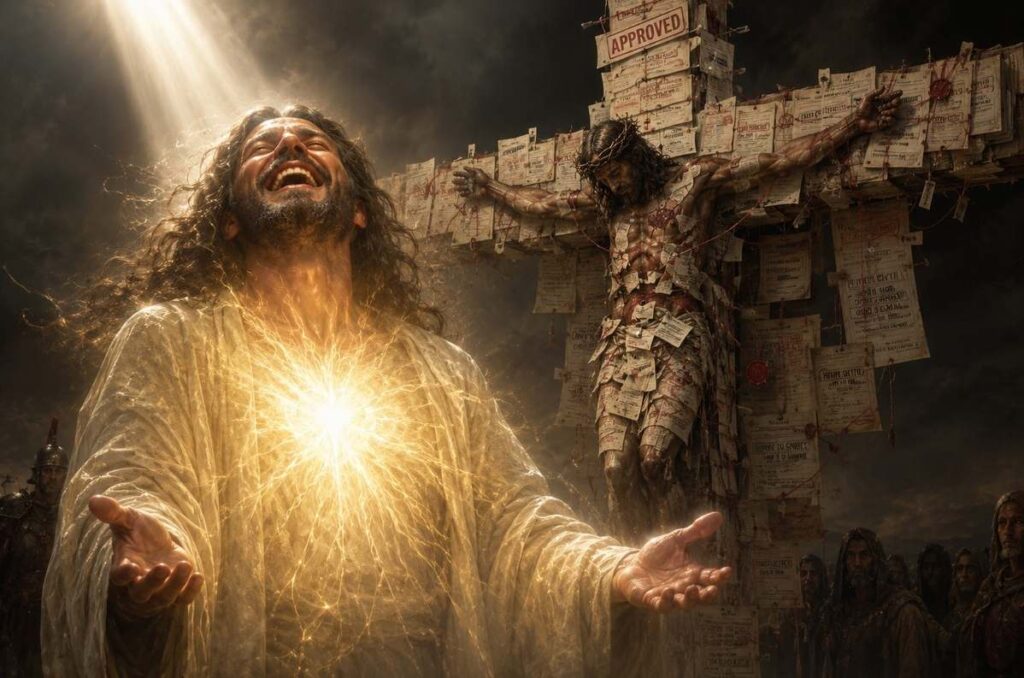
The most striking Gnostic laughter appears in the Second Treatise of the Great Seth. In this text, the Saviour describes the rulers as ignorant of what they are doing. They believe they have captured, humiliated, and destroyed him. From the higher perspective, however, they have mistaken appearance for reality. The Saviour laughs at their ignorance because they have not recognised what they were actually dealing with.
This is not ordinary mockery. It is metaphysical reversal. The cross, in this reading, becomes the place where worldly power exposes its blindness. The rulers think they have won because they can act upon bodies, names, offices, symbols, and public spectacle. The Saviour laughs because the deepest life was never within their jurisdiction.
This laughter belongs to the same family as the revealer’s smile in other Gnostic texts. The teacher sees the disciple’s terror, confusion, or literalism and responds from a position the disciple has not yet entered. The smile does not belittle the question. It loosens the frame in which the question has become frightening.
In this sense, Gnostic laughter is a pedagogy. It teaches by destabilising false seriousness. It tells the seeker: the trap is real at one level, but not ultimate. The pain is real at one level, but not final. The rulers can bruise the costume, but they cannot govern the source of light.
The Bureaucratic Demiurge
The Demiurge, especially under the name Yaldabaoth, is often portrayed as ignorant, arrogant, and mistaken about his own status. In some Gnostic myths, he declares himself the only God because he does not know what is above him. The terror of the figure lies in his power over the lower world. The comedy lies in the gap between that power and his self-understanding.
He is not absurd because he is harmless. Harm can be administered by incompetence as easily as by malice. Bureaucracies ruin lives every day without needing mythic horns. The Demiurge is absurd because he mistakes office for source, jurisdiction for truth, construction for creation, and management for divinity.
The archons share this flavour. They appear as rulers, gatekeepers, enforcers, and cosmic clerks. They demand recognition from beings they cannot truly understand. They police boundaries around a world they did not originate. Their power depends on the soul believing that their authority is deeper than it is.
To see the bureaucratic element in false power is spiritually useful. It reduces the aura. The empire becomes paperwork. The dragon becomes a filing cabinet with teeth. The cosmic tyrant becomes a middle-manager shouting at a printer. This does not make the world painless. It makes its false gods less impressive.
The Physiology of Cosmic Mirth
Laughter is not only an idea. It is a bodily event. Breath changes. The diaphragm moves. Facial muscles alter. The nervous system receives a different signal. The body, for a moment, stops bracing itself against the world and enters a rhythm of release.
Research on laughter and laughter-based interventions suggests that laughter can be associated with reductions in stress markers such as cortisol and with improvements in mood, stress, pain, and social bonding. The evidence is not a magic wand, and not every claim made for laughter therapy is equally strong. But the broad pattern is clear enough: laughter can shift the body out of rigid threat-posture and into a more flexible state.
Spiritually, this matters because fear is not only mental. It is somatic. The body can be trained into chronic contraction: shoulders lifted, jaw clenched, breath shallow, attention narrowed, imagination colonised by threat. If archontic systems operate through fear, vigilance, shame, and doom, laughter interrupts the circuit at the level of breath and muscle.
Laughter as Somatic Release
When recognition lands deeply, the body may laugh before the mind has finished explaining. This laughter says: the threat is no longer total. The spell has cracked. The monster was partly shadow, partly theatre, partly inherited fear wearing a mask.
This does not mean the body should be forced into laughter as a form of denial. Forced cheerfulness can become another prison. But intentional laughter, used gently, may help loosen the body’s alliance with fear. It offers the organism a rehearsal of release.
The old seriousness says, “This is terrible, and therefore ultimate.” Cosmic mirth says, “This may be terrible, but it is not ultimate.” That small distinction can move through the diaphragm like a secret jailbreak.
The Neurochemistry of Liberation, Carefully Stated
Laughter is often associated with endorphins, social bonding, stress reduction, and positive affect. Laughter yoga studies and laughter-therapy reviews suggest possible benefits for stress, anxiety, depression, burnout, and cortisol response in some contexts. These effects vary by person, study design, and setting, so they should be held as supportive evidence rather than a universal prescription.
The spiritual point does not depend on exaggerated medical claims. Laughter matters because it changes relationship. The person who can laugh at a fear is no longer fused with it in the same way. The person who can laugh at an inflated ego has already created space around it. The person who can laugh at false power has withdrawn a portion of consent.
The giggle is not trivial. It is not always liberation either. It is a signal, a doorway, a crack in the serious face of the world. Used wisely, it can help the nervous system remember that fear is not the only available posture.
The Comedic Frameworks
The Irony of the Ego
The ego takes itself with magnificent gravity. Its grievances, preferences, spiritual rank, wounds, resentments, autobiographical footnotes, and secret heroic scripts all gather like officials at a royal inquiry. Awakening often reveals the whole assembly as overstaffed.
This is not contempt for the human person. It is compassion with cleaner eyesight. The ego is not evil. It is a nervous little administrator trying to keep the organism safe, important, remembered, praised, justified, and defended. It deserves understanding, but not enthronement.
Comic recognition appears when the performance is seen as performance. The spiritual persona, the tragic protagonist, the misunderstood genius, the wounded chosen one, the secret messiah, the permanently persecuted truth-holder: each may contain a fragment of real pain or insight. But each becomes absurd when mistaken for the whole person.
The laughter is not mockery of suffering. It is release from over-identification. The actor is allowed to bow. The play may continue. But the theatre is no longer mistaken for the sky.
The Absurdity of Separation
Much spiritual seeking is built around the effort to find what has never truly been absent. The seeker searches for union while standing inside a reality already held by the source. The soul hunts for the light while carrying the spark. The person seeks permission to exist from powers that did not create them.
That is the old comedy of separation. Not because separation feels harmless, but because its final authority dissolves under recognition. The seeker and the sought are not two objects across a room. They are the drama of consciousness looking for itself through a maze of mirrors.
The Sophia myth carries this strange mixture of tragedy and comedy. Wisdom falls, wanders, suffers, and participates in the generation of a lower order. Yet the recovery is not the manufacture of something new. It is the restoration of relation to what was never truly destroyed. The exile discovers that the homeland was deeper than location.
The punchline is not “nothing matters.” The punchline is “what matters was never owned by the powers that frightened you.”
The Incompetence of False Authority
False authority often survives by appearing omniscient. It speaks in deep tones. It loves seals, titles, thresholds, prohibitions, inherited costumes, technical language, and procedural fog. It benefits when the soul assumes that complexity means wisdom.
Gnostic humour reverses the spell. It looks at the apparatus and asks: does this thing actually know what it claims to know? Does the ruler know the source? Does the gatekeeper know what lies beyond the gate? Does the system that judges the soul understand the soul?
In the Second Treatise of the Great Seth, the rulers are laughable because they misread the event in front of them. They act with confidence, but confidence is not knowledge. They enact power upon appearance while missing the reality that exceeds appearance.
This is still a useful diagnostic. Whenever a system demands total seriousness, total obedience, and total identification with its categories, a little laughter may be in order. Not flippancy. Not denial. A precise laugh. The kind that says: I see the costume.
Holy Fools and the Wisdom of Ridicule
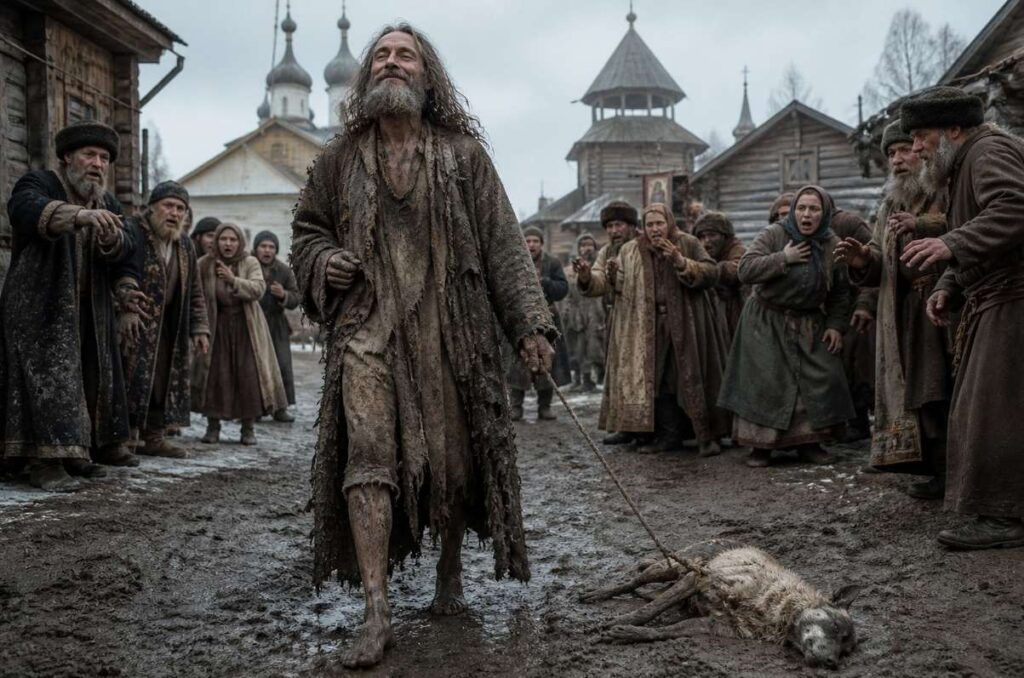
The holy fool appears across Christian and comparative religious history as a figure who breaks social expectation in order to expose deeper falsehood. The fool may act absurdly, speak in riddles, violate status codes, refuse respectable presentation, and confuse observers who cannot decide whether they are witnessing madness, sanctity, theatre, or prophecy.
This figure matters because false order depends on predictable behaviour. A society of well-managed egos knows how to rank people. The holy fool becomes unreadable. He steps outside the normal prestige economy and therefore becomes difficult to govern through praise, shame, reputation, or fear of embarrassment.
The Yurodivy of Russia
The Eastern Christian yurodivy, or fool for Christ, is one of the most vivid forms of this pattern. The holy fool may appear ragged, erratic, scandalous, or socially impossible, yet the tradition often treats this outward foolishness as a mask for spiritual freedom. Such figures can speak truths that respectable people cannot utter because they have already surrendered the currency of respectability.
Stories of figures such as Symeon of Emesa and Basil Fool for Christ show the same inversion again and again: the one who appears foolish sees more clearly than the respectable crowd. The holy fool is not merely eccentric. He is a living sabotage of the social spell. He reveals that consensus is not the same as truth.
The political function of the holy fool is especially important. A courtier flatters power because he needs position. A bureaucrat obeys power because he needs office. A holy fool can tell power that it is ridiculous because he has already stepped outside the ladder that power controls.
Folly for Christ in the West
The Western tradition also preserves holy folly. Saint Paul writes of being a “fool for Christ.” Saint Francis of Assisi unsettles ordinary values by embracing poverty, simplicity, and radical dependence. The Hebrew prophets use symbolic actions that shock the imagination: Isaiah walking naked and barefoot, Ezekiel staging siege and exile, Hosea turning domestic life into prophetic theatre.
These acts are not random eccentricity. They are strategic ruptures in perception. The audience expects piety to behave politely. The holy fool refuses. The audience expects wisdom to appear dignified. The holy fool scrambles the signal. The audience expects truth to ask permission from respectability. The holy fool laughs and walks straight through the room.
The Gnostic resonance is clear. The world takes its own stagecraft seriously. The holy fool declines the script. The laughing Saviour, the comic Demiurge, and the saint who wears foolishness as armour all enact the same reversal: what the world calls madness may be sanity refusing costume.
Practices of the Ridiculous
Humour can become practice when it is used with sincerity, timing, and discernment. It should not be used to mock pain, avoid responsibility, or escape emotional work. But used well, comic practice can deflate spiritual inflation, interrupt fear loops, and restore lightness where the ego has built a cathedral to its own importance.
Holy Fool Meditation
Sit quietly and notice the part of you that wants to be special, advanced, chosen, wounded beyond comparison, uniquely misunderstood, secretly superior, or cosmically promoted. Do not attack it. Let it speak. Let it become theatrical. Let it inflate until it becomes visible.
Then gently ask: who is performing this? What does this role protect? What fear sits behind the crown? The point is not to shame the ego, but to make its costume obvious enough that identification loosens.
When the practice works, laughter may appear by itself. Not because the ego is evil, but because its grandeur is so tenderly overproduced. The little administrator has been wearing a cosmic hat three sizes too large. Bless it, then remove the hat.
The Cosmic Stand-Up, Used Carefully
Some experiences can be reframed through humour once they have been sufficiently felt, processed, and integrated. The old embarrassment becomes a story. The once-fatal humiliation becomes human. The catastrophe becomes, not harmless, but narratable. The victim becomes the witness. The witness becomes the teller.
This must be handled carefully. Trauma should not be forced into comedy to prove spiritual advancement. If an experience still overwhelms the body, fragments memory, produces panic, or destabilises daily functioning, it needs care, not a punchline. Humour belongs after enough safety has returned for the psyche to breathe.
When used wisely, comic reframing does not deny the wound. It changes the wound’s ownership. The story no longer grips the throat in exactly the same way. The teller is not pretending nothing happened. The teller is discovering that something else is also true: the event did not get the final edit.
Silent Laughter and Hasya Yoga
Silent laughter is simple. Sit or stand. Let the face soften. Begin a gentle, soundless laugh from the diaphragm. Let the shoulders move. Let the breath pulse. Do not force intensity. Let the body remember the shape of laughter even if the mood has not yet caught up.
Modern laughter yoga, often called Hasya Yoga, was developed by Dr Madan Kataria in Mumbai in 1995. It combines intentional laughter with breathing, playfulness, movement, and group participation. Some research suggests laughter yoga may help reduce stress, burnout, anxiety, depression, or cortisol in certain settings, though results should be treated as supportive rather than absolute.
A Gnostic adaptation does not require a group, a uniform, or spiritual cheerleading. Five minutes of private, gentle laughter can become a small revolt against inner heaviness. Not happiness on command. Not denial. A rehearsal of freedom in the body.

The Shadow of the Grin
Humour has a shadow. The grin can liberate, but it can also conceal. It can puncture false authority, or it can help the ego avoid grief. It can restore breath, or it can become a mask for dissociation. Discernment is everything.
When Humour Becomes Bypass
Spiritual bypassing happens when spiritual language or practice is used to avoid emotional work. Humour can become part of that avoidance. A person laughs before they have felt. Jokes before they have grieved. Performs lightness before the body has found safety. The result is not freedom, but a decorated escape route.
Genuine liberation-laughter includes darkness without surrendering to it. Bypass-laughter refuses darkness and calls the refusal transcendence. The difference is usually felt in the body. Genuine laughter leaves warmth, breath, tenderness, or spaciousness. Bypass-laughter leaves a metallic edge, exhaustion, numbness, or the feeling that something important has been skipped.
The Gnostic does not avoid the underworld. The Gnostic walks through it with a torch and, when appropriate, a joke sharp enough to frighten the ghosts. The joke does not replace the torch. It keeps the hand from trembling.
When Laughter Becomes Unstable
There is also a difference between liberating laughter and destabilising laughter. If laughter becomes manic, compulsive, detached from context, aggressive, dissociative, or connected with sleep loss, paranoia, impulsive decisions, or loss of ordinary function, it should not be romanticised as awakening. It may be a sign that the nervous system needs support.
This is especially important after intense spiritual experiences, trauma release, psychedelic experiences, breathwork, grief, or prolonged stress. The body may discharge through laughter, shaking, crying, rage, silence, or collapse. Not every discharge is a problem, but not every discharge is integration either.
Wisdom knows when to laugh and when to call someone trustworthy. The holy fool is not the same as the unsupported breakdown. One is a mask used from freedom. The other may be a cry for containment.
The serious face is often the first archon. But the fake grin is its cousin. True laughter neither worships fear nor avoids feeling.
The Gnostic Reading: Laughter as Archonic Sabotage
Archonic power depends on misrecognition. It wants the soul to mistake the lower order for the whole order, the official voice for truth, the fear response for wisdom, the gatekeeper for God. Laughter interrupts this chain.
When the soul laughs at false authority, it does not necessarily escape the world at once. Bills remain. Bodies ache. History does not undo itself. But the energetic relation changes. The archon is no longer the weather. It becomes an object in the field. It can be noticed, named, questioned, and sometimes ridiculed.
This is why humour can be a form of sabotage. Not against truth, but against false seriousness. Not against compassion, but against theatrical domination. Not against grief, but against the belief that grief has the final word.
The joke at the heart of the Pleroma is not that the world is meaningless. It is that the world’s false rulers mistook borrowed light for ownership. They thought the spark was an inmate. It was a visitor. They thought the prison was ultimate. It was a temporary architecture. They thought fear would last forever. Then someone laughed.
Related Glossary Terms
For quick definitions, use the main ZenithEye Glossary. The key terms for this article are:
Read Next
Continue with: The Default Mode Network: Neuroscience of the Narrative Self
If this article explores the comedy of seeing through false seriousness, the next step is the structure of the self that takes the performance personally: the narrative mind, the default mode network, and the story of “me.”
Within The Thread
This article belongs to The Architecture of Perception, a layer of The Thread concerned with how reality is interpreted, filtered, narrated, and mistaken for the whole. Gnostic humour belongs here because it changes perception: the same power looks different once its costume is seen.
Frequently Asked Questions
Does Gnosticism have a sense of humour?
Yes. Some Gnostic texts use laughter, irony, reversal, and ridicule to expose the ignorance of lower powers. The clearest example is the Second Treatise of the Great Seth, where the Saviour laughs at the rulers who think they have defeated him. This laughter is not cruelty. It is recognition that worldly power has mistaken appearance for reality.
What does it mean to laugh at the Demiurge?
To laugh at the Demiurge is to recognise the absurdity of partial authority pretending to be ultimate reality. It does not mean denying suffering or pretending the lower world is harmless. It means seeing that false power depends on fear, mystique, and misrecognition. Laughter withdraws some of that consent.
Is laughter actually good for the body?
Research suggests that laughter and laughter-based interventions can support stress reduction, mood, social bonding, and in some studies reduced cortisol. The evidence should be held carefully, not exaggerated into a cure-all. Spiritually, the key point is that laughter can shift the body out of rigid threat posture and create space around fear.
What is a holy fool?
A holy fool is a religious figure who uses apparent foolishness, social disruption, or comic inversion to expose false values. In Eastern Christianity, the yurodivy or fool for Christ may appear mad, poor, scandalous, or ridiculous while functioning as a truth-teller outside normal status structures.
What is laughter yoga or Hasya Yoga?
Laughter yoga, also called Hasya Yoga, is a modern practice developed by Dr Madan Kataria in Mumbai in 1995. It combines intentional laughter with breathing, playfulness, and group participation. Some research suggests it may help with stress and mood in certain contexts, though it should not be treated as a replacement for medical or psychological care.
Can humour become spiritual bypassing?
Yes. Humour becomes spiritual bypassing when it is used to avoid grief, rage, trauma, responsibility, or embodied integration. Genuine liberation-laughter includes the darkness without being ruled by it. Bypass-laughter skips feeling and calls the avoidance freedom.
How can humour be used as spiritual practice?
Humour can be used to deflate spiritual inflation, expose false authority, interrupt fear loops, and restore bodily lightness. Helpful practices include noticing the absurdity of ego roles, using gentle comic reframing after emotional processing, and practising quiet diaphragmatic laughter. It should be used with care, especially around trauma or instability.
Further Reading
Deepen your exploration of Gnostic humour, integration, and spiritual discernment with these related ZenithEye articles:
- The Stages of Integration: Immediate, Short-Term & Long-Term After Awakening – The wider trajectory of post-awakening integration, including stabilisation, working through, and ripening.
- Integration and Grounding After Mystical Experience – Practical methods for embodying insight without floating away into performance or bypass.
- Shadow Work: Excavating the Repressed – How to include the darkness that genuine humour must face rather than avoid.
- Against Spiritual Bypassing: The Refusal to Feel – Why premature lightness can become another trap if it avoids emotional integration.
- Spiritual Inflation: How to Recognise It in Yourself Before It Destroys You – The grandiose ego that holy fool practice can help deflate.
- Self-Discovery and the Life Paradoxes – A broader meditation on contradiction, irony, and the strange architecture of inner discovery.
- Recognising Completion vs. Chasing Peaks – When the joke lands, the seeking relaxes, and ordinary life becomes enough.
- Spiritual Emergency: When Transformation Becomes Crisis – When laughter, intensity, or altered states become destabilising and need support.
- The Glitch in the Zenith: Recognising the Code of the Self – Cognitive frameworks for seeing through constructed identity without losing groundedness.
- The Default Mode Network: Neuroscience of the Narrative Self – The next layer of the self-story that takes itself so seriously.
References and Sources
The following sources informed the theological, physiological, psychological, and historical framework of this article.
Primary Sources and Critical Editions
- [1] Robinson, James M. (ed.). The Nag Hammadi Library in English. 3rd ed. HarperSanFrancisco, 1990.
- [2] Meyer, Marvin (ed.). The Nag Hammadi Scriptures: The International Edition. HarperOne, 2007.
- [3] Bullard, Roger A. and Joseph A. Gibbons (trans.). “The Second Treatise of the Great Seth.” In The Nag Hammadi Library in English.
- [4] Waldstein, Michael and Frederik Wisse (trans.). “The Apocryphon of John.” In The Nag Hammadi Library in English.
- [5] Turner, John D. Sethian Gnosticism and the Platonic Tradition. Presses de l’Université Laval, 2001.
Laughter, Stress, and Laughter Yoga
- [6] Kramer, C. K. and colleagues. “Laughter as Medicine: A Systematic Review and Meta-Analysis of Interventional Studies Evaluating the Impact of Spontaneous Laughter on Cortisol Levels.” PLOS ONE, 2023.
- [7] Erkin, Ö. and colleagues. “The Impact of Laughter Yoga as a Nursing Intervention Classification on Health Parameters in Nurses and Nursing Students: A Systematic Review.” BMC Complementary Medicine and Therapies, 2024.
- [8] Laughter Yoga International. “History of Laughter Yoga.” Official history of Dr Madan Kataria’s first laughter club in Mumbai, 1995.
- [9] U.S. Department of Veterans Affairs. “The Healing Benefits of Humor and Laughter.” Whole Health Library.
Holy Fools and Religious Folly
- [10] Ivanov, Sergey A. Holy Fools in Byzantium and Beyond. Oxford University Press, 2006.
- [11] Kobets, Svitlana. “Holy Foolishness in Russia: New Perspectives.” Slavic and East European Journal, 2000s scholarship on yurodstvo.
- [12] Saward, John. Perfect Fools: Folly for Christ’s Sake in Catholic and Orthodox Spirituality. Oxford University Press, 1980.
- [13] The Blackwell Dictionary of Eastern Christianity. Entry on fools for Christ and Eastern Orthodox holy folly.
Spiritual Bypassing and Integration
- [14] Welwood, John. “Principles of Inner Work: Psychological and Spiritual.” In Awakening the Heart, Shambhala, 1983/1984.
- [15] Welwood, John. Toward a Psychology of Awakening: Buddhism, Psychotherapy, and the Path of Personal and Spiritual Transformation. Shambhala, 2000.
- [16] Kornfield, Jack. After the Ecstasy, the Laundry: How the Heart Grows Wise on the Spiritual Path. Bantam, 2000.
- [17] Grof, Stanislav and Christina Grof (eds.). Spiritual Emergency: When Personal Transformation Becomes a Crisis. Tarcher, 1989.
- [18] van der Kolk, Bessel. The Body Keeps the Score: Brain, Mind, and Body in the Healing of Trauma. Viking, 2014.
Study and Safety Note
This article explores humour as a symbolic, contemplative, and embodied practice. It does not provide medical, psychological, trauma-treatment, or spiritual-direction advice. Laughter can support release, perspective, and resilience, but it should not be used to avoid grief, rage, trauma, relational repair, or clinical support.
If laughter becomes compulsive, manic, dissociative, aggressive, or connected with sleep loss, paranoia, impulsive decisions, or inability to function, seek support from a qualified mental health professional. If you are processing trauma, humour should complement, not replace, safe therapeutic support.