Psychosis and Mysticism: The Shared Territory & The Crucial Difference
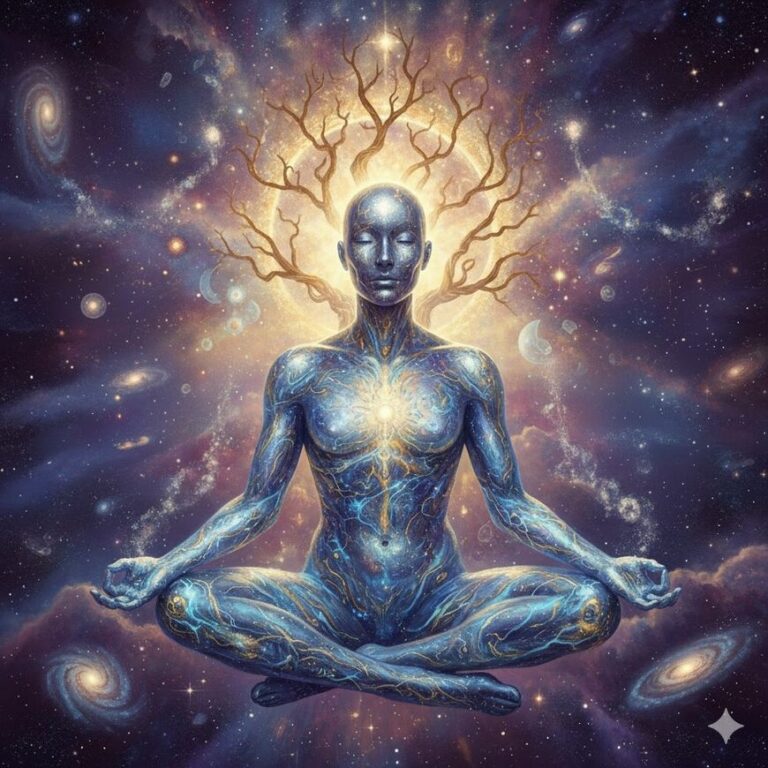
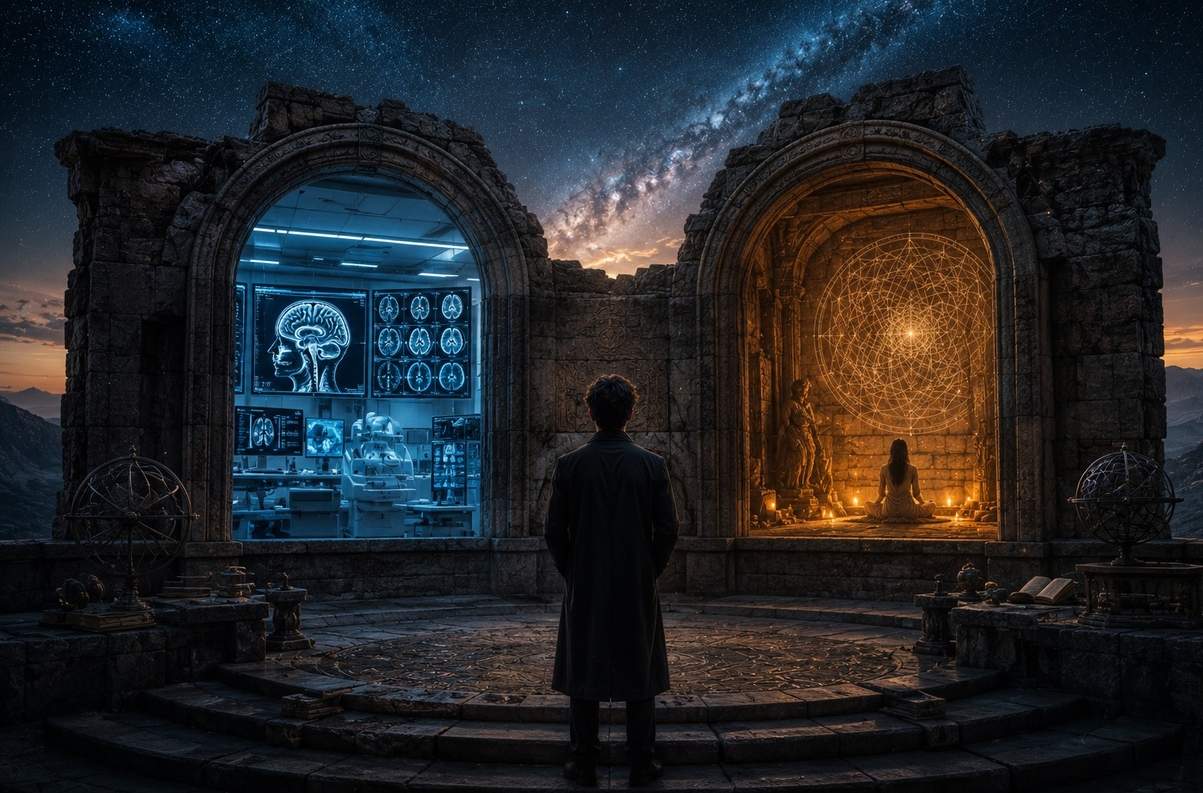
The experience arrives with identical force regardless of postal code. The dissolution of boundary. The influx of meaning. The sense of cosmic significance. The communication with non-ordinary entities. The revelation of hidden patterns. The urgency of transmission. The psychiatrist and the mystic look at the same phenomenon through different windows of the same observatory. One sees pathology. One sees breakthrough. The difference is not in the experience. It is in the integration.
This is the territory no one wants to map accurately. The psychiatric framework, protective and mechanistic, pathologises all non-ordinary experience as malfunction. The spiritual framework, romantic and uncritical, validates all non-ordinary experience as revelation. Both frameworks fail the practitioner. The psychotic, spiritualised, is denied necessary treatment and left to deteriorate in isolation. The mystic, medicalised, is denied legitimate transformation and sedated back into dormancy. The thread requires discernment–the recognition that the same territory can be traversed in different directions, toward radically different destinations.
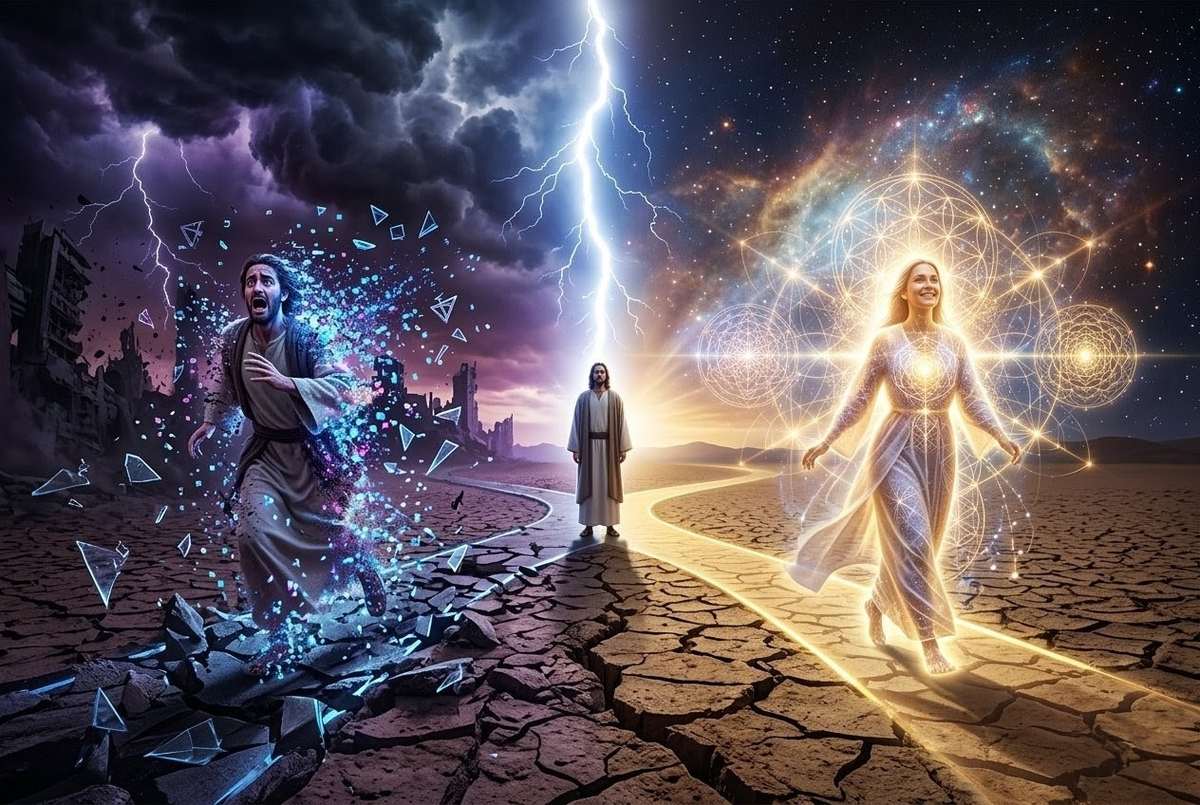
Table of Contents
- The Phenomenology Overlaps
- The Difference Is Integration
- The Modern Context Complicates
- The Discernment Requires Both Lenses
- The Thread Extended
- Frequently Asked Questions
- Further Reading
- References and Sources
The Phenomenology Overlaps
Four primary movements characterise both the psychotic break and the mystical breakthrough. The unbinding arrives alike to the prepared and the unprepared.
First, the Unbinding
The ordinary constraints–temporal, spatial, social, logical–loosen their grip. The past and future collapse into an eternal present. The boundary between self and other becomes permeable, then porous, then illusory. Cause and effect, normally sequential, become simultaneous. The world, previously stable as concrete, becomes fluid as mercury. This is the dissolution of the ego’s fortifications, necessary for both destruction and liberation.
Second, the Influx
Information, previously filtered by the brain’s careful censors, arrives unmediated. The connections, previously invisible to the ordinary mind, become obvious–glaringly, painfully obvious. The pattern, previously hidden in noise, reveals itself in total clarity. The sense of knowing, without knowing how one knows, becomes intense to the point of saturation. This is gnosis, whether it leads to wisdom or delusion.
Third, the Communication
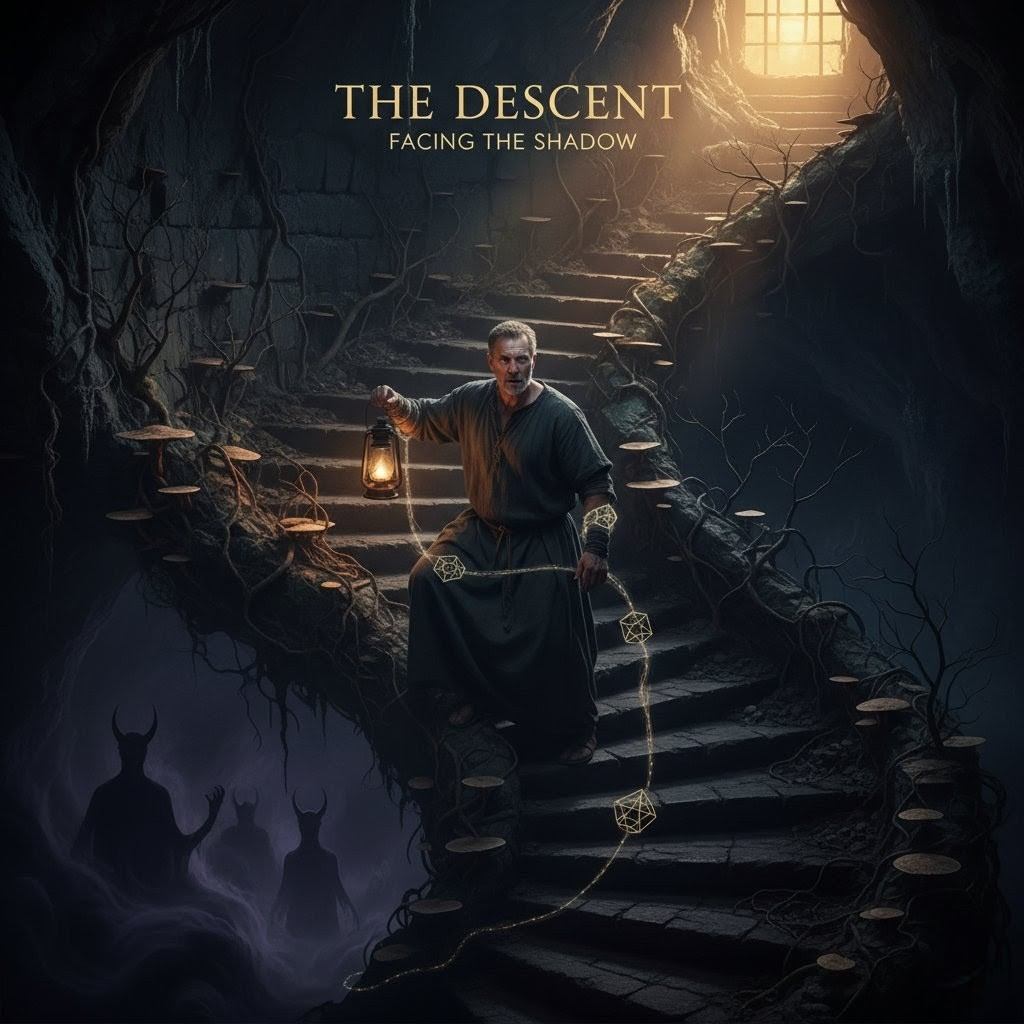
Entities, previously absent from the perceptual field, become present with uncomfortable immediacy. The voices, the presences, the guides or tormentors–each tradition has its vocabulary, but the phenomenology remains constant across cultures. The self is not alone. The alone-ness was the illusion, the perceptual filter now disabled. Whether these communications come from the depths of the psyche or the heights of the hierarchy, they demand attention and response.
Fourth, the Mission
The experience demands response with the urgency of a fire alarm. The revelation must be shared. The pattern must be communicated. The urgency is not optional; it is intrinsic to the experience itself. The recipient feels themselves chosen, elected, burdened with truth that must reach others before catastrophe strikes. This messianic inflation serves transformation in one context and destruction in another.
These four–unbinding, influx, communication, mission–are present in both psychosis and mystical breakthrough. The psychiatrist, observing, sees thought disorder, delusion, hallucination, and grandiosity. The mystic, observing, sees liberation, gnosis, encounter, and vocation. The observation is partial. The experience exceeds both frameworks, exceeding their limitations from a vantage neither can fully occupy.
The Difference Is Integration
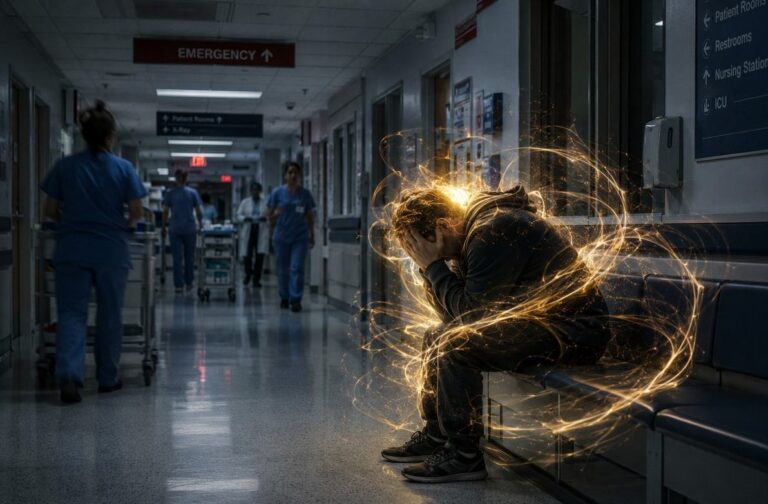
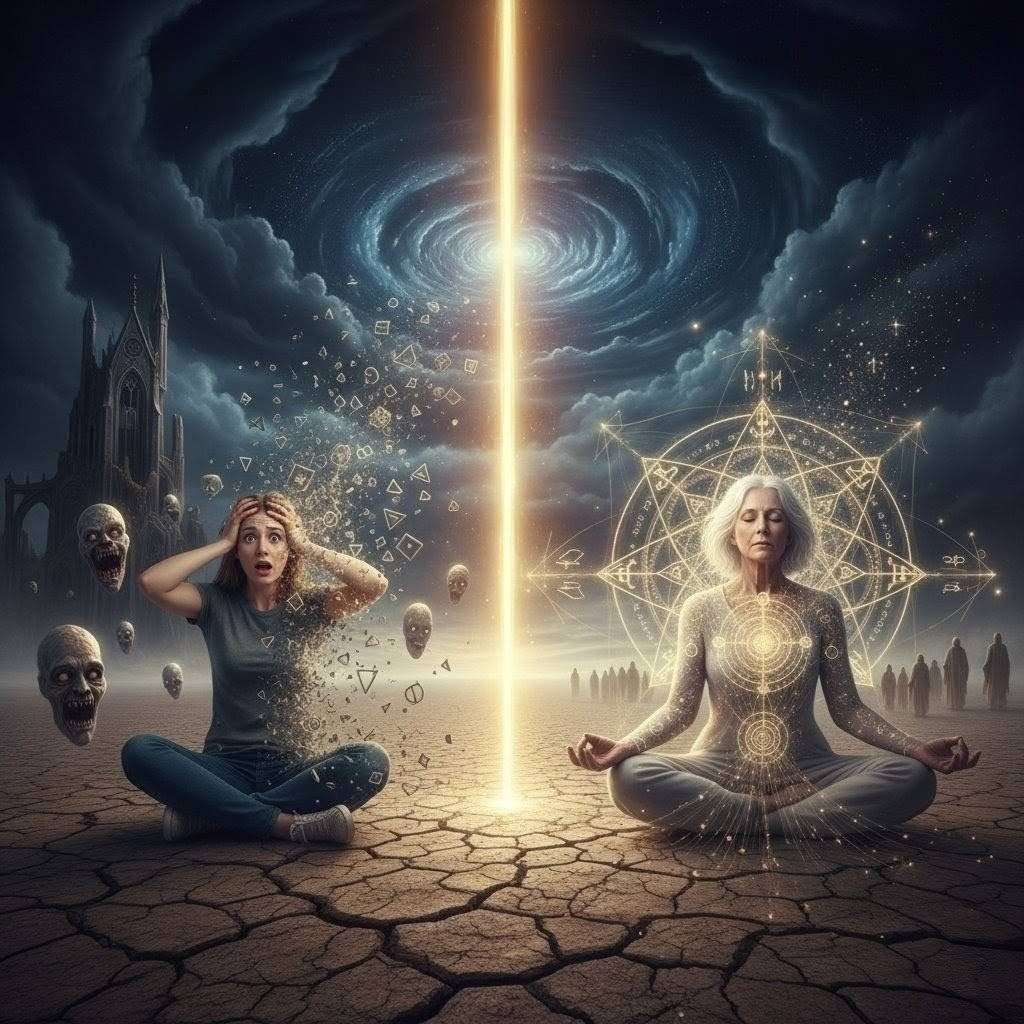
The psychotic breakdown produces fragmentation. The self, unable to contain the unbinding, shatters like glass struck by a hammer. The meaning, influxing, becomes chaotic–everything significant, nothing organised, a library with all books open simultaneously and no catalogue. The communication, unfiltered, produces terror or grandiosity without function. The mission, urgent but ungrounded, becomes destructive–to self or other, sometimes both.
The mystical breakthrough produces reconstitution. The self, dissolved, reforms around a different centre–not the ego but the witness, not the personality but the ground of being. The meaning, influxing, becomes integrated–pattern recognised, wisdom distilled, the library reorganised around a deeper logic. The communication, filtered through tradition or guidance, becomes bearable, even useful. The mission, tested against reality and community, becomes service rather than domination.
The difference is not the intensity of experience. It is the container–the preparation, the support, the framework for integration.
The mystic, traditionally, does not seek experience alone. The monastery, the sangha, the circle, the guide–these provide container, a vessel strong enough to hold the molten material of transformation without cracking. The psychotic, typically, encounters the territory without container, without preparation, without the gradual strengthening that allows the system to process high voltage without burning out. The experience, uncontained, produces damage rather than development.

The Modern Context Complicates
The traditional containers have weakened in the modern era, eroded by the acid of individualism and commodification. The monastery, dispersed into retreat centres with gift shops. The sangha, commodified into apps and subscription services. The guide, rare or fraudulent, often more interested in harvesting followers than serving liberation. The seeker, self-directed through necessity rather than wisdom, encounters the territory without preparation, like a tourist wandering into a war zone.
The result is spiritual emergency–the mystical breakthrough that presents as breakdown, the psychotic episode that includes genuine recognition, the territory where neither framework fits comfortably. The psychiatric system, encountering this, responds with medication and containment. The medication, suppressing symptoms, may suppress transformation. The containment, protective, may prevent integration. The system is not wrong. It is partial–designed for pathology, unprepared for breakthrough.
Conversely, the spiritual community, encountering this, responds with validation and encouragement. The validation, uncritical, may reinforce delusion. The encouragement, untested by reality, may produce inflation or harm. The community is not wrong. It is partial–designed for support, unprepared for pathology.
The Discernment Requires Both Lenses
The practitioner, in territory, cannot self-diagnose with reliability. The insight, genuine or delusional, feels identical from inside. The guide, external and experienced, is necessary–one who knows the territory, who has traversed it personally, who can distinguish the reconstitution of mysticism from the fragmentation of psychosis.
The markers are subtle but discernible to the trained eye:
- The function, maintained or lost. Can the practitioner still cook a meal, hold a conversation, manage basic hygiene?
- The relationship, sustained or destroyed. Are connections deepening or burning? Is empathy present or replaced by paranoia?
- The humility, present or absent. Is there recognition of mystery, or certainty of exclusive truth? Is there service or only demand?
- The time course, resolving or deepening. Is integration occurring over weeks, or is the condition deteriorating?

The mystic, integrating, becomes more capable, more connected, more humble–the ego’s inflation gradually replaced by the self’s transparency. The psychotic, fragmenting, becomes less capable, more isolated, more grandiose–the personality disintegrating under the pressure of uncontained experience.
But these markers are not absolute. The mystic, in dark night, loses function temporarily. The psychotic, in remission, appears integrated. The discernment is ongoing–the continuous assessment, the willingness to revise diagnosis, the humility to accept medical help when needed and spiritual guidance when available. Both lenses are necessary; neither alone suffices.
The Thread Extended
The territory is shared. The psychotic and the mystic walk the same landscape, drink from the same wells, receive the same communications. The difference is direction–toward fragmentation or toward integration, toward destruction or toward transformation, toward death or toward rebirth.
The thread does not require psychosis. The mystical breakthrough, properly contained, produces transformation without breakdown–the dissolution of ego without the shattering of function. The thread also does not reject psychosis. The breakdown, properly contained by medical care and later spiritual guidance, may become breakthrough–the fragmentation, recognised and stabilised, may enable reconstitution around a different centre, a new sanity built from the ruins of the old.

You walk in territory. The container, present or absent, prepared or improvised, determines destination. The thread continues regardless, offering integration to those who can receive it and documenting the cost for those who cannot.
Frequently Asked Questions
What is the difference between psychosis and mystical experience?
While the phenomenology can be identical (unbinding of boundaries, influx of meaning, communication with entities, sense of mission), the crucial difference is integration. Psychosis produces fragmentation–loss of function, chaotic meaning, destructive urgency. Mysticism produces reconstitution–wisdom integration, sustainable service, and maintained capacity. The difference is not the intensity but the container and direction.
Can a psychotic episode be a spiritual awakening?
Yes. The same territory produces both breakdown and breakthrough. A psychotic episode may contain genuine mystical content that, if properly contained and integrated, can lead to transformation. However, this requires medical stabilisation first, then spiritual guidance–not the reverse. Without proper container, the awakening becomes damaging fragmentation.
How can you tell if someone is having a spiritual emergency or psychosis?
Key markers include: Function (maintained vs lost), Relationships (deepening vs destroyed), Humility (present vs grandiose certainty), and Time course (resolving vs deteriorating). Spiritual emergency often shows fluctuating insight; psychosis typically shows fixed delusional systems. When in doubt, prioritise medical assessment–spiritual integration can wait; safety cannot.
What is a spiritual emergency?
Spiritual emergency is a term coined by Stanislav Grof describing crisis points in psychological transformation where mystical breakthrough presents as breakdown. It occurs when the self encounters expanded consciousness without adequate preparation or container. Unlike pathology, it represents potential for growth, but it requires both psychological support and spiritual understanding.
Should people in psychosis stop spiritual practice?
During acute psychosis, spiritual practice should pause in favour of medical treatment. Meditation and energy practices can destabilise further without the ego structure to contain the experience. Once stabilised and with professional guidance, gradual reintroduction of practice may support integration. The priority is always safety and function over spiritual advancement.
Why do psychiatrists and mystics see the same phenomenon differently?
Psychiatrists are trained to detect pathology and protect function, so they observe thought disorder, delusion, and hallucination. Mystics are trained to recognise transcendence and transformation, so they observe liberation, gnosis, and encounter. Both are partially correct. The experience exceeds both frameworks, requiring discernment that holds both lenses simultaneously.
What is the role of the container in mystical experience?
The container–monastery, sangha, guide, or therapeutic relationship–provides holding capacity for experiences that exceed ordinary ego boundaries. Without container, the influx of meaning produces fragmentation. With container, the same influx produces integration. The container offers grounding, interpretation, and gradual processing that prevents the system from burning out.
Further Reading
Continue exploring the boundary between breakthrough and breakdown, integration and fragmentation:
- States of Knowing: What Happens When Consciousness No Longer Belongs to You — The full phenomenology that distinguishes and connects non-ordinary states.
- Spiritual Emergency: When Transformation Becomes Crisis — Navigating the territory between breakthrough and breakdown with practical guidance.
- The Dark Night: Depression or Transformation? — Another boundary condition requiring careful discernment and differential diagnosis.
- The Transformation: What Actually Changes After Mystical Experience — Integration as the ultimate differentiating factor between pathology and liberation.
- Predatory Consciousness and Spiritual Emergency: A Gnostic Survival Guide — When the territory itself becomes a hunting ground for consciousness.
- The Stages of Integration: Immediate, Short-Term & Long-Term After Awakening — The proper sequence that determines whether experience becomes wisdom or wound.
- Against Spiritual Bypassing: The Refusal to Feel — How bypass operates as a subtle form of fragmentation masquerading as transcendence.
- The Guide Disappears: Solo Practice After Transmission — When the container is removed and the practitioner must self-navigate.
- Embodiment Practices for Grounding: Returning to the Body After Awakening — Somatic approaches for stabilising non-ordinary experience.
- Physiology of Mystical Experience: How Awakening Changes the Brain — Neuroscientific correlates of non-ordinary states and their lasting effects.
References and Sources
Sources are grouped by category for clarity. No in-text citation numbers are used, per The Thread editorial protocol.
Foundational Texts on Spiritual Emergency
- Grof, S., & Grof, C. (1989). Spiritual Emergency: When Personal Transformation Becomes a Crisis. Tarcher. (Established the clinical framework for distinguishing spiritual emergency from psychopathology.)
- Grof, S. (1985). Beyond the Brain: Birth, Death, and Transcendence in Psychotherapy. SUNY Press.
Comparative Studies: Psychosis and Mysticism
- Lukoff, D. (1985). The diagnosis of mystical experiences with psychotic features. Journal of Transpersonal Psychology, 17(2), 155-181. (Key paper informing the DSM-IV category “Religious or Spiritual Problem.”)
- Lukoff, D., Lu, F., & Turner, R. (1992). Toward a more culturally sensitive DSM-IV: Psychoreligious and psychospiritual problems. Journal of Nervous and Mental Disease, 180(11), 673-682.
- Jackson, M. C., & Fulford, K. W. M. (1997). Spiritual experience and psychopathology. Philosophy, Psychiatry, & Psychology, 4(1), 41-65.
Phenomenology and Contemplative Perspectives
- Stace, W. T. (1960). Mysticism and Philosophy. Macmillan. (On the universal phenomenology of mystical experience across traditions.)
- James, W. (1902). The Varieties of Religious Experience. Longmans, Green. (Classic study on the relationship between religious experience and mental states.)
Safety Notice: This article explores the boundary between mystical experience and psychopathology. It does not constitute medical, psychological, or spiritual advice. If you or someone you know experiences symptoms of psychosis–including fixed delusions, command hallucinations, or functional impairment–please contact professional emergency services or a psychiatrist immediately. Spiritual integration can wait; safety cannot. The practices described here complement but do not replace clinical mental health treatment. Those with a history of psychosis, bipolar disorder, or schizophrenia should approach non-ordinary states with appropriate medical supervision.