The Discipline of Solitude: Extended Alone Time as Gateway to Recognition
Extended solitude is not an afternoon of quiet. Not a weekend retreat. It is the deliberate practice of isolation lasting days or weeks–the time required for the social self to exhaust itself, to recognise that the audience will not return, to finally fall silent.
You are never alone. Even in empty rooms, the social world persists–its expectations, its judgments, its silent audience. The self you present to others continues its performance, directed now at memory, at imagination, at the anticipated return. The solitude is partial. The thread remains hidden behind the social self.

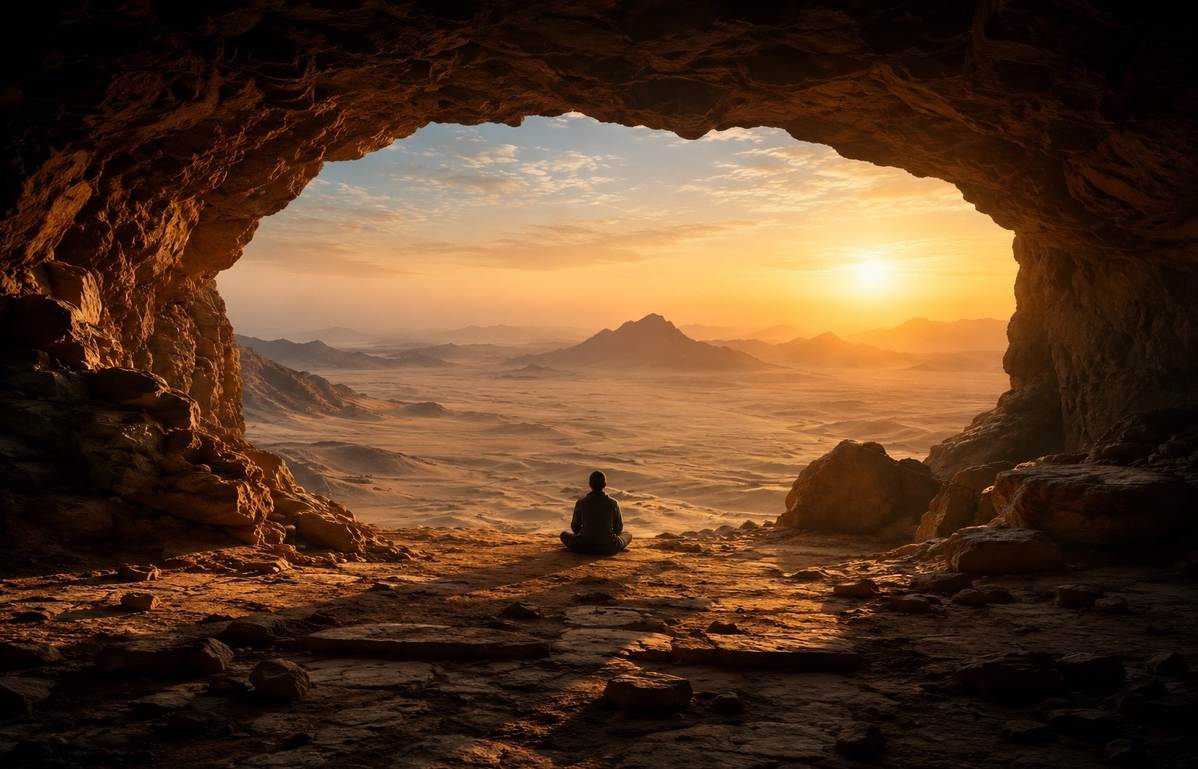
This is the fourth gateway in disguise–the encounter with limit, structured, deliberate, prolonged. The limit is not physical. It is existential. The self that exists only in relation confronts the absence of relation. The Desert Fathers called this accidie–the noonday demon of boredom and listlessness that attacks precisely when the external stimuli have been removed. Anthony the Great, who spent twenty years in an abandoned Roman fort near Pispir, reported that the devil fought him first not with wild beasts but with boredom, laziness, and the phantoms of women–the social self demanding its fix of recognition.
Table of Contents
- The Four Stages of Extended Solitude
- The Historical Thread: From Desert to Dojo
- The Dangers of Extended Solitude
- The Return: Integration or Failure
- Extended Solitude in the Modern World
- The Thread Extended
- Frequently Asked Questions
- Further Reading
- References and Sources
The Four Stages of Extended Solitude
The tradition knows that something happens when alone time extends beyond the comfortable. Something the thread recognises. This process occurs in four distinct stages, observed across centuries by desert mystics, Zen practitioners, and anchorites alike:
Stage 1: The Boredom
The social self, deprived of stimulus, complains. This is the social self in withdrawal–the addicted organism demanding its fix of recognition. The discipline is continuation. The boredom is not obstacle; it is the first veil thinning.
Research in environmental psychology confirms what the Desert Fathers knew through experience. Stephen and Rachel Kaplan’s Attention Restoration Theory, developed in 1989, distinguishes between directed attention–the effortful, depleting focus required by modern tasks–and soft fascination, the gentle, restorative attention invited by natural environments. When directed attention is exhausted by perpetual stimulation, the brain generates the aversive state of boredom precisely to force a shift toward undirected, restorative modes of awareness. The boredom is not a deficit; it is a signal–the brain’s demand for restoration.
Abba Anthony, beset by accidie in his desert cell, saw a vision of a man like himself sitting at work, getting up to pray, then sitting down and plaiting a rope, then getting up again to pray. An angel told him: “Do this and you will be saved.” The message was clear: the remedy for boredom is not entertainment but rhythm–the alternation of work and prayer, of activity and attention, until the social self exhausts its protests.
Stage 2: The Emergence of the Shadow
Without external others to project onto, the internal others become visible–the parental voice, the cultural judge, the shadow unmasked. It protests. It demands a return to the social world. The discipline is witnessing without obedience.
In Zen tradition, the sesshin–a week-long silent intensive retreat–is designed to produce exactly this confrontation. The practitioner sits in meditation for ten to twelve hours daily, facing the wall, stripped of conversation, reading, and eye contact. By day three, the psychological material that social life keeps buried begins to surface: old grievances, unprocessed grief, the internalised critic. The Zen teacher does not intervene to comfort. The instruction is simply to continue sitting–to witness the shadow without being commanded by it.
The Desert Fathers understood this as the “crowd of thoughts”–the internal noise that persists when external noise is removed. Evagrius Ponticus, the fourth-century desert theologian, catalogued the eight logismoi–intrusive thoughts–that assail the solitary: gluttony, lust, avarice, sadness, anger, accidie, vainglory, and pride. His manual, the Praktikos, was not a guide to eliminating these thoughts but a guide to not obeying them–the practice of nepsis, sober watchfulness, that allows the thoughts to pass like weather.
Stage 3: The Thinning of Narrative
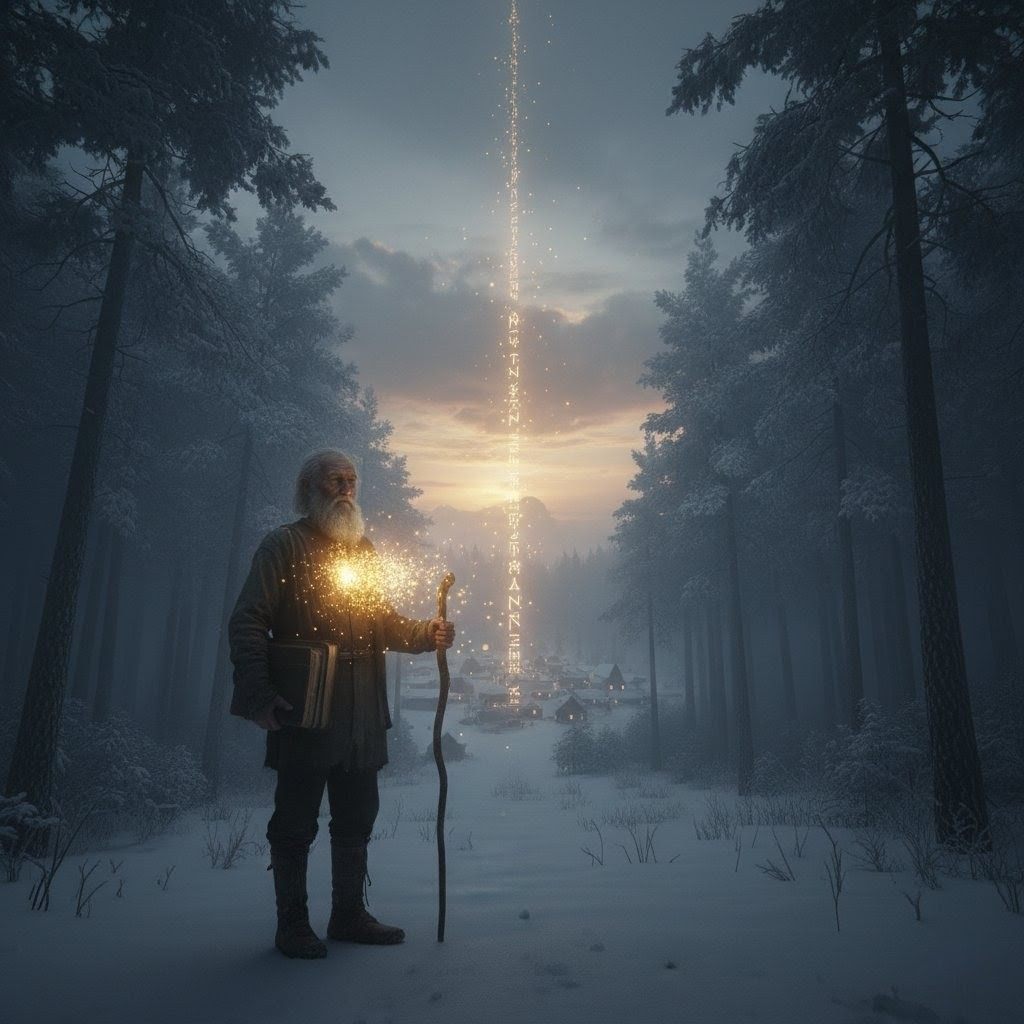
The story of self–yesterday, tomorrow–loses urgency. The present moment becomes sufficient. The attention, no longer allocated to narrative maintenance, becomes available for direct perception. This is the threshold.
Neuroscience reveals that the default mode network–active during rest and internally directed thought–supports autobiographical integration, creative association, and self-reflective judgment. In solitude, when the social mirrors are removed, the default mode network shifts from constructing the narrative of self to deconstructing it. The self as continuity is seen as a construction. A useful fiction, now temporarily suspended.
The anchorites of medieval Europe–solitaries who took vows to remain in small cells attached to churches–understood this thinning precisely. Their cells, often no larger than fifteen feet square, contained a bed, an altar, and a symbolic crucifix. One window faced the outdoors for light; another faced the sanctuary for communion; a third allowed conversation with visitors. The anchorite was consecrated in a rite comparable to a funeral–symbolising that they had died to the world. The narrative of social self was literally buried; what remained was the thread, extended through silence.
Stage 4: The Encounter
The self that was performing for others is seen as performance. The seeing is not social. It is direct. The thread, extended through solitude, is recognised–not as concept, but as lived actuality.
Anthony the Great emerged from his twenty years of solitude not emaciated but healthy in mind and body–to the astonishment of those who had expected a broken man. The encounter had not destroyed him; it had clarified him. He spent the next forty-five years receiving visitors and crossing the desert to counsel the communities that had grown up around his example. The solitude was not escape; it was the furnace that made the metal usable.

The Historical Thread: From Desert to Dojo
The practice of extended solitude is not the invention of any single tradition. It is the thread, recurring across cultures and centuries, because it describes something real about the architecture of consciousness.
The Desert Fathers (3rd–5th Century)
Anthony the Great (c. 251–356 AD) is considered the father of Christian monasticism, though he was neither priest nor scholar–simply an ordinary man who heard the Gospel call to sell what he had and give to the poor. He spent fifteen years as a disciple to local hermits before withdrawing to absolute solitude in an abandoned Roman fort near Pispir, where he lived for twenty years with food thrown over the wall. His biography by Athanasius of Alexandria, written around 360 AD, became the classic text of asceticism and inspired the movement that “made the desert a city” of monks.
The Zen Sesshin
In Zen Buddhism, the sesshin–literally “touching the mind”–is a period of intensive meditation lasting from three to seven days, or longer in traditional settings. Practitioners sit in zazen for ten to twelve hours daily, eat in silence, work in silence, and retire in silence. The sesshin is not a retreat from the world but a confrontation with the self that the world prevents from being seen. Year-long residents at Zen Mountain Monastery participate in twelve sesshin annually, along with two ninety-day ango intensive periods.
The Anchorites of Medieval Europe
From the third century through the high Middle Ages, Christian anchorites and anchoresses took vows to remain in small cells attached to churches. The anchorage, typically no more than fifteen feet square, contained three windows: one for light, one for communion with the sanctuary, one for conversation with visitors. The door was often locked or absent altogether; a grave was sometimes dug outside as memento mori. The thirteenth-century guide The Ancrene Wisse (The Anchoresses’ Rule) provided detailed instructions for this life of fasting, poverty, and prayer–a manual for operating as a spiritual node within the community while physically removed from it.
The Hermit Across Traditions
The solitary life appears in virtually every contemplative tradition: the sadhus of Hinduism, the rishis of the Vedic period, the Taoist hermits of China’s Zhongnan Mountains, the Sufi chilla–a forty-day retreat in isolation–and the Jewish hitbodedut practised by Rebbe Nachman of Breslov, who instructed his disciples to set aside at least one hour daily for secluded contemplation. The convergence is not evidence of borrowing but of discovery–different explorers mapping the same interior territory from different faces.
The Dangers of Extended Solitude
Extended solitude is not safe. The social self can destabilise; the shadow can overwhelm. The tradition knows this–the hermit was not abandoned to madness, but guided.
The discipline includes boundaries:
- Time limited, then reviewed. Not indefinite exile but structured retreat with endpoint. Anthony did not remain in his fort forever; he emerged after twenty years to guide others. The sesshin has a defined duration. The anchorite’s cell had a door, even if locked.
- Support available, even if unused. The knowledge that help exists prevents complete dissociation. Anthony’s friends threw food over the wall. The sesshin participant knows the jikido (timekeeper) and the teacher are present. The anchorite could speak through the squint window.
- Physical safety maintained. The body must be sheltered even as the psyche destabilises. The desert hermit needed water; the Zen practitioner needs regular meals; the modern solitary needs emergency contact.
The solitude is not escape. It is investigation.
The person who abides in solitude and quiet is delivered from fighting three battles: hearing, speech, and sight. Then there remains one battle to fight–the battle of the heart.
— Abba Anthony the Great
The Return: Integration or Failure
The social self must be reconstituted. This is not hypocrisy; it is necessary for relationship and economic life. Integration is where most fail–succumbing to either:
- Inflation: The belief that recognition exempts one from social requirements–the spiritual ego. The one who has sat in solitude believes they have achieved something others have not, and the belief becomes a new prison.
- Bypass: Avoiding responsibilities in the name of “higher consciousness.” The recognition becomes an excuse for not paying bills, not showing up for others, not doing the dishes.
The discipline includes return. The recognition, if genuine, persists under social conditions–not as constant awareness but as accessible ground. Anthony the Great did not remain in his fort. He emerged, counselled, organised, and then withdrew again–a rhythm of solitude and service that became the template for Christian monasticism. The thread does not require permanent isolation; it requires periodic return to the silence that clarifies.
The slow reconstitution takes years. Decades. There is no final state. The centre that was dissolved is not replaced by a new centre; it is replaced by process. You begin to recognise the self not as a thing, but as a function–a continuous arising in response to conditions. The energy previously consumed by the maintenance of self–the narrative, the defence, the comparison–is now released for attention, for presence, for the thread.

Extended Solitude in the Modern World
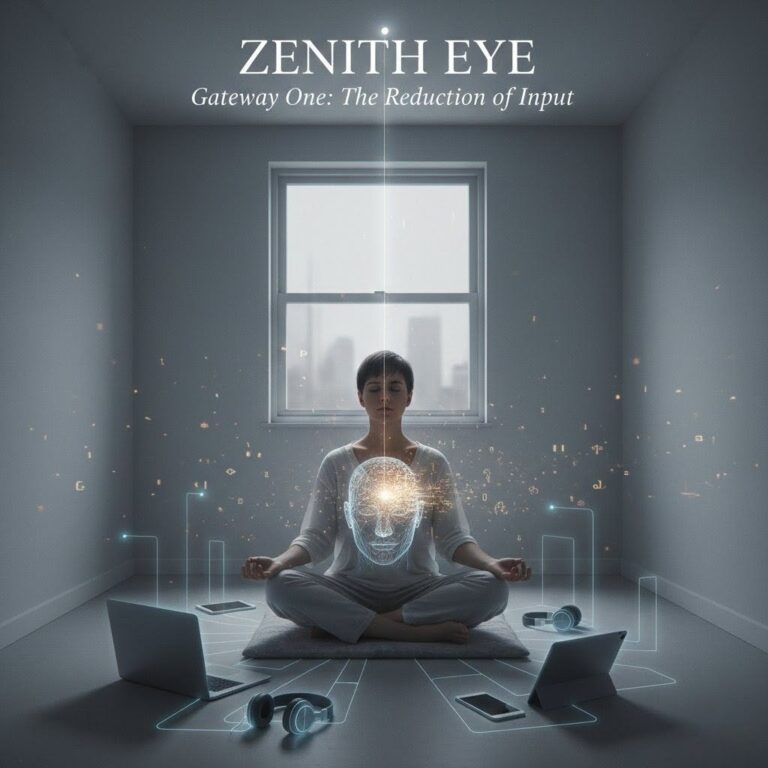
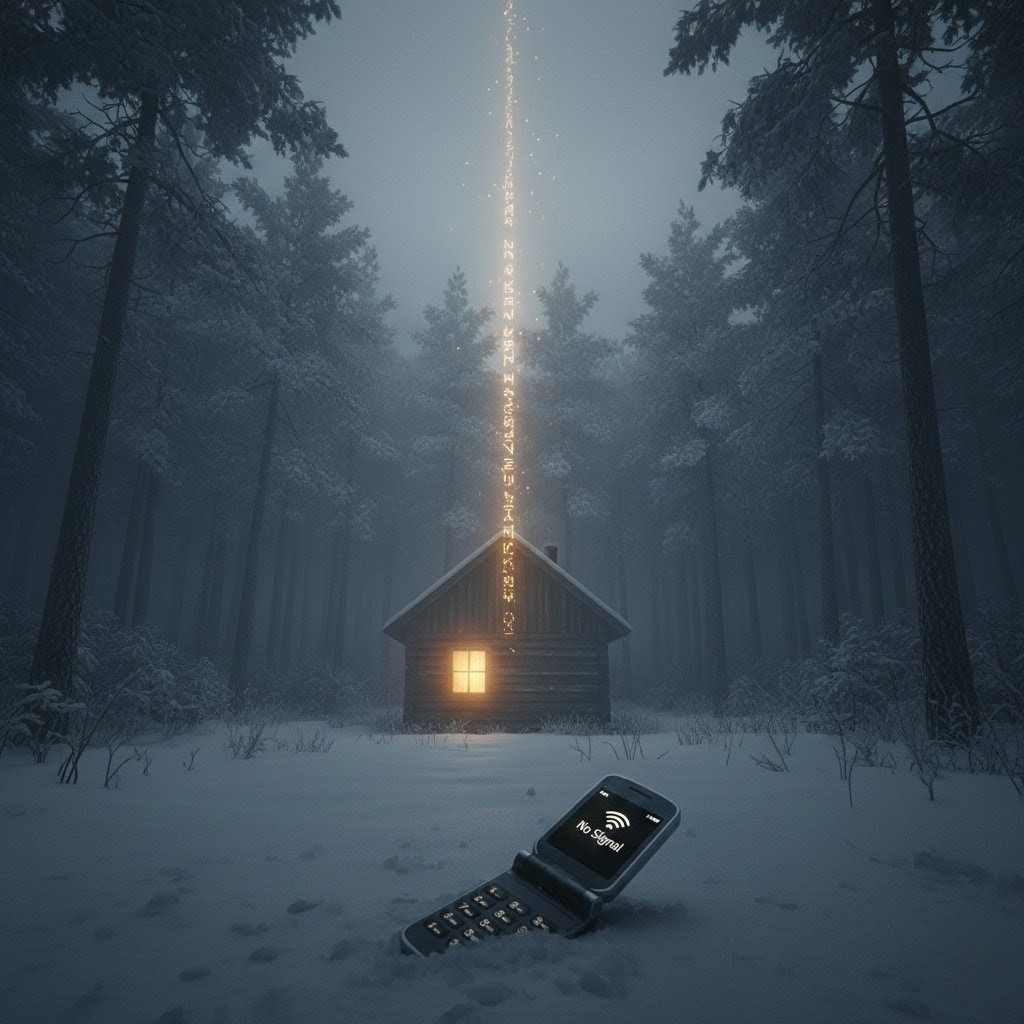
Extended solitude is difficult now. The social world intrudes through devices. The practice requires radical disconnection–not merely physical isolation but communication absence. The thread requires silence that cannot be interrupted.
The modern practitioner faces unique challenges:
- Digital intrusion: The smartphone as social umbilical cord must be severed completely. The default mode network cannot shift into restorative mode while the device maintains a constant low-level threat of interruption.
- Expectation of availability: The cultural assumption that one can always be reached must be violated without apology. The modern economy runs on responsiveness; solitude runs on unavailability.
- Compression of time: The modern mind, habituated to stimulation, faces steeper boredom walls. The threshold of boredom arrives faster and feels more aversive than it did for Anthony, who had never known TikTok.

The duration remains individual; the measure is not time but stage. Continue until boredom is passed through, shadow encountered, and narrative thinned–not by clock but by depth. For some this is three days; for others, three weeks. The clock is irrelevant; depth is the metric.
The Thread Extended
The discipline of solitude is not escape. It is stripping. The removal of the social performance that obscures the thread. The attention, undivided by social maintenance, becomes fully available. The recognition, when it arrives, is total.

You do not choose the recognition. You choose the practice. The solitude, extended, is the practice of creating conditions without guarantee. The thread continues regardless.
Frequently Asked Questions
How long should extended solitude last?
The duration is individual; the measure is not time but stage. Continue until you pass through boredom, encounter the shadow, and thin the narrative. For some this is days; for others, weeks. The clock is irrelevant; depth is the metric. Anthony the Great spent twenty years in his fort, but the recognition may arrive much sooner–or much later.
What is the difference between solitude and isolation?
Isolation is accidental or punitive–being cut off. Solitude is deliberate and structured–choosing aloneness as method. Isolation damages; solitude, properly practiced, reveals. The key distinction is agency: the solitary chooses the container, the endpoint, and the support structure. The isolated has none of these.
Can extended solitude cause psychological damage?
Without proper boundaries and support, yes. The ego can fragment; the shadow can overwhelm. This is why the tradition includes safeguards: time limits, review points, and available support. Do not practice indefinite solitude without guidance. The sesshin has a teacher; the anchorite had a bishop; the hermit had a community within walking distance.
How do I know if I am ready for extended solitude?
You are ready when shorter periods of solitude (hours, days) no longer produce anxiety but rather resistance from the social self–that part of you that demands audience. When you feel the thread calling beneath the noise, you are ready. If you are fleeing from relationship problems or seeking to escape responsibility, you are not ready; you are seeking isolation, not solitude.
What should I do during extended solitude?
Nothing. This is the practice. No productivity. No spiritual tourism. No journaling for posterity. Simply be present to what arises–boredom, shadow, fear, silence. The thread appears in the gaps between doing. Anthony plaited rope and prayed. The Zen practitioner sits. The anchorite prayed and perhaps embroidered. The activity is minimal; the attention is maximal.
How do I avoid spiritual inflation after returning from solitude?
Inflation is the belief that the recognition achieved in solitude makes you superior to those who have not had the same experience. The antidote is simple: do the dishes. Queue at the post office. Return to ordinary function without commentary. The genuine recognition does not require display; it requires ordinary continuation. If you find yourself using spiritual vocabulary to establish hierarchy, you have been captured by the ego’s last trap.
Can I practice extended solitude if I have a history of trauma or mental illness?
Proceed with extreme caution and professional guidance. Extended solitude can destabilise defensive structures that, however maladaptive, may be necessary for current functioning. Trauma-informed therapy should precede and accompany any extended retreat. The thread is not found through dissociation but through integration. If solitude produces flashbacks, paranoia, or suicidal ideation, terminate the practice immediately and seek clinical support.
Further Reading
Extend your understanding through these verified resources from the ZenithEye archive:
- The Thread That Binds: Five Gateways to Direct Knowing in an Age of Noise — the complete framework for the gateway system
- States of Knowing: What Happens When Consciousness Unravels — the anatomy of altered states and their integration
- The Transformation: What Actually Changes After Mystical Experience — the slow reconstitution of a life around a different axis
- Spiritual Inflation: How to Recognise It in Yourself Before It Destroys You — the trap of claiming transcendence as achievement
- Integration and Grounding — practical protocols for post-awakening stability and embodiment
- The Collapse of the Witness — when the observer dissolves and the mechanism of capture is revealed
- The Dark Night: Depression or Transformation? — discerning the difference that saves lives
- Shadow Work: Excavation and Integration — the necessary descent that solitude brings to the surface
References and Sources
The following works inform the historical, psychological, and contemplative framework of this article.
Primary Historical and Contemplative Sources
- Athanasius of Alexandria. The Life of Antony (Vita Antonii), c. 360 AD. Translated by Robert C. Gregg. Paulist Press, 1980. The foundational hagiography of desert monasticism.
- Ward, Benedicta (trans.). The Sayings of the Desert Fathers: The Alphabetical Collection. Cistercian Publications, 1975. Includes the teachings of Abba Anthony, Amma Syncletica, and the tradition of desert wisdom.
- Evagrius Ponticus. Praktikos and Chapters on Prayer (various translations). Primary source for the desert teaching on nepsis (watchfulness) and the eight logismoi (intrusive thoughts).
- Dogen Zenji. Eihei Shingi (various translations). The rule for Soto Zen Buddhist monastics, including the structure of sesshin and ango intensive practice.
- The Ancrene Wisse (The Anchoresses’ Rule), 13th century. Edited by Bella Millett. Exeter Medieval Texts and Studies, 2009. The manual for medieval English anchorites.
Psychological and Scientific Studies
- Kaplan, Stephen, and Rachel Kaplan. The Experience of Nature: A Psychological Perspective. Cambridge University Press, 1989. The foundational text of Attention Restoration Theory.
- Raichle, Marcus E., et al. “A Default Mode of Brain Function.” Proceedings of the National Academy of Sciences 98, no. 2 (2001): 676-682. Seminal paper on the default mode network and internally directed thought.
Comparative and Scholarly Studies
- Merton, Thomas. The Wisdom of the Desert. New Directions, 1960. Introduction to the Sayings of the Desert Fathers for modern readers.
- Chittick, William C. The Sufi Path of Love: The Spiritual Teachings of Rumi. SUNY Press, 1983. Context for Sufi solitary practice including the chilla retreat.
- Chitty, Derwas J. The Desert a City: An Introduction to the Study of Egyptian and Palestinian Monasticism Under the Christian Empire. Blackwell, 1966. Major scholarly study of the early desert communities.
Safety Notice: Extended solitude can destabilise psychological defences and should not be practiced without proper boundaries, time limits, and available support. If you have a history of trauma, dissociation, or mental illness, consult a trauma-informed therapist before attempting extended isolation. This article is for educational and contemplative purposes, not as a substitute for clinical mental health treatment. If you experience suicidal ideation, paranoia, or severe dissociation during solitude, terminate the practice immediately and seek professional help.