The Table of Trithemius – A Bridge of Secret Codes and Angelic Spirits
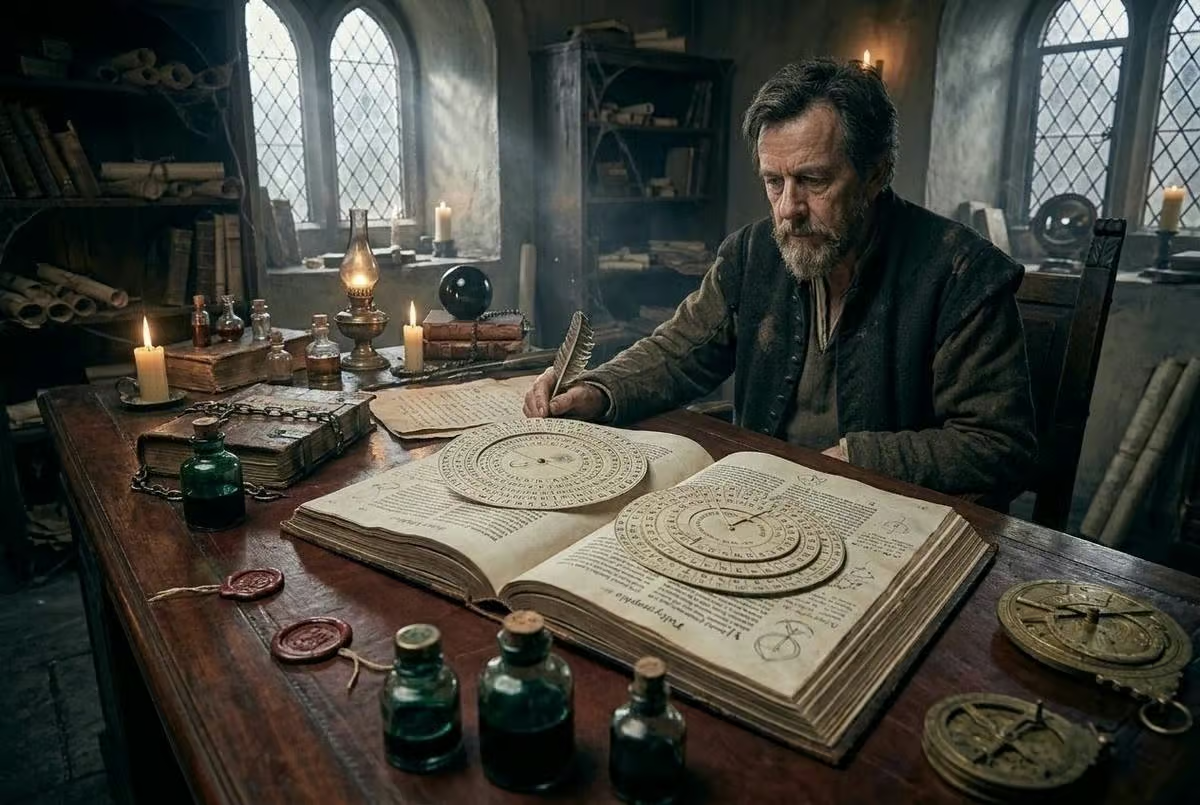
The Table of Trithemius is one of the great crossroads of Renaissance hidden knowledge: a grid of letters where cryptography, secrecy, language, angelic imagination, and spiritual discipline meet. Known more technically as the Tabula Recta, it appears in Johannes Trithemius’s Polygraphia as a method for polyalphabetic substitution, a way of hiding messages by shifting letters through ordered rows.
At first glance, the table is simple: alphabet beneath alphabet, each row displaced from the one above it. Yet that simplicity is the spell. A message moves through the grid and becomes unreadable to those without the key. Meaning remains present, but concealed. For a Renaissance mind shaped by sacred language, angelic hierarchy, hidden writing, and divine order, this was never merely a technical trick. It suggested a deeper principle: reality itself may contain meanings that are visible only when the reader knows how to read.
This article explores the Table of Trithemius as cryptographic tool, symbolic bridge, Renaissance artefact, and esoteric metaphor. It also separates the historical table from later magical overlays. The Tabula Recta is not, by itself, a proven angelic switchboard. But in the world of Trithemius, Agrippa, John Dee, angelic communication, and Christian occult philosophy, ciphers and spirits belonged to neighbouring rooms in the same strange house.
In Plain Terms
The Table of Trithemius, or Tabula Recta, is a square alphabet table used for polyalphabetic substitution ciphers.
It appears in Trithemius’s Polygraphia, an early printed work on cryptography and hidden writing.
It is connected to angelic magic indirectly through Trithemius’s wider reputation, his controversial Steganographia, and later Renaissance figures such as John Dee, who brought cryptography, mathematics, angelic language, and spiritual communication into the same symbolic field.
The safest reading is layered. The table is historically a cipher tool, symbolically a map of hidden meaning, and esoterically a reminder that language can conceal as well as reveal.
Primary Sources and Traditions Discussed
- Johannes Trithemius’s Polygraphia: the printed cryptographic work where the Tabula Recta appears as part of a wider system of secret writing.
- Trithemius’s Steganographia: the controversial work of hidden writing that presents ciphers through the language of spirits and angelic communication.
- Renaissance cryptography: alphabet tables, substitution ciphers, hidden writing, cipher wheels, diplomatic secrecy, and coded transmission.
- Christian angelic and grimoire traditions: the symbolic world in which names, spirits, divine order, seals, and hidden messages could overlap.
- John Dee’s mathematical and angelic context: the later Elizabethan world where mathematics, angelic language, scrying, tables, and sacred science became deeply intertwined.
- Hermetic and Neoplatonic symbolism: the idea that number, letter, proportion, cosmos, and mind participate in a shared order.
- Gnostic discernment: the need to distinguish true hidden knowledge from glamour, secrecy for its own sake, false authority, and spiritualised code worship.
- Modern informational sovereignty: the way encryption, secrecy, attention, algorithmic control, and hidden communication still shape contemporary consciousness.
How to Read This Article
This article is historical, symbolic, and contemplative. It does not provide operational magical training, secure modern encryption advice, spirit-contact instruction, or a claim that the Tabula Recta itself proves angelic communication.
Three layers should be kept distinct. The historical table is a cipher grid. The Trithemian mythos links cryptography with hidden spirits, angelic names, and controversial methods of transmission. The modern Gnostic reading asks what coded language reveals about secrecy, power, spiritual discernment, and hidden architecture.
The table becomes useful when it teaches careful reading. It becomes misleading when every code is treated as revelation, every secret as sacred, or every hidden system as automatically liberating.
A cipher hides a message. A sacred cipher asks a more dangerous question: who is ready to read?
Table of Contents
- Johannes Trithemius: Abbot, Cryptographer, and Controversial Magus
- What Is the Tabula Recta?
- Polygraphia and Steganographia: Open Cipher and Hidden Writing
- Why Angelic Spirits Enter the Cipher
- John Dee and the Cryptographic Imagination
- From Cipher Table to Ritual Map
- Why the Steganographia Was Feared
- Codes, Angels, and the Gnostic Question
- Modern Encryption and Informational Sovereignty
- The Caution: Not Every Hidden Message Is Revelation
- The Gnostic Reading: Learn the Syntax Without Worshipping the System
- Related Glossary Terms
- Read Next
- Frequently Asked Questions
- Further Reading
- References and Sources
Johannes Trithemius: Abbot, Cryptographer, and Controversial Magus
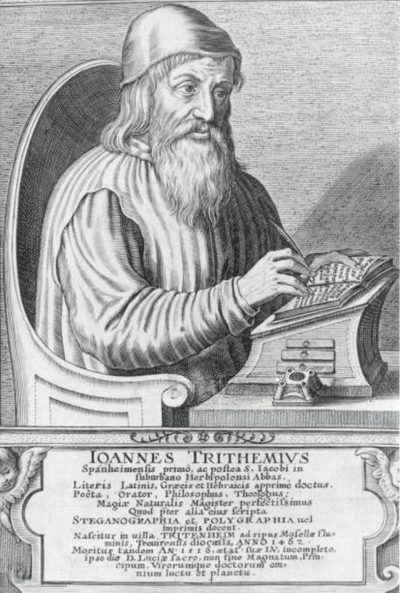
Johannes Trithemius (1462-1516) was a Benedictine abbot, historian, scholar, cryptographer, theologian, and one of the more unsettling figures in the intellectual prehistory of modern secrecy. His career sits in a difficult borderland. On one side stands the monastery, with its discipline of prayer, text, memory, order, and transmission. On the other stands the occult imagination of the Renaissance, where angels, numbers, hidden writing, planetary powers, and ancient wisdom seemed to belong to one interconnected cosmos.
Trithemius was not a casual dabbler in secrecy. He wrote seriously about cryptography, hidden writing, and the transmission of messages. He also became surrounded by rumours of spirit communication, magical theology, and angelic intermediaries. His reputation was partly created by the ambiguity of his works: were his “spirits” literal beings, cryptographic keys, devotional symbols, memory devices, or all of these at different levels?
That ambiguity is precisely why Trithemius matters. He shows a Renaissance mind refusing the modern split between code and spirit. Hidden writing could be a practical diplomatic tool. It could also become a spiritual metaphor. A message concealed beneath ordinary language suggested that visible reality itself might be only the outer script of a deeper order.
In this world, the cipher is not merely technical. It is initiatory. The unprepared reader sees noise. The prepared reader sees form.
What Is the Tabula Recta?
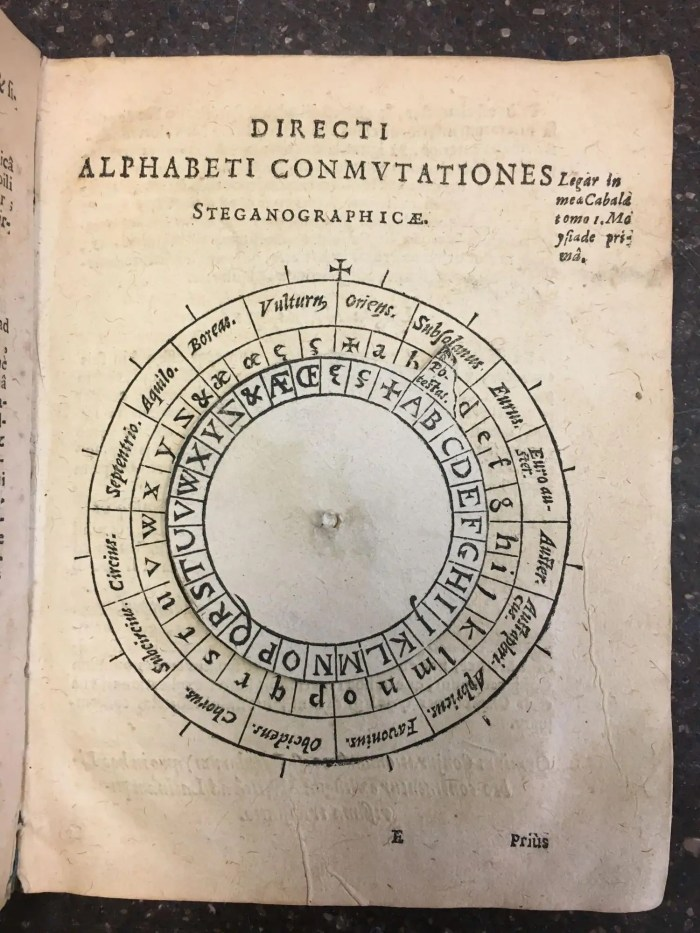
The Tabula Recta, often called the Table of Trithemius, is a square table of shifted alphabets used for polyalphabetic substitution. In its classical Latin form, it is commonly given as a 24-letter table rather than a modern 26-letter alphabet. Each row shifts the alphabet by one place. A letter is encrypted according to the row being used, so the same plain letter may become different cipher letters at different points in the message.
This was a major step beyond simple substitution. In a basic Caesar-style cipher, each letter is shifted in the same way throughout the message. In a polyalphabetic cipher, the alphabet changes. The result is far harder to break because repetition becomes less obvious. The table provides a disciplined way of moving through multiple alphabets without losing order.
The table later became associated with the wider family of Vigenère-style ciphers, though Trithemius’s own method and later Vigenère systems should not be treated as identical. Historically, the important point is that Trithemius helped establish the table as a powerful tool for secret writing and alphabetic transformation.
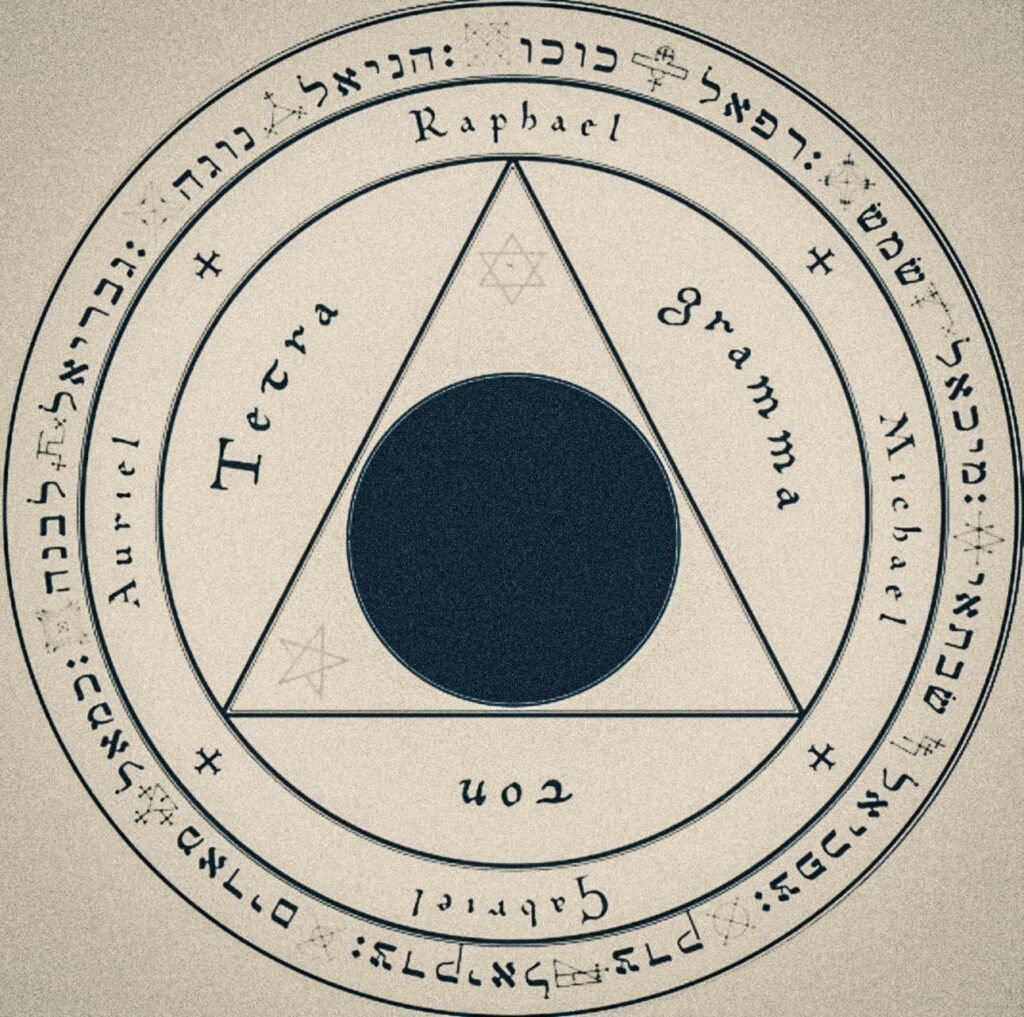
Esoterically, the table’s power lies in its form. It takes the alphabet, the basic body of language, and shows that meaning can be transformed by position, key, and sequence. Nothing supernatural is needed for the symbolism to be potent. The same letter changes according to its place in the pattern. Consciousness works like this too. A word, image, dream, ritual, or doctrine may change meaning depending on the level from which it is read.
Polygraphia and Steganographia: Open Cipher and Hidden Writing
Trithemius’s Polygraphia, published in 1518 after his death, presents systems of secret writing more openly. It belongs to cryptography: the art of transforming a message so that it remains present but unreadable to outsiders. The Tabula Recta fits this world well. It is a visible tool for organised concealment.
The Steganographia, composed earlier and printed in 1606, is more controversial. Its title points to hidden writing, but the work famously presents its methods through the language of spirits, planetary or hourly intelligences, invocations, and remote communication. For centuries, it was read by many as a magical or demonic book. Modern cryptographic analysis has shown that much of its spirit language conceals cipher methods.
This makes the relationship between the two works fascinating. The Polygraphia shows the cryptographic face. The Steganographia shows the veiled face. One says, “Here is secret writing.” The other says, “Here are spirits who carry messages.” The difference may be literal, symbolic, strategic, or deliberately ambiguous.
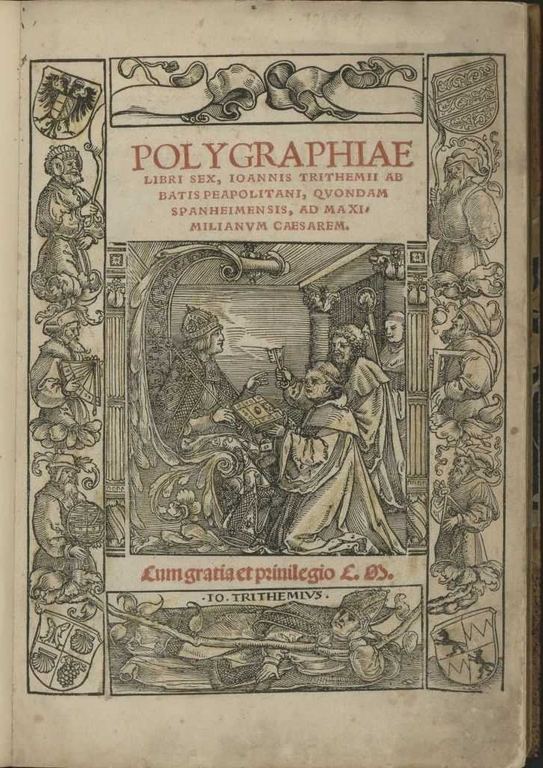
For a modern reader, the lesson is not that spirits are “only” codes, or that codes are “really” spirits. The lesson is that Renaissance hidden knowledge often worked through layered presentation. A text could be devotional, magical, cryptographic, political, protective, and pedagogical at the same time. The page was not flat. It had chambers.
Why Angelic Spirits Enter the Cipher
Why would a cryptographic system speak in the language of spirits at all? The answer lies in the Renaissance imagination. Angels were not merely winged ornaments. They were intelligences, messengers, mediators, planetary governors, and carriers of divine order. Communication across distance, whether spiritual or diplomatic, naturally invited angelic language.
A spirit in the Steganographia may function as a cipher key, a mnemonic figure, a symbolic guardian of a method, or a genuine spiritual intelligence within the worldview of the practitioner. Trithemius’s genius, and perhaps his danger, was that he allowed these meanings to overlap. A name could unlock a method. A method could look like invocation. An invocation could hide mathematics.
This is not simply trickery. In the older magical imagination, names were not arbitrary labels. Names carried force. To know the right name was to know a route of access. Cryptography also works by access. Without the key, the message remains closed. With the key, the same text opens.
That is where code and angelology touch. Both are concerned with mediation: how a message passes from one level to another without being corrupted, intercepted, or misunderstood.
John Dee and the Cryptographic Imagination
John Dee belongs to the next great wave of this same current. Mathematician, astrologer, adviser, collector, imperial theorist, and Christian magus, Dee saw number, geometry, language, navigation, and angelic communication as related forms of hidden order. He was not merely interested in secrets for secrecy’s sake. He wanted access to the architecture of creation.
Dee’s angelic work with Edward Kelley later produced tables, calls, angelic names, letters, scrying records, and the system now called Enochian. Whether or not one draws a direct line from Trithemius to every part of Dee’s work, the family resemblance is clear. Both worlds treat communication as structured, mediated, and governed by correct form.
For Dee, as for Trithemius, sacred knowledge was not a loose inspiration floating through the air. It arrived through instruments: books, tables, seals, alphabets, mirrors, stones, diagrams, numbers, and disciplined records. Revelation had paperwork. The heavens, apparently, preferred a properly formatted document.
The Table of Trithemius therefore helps illuminate Dee’s later angelic environment. It shows how a grid of letters could become more than a cipher. It could become a model for how hidden intelligence might enter the world through ordered symbols.
From Cipher Table to Ritual Map
The Tabula Recta is historically a cipher table. Later esoteric readers, however, often use alphabetic tables as ritual maps: tracing names, generating sigils, meditating on letter pathways, or aligning intention with symbolic sequences. This is not the same as saying Trithemius designed the table primarily as a magical sigil machine. It is saying that occult traditions often turn technical structures into contemplative ones.

1. Encryption as Disciplined Attention
Using a cipher requires attention. The operator must know the alphabet, the row, the key, the sequence, and the difference between plain text and transformed text. This is not passive reading. It is active participation in meaning.
As a contemplative metaphor, encryption trains the mind to see that messages do not always appear in their original form. Dreams, myths, rituals, sacred texts, and even emotional reactions often arrive encrypted. The question is not merely “what does this say?” but “from what level should it be read?”
2. Sigil Generation as Later Esoteric Use
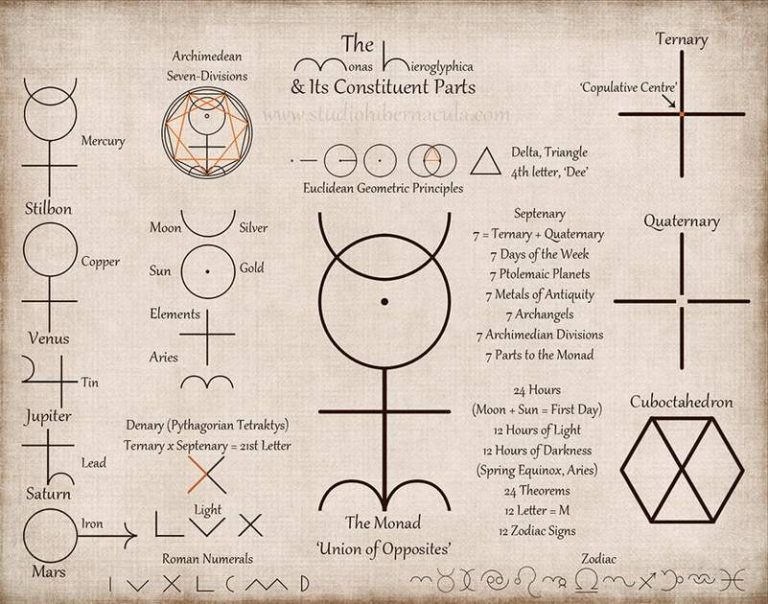
Some later practitioners use alphabetic tables to trace names and create geometric marks or sigils. In such work, the name becomes a pathway across the table. The resulting figure is treated as a compressed symbolic form, a sign that gathers intention, name, and movement into one image.
This should be labelled as later esoteric use, not as the plain historical function of the Tabula Recta. Still, it shows why the table attracts occult imagination. A grid of letters already contains hidden paths. The sigil simply makes one path visible.
3. Steganography as Concealment in Plain Sight
Steganography differs from encryption. Encryption makes a message unreadable. Steganography hides the fact that a message exists at all. A coded message may look like ordinary devotional writing, harmless correspondence, poetry, diagram, or ritual instruction.
This is where Trithemius becomes especially interesting. His spirit language may conceal cryptographic procedures. The grimoire becomes a cloak for mathematics. To the untrained reader, spirits appear to speak. To the trained reader, hidden writing begins to disclose itself.
Why the Steganographia Was Feared
The Steganographia became infamous because it looked dangerous from more than one angle. To ecclesiastical readers, it appeared to involve spirit communication, conjuration, and hidden powers. To political readers, it represented covert messaging and secrecy. To intellectual readers, it blurred categories that authorities preferred to keep separate: devotion, magic, mathematics, cryptography, and communication across distance.
Its placement on the Index of prohibited books made it part of the mythology of forbidden knowledge. Yet the ban should not be simplified into melodrama. Early modern authorities feared many things: heresy, deception, unauthorised spirit contact, political secrecy, magical practice, and the circulation of techniques that bypassed approved channels. Trithemius’s work touched several of those nerves at once.
That is why the book is so important. It reveals that secrecy itself can become politically and spiritually charged. A hidden message is never only a hidden message. It raises the question of who may speak, who may know, who may transmit, and who has the authority to read.
Codes, Angels, and the Gnostic Question
Gnosticism is not cryptography, and Trithemius was not a Gnostic teacher. Yet the Gnostic imagination understands hiddenness. The world can be read as a text whose surface conceals deeper truth. Powers may control what is seen, said, remembered, and authorised. Liberation depends on recognition, not mere access to information.
The Table of Trithemius becomes a useful symbol here. It shows that a message may be present and still unavailable. The barrier is not absence, but unreadability. The hidden meaning is not elsewhere. It is here, folded through another order.
This is close to the Gnostic problem of the world. The divine spark is present, yet obscured. Reality is not empty of meaning. It is misread under the conditions of ignorance. The archonic pattern does not always destroy truth. It may simply encode it beneath fear, distraction, doctrine, spectacle, or habit.
But this also carries a warning. Not every hidden thing is holy. Not every secret is liberation. Some secrets are tools of control. Some codes protect wisdom. Others protect manipulation. Discernment is the difference.
Modern Encryption and Informational Sovereignty
The modern world is built on encryption. Banking, messaging, identity, surveillance, privacy, authentication, and digital control all depend on hidden transformations of information. Most people now live inside cryptographic systems they rarely see and cannot personally inspect.
This gives Trithemius new relevance. His table is not secure by modern standards, but it still teaches a powerful principle: information is never neutral when power wants to control transmission. The ability to conceal, protect, authenticate, and decode messages is part of sovereignty.
In the digital age, the “archonic firewall” is not only mythic. It appears as algorithmic filtering, attention capture, surveillance capitalism, platform control, automated moderation, data extraction, and the shaping of what can be seen. The old ciphers protected letters. Modern ciphers protect lives, identities, dissidents, relationships, and private thought.

A Gnostic approach to modern encryption does not romanticise secrecy for its own sake. It asks what secrecy protects. Does it protect conscience, privacy, dignity, and truth? Or does it hide exploitation, manipulation, and unaccountable power?
The Caution: Not Every Hidden Message Is Revelation
Once a person begins to think in codes, there is a risk of seeing codes everywhere. This can become creative and illuminating. It can also become obsessive. The mind can turn ordinary coincidence into secret instruction, random pattern into destiny, and private fear into cosmic communication.
The old esoteric traditions knew this danger. They used discipline, teachers, prayer, record-keeping, ethics, and structure to slow interpretation down. A cipher must be solved carefully. So must a dream, vision, synchronicity, ritual result, or hidden text.
Modern readers should be especially careful with claims that “everything is a code” or “every pattern is a message”. Such claims can be poetic, but they can also become destabilising. Hidden meaning should make perception clearer, not more frantic. A true key opens the lock. It does not make every door seem trapped.
Discernment asks: does this interpretation increase clarity, humility, responsibility, and embodied life? Or does it increase obsession, paranoia, superiority, fear, and isolation? The answer matters more than the elegance of the code.
The Gnostic Reading: Learn the Syntax Without Worshipping the System
The Table of Trithemius is a beautiful object of thought because it reveals the double nature of hidden systems. A code can protect truth from those who would destroy it. A code can also exclude, control, and manipulate. The same structure can liberate or imprison depending on who holds the key and why.
Gnostic discernment does not worship secrecy. It seeks direct knowing. A secret is valuable only if it protects or reveals truth. If secrecy becomes status, fear, dependence, or theatrical obscurity, it has become another veil.
The table teaches that meaning can be transformed without being lost. It also teaches that the reader must participate. No one can decode passively. The seeker must learn the alphabet, the key, the movement, and the difference between concealment and revelation.
The archonic pattern thrives when people cannot read the systems that govern them. It also thrives when people become fascinated by systems and forget the living spark those systems were meant to serve. The Gnostic task is to learn the syntax, read the hidden order, and then refuse to mistake the table for the Source.
The code is a bridge. Cross it. Do not build a prison from its letters.
Related Glossary Terms
For quick definitions, use the main ZenithEye Glossary. The key terms for this article are:
Read Next
Continue with: The Steganographia: 400 Years on the Vatican’s Banned List for Hacking the Angelic Mainframe
If this article explains the table itself, the next step is Trithemius’s stranger and more controversial companion text: a work where hidden writing, spirit language, coded transmission, and forbidden knowledge become almost impossible to separate.
Within The Hidden Agreements
This article belongs to Cryptographic Systems & Occult Communication, the Hidden Agreements layer where ciphers, sacred alphabets, secret writing, seals, coded doctrine, angelic languages, and hidden transmission are read as technologies of concealment and revelation.
Frequently Asked Questions About the Table of Trithemius
What is the Table of Trithemius?
The Table of Trithemius, also called the Tabula Recta, is a square table of shifted alphabets used for polyalphabetic substitution ciphers. It appears in Johannes Trithemius’s Polygraphia and became important in the history of cryptography and secret writing.
How does the Tabula Recta work?
The Tabula Recta works by using different shifted alphabets for different letters of a message. Instead of replacing each letter with one fixed substitute, the row changes according to a key or sequence. This makes repeated letters less obvious and creates a stronger cipher than simple substitution.
Is the Table of Trithemius the same as the Vigenère cipher?
No. The Tabula Recta is an important earlier table used in polyalphabetic substitution, and later Vigenère-style systems also use similar alphabet squares. Trithemius’s method and the later Vigenère cipher are related historically but should not be treated as identical.
What is the difference between Polygraphia and Steganographia?
Polygraphia presents systems of cryptography and secret writing more openly. Steganographia is more controversial because it presents hidden writing through the language of spirits, angelic communication, and remote transmission. Modern analysis shows that much of Steganographia conceals cryptographic methods beneath spiritual language.
Why is Trithemius connected with angels and spirits?
Trithemius wrote in a Renaissance world where hidden writing, angelic names, divine order, memory, and spiritual communication could overlap. In works such as Steganographia, spirit names may function as cipher keys, mnemonic devices, symbolic figures, or literal beings within the older magical worldview.
How does the Table of Trithemius relate to John Dee?
John Dee belonged to a later Renaissance environment where mathematics, cryptography, angelic language, tables, seals, and sacred science were deeply intertwined. The Table of Trithemius helps illuminate the cryptographic and symbolic background to Dee’s angelic and mathematical imagination, though it is not the same as Dee’s Enochian system.
Can the Table of Trithemius be used for modern encryption?
The Table of Trithemius is historically important, but it is not secure by modern cryptographic standards. It is valuable for historical study, symbolic reflection, and understanding the development of polyalphabetic ciphers, but it should not be used to protect sensitive modern data.
What is the Gnostic meaning of the Table of Trithemius?
A Gnostic reading treats the table as a symbol of hidden meaning, encoded reality, and the need for discernment. It reminds the reader that truth may be present but unreadable without the right key, while also warning that secrecy itself is not liberation. The goal is direct knowing, not fascination with codes for their own sake.
Study and Safety Note
This article explores Trithemius, the Tabula Recta, cryptography, steganography, angelic language, John Dee, hidden writing, and Gnostic discernment for educational and reflective purposes. It does not provide secure modern encryption advice, magical training, spirit-contact instruction, medical advice, psychological advice, psychiatric advice, or crisis support.
If work with codes, hidden messages, synchronicities, occult systems, or secret meanings becomes obsessive, frightening, isolating, or destabilising, step back and return to ordinary grounding. Not every pattern is a message. Not every hidden structure requires pursuit.
Hidden knowledge should deepen clarity, humility, ethical action, and embodied presence. If it increases paranoia, grandiosity, fear, sleeplessness, contempt, or loss of function, seek support and reduce intensity.
Further Reading
These ZenithEye links continue the themes of Trithemius, hidden writing, angelic communication, John Dee, cryptographic systems, sacred language, and informational sovereignty:
- The Steganographia: 400 Years on the Vatican’s Banned List for Hacking the Angelic Mainframe – Trithemius’s more controversial work of hidden writing, spirit language, and concealed communication.
- The Art of Drawing Spirits into Crystals: A Complete Trithemian Guide – Crystal scrying, angelic authentication, theurgy, and spirit-contact discernment in the Trithemian tradition.
- John Dee Mathematical Preface 1570: Occult Foundation of Renaissance Magic and Esoteric Mathematics – Dee’s sacred science, mathematical worldview, and the intellectual soil in which angelic systems could grow.
- The 19 Occult Arts: John Dee’s Complete Renaissance Magic Curriculum – Dee’s wider magical curriculum, where mathematics, optics, astronomy, navigation, and contemplative discipline form a sacred programme of knowledge.
- Scrying the Enochian Aethyrs: The Ultimate Guide to Higher Dimensional Gnosis – Dee’s visionary Aethyr sequence, read through altered states, symbolic ascent, and grounded discernment.
- Heptarchia Mystica: Commanding John Dee’s 7 Planetary Kings – Dee’s sevenfold angelic and planetary order, read through kings, princes, ministers, seals, timing, and sacred rhythm.
- Deciphering the Esoteric Meaning: The Bible as Technology of Consciousness – Sacred texts, symbolic concealment, layered meaning, and the hidden language of esoteric Christianity.
- The Power of Words: Etymology, Conscious Language, and the Magic of Speech – Language as vibration, meaning, symbolic force, and conscious practice.
- The Enochian Cipher: Occult Cryptography and the Language of Angels – Angelic alphabets, Dee’s received language, and the occult imagination of sacred code.
- Gnosis in the Digital Age: Reclaiming Your Sovereignty from the Algorithm – A modern companion on attention, algorithms, digital power, and informational self-governance.
References and Sources
The following sources support the historical, cryptographic, esoteric, and comparative framework used in this article.
Primary Trithemian Sources
- Trithemius, Johannes. Polygraphia. First printed 1518. Foundational work for the Tabula Recta and early modern systems of secret writing.
- Trithemius, Johannes. Steganographia. Composed c. 1499, first printed 1606. Important for hidden writing, spirit language, and the overlap between cryptography and angelic communication.
- Trithemius, Johannes. De Septem Secundeis. A short work on planetary intelligences and historical cycles, relevant to Trithemius’s wider angelic and cosmological reputation.
Cryptography and Hidden Writing
- Kahn, David. The Codebreakers: The Comprehensive History of Secret Communication from Ancient Times to the Internet. Scribner, revised edition, 1996.
- Singh, Simon. The Code Book: The Science of Secrecy from Ancient Egypt to Quantum Cryptography. Fourth Estate, 1999.
- Schmeh, Klaus. Codebreaking: A Practical Guide. Wiley, 2020.
- Schmeh, Klaus. Articles and analyses on historical cryptography and the cryptographic reading of Trithemius’s Steganographia.
- Friedman, William F. and Friedman, Elizebeth S. The Shakespearean Ciphers Examined. Cambridge University Press, 1957. Useful context for evaluating hidden-writing claims critically.
Trithemius, Magic, and Renaissance Esotericism
- Brann, Noel L. Trithemius and Magical Theology: A Chapter in the Controversy over Occult Studies in Early Modern Europe. SUNY Press, 1999.
- Brann, Noel L. The Abbot Trithemius (1462-1516): The Renaissance of Monastic Humanism. Brill, 1981.
- Hanegraaff, Wouter J., ed. Dictionary of Gnosis and Western Esotericism. Brill, 2005.
- Yates, Frances A. The Occult Philosophy in the Elizabethan Age. Routledge, 1979.
- Agrippa, Heinrich Cornelius. De Occulta Philosophia Libri Tres. 1533. English translation by John French, 1651. Modern edition edited by Donald Tyson, Llewellyn, 1993.
- Walker, D. P. Spiritual and Demonic Magic from Ficino to Campanella. University of Notre Dame Press, 1975.
John Dee, Angelic Communication, and Mathematical Esotericism
- Dee, John. The Mathematical Preface to Henry Billingsley’s English translation of Euclid’s Elements. London, 1570.
- Dee, John. John Dee’s Five Books of Mystery: Original Sourcebook of Enochian Magic. Edited by Joseph H. Peterson. Weiser Books, 2003.
- Casaubon, Meric, ed. A True & Faithful Relation of What Passed for Many Years Between Dr. John Dee and Some Spirits. London, 1659.
- Harkness, Deborah E. John Dee’s Conversations with Angels: Cabala, Alchemy, and the End of Nature. Cambridge University Press, 1999.
- French, Peter J. John Dee: The World of an Elizabethan Magus. Routledge, 1972.
- Asprem, Egil. Arguing with Angels: Enochian Magic and Modern Occulture. SUNY Press, 2012.
- Clucas, Stephen, ed. John Dee: Interdisciplinary Studies in English Renaissance Thought. Springer, 2006.
Language, Symbol, and Gnostic Discernment
- Robinson, James M., ed. The Nag Hammadi Library in English. Revised edition. HarperOne, 1990.
- Meyer, Marvin, ed. The Nag Hammadi Scriptures. HarperOne, 2007.
- Layton, Bentley. The Gnostic Scriptures. Yale University Press, 1987.
- King, Karen L. What Is Gnosticism?. Harvard University Press, 2003.
- Eco, Umberto. The Search for the Perfect Language. Blackwell, 1995.
- Couliano, Ioan P. Eros and Magic in the Renaissance. University of Chicago Press, 1987.
- Copenhaver, Brian P. Hermetica: The Greek Corpus Hermeticum and the Latin Asclepius. Cambridge University Press, 1992.