Reading Coptic Texts: A Guide for Non-Specialists
The Language of the Gnostic Scriptures: Coptic in the Nag Hammadi Library
The Nag Hammadi Library was written in Coptic, the final stage of the Egyptian language, using the Greek alphabet with additional characters from Demotic Egyptian [1]. For readers approaching these texts in translation, understanding basic Coptic helps illuminate translation choices, recognise key terms, and appreciate the linguistic bridge between Egyptian and Greek thought. This guide functions as a technical manual for navigating the “classified documentation” of the Nag Hammadi corpus–decrypting the linguistic codes that preserve esoteric teachings from antiquity.
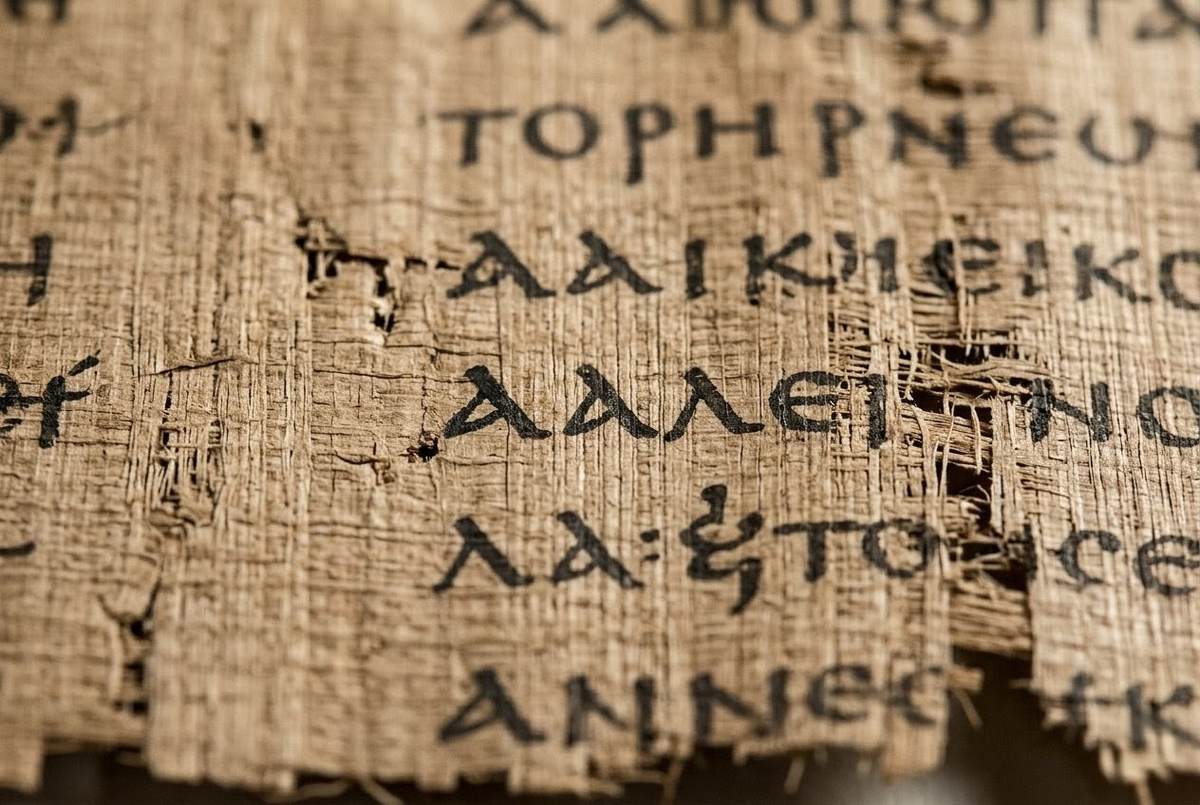
Table of Contents
- What is Coptic?
- The Coptic Alphabet
- Basic Phonology
- Key Grammatical Features
- Key Terms in the Nag Hammadi Texts
- Textual Conventions
- Reading Strategies for Non-Specialists
- Resources for Learning Coptic
- The Value of Original Language Study
- Frequently Asked Questions
- Further Reading
- References and Sources
What is Coptic?
Coptic developed in the first centuries CE when Egyptian scribes adapted the Greek alphabet to write their native language [2]. It flourished from approximately 100 CE to 1000 CE, overlapping with the Greek and Roman periods in Egypt. The language represents the last evolutionary stage of Egyptian, separated from earlier phases (Old, Middle, Late Egyptian, and Demotic) by millennia of development.
When the last temples closed and hieroglyphic literacy disappeared, Coptic remained as the written form of Egyptian, used by Christians until Arabic gradually replaced it after the Islamic conquest [3]. Six major Coptic dialects existed, though Sahidic (Thebaic, from Upper Egypt) became the standard literary dialect. The Nag Hammadi texts are primarily Sahidic with occasional Lycopolitan (Subakhmimic) features, reflecting their origin in Upper Egypt [4].
Why Coptic Matters
Coptic serves as the “filing system” preserving Gnostic literature–the administrative protocol that allowed Egyptian Christian communities to archive Greek esoteric teachings in a local linguistic format. Without Coptic, the Nag Hammadi Library would not exist as we know it.
The Coptic Alphabet
Coptic uses the Greek alphabet plus seven Demotic characters [5]. The Greek letters (familiar from English) include: Alpha (Ⲁ), Beta (Ⲃ), Gamma (Ⲅ), Delta (Ⲇ), Epsilon (Ⲉ), Zeta (Ⲍ), Eta (Ⲏ), Theta (Ⲑ), Iota (Ⲓ), Kappa (Ⲕ), Lambda (Ⲗ), Mu (Ⲙ), Nu (Ⲛ), Xi (Ⲝ), Omicron (Ⲟ), Pi (Ⲡ), Rho (Ⲣ), Sigma (Ⲥ), Tau (Ⲧ), Upsilon (Ⲩ), Phi (Ⲫ), Chi (Ⲭ), Psi (Ⲯ), and Omega (Ⲱ).
The seven Demotic characters unique to Coptic provide sounds not covered by Greek [6]:
- Ϣ ϣ (shai) — pronounced “sh” as in “ship”
- Ϥ ϥ (fai) — pronounced “f”
- Ϧ ϧ (khai) — hard “h” sound, like Arabic “ha”
- Ϩ ϩ (hori) — soft “h” as in “hot”
- Ϫ ϫ (janja) — pronounced like English “j” or soft “g”
- Ϭ ϭ (chima) — “ky” sound, like “cue” or “ch”
- Ϯ ϯ (ti) — pronounced “ti” when not followed by a vowel
Basic Phonology
Coptic pronunciation differs from Classical Greek [7]:
- ⲅ (g) before ⲅ, ⲕ, ⲝ, ⲭ becomes “ng” (like “finger”)
- ⲑ (th) becomes “t” in some dialects, “th” in others
- ⲇ (d) and ⲧ (t) are often confused in late texts
- ϩ (h) at the beginning of words often indicates the definite article (“the”)
Primary Source Citation: “The one who possesses the Five Seals with the water of the baptizers… they immersed him in the spring of the water of life.” — NHC XIII,1 49:28-30 (Trimorphic Protennoia, Sahidic Coptic) [8]
Key Grammatical Features
Articles: Coptic uses prefixes rather than standalone words for “the” and “a” [9]:
- ⲡ- (p) = the (masculine singular)
- ⲧ- (t) = the (feminine singular)
- ⲛ- (n) = the (plural)
- ⲟⲩ- (ou) = a/an (indefinite)
Example: ⲡⲛⲟⲩⲧⲉ (pnoute) = “the god” or simply “God”
Pronouns: Suffix pronouns attach directly to nouns and verbs [10]:
- -ⲓ (-i) = I, me, my
- -ⲕ (-k) = you (masculine singular)
- – (-ø) = he, him, his (often unwritten or marked by vowel change)
- -ⲥ (-s) = she, her, hers
Verbs: Coptic verbs are typically roots with prefixes indicating tense [11]:
- ⲁ- (a-) = past tense marker
- ϣⲁ- (sha-) or ⲛⲁ- (na-) = future tense
- ⲉ- (e-) = imperative or purpose
Key Terms in the Nag Hammadi Texts
Recognising these common words helps readers navigate the original texts [12]:
Theological Terms:
- ⲛⲟⲩⲧⲉ (noute) = god/God (from Egyptian ntj)
- ⲡⲛⲉⲩⲙⲁ (pneuma) = spirit (Greek loanword)
- ⲯⲩⲭⲏ (psykhe) = soul (Greek loanword)
- ⲥⲱⲙⲁ (soma) = body (Greek loanword)
- ⲅⲛⲱⲥⲓⲥ (gnosis) = knowledge (Greek loanword)
- ⲥⲟⲟⲩⲛ (sooun) = to know (Egyptian root)
- ⲥⲟⲫⲓⲁ (sophia) = wisdom (Greek loanword)
- ⲁⲣⲭⲱⲛ (archon) = ruler (Greek loanword)
- ⲁⲓⲱⲛ (aion) = aeon/age (Greek loanword)
- ⲡⲗⲏⲣⲱⲙⲁ (pleroma) = fullness (Greek loanword)
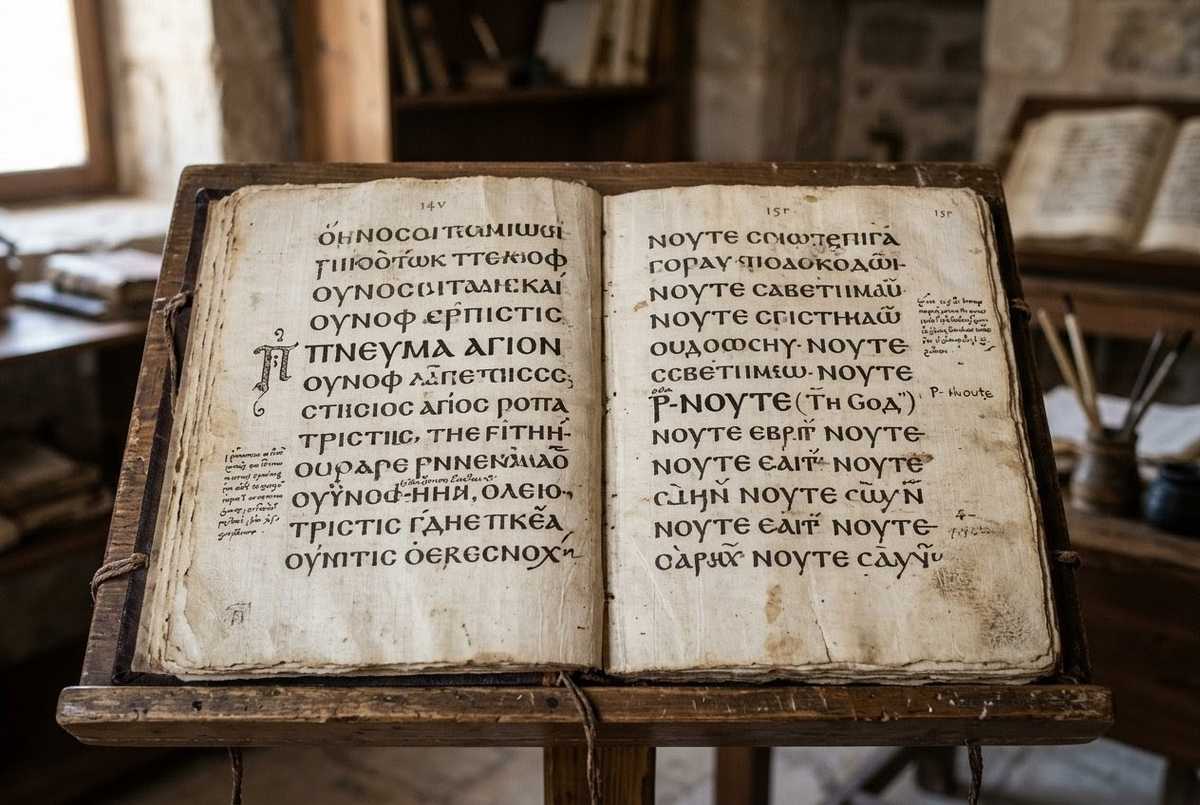
Primary Source Citation: “I am the Thought of the Father, Providence (Pronoia) of the Father… I am the Invisible One within the All.” — NHC XIII,1 35:1-4 (Trimorphic Protennoia, showing Greek loanword ⲡⲣⲟⲛⲟⲓⲁ) [13]
Textual Conventions
When reading scholarly editions of Coptic texts, you will encounter standard conventions [14]:
Brackets:
- […] = Lacuna (missing text due to manuscript damage)
- [word] = Text restored by editor (conjectural)
- (word) = Abbreviation expanded by editor
- [[word]] = Text erased by ancient scribe
Critical Signs:
- †…† = Crux interpretationum (doubtful reading)
- * = Dittography (accidental repetition)
- vac = Vacat (blank space in manuscript)
Reading Strategies for Non-Specialists
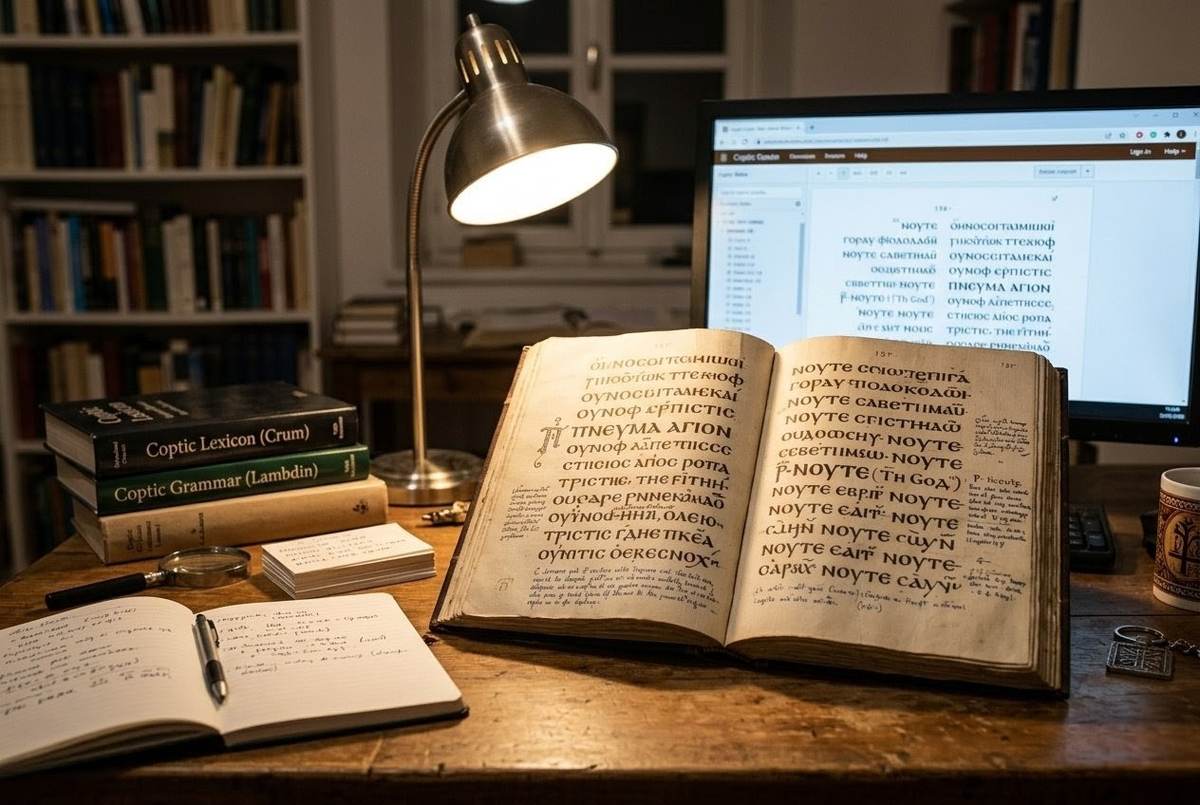
1. Use Interlinear Texts: Some online resources provide Coptic texts with word-by-word glosses. Comparing these with English translations reveals how complex concepts are handled [15].
2. Learn the Script: Even without mastering grammar, recognising the alphabet allows you to identify proper names, key theological terms, and structural markers (like “Jesus said” or “and he answered”).
3. Focus on Key Terms: Make flashcards for the most frequent theological vocabulary. Recognising ⲛⲟⲩⲧⲉ (god), ⲡⲛⲉⲩⲙⲁ (spirit), and ⲥⲱⲙⲁ (body) helps you spot these concepts in the original text.
4. Compare Translations: Different translators render Coptic terms differently. For example, ⲛⲟⲩⲧⲉ might be translated as “God,” “god,” or “the god” depending on context. Comparing translations alerts you to interpretive choices.
5. Note Coptic Features in Translations: Good translations indicate Coptic wordplay, etymologies, or ambiguous terms in footnotes. These notes often reveal theological nuances lost in English.
Resources for Learning Coptic
For Beginners: Layton, Bentley. Coptic in 20 Lessons. A rigorous but accessible introduction to Sahidic grammar. Lambdin, Thomas O. Introduction to Sahidic Coptic. The standard reference grammar [16].
Dictionaries: Criddle, A.H. Coptic Dictionary. Available online through the Packard Humanities Institute. Vycichl, Werner. Dictionnaire etymologique de la langue copte. For deeper etymological study.
Online Resources: The St Shenouda the Archimandrite Coptic Society offers online lessons and texts. Coptica provides digital texts and manuscripts. The International Image Interoperability Framework (IIIF) offers high-resolution images of Nag Hammadi papyri.
Primary Source Citation: “These are the secret words which Jesus the Living spoke… and Didymos Judas Thomas wrote them down.” — NHC II,2 32:10-11 (Gospel of Thomas, prologue showing typical Sahidic syntax) [17]
The Value of Original Language Study
Reading even small portions of the Nag Hammadi texts in Coptic illuminates dimensions lost in translation [18]:
Cultural Hybridity: The texts mix Egyptian, Greek, and Christian terminology. The word ⲛⲟⲩⲧⲉ (noute), for example, derives from the ancient Egyptian ntj (god), yet appears in Christian theological contexts.
Wordplay: Puns and etymological connections in Coptic often carry theological weight. The name ⲓⲁⲗⲇⲁⲃⲁⲱⲑ (Yaldabaoth) may echo Aramaic words meaning “child of chaos” or “begetter of Sabaoth,” wordplay visible only in the original [19].
Vocalisation: While we cannot recover ancient pronunciation perfectly, reading aloud connects you to the ritual and oral dimensions of these texts. Many were composed for liturgical use or recitation.
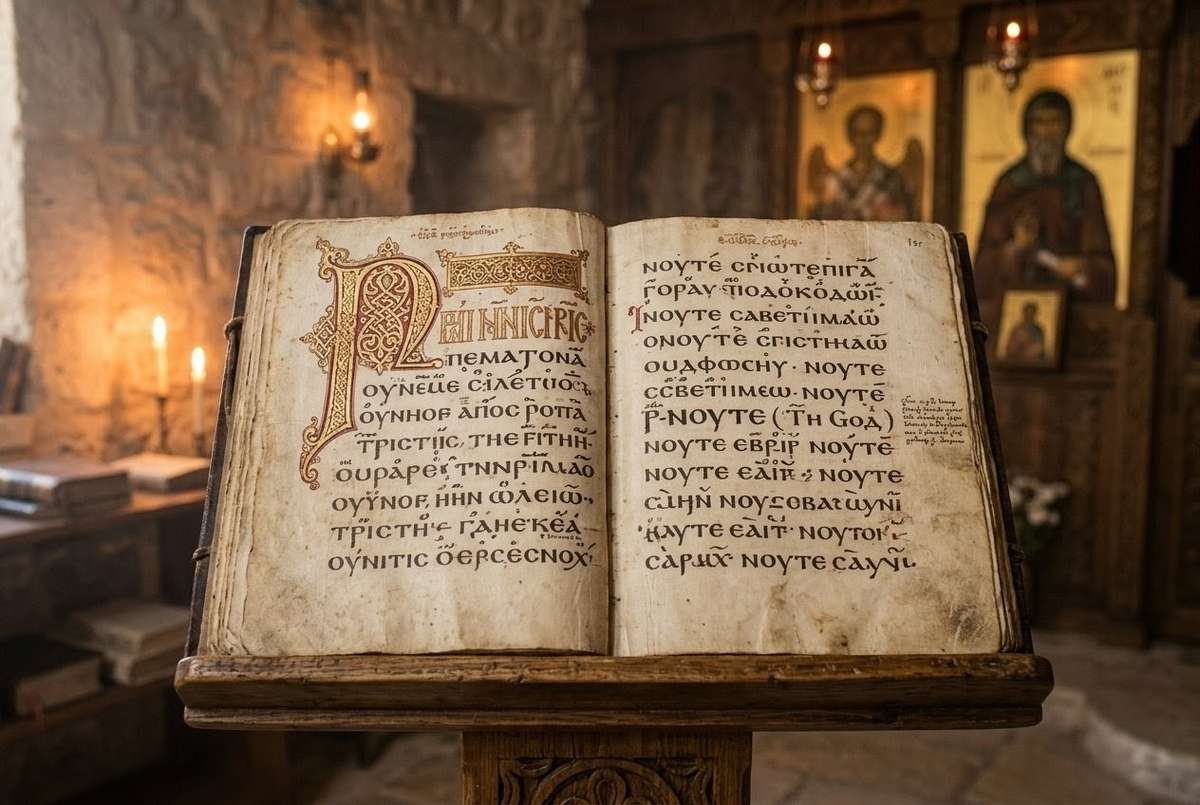
Though Coptic ceased to function as a spoken language around the 16th century, it remains the liturgical language of the Coptic Orthodox Church. Monks in Egyptian monasteries still chant the Psalms and liturgies in Coptic, preserving the soundscape within which the Nag Hammadi texts were composed [20].
For the non-specialist, even modest engagement with Coptic deepens appreciation for the Nag Hammadi Library as material, linguistic, and cultural artefacts–not merely as repositories of ideas, but as products of specific Egyptian Christian communities wrestling with Greek philosophy, Jewish tradition, and emerging orthodoxy.
Frequently Asked Questions
What is Coptic and why is it important for studying the Nag Hammadi Library?
Coptic is the final stage of the Egyptian language, written using the Greek alphabet plus seven Demotic characters. It served as the administrative and liturgical language of Egyptian Christianity from approximately 100 CE to 1000 CE. The Nag Hammadi Library is written primarily in Sahidic Coptic, making knowledge of this language essential for understanding translation choices, recognising Greek loanwords versus native Egyptian terms, and appreciating the cultural hybridity of Gnostic texts. Without Coptic, scholars would lack access to the precise theological terminology and wordplay present in the original manuscripts.
What are the seven Demotic characters in the Coptic alphabet?
The seven Demotic characters added to the Greek alphabet for Coptic are: Ϣ ϣ (shai, pronounced ‘sh’), Ϥ ϥ (fai, pronounced ‘f’), Ϧ ϧ (khai, hard ‘h’ like Arabic), Ϩ ϩ (hori, soft ‘h’), Ϫ ϫ (janja, ‘j’ or soft ‘g’), Ϭ ϭ (chima, ‘ky’ or ‘ch’ sound), and Ϯ ϯ (ti, pronounced ‘ti’). These characters preserved sounds unique to the Egyptian language that Greek lacked, such as the ‘sh’ sound and the hard aspirated ‘h’.
What is the difference between Sahidic and other Coptic dialects?
Sahidic (Thebaic) was the standard literary dialect of Upper Egypt and became the dominant written form of Coptic. Six major dialects existed: Sahidic, Bohairic (used today in the Coptic Church), Akhmimic, Subakhmimic (Lycopolitan), Fayyumic, and Oxyrhynchite. The Nag Hammadi texts are primarily Sahidic with occasional Lycopolitan features, reflecting their origin in Upper Egypt near Nag Hammadi. Sahidic uses specific phonological features, such as treating certain Greek diphthongs differently from Bohairic.
How do Coptic articles work?
Coptic uses prefix articles rather than standalone words. ⲡ- (p) indicates ‘the’ for masculine singular nouns, ⲧ- (t) for feminine singular, and ⲛ- (n) for plural. The indefinite article ‘a/an’ is ⲟⲩ- (ou). These prefixes attach directly to nouns–for example, ⲡⲛⲟⲩⲧⲉ (pnoute) means ‘the god’ or simply ‘God’. This system differs from both earlier Egyptian (which used suffix determinatives) and Greek (which used standalone articles).
What are the most important theological terms to recognise in Coptic?
Key theological vocabulary includes: ⲛⲟⲩⲧⲉ (noute, god–from Egyptian), ⲡⲛⲉⲩⲙⲁ (pneuma, spirit–Greek loan), ⲯⲩⲭⲏ (psykhe, soul–Greek), ⲥⲱⲙⲁ (soma, body–Greek), ⲅⲛⲱⲥⲓⲥ (gnosis, knowledge–Greek), ⲥⲟⲟⲩⲛ (sooun, to know–Egyptian), ⲥⲟⲫⲓⲁ (sophia, wisdom–Greek), ⲁⲣⲭⲱⲛ (archon, ruler–Greek), and ⲡⲗⲏⲣⲱⲙⲁ (pleroma, fullness–Greek). Recognising these helps identify theological concepts in the original text.
What do the brackets and symbols mean in critical Coptic editions?
Scholarly editions use specific conventions: […] indicates a lacuna (missing text due to damage); [word] shows text restored by the editor (conjectural); (word) indicates an abbreviation expanded by the editor; [[word]] marks text erased by ancient scribes; †…† (crux) indicates doubtful readings; * marks dittography (accidental repetition); and ‘vac’ indicates blank spaces in the manuscript. These symbols help readers distinguish original text from editorial interventions.
Is Coptic still spoken today?
Coptic ceased to function as a spoken, everyday language around the 16th century, gradually replaced by Arabic after the Islamic conquest. However, it remains the liturgical language of the Coptic Orthodox Church of Egypt. Monks in Egyptian monasteries still chant the Psalms and liturgies in Coptic, preserving the soundscape within which the Nag Hammadi texts were composed. Efforts to revive Coptic as a spoken language exist among some Egyptian nationalists and language enthusiasts, though these remain limited.
Further Reading
- The Prayer of the Apostle Paul: A Gnostic Supplication — A short text ideal for beginning Coptic readers, offering repetitive liturgical formulae.
- The Discovery at Nag Hammadi: How the Gnostic Library Was Found — The archaeological context of the Coptic manuscripts and their preservation.
- The Coptic Gnostic Library: Codicology and Conservation — Technical details on the material preservation of the Nag Hammadi codices.
- Gnostic Technical Glossary: Key Terms Explained — Definitions of theological terminology found in the Coptic texts.
- Reading Coptic Texts: A Guide for Non-Specialists — Practical strategies for approaching Coptic without formal training.
- Nag Hammadi Library: Complete Reader’s Guide — Overview of all 46 tractates with bibliographic guidance.
- Nag Hammadi Library: The Complete Guide to Gnostic Scriptures — Comprehensive introduction to the corpus and its scholarly apparatus.
References and Sources
The following sources support the claims and quotations presented in this article. All citations to the Nag Hammadi Library represent direct translations from the Coptic text as established in the standard critical editions.
Primary Sources and Critical Editions
- [1] Robinson, J.M. (1977). The Nag Hammadi Library in English. Harper & Row.
- [2] Layton, B. (2004). A Coptic Grammar with Chrestomathy and Glossary: Sahidic Dialect. 2nd ed. Harrassowitz.
- [3] Lambdin, T.O. (1983). Introduction to Sahidic Coptic. Mercer University Press.
- [4] Schenke, H.M. (2003). “The Linguistic Nature of Coptic.” In International Directory of Africanists.
- [5] Criddle, A.H. (1999). Coptic Dictionary. Packard Humanities Institute.
Coptic Studies and Linguistic Analysis
- [6] Loprieno, A. (1995). Ancient Egyptian: A Linguistic Introduction. Cambridge University Press.
- [7] Funk, W.P. (1988). “Dialectology.” In The Coptic Encyclopedia, Vol. 8. Macmillan.
- [8] Turner, J.D. (2001). Sethian Gnosticism and the Platonic Tradition. Universite Laval.
- [9] Till, W.C. (1955). Koptische Grammatik. 2nd ed. Verlag Enzyklopadie.
- [10] Polotsky, H.J. (1990). Grundlagen des koptischen Satzbaus. 2 vols. Decatur.
Comparative and Textual Studies
- [11] Burns, D.M. (2023). “Translating Esotericism: Coptic.” Correspondences 11.1, 51-57.
- [12] Meyer, M. (2007). The Nag Hammadi Scriptures. HarperOne.
- [13] Waldstein, M. & Wisse, F. (1995). The Apocryphon of John. Brill.
- [14] Schenke, H.M. (2012). Textkritik der Apokryphen des Alten Testaments. Mohr Siebeck.
- [15] Brakke, D. (2010). The Gnostics: Myth, Ritual, and Diversity in Early Christianity. Harvard University Press.
Pedagogical Resources
- [16] Layton, B. (2007). Coptic in 20 Lessons. Peeters.
- [17] Guillaumont, A. et al. (1979). The Gospel According to Thomas. Brill.
- [18] Smith, M. (1981). “Coptic Language and Literature.” In The Coptic Encyclopedia.
- [19] Scholem, G. (1965). Jewish Gnosticism, Merkabah Mysticism, and Talmudic Tradition. Jewish Theological Seminary.
- [20] Atiya, A.S. (1991). The Coptic Encyclopedia. 8 vols. Macmillan.