The Coptic Gnostic Library: Codicology, Conservation, and Modern Scholarship
The Physical Reality of Ancient Books: Codicology and Conservation of the Nag Hammadi Library
The Coptic Gnostic Library–the physical collection discovered at Nag Hammadi–represents one of the most significant assemblages of ancient books surviving from antiquity. Understanding how these texts were manufactured, bound, buried, and conserved reveals as much about ancient literacy and religious practice as the words contained within them. This “material filing system” preserves not merely theological content but evidence of scribal labour, monastic book production, and the technological transition from scroll to codex [1][2].
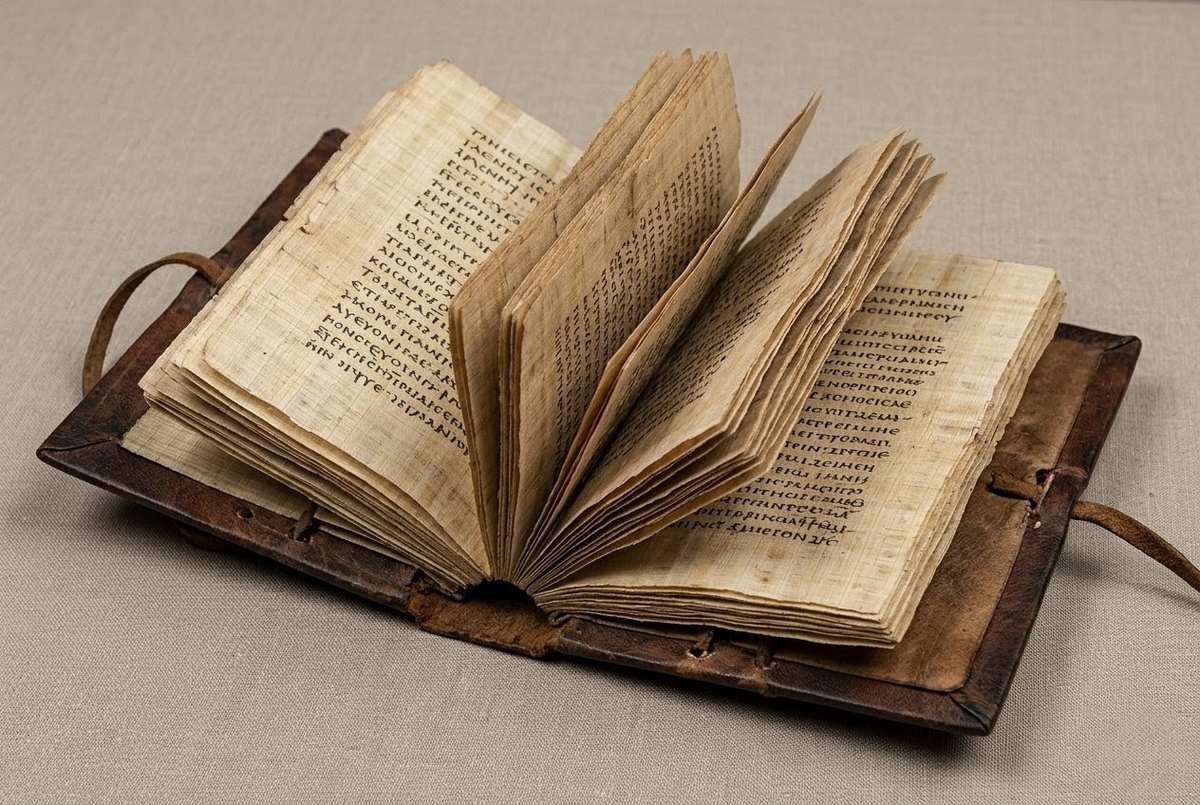
Table of Contents
- What is a Codex?
- The Materials of Manufacture
- The Structure of the Collection
- The Scribes and Their Work
- The State of Preservation
- Conservation History
- Codicological Analysis
- Textual Transmission
- The Importance of Paratext
- Modern Scholarly Editions
- Frequently Asked Questions
- Further Reading
- References and Sources
What is a Codex?
The Nag Hammadi texts are codices (singular: codex)–books with pages bound along one edge [3]. This format, ancestor of the modern book, was replacing scrolls in the Roman world during the third and fourth centuries CE. The Nag Hammadi discovery provides crucial evidence for this technological transition, showing how the codex format enabled the compilation of multiple texts into portable, accessible volumes.
Each codex consists of papyrus sheets folded once to form two leaves (four pages) of a quire. Multiple quires were stacked and bound through the centre folds with leather thongs [4]. Covers were made of stiffened leather, sometimes reinforced with waste papyrus (cartonnage) for rigidity. This “binding infrastructure” represents a significant technological advancement over the scroll format, allowing random access to content and the compilation of disparate texts into single volumes.
Codex vs. Scroll
The codex format offered distinct advantages: it allowed writing on both sides of the sheet (recto and verso), facilitated random access to specific passages, enabled the compilation of multiple texts in one volume, and was more portable than scrolls. By the fourth century, the codex had become the dominant format for Christian texts, while scrolls remained standard for Jewish and pagan literature.
The Materials of Manufacture
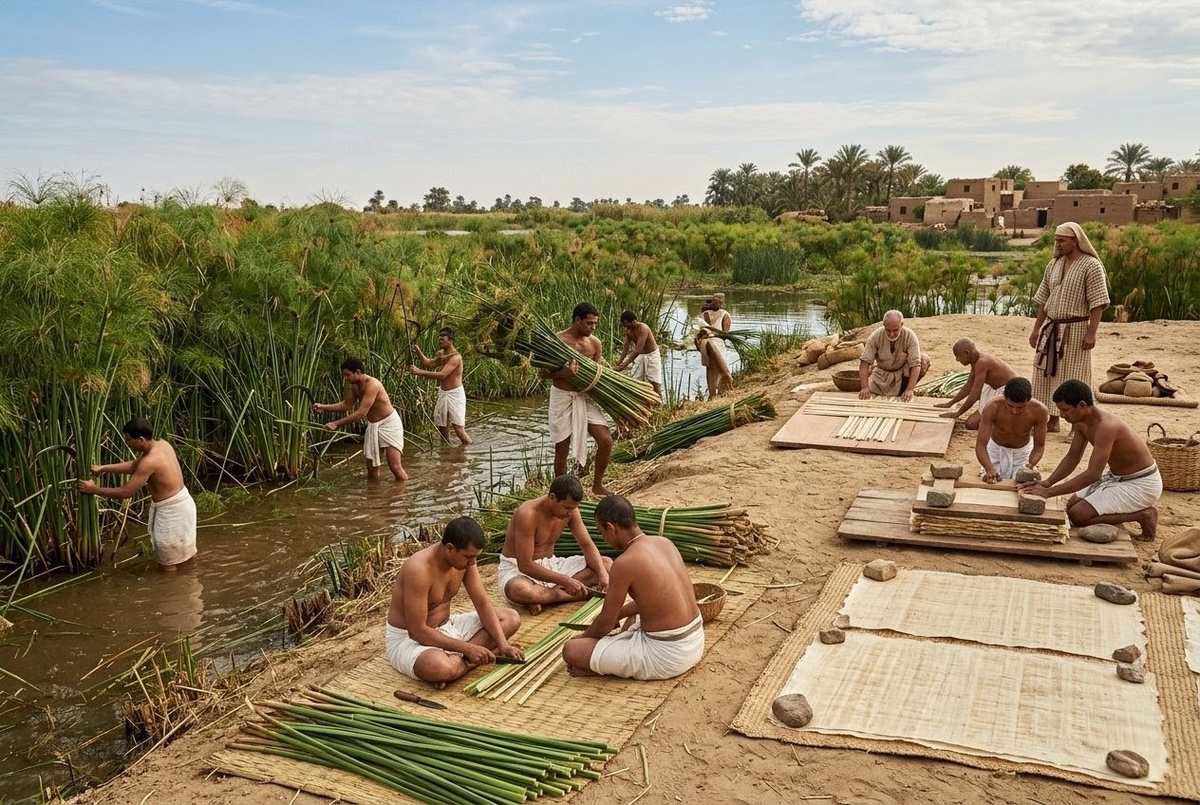
Papyrus: The writing material came from the papyrus reed (Cyperus papyrus), harvested in the Nile Delta [5]. Strips were cut from the stem’s inner pith, laid in overlapping horizontal and vertical layers, pressed, and dried to form sheets. The Nag Hammadi papyrus varies in quality–some sheets are fine and smooth, others coarse and fibrous. This variation suggests multiple sources of supply or different production batches within the scriptorium “procurement system.”
Leather: Covers and bindings used tanned goat or sheep leather [6]. Some bindings show evidence of tooling (decorative stamping), though most are plain. The leather thongs that bound the quires passed through the cover boards and were secured with leather tackets or glue. The excellent preservation of this leather is largely due to the dry Egyptian desert climate, which prevented the dry rot that damages leather in more humid conditions [7].
Ink: The texts were written in carbon-based ink (lampblack mixed with gum and water), producing a black line that has remained remarkably stable [8]. Some titles and decorations used red ink (iron gall or ochre-based). This “documentation standard” ensured legibility over sixteen centuries of burial.
The Structure of the Collection
The thirteen codices vary significantly in size and construction [9]:
- Codex I (Jung Codex): The smallest, measuring approximately 15 x 24 cm, containing 4 tractates. Acquired by the Carl Gustav Jung Institute in 1951 and not returned to Cairo until 1975 [10].
- Codex II: Better preserved, 15 x 26 cm, containing the Apocryphon of John and Gospel of Thomas. This codex provides the most complete versions of these foundational texts [6].
- Codex XI: The largest, containing lengthy treatises like A Valentinian Exposition and Allogenes.
Some codices contain only one or two texts; others are miscellanies containing up to eight different works. This suggests multiple scribal enterprises–some producing luxury editions of specific texts, others compiling comprehensive libraries [11].
The Scribes and Their Work
At least fifty different scribal hands have been identified across the collection, indicating extensive copying activity [12]. Some codices show multiple hands working on different texts, suggesting scriptorium production. Others display single hands copying multiple texts, perhaps the work of individual scholars or monks assembling personal libraries.
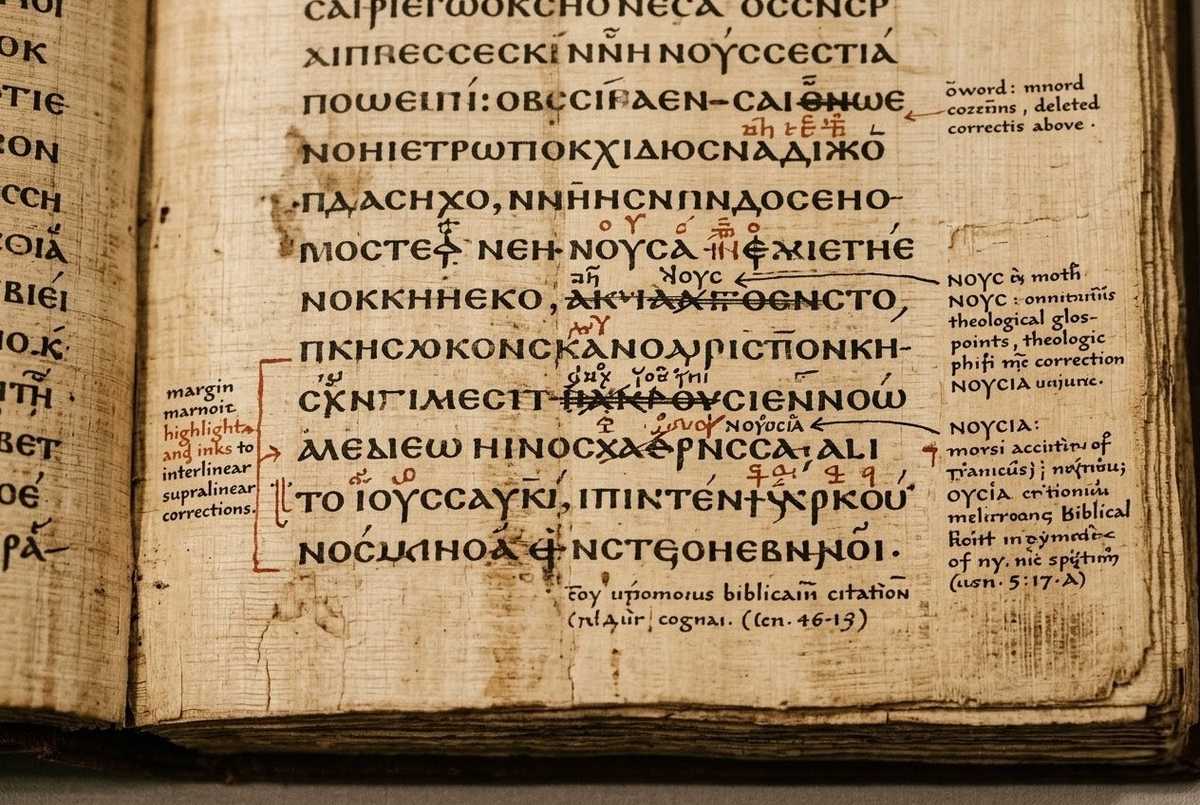
The scripts range from professional bookhands to amateur cursive. Some texts are beautifully executed with consistent letterforms and regular margins; others are hastily copied with irregular lines and numerous corrections [13].
Primary Source Analysis: Codex I was copied by two scribes. Scribe A copied all texts except The Treatise on the Resurrection, showing significant variation in quality and word count per page–fluctuating by up to 30% between sections. This suggests either changing external pressures or varying levels of scribal “workload management” [14].
Interesting scribal features include [15]:
- Stichometry: Some texts show counting marks (indicating lines per page), used for calculating scribes’ pay or checking completeness.
- Colophons: End notes identifying the text or scribe, rare in this collection but present in some codices.
- Corrections: Supralinear corrections, erasures, and marginal notes showing active engagement with the texts.
The State of Preservation
When discovered, the codices presented varying conditions [16]:
- Codex I: Relatively well-preserved due to its separate history (kept in Switzerland), though the papyrus had become brittle.
- Codices II-VI: Severe damage from moisture and pressure. Pages were stuck together, requiring careful humidification and separation.
- Codex XII: The most damaged, reduced to fragments by soil chemicals and compression.
- Bindings: Most leather covers had deteriorated into stiff, blackened masses. Some survived intact enough to show sewing patterns; others dissolved when touched.
The codices were buried in a sealed jar near the Jabal al-Tarif, protected by the dry desert climate that prevented the deterioration common in more humid environments [7]. This “archival storage protocol” inadvertently created optimal preservation conditions for sixteen centuries.
Conservation History
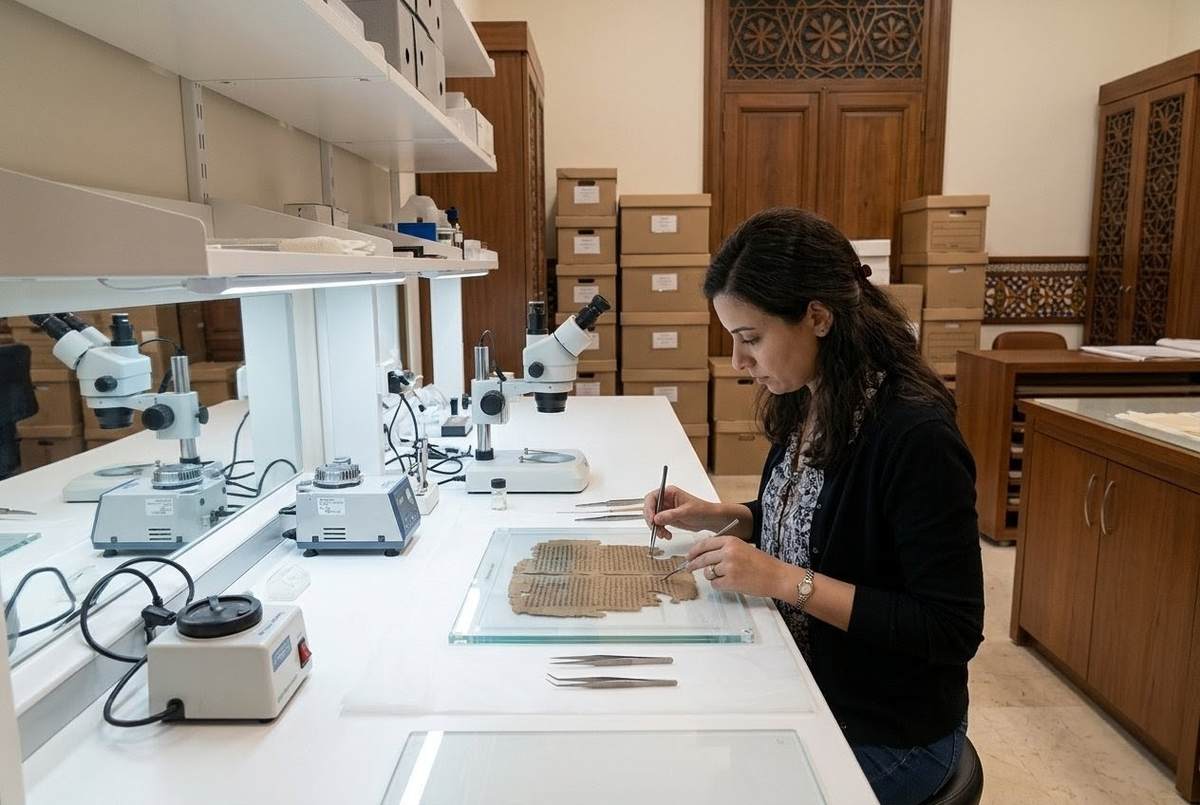
Phase 1 (1950s-1960s): Early conservation at the Coptic Museum involved separating stuck pages using humidity chambers and pressing them between glass plates [17]. While effective for preservation, this method sometimes damaged fibres and obscured text near the spine.
Phase 2 (1970s): Under the Coptic Gnostic Library Project led by James M. Robinson, conservators developed techniques for unfolding damaged leaves without glass pressure [18]. Papyrus was humidified and supported with tissue during flattening.
Phase 3 (1980s-present): Modern conservation uses minimal intervention. Fragile leaves are housed in archival folders with polyester film windows. Humidity and light controls prevent further deterioration [19].
Codicological Analysis
Codicologists have reconstructed manufacturing techniques through microscopic analysis [20]:
- Quire formation: Most quires consist of 5-7 bifolia (folded sheets), creating gatherings of 20-28 pages. Codex I uniquely uses three quires (22, 8, and 6 sheets), suggesting unplanned construction [14].
- Ruling: Some texts show pricking along the margins and ruling lines to guide writing; others are written without guides.
- Pagination: Few codices preserve original page numbers; most rely on modern scholarly pagination.
The binding structures reveal two main types [21]:
- Coptic binding: Sewn with chain stitches visible on the spine, characteristic of Egyptian bookmaking. This technique involves unsupported sewing where threads form interlocking loops without spine reinforcements.
- Modified coptic: Sewn with thongs inserted through the spine edge, creating a flatter profile. The Nag Hammadi codices primarily use this method with leather thongs passed through pairs of holes along the spine fold [6].
Technical Note: Eleven of the 13 codices retain their original leather bindings, showcasing overcast sewing techniques on papyrus folios. The use of cartonnage (layers of recycled papyrus pressed into covers) demonstrates resourcefulness amid limited supplies [6].
Textual Transmission
The presence of duplicate texts (three versions of the Apocryphon of John, two of the Gospel of Truth) allows scholars to study textual transmission [22]. Variants between versions reveal how these texts evolved through copying:
- Scribal errors (homoioteleuton, dittography)
- Deliberate corrections and harmonisations
- Expansions and abbreviations
- Translation variants (some texts were translated from Greek to Coptic multiple times)
This “textual versioning” demonstrates the fluidity of Gnostic traditions before the standardisation imposed by print culture [23].
The Importance of Paratext
Beyond the main texts, the codices contain valuable paratextual material [24]:
- Colophons and subscriptions: Identifying texts and occasionally scribes
- Blank pages: Suggesting incomplete copying or reserved space for notes
- Scribal notes: Marginal annotations, corrigenda, and reader responses
- Protective prayers: Some codices include protective formulae against theft or damage
Modern Scholarly Editions
The conservation effort supported the creation of critical editions [25]:
- The Coptic Gnostic Library (Brill): The complete scholarly edition with Coptic text, critical apparatus, English translation, and indices. Published in 14 volumes between 1975 and 1995 [18].
- The Nag Hammadi Library in English (HarperCollins): A one-volume translation for general readers, first published in 1977 and revised in 1988 and 1996 [26].
- Digital Editions: Recent projects have digitised the papyri through the International Image Interoperability Framework (IIIF), making high-resolution images available online. Scholars worldwide can now examine the manuscripts remotely [27].
Despite conservation efforts, the papyrus continues to deteriorate. Oxidation, humidity fluctuations, and handling stress threaten the fragile remains. The Coptic Museum in Cairo maintains strict environmental controls, but the sheer volume of material (over 1,200 pages) makes comprehensive monitoring difficult [28].
Scholars continue to debate whether further physical handling is justified or whether future study should rely on digital surrogates. The tension between access and preservation remains unresolved–a “security clearance” problem for the twenty-first century, balancing research needs against the irreversible fragility of the physical archive.
Frequently Asked Questions
What is a codex and how does it differ from a scroll?
A codex is a book format with pages bound along one edge, replacing the earlier scroll format. The Nag Hammadi codices use the Coptic binding technique–folded papyrus sheets (quires) sewn with leather thongs through the centre folds. Unlike scrolls, which are read by unrolling sequentially, codices allow random access to any page and can contain multiple texts in one volume. By the fourth century CE, the codex had become the dominant format for Christian texts, while scrolls remained standard for Jewish and pagan literature.
What materials were used to make the Nag Hammadi codices?
The Nag Hammadi codices were manufactured using: (1) Papyrus–sheets made from the pith of Cyperus papyrus reeds harvested in the Nile Delta; (2) Leather–tanned goat or sheep leather for covers and binding thongs, sometimes stiffened with cartonnage (layers of recycled papyrus); (3) Ink–carbon-based lampblack mixed with gum and water for text, with iron gall or ochre-based red ink for titles and decorations. The dry Egyptian desert climate preserved these materials remarkably well over sixteen centuries.
How were the Nag Hammadi codices conserved after discovery?
Conservation occurred in three phases: (1) 1950s-1960s–Early conservation at the Coptic Museum used humidity chambers to separate stuck pages, pressing them between glass plates; (2) 1970s–The Coptic Gnostic Library Project developed techniques for unfolding damaged leaves without glass pressure, using tissue support during humidification and flattening; (3) 1980s-present–Modern conservation uses minimal intervention, housing fragile leaves in archival folders with polyester film windows and maintaining strict humidity and light controls at the Coptic Museum in Cairo.
What is Coptic binding and how was it used in the Nag Hammadi codices?
Coptic binding is an ancient bookbinding technique using unsupported chain stitches–interlocking loops of thread passed through quire folds without cords or tapes. The Nag Hammadi codices primarily use a modified form with leather thongs inserted through pairs of holes along the spine fold, secured with tackets (short leather straps). This technique, originating in second-century Egypt, created flexible, durable books that could open flat. Eleven of the 13 codices retain original leather bindings demonstrating this method.
How many scribes worked on the Nag Hammadi Library?
At least fifty different scribal hands have been identified across the Nag Hammadi collection, indicating extensive copying activity. Some codices show multiple hands working on different texts (suggesting scriptorium production), while others display single hands copying multiple texts (perhaps individual scholars or monks assembling personal libraries). Codex I specifically was copied by two scribes–Scribe A produced most texts with variable quality, while Scribe B copied The Treatise on the Resurrection with more consistent letterforms.
What is textual transmission and why do duplicate texts matter?
Textual transmission refers to how texts were copied and transmitted over time. The Nag Hammadi Library contains duplicate texts–three versions of the Apocryphon of John and two of the Gospel of Truth–allowing scholars to compare variants and reconstruct how these texts evolved. Variants reveal scribal errors (homoioteleuton, dittography), deliberate corrections, expansions/abbreviations, and translation differences (Greek to Coptic). This evidence shows the fluidity of Gnostic traditions before standardisation and helps establish critical editions.
Where are the Nag Hammadi codices preserved today?
The Nag Hammadi codices are primarily housed in the Coptic Museum in Old Cairo, Egypt. Of the 1945 discovery, eleven complete books and fragments of two others are preserved there, comprising over 1,000 written pages. Codex I (the Jung Codex) was acquired by the Carl Gustav Jung Institute in Zurich in 1951 and not returned to Cairo until 1975. The collection is now maintained under strict environmental controls, though ongoing deterioration from oxidation and handling stress remains a concern for conservators.
Further Reading
- The Discovery at Nag Hammadi: How the Gnostic Library Was Found — The archaeological context and recovery of the “physical archive” buried since the fourth century.
- Timeline of Gnosticism: From Ancient Texts to Modern Discovery — The chronological trajectory of Gnostic history from second-century origins to modern scholarship.
- Gnostic Technical Glossary: Key Terms Explained — Definitions of theological terminology found in the codices.
- Nag Hammadi Library: Complete Reader’s Guide — Comprehensive navigation of all 46 tractates with bibliographic guidance.
- The Apocryphon of John: A Gnostic Creation Myth — The foundational text preserved in three versions across the codices.
- The Gospel of Thomas: Ancient Wisdom Sayings — The most famous Nag Hammadi text, preserved in Codex II.
- The Coptic Gnostic Library: Codicology and Conservation — Technical details on the material preservation of the Nag Hammadi codices.
References and Sources
The following sources support the claims and technical descriptions presented in this article. All references to the Nag Hammadi codices follow the standard NHC (Nag Hammadi Codices) designation system established by the Coptic Gnostic Library Project.
Primary Sources and Critical Editions
- [1] Robinson, J.M. (1977). The Nag Hammadi Library in English. Harper & Row.
- [2] Robinson, J.M. (ed.). (1975-1996). The Coptic Gnostic Library (12 vols.). Brill.
- [3] Turner, E.G. (1977). The Typology of the Early Codex. University of Pennsylvania Press.
- [4] Skeat, T.C. (1982). “The Length of the Standard Papyrus Roll and the Cost-Advantage of the Codex.” Zeitschrift fur Papyrologie und Epigraphik, 45, 169-175.
- [5] Lewis, N. (1974). Papyrus in Classical Antiquity. Clarendon Press.
Codicology and Bookbinding Studies
- [6] Szirmai, J.A. (1999). The Archaeology of Medieval Bookbinding. Ashgate. [Coptic binding techniques]
- [7] Miller, J. (2008). “Cairo in August: Researching the Nag Hammadi Codices.” Bonefolder, 4(2).
- [8] Leach, B. & Tait, J. (2000). “Papyrus.” In Ancient Egyptian Materials and Technology. Cambridge University Press.
- [9] Robinson, J.M. (1979). “The Construction of the Nag Hammadi Codices.” In Essays on the Nag Hammadi Texts in Honour of Pahor Labib. Brill.
- [10] Funk, W.P. (1995). “The Jung Codex.” In The Coptic Encyclopedia, Vol. 5. Macmillan.
Scribal Studies and Material Analysis
- [11] Ehrman, B.D. (1993). The Orthodox Corruption of Scripture. Oxford University Press.
- [12] Pasquali, G. (1952). Storia della tradizione e critica del testo. 2nd ed. Le Monnier.
- [13] Turner, J.D. (2001). Sethian Gnosticism and the Platonic Tradition. Universite Laval.
- [14] Linjamaa, P. (2024). The Nag Hammadi Codices and Their Ancient Readers. Cambridge University Press. [Codex I analysis]
- [15] Emmel, S. (2003). “The Coptic Gnostic Texts as Witnesses to the Production of Coptic Books.” In The Multilingual Origins of Christian Literature. Peeters.
Conservation and Preservation
- [16] Boudalis, G. (2015). The Making of the Early Codex and the Crafts of Late Antiquity. Bard Graduate Center.
- [17] Pahor Labib, (1963). “Conservation of the Nag Hammadi Papyri.” Restaurator, 1(1), 23-32.
- [18] Robinson, J.M. (2016). “Liberator of the Nag Hammadi Codices.” Biblical Archaeology Review.
- [19] Bausi, A. et al. (2019). “Digital Preservation of Coptic Manuscripts.” Digital Humanities Quarterly, 13(2).
- [20] Crisci, E.D. & Pecere, O. (2004). “Codicologia.” In La descrizione dei manoscritti. Edizioni di Storia e Letteratura.
Textual Transmission and Paratext
- [21] Boudalis, G. (2018). “The Bindings of the Early Christian Codex.” In Coptic Studies. Peeters.
- [22] Williams, M.A. (1996). Rethinking “Gnosticism”: An Argument for Dismantling a Dubious Category. Princeton University Press.
- [23] King, K.L. (2003). What is Gnosticism? Harvard University Press.
- [24] Genette, G. (1997). Paratexts: Thresholds of Interpretation. Cambridge University Press.
- [25] Robinson, J.M. (1981). “From Papyrus to Print: The Publication of the Nag Hammadi Library.” Biblical Archaeologist, 44(4), 238-243.
- [26] Layton, B. (1987). The Gnostic Scriptures. Doubleday.
- [27] IIIF Consortium. (2015). International Image Interoperability Framework. http://iiif.io
- [28] Coptic Museum Cairo. (2024). Annual Report on Conservation of the Nag Hammadi Collection.