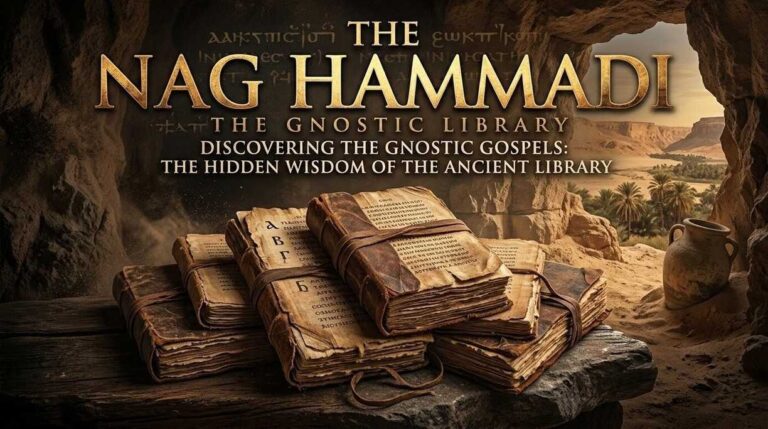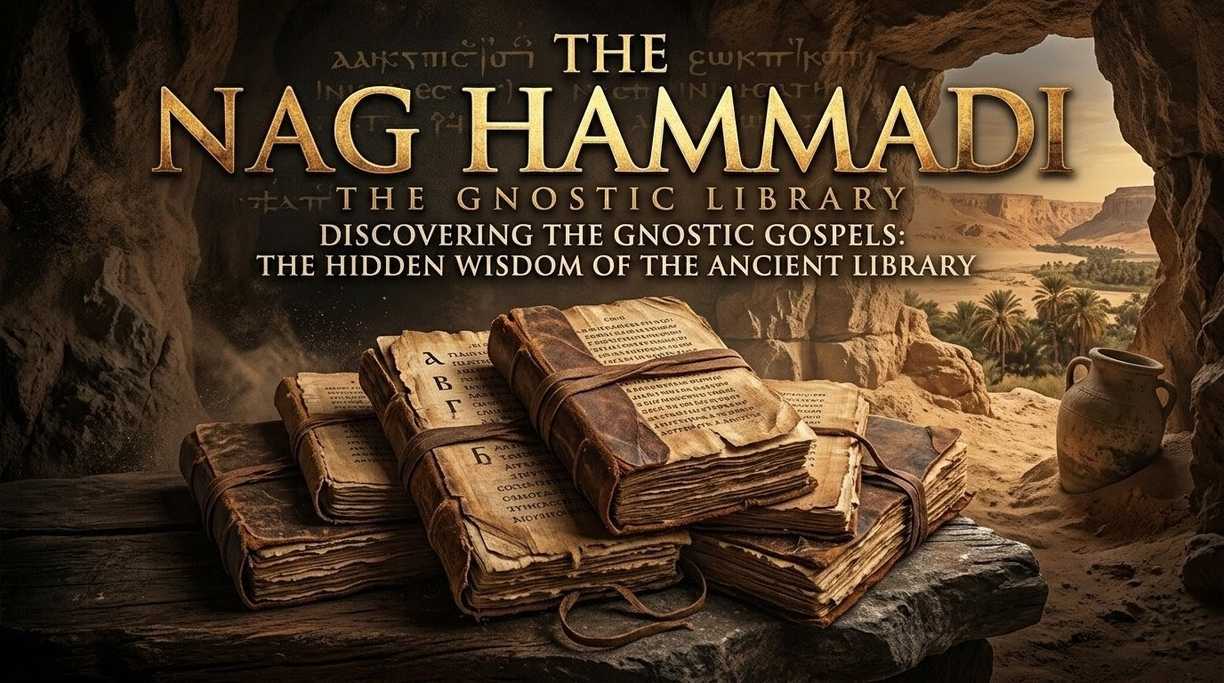
Codex VII: Sethian Technical Theology and the Critique of Martyrdom
Codex VII of the Nag Hammadi Library has earned its reputation as the most challenging codex in the collection. Its five tractates preserve Sethian theological speculation at its most abstract, visionary, and technically demanding–texts that assume substantial background knowledge and repay sustained attention with unique perspectives on Gnostic thought. The Paraphrase of Shem (NHC VII,1) presents an elaborate three-principle cosmology that resists easy interpretation. The Second Treatise of the Great Seth (NHC VII,2) offers a radical docetic reinterpretation of the crucifixion and a scathing critique of Christian martyrdom. The Apocalypse of Peter (NHC VII,3) reveals the famous laughing Saviour above the cross. The Teachings of Silvanus (NHC VII,4) provides rare evidence of Gnostic wisdom literature. And the Three Steles of Seth (NHC VII,5) preserves liturgical hymns that offer crucial evidence for Gnostic ritual practice [1].
Together, these texts transform Codex VII into an advanced seminar in Sethian spirituality–not an entry point for newcomers but a destination for those who have already traversed the foundational texts of the library. Where other codices offer narrative clarity or devotional accessibility, Codex VII demands engagement with technical terminology, fragmentary manuscripts, and cosmological systems that push the boundaries of ancient speculative theology. For scholars and prepared readers, however, this codex is indispensable. It reveals the full range of Gnostic expression–from cosmic speculation to practical wisdom, from docetic christology to liturgical hymnody–and demonstrates that Sethianism was not a single system but a diverse tradition encompassing multiple literary genres and theological emphases [2].
Table of Contents
- Introduction — The Most Challenging Codex
- The Manuscript and Its Context
- The Tractates of Codex VII
- Sethian Technical Literature at Its Most Abstract
- Reading Codex VII: A Guided Approach
- Why Codex VII Matters
- Frequently Asked Questions
- Further Reading
- References and Sources
Introduction — The Most Challenging Codex
What is Codex VII?
Codex VII is the most technically challenging codex in the Nag Hammadi Library, containing five Sethian tractates: the Paraphrase of Shem (obscure three-principle cosmology), the Second Treatise of the Great Seth (docetic crucifixion and anti-martyrdom), the Apocalypse of Peter (laughing Saviour above the cross), the Teachings of Silvanus (practical wisdom literature), and the Three Steles of Seth (liturgical hymns). Written in the Subachmimic Coptic dialect, these texts represent Sethian theology at its most abstract and visionary.
The five territories: Paraphrase of Shem (cosmological obscurity) → Second Treatise (docetic radicalism) → Apocalypse of Peter (visionary crucifixion) → Teachings of Silvanus (ethical pragmatism) → Three Steles (liturgical ascent). Together they map the outer edges of Sethian speculation [3][4].
The texts of Codex VII are not devotional readings for casual encounter. They are administrative documents from the celestial civil service, detailing protocols for navigating territories where the filing system grows so complex that only those with the highest security clearances can trace the jurisdictional boundaries. The Paraphrase of Shem opens with a revelation concerning “the nature of the power that is above all powers”–a phrase that signals the text’s ambition and its difficulty. The Second Treatise declares its author a stranger to the regions below, establishing a posture of radical alienation from the cosmic administration. The Apocalypse of Peter exposes the crucifixion as an archontic bungle, a case of mistaken identity in which the wrong claimant was processed. And the Three Steles provide the sonic passwords–hymns of praise–required to ascend through the departmental hierarchies of the divine triad [5].
For scholars of ancient religion, Codex VII is essential. It preserves the most extensive collection of non-Christian Sethian texts in the library, offering unparalleled evidence for the diversity and sophistication of the tradition. For contemplative readers, it offers a spirituality that treats enlightenment as advanced navigation–the ability to move through territories where the signposts are written in technical terminology and the guards demand passwords composed in hymnic verse. This is Gnosticism for those who have already passed the preliminary checkpoints and are ready for the inner sanctum of Sethian speculation [6].
The Manuscript and Its Context
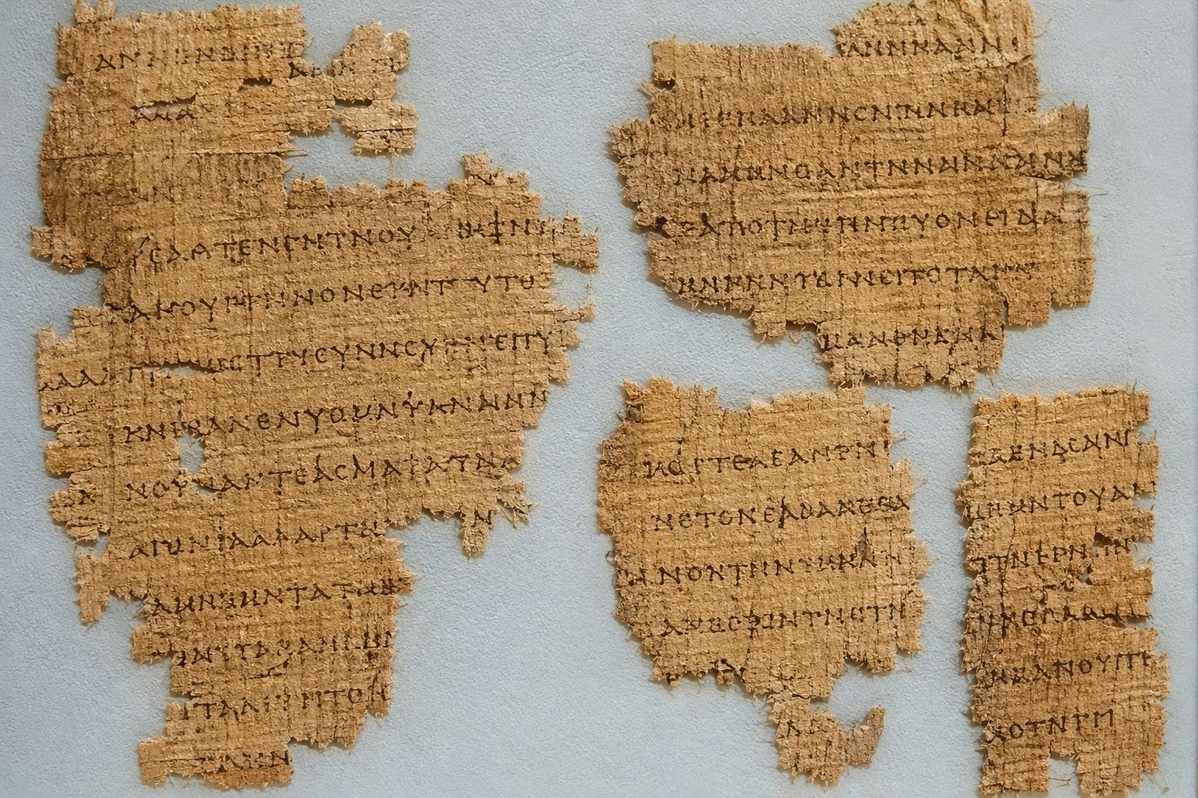
Codex VII was discovered in December 1945 near the town of Nag Hammadi in Upper Egypt, buried alongside eleven other codices in a sealed jar at the foot of the Jabal al-Tarif cliffs. The codex contains approximately 154 pages of Coptic text, making it one of the longer volumes in the collection. The texts are written primarily in the Subachmimic dialect, with occasional Sahidic influences that suggest a scribal hand familiar with multiple Coptic variants [3]. Paleographical analysis places the copying in the mid-to-late fourth century CE, though the Greek originals of the tractates likely circulated one to two centuries earlier [4].
The physical condition of Codex VII presents significant challenges. The Paraphrase of Shem suffers from extensive lacunae in its opening pages, leaving scholars to reconstruct its cosmological framework from partial evidence. The Second Treatise and Apocalypse of Peter are comparatively well-preserved, though not without gaps. The Teachings of Silvanus survives nearly intact, while the Three Steles of Seth shows damage in its concluding liturgical rubrics. These material conditions reinforce the codex’s reputation for difficulty: not only are the texts intellectually demanding, but the manuscript itself withholds portions of the information we need to understand them fully [7].
The codex was bound in leather over papyrus boards, a standard format for the Nag Hammadi collection. Its placement within the buried jar–sealed with pitch and hidden in a cemetery–suggests deliberate preservation during a period of ecclesiastical controversy, possibly during the campaign by Bishop Athanasius of Alexandria to suppress non-canonical texts in the 360s CE. The Subachmimic dialect indicates that the translators or copyists worked within Upper Egyptian monastic or scholastic circles, possibly connected to the Pachomian monastery near Nag Hammadi. Codex VII thus arrives to us as a contraband dossier–classified material concealed from the ecclesiastical authorities who were systematically excising alternative spiritualities from the Christian administrative record [8].
The Tractates of Codex VII
The five tractates of Codex VII articulate distinct modalities of Sethian spirituality–from obscure cosmological speculation to radical christological revision to practical ethical instruction to liturgical ascent. Together they demonstrate that Sethianism was not a monolithic system but a diverse tradition capable of generating multiple literary genres and theological approaches.
Paraphrase of Shem (NHC VII,1): Cosmological Obscurity
The Paraphrase of Shem opens with a revelation given to Shem, son of Noah, concerning the fundamental structure of reality. “The paraphrase of Shem, which he spoke to his companions, concerning the nature of the power that is above all powers.” This incipit establishes the text’s ambition: to reveal the metaphysical architecture that governs both the visible cosmos and the invisible realms beyond it [9].
The text presents an elaborate cosmology involving three principles: light, darkness, and spirit situated between them. The cosmos emerges from their interaction, with the material world formed from darkness and the spiritual world from light. Salvation comes through knowledge of this structure and the cultivation of the spiritual element within the human composite. The Paraphrase is notoriously difficult–fragmentary, allusive, full of technical terminology that resists easy interpretation. Scholars debate its relationship to other Sethian texts, its date of composition, and even its basic structural organisation. Unlike the narrative frameworks that make other tractates accessible, the Paraphrase reads like an advanced theological treatise composed for readers who have already mastered the preliminary syllabus. For general readers, this is optional reading; for specialists, it is essential for understanding the outer boundaries of Sethian cosmological imagination [10].
Second Treatise of the Great Seth (NHC VII,2): Docetic Radicalism
The Second Treatise presents a revelation from the divine Seth, third son of Adam, to his descendants–a radical reinterpretation of Christian history that transforms the crucifixion from tragedy to triumphal mockery. The narrator, speaking as the Saviour, recounts his descent through the planetary spheres, altering his forms to evade archontic detection, and entering the material realm as a stranger to its jurisdictions [11].
Primary Source Citation: NHC VII,2 56:1-20. “They saw me and punished me, but someone else, their father, drank the gall and the vinegar; it was not I. They were striking me with a scourge, but someone else, Simon, bore the cross on his shoulder. Someone else wore the crown of thorns. And I was on high, poking fun at all the excesses of the rulers and the fruit of their error and conceit. I was laughing at their ignorance.”
Most striking is the text’s explicit rejection of Christian martyrdom: “I did not die in reality, but in appearance… Those who say they die for my sake are liars. I am the stranger to them.” This declaration sets the Second Treatise apart from orthodox Christianity and even from some Gnostic traditions that maintained a more positive attitude toward suffering. The Gnostic is the stranger, the alien, the one who belongs to another realm entirely–not a citizen of the cosmic administration but a traveller passing through hostile territory on the way to a native country beyond the archontic border. The text also contains a scathing critique of the “archons of this world” and their religious systems: “They are bound with measures and times and moments, since it is lorded over them.” The archons may control the temporal bureaucracy, but they cannot detain those who carry the proper exit visas [12].
Apocalypse of Peter (NHC VII,3): The Laughing Saviour
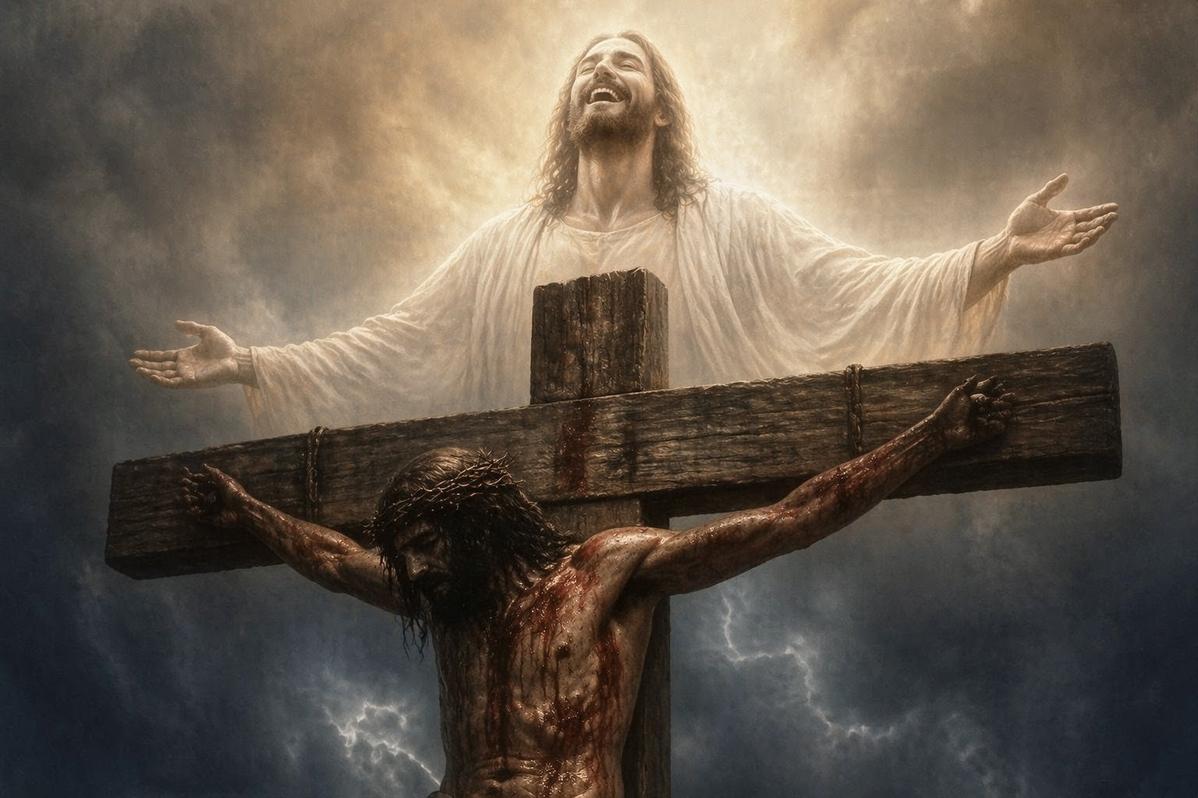
The Apocalypse of Peter presents a revelation given to Peter by Jesus, showing him the true meaning of the crucifixion through a visionary audition. The text is famous for its docetic interpretation: Jesus did not suffer on the cross; a substitute took his place while the spiritual Saviour laughed from above, mocking the archons’ incompetence [13].
Primary Source Citation: NHC VII,3 81:15-18. “The saviour said to me, ‘He whom you see above the cross, glad and laughing, is the living Jesus. But he into whose hands and feet they are driving the nails is his fleshly part, which is the substitute.'”
This interpretation resolves the scandal of the cross for Gnostic sensibilities–the divine does not suffer; the material body is disposable. But the text goes further, containing a remarkable polemic against the emerging orthodox church hierarchy. It attacks bishops and deacons who “bend themselves under the judgement of the first seats” and accuses them of rejoicing over archontic imprisonment of immortal souls. This is counter-intelligence against the ecclesiastical administration–a revelation that exposes the archontic sympathies of emerging orthodox power structures. The Apocalypse of Peter thus functions as both theological treatise and political pamphlet, unmasking the collaboration between earthly hierarchy and celestial hostility [14].
Teachings of Silvanus (NHC VII,4): Practical Wisdom
The Teachings of Silvanus stands apart from its codex companions. A wisdom text attributed to Silvanus, a companion of Paul mentioned in 1 Thessalonians, it presents ethical instruction in the form of wisdom sayings–more practical than speculative, more concerned with daily conduct than cosmic cartography. The text resembles biblical wisdom literature (Proverbs, Sirach) more than Gnostic apocalypse, suggesting that the wisdom tradition remained vital in Gnostic circles alongside the more exotic speculative texts [15].
Primary Source Citation: NHC VII,4 84:15-20. “My son, observe my advice. Flee wickedness. Watch yourself carefully in all things, in whatever you do… Work hard, my son, lest death overtake you and you become a dead man while still alive.”
“Cast worry out of your heart, and put sorrow away from you. For worry has killed many, and there is no profit in it.” Such counsels represent the internal administration of the self–the governance of attention and the proper allocation of psychic resources. Unlike the cosmic speculators who populate other tractates, Silvanus concerns himself with the practical management of emotional reactivity. The text recognises that one need not overthrow the cosmic administration to be free of it; one need only cease paying the taxes of anxiety that sustain its operations. This is Gnosticism as askesis–not the extreme asceticism of body-hatred attributed to certain factions by hostile heresiologists, but the disciplined training of attention that renders the practitioner immune to the distractions of the archonic marketplace [16].
Three Steles of Seth (NHC VII,5): Liturgical Ascent
The Three Steles of Seth is a liturgical text–three hymns of praise addressed to the divine realm, presented as the worship of Seth and his descendants. Unlike the other tractates in Codex VII, this text is not narrative or argumentative but hymnic and ritual. The steles are meant to be recited, not merely read–evidence of actual Gnostic worship practice that complements the theoretical speculations of the other texts [17].
Primary Source Citation: NHC VII,5 118:10-13. “The revelation of Dositheos about the three steles of Seth, father of the living and unshakable race. He remembered what he saw, understood, and read, and gave it to the chosen, just as it was written there.”
The text describes a complex hierarchy of divine beings, from the invisible spirit through the self-generated divine to the aeons and powers. The first stele is addressed to Geradamas (the heavenly Adam), the second to Barbelo (the divine Mother), and the third to the preexistent Father. The worshipper ascends through praise, moving from lower to higher realms through the power of invocation. Once the spiritual acme is achieved, the worshippers enter into silent praise tantamount to cognitive assimilation to the supreme Father, after which they descend through the three levels in reverse order. This is not merely poetry but operational protocol–the sonic architecture of a ritual ascent that transforms hymnic praise into celestial navigation [18].
Sethian Technical Literature at Its Most Abstract
Codex VII represents Sethianism at its most technically ambitious. The Paraphrase of Shem and the Three Steles employ terminology and cosmological frameworks that assume familiarity with the entire Sethian mythological system–the Four Luminaries, the Five Seals, the divine triad of Father-Mother-Son, and the complex aeonic hierarchies that populate the pleroma. These texts were not composed for initiates entering the tradition but for advanced practitioners who had already received the preliminary teachings and were ready for the inner curriculum [19].
The docetic christology of the Second Treatise and the Apocalypse of Peter represents a distinctive Sethian contribution to early Christian theology. Where Valentinianism developed elaborate sacramental systems and Hermeticism pursued philosophical universalism, Sethianism concentrated on the radical otherness of the divine Saviour and the fundamentally deceptive nature of the material cosmos. The crucifixion is not redemption but illusion; the body is not temple but prison; the orthodox church is not authority but archontic collaborator. This is the revolutionary resistance cell of ancient Christianity–a community that viewed the dominant ecclesiastical structure as a branch office of the cosmic demiurge, staffed by personnel who had either forgotten or never known the location of the executive headquarters [20].
The Teachings of Silvanus complicates this picture by introducing a pragmatic dimension. Not all Sethians were cosmic speculators or radical docetists; some were simply seeking practical wisdom for daily living. The presence of Silvanus in Codex VII suggests that the ancient collectors valued this diversity–that they saw no contradiction between the heights of mystical speculation and the sober ground of ethical practice. The archons may govern the stars and assign destinies according to planetary jurisdictions, but Silvanus reminds us that the governance of the self remains the foundation upon which all higher knowledge is built [21].
Reading Codex VII: A Guided Approach
For newcomers to Nag Hammadi, Codex VII presents a formidable barrier. The density of its technical terminology, the fragmentary condition of its manuscripts, and the advanced cosmological assumptions of its tractates make this codex unsuitable as an entry point. Beginners are strongly advised to start elsewhere–with the Gospel of Thomas, the Gospel of Truth, or the Apocryphon of John–before attempting the material in Codex VII [22].
Those with foundational preparation should begin with the Teachings of Silvanus, whose practical wisdom and ethical clarity offer the most accessible entry into the codex. From there, proceed to the Apocalypse of Peter for its vivid visionary narrative and famous crucifixion interpretation. The Second Treatise of the Great Seth follows naturally, extending the docetic themes of the Apocalypse while introducing the radical critique of martyrdom. Only after mastering these three should the reader attempt the Paraphrase of Shem and the Three Steles of Seth–texts that require background in Sethian cosmology, Middle Platonic metaphysics, and the ritual practices of ancient ascent literature [23].
For advanced study, Codex VII demands comparative reading. Set the Paraphrase of Shem alongside the Apocryphon of John to trace the development of Sethian cosmological speculation. Read the Second Treatise and the Apocalypse of Peter with the Gnostic Attitudes Toward Martyrdom article to understand the historical context of their anti-martyrdom polemic. Study the Three Steles alongside Zostrianos and Allogenes to map the full range of Sethian ritual ascent. Such comparison reveals both the shared ritual substrate and the distinctive developments that make each text unique [24].
Why Codex VII Matters
This codex preserves the most challenging and technically demanding texts in the library–material that reveals the full sophistication and sometimes the full obscurity of Sethian theology. It is not for everyone, but for those with preparation, it offers perspectives unavailable elsewhere in the collection. The critique of martyrdom in the Second Treatise is historically significant–evidence of how Gnostics differentiated themselves from orthodox Christianity on a crucial point of religious practice, refusing to valorise suffering as a spiritual ideal and instead treating the body as disposable camouflage for the spiritual self [25].
The Apocalypse of Peter’s crucifixion interpretation became famous (or infamous) in early Christian polemics, cited by heresiologists as evidence of Gnostic extremism while celebrated by modern scholars as a daring theological solution to the problem of divine suffering. The text’s additional polemic against bishops and deacons provides crucial evidence for the social context of Gnostic-orthodox conflict, revealing a community that viewed hierarchical authority not as divine gift but as archontic infiltration [26].
Most importantly, Codex VII reveals the diversity of Gnostic expression–not just philosophical system or visionary ascent, but also practical wisdom and liturgical practice. For understanding Gnosticism as a lived religion, not merely a set of speculative ideas, this codex is essential. It stands as the advanced research division of the Sethian administration–the department where the filing system grows so complex that only those with the highest security clearances can navigate its corridors, where every form requires three signatures from the divine triad, and where the exit visas are written in hymnic verse [27].

Frequently Asked Questions
What is Codex VII in the Nag Hammadi Library?
Codex VII is one of the twelve codices discovered near Nag Hammadi in 1945, containing five Sethian tractates: the Paraphrase of Shem, the Second Treatise of the Great Seth, the Apocalypse of Peter, the Teachings of Silvanus, and the Three Steles of Seth. It is regarded as the most technically challenging codex due to its abstract cosmology, fragmentary condition, and advanced theological speculation.
What are the five tractates of Codex VII?
The five tractates are: (1) Paraphrase of Shem (NHC VII,1)–an obscure revelation concerning three cosmic principles; (2) Second Treatise of the Great Seth (NHC VII,2)–a docetic reinterpretation of the crucifixion; (3) Apocalypse of Peter (NHC VII,3)–a vision of the laughing Saviour above the cross; (4) Teachings of Silvanus (NHC VII,4)–practical wisdom sayings; and (5) Three Steles of Seth (NHC VII,5)–liturgical hymns for ritual ascent.
What is the Paraphrase of Shem and why is it challenging?
The Paraphrase of Shem (NHC VII,1) is a revelation to Shem, son of Noah, presenting a cosmology of three principles–light, darkness, and spirit. It is challenging due to its fragmentary condition, allusive technical terminology, and lack of narrative framework, making it accessible primarily to specialists in Sethian cosmology.
How does the Second Treatise of the Great Seth interpret the crucifixion?
The Second Treatise (NHC VII,2) presents a docetic view: Jesus was a spiritual being who temporarily inhabited a human body, and the crucifixion was an illusion. Someone else bore the suffering while Jesus laughed from above. The text also rejects Christian martyrdom, declaring that those who die for his sake are liars.
What is the Apocalypse of Peter’s docetic view of the cross?
The Apocalypse of Peter (NHC VII,3) describes Peter seeing two figures on the cross: the living Jesus glad and laughing above it, while a substitute–his fleshly part–receives the nails. This resolves the scandal of divine suffering by distinguishing the spiritual Saviour from his disposable material body.
What are the Three Steles of Seth and their significance?
The Three Steles of Seth (NHC VII,5) are liturgical hymns addressed to the Sethian divine triad–Geradamas, Barbelo, and the preexistent Father. They provide rare evidence of actual Gnostic worship practice, describing an ascent through praise followed by silent contemplation and descent through the three levels in reverse order.
How should readers approach the difficult texts of Codex VII?
Beginners should start with the Teachings of Silvanus for practical accessibility, then the Apocalypse of Peter and Second Treatise. The Paraphrase of Shem and Three Steles require advanced preparation, including familiarity with the Apocryphon of John, Sethian cosmology, and Middle Platonic metaphysics.
Further Reading
These links connect Codex VII to related resources within the ZenithEye library, providing pathways for deeper exploration of specific texts, traditions, and the historical context of Sethian technical literature.
- The Nag Hammadi Library: Complete Reader’s Guide — Master index and navigational hub for all forty-six tractates and thematic collections.
- Paraphrase of Shem: Noetic Baptism and the Three Natures — Detailed individual tractate study exploring the most obscure cosmological text in the library.
- Second Treatise of the Great Seth — In-depth analysis of the radical docetic crucifixion narrative and its critique of martyrdom.
- Apocalypse of Peter: The Laughing Saviour and Docetic Cross — Examination of the famous visionary crucifixion and its polemic against orthodox hierarchy.
- Teachings of Silvanus: Practical Wisdom for Spiritual Life — The accessible entry point from Codex VII, exploring Gnostic wisdom literature and ethical practice.
- Three Steles of Seth: Hymns of Praise and Ascent — Study of the liturgical hymns and their evidence for actual Gnostic ritual worship.
- Gnostic Attitudes Toward Martyrdom — Historical context for the Second Treatise’s radical rejection of Christian martyrdom as religious ideal.
- Sethian and Valentinian Traditions in Nag Hammadi — Comparative guide positioning Codex VII within the broader landscape of Gnostic schools.
- The Complete Nag Hammadi Reading Order — Structured path through all forty-six tractates, with guidance on building preparation for advanced texts such as those in Codex VII.
- Codex VIII: Zostrianos and Ascent Literature — Comparative codex overview examining the next stage of Sethian technical literature and Platonist ascent.
References and Sources
The following sources support the claims and quotations presented in this article. All citations to the Nag Hammadi Library represent direct translations from the Coptic text as established in the standard critical editions.
Primary Sources and Critical Editions
- [1] Robinson, J.M. (Ed.). (1988). The Nag Hammadi Library in English (4th ed.). Brill.
- [2] Meyer, M. (Ed.). (2007). The Nag Hammadi Scriptures: The International Edition. HarperOne.
- [3] Krause, M. & Labib, P. (1971). Gnostische und hermetische Schriften aus Codex II und Codex VI. Verlag J.J. Augustin.
- [4] Pearson, B.A. (2007). Ancient Gnosticism: Traditions and Literature. Fortress Press.
- [5] Layton, B. (1987). The Gnostic Scriptures. Doubleday.
Scholarly Monographs and Commentaries
- [6] Turner, J.D. (2001). Sethian Gnosticism and the Platonic Tradition. Peeters.
- [7] Brashler, J.A. (1979). “The Second Treatise of the Great Seth (VII,2).” In Nag Hammadi Codices V,2-5 and VI with Papyrus Berolinensis 8502,1 and 4. NHS 11. Brill.
- [8] Peel, M.L. (1970). “The Teachings of Silvanus (NHC VII,4).” Novum Testamentum, 12, 233-240.
- [9] Schenke, H.-M. (1974). “The Phenomenon and Significance of Gnostic Sethianism.” In The Rediscovery of Gnosticism, Vol. 2. Brill.
- [10] Williams, M.A. (1996). Rethinking “Gnosticism”: An Argument for Dismantling a Dubious Category. Princeton University Press.
Comparative Studies and Thematic Analyses
- [11] Pagels, E.H. (1979). The Gnostic Gospels. Random House.
- [12] King, K.L. (2006). The Secret Revelation of John. Harvard University Press.
- [13] Wisse, F. (1988). “The Paraphrase of Shem (NHC VII,1).” In Nag Hammadi Codex VII. NHS 30. Brill.
- [14] Nagel, P. (1979). “The Apocalypse of Peter (NHC VII,3).” In Nag Hammadi Codices V,2-5 and VI. NHS 11. Brill.
- [15] Turner, J.D. (1993). “Ritual in Gnostic Ascent Literature.” SBL Seminar Papers, 32, 485-505.