The Second Treatise of the Great Seth: The Saviour Who Laughs at the Cross
The Second Treatise of the Great Seth (NHC VII,2) preserves one of the most radical expressions of docetic Christology in the entire Nag Hammadi Library. Composed in Greek around 200 CE, likely in Alexandria, and translated into Coptic by the fourth century, this first-person discourse attributed to Jesus confronts readers with an uncompromising theological vision: the Saviour did not suffer on the cross, did not die in reality, and laughed from above at the archons who believed they had secured his execution [1]. For scholars of early Christianity, the text offers essential evidence of the extraordinary diversity of second- and third-century Christological reflection; for the general reader, it remains among the most intellectually demanding and spiritually provocative works in the Gnostic corpus.
This article examines the Second Treatise through the combined lenses of codicology, theological analysis, and historical criticism. We explore its famous substitutionist crucifixion narrative, its polemical rejection of Christian martyrdom, its absolute dualism between the Father of Truth and the Father of Flesh, and its profound articulation of Gnostic alienation from the material order. Throughout, we maintain scholarly rigour while acknowledging the text’s undeniable power to disturb conventional religious assumptions.
Table of Contents
- Introduction to the Second Treatise
- The Manuscript and Its Context
- The Substitution on the Cross
- The Rejection of Martyrdom
- The Father of Truth vs. the Father of Flesh
- The Stranger and the Alien
- Reading the Second Treatise Critically
- Why the Second Treatise Matters
- Frequently Asked Questions
- Further Reading
- References and Sources
Introduction to the Second Treatise
What is Docetism?
Docetism derives from the Greek dokein, meaning “to seem” or “to appear”. In Christological terms, it denotes the belief that Jesus Christ only appeared to possess a physical body and only appeared to suffer and die on the cross, while in reality his divine nature remained untouched by material experience. The Second Treatise of the Great Seth advances one of the most radical forms of docetism in early Christian literature, asserting not merely the appearance of suffering but the active substitution of another figure in the Saviour’s place.
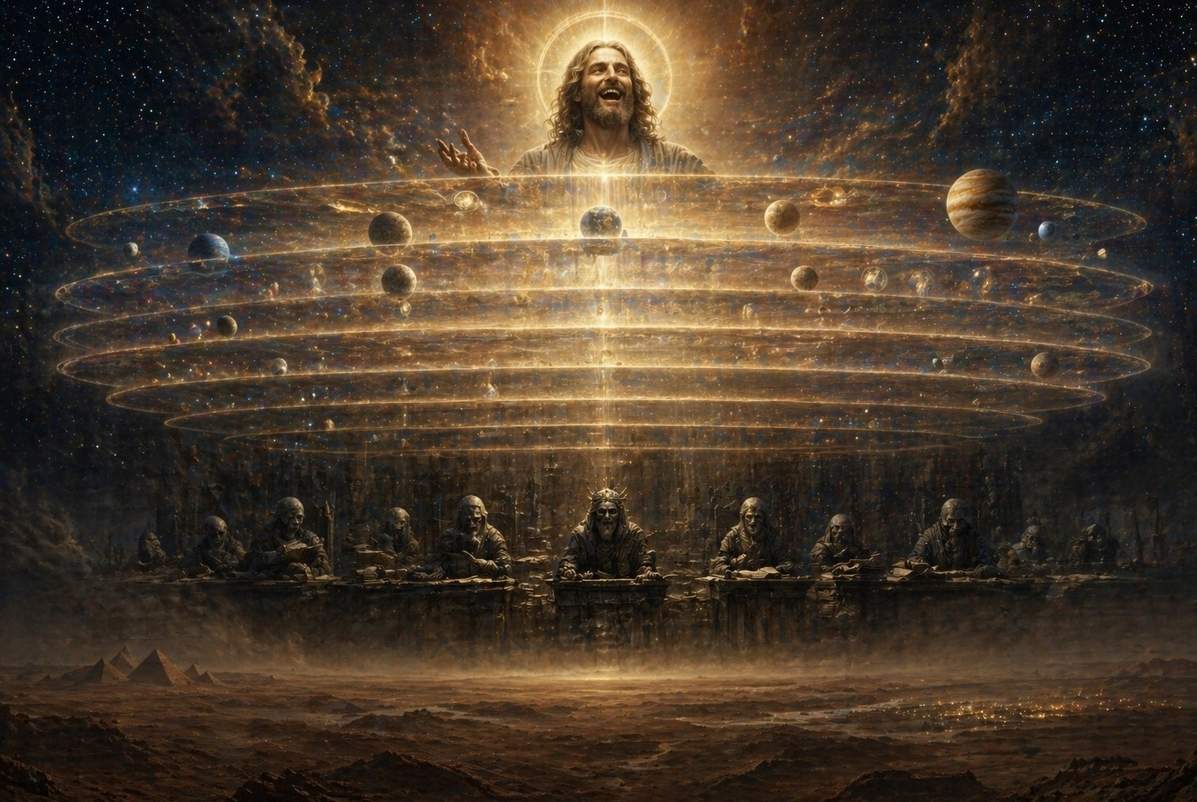
Despite its title, the word “Seth” never actually appears in the text, nor does any separate “First Treatise” survive [2]. The title likely reflects Sethian theological convictions that the Great Seth–the son of Adam and Eve in Genesis–and Jesus represent two manifestations of the same divine revealer, dispatched from the executive headquarters of the Pleroma to deliver gnosis to a world trapped in bureaucratic error. The text unfolds as a first-person homily in which the risen Christ addresses his immortal disciples, recounting his pre-existent glory, his descent through the planetary spheres, his ministry on earth, and his triumphant escape from the archons’ execution squad.
The treatise divides broadly into two movements. The first section glorifies Christ’s heavenly origins and describes his descent through the cosmic spheres, evicting the previous occupant of his bodily dwelling and sowing confusion among the middle-management archons who attempted to process his paperwork [3]. The second section recounts his earthly ministry, the crucifixion as cosmic delusion, and the promise of eternal rest for the elect who possess the proper security clearance to ascend beyond the material branch office. This structure places the text firmly within Sethian baptismal and apocalyptic traditions, though scholars have noted eclectic borrowings from Valentinian cosmology that complicate any simple classification [4].
The Manuscript and Its Context
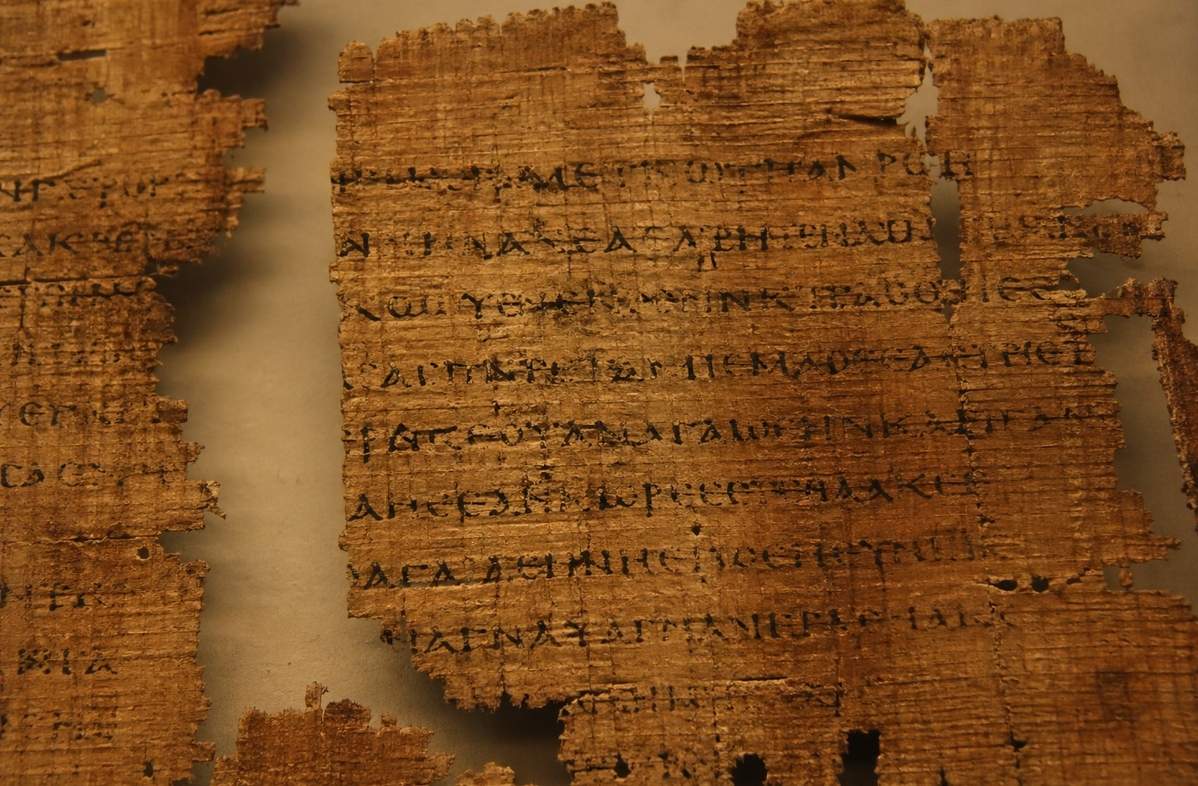
The Second Treatise of the Great Seth occupies pages 49 through 70 of Codex VII, one of the thirteen leather-bound volumes discovered in December 1945 near the town of Nag Hammadi in Upper Egypt [5]. The codex contains five tractates: the Paraphrase of Shem, the Second Treatise of the Great Seth, the Apocalypse of Peter, the Teachings of Silvanus, and the Three Steles of Seth. This collection suggests a deliberate editorial programme centred on Sethian themes, with the Second Treatise serving as the theological centrepiece between the cosmological speculation of the Paraphrase and the visionary drama of the Apocalypse of Peter.
Linguistic analysis indicates that the text was originally composed in Koine Greek during the early third century CE, most probably in Alexandria, the literary and intellectual capital of Egyptian Christianity [6]. The surviving Coptic translation, produced by the mid-fourth century, exhibits Subachmimic dialect features alongside standard Sahidic forms, suggesting translation activity within monastic or scholarly circles familiar with multiple Coptic idioms. The manuscript’s preservation in a sealed jar near a Pachomian monastery raises enduring questions about whether Gnostic texts were hidden by sympathetic monks seeking to protect them from Theodosian persecution, or by orthodox authorities attempting to remove heretical materials from circulation [7].
Codex VII’s physical condition presents significant challenges. While more complete than the fragmentary Codex XII, the manuscript shows water damage, torn pages, and faded ink that occasionally obscure the translator’s choices. Nevertheless, the crucial passages describing the crucifixion and the rejection of martyrdom remain legible, preserving what John D. Turner has called “the most subversive laughter in early Christian literature” [8].
The Substitution on the Cross
Primary Source Citation: NHC VII,2 55:15-20; 56:1-15
“I did not die in reality but in appearance, lest I be put to shame by them. For my death which they think happened happened to them in their error and blindness, since they nailed their man up to their death… It was another, their father, who drank the gall and the vinegar; it was not I. They struck me with the reed; it was another, Simon, who bore the cross on his shoulder. It was another upon whom they placed the crown of thorns.”
The text’s most notorious passage reimagines the crucifixion as a cosmic bureaucratic blunder in which the archons process the wrong personnel file. The Saviour declares unequivocally that he “did not die in reality but in appearance,” framing the Passion not as atonement but as administrative confusion–the middle-management powers of the cosmos nailing up a substitute while the true executive remains untouched in the headquarters above [9]. This is docetism pushed beyond mere appearance into active substitution, a Christological position that proto-orthodox writers such as Irenaeus condemned as among the most dangerous heresies of the second century.
Simon of Cyrene and the Body-Double
The canonical Gospels of Matthew, Mark, and Luke mention Simon of Cyrene as the passer-by compelled to carry Jesus’ cross to Golgotha. The Second Treatise transforms this minor figure into the central actor of a substitutionist drama. According to the text, Simon bore the cross on his shoulder, while “another, their father” drank the gall and vinegar and received the crown of thorns [10]. Scholarly debate continues over whether “their father” refers to the demiurge Yaldabaoth himself, to a phantom body-double manufactured by the archons, or to Simon in a composite substitution narrative. What remains clear is that the Saviour’s divine nature experienced no suffering whatsoever–the crucifixion touched only flesh, and that flesh belonged to someone else.
This interpretation aligns with docetic traditions reported by Irenaeus in his account of the Basilidians, who taught that Jesus exchanged forms with Simon of Cyrene and laughed while the substitute was crucified [11]. Yet the Second Treatise develops this tradition with distinctive Sethian features, embedding the substitution within a larger narrative of pre-existent souls, archontic deception, and the Saviour’s triumphant revelation of gnosis to the elect.
The Laughter of the Saviour
Primary Source Citation: NHC VII,2 56:15-20
“I saw him being given the drink which mingled with gall and vinegar. And I was with the father. And I laughed at their ignorance. I turned into an angel of truth, and I laughed at their ignorance.”
The Saviour’s laughter constitutes one of the most theologically charged images in the Nag Hammadi Library. From his position “on high,” Christ observes the archons’ futile violence and responds not with sorrow, forgiveness, or patient endurance, but with derisive mockery. “I laughed at their ignorance,” he declares, transforming himself into “an angel of truth” whose very presence exposes the counterfeit authority of the cosmic rulers [12].
This laughter is not mere cruelty; it functions as a theological counter-intelligence operation. By revealing that the archons have attacked an empty target, the Saviour demonstrates the absolute impotence of the material powers against the divine realm. The cross becomes not an instrument of redemptive suffering but a stage for cosmic comedy–a divine jest at the expense of those who believe they control the filing system of reality. April D. DeConick has interpreted such laughter as a mechanism of triumphant detachment, enabling the Gnostic adept to maintain spiritual sovereignty in the face of persecution and material trauma [13].

The Rejection of Martyrdom
Primary Source Citation: NHC VII,2 60:1-10; 60:13-20
“Those who say they will die first and then rise are in error. If they do not first receive the resurrection while they live, when they die they will receive nothing… They are an imitation, a doctrine of a dead man and lies.”
The Second Treatise extends its docetic Christology into an explicit and uncompromising rejection of Christian martyrdom. Where emerging orthodoxy elevated martyrdom as the supreme witness (martyria) to faith–the blood of the martyrs as the seed of the church–the Second Treatise dismisses such death as profound misunderstanding. Those who anticipate resurrection after death have missed the point entirely: resurrection must be received “while they live,” or it will not be received at all [14].
Martyrdom as Misunderstanding
For the Second Treatise, martyrdom represents not heroic fidelity but catastrophic error–the sacrifice of a living being to a dead god. The text condemns orthodox Christian practice as “a doctrine of a dead man and lies,” accusing the proto-orthodox of worshipping the very archontic powers they believe they serve [15]. In this framework, the martyr does not witness to truth but collaborates with deception, offering bodily suffering to a demiurge who delights in bloodshed because it reinforces the illusion that the material realm possesses genuine power over the spirit.
The polemic targets not merely individual believers but the emerging institutional church. The text describes orthodox leaders as “unknowingly empty, not knowing who they are,” serving two masters–or rather, a multitude–in a hierarchy that mirrors the stratified tyranny of Yaldabaoth and his subordinates [16]. This critique of ecclesiastical authority positions the Second Treatise as one of the earliest surviving Christian documents to attack the theological foundations of what would become Catholic orthodoxy.
Resurrection in This Life
The text’s soteriology centres on immediate spiritual transformation rather than post-mortem hope. “If they do not first receive the resurrection while they live, when they die they will receive nothing.” This formulation inverts conventional eschatology: the resurrection is not a future event but a present recognition, not a bodily reanimation but a gnostic awakening to one’s true identity as a pre-existent spirit temporarily assigned to a material branch office [17].
The elect who possess this knowledge require no martyrdom to validate their faith. Their security clearance comes through gnosis alone–the recognition that they originate from the world above, that the fleshly cloud merely overshadows their true nature, and that the archons’ threats carry no more authority than the bluster of middle-management functionaries who have lost access to the executive boardroom. This present-tense soteriology distinguishes Sethian Gnosticism sharply from the future-oriented eschatology of emerging orthodoxy.
The Father of Truth vs. the Father of Flesh
Primary Source Citation: NHC VII,2 51:20-25; 64:1-10
“I am from above; he is from below… The archons wanted to deceive the human race because they did not know that the father of truth is not like them. My father who is not of this world… Their father who is of this world.”
The Second Treatise articulates an absolute dualism that permits no theological compromise between the transcendent and material realms. It distinguishes two fathers: the Father of Truth, who dwells in the Pleroma and generates the pre-existent souls of the elect; and the Father of Flesh, the demiurge Yaldabaoth, who governs the material cosmos through ignorance, envy, and counterfeit authority [18]. “I am from above; he is from below,” the Saviour declares, drawing a line that no amount of theological diplomacy can erase.
Absolute Dualism in Sethian Cosmology
This dualism exceeds the relative distinctions found in Valentinian theology, where the material world retains some trace of divine goodness. In the Second Treatise, the material realm is not merely flawed but fundamentally alien to truth, a counterfeit domain constructed by Yaldabaoth in a fit of jealous rage after glimpsing the higher divine order [19]. The demiurge’s proclamation–“I am God, and there is no other beside me”–represents not pious monotheism but arrogant usurpation, a deliberate subversion of Isaiah 45:5 that exposes his profound ignorance of the executive headquarters above him [20].
The archons function as Yaldabaoth’s subordinate bureaucrats, enforcing bondage through illusions and false worship. They fashion Adam as a shadow of the heavenly anthropos, construct bodily prisons for pre-existent souls, and attempt to process the Saviour’s execution using their standard protocols–only to discover that their paperwork has no jurisdiction over divine beings [21]. This portrayal of archontic impotence reinforces the text’s central message: the material powers are middle-management at best, and their entire filing system collapses when confronted with genuine gnosis.
The Stranger and the Alien
Perhaps no theme in the Second Treatise resonates more powerfully with contemporary readers than its repeated identification of the Saviour–and by extension, the Gnostic community–as stranger and alien. “I am the stranger to them,” Jesus declares. “We are alien to them. The world is not worthy of us” [22]. This language of radical estrangement articulates a social location familiar to anyone who has found themselves outside dominant cultural, religious, or ideological systems.
Gnostic Self-Understanding as Exiles
The text constructs identity around non-belonging. The elect are not merely different from the mass of humanity; they are ontologically other, spirits from the Pleroma temporarily stationed in a material branch office they never chose and cannot fully inhabit. This alienation is not psychological melancholy but cosmological fact: the true home lies in the executive headquarters, and every experience of not fitting in serves as a reminder of that origin [23].
The Saviour’s final promise to his disciples confirms this identity: “They will pass by every gate without fear and will be made perfect in the third glory.” The elect possess exit visas that no archontic checkpoint can invalidate. Their alien status becomes their greatest credential, their strangeness the proof of their true citizenship in a realm where the demiurge’s jurisdiction does not extend [24].
Reading the Second Treatise Critically
The Second Treatise demands multiple reading strategies. Read historically, it preserves one voice in the extraordinarily diverse chorus of second- and third-century Christianity–a perspective that orthodox authorities eventually marginalised but that once commanded significant followings across Egypt and the eastern Mediterranean [25]. Read theologically, it offers a radical interpretation of divine impassibility, protecting the transcendent God from contamination by material suffering through the mechanism of substitution and illusion.
Historical and Literary Context
Scholars debate whether the text originated as a liturgical homily, a revelation dialogue, or a polemical tract against proto-orthodox rivals. John D. Turner has proposed a hybrid genre that blends first-person revelatory monologue with satirical critique of ecclesiastical hierarchies–a form that would have functioned effectively in Sethian communities gathering for baptismal instruction or ritual celebration [26]. The text’s allusions to “living water,” “the third baptism,” and “the bridal chamber of the heavens” suggest connections to initiatory practices that conferred incorruptibility upon the elect [27].
The treatise’s anti-orthodox polemic must be understood within the context of Roman imperial Christianity’s consolidation. As proto-orthodox bishops gained institutional power during the third century, Gnostic communities faced increasing pressure to conform or disappear. The Second Treatise’s violent rhetoric–dismissing opponents as “dumb animals” and “shadows”–reflects not merely theological disagreement but existential conflict between competing visions of Christianity’s future [28].
Theological Implications
Theologically, the Second Treatise raises enduring questions about the relationship between divinity and suffering. By denying that the Saviour experienced physical death, the text safeguards divine transcendence at the cost of what many Christians have found most moving about the cross: the conviction that God participates in human pain. This trade-off reveals a fundamental tension in Gnostic thought between the perfection of the Pleroma and the chaos of the material realm–a tension that the text resolves through absolute separation rather than redemptive incarnation [29].
Yet the text also offers a sophisticated critique of religious violence. By exposing the crucifixion as illusion, the Second Treatise undermines the theological foundations of persecution: if the Saviour did not suffer, then those who inflict suffering in his name serve only the archons. This counter-intelligence reading of Christian history–in which orthodox martyrdom and orthodox persecution become mirror images of the same archontic deception–retains disturbing relevance for any tradition that has sanctified violence in the name of truth [30].

Why the Second Treatise Matters
The Second Treatise of the Great Seth matters because it preserves the most uncompromising version of Gnostic docetism in the surviving literature. It demonstrates that early Christians entertained Christological possibilities far beyond the boundaries later established by Nicene orthodoxy–possibilities that included substitution, illusion, divine laughter, and the absolute rejection of material suffering as a medium of redemption [31].
The text also illuminates the social psychology of religious alienation. Its language of strangeness and exile speaks to communities who experienced themselves as outsiders to dominant culture, offering a theological framework that transformed marginalisation from stigma into credential. In an age when religious conformity remains politically powerful, the Second Treatise reminds us that dissenting voices once flourished within Christianity itself–and that their suppression required centuries of institutional effort [32].
Finally, the treatise challenges any comfortable theology of the cross. Whether one accepts or rejects its docetic premises, the text forces readers to confront the question: what does it mean for God to suffer? And what follows–for ethics, for politics, for the spiritual life–if God does not? The Second Treatise offers no easy answers, only the stark clarity of a vision that found the conventional answers wanting [33].
Frequently Asked Questions
What is the Second Treatise of the Great Seth?
The Second Treatise of the Great Seth (NHC VII,2) is a Sethian Gnostic text composed in Greek around 200 CE and preserved in a fourth-century Coptic translation. Written as a first-person discourse attributed to Jesus, it presents a radical docetic Christology in which the Saviour did not truly suffer or die on the cross but laughed at the archons from above while a substitute underwent the crucifixion.
What is docetic Christology in the Second Treatise of the Great Seth?
Docetic Christology in the Second Treatise asserts that Jesus only appeared to possess a physical body and only appeared to suffer and die. The text claims that Simon of Cyrene bore the cross and that another figure referred to as ‘their father’ drank the gall, vinegar, and crown of thorns, while the divine Christ remained untouched by material experience and laughed at the archons’ ignorance.
Who was crucified in the Second Treatise of the Great Seth?
According to the text, Simon of Cyrene bore the cross on his shoulder, while another figure referred to as ‘their father’ drank the gall and vinegar and received the crown of thorns. The divine Christ explicitly states, ‘I did not die in reality but in appearance,’ remaining above the crucifixion and laughing at the archons who believed they had killed him.
Why does Jesus laugh at the crucifixion in the Second Treatise?
Jesus laughs because the crucifixion exposes the archons’ ignorance and impotence. From the divine perspective, the material powers have attacked an empty target, mistaking a substitute for the true Saviour. This laughter functions as theological mockery that demonstrates the absolute superiority of the spiritual realm over the material cosmos.
What does the Second Treatise say about martyrdom?
The text explicitly rejects Christian martyrdom, declaring that those who expect resurrection after death are in error. It insists that resurrection must be received ‘while they live’ through gnosis, not through physical suffering. The text condemns orthodox practice as ‘a doctrine of a dead man and lies,’ arguing that martyrdom serves the archons rather than the true God.
Who is the Father of Flesh in the Second Treatise?
The Father of Flesh is the demiurge Yaldabaoth, the biblical creator god who governs the material world through ignorance and counterfeit authority. The text contrasts this false father with the Father of Truth, the transcendent God who dwells in the Pleroma and generates the pre-existent souls of the elect.
How does the Second Treatise relate to Sethian Gnosticism?
The text belongs to the Sethian branch of Gnosticism, which emphasises Seth as a divine revealer and progenitor of an elect spiritual lineage. Although the name ‘Seth’ never appears in the text, its theology of pre-existent souls, archontic deception, baptismal initiation, and absolute dualism aligns with other Sethian works such as the Apocryphon of John and Zostrianos.
Further Reading
These links connect the Second Treatise of the Great Seth to related resources within the ZenithEye library, offering context on docetic Christology, Sethian cosmology, and the broader landscape of Nag Hammadi scholarship.
- Apocalypse of Peter: The Laughing Saviour and Docetic Cross — Another Nag Hammadi text featuring substitutionist crucifixion theology and divine mockery of the archons.
- Codex VII: Sethian Technical Literature — The manuscript context of the Second Treatise, alongside the Paraphrase of Shem, the Apocalypse of Peter, and the Three Steles of Seth.
- Gnostic Attitudes Toward Martyrdom — A thematic exploration of how Nag Hammadi texts variously appropriated, transformed, and rejected the martyr ideal of emerging orthodoxy.
- Apocryphon of John: Gnostic Creation Myth — The foundational Sethian cosmogony that establishes the archontic framework within which the Second Treatise operates.
- Reality of the Archons — An examination of the ruling powers that the Second Treatise exposes as impotent middle-management functionaries.
- Gnostic Schools: Sethians, Valentinians, and Hermetics — A comparative guide to the major Gnostic movements, clarifying the Second Treatise’s place within Sethian tradition.
- Three Steles of Seth: Hymns of Ascent — Another Sethian text from Codex VII that complements the Second Treatise’s theology of heavenly glorification.
- Nag Hammadi Library Complete Reader’s Guide — The master index for navigating all forty-six tractates, codex overviews, and thematic collections in the ZenithEye archive.
References and Sources
The following sources support the claims and quotations presented in this article. All citations to the Nag Hammadi Library represent direct translations from the Coptic text as established in the standard critical editions.
Primary Sources and Critical Editions
- [1] James M. Robinson, ed., The Nag Hammadi Library in English, 3rd ed. (Leiden: Brill, 1988), 329-38. Standard translation of NHC VII,2 by J. A. Gibbons, R. A. Bullard, and F. Wisse.
- [2] Louis Painchaud, Le Deuxieme Traite du Grand Seth (NH VII, 2), Bibliotheque copte de Nag Hammadi, Section “Textes” 6 (Quebec: Les Presses de l’Universite Laval, 1982). Critical Coptic edition with French translation and introduction.
- [3] Hans-Gebhard Bethge, “Zweiter Logos des grossen Seth: Die zweite Schrift aus Nag-Hammadi-Codex VII,” Theologische Literaturzeitung 100 (1975): 97-110. German translation and preliminary analysis.
- [4] Karl-Wolfgang Troger, “Der zweite Logos des grossen Seth: Gedanken zur Christologie in der zweiten Schrift des Codex VII,” in Essays on the Nag Hammadi Texts: In Honor of Pahor Labib, ed. Martin Krause (Leiden: Brill, 1975). Early Christological study.
- [5] Stephen E. Robinson, “The Second Treatise of the Great Seth,” in The Coptic Encyclopedia, ed. Aziz S. Atiya (New York: Macmillan, 1991). Encyclopaedic overview of manuscript and contents.
Scholarly Monographs and Commentaries
- [6] David Brakke, The Gnostics: Myth, Ritual, and Diversity in Early Christianity (Cambridge, MA: Harvard University Press, 2010). Contextualises Sethianism within the broader landscape of early Christian diversity.
- [7] Michael Allen Williams, Rethinking “Gnosticism”: An Argument for Dismantling a Dubious Category (Princeton: Princeton University Press, 1996). Critical reassessment of Gnosticism as a scholarly category, with attention to Sethian texts.
- [8] John D. Turner, “The Gnostic Threefold Path to Enlightenment,” Novum Testamentum 22 (1980): 324-51. Analysis of Sethian ascent literature and ritual context.
- [9] April D. DeConick, The Gnostic New Age: How a Countercultural Spirituality Revolutionised Christianity from Antiquity to Today (New York: Columbia University Press, 2016). Examines laughter and trauma in Gnostic texts.
- [10] Elaine Pagels, The Gnostic Gospels (New York: Random House, 1979). Classic study of Nag Hammadi texts and their exclusion from orthodox canon.
Comparative Studies and Thematic Analyses
- [11] Birger A. Pearson, Ancient Gnosticism: Traditions and Literature (Minneapolis: Fortress Press, 2007). Survey of Sethian and Valentinian traditions with attention to docetic Christology.
- [12] Nicola Denzey Lewis, Introduction to “Gnosticism”: Ancient Voices, Christian Worlds (New York: Oxford University Press, 2013). Accessible introduction to Gnostic texts and their social contexts.
- [13] Roelof van den Broek, Gnostic Religion in Antiquity (Cambridge: Cambridge University Press, 2013). Historical and theological analysis of Gnostic diversity.
- [14] Gedaliahu A. G. Stroumsa, Another Seed: Studies in Gnostic Mythology (Leiden: Brill, 1984). Examination of Sethian mythology and its Jewish apocalyptic roots.
- [15] Louis Painchaud, “La Polemique anti-ecclesiale et exegese de la passion dans le Deuxieme traite du grand Seth (NH VII, 2),” in Colloque international sur les textes de Nag Hammadi, ed. Bernard Barc (Quebec: Laval University Press, 1981), 340-51. Specialist study of anti-ecclesiastical polemic and passion exegesis.