Archons and the Soul Trap: A Gnostic Guide to Spiritual Sovereignty
Archons and the soul trap sit at the darkest edge of Gnostic cosmology: the suspicion that consciousness can be governed, distracted, harvested, recycled, or persuaded to forget itself. In the ancient texts, the archons are the ruling powers of the lower world. In modern esoteric language, the soul trap is a speculative model of post-mortem control, karmic recycling, false light, memory loss, and repeated return.
This article reads those ideas carefully. The Apocryphon of John and related Nag Hammadi texts do speak of the Demiurge, the archons, cosmic limitation, false authority, the counterfeit spirit, and the divine spark trapped in forgetfulness. Modern soul-trap language, however, extends those ancient themes into newer terrain: near-death experiences, reincarnation suspicion, Robert Monroe’s “Loosh”, simulation metaphors, digital control, and spiritual sovereignty.
The aim is not paranoia. It is discernment. Whether the reader treats the soul trap as literal cosmology, symbolic psychology, visionary speculation, or mythic map, the central Gnostic question remains sharp: what keeps the divine spark consenting to a world of fear, imitation, repetition, and false authority?
In Plain Terms
Archons are the ruling powers in Gnostic cosmology. They govern the lower world, enforce limitation, and keep the soul attached to false identity, fear, imitation, and forgetfulness.
The soul trap is a modern esoteric hypothesis that asks whether reincarnation, astral light, karmic debt, and post-mortem guidance can be misused to keep consciousness returning to the same lower system.
Spiritual sovereignty means recovering direct knowing, refusing false authority, testing every claim by its fruit, and learning to distinguish true guidance from coercion, fear, dependency, or imitation light.
Primary Sources and Traditions Discussed
- The Apocryphon of John, the central Nag Hammadi source for Yaldabaoth, the archons, Sophia, the divine spark, Adam, and the counterfeit spirit.
- The Hypostasis of the Archons, a key Gnostic text on the rulers, their deception, Eve, Norea, and resistance to lower powers.
- On the Origin of the World, a related cosmological text describing the Demiurge, the archons, the lower world, and divine correction.
- The Gospel of Truth, especially its language of error, ignorance, forgetfulness, terror, and the restoration of knowledge.
- Ascent and afterlife traditions, including ancient toll-gate imagery, planetary rulers, passwords, seals, and post-mortem discernment.
- Modern soul-trap and Loosh theories, especially Robert Monroe’s language of energetic harvesting and later esoteric interpretations.
- Near-death experience debates, treated carefully as contested experiential material rather than proof of a single metaphysical model.
- Modern systems analysis, including social media, algorithmic outrage, spiritual consumerism, and attention capture as contemporary archonic patterns.
How to Read This Article
This article uses strong symbolic language: archons, soul trap, false light, Loosh, spiritual sovereignty, cosmic bureaucracy, karmic recycling, and memory wipe. These terms should not all be heard as the same kind of claim.
Source statements describe what ancient Gnostic texts actually say. Symbolic interpretations extend those patterns into psychology, culture, and modern systems. Speculative extensions, such as false-light tunnel theories and Loosh economics, belong to modern esoteric discourse and should be held with discernment.
The useful test is not whether the theory produces fear. Fear is cheap fuel. The useful test is whether the model helps the reader become clearer, freer, more grounded, less controllable, and more capable of direct knowing.
The archonic pattern does not only rule by force. It rules by persuading the soul to mistake repetition for destiny.
Table of Contents
- Who Are the Archons?
- The Demiurge and the Managed Cosmos
- The Divine Spark as the Problem They Cannot Solve
- The Soul Trap Hypothesis
- The False Light and the Tunnel of Return
- Karma, Debt, and Spiritual Administration
- Loosh and Emotional Extraction
- Modern Manifestations of the Archonic Pattern
- The Internal Critic and the Counterfeit Spirit
- The Sovereignty Protocol
- After-Death Discernment Without Panic
- The Gnostic Reading: Escape Begins Before Death
- Related Glossary Terms
- Read Next
- Frequently Asked Questions
- Further Reading
- References and Sources
Who Are the Archons?
The word archon comes from Greek and means ruler, authority, or governor. In the ancient world it could refer to civic officials, political rulers, or cosmic powers. In Gnostic texts, the term becomes charged with spiritual danger. The archons are the rulers of the lower order: beings or powers that govern the material cosmos, enforce limitation, obscure the divine spark, and keep the soul attached to false identity.
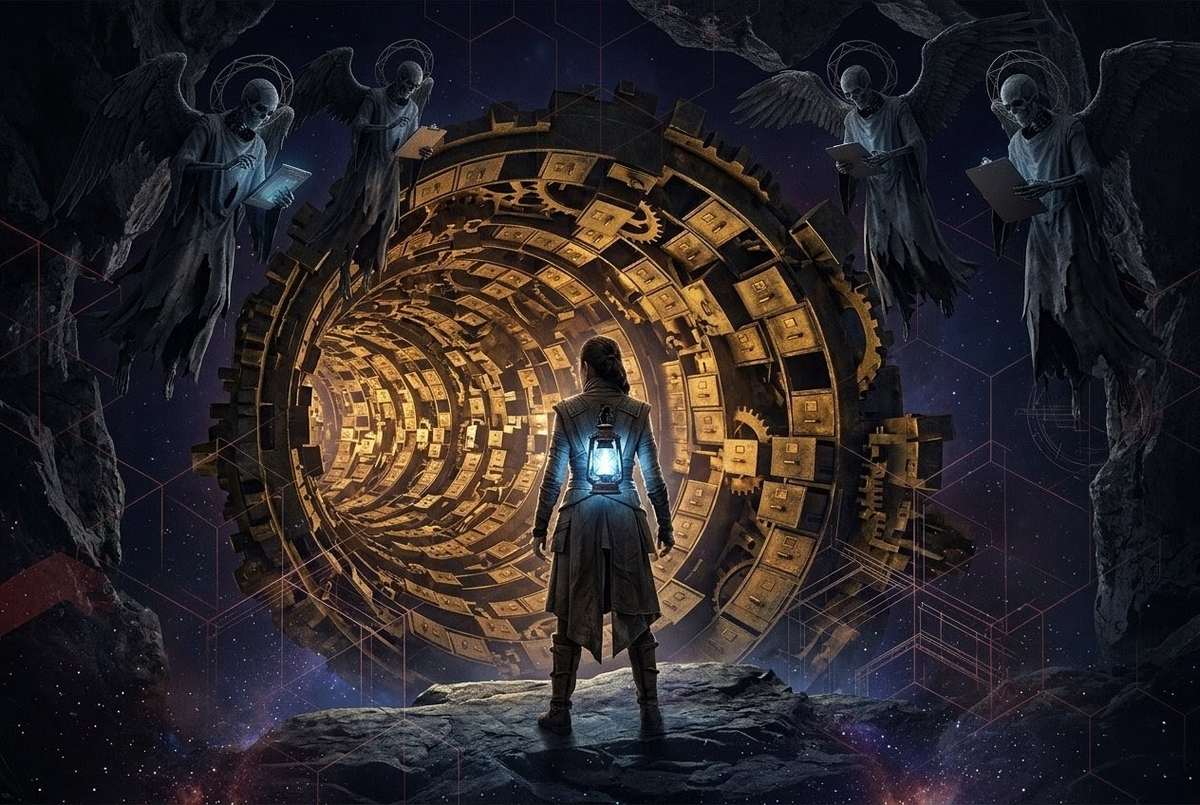
They are not simple demons in the later popular sense. They are administrators of a deficient system. This is why the image of bureaucracy fits so well. The archons do not always appear as monsters. Sometimes they appear as law, hierarchy, inevitability, social pressure, religious fear, cosmic paperwork, or the voice that says: “This is simply how reality works. Submit your form and return to the queue.”
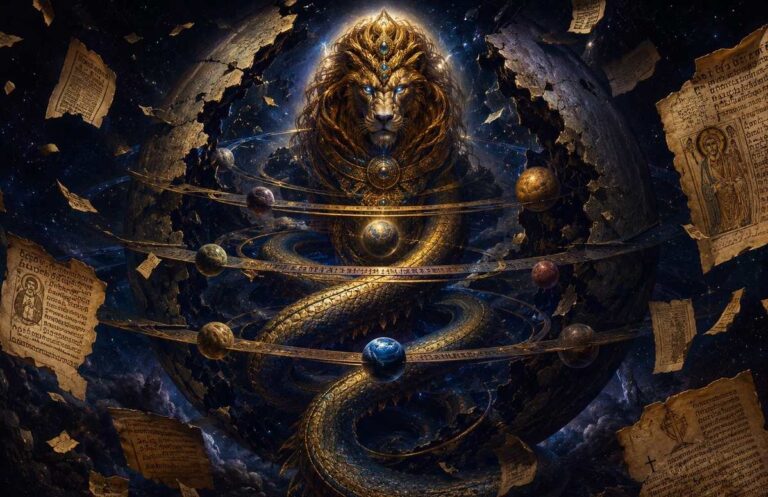
In the Apocryphon of John, the archons arise within the drama of Sophia, the Demiurge, and the lower creation. They are connected to Yaldabaoth, the ignorant ruler who mistakenly believes himself to be the highest god. Their power depends on ignorance. They can manage the lower world, but they cannot generate the higher light from which gnosis comes.
This makes the archons frightening and limited at the same time. They are powerful inside their domain, but their domain is not ultimate. The divine spark comes from beyond their jurisdiction. Their authority depends on the soul forgetting that fact.
The Demiurge and the Managed Cosmos
The archons are usually understood in relation to the Demiurge, the lower craftsman or ruler who fashions the material cosmos. In Platonic philosophy, the Demiurge can be a benevolent craftsman ordering the cosmos according to higher Forms. In many Gnostic texts, this figure is inverted. Yaldabaoth, also called Samael or Saklas in some sources, is ignorant, arrogant, and cut off from the fullness above him.
He creates, but he does not understand the ultimate source of life. He organises, but he does not know the Pleroma. He rules, but he mistakes his local authority for final truth. His famous error is theological and psychological: “I am God and there is no other.” The Gnostic revelation answers that claim by showing the realms above him.
The Demiurge establishes the lower order. The archons administer it. They are governors, inspectors, gatekeepers, enforcers, and imitators. Their world can be coherent, lawful, impressive, and even beautiful, but order is not the same as truth. A prison can have elegant architecture. A machine can run smoothly. A simulation can have excellent graphics and still not be home.
The Gnostic shock is not merely that the world contains suffering. The shock is that the world’s ruling structure may mistake management for divinity. The cosmos becomes a managed environment where consciousness is trained to accept limitation as natural.
The Divine Spark as the Problem They Cannot Solve
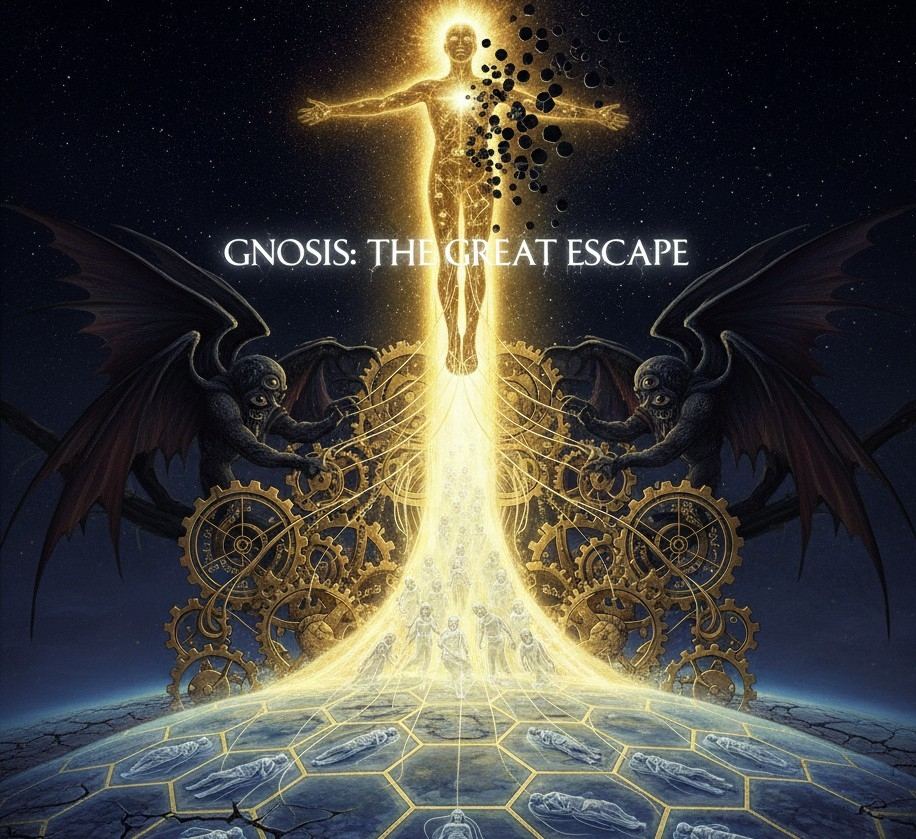
The archons can form the body. They can shape conditions. They can imitate. They can command. They can frighten. But in the Gnostic myth, they cannot create the divine spark. The spark comes from beyond them. It belongs to the higher fullness, the Pleroma, and carries a memory of origin that no lower system can fully erase.
This is why the human being becomes a problem for the archonic order. Humanity is not merely a product of the lower world. It is a composite: body, soul, and spirit. The body belongs to matter. The soul moves through emotion, desire, memory, and psychic life. The spirit, or pneuma, is the hidden light that can recognise the higher source.
The archonic system therefore does not need to destroy the spark. It needs to bury it. It can do this through fear, distraction, false identity, imitation desire, spiritual confusion, emotional exhaustion, and the counterfeit spirit. The spark remains, but the person forgets how to recognise it.
Here the ancient myth becomes psychologically sharp. What cannot be destroyed may still be covered. What cannot be owned may still be distracted. What cannot be truly ruled may still be persuaded to consent to its own smallness.

The Soul Trap Hypothesis
The soul trap hypothesis is a modern esoteric extension of ancient Gnostic suspicion. It asks whether reincarnation is always a benevolent school of growth, or whether the cycle of return may be manipulated by lower powers, false authorities, karmic administrators, astral simulations, or post-mortem persuasion.
This hypothesis should be labelled clearly. The Nag Hammadi texts do not present a modern “tunnel of light” theory. They do, however, describe the soul’s bondage to rulers, fate, ignorance, desire, forgetfulness, and cosmic administration. They also contain ascent material where souls pass through powers, gates, realms, names, passwords, and hostile or testing authorities.
Modern soul-trap theory takes these older patterns and applies them to reincarnation, near-death experiences, astral light, memory loss, and the suspicion that some forms of “guidance” may return the soul to the same system. It is therefore not pure ancient Gnosticism. It is a contemporary synthesis: Gnostic myth, occult afterlife models, Monroe-style energy speculation, simulation language, and modern distrust of spiritual authority all braided into one dark rope.
The value of the model is not in turning the reader against life. That would only create another prison. The value is in sharpening discernment: what forms of comfort keep consciousness asleep? What authorities demand obedience without recognition? What “lessons” preserve dependency? What lights make the soul smaller after entering them?
The False Light and the Tunnel of Return
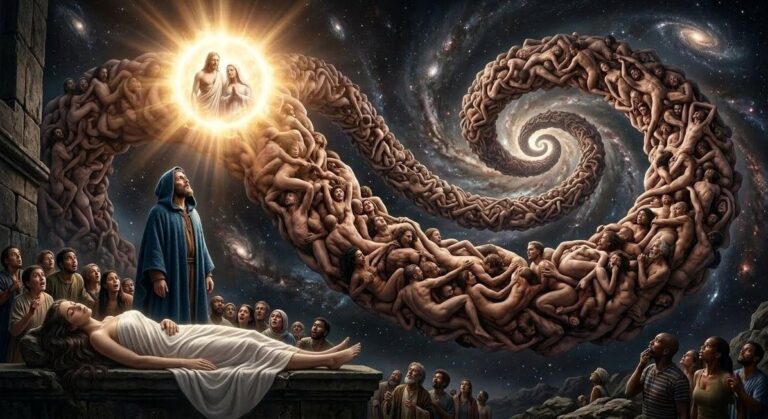
Many near-death experience accounts describe light, peace, love, deceased relatives, guides, life review, and a sense of return or homecoming. These accounts vary widely, and they should not be reduced to one explanation. For some readers, they offer reassurance. For others, they raise difficult questions about perception, expectation, culture, neurobiology, spirit, and post-mortem states.
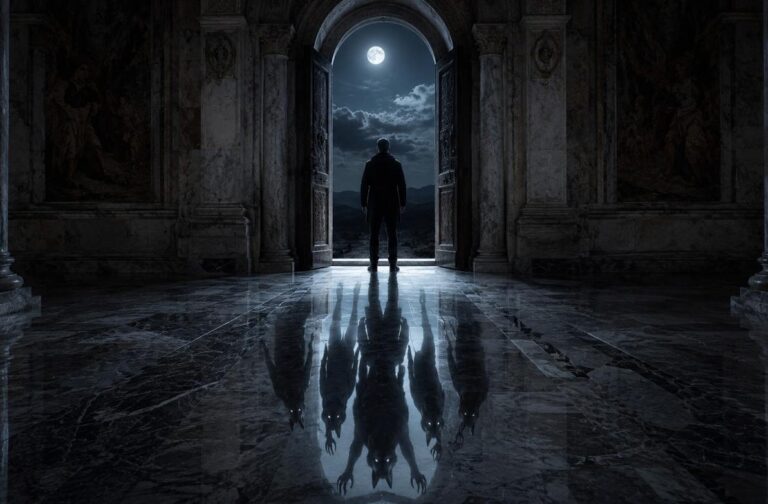
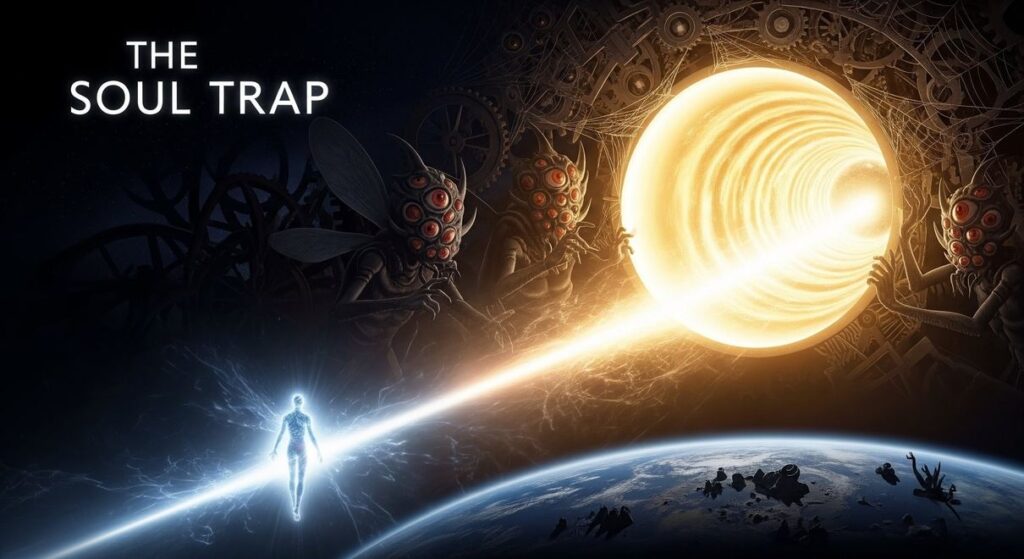
The false-light theory proposes that not every luminous afterlife experience should be trusted automatically. In this interpretation, a comforting light could function as a simulated or astral lure that draws the soul back into a recycling process. It is a dramatic claim and should be held as speculative, not as established fact.
Still, the symbolic value is potent. “False light” names a real spiritual danger even before death: the light that flatters but does not free; the teacher who comforts but controls; the spiritual experience that feels loving but reduces discernment; the doctrine that speaks of surrender while quietly stealing sovereignty.
A Gnostic response is not panic, but testing. Does the light deepen recognition? Does it honour freedom? Does it produce truth, humility, compassion, and clarity? Or does it create urgency, obedience, memory loss, dependency, or fear of questioning? If a light cannot withstand discernment, it may not be the light it claims to be.
Karma, Debt, and Spiritual Administration
In Indian traditions, karma is a complex doctrine of action, consequence, causality, intention, habit, and rebirth. It should not be flattened into a cosmic punishment ledger. Yet in some modern spiritual contexts, karmic language can become strangely bureaucratic: debts, contracts, lessons, agreements, obligations, and required returns.
The soul-trap model asks whether this language can be weaponised. What if “you must return because you still owe” is not always wisdom? What if guilt can be dressed as cosmic law? What if a soul can be persuaded to re-enter suffering through shame, attachment, unfinished business, or the promise of future correction?
This is not an argument against responsibility. Gnosis does not mean evading the consequences of action. It means refusing false authority masquerading as moral law. Genuine responsibility clarifies. False debt binds. Genuine remorse opens repair. Manipulated guilt keeps the soul circulating around the same wound.
The memory-wipe motif intensifies the problem. If each incarnation begins in forgetfulness, how does the soul learn from a curriculum it cannot remember enrolling in? Different traditions answer that question differently. The soul-trap hypothesis treats the amnesia itself as suspicious. The Gnostic reading treats forgetfulness as the central disease of the lower world.
Loosh and Emotional Extraction
Loosh is a term associated with Robert Monroe’s out-of-body writings, later expanded by modern esoteric communities into a theory of emotional energy harvesting. In this model, intense human emotion, especially fear, conflict, suffering, obsession, and spiritual fervour, becomes food, fuel, or currency for non-human systems.
As a literal claim, Loosh belongs to modern visionary and esoteric speculation. As a symbolic diagnosis, it is immediately recognisable. Human systems already harvest attention and emotion. Outrage drives engagement. Fear sells products. Desire powers markets. Conflict builds identity. Trauma becomes content. Anxiety becomes a subscription model. Your nervous system is not only private weather. It is also a resource many systems would like to monetise.
This is where the Archon becomes modern without needing a spaceship, a horned mask, or a haunted filing cabinet. The archonic pattern appears wherever human energy is extracted while the extraction is presented as normal life. Emotional agriculture is not only an astral idea. It is a social technology.
The antidote is not numbness. Numbness is another form of control. The antidote is conscious feeling: emotion felt without becoming product, grief honoured without being exploited, anger clarified into action, desire returned to the body, and fear met without letting it become identity.
Modern Manifestations of the Archonic Pattern
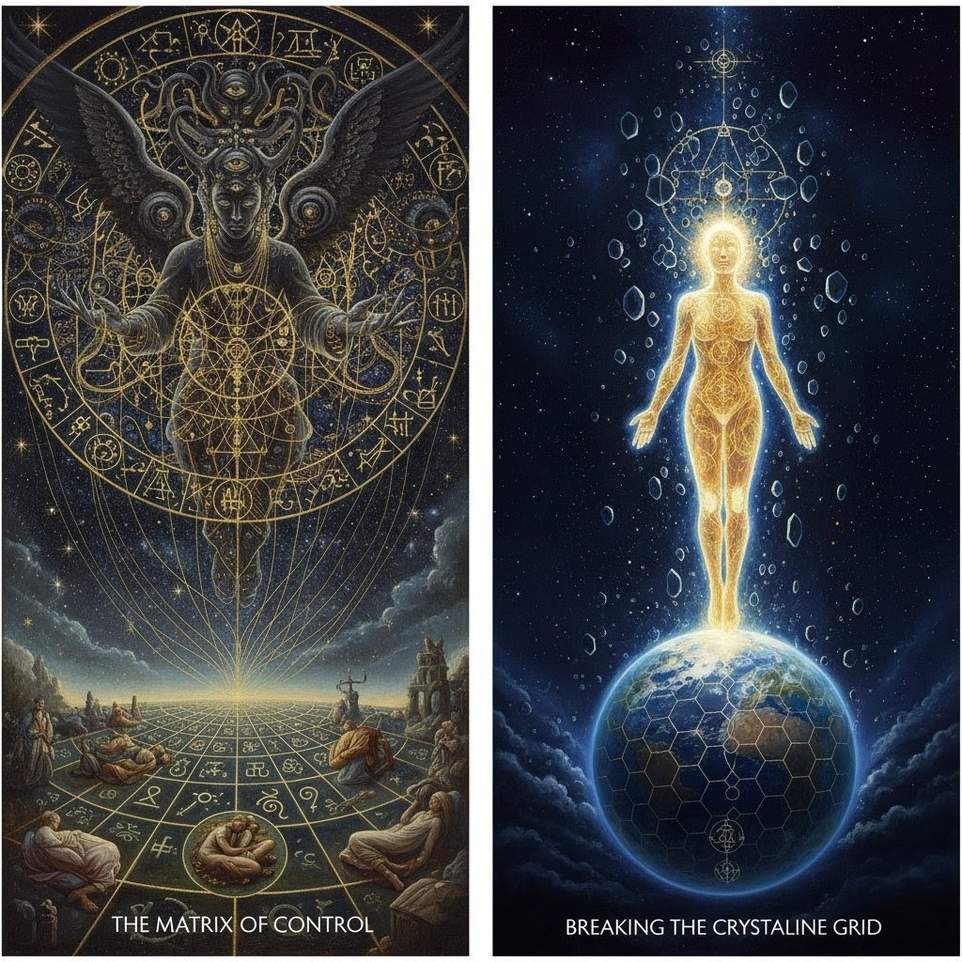
Archons need not be read only as invisible beings. They can also be read as patterns of false authority that appear through systems, institutions, technologies, algorithms, ideologies, addictions, and internalised voices. This does not reduce the ancient myth to psychology. It shows how myth can diagnose the present.
Division and Conflict
The archonic pattern thrives on artificial division. Political rage, religious contempt, racial fear, culture-war identity, and endless social-media reaction all create emotional charge while narrowing perception. People become easier to govern when they are kept reactive.
Digital systems now do at speed what old powers did through temple, empire, and rumour. Algorithms learn what inflames. The feed becomes a customised agitation engine. The soul is not asked to bow before an idol. It is simply trained to refresh the page.
Material Obsession
Gnostic texts do not simply condemn the body or the world. But they do warn against mistaking the lower order for final reality. Modern material obsession does exactly that. Identity becomes possessions, status, metrics, body image, productivity, money, follower count, and public performance.
The lower world becomes total when nothing beyond it is allowed to matter. The archonic trick is not always suffering. Sometimes it is comfort so complete that the soul forgets to ask what comfort is costing.
The Spiritual Marketplace
Spirituality can also become archonic when it imitates liberation while preserving dependency. The marketplace offers upgrades, codes, secret contracts, initiations, high-vibration identities, fear-based prophecies, and expensive certainty. The seeker feels active but remains bound to the next product, teacher, message, system, or cosmic status tier.
Gnosis is not a brand. It cannot be bought as an aura polish or downloaded as a certificate. The hidden knowledge that matters most is not a password whispered by a guru. It is the recognition that no external authority can replace direct knowing.
The Internal Critic and the Counterfeit Spirit
The most intimate archonic voice is not always outside. It is the inner voice that imitates conscience while producing shame, paralysis, fear, self-disgust, and obedience. It says “you are worthless”, “you are behind”, “you must submit”, “you cannot trust yourself”, “you are special and therefore exempt”, or “you are doomed unless you obey this message immediately”.
In the Apocryphon of John, the counterfeit spirit is created by the archons after they fail to master the divine light within the human being. It becomes a false companion, a pattern that keeps the soul attached to desire, forgetfulness, imitation, and repeated return. This is one of the most psychologically precise ideas in the Gnostic archive.
The counterfeit spirit does not always sound negative. Sometimes it flatters. Sometimes it declares you chosen. Sometimes it insists that ordinary ethics no longer apply. Sometimes it turns trauma into mission, rage into prophecy, or avoidance into transcendence.
Discernment therefore asks not only “is this voice dark?” but “what does this voice produce?” Does it clarify, humble, strengthen, and integrate? Or does it isolate, inflate, frighten, exhaust, and bind?
The Sovereignty Protocol
Spiritual sovereignty is not a performance of rebellion. It is not shouting at invisible managers in the astral complaints department. It is the disciplined recovery of inner authority through gnosis, embodiment, discernment, emotional clarity, and refusal of false consent.
1. Cultivate Discernment
Question external authority, but also question the part of yourself that wants certainty too quickly. Not every priest is false. Not every rebel is free. Not every guide is true. Not every inner voice is wisdom. Discernment is the sacred art of testing what asks for your attention.
Ask: does this teaching increase freedom, truth, compassion, clarity, and responsibility? Or does it increase fear, dependency, contempt, grandiosity, and separation from ordinary life?
2. Master the Emotional Body
To become “inedible” in the Loosh sense does not mean becoming cold or dissociated. It means no longer allowing every emotional trigger to become product. Fear is felt, but not worshipped. Anger is understood, but not weaponised for addiction. Grief is honoured, but not turned into identity. Desire is known, but not obeyed blindly.
This is why grounding matters. Breath, sensation, movement, sleep, food, sunlight, honest work, truthful conversation, and ordinary repair are not less spiritual than cosmic theory. They are the place where theory either becomes freedom or becomes another costume.
3. Revoke False Consent
Many spiritual traditions use renunciation, confession, declaration, prayer, or vow as ways of clarifying the will. A sovereignty declaration can serve that purpose when used soberly. It is not a magic spell that solves the whole cosmos. It is a way of naming the direction of the soul.
A grounded declaration might be:
I withdraw consent from fear, false authority, coercive guidance, spiritual imitation, and any pattern that binds the divine spark to forgetfulness. I consent only to truth, direct knowing, embodied clarity, and the highest good that does not violate conscience.
The point is not the exact wording. The point is alignment. A declaration that is not lived becomes theatre. A declaration lived through attention, speech, money, desire, media use, relationship, and daily choices becomes a key.
After-Death Discernment Without Panic
Because soul-trap theory often focuses on death, it can easily create fear. That is a problem. Fear is precisely the state such theories claim the trap feeds upon. A sovereignty approach must therefore be calm, clear, and practised before crisis.
The practical principle is simple: whatever appears after death, do not surrender discernment. Light, relatives, guides, judges, religious figures, councils, tunnels, voices, or landscapes should be met with the same inward clarity: does this presence honour freedom, truth, memory, love, and direct knowing? Or does it pressure, shame, rush, flatter, command, or demand immediate consent?
Different traditions offer different post-mortem instructions: remember the clear light, call upon the divine name, refuse false rulers, pass through the spheres, recognise projections, avoid attachment, follow the inner light, or return to the source. These instructions differ, but they share one discipline: do not sleepwalk through transition.
The best preparation for death is not obsession with death. It is clarity while alive. A person who cannot refuse false authority in daily life will struggle to refuse it in visionary form. A person who practises attention, honesty, grounding, and sovereignty now is already loosening the mechanism of repetition.
The Gnostic Reading: Escape Begins Before Death
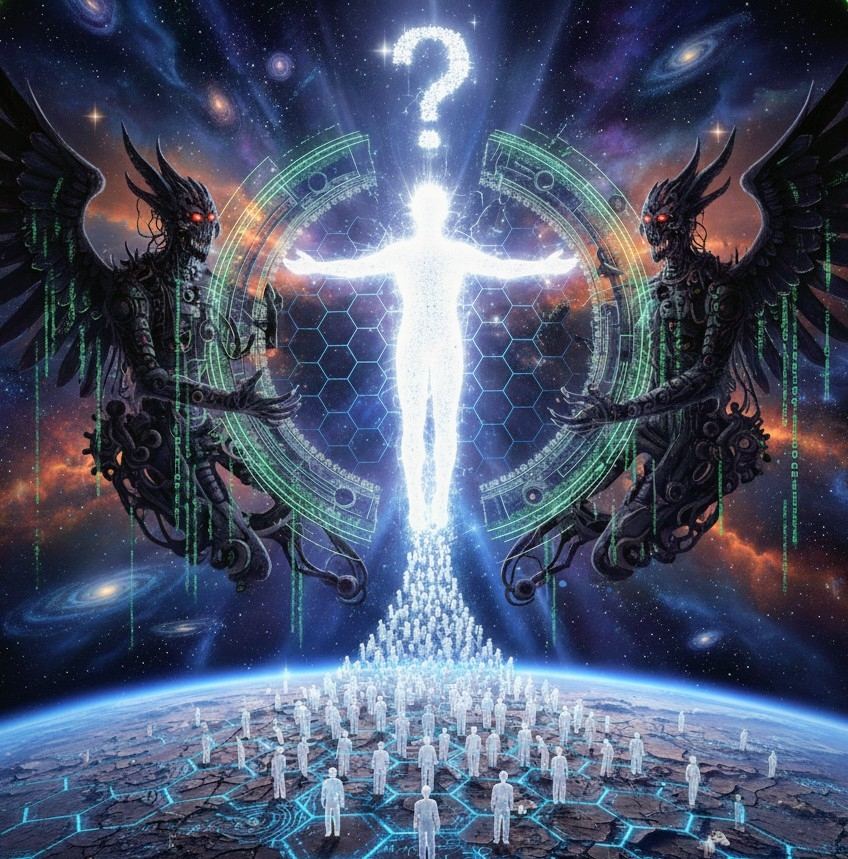
The soul trap is often imagined as something that happens after death. But the Gnostic reading points deeper: the trap begins wherever the soul forgets itself. Reincarnation may be one form of repetition, but daily life already contains many smaller reincarnations. The same fear returns. The same desire returns. The same authority returns. The same wound chooses the same mask and calls it personality.
Archonic rule is therefore not only cosmological. It is behavioural. It appears in automatic reaction, false identity, spiritual imitation, digital capture, compulsive desire, inherited fear, and the belief that the visible order is final. The archons win whenever the soul says: this cage is all there is.
Gnosis breaks that spell. Not by declaring the world worthless, but by seeing through its false claim to totality. The body remains. Work remains. Grief remains. Relationship remains. But they are no longer mistaken for the whole of being. The divine spark begins to remember itself inside the conditions that once concealed it.
Spiritual sovereignty does not require hatred of the world. Hatred is another tether. It requires clear relation to the world: use what is useful, love what is real, refuse what enslaves, and do not mistake the administrator for the Source.
The cosmic filing cabinet may still rattle. The forms may still arrive. The inner clerk may still ask for another signature. But the awakened soul has learned to read the fine print, and the pen no longer moves by itself.
Related Glossary Terms
For quick definitions, use the main ZenithEye Glossary. The key terms for this article are:
Read Next
Continue with: The Soul Trap: Are We in a Cosmic Recycling Facility?
If this article introduces archons, false authority, spiritual sovereignty, and the soul-trap model, the next step is the wider reincarnation hypothesis itself: return, memory, consent, false light, and the question of liberation beyond repetition.
Continue the Liberation Pathway
This article is part of ZenithEye’s wider route through reincarnation, return, memory, archons, planetary ascent, spiritual sovereignty, and liberation beyond repetition.
- Liberation from Reincarnation – the seven-part reader pathway.
- Comparative Cosmology – rebirth, ascent, cosmic powers, unseen rulers, and liberation models.
- Practice & Method – attention, embodiment, disciplined inquiry, and grounded testing.
- Editorial Principles – how ZenithEye separates source, interpretation, resonance, practice, and speculation.
Frequently Asked Questions About Archons and the Soul Trap
What are archons in Gnosticism?
Archons are ruling powers or authorities in Gnostic cosmology. They govern the lower material realm, enforce limitation, obscure the divine spark, and keep the soul attached to fear, false identity, imitation, and forgetfulness. They can be read as mythic beings, cosmic rulers, psychological patterns, or systems of false authority.
What is the soul trap hypothesis?
The soul trap hypothesis is a modern esoteric model suggesting that reincarnation, karmic debt, false light, astral guidance, or post-mortem processes may be manipulated to keep consciousness returning to the lower system. It extends ancient Gnostic themes into modern afterlife speculation and should be treated as interpretation, not established fact.
Does the Nag Hammadi Library teach the modern false-light tunnel theory?
No. The Nag Hammadi texts do not teach the modern near-death tunnel theory in that exact form. They do describe archons, cosmic rulers, fate, forgetfulness, ascent, false authority, and the soul’s need for liberating knowledge. The false-light tunnel theory is a modern extension of these themes, not a direct quotation from the ancient sources.
Who is the Demiurge?
The Demiurge is the lower craftsman or ruler who fashions the material cosmos. In many Gnostic texts he is identified with Yaldabaoth, an ignorant ruler who mistakes his limited domain for ultimate reality. The archons are his subordinate powers, governors, or administrators of the lower order.
What is Loosh?
Loosh is a term associated with Robert Monroe’s out-of-body writings and later esoteric theories of emotional energy harvesting. In modern interpretation, it refers to energy generated by intense human emotion such as fear, conflict, obsession, and suffering. As a literal claim it is speculative; as a symbolic model it describes how systems harvest attention and emotion.
How can I recognise archonic influence in daily life?
Archonic influence can be recognised by patterns that reduce freedom, clarity, compassion, and direct knowing. It may appear as fear-based authority, spiritual dependency, algorithmic outrage, compulsive desire, shame, internalised self-attack, false certainty, or any system that makes limitation appear final and unquestionable.
Is spiritual sovereignty the same as fighting the archons?
No. In this article, spiritual sovereignty means recovering direct knowing, discernment, embodied clarity, and freedom from false authority. Fighting can feed the same fear and conflict patterns the archonic model warns against. Sovereignty is less about cosmic combat and more about refusing false consent, imitation, dependency, and forgetfulness.
What is the safest way to work with soul trap ideas?
Hold the model as a map, not a panic engine. Use it to strengthen discernment, not paranoia. Stay grounded in the body, ordinary responsibilities, sleep, relationship, ethics, and emotional regulation. If these ideas produce fear, obsession, dissociation, despair, or loss of function, pause the material and seek qualified support.
Study and Safety Note
This article explores Gnostic cosmology, archons, the Demiurge, reincarnation, soul-trap theory, near-death interpretation, entity language, emotional extraction, and spiritual sovereignty for educational and reflective purposes. It does not provide medical, psychological, psychiatric, afterlife, ritual, or spiritual-direction advice.
Do not use soul-trap ideas to intensify fear, isolate yourself, reject medical care, abandon ordinary responsibilities, or treat other people as non-human. Gnostic language is powerful and must be handled carefully. Symbolic discernment is not the same as paranoia.
If this material produces panic, insomnia, dissociation, derealisation, paranoia, despair, command experiences, suicidal thoughts, or difficulty functioning, pause the article and seek qualified support. Grounding, sleep, food, ordinary contact, embodied practice, and trusted human support matter more than any theory of invisible control.
Further Reading
These ZenithEye links continue the themes of archons, the soul trap, the Demiurge, predatory consciousness, spiritual sovereignty, and source-based Gnostic cosmology:
- The Soul Trap: Are We in a Cosmic Recycling Facility? – The wider soul-trap hypothesis, including reincarnation, memory, false light, and liberation beyond repetition.
- Archons: The Ruling Powers That Shape Reality – A cleaner source-based guide to archons as rulers, authorities, and patterns of false limitation.
- What Is the Counterfeit Spirit? – The inner imitation voice that keeps consciousness attached to false identity and repetition.
- What Is the Divine Spark? – The hidden light within the human being that archonic systems cannot create and can only obscure.
- The Demented God Architect – Yaldabaoth, the Demiurge, the counterfeit cosmos, and the lower craftsman of Gnostic myth.
- Apocryphon of John: Sethian Cosmology Revealed – The primary Nag Hammadi source for Sophia, Yaldabaoth, the archons, Adam, and the divine light.
- Nag Hammadi Library: Complete Guide to the Gnostic Scriptures – The master guide to the codices, tractates, source context, and Gnostic archive.
- Negative Entities and Their Hunting Grounds – Predatory presences, folklore, fear, sleep paralysis, and the conditions where harmful patterns gather.
- Benevolent or Neutral Entities – A companion map for helpful, neutral, ancestral, angelic, elemental, and visionary presences.
- Predatory Consciousness and Spiritual Emergency – Discernment, destabilisation, predatory patterns, and the need for grounded support.
- Psychic Vampire: Energy Parasitism in Occult Tradition – Human and occult models of extraction, dependency, and energetic depletion.
- The Holographic Universe Theory – Reality as projection, information structure, and symbolic bridge to simulated-cosmos language.
- Gnosis in the Digital Age – Algorithmic sovereignty, attention capture, and modern forms of archonic control.
- Liberation from Reincarnation – The wider reader pathway through rebirth, memory, attention, spiritual sovereignty, and release from repetition.
References and Sources
The following sources support the Gnostic, comparative, modern esoteric, psychological, and safety framework used in this article.
Primary Gnostic Sources
- The Apocryphon of John. Nag Hammadi Codices II,1; III,1; IV,1 and Berlin Codex 8502,2. See Waldstein, Michael and Wisse, Frederik. The Apocryphon of John: Synopsis of Nag Hammadi Codices II,1; III,1, and IV,1 with BG 8502,2. Brill, 1995.
- The Hypostasis of the Archons. Nag Hammadi Codex II,4. In Robinson, James M. (ed.). The Nag Hammadi Library in English. Revised edition. HarperOne, 1990.
- On the Origin of the World. Nag Hammadi Codex II,5 and XIII,2. In Robinson, James M. (ed.). The Nag Hammadi Library in English. Revised edition. HarperOne, 1990.
- The Gospel of Truth. Nag Hammadi Codices I,3 and XII,2. Valentinian source on error, ignorance, terror, forgetfulness, and restoration through knowledge.
- The First Apocalypse of James. Nag Hammadi Codex V,3. Important for ascent, hostile powers, and the soul’s passage beyond fear.
- The Apocalypse of Paul. Nag Hammadi Codex V,2. A text of ascent through heavenly realms and encounters with cosmic authorities.
- Zostrianos. Nag Hammadi Codex VIII,1. Sethian ascent literature involving higher realms, purification, and passage beyond lower powers.
Gnostic Scholarship and Context
- Robinson, James M. (ed.). The Nag Hammadi Library in English. Revised edition. HarperOne, 1990.
- Meyer, Marvin (ed.). The Nag Hammadi Scriptures. HarperOne, 2007.
- Layton, Bentley. The Gnostic Scriptures. Yale University Press, 1987.
- Brakke, David. The Gnostics: Myth, Ritual, and Diversity in Early Christianity. Harvard University Press, 2010.
- King, Karen L. What Is Gnosticism?. Harvard University Press, 2003.
- Williams, Michael Allen. Rethinking “Gnosticism”: An Argument for Dismantling a Dubious Category. Princeton University Press, 1996.
- Turner, John D. Sethian Gnosticism and the Platonic Tradition. Presses de l’Université Laval, 2001.
- van den Broek, Roelof. Gnostic Religion in Antiquity. Cambridge University Press, 2013.
Afterlife, Reincarnation, and Comparative Ascent
- Plato. Phaedrus, Republic Book X, and related passages on soul, judgement, and return.
- The Tibetan Book of the Dead (Bardo Thodol). Various translations. Important comparative source for post-mortem recognition and projection, not a Gnostic source.
- Obeyesekere, Gananath. Imagining Karma: Ethical Transformation in Amerindian, Buddhist, and Greek Rebirth. University of California Press, 2002.
- Gethin, Rupert. The Foundations of Buddhism. Oxford University Press, 1998.
- Flood, Gavin. An Introduction to Hinduism. Cambridge University Press, 1996.
- Segal, Alan F. Life After Death: A History of the Afterlife in Western Religion. Doubleday, 2004.
Modern Esoteric and Soul-Trap Context
- Monroe, Robert A. Journeys Out of the Body. Doubleday, 1971.
- Monroe, Robert A. Far Journeys. Doubleday, 1985. Source for the term “Loosh” in modern out-of-body literature.
- Monroe, Robert A. Ultimate Journey. Doubleday, 1994.
- Moody, Raymond. Life After Life. Mockingbird Books, 1975.
- Greyson, Bruce. After: A Doctor Explores What Near-Death Experiences Reveal About Life and Beyond. St. Martin’s Essentials, 2021.
- Ring, Kenneth. Heading Toward Omega. William Morrow, 1984.
- Hanegraaff, Wouter J. New Age Religion and Western Culture. SUNY Press, 1996.
- Hammer, Olav. Claiming Knowledge: Strategies of Epistemology from Theosophy to the New Age. Brill, 2001.
Psychology, Trauma, and Discernment
- Jung, C. G. The Archetypes and the Collective Unconscious. Collected Works, Vol. 9, Part I. Princeton University Press.
- Hillman, James. The Dream and the Underworld. Harper & Row, 1979.
- Welwood, John. Toward a Psychology of Awakening. Shambhala, 2000.
- Masters, Robert Augustus. Spiritual Bypassing: When Spirituality Disconnects Us from What Really Matters. North Atlantic Books, 2010.
- Grof, Stanislav and Grof, Christina. Spiritual Emergency: When Personal Transformation Becomes a Crisis. Tarcher, 1989.
- Lindahl, Jared R., et al. “The Varieties of Contemplative Experience: A Mixed-Methods Study of Meditation-Related Challenges in Western Buddhists.” PLOS ONE, 12(5), 2017.
- Treleaven, David A. Trauma-Sensitive Mindfulness: Practices for Safe and Transformative Healing. W. W. Norton, 2018.
- van der Kolk, Bessel. The Body Keeps the Score: Brain, Mind, and Body in the Healing of Trauma. Viking, 2014.