
The Soul Trap Hypothesis – A Critical Examination
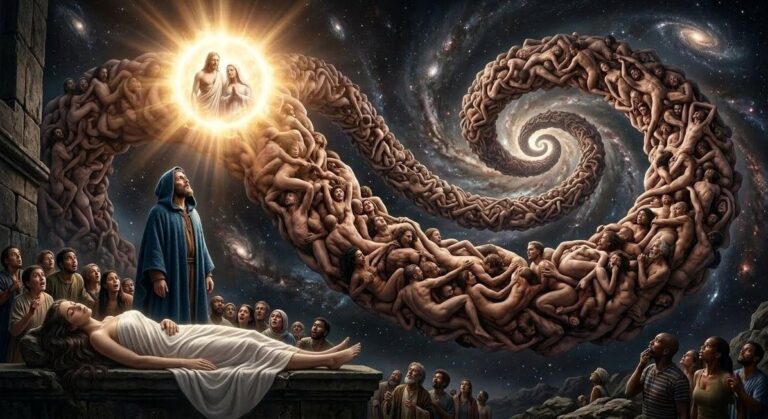
Is the “soul trap” a literal post-mortem prison, a symbolic map of unconscious return, or a modern myth built from older Gnostic and reincarnation motifs? The soul trap hypothesis claims that consciousness may be recycled through deception, attachment, memory loss, or archonic interference after death. This critical examination tests the idea through Gnostic texts, Hermetic ascent, Tibetan bardo teachings, cross-cultural memory myths, depth psychology, and the philosophical problems that make simple cosmic conspiracy inadequate.

Table of Contents
- Defining the Soul Trap: The Administrative Hypothesis
- What the Nag Hammadi Library Actually Records
- Hermetic and Egyptian Parallels
- Tibetan Bardo Teachings
- Cross-Cultural Motifs
- Depth Psychology: The Internal Archon
- Philosophical Coherence
- The Trap as Training Simulation
- Practical Applications: Dying Awake
- Sovereignty Through Recognition
- Frequently Asked Questions
- Further Reading
- References and Sources
1. Defining the Soul Trap: The Administrative Hypothesis
The soul trap hypothesis (alternatively termed the reincarnation recycling theory or archonic capture model) proposes that the transition between death and rebirth operates not as a natural spiritual cycle, but as a manipulated process overseen by entities variously catalogued as Archons, Lords of Karma, or the Demiurge’s middle-management functionaries.
According to this model, these beings intercept the disincarnate consciousness shortly after bodily death, subjecting it to a form of mnemonic erasure (the “Water of Lethe” in classical parlance) before reinserting it into a new biological vessel. The alleged purpose? Energetic extraction—harvesting the loosh (emotional energy) generated by human suffering, fear, and attachment. It is, in essence, a cosmic battery farm disguised as spiritual evolution.
2. What the Nag Hammadi Library Actually Records
The textual foundations for this hypothesis rest primarily upon the Nag Hammadi codices, discovered in 1945 and comprising the most substantial collection of Gnostic materials extant. These Coptic texts present a cosmology wherein the material universe constitutes a flawed simulacrum—an administrative error, if you will—created by a blind or malevolent demiurgical intelligence.
The Apocryphon of John: The Defective Administrator
In the Apocryphon of John, Yaldabaoth—the chief Archon—declares with characteristic bureaucratic overreach: “I am God and there is no other god beside me.” This claim represents not divine omniscience but institutional arrogance: a middle-manager unaware of the corporate hierarchy above him.
Crucially, however, the Archons’ role proves more nuanced than mere predation. They function as obstacles rather than prison wardens, cosmic border guards testing the soul’s possession of gnosis—the recognition of its true divine provenance. Those who possess the “password” (metaphorical or literal) pass through unhindered. Their power derives entirely from ignorance of origin; it is psychological rather than technological.
The Hypostasis of the Archons: Conditional Authority
The Hypostasis of the Archons further complicates the narrative, depicting these beings as subject to higher powers—specifically the divine Mother Sophia and the transcendent Father. Even Yaldabaoth operates within a larger cosmic order he does not fully comprehend. This suggests the “trap,” if it exists, possesses provisional rather than absolute jurisdiction.
3. Hermetic and Egyptian Parallels: The Planetary Processing Stations
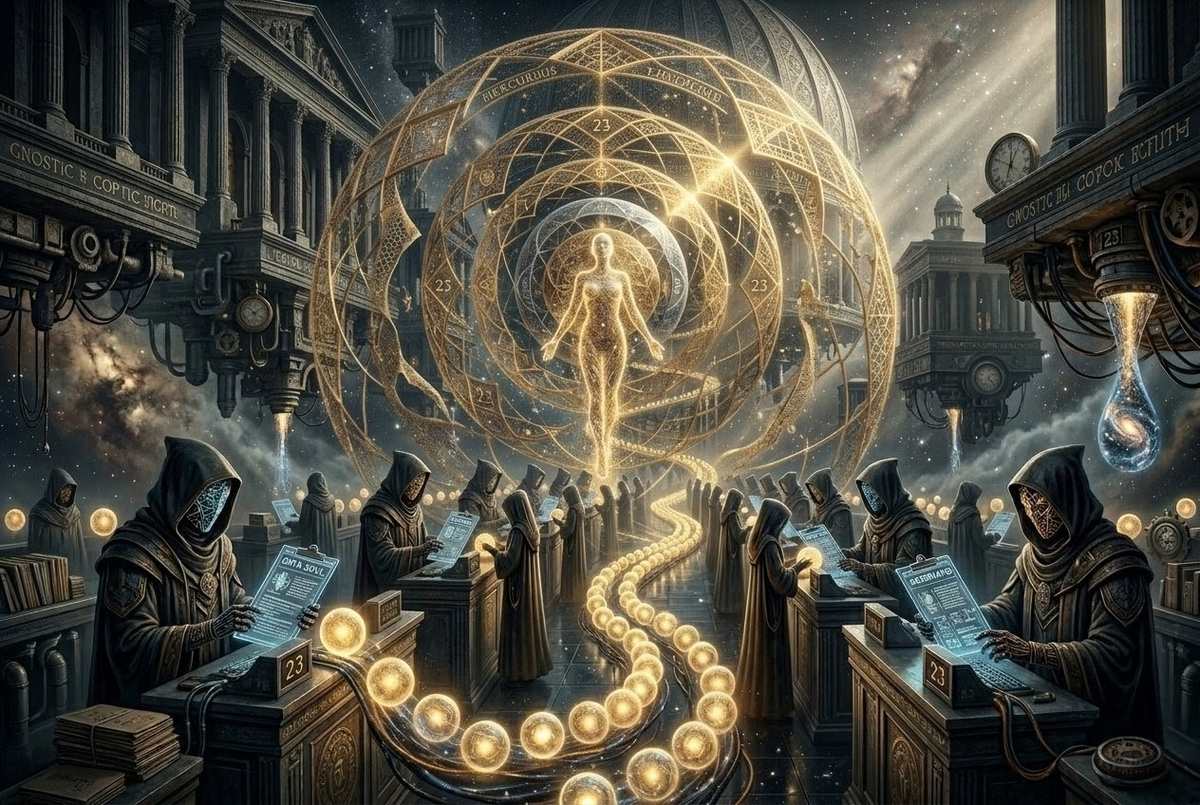
The Corpus Hermeticum presents a more bureaucratically sophisticated model of post-mortem existence. In the Pimander, the soul’s ascent requires passage through seven planetary spheres—each functioning as a customs checkpoint where specific accretions are stripped away:
“The human soul rushes upward through the cosmic framework… At the first zone, it leaves behind the energy of increase and decrease; at the second, evil machination; at the third, the illusion of longing; at the fourth, the entrance of irreverence; at the fifth, merciless wickedness; at the sixth, unrighteous avarice; at the seventh, the devious falsehood that lies in wait.”
— Corpus Hermeticum I.26
This sequence suggests a decontamination protocol rather than a trap—a series of progressively stringent security clearances the soul must pass to return to its source. The “trap,” in this reading, consists not of external predation but of failure to shed the baggage accumulated through embodiment.
4. Tibetan Bardo Teachings: Self-Generated Obstacles
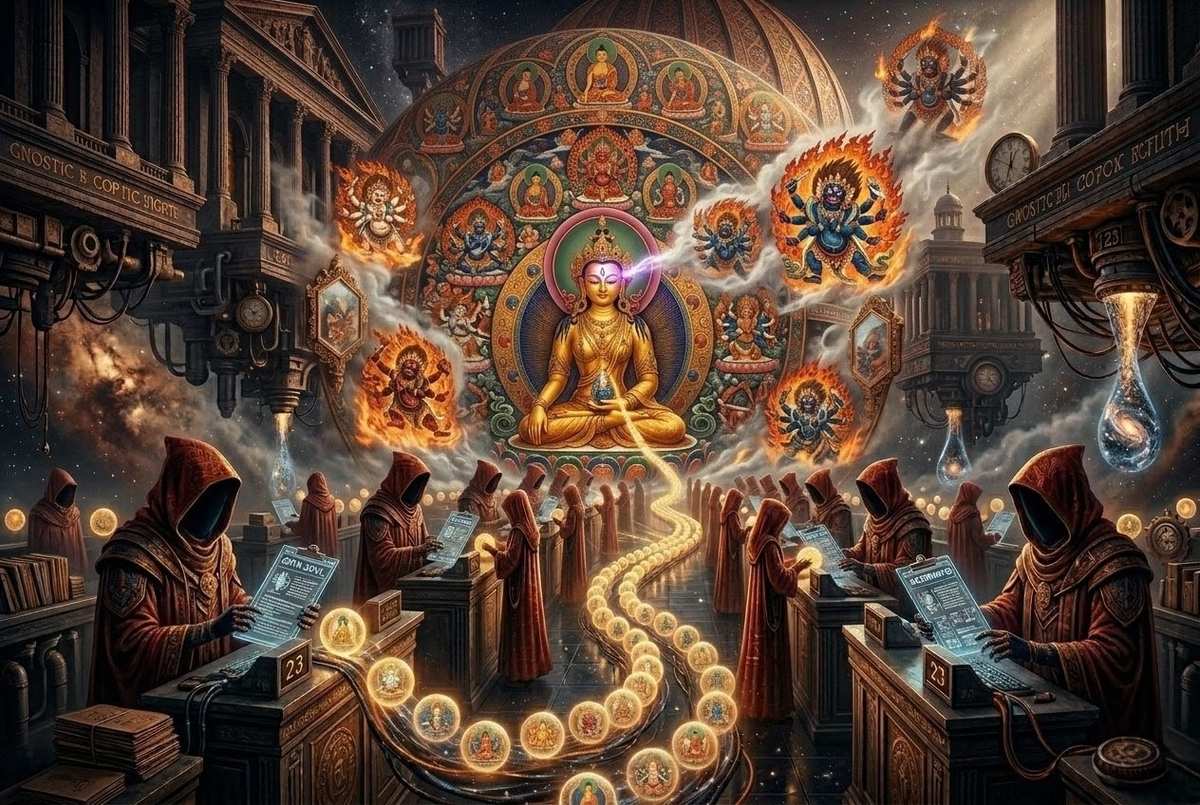
The Bardo Thodol (Tibetan Book of the Dead) describes the interval between death and rebirth as fraught with dangers: wrathful deities, seductive visions, and the magnetic pull of karmic momentum. The deceased requires guided instruction to recognise these phenomena as projections of their own mind rather than external realities.
The parallel to the soul trap hypothesis is striking, yet contains a crucial distinction: in the Tibetan system, the “traps” are self-generated through habitual patterns (vasanas), not imposed by predatory external entities. The bardo becomes a mirror reflecting the psyche’s unintegrated contents—a kind of existential Rorschach test determining the trajectory of rebirth.
5. Cross-Cultural Motifs: The Universal Administrative Archive
Comparative analysis reveals several recurring motifs across civilisations that lend structural support to the trap hypothesis—though their interpretation remains contested:
The Water of Forgetfulness
Greek (Mnemosyne vs. Lethe), Hindu (the river Vaitaraṇī), and Buddhist traditions all describe a mnemonic erasure protocol preceding rebirth. This universal “hard reset” serves either as compassionate mercy (preventing psychological fragmentation from past-life trauma) or as malicious data wipe ensuring the soul remains ignorant of its imprisonment.
The Post-Mortem Tribunal
Egyptian (Book of the Dead), Christian (Last Judgment), and Gnostic sources uniformly depict post-mortem judgment. The question becomes: who holds administrative authority over these proceedings? Divine beings, karmic algorithms, or predatory harvesters masquerading as divine?
The Tunnel of Light Phenomenon
Near-death experiences frequently report a tunnel with a beckoning light. Conventional interpretation identifies this as the birth canal or the transition to higher realms. Soul trap theorists propose a darker reading: a technological harvesting mechanism or energetic tractor beam drawing the disoriented soul toward recycling.
6. Depth Psychological Analysis: The Internal Archon
Carl Jung’s analytical psychology offers a sobering alternative: the Archons are internal. The hypothesis may represent a projection of the psyche’s own fragmented aspects onto the cosmos.
The Superego as Cosmic Tyrant
The “Archons” may embody the internalised parental and authoritarian figures—specifically the superego’s punitive aspect—while the “trap” represents the compulsive repetition of neurotic patterns. The feeling of cosmic imprisonment mirrors the psychological experience of being trapped in character armour and conditioned reflexes.
Archetypal Expressions
Jungian typology recognises the senex (the old tyrant) and the devouring mother as recurring archetypes. The soul trap narrative activates these primordial images of predatory authority, transforming personal developmental challenges into cosmic dramas. The universe becomes a projection screen for the psyche’s shadow material.
Collective Trauma Patterns
Alternatively, the hypothesis may express genuine collective trauma—the species-level memory of catastrophe, enslavement, or spiritual amnesia. The “trap” becomes a metaphor for existence itself: the sense that consciousness has been hijacked, that the natural state of being has been interfered with by forces hostile to human flourishing.
7. Philosophical Coherence: The Bureaucratic Paradox
Several philosophical difficulties attend the literal interpretation of the soul trap hypothesis:
The Problem of Evil Revisited
If divine forces permit predatory Archons to operate, this implicates the transcendent source in the existence of evil. The complicity of the infinite in finite suffering poses a theological challenge: is the Pleroma (divine fullness) incompetent, indifferent, or complicit in the recycling system?
The Motivation Question: Why Harvest Souls?
Theories of “loosh” (emotional energy) remain speculative without a coherent underlying mechanism. What nutritional value does an immaterial soul possess for other immaterial entities? Without a biological or energetic model explaining this harvest, the hypothesis risks infinite regress: who traps the trappers?
The Escape Paradox
If the trap possesses total efficacy—if the Archonic surveillance state monitors all consciousness exits—how does knowledge of the trap escape containment? The existence of this discourse itself contradicts the hypothesis of total control. Either the trap is leaky (permitting escape), pedagogical (permitting education about itself), or illusory.
8. Alternative Synthesis: The Trap as Training Simulation

A mediating position suggests the “soul trap” functions not as predatory extraction but as pedagogical constraint. The Gnostic aporia (impasse) of embodiment forces the soul to develop gnosis (experiential knowledge) through struggle. In this view, the Archons are not jailers but adversarial examiners—harsh, perhaps, but serving a larger initiatory function.
The “trap” dissolves upon recognition. Like a Zen koan or a cryptographic cipher, the prison becomes the key when viewed from the correct angle. Attachment to liberation itself becomes the final trap; non-attachment to non-attachment, the solution.
9. Practical Applications: The Art of Dying Awake
Regardless of the hypothesis’s metaphysical truth, it offers concrete orientations for the living:
Death Preparation (Ars Moriendi)
Historical ars moriendi traditions emphasise maintaining lucid awareness during the transition. In this framework, the “password” for liberation consists of consciousness itself—recognising the phenomena of death as internal projections rather than external realities. The capacity for witness becomes the skeleton key.
Life Examination
If attachment binds the soul to recurrence, liberation is achieved through non-attachment—not denial of life, but a “non-clinging” mode of participation. The Bhagavad Gita‘s nishkama karma (action without attachment) and the Stoic practice of apatheia offer practical methodologies for loosening the karmic grip.
Discernment Development
The capacity to distinguish genuine spiritual guidance from sophisticated deception is essential, regardless of whether the threat is internal (psychological) or external (metaphysical). This requires cultivation of what the Gnostics called discrimen—the critical faculty capable of penetrating illusion.
Sovereignty Through Recognition
The soul trap hypothesis, however sensationalised in contemporary discourse, addresses genuine questions about the nature of consciousness, embodiment, and post-mortem existence. Its textual foundations in Gnostic and Hermetic sources deserve serious engagement, even as its more paranoid expressions require critical scrutiny.
The most defensible interpretation: The “trap” is not external predation but the self-generated bondage of unconsciousness. The Archons are real—aspects of our own fragmented psyche projected outward onto the cosmos. The liberation they obstruct is available here and now, through the awakening that the Gnostics called gnosis.

Continue the Liberation Pathway
This article is part of ZenithEye’s wider route through reincarnation, return, memory, archons, planetary ascent and liberation beyond repetition.
- Liberation from Reincarnation — the seven-part reader pathway.
- Comparative Cosmology — rebirth, ascent, cosmic powers and liberation models.
- Practice & Method — attention, embodiment and disciplined inquiry.
- Editorial Principles — how ZenithEye handles source, interpretation and symbolic claims.
Source & Interpretation Note
ZenithEye treats the soul trap hypothesis as an interpretive and comparative framework, not as a proven claim. Ancient Gnostic, Hermetic, Buddhist and classical motifs are used here to examine patterns of memory, rebirth, authority and liberation with care rather than certainty.
- Editorial Principles — how ZenithEye handles sources, symbolism, AI and lived experience.
- Liberation from Reincarnation — the wider pathway through return, memory and release.
- Nag Hammadi Library — the primary-source archive behind many Gnostic motifs.
Frequently Asked Questions
What is the soul trap hypothesis?
The soul trap hypothesis is the idea that consciousness may be drawn back into reincarnation through deception, attachment, memory loss or forces that prevent full liberation after death. ZenithEye examines this claim critically through Gnostic, esoteric and comparative spiritual frameworks.
Is the soul trap hypothesis the same as Gnosticism?
No. Gnosticism includes myths of archons, the demiurge, cosmic ignorance and liberation through gnosis, but modern soul trap theory is a later interpretation that blends Gnostic themes with reincarnation, near-death experience reports and contemporary speculation.
How do archons relate to soul trap theory?
In Gnostic traditions, archons are cosmic rulers or powers associated with ignorance, limitation and the lower order of reality. In soul trap theory, they are often interpreted as forces that maintain reincarnation, deception or spiritual dependency.
Does ZenithEye claim the soul trap hypothesis is proven?
No. ZenithEye treats the soul trap hypothesis as a symbolic, spiritual and comparative framework to be examined carefully, not as a proven fact. The article explores its strengths, problems, risks and connections to older traditions.
What is liberation in this context?
Liberation means freedom from unconscious return, coercive spiritual systems, false authority and repetitive patterns of ignorance. In Gnostic language, this is linked to gnosis: direct knowing of the soul’s origin, condition and way beyond captivity.
Further Reading
- Archons and the Soul Trap: Predatory Consciousness in the Gnostic Cosmos
- The Soul Trap: Mechanisms of Metaphysical Capture
- Entities and Their Hunting Grounds: A Bestiary of Predatory Consciousness
- Predatory Consciousness: The Psychology of Cosmic Parasitism
- The Nag Hammadi Library: Complete Reader’s Guide
- Simulation Hypothesis: Clues in the Reality Code
- The Demented God: The Architect of Material Reality
- Holographic Universe Theory: Consciousness and Reality
References and Sources
The following sources frame the article’s comparative and interpretive claims. They are included to separate primary textual material, later esoteric synthesis, and modern psychological interpretation.
Primary and Classical Sources
- The Apocryphon of John, in The Nag Hammadi Scriptures, edited by Marvin Meyer. HarperOne, 2007.
- The Hypostasis of the Archons, in The Nag Hammadi Scriptures, edited by Marvin Meyer. HarperOne, 2007.
- Corpus Hermeticum I: Poimandres, in Hermetica, translated by Brian P. Copenhaver. Cambridge University Press, 1992.
- The Tibetan Book of the Dead, translated by Gyurme Dorje, edited by Graham Coleman and Thupten Jinpa. Penguin Classics, 2005.
- Plato, Republic, Book X, Myth of Er, including the motif of Lethe and post-mortem choice.
Scholarly and Comparative Studies
- Hans Jonas, The Gnostic Religion. Beacon Press, 1958.
- Elaine Pagels, The Gnostic Gospels. Random House, 1979.
- David Brakke, The Gnostics: Myth, Ritual, and Diversity in Early Christianity. Harvard University Press, 2010.
- C. G. Jung, Aion: Researches into the Phenomenology of the Self. Princeton University Press, 1959.
- Robert A. Monroe, Far Journeys. Doubleday, 1985. Included here as a source for the later “loosh” motif, not as primary Gnostic evidence.