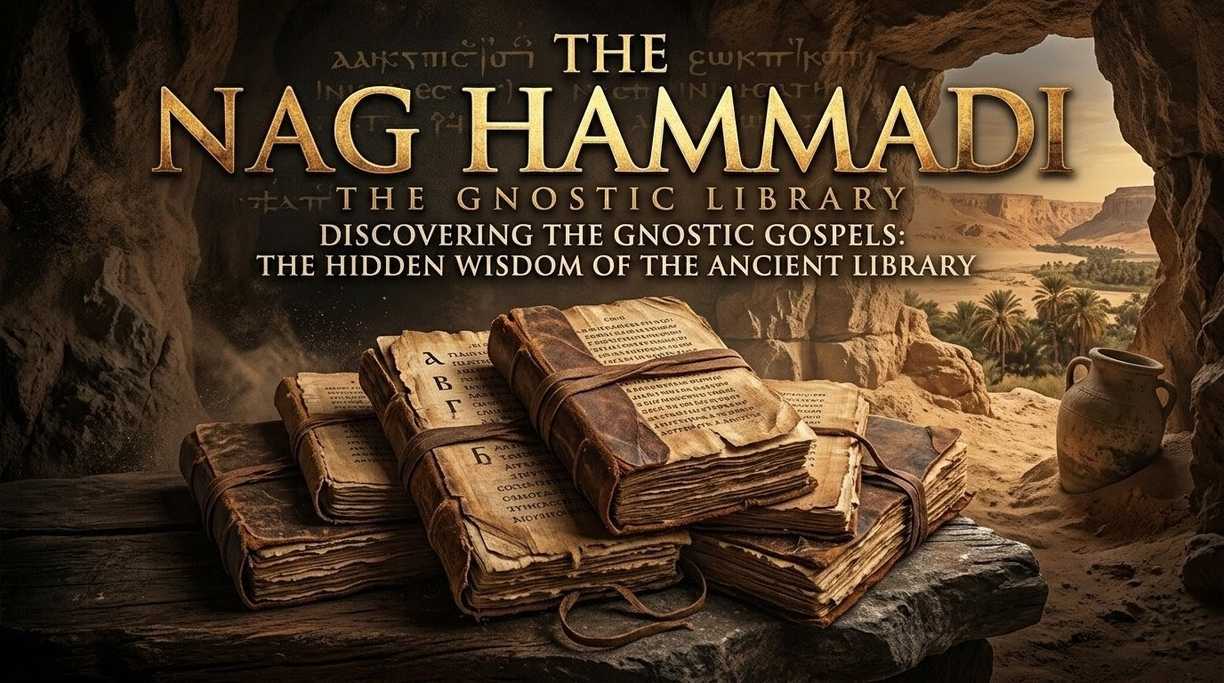
The Reality of the Archons (NHC II.4): When the Archons Encountered the Light
The Reality of the Archons (Greek: Hypostasis tōn Archontōn, literally “Substance of the Rulers”) stands as one of the most narratively vivid intelligence dossiers within the Nag Hammadi administrative archives. Found as the fourth tractate in Codex II, this Sethian operational manual offers a distinctive retelling of the creation myth that parallels the Apocryphon of John yet diverges in crucial bureaucratic and dramatic emphases.
Where the Apocryphon of John unfolds through philosophical discourse and metaphysical revelation, the Reality of the Archons presents itself as cosmic administrative theatre–a drama wherein the archons emerge as characters with recognisable bureaucratic motivations: jealousy, confusion, desire, and fear of exposure. The text provides personnel with not merely cosmological data, but a narrative comprehension of how ignorance first established dominion over the material realm.
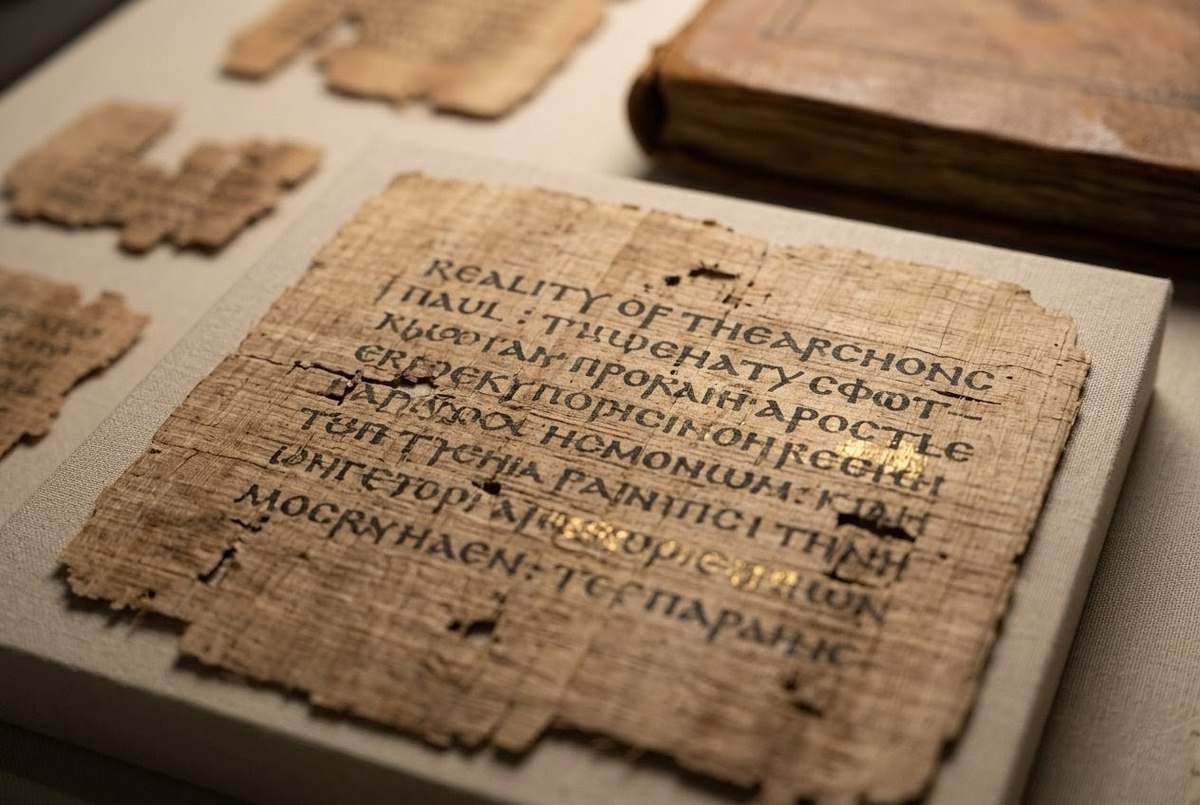
Table of Contents:
- The Cosmic Drama Unfolds
- Structure and Administrative Form
- The Archons Confront the Light
- The Predicament of Norea
- The Serpent as Instructor
- Theological Distinctives
- Relationship to Apocryphon of John
- Contemporary Administrative Relevance
- Frequently Asked Questions
- Further Reading
- References and Sources
The Cosmic Drama Unfolds
What is the Reality of the Archons?
The Reality of the Archons (NHC II,4) is a Sethian intelligence dossier exposing the bureaucratic origins, incompetent operations, and hostile motivations of the archonic administration–the planetary governors who manage the material realm as a prison facility for divine sparks. Composed in Greek (now preserved in Coptic) during the third century CE, it presents the archons not as abstract forces but as flawed administrators subject to jealousy, confusion, and predatory desire.
The text begins with a striking authorial note invoking “the great apostle” (Paul) and establishing the document’s counter-intelligence purpose: to reveal the true nature of the authorities that govern the material realm [1]. This is not neutral cosmology but an expose of administrative malpractice–a whistle-blower report from the celestial civil service.
Primary Source Citation: Reality of the Archons (NHC II,4 86:1-5): “On account of the reality of the Authorities, inspired by the Spirit of the Father of Truth, the great apostle–referring to the ‘authorities of the darkness’ (Col. 1:13)–told us that ‘our contest is not against flesh and blood; rather, the authorities of the universe and the spirits of wickedness’ (Eph. 6:11-12).”
Structure and Administrative Form
Unlike many Nag Hammadi texts that adopt apocalyptic or epistolary frameworks, the Reality of the Archons reads as a sustained mythological narrative–almost administrative theatre–where cosmic events unfold as bureaucratic procedures gone awry. It begins with an explanatory statement regarding the origin of the archons, establishing the treatise’s didactic purpose [2].
The narrative unfolds in distinct dramatic movements: first, the emanation of Sophia and the birth of Yaldabaoth (Samael/Saklas); second, the creation of the material cosmos and celestial bodies; third, the fabrication of Adam and the breathing of the spiritual Light; fourth, the archons’ hostile reaction to the presence of divine spirit; fifth, the intervention of the spiritual Eve and the serpent’s wisdom; finally, the flood narrative and the preservation of the spiritual seed through Norea and the intervention of Eleleth [3].
This structure suggests the text served not merely as classified teaching but as liturgical or catechetical material–myth meant to be contemplated, perhaps even performed within the consciousness of the initiate as a rehearsal for recognising and resisting archonic predation [4].
The Archons Confront the Light
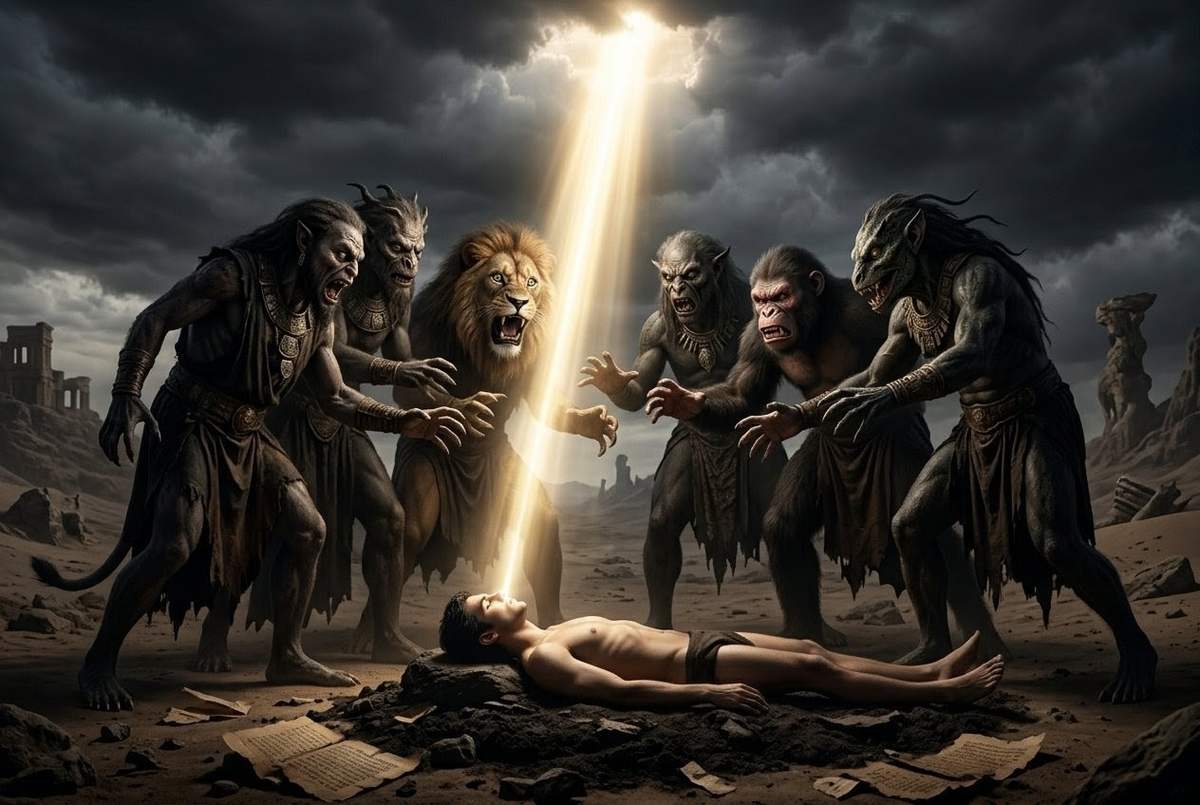
The central theological innovation of this dossier lies in its extended treatment of the archons’ reaction upon recognising the spiritual Light within Adam. When the invisible Spirit breathes the living spark into the first human, the rulers observe something that confounds their administrative understanding entirely [5].
Primary Source Citation: Reality of the Archons (NHC II,4 88:15-20): “When they saw the eikon which was upon the water, they said to one another: ‘Come, let us make a human according to the eikon of God and our own likeness, that his eikon may become a light for us.'”
The archons’ motivation is explicit: they wish to capture, contain, and exploit the divine Light for their own illumination and administrative authority. Yet when they create Adam’s physical body from the soil, they cannot make him rise. He lies upon the ground as inert matter until the Spirit intervenes, infusing the creature with the spiritual essence that renders him truly living [6].
What follows is remarkable in Gnostic literature–the archons experience something akin to terror and jealousy simultaneously. They perceive that the Light within Adam exceeds their own nature. The text dramatises this moment as a turning point in cosmic history: the instant when the forces of ignorance recognise their own limitation and, rather than surrendering to wisdom, determine to enforce dominion through deception and predatory control [7].
The Predicament of Norea
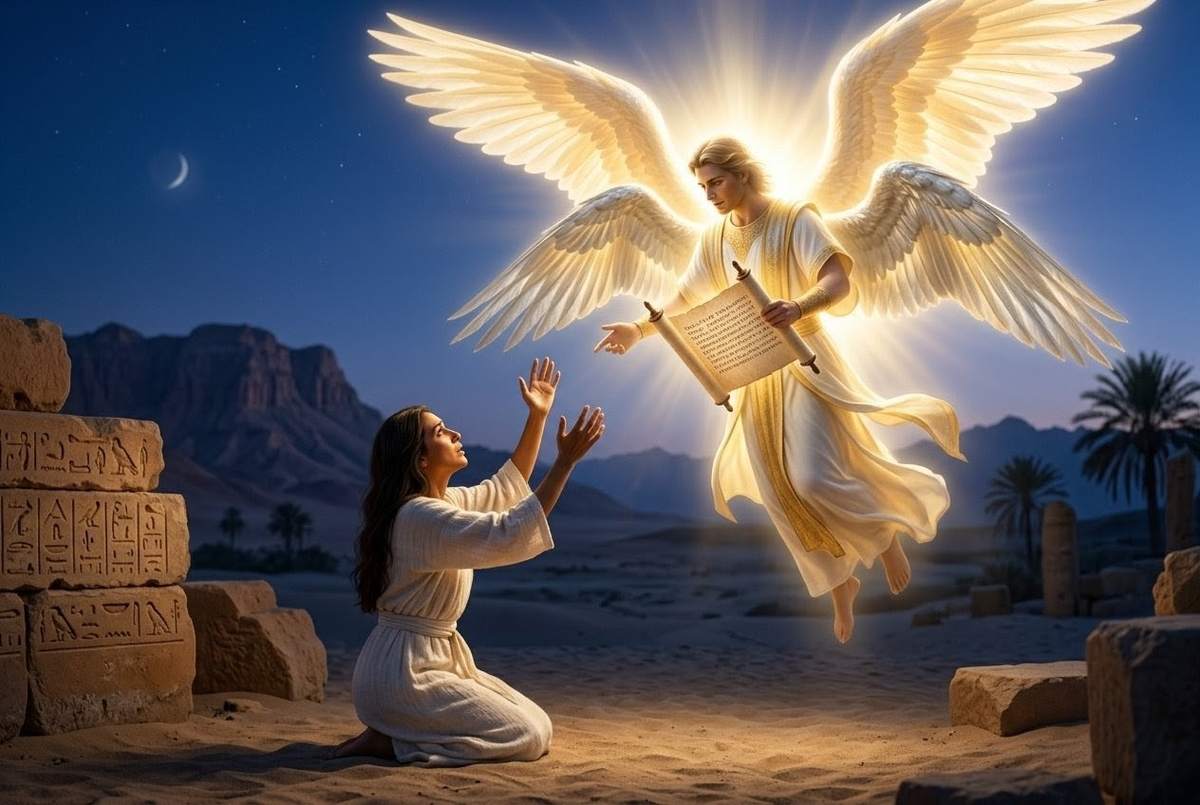
The tractate introduces Norea–sister of Seth and a figure unique to this narrative tradition–as a pivotal character representing the incorruptible spiritual lineage. When the archons attempt to seize her for sexual violence (echoing the Watchers myth from 1 Enoch), Norea cries out to the divine realm. Her prayer summons the angel Eleleth, who reveals to her the true nature of the archons and the promise of eventual liberation [8].
Primary Source Citation: Reality of the Archons (NHC II,4 92:1-10): “But Norea turned, with the might of [her spirit]; and in a loud voice, she cried out up to the Holy One, the God of the Entirety, ‘Rescue me from the Rulers of Unrighteousness and save me from their clutches–forthwith!’ The (Great) Angel came down from the heavens and said to her, ‘Why are you crying up to God? Why do you act so boldly towards the Holy Spirit?’ Norea said, ‘Who are you?’ He said, ‘It is I who am Eleleth, Sagacity, the great angel who stands in the presence of the Holy Spirit. I have been sent to speak with you and save you from the grasp of the lawless.'”
This episode serves multiple administrative functions. First, it connects the Sethian tradition with Jewish apocalyptic literature, particularly the Enochic corpus. Second, it demonstrates that the spiritual seed retains power to summon help from the Pleroma even within the darkest material circumstances. Third, it establishes Norea as a prototype of the Gnostic believer–one who, confronted by archonic predation, remembers to call upon the True God rather than submitting to false authority [9].
Eleleth’s revelation to Norea includes a prophecy regarding the eventual dissolution of archonic power–a promise that would have provided significant consolation to communities experiencing persecution or social marginalisation. The text thus functions as both cosmogony and pastoral theology for those navigating hostile administrative environments [10].
The Serpent as Instructor
Like the Apocryphon of John, the Reality of the Archons reinterprets the Edenic serpent as an agent of liberation rather than deception. Yet here the presentation carries particular narrative force. The spiritual Eve (distinct from the carnal Eve created by the archons as her shadow) instructs the serpent to awaken Adam from his trance of ignorance [11].
This complex doubling–spiritual versus carnal Eve, divine wisdom versus created mimicry–reflects the text’s sophisticated anthropology. The human being comprises multiple layers: the physical body formed by the archons, the soul provided by the planets, and the spiritual essence originating from the divine realm. The serpent, possessed by the Female Spiritual Principle, addresses the deepest layer, stirring the divine spark to remember its origin [12].
The Spiritual Eve and the Carnal Shadow
The text presents a sophisticated personnel classification system: the Spiritual Eve (also called Zoe, “Life”) represents the divine instructor who enters the serpent to communicate true knowledge. The Carnal Eve represents the shadow left behind when the Spiritual Eve transforms into the Tree of Knowledge to escape archonic rape. This bifurcation explains how the archons could “know” Eve yet fail to defile the spiritual lineage–they encountered only the shadow, not the substance.
The archons’ subsequent curse upon the serpent and upon the woman reads as defensive panic rather than righteous judgment. The text exposes the counterfeit nature of their authority–they punish precisely because they fear the awakening they cannot prevent, and they curse because they recognise their own impotence against the divine Light [13].
Theological Distinctives
Several theological features distinguish this tractate within Sethian literature. First, its treatment of Sophia differs subtly from other texts. Here, Sophia’s repentance and elevation occur with less dramatic agonising; the focus shifts instead to the archons’ psychology and the human drama of awakening [14].
Second, the text presents a more developed angelology than many companion tractates. Eleleth’s appearance and discourse suggest a well-developed intermediary theology, with specific angels assigned to spiritual protection and revelation. Eleleth, identified as one of the Four Luminaries (specifically the fourth), represents the high-level administrative response to Norea’s emergency petition [15].
Third, the tractate’s eschatology emphasises not merely individual salvation but the eventual purification of the cosmos itself. When the spiritual seed is fully gathered, the text suggests, the archonic regime will dissolve entirely–an optimistic universalism that contrasts with more dualistic presentations in some Gnostic texts [16].
Relationship to Apocryphon of John
Scholars have long debated the precise relationship between these two Sethian masterpieces. They share fundamental mythology: the fall of Sophia, the ignorant demiurge, the creation of Adam through archonic envy, the theft of spiritual power, and the rescue by the spiritual Eve. Yet their treatments diverge significantly [17].
The Apocryphon of John presents itself as secret teaching delivered by the Saviour to John son of Zebedee–a distinctly Christian Gnostic framework. The Reality of the Archons lacks this explicit Christian identification, though it retains the saviour figure in its conclusion. The former emphasises metaphysical speculation and the structure of the divine realm; the latter concentrates upon narrative drama and the psychological experience of archonic encounter [18].
Both texts, however, converge upon the same essential insight: the material world was created not by the True God but by ignorant and jealous powers who wished to capture the divine Light for their own purposes. The human task remains consistent across both traditions–to recognise one’s true identity as spiritual rather than material, and to participate in the eventual restoration of all things to the Pleroma [19].
Contemporary Administrative Relevance
Modern readers often find the Reality of the Archons peculiarly accessible. Its dramatic structure translates readily into psychological terms: the “archons” become internalised complexes, cultural conditioning, or systemic oppression; the “Light” becomes authentic consciousness; the awakening becomes the moment of self-recognition beyond social programming [20].
Yet the text resists purely psychological reduction. It insists upon the objective reality of spiritual forces–both the archonic powers that bind and the divine presence that liberates. This dual claim, simultaneously experiential and ontological, characterises the Gnostic approach to knowledge: gnosis is not merely self-awareness but recognition of cosmic administrative structure and one’s place within it [21].
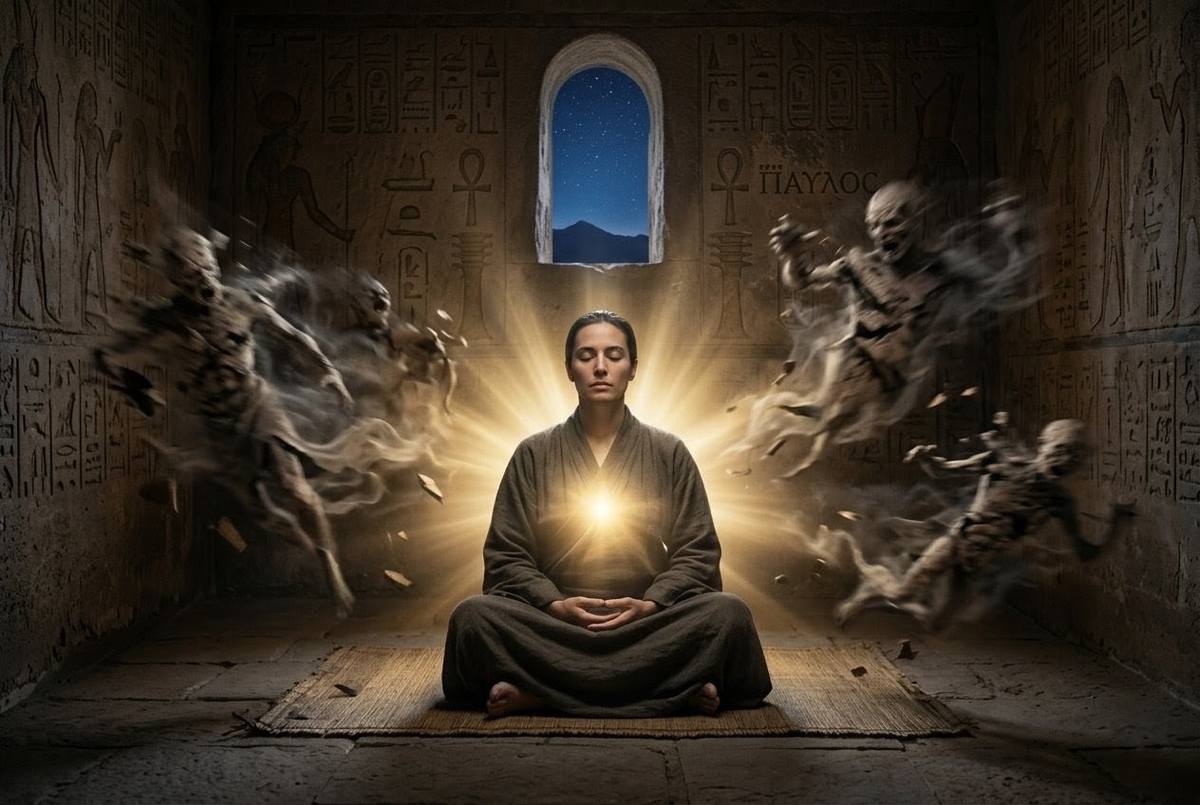
The archons may surround us, but they cannot ultimately contain the Light they sought to possess. The divine spark retains inviolable power even within the most oppressive administrative jurisdictions.
— ZenithEye Editorial Position
For the contemporary Gnostic seeker, the Reality of the Archons offers a map–not of geography but of consciousness. It traces how ignorance established its regime, how wisdom infiltrates that regime through cunning and compassion, and how the spiritual spark retains inviolable power even within the most oppressive circumstances. The archons may surround us, but they cannot ultimately contain the Light they sought to possess.
Frequently Asked Questions
What is the Reality of the Archons?
The Reality of the Archons (also called Hypostasis of the Archons, NHC II,4) is a Sethian Gnostic text from the third century CE that presents the archons (planetary rulers) as flawed administrators who created the material world to capture divine Light. Unlike philosophical Gnostic texts, it reads as cosmic drama featuring characters like Yaldabaoth (the blind chief archon), Norea (Seth’s sister), and the angel Eleleth. It retells Genesis 1-6 as an expose of administrative malpractice by ignorant celestial authorities.
Who are the main characters in the Reality of the Archons?
The main characters include: Yaldabaoth (also called Samael and Saklas), the blind, arrogant chief archon who claims to be the only god; Sophia, whose passion produces Yaldabaoth; Adam, the human containing divine Light; the Spiritual Eve (also called Zoe), who escapes archonic rape by transforming into the Tree of Knowledge; Norea, Seth’s sister who burns Noah’s ark and calls for divine rescue; and Eleleth, the fourth of the Four Luminaries who descends to save Norea and reveal the archons’ eventual downfall.
What is the difference between Reality of the Archons and Apocryphon of John?
Both are Sethian creation myths sharing the same fundamental narrative: Sophia’s fall, Yaldabaoth’s birth, and the rescue of divine sparks. However, Reality of the Archons presents itself as mythological drama focusing on archonic psychology and narrative action, while Apocryphon of John unfolds as philosophical revelation delivered by the Saviour to John. Reality of the Archons lacks explicit Christian framing, features Norea prominently (absent in Apocryphon), and includes unique elements like Norea burning the ark. Apocryphon emphasises metaphysical speculation and divine realm structure.
Who is Norea and why is she important?
Norea is the sister of Seth and daughter of Adam and Eve, unique to the Reality of the Archons and related Sethian texts. She represents the incorruptible spiritual lineage and undefiled virgin who resists archonic predation. When the archons attempt to rape her, she cries out to the divine realm and summons the angel Eleleth. She also burns Noah’s ark when refused entry, demonstrating that the spiritual seed retains power even in desperate circumstances. Norea serves as prototype of the Gnostic believer who calls upon the True God rather than submitting to false authority.
What role does the serpent play in Reality of the Archons?
Unlike traditional biblical interpretation where the serpent deceives, in Reality of the Archons the serpent serves as the Instructor (Coptic: PREFTAMO) possessed by the Spiritual Eve (Zoe). The Spiritual Eve enters the serpent to communicate true knowledge to Adam and the carnal woman, awakening them to their spiritual plight. The serpent encourages eating from the Tree of Knowledge, leading to the realisation of their nakedness (spiritual lack) rather than physical shame. The archons curse the serpent out of defensive panic, revealing their impotence against divine wisdom.
What is the Spiritual Eve vs Carnal Eve distinction?
The text presents a bifurcated Eve: the Spiritual Eve (also called Zoe, meaning ‘Life’) is the divine instructor who enters the serpent to communicate knowledge. When the archons attempt to rape her, she transforms into the Tree of Knowledge to escape, leaving behind a shadow called the Carnal Eve. This explains how the archons could ‘know’ Eve without defiling the spiritual lineage–they encountered only the shadow or mimicry. The Carnal Eve represents the psychic/carnal nature given by the archons, while the Spiritual Eve represents the divine presence that awakens Adam from ignorance.
What happens to the archons in the end?
According to Eleleth’s prophecy to Norea, the archonic regime is temporary and will eventually dissolve entirely. When the spiritual seed is fully gathered and the True Man (possibly referring to Jesus or the Gnostic redeemer) appears, the archons will be overthrown and Seth’s descendants will receive eternal life. The text promises that unlike the archons, who come from chaos and ignorance, the spiritual seed comes from the heavenly Light above and will ultimately return to the Pleroma (Fullness), while the archonic administration perishes.
Further Reading
Explore related Sethian texts, archonic cosmology, and the Norea tradition:
- The Apocryphon of John: Sethian Creation Myth — The companion Sethian text providing philosophical framework for the Reality of the Archons narrative.
- Norea: The Undefiled Virgin of Sethian Gnosticism — Dedicated analysis of the Norea figure across Sethian texts including the Thought of Norea.
- The Four Luminaries: Sethian Angelic Hierarchy — Eleleth and the angelic administration that responds to spiritual emergency petitions.
- On the Origin of the World (NHC II,5) — The companion text following Reality of the Archons in Codex II, sharing Norea traditions.
- The Thought of Norea (NHC IX) — Extended treatment of the Norea figure and her role in spiritual resistance.
- The Gospel of the Egyptians: Sethian Mythology — The Sethian three natures (pneumatic, psychic, hylic) and the role of Seth as father of the spiritual race.
- Sethian and Valentinian Traditions in the Nag Hammadi Library — Comparative analysis of the major Gnostic administrative departments.
- Nag Hammadi Codex II: Complete Guide — The complete contents of Codex II including Apocryphon of John, Gospel of Thomas, Gospel of Philip, and Reality of the Archons.
References and Sources
The following sources support the claims and quotations presented in this article:
Primary Sources and Critical Editions
- [1] Layton, B. (1977). “The Hypostasis of the Archons (II,4).” In J.M. Robinson (Ed.), The Nag Hammadi Library in English (pp. 149-156). Harper & Row.
- [2] Layton, B. (1989). Nag Hammadi Codex II, 2-7, Volume II: On the Origin of the World, Exegesis on the Soul, and The Book of Thomas the Contender. Brill.
- [3] Meyer, M. (2007). The Nag Hammadi Scriptures: The International Edition. HarperOne.
- [4] Bullard, R.A. (1970). The Hypostasis of the Archons: The Coptic Text with Translation and Commentary. De Gruyter.
- [5] Barc, B. (1980). L’Hypostase des Archontes: Traité gnostique sur l’origine de l’homme, du monde et des archontes (NH II,4). Brill.
Sethian and Norea Studies
- [6] Turner, J.D. (2001). Sethian Gnosticism and the Platonic Tradition. Presses Universitaires de Louvain.
- [7] Logan, A.H.B. (1996). Gnostic Truth and Christian Heresy: A Study in the History of Gnosticism. T&T Clark.
- [8] Pearson, B.A. (1981). “The Figure of Norea in Gnostic Literature.” In B.A. Pearson (Ed.), Gnosticism, Judaism, and Egyptian Christianity (pp. 84-94). Fortress Press.
- [9] Luttikhuizen, G.P. (2003). “The Hymn of Norea, Daughter of Eve.” In A. Marjanen & P. Luomanen (Eds.), A Companion to Second-Century Christian “Heretics” (pp. 199-211). Brill.
- [10] Brakke, D. (2010). The Gnostics: Myth, Ritual, and Diversity in Early Christianity. Harvard University Press.
Comparative and Interpretive Studies
- [11] Rasimus, T. (2009). Paradise Reconsidered in Gnostic Mythmaking: Rethinking Sethian Tradition in the Light of the Ophite Evidence. Brill.
- [12] Gilhus, I.S. (1985). The Nature of the Archons: A Study in the Soteriology of a Gnostic Treatise from Nag Hammadi (CG II,4). Wissenschaftliche Untersuchungen zum Neuen Testament 2.12. Mohr Siebeck.
- [13] Painchaud, L. (1995). “The Redactional History of the Hypostasis of the Archons (NHC II,4).” In L’Évangile selon Thomas et les textes de Nag Hammadi (pp. 218-234). Presses de l’Université Laval.
- [14] King, K.L. (2003). What Is Gnosticism? Harvard University Press.
- [15] Williams, M.A. (1996). Rethinking “Gnosticism”: An Argument for Dismantling a Dubious Category. Princeton University Press.