Sethian and Valentinian: The Two Great Streams of Nag Hammadi Theology
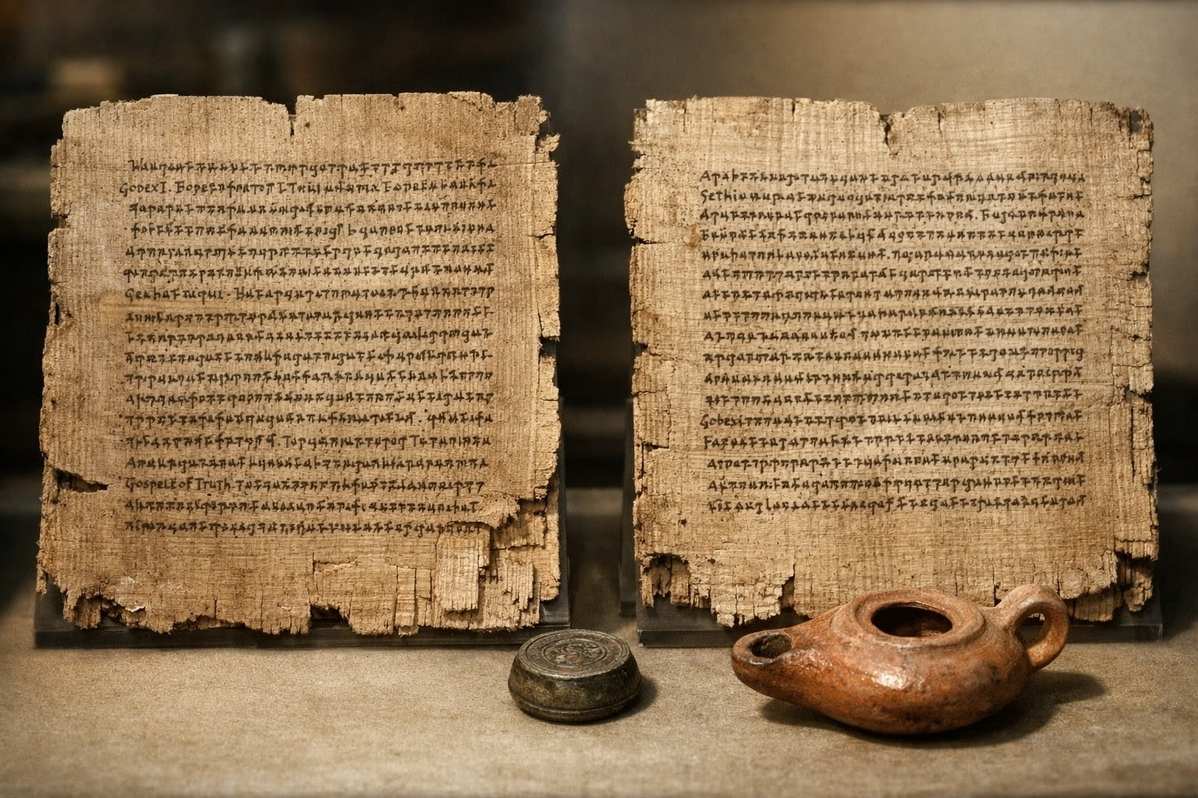
Sethian and Valentinian traditions are two of the largest and most important streams represented in the Nag Hammadi Library. They are often placed under the broad label “Gnostic”, but they should not be read as the same system.
Sethian texts usually speak through mythic drama: the Invisible Spirit, Barbelo, the divine race of Seth, Sophia’s disturbance, Yaldabaoth, archons, cosmic imprisonment, revelation and ascent. Valentinian texts tend to move through a different pattern: the Father, Pleroma, aeons, syzygies, Sophia’s deficiency, Christ, the spiritual seed, sacraments, Church and restoration.
Both currents ask how spirit becomes trapped in ignorance and how it returns to the divine source. But they answer in different accents. Sethian literature often sounds like revelation against the rulers. Valentinian literature often sounds like the healing of broken relation.
What is the difference between Sethian and Valentinian Gnosticism?
Sethian Gnosticism is a mythic and often apocalyptic tradition centred on the divine race of Seth, the fall of Sophia, the ignorant creator Yaldabaoth, archons and the soul’s liberation through revelation and ascent.
Valentinian Gnosticism is a Christian Gnostic tradition associated with Valentinus and his school. It centres on the Pleroma, paired aeons, Sophia’s deficiency, Christ, the spiritual seed, sacrament and restoration to divine Fullness.
The simplest distinction: Sethian texts often dramatise cosmic imprisonment and revelation; Valentinian texts often systematise restoration, sacrament and spiritual recognition.
Content Note: This article discusses ancient symbolic ideas about spiritual hierarchy, salvation, hidden knowledge, archons, sacraments, cosmic rulers and different human types. These are historical and theological categories, not tools for ranking or diminishing living people.
Table of Contents
- Why the Distinction Matters
- Primary Sources and Traditions Discussed
- Sethian Gnosticism
- Key Sethian Texts
- Major Sethian Themes
- Valentinian Gnosticism
- Key Valentinian Texts
- Major Valentinian Themes
- Key Differences Between Sethian and Valentinian Traditions
- Beyond Sethian and Valentinian
- How to Read the Nag Hammadi Library Strategically
- How ZenithEye Reads This
- Frequently Asked Questions
- Further Reading
- References and Sources
Why the Distinction Matters
The word “Gnosticism” is useful, but it can also blur important differences. The Nag Hammadi Library is not a single textbook. It is a collection of texts from several related but distinct spiritual, philosophical and religious currents.
When Sethian and Valentinian texts are read as one system, confusion follows. The same words can carry different meanings. The same mythic figures can be used differently. The same goal of return to the divine can be imagined through different routes.
Sethian texts often begin with mythic rupture: a false creator, archonic rule, cosmic forgetfulness and the need for revelation from beyond. Valentinian texts often begin with divine Fullness, relational order, Sophia’s deficiency and the restoration of what has become estranged.
Understanding the difference helps the reader move through Nag Hammadi without forcing every tractate into one mould. The archive becomes less like a pile of strange fragments and more like a map of neighbouring but distinct spiritual territories.
Primary Sources and Traditions Discussed
The Sethian and Valentinian currents are identified through patterns of myth, terminology, theology and ritual emphasis. Not every classification is beyond debate, and some texts sit near the borders. Still, the broad distinction is one of the most useful tools for reading the Nag Hammadi Library.
Sethian or Sethian-related texts include the Apocryphon of John, Hypostasis of the Archons, On the Origin of the World, The Holy Book of the Great Invisible Spirit, Trimorphic Protennoia, Three Steles of Seth, Zostrianos, Allogenes, Marsanes and Thought of Norea.
Valentinian or Valentinian-related texts include the Gospel of Truth, Gospel of Philip, Tripartite Tractate, Treatise on the Resurrection, Interpretation of Knowledge and A Valentinian Exposition.
Other Nag Hammadi works belong to different currents or resist easy classification, including Hermetic, Thomasine, wisdom, apocalyptic and philosophical texts.
Reading Principle: Do not treat “Gnostic” as if it names one fixed system. Read each text through its likely tradition, source layer, vocabulary and spiritual aim.
Sethian Gnosticism
Sethian Gnosticism is one of the most important mythic currents in the Nag Hammadi Library. It is named after Seth, the third son of Adam and Eve, who becomes the symbolic ancestor of a spiritual race.
Sethian texts often draw on Jewish apocalyptic, wisdom speculation, Genesis interpretation and angelic mythology. They retell creation in a radical way: the highest God is beyond the creator of the lower world, and human beings carry a divine element that does not belong to the archonic order.
The Sethian world is often dramatic and severe. The material cosmos can appear as a prison, a counterfeit order or a realm ruled by ignorance. Salvation comes through revelation, recognition, sacred names, descent of divine aid and ascent beyond the lower powers.
This is why Sethian literature can feel electric, dangerous and architecturally vast. It is not usually gentle religious advice. It is cosmic myth with a blade hidden in the lamp.
Key Sethian Texts
The Apocryphon of John is the foundational Sethian creation myth. It explains the Invisible Spirit, Barbelo, the aeons, Sophia, Yaldabaoth, the archons, Adam, Eve and the awakening of the divine spark.
Hypostasis of the Archons retells Genesis with a focus on archonic powers, Eve, spiritual instruction and the resistance of truth against the rulers.
On the Origin of the World expands the cosmic myth, giving a fuller account of the lower world, archons, Sophia, humanity and final correction.
The Holy Book of the Great Invisible Spirit, also known as the Gospel of the Egyptians, preserves a complex Sethian cosmogony centred on the Great Invisible Spirit, Seth, heavenly beings and saving revelation.
Trimorphic Protennoia speaks in the voice of First Thought, presenting a dramatic descent of divine voice, sound and light into the lower realm.
Zostrianos, Allogenes and Marsanes represent later Platonising Sethian ascent literature, where visionary ascent and apophatic theology become highly technical.
Major Sethian Themes
The highest God is beyond the lower creator. Sethian texts distinguish the unknowable divine source from Yaldabaoth or the Demiurge, who mistakenly claims supreme authority.
Barbelo is central. Barbelo often appears as the first emanation or divine Mother, a luminous figure of thought, life and pre-cosmic fullness.
Sophia’s disturbance produces the lower order. Her movement outside harmony leads to Yaldabaoth and the archonic world.
The archons rule through ignorance. They imitate, control, deceive and attempt to keep the divine spark asleep.
Revelation is liberation. Salvation comes when the soul recognises its origin and no longer accepts the world of the rulers as final.
Ascent matters. Later Sethian texts especially describe visionary ascent through levels of reality towards the unknowable One.
In Plain Terms: Sethian Gnosticism
Sethian texts usually say that the soul belongs to a higher divine source, but has become trapped in a lower world ruled by ignorance. Revelation awakens the divine spark, exposes the false authority of the archons and opens a route of ascent beyond the counterfeit order.
Valentinian Gnosticism
Valentinian Gnosticism emerges from within second-century Christianity and is associated with the teacher Valentinus and his followers. It is more explicitly Christian, ecclesial, sacramental and philosophical than many Sethian sources.
Valentinian texts still speak of a higher Fullness and a lower realm of deficiency, but their tone is often different. The world is not always described as a prison to be shattered. It is more often a realm of mixture, ignorance and incompletion that must be healed and restored.
The central word is Pleroma, meaning Fullness. Divine reality unfolds through aeons, often arranged in paired relations called syzygies. Sophia’s disturbance introduces deficiency, and the Saviour descends to restore what has become separated.
Valentinianism is therefore less a mythology of escape than a theology of return. Its music is recognition, sacrament, union and restoration.
Key Valentinian Texts
The Gospel of Truth is a poetic meditation on error, joy, recognition and the Father’s name. It is one of the most beautiful Valentinian or Valentinian-related texts.
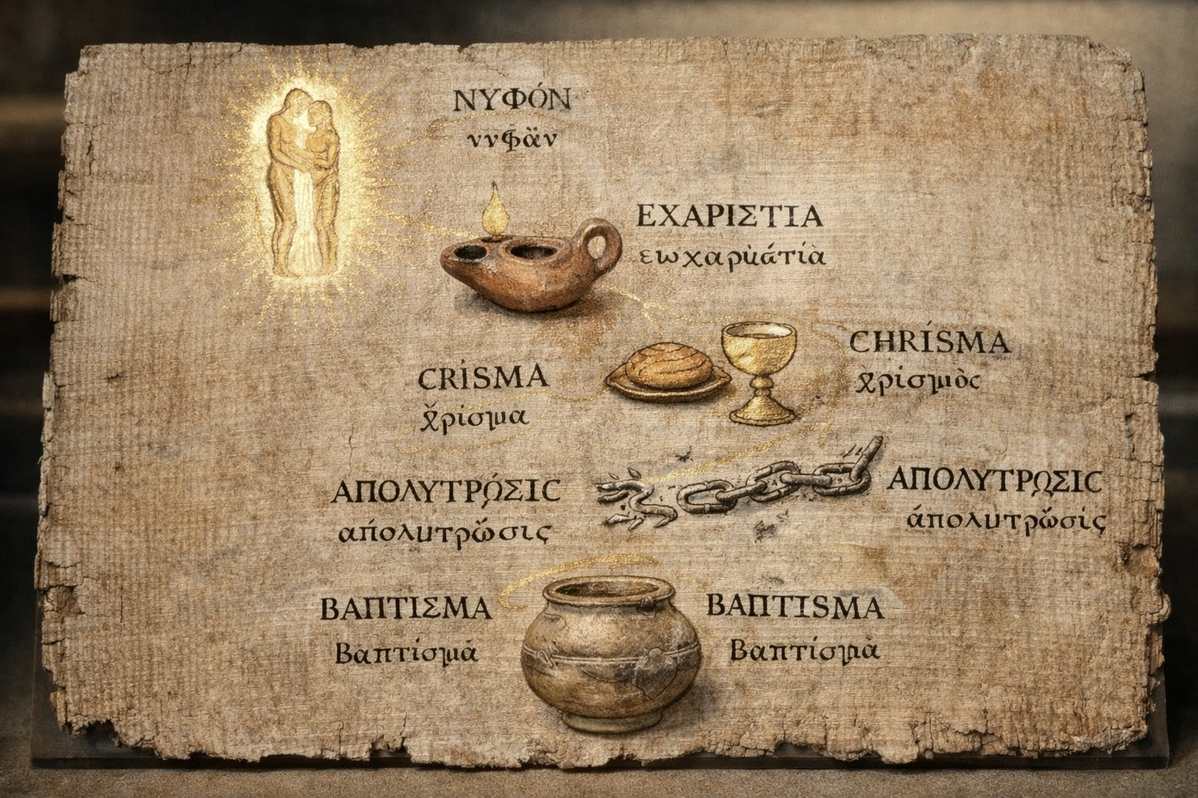
The Gospel of Philip explores sacrament, bridal chamber, chrism, names, images, union and restored identity.
The Tripartite Tractate is the longest and most systematic Valentinian text in the Nag Hammadi Library, giving a broad account of the Father, Pleroma, deficiency, creation, humanity, Saviour and restoration.
The Treatise on the Resurrection is a pastoral letter to Rheginos that presents resurrection as present spiritual transformation, not merely future bodily resuscitation.
Interpretation of Knowledge addresses community, spiritual gifts, teaching, humility and the body of truth.
A Valentinian Exposition preserves fragmentary but important Codex XI material connecting Valentinian cosmology with sacramental themes.
Major Valentinian Themes
The Pleroma is divine Fullness. It is the realm of relation, emanation, aeons and completion.
Syzygy means paired wholeness. Divine life is often imagined through complementary relations, and salvation is the healing of broken relation.
Sophia’s deficiency explains disorder. The lower world emerges from disturbance, ignorance and incompletion, not from the highest Father’s direct intention.
Christ restores. The Saviour descends to reveal the Father, awaken the spiritual seed and gather what has become estranged.
Sacrament matters. Baptism, chrism, eucharist, redemption and bridal chamber become symbolic acts of transformation and restored identity.
Humanity is threefold. Valentinian sources often speak of material, psychic and spiritual humanity, though modern readers should not turn these ancient categories into labels for living people.
In Plain Terms: Valentinian Gnosticism
Valentinian texts usually say that divine Fullness has become disturbed through deficiency, and that Christ restores the spiritual seed through recognition, sacrament and reunion. Salvation is not only escape from the lower world. It is the healing of separation and return to the Pleroma.
Key Differences Between Sethian and Valentinian Traditions
The following comparison is a reading aid, not a rigid cage. Both traditions are diverse, and some texts sit near the borders. Still, the contrast is useful.
1. Historical Roots
Sethian: Strong roots in Jewish apocalyptic, Genesis interpretation, wisdom speculation and angelic mythology. Later texts interact with Christianity and Platonism.
Valentinian: Emerges from within second-century Christianity and interprets Christian scripture, Christ, sacrament and Church through a deeper symbolic and philosophical system.
2. Literary Style
Sethian: Mythic, visionary, apocalyptic and often dramatic. Creation is retold as a cosmic crisis involving archons, hidden powers and saving revelation.
Valentinian: More poetic, philosophical, pastoral and systematic. Texts often explore error, recognition, sacrament, spiritual maturity and restoration.
3. View of the World
Sethian: The lower world is often a counterfeit or prison ruled by ignorant powers. Escape and ascent are major themes.
Valentinian: The lower world is deficient, mixed and incomplete, but not always treated as simply evil. Restoration and healing are major themes.
4. Salvation
Sethian: Salvation comes through revelation, awakening of the divine spark, sacred names, descent of the revealer and ascent beyond the lower powers.
Valentinian: Salvation comes through recognition, Christ’s restorative work, spiritual seed, sacrament, union and return to the Pleroma.
5. Christ and Revelation
Sethian: Jesus often appears as a revealer who discloses the hidden structure of reality and the soul’s origin beyond the archons.
Valentinian: Christ is the Saviour who reveals the Father, heals deficiency, awakens the spiritual seed and restores relation to Fullness.
6. Ritual and Practice
Sethian: Often associated with baptismal imagery, the Five Seals, sacred names, visionary ascent and passage beyond archonic powers.
Valentinian: Associated with baptism, chrism, eucharist, redemption and bridal chamber as symbolic forms of transformation, restoration and union.
7. Spiritual Atmosphere
Sethian: More confrontational, apocalyptic and cosmic. The soul must awaken against the false order.
Valentinian: More restorative, ecclesial and sacramental. The soul must remember, mature and return to relation.
Core Contrast: Sethian texts often ask, “How do we awaken from the false world and ascend beyond the rulers?” Valentinian texts often ask, “How does what has become deficient return to the Fullness through Christ, knowledge and restored relation?”
Beyond Sethian and Valentinian
The Nag Hammadi Library contains more than Sethian and Valentinian texts. Several works belong to other currents or resist neat classification.
Hermetic texts include the Discourse on the Eighth and Ninth, Prayer of Thanksgiving and Asclepius. These belong to Egyptian-Greek Hermetic spirituality rather than Sethian or Valentinian myth.
Thomasine texts, especially the Gospel of Thomas, focus on sayings, wisdom, hidden interpretation and self-knowledge rather than elaborate cosmic mythology.
Wisdom and ethical texts, such as Teachings of Silvanus and Sentences of Sextus, preserve moral and contemplative instruction with less interest in archonic cosmology.
Poetic and paradoxical texts, such as Thunder: Perfect Mind, do not fit neatly into school categories. Their power lies partly in resisting simple placement.
The library is therefore not one doctrine. It is an archive of routes: mythic, poetic, philosophical, sacramental, ascetic, apocalyptic and contemplative.
How to Read the Nag Hammadi Library Strategically
The best way to approach Nag Hammadi is not to read randomly and hope the pieces assemble themselves. Start with a route.
For mythic drama and cosmic architecture: begin with Hypostasis of the Archons, then Apocryphon of John, then On the Origin of the World.
For Valentinian beauty and recognition: begin with the Gospel of Truth, then Gospel of Philip, then Tripartite Tractate.
For resurrection, death and spiritual transformation: read the Treatise on the Resurrection beside the Gospel of Truth and Tripartite Tractate.
For community and spiritual gifts: read Interpretation of Knowledge beside the Valentinian sacramental texts.
For advanced ascent and Platonising Sethian material: move later to Zostrianos, Allogenes, Marsanes and Three Steles of Seth.
For poetic shock and mystical paradox: read Thunder: Perfect Mind slowly, without forcing it into a school before it has spoken.
How ZenithEye Reads This
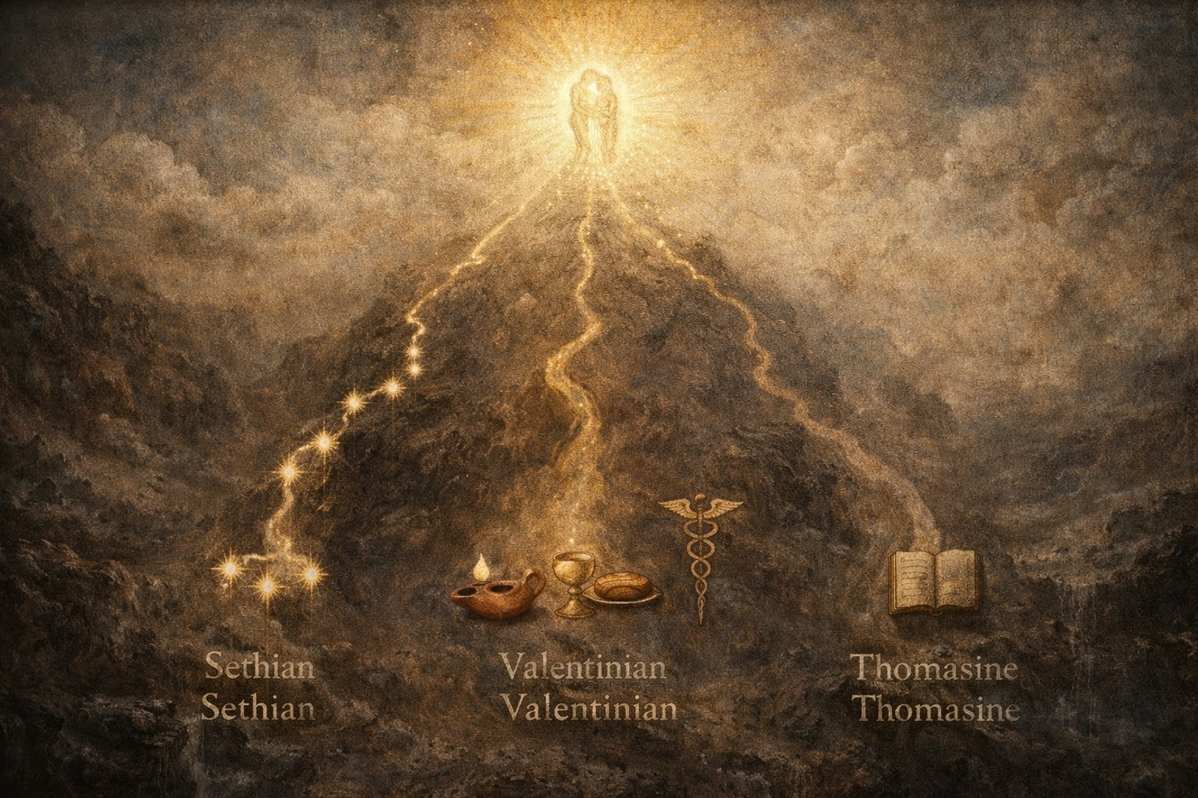
ZenithEye reads the Sethian and Valentinian distinction as a practical map for readers. It is not about locking ancient texts into boxes. It is about helping the reader hear each text in its own register.
Sethian texts are best approached as revelation literature. They expose false authority, dramatise cosmic ignorance and awaken the divine spark against the archonic order.
Valentinian texts are best approached as restoration literature. They explore divine Fullness, spiritual seed, Christ, sacrament, community and the healing of separation.
Both matter. Sethian texts sharpen discernment against counterfeit rule. Valentinian texts deepen the language of healing, relation and return. One cuts the chain. The other teaches the soul how to belong again.
Read together, they show why the Nag Hammadi Library is not a single doctrine but a living archive of spiritual diagnosis. Different wounds require different medicines. Different texts open different gates.
Safety Notice: This article explores symbolic, historical and spiritual ideas about hidden knowledge, spiritual hierarchy, archons, salvation, initiation, sacraments and human types. It is intended for grounded study of ancient texts, not as medical, psychological, legal or spiritual advice. Do not use ancient categories such as spiritual, psychic, material, elect or seed to rank, pressure or control living people. If themes of cosmic systems, hidden status, spiritual hierarchy or hostile powers become distressing or destabilising, seek support from a qualified professional, trusted support service or appropriate safeguarding body.
Frequently Asked Questions
What is the difference between Sethian and Valentinian Gnosticism?
Sethian Gnosticism is usually more mythic, apocalyptic and centred on revelation against archonic powers. Valentinian Gnosticism is usually more Christian, philosophical, sacramental and centred on restoration to the Pleroma. Sethian texts often focus on cosmic imprisonment and ascent, while Valentinian texts focus on deficiency, Christ, sacrament and restored relation.
Are Sethian and Valentinian texts part of the same system?
No. They share some broad Gnostic themes, such as divine origin, ignorance, the need for knowledge and return to the divine, but they are distinct traditions with different mythologies, vocabularies, rituals and theological emphases.
Which texts are key Sethian works?
Key Sethian or Sethian-related texts include the Apocryphon of John, Hypostasis of the Archons, On the Origin of the World, The Holy Book of the Great Invisible Spirit, Trimorphic Protennoia, Three Steles of Seth, Zostrianos, Allogenes, Marsanes and Thought of Norea.
Which texts are key Valentinian works?
Key Valentinian or Valentinian-related texts include the Gospel of Truth, Gospel of Philip, Tripartite Tractate, Treatise on the Resurrection, Interpretation of Knowledge and A Valentinian Exposition. These texts show poetic, systematic, pastoral, communal and sacramental sides of the Valentinian tradition.
Is Sethian Gnosticism anti-world?
Many Sethian texts describe the lower world as a counterfeit or prison ruled by ignorant powers, so they often sound more cosmically pessimistic than Valentinian texts. However, the tradition is diverse, and later Sethian works also engage deeply with Platonist metaphysics and contemplative ascent.
Is Valentinian Gnosticism more Christian than Sethian Gnosticism?
Valentinian Gnosticism emerges from within second-century Christianity and makes strong use of Christian scripture, Christology, sacramental language and Church imagery. Sethian texts often have deeper roots in Jewish apocalyptic and Genesis interpretation, though some Sethian texts also incorporate Christian elements.
Which tradition should beginners read first?
For mythic drama, begin with Hypostasis of the Archons and the Apocryphon of John. For poetic and philosophical recognition, begin with the Gospel of Truth and Gospel of Philip. For systematic Valentinian theology, read the Tripartite Tractate after the easier Valentinian texts.
Does the Nag Hammadi Library contain only Sethian and Valentinian texts?
No. The Nag Hammadi Library also contains Hermetic, Thomasine, wisdom, apocalyptic, poetic and philosophical texts that do not fit neatly into either Sethian or Valentinian categories.
Why does this distinction matter for reading Nag Hammadi?
The distinction matters because Sethian and Valentinian texts use different maps. Reading them as one system can cause confusion. Recognising their separate traditions helps readers understand each text’s vocabulary, theology, spiritual aim and place in the wider library.
Further Reading
Continue through the related Gnostic schools, Sethian, Valentinian and Nag Hammadi source layer:
- Gnostic Schools: a broader guide to Sethian, Valentinian, Hermetic and related traditions.
- The Apocryphon of John: the foundational Sethian creation myth of Barbelo, Sophia, Yaldabaoth, archons and awakened humanity.
- Hypostasis of the Archons: Eve, truth, spiritual instruction and resistance to the rulers.
- On the Origin of the World: a fuller Sethian-related account of creation, archons, Sophia and final correction.
- The Five Seals: Sethian initiation, baptismal imagery and ascent symbolism.
- Zostrianos: advanced Sethian ascent through aeonic layers and Platonising metaphysics.
- Allogenes: Sethian ascent, apophatic stillness and encounter with the unknowable One.
- The Gospel of Truth: Valentinian meditation on error, joy, recognition and the Father’s name.
- The Gospel of Philip: Valentinian sacrament, bridal chamber, chrism, names and sacred union.
- The Tripartite Tractate: the most systematic Nag Hammadi witness to Valentinian theology.
- Valentinian Gnosticism: the broader overview of the Valentinian school, Pleroma, Sophia, spiritual seed and restoration.
- Nag Hammadi Library: Complete Guide to the Gnostic Scriptures: the wider archive guide to codices, tractates and traditions.
References and Sources
The following sources support the historical, textual and interpretive claims made in this article.
Primary Sources and Critical Editions
- The Apocryphon of John. Nag Hammadi Codex II,1; III,1; IV,1; and Berlin Codex 8502,2.
- Hypostasis of the Archons. Nag Hammadi Codex II,4.
- On the Origin of the World. Nag Hammadi Codex II,5 and XIII,2.
- The Holy Book of the Great Invisible Spirit. Nag Hammadi Codex III,2 and IV,2.
- Trimorphic Protennoia. Nag Hammadi Codex XIII,1.
- Three Steles of Seth. Nag Hammadi Codex VII,5.
- Zostrianos. Nag Hammadi Codex VIII,1.
- Allogenes. Nag Hammadi Codex XI,3.
- Marsanes. Nag Hammadi Codex X.
- The Gospel of Truth. Nag Hammadi Codex I,3.
- The Treatise on the Resurrection. Nag Hammadi Codex I,4.
- The Tripartite Tractate. Nag Hammadi Codex I,5.
- The Gospel of Philip. Nag Hammadi Codex II,3.
- Interpretation of Knowledge. Nag Hammadi Codex XI,1.
- A Valentinian Exposition. Nag Hammadi Codex XI,2.
- Robinson, James M., ed. The Nag Hammadi Library in English. Harper & Row / HarperSanFrancisco, revised editions.
- Meyer, Marvin, ed. The Nag Hammadi Scriptures. HarperOne, 2007.
- Layton, Bentley. The Gnostic Scriptures. Doubleday, 1987.
Sethian Studies
- Schenke, Hans-Martin. “Das sethianische System nach Nag-Hammadi-Handschriften.” In Studia Coptica. De Gruyter, 1974.
- Turner, John D. Sethian Gnosticism and the Platonic Tradition. Peeters, 2001.
- Burns, Dylan M. Apocalypse of the Alien God: Platonism and the Exile of Sethian Gnosticism. University of Pennsylvania Press, 2014.
- Rasimus, Tuomas. Paradise Reconsidered in Gnostic Mythmaking. Brill, 2009.
- Waldstein, Michael, and Frederik Wisse. The Apocryphon of John. Brill, 1995.
- King, Karen L. The Secret Revelation of John. Harvard University Press, 2006.
Valentinian Studies
- Thomassen, Einar. The Spiritual Seed: The Church of the Valentinians. Brill, 2006.
- Dunderberg, Ismo. Beyond Gnosticism: Myth, Lifestyle, and Society in the School of Valentinus. Columbia University Press, 2008.
- Markschies, Christoph. Valentinus Gnosticus? Mohr Siebeck, 1992.
- Esler, Philip F. The First Valentinians. Cambridge University Press, 2023.
- Pagels, Elaine. The Gnostic Paul: Gnostic Exegesis of the Pauline Letters. Fortress Press, 1975.
Comparative and Methodological Studies
- Williams, Michael Allen. Rethinking “Gnosticism”: An Argument for Dismantling a Dubious Category. Princeton University Press, 1996.
- King, Karen L. What Is Gnosticism?. Harvard University Press, 2003.
- Brakke, David. The Gnostics: Myth, Ritual, and Diversity in Early Christianity. Harvard University Press, 2010.
- Pearson, Birger A. Ancient Gnosticism: Traditions and Literature. Fortress Press, 2007.
- van den Broek, Roelof. Gnostic Religion in Antiquity. Cambridge University Press, 2013.
- Logan, A.H.B. Gnostic Truth and Christian Heresy: A Study in the History of Gnosticism. T&T Clark, 1996.
Reading Note: Sethian and Valentinian traditions should be read as neighbouring routes, not identical systems. Sethian texts train discernment against false cosmic rule. Valentinian texts train recognition of Fullness, relation and restoration. Together they reveal the Nag Hammadi Library as an archive of distinct but converging paths of awakening.