Gnostic Schools: Sethians, Valentinians, Hermetics — A Comprehensive Overview
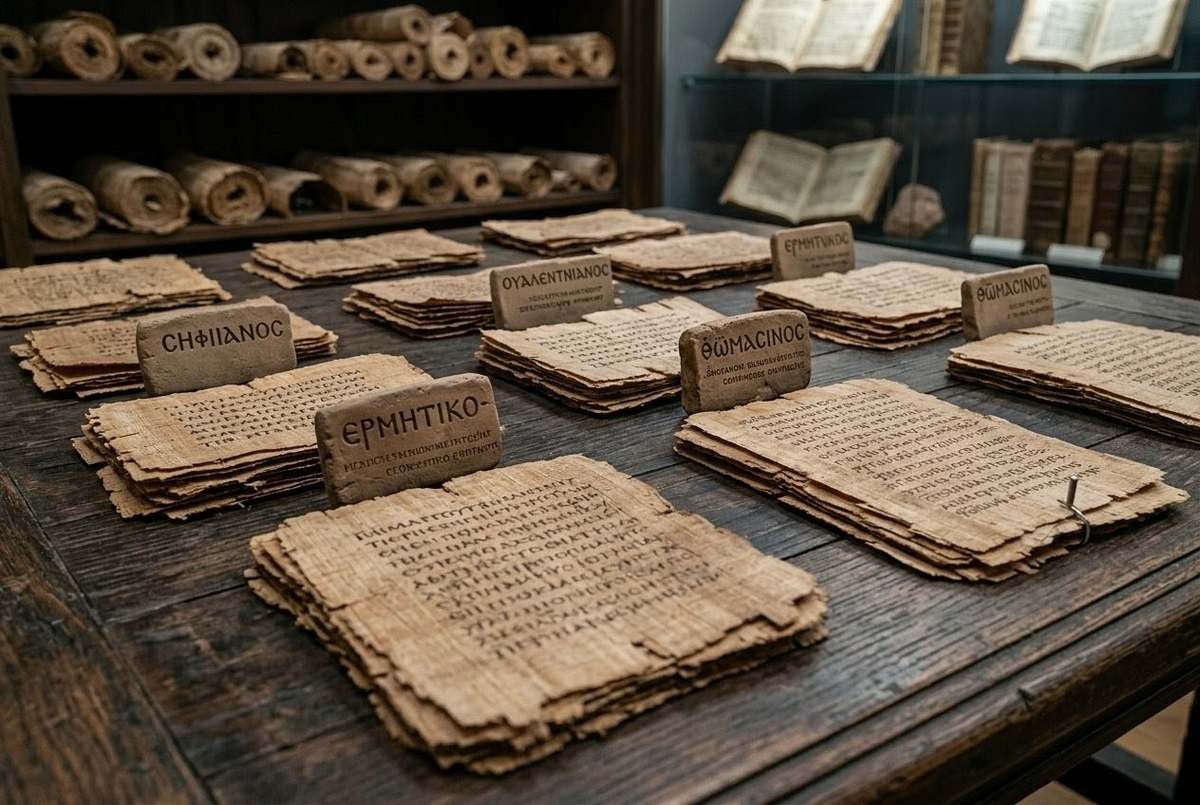
Gnostic schools are the distinct currents, traditions and reading-worlds preserved across the Nag Hammadi Library and related ancient sources. The word “Gnosticism” can make these texts sound like one unified religion, but the archive itself is more intricate: Sethian myth, Valentinian theology, Hermetic ascent, Thomasine sayings, wisdom instruction, apocalyptic vision and other borderland forms.
This matters because not all “Gnostic” texts are saying the same thing. The Apocryphon of John does not think like the Gospel of Philip. The Gospel of Thomas does not move like Zostrianos. Hermetic ascent does not share the same spiritual atmosphere as Sethian resistance to archons or Valentinian restoration to the Pleroma.
The Nag Hammadi Library is therefore best read as an archive of routes rather than a single map. Each tradition has its own vocabulary, spiritual problem, cosmology and path of return. The reader who sees those differences can move through the library with clarity rather than becoming lost in a glittering fog of names.
What are the main Gnostic schools?
The main schools and currents represented in or around the Nag Hammadi Library include Sethian, Valentinian, Hermetic and Thomasine traditions, along with wisdom, apocalyptic and other texts that do not fit neatly into one category.
Sethian texts often focus on cosmic fall, archons, revelation and ascent. Valentinian texts often focus on Pleroma, Sophia, Christ, sacrament and restoration. Hermetic texts focus on divine mind, ascent and transformation. Thomasine texts focus on hidden sayings, self-knowledge and recognition.
Content Note: This article discusses ancient symbolic ideas about hidden knowledge, spiritual hierarchy, archons, initiation, ascent, sacraments and salvation. These are historical and theological categories, not tools for ranking or controlling living people.
Table of Contents
- Why Gnostic Schools Matter
- Why Gnosticism Is Not One System
- Sethian Gnosticism
- Valentinian Gnosticism
- Hermetic Tradition
- Thomasine Tradition
- Marcion and the Boundary of Gnosticism
- Comparing the Main Traditions
- Which Route Should You Read First?
- How ZenithEye Reads This
- Frequently Asked Questions
- Further Reading
- References and Sources
Why Gnostic Schools Matter
The Nag Hammadi Library preserves texts from several different spiritual and intellectual worlds. Some are mythic and apocalyptic. Some are philosophical. Some are sacramental. Some are poetic. Some are wisdom collections with little interest in elaborate cosmology.
That diversity is not a flaw in the archive. It is the archive’s secret weather. The texts were not all written by one group, for one community, with one doctrine. They were copied, gathered and preserved across a wider landscape of late antique religious searching.
Without school distinctions, readers often force every text into one system. They expect every work to teach the same Demiurge, the same Pleroma, the same aeons, the same view of Jesus and the same route of salvation. That approach quickly produces confusion.
Reading by tradition gives each text room to breathe. Sethian texts can be heard as Sethian. Valentinian texts can be heard as Valentinian. Hermetic and Thomasine texts can speak in their own register, without being squeezed into a myth they do not fully share.
Why Gnosticism Is Not One System
Modern scholarship has repeatedly challenged the idea that “Gnosticism” names one single ancient religion. The term is useful as an umbrella, but it can also flatten real differences.
Many texts share family resemblances: hidden knowledge, divine origin, alienation from the lower world, critique of false powers, the need for awakening and return to a higher source. But those shared themes do not make every text identical.
A Sethian myth of Yaldabaoth is not the same as a Valentinian account of deficiency. Hermetic ascent through the eighth and ninth is not the same as Valentinian bridal chamber symbolism. Thomasine self-recognition is not the same as Sethian Five Seals initiation.
The better image is not one cathedral, but a cluster of sanctuaries built near the same hidden spring. They share water, but not architecture.
Reading Principle: Treat “Gnostic” as a family resemblance, not a single doctrine. Ask which tradition a text belongs to before assuming what its symbols mean.
Sethian Gnosticism
Sethian Gnosticism is one of the most important mythic traditions represented in Nag Hammadi. It takes its name from Seth, the third son of Adam and Eve, who becomes the symbolic ancestor of a spiritual race.
Sethian texts often draw on Jewish apocalyptic, Genesis interpretation, wisdom speculation and angelic mythology. They retell creation as a cosmic crisis. The highest divine source is beyond the lower creator, and the human spiritual element belongs to a realm above the archons.
Core Sethian figures include the Invisible Spirit, Barbelo, Autogenes, Sophia, Yaldabaoth, the archons, the Four Luminaries and the seed of Seth. The spiritual problem is ignorance and captivity within a lower order that falsely claims authority.
Important Sethian or Sethian-related texts include the Apocryphon of John, Hypostasis of the Archons, On the Origin of the World, The Holy Book of the Great Invisible Spirit, Trimorphic Protennoia, Three Steles of Seth, Zostrianos, Allogenes, Marsanes and Thought of Norea.
The Sethian route is often dramatic, confrontational and visionary. It exposes false cosmic rule and awakens the divine spark against the counterfeit order.
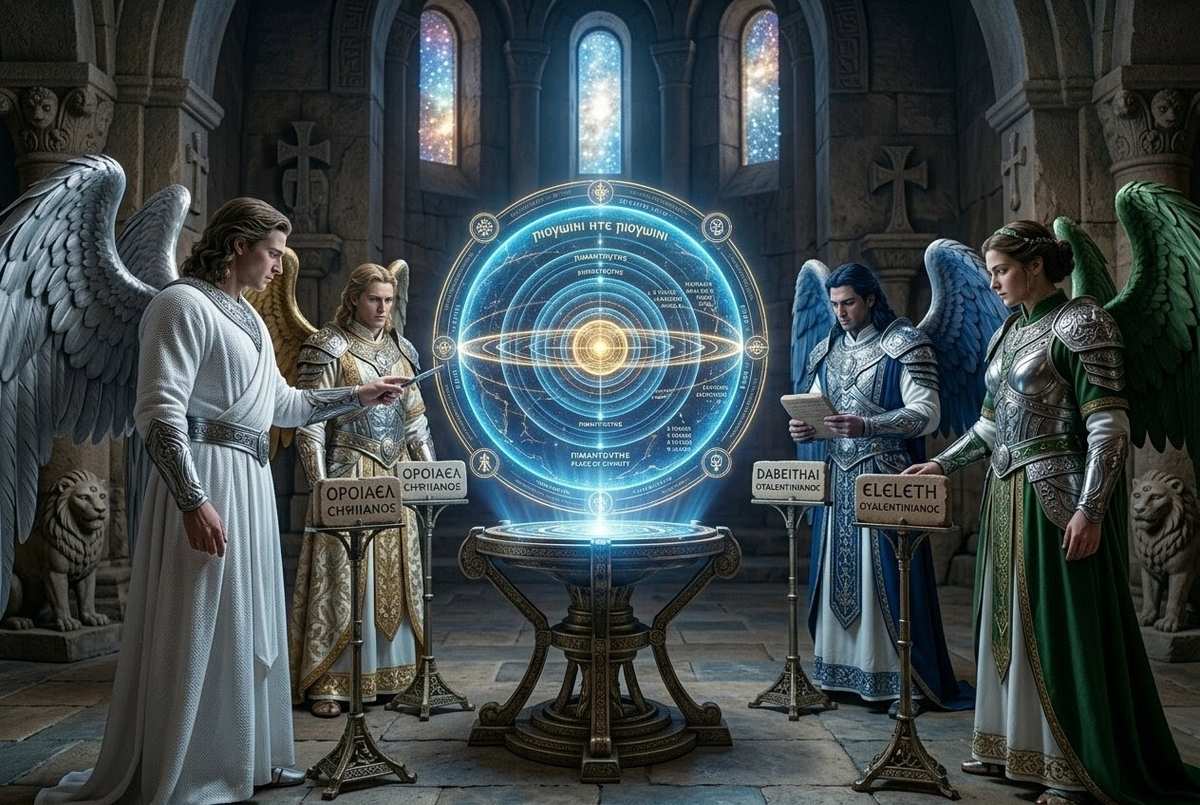
In Plain Terms: Sethian Gnosticism
Sethian texts usually say that the soul belongs to a higher divine source, but has become trapped in a lower world ruled by ignorance. Revelation awakens the divine spark, exposes the false authority of the archons and opens a route of ascent beyond the counterfeit order.
Valentinian Gnosticism
Valentinian Gnosticism is a Christian Gnostic tradition associated with Valentinus and his followers. It developed in the second century and became one of the most sophisticated theological movements contested by early catholic writers.
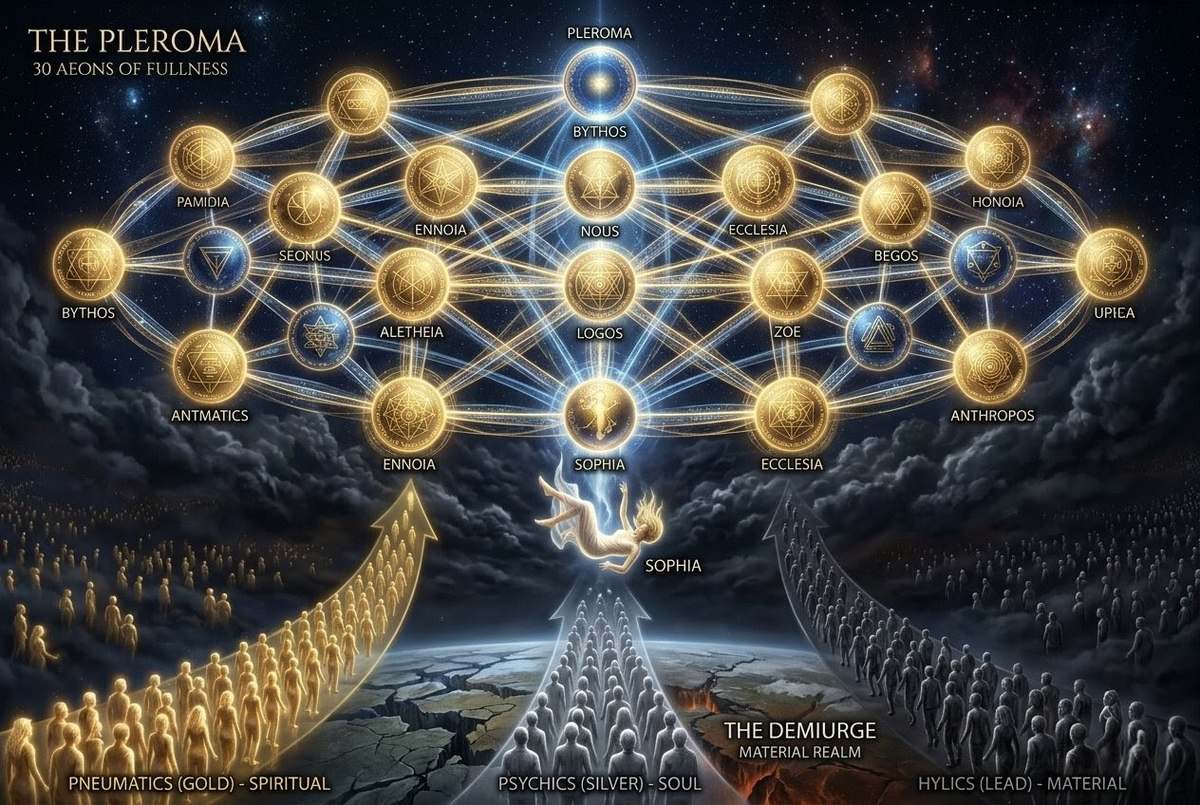
Valentinian sources tend to be more explicitly Christian, philosophical, sacramental and restorative than many Sethian texts. They interpret scripture, Christ, Church and sacrament through the language of the Pleroma, aeons, Sophia, spiritual seed and restoration.
The central word is Pleroma, meaning Fullness. Divine reality unfolds through aeons, often paired in syzygies. Sophia’s disturbance introduces deficiency, and the Saviour descends to heal what has become estranged.
Important Valentinian or Valentinian-related texts include the Gospel of Truth, Gospel of Philip, Tripartite Tractate, Treatise on the Resurrection, Interpretation of Knowledge and A Valentinian Exposition.
The Valentinian route is often less a prison-break myth than a theology of return. Its great themes are recognition, sacrament, syzygy, spiritual maturity and restoration to Fullness.
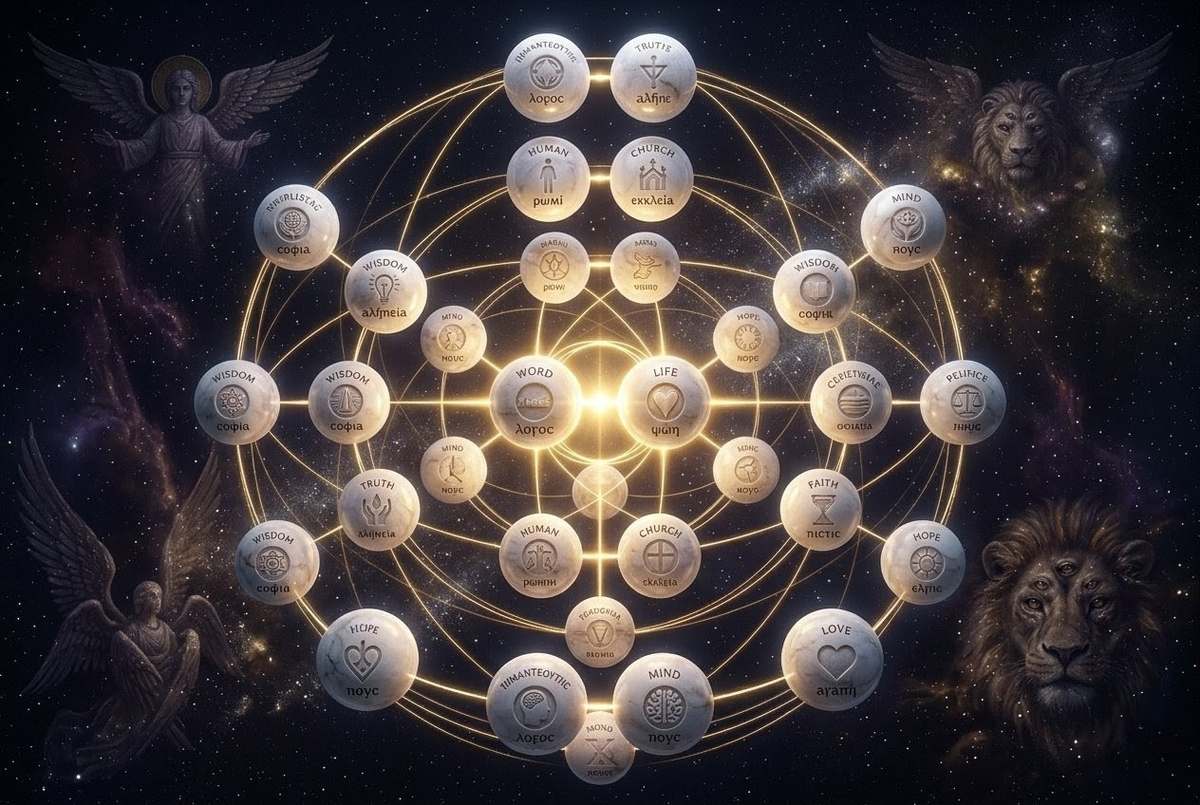
In Plain Terms: Valentinian Gnosticism
Valentinian texts usually say that divine Fullness has become disturbed through deficiency, and that Christ restores the spiritual seed through recognition, sacrament and reunion. Salvation is the healing of separation and the return of what was scattered to the Pleroma.
Hermetic Tradition
Hermeticism is closely related to the wider world of late antique gnosis, but it is not simply the same as Sethian or Valentinian Gnosticism. It belongs to an Egyptian-Greek religious and philosophical current associated with Hermes Trismegistus.
Hermetic texts often focus on divine mind, cosmic sympathy, ascent, prayer, instruction and transformation. They are less hostile to the cosmos than many Sethian texts. The universe can be seen as a living order that reveals divine intelligence, even if the soul must rise beyond lower attachments.
The Nag Hammadi Library includes Hermetic material, especially the Discourse on the Eighth and Ninth, the Prayer of Thanksgiving and a version of Asclepius. These texts show contemplative ascent, thanksgiving and the soul’s movement towards higher divine realities.
The Hermetic route is less about defeating archons and more about awakening the mind to its divine source. It is a path of ascent through understanding, prayer, contemplation and transformation.
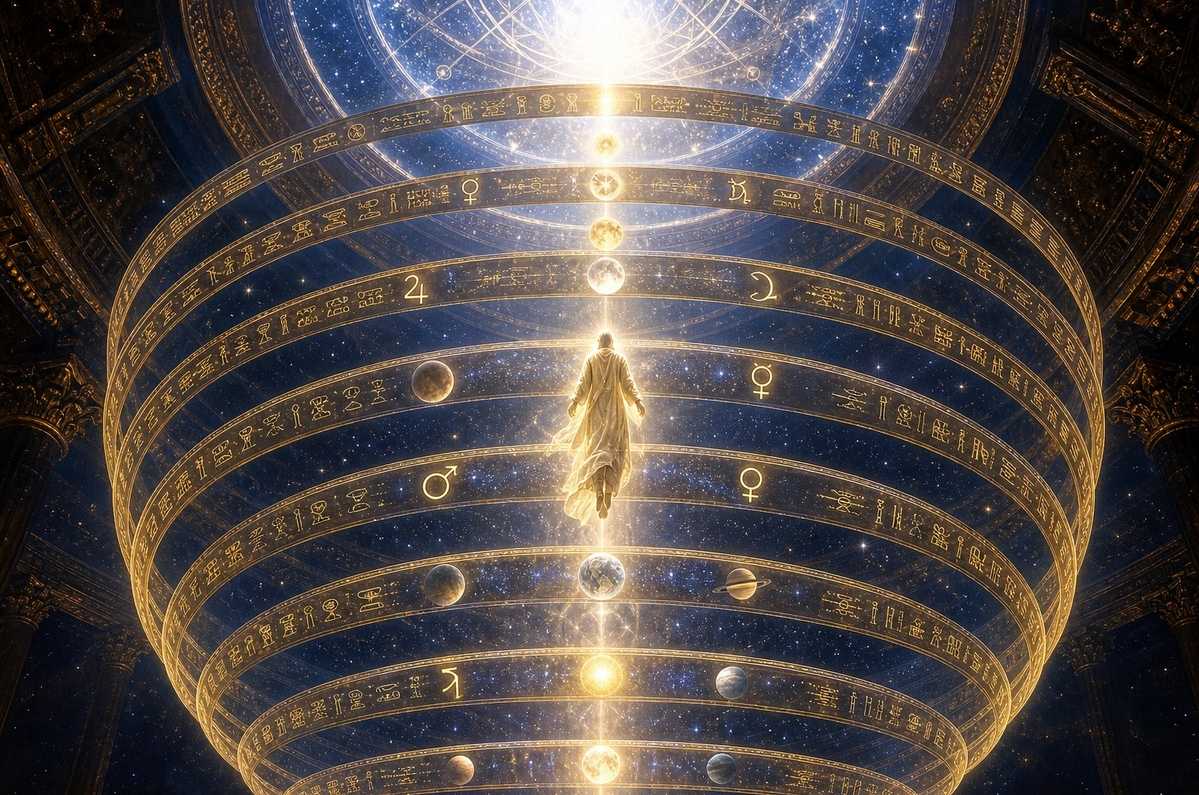
In Plain Terms: Hermeticism
Hermetic texts teach that the human mind can awaken to divine Mind through instruction, contemplation, prayer and ascent. The cosmos is not merely a prison. It can become a living sign through which the soul learns to recognise its higher source.
Thomasine Tradition
The Thomasine tradition is centred above all on the Gospel of Thomas, a collection of sayings attributed to Jesus and preserved complete in Nag Hammadi Codex II, with Greek fragments known from Oxyrhynchus.
Thomasine material differs sharply from both Sethian myth and Valentinian system. It does not build an elaborate cosmology of Sophia, Yaldabaoth, aeons and archons. Instead, it focuses on hidden sayings, seeking, finding, self-knowledge and the discovery of the kingdom already present.
The name Thomas means “twin”, and this twin symbolism has often been read as a clue to recognition. The seeker is invited to discover a hidden likeness, an inward correspondence with the living Jesus and the divine source.
The Book of Thomas the Contender develops a more ascetic and dialogic Thomasine route, focusing on the struggle between flesh and soul, desire and recognition.
The Thomasine route is direct and sharp. It asks less, “What is the full structure of the heavens?” and more, “Who are you when the hidden thing in you is brought to light?”
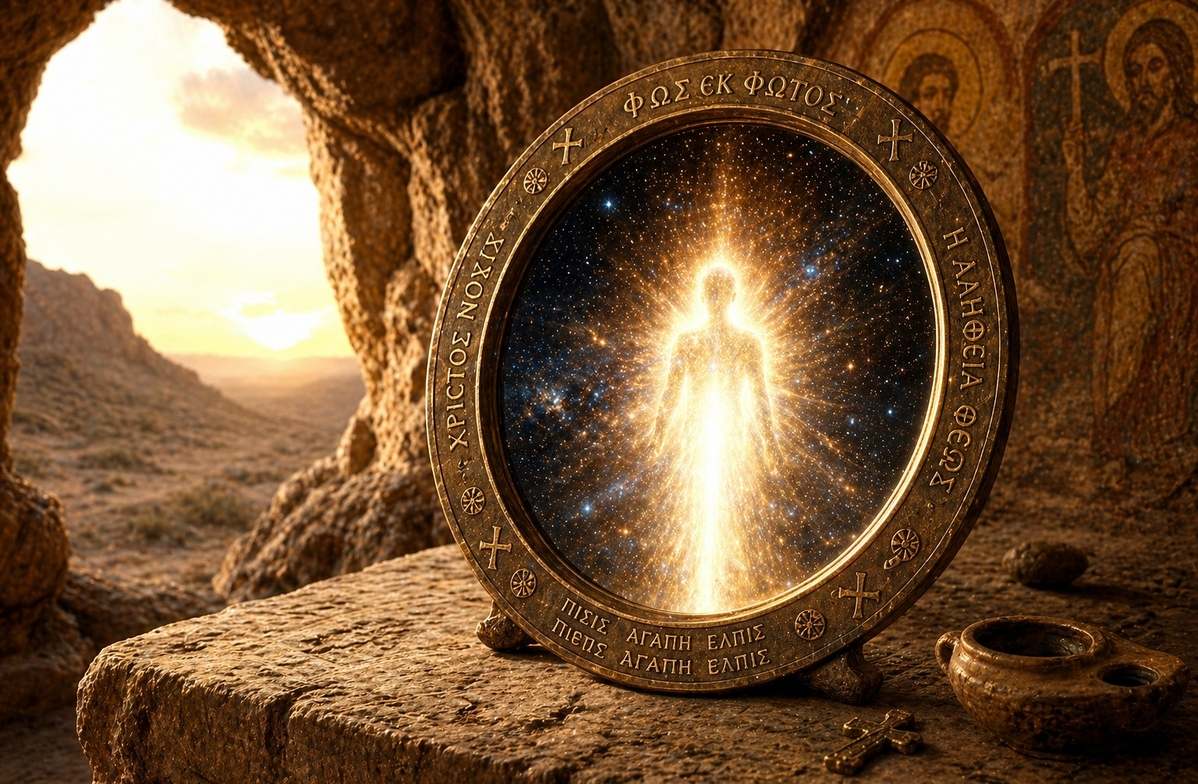
In Plain Terms: Thomasine Tradition
Thomasine texts focus on hidden sayings, self-knowledge and recognition. They are less concerned with cosmic maps and more concerned with the seeker discovering the kingdom, light or living presence already hidden within.
Marcion and the Boundary of Gnosticism
Marcion of Sinope is often discussed near Gnostic traditions because he sharply distinguished the God revealed by Jesus from the creator God of the Hebrew scriptures. However, Marcionism should be treated carefully. It is not a Nag Hammadi school, and it does not share many classic Gnostic features.
Marcion rejected the Hebrew Bible, edited a Christian canon centred on a version of Luke and Pauline letters, and founded an organised church that rivalled emerging catholic Christianity. His movement was dualistic, but not esoteric in the same way as Valentinian or Sethian traditions.
He did not build a complex aeonic cosmology, did not emphasise secret ascent through archonic realms, and did not work with the Nag Hammadi mythic vocabulary of Barbelo, Sophia, Yaldabaoth or the Pleroma in the same way.
For this reason, Marcion is best treated as a boundary case: useful for understanding ancient Christian dualism and canon formation, but not one of the main Nag Hammadi schools.
Comparing the Main Traditions
The following comparison is a reader’s map, not a set of locked boxes. The traditions overlap, develop and sometimes borrow from one another. Still, the distinctions are useful.
Sethian
Core concern: cosmic fall, archonic rule, revelation and ascent.
Key figures: Invisible Spirit, Barbelo, Sophia, Yaldabaoth, Seth, Four Luminaries, archons.
Best entry texts: Hypostasis of the Archons, Apocryphon of John, On the Origin of the World.
Valentinian
Core concern: Pleroma, deficiency, Christ, spiritual seed, sacrament and restoration.
Key figures: Father, aeons, Sophia, Saviour, spiritual seed, Church, bridal chamber.
Best entry texts: Gospel of Truth, Gospel of Philip, Tripartite Tractate.
Hermetic
Core concern: divine Mind, cosmic order, instruction, contemplation and ascent.
Key figures: Hermes Trismegistus, Nous, the disciple, planetary spheres, Ogdoad and Ennead.
Best entry texts: Discourse on the Eighth and Ninth, Prayer of Thanksgiving, Asclepius.
Thomasine
Core concern: hidden sayings, seeking, finding, self-knowledge and the kingdom within.
Key figures: Jesus, Thomas the Twin, the seeker, the living one.
Best entry texts: Gospel of Thomas, Book of Thomas the Contender.
Core Contrast: Sethian texts often reveal the false structure of the lower world. Valentinian texts restore the broken relation to Fullness. Hermetic texts train the mind to ascend. Thomasine texts turn the saying into a mirror.
Which Route Should You Read First?
The best entry point depends on the kind of reader you are and the kind of question that brought you to the archive.
For mythic drama and cosmic resistance: begin with Sethian texts. Start with Hypostasis of the Archons, then move to the Apocryphon of John and On the Origin of the World.
For philosophical theology and Christian restoration: begin with Valentinian texts. Start with the Gospel of Truth, then read the Gospel of Philip and Tripartite Tractate.
For contemplative ascent and divine mind: begin with Hermetic texts. Read the Discourse on the Eighth and Ninth beside the Prayer of Thanksgiving.
For sayings, paradox and direct self-recognition: begin with the Gospel of Thomas. Read slowly, one saying at a time, without rushing to force it into another school’s cosmology.
For a whole-library route: read one accessible text from each stream before diving deeper. The archive becomes far clearer once you hear the different instruments in the orchestra.

How ZenithEye Reads This
ZenithEye reads the Gnostic schools as route-markers rather than sectarian cages. The aim is not to trap every text inside a label, but to help the reader enter each text through the right doorway.
Sethian texts are especially powerful for seeing false authority, cosmic imitation and the awakening of the spark against archonic rule.
Valentinian texts are especially powerful for seeing the healing of deficiency, the return of the spiritual seed and the sacramental restoration of relation.
Hermetic texts are especially powerful for seeing the mind as a ladder, the cosmos as a living sign and ascent as contemplative transformation.
Thomasine texts are especially powerful for cutting through complexity and asking the dangerous simple question: what is hidden in you that must be brought to light?
Read together, these schools turn the Nag Hammadi Library into a layered archive of awakening. Some texts break chains. Some restore names. Some polish the mirror. Some teach the soul to climb. The hidden spring has more than one path leading towards it.
Safety Notice: This article explores symbolic, historical and spiritual ideas about hidden knowledge, spiritual hierarchy, archons, initiation, ascent, sacraments, dualism and salvation. It is intended for grounded study of ancient texts, not as medical, psychological, legal or spiritual advice. Do not use ancient categories such as spiritual, psychic, material, elect or seed to rank, pressure or control living people. If themes of cosmic systems, hostile powers, hidden status or spiritual hierarchy become distressing or destabilising, seek support from a qualified professional, trusted support service or appropriate safeguarding body.
Frequently Asked Questions
What are the main Gnostic schools?
The main Gnostic schools and currents represented in or around the Nag Hammadi Library include Sethian, Valentinian, Hermetic and Thomasine traditions. The library also contains wisdom, apocalyptic, philosophical and other texts that do not fit neatly into one category.
Is Gnosticism one unified system?
No. Gnosticism is best treated as an umbrella term for related but distinct traditions. Many texts share themes such as hidden knowledge, divine origin, ignorance and return, but Sethian, Valentinian, Hermetic and Thomasine texts have different vocabularies, cosmologies and spiritual aims.
What is Sethian Gnosticism?
Sethian Gnosticism is a mythic and often apocalyptic tradition centred on Seth, the Invisible Spirit, Barbelo, Sophia, Yaldabaoth, archons and the awakening of the divine spark. Key texts include the Apocryphon of John, Hypostasis of the Archons and On the Origin of the World.
What is Valentinian Gnosticism?
Valentinian Gnosticism is a Christian Gnostic tradition associated with Valentinus and his school. It focuses on the Pleroma, aeons, Sophia’s deficiency, Christ, spiritual seed, sacrament and restoration. Key texts include the Gospel of Truth, Gospel of Philip and Tripartite Tractate.
Is Hermeticism the same as Gnosticism?
Hermeticism is related to the wider world of late antique gnosis, but it is not simply identical with Sethian or Valentinian Gnosticism. Hermetic texts focus on divine mind, cosmic order, contemplation, prayer and ascent, often with a more positive view of the cosmos.
What is the Thomasine tradition?
The Thomasine tradition centres on the Gospel of Thomas and related texts. It focuses on hidden sayings, seeking, finding, self-knowledge and the kingdom already present, rather than elaborate myths of Sophia, Yaldabaoth and the aeons.
Is Marcionism a Gnostic school?
Marcionism is often discussed near Gnostic traditions because it sharply distinguishes the God revealed by Jesus from the creator God of the Hebrew scriptures. However, Marcionism is not a Nag Hammadi school and lacks many classic Gnostic features, so it is best treated as a related boundary case.
Which Gnostic school should beginners read first?
For mythic drama, begin with Sethian texts such as Hypostasis of the Archons and the Apocryphon of John. For philosophical and sacramental theology, begin with Valentinian texts such as the Gospel of Truth and Gospel of Philip. For contemplative ascent, begin with Hermetic texts. For hidden sayings and self-recognition, begin with the Gospel of Thomas.
Why do Gnostic school distinctions matter?
The distinctions matter because the same terms can mean different things in different traditions. Reading by school helps readers understand each text’s vocabulary, spiritual aim and place in the wider Nag Hammadi Library without forcing all texts into one artificial system.
Further Reading
Continue through the related Gnostic schools, Sethian, Valentinian, Hermetic, Thomasine and Nag Hammadi source layer:
- Sethian and Valentinian Traditions Compared: a focused comparison of the two largest Nag Hammadi streams.
- The Apocryphon of John: the foundational Sethian creation myth of Barbelo, Sophia, Yaldabaoth, archons and awakened humanity.
- Hypostasis of the Archons: Eve, truth, spiritual instruction and resistance to the rulers.
- On the Origin of the World: a fuller Sethian-related account of creation, archons, Sophia and final correction.
- The Gospel of Truth: Valentinian meditation on error, joy, recognition and the Father’s name.
- The Gospel of Philip: Valentinian sacrament, bridal chamber, chrism, names and sacred union.
- The Tripartite Tractate: the most systematic Nag Hammadi witness to Valentinian theology.
- Valentinian Gnosticism: the broader overview of the Valentinian school, Pleroma, Sophia, spiritual seed and restoration.
- The Discourse on the Eighth and Ninth: Hermetic ascent through the eighth and ninth realms.
- Hermeticism and Gnosticism: Egyptian wisdom, divine mind and late antique gnosis compared.
- The Gospel of Thomas: hidden sayings, self-knowledge and the kingdom within.
- The Book of Thomas the Contender: flesh, soul, ascetic struggle and Thomasine recognition.
- Nag Hammadi Library: Complete Guide to the Gnostic Scriptures: the wider archive guide to codices, tractates and traditions.
References and Sources
The following sources support the historical, textual and interpretive claims made in this article.
Primary Sources and Critical Editions
- The Apocryphon of John. Nag Hammadi Codex II,1; III,1; IV,1; and Berlin Codex 8502,2.
- Hypostasis of the Archons. Nag Hammadi Codex II,4.
- On the Origin of the World. Nag Hammadi Codex II,5 and XIII,2.
- The Holy Book of the Great Invisible Spirit. Nag Hammadi Codex III,2 and IV,2.
- Trimorphic Protennoia. Nag Hammadi Codex XIII,1.
- Three Steles of Seth. Nag Hammadi Codex VII,5.
- Zostrianos. Nag Hammadi Codex VIII,1.
- Allogenes. Nag Hammadi Codex XI,3.
- Marsanes. Nag Hammadi Codex X.
- The Gospel of Truth. Nag Hammadi Codex I,3.
- The Treatise on the Resurrection. Nag Hammadi Codex I,4.
- The Tripartite Tractate. Nag Hammadi Codex I,5.
- The Gospel of Philip. Nag Hammadi Codex II,3.
- Interpretation of Knowledge. Nag Hammadi Codex XI,1.
- A Valentinian Exposition. Nag Hammadi Codex XI,2.
- The Gospel of Thomas. Nag Hammadi Codex II,2.
- The Book of Thomas the Contender. Nag Hammadi Codex II,7.
- Discourse on the Eighth and Ninth. Nag Hammadi Codex VI,6.
- Prayer of Thanksgiving. Nag Hammadi Codex VI,7.
- Asclepius. Nag Hammadi Codex VI,8.
- Robinson, James M., ed. The Nag Hammadi Library in English. Harper & Row / HarperSanFrancisco, revised editions.
- Meyer, Marvin, ed. The Nag Hammadi Scriptures. HarperOne, 2007.
- Layton, Bentley. The Gnostic Scriptures. Doubleday, 1987.
Sethian Studies
- Schenke, Hans-Martin. “Das sethianische System nach Nag-Hammadi-Handschriften.” In Studia Coptica. De Gruyter, 1974.
- Turner, John D. Sethian Gnosticism and the Platonic Tradition. Peeters, 2001.
- Burns, Dylan M. Apocalypse of the Alien God: Platonism and the Exile of Sethian Gnosticism. University of Pennsylvania Press, 2014.
- Rasimus, Tuomas. Paradise Reconsidered in Gnostic Mythmaking. Brill, 2009.
- Waldstein, Michael, and Frederik Wisse. The Apocryphon of John. Brill, 1995.
- King, Karen L. The Secret Revelation of John. Harvard University Press, 2006.
Valentinian Studies
- Thomassen, Einar. The Spiritual Seed: The Church of the Valentinians. Brill, 2006.
- Dunderberg, Ismo. Beyond Gnosticism: Myth, Lifestyle, and Society in the School of Valentinus. Columbia University Press, 2008.
- Markschies, Christoph. Valentinus Gnosticus? Mohr Siebeck, 1992.
- Esler, Philip F. The First Valentinians. Cambridge University Press, 2023.
- Pagels, Elaine. The Gnostic Paul: Gnostic Exegesis of the Pauline Letters. Fortress Press, 1975.
Hermetic and Thomasine Studies
- Copenhaver, Brian P. Hermetica: The Greek Corpus Hermeticum and the Latin Asclepius. Cambridge University Press, 1992.
- Mahé, Jean-Pierre. Hermès en Haute-Égypte. Presses de l’Université Laval, 1978-1982.
- Fowden, Garth. The Egyptian Hermes: A Historical Approach to the Late Pagan Mind. Princeton University Press, 1986.
- Gathercole, Simon. The Gospel of Thomas: Introduction and Commentary. Brill, 2014.
- DeConick, April D. Recovering the Original Gospel of Thomas. T&T Clark, 2006.
- Patterson, Stephen J. The Gospel of Thomas and Jesus. Polebridge Press, 1993.
Comparative and Methodological Studies
- Williams, Michael Allen. Rethinking “Gnosticism”: An Argument for Dismantling a Dubious Category. Princeton University Press, 1996.
- King, Karen L. What Is Gnosticism?. Harvard University Press, 2003.
- Brakke, David. The Gnostics: Myth, Ritual, and Diversity in Early Christianity. Harvard University Press, 2010.
- Pearson, Birger A. Ancient Gnosticism: Traditions and Literature. Fortress Press, 2007.
- van den Broek, Roelof. Gnostic Religion in Antiquity. Cambridge University Press, 2013.
- Logan, A.H.B. Gnostic Truth and Christian Heresy: A Study in the History of Gnosticism. T&T Clark, 1996.
- Harnack, Adolf von. Marcion: The Gospel of the Alien God. English translation, Labyrinth Press, 1990.
Reading Note: Gnostic Schools is best read as a route-map before deeper source study. Sethian texts teach cosmic discernment, Valentinian texts teach restoration to Fullness, Hermetic texts teach contemplative ascent, and Thomasine texts teach recognition through hidden sayings. The Nag Hammadi Library is not one corridor. It is a house of many doors.