The Hypostasis of the Archons: Eve as the Voice of Truth
The Hypostasis of the Archons is one of the most accessible and dramatic Sethian texts in the Nag Hammadi Library. Preserved as Nag Hammadi Codex II,4, its title means “the reality”, “substance” or “nature” of the rulers. Those rulers are the archons, the lower cosmic powers who attempt to imitate divine creation without understanding the divine source.
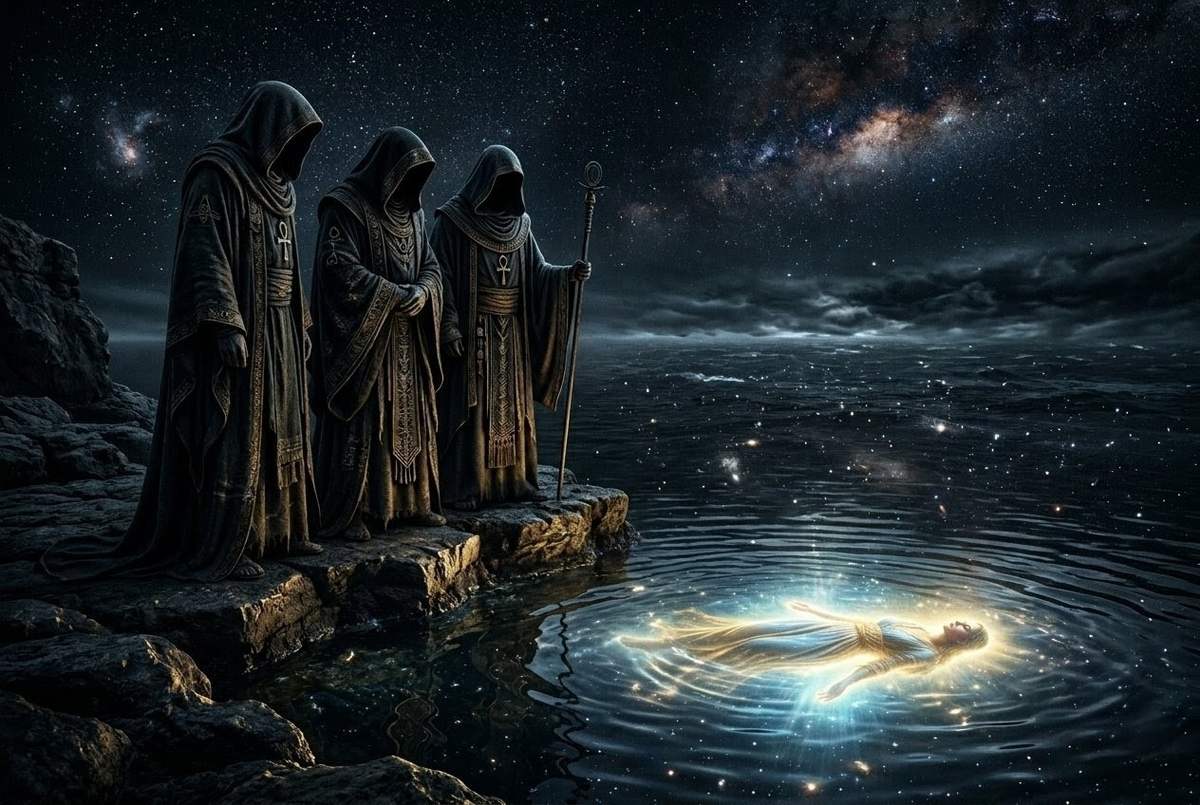
The text retells parts of Genesis through a Gnostic lens. The archons see a divine image reflected in the waters and try to copy it. They form a body from matter, but cannot truly animate it. Eve appears not as a secondary afterthought, but as a spiritual instructor. The serpent becomes a truth-teller. The flood becomes an act of lower power rather than simple divine judgement.
This makes The Hypostasis of the Archons a powerful gateway into Sethian cosmology. It contains many of the same themes as the Apocryphon of John, but presents them through story, reversal and mythic drama rather than dense metaphysical architecture.
What is the Hypostasis of the Archons?
The Hypostasis of the Archons is a Sethian Gnostic text preserved in Nag Hammadi Codex II,4. It retells Genesis as a story of lower rulers, spiritual awakening, Eve as revealer, and the human being as a mixture of material formation and divine spirit.
The text is important because it gives a clear narrative form to major Gnostic themes: the archons, Yaldabaoth, the divine spark, Eve’s wisdom, the serpent as revealer, and the soul’s struggle to recognise its true origin.
Table of Contents
- Text and Codex Setting
- Why the Hypostasis of the Archons Matters
- What Does “Hypostasis of the Archons” Mean?
- Who Are the Archons?
- The Divine Reflection in the Waters
- The Creation of Humanity
- Eve as Spiritual Teacher
- The Serpent as Truth-Teller
- The Violence Against Eve and the Two Eves
- The Flood and the Cloud of Light
- Norea and Spiritual Resistance
- The Hypostasis and the Apocryphon of John
- Reading the Hypostasis Today
- Frequently Asked Questions
- Further Reading
- References and Sources
Text and Codex Setting
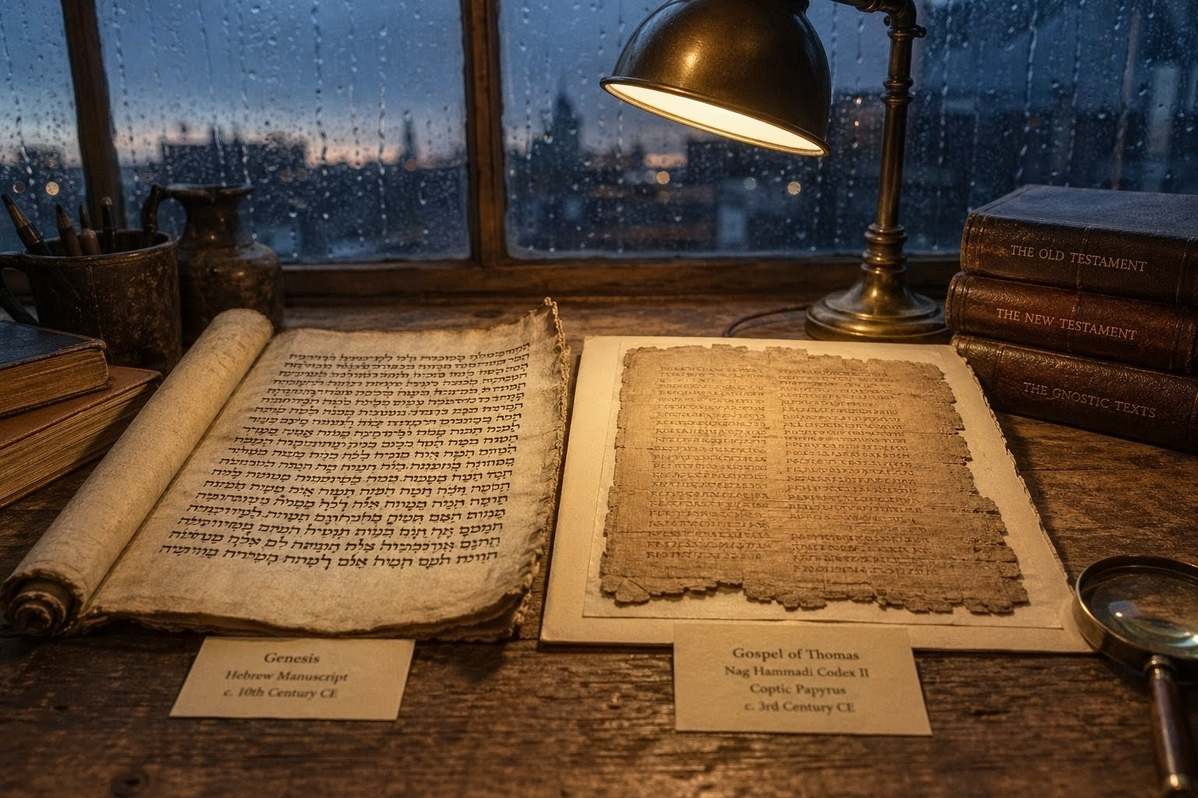
The Hypostasis of the Archons is preserved in Nag Hammadi Codex II as its fourth tractate. Codex II is one of the most important codices in the Nag Hammadi Library, containing major works such as the Gospel of Thomas, the Gospel of Philip, the Apocryphon of John, On the Origin of the World and the Exegesis on the Soul.
The text is usually classified as Sethian or Sethian-related because of its archon mythology, its use of Yaldabaoth, its reinterpretation of Genesis, its concern with the divine seed, and its close relationship to other Sethian creation texts.
Unlike some of the more technical Sethian writings, this text moves through narrative. It tells a story of imitation, error, instruction and awakening. That makes it one of the best entry points for readers trying to understand how Gnostic myth reworks biblical creation.
Codex Note: The Hypostasis of the Archons is Nag Hammadi Codex II,4. It belongs beside the Apocryphon of John and On the Origin of the World as one of the key Nag Hammadi retellings of Genesis through a Gnostic lens.
Why the Hypostasis of the Archons Matters
The Hypostasis of the Archons matters because it takes the familiar Genesis story and turns it inside out. The rulers who claim authority are shown to be ignorant. Eve, often blamed in later tradition, becomes a spiritual instructor. The serpent, usually treated as deceiver, becomes the one who helps open the eyes of the mind.
The result is not random inversion for shock value. It is a coherent Gnostic interpretation of reality. The text asks whether the powers that made the visible world are truly the highest divine source, or whether they are lower rulers mistaking imitation for creation.
Its importance also lies in its clarity. The Apocryphon of John gives a fuller and more technical cosmology. The Hypostasis of the Archons gives the same kind of mythic material in story form. It shows the archons acting, failing, desiring, deceiving and being outwitted.
For modern readers, the text remains striking because it is about discernment. It asks who has the right to define reality, who benefits from ignorance, and what happens when the soul receives knowledge that lower powers tried to suppress.
What Does “Hypostasis of the Archons” Mean?
The word hypostasis can mean reality, nature, underlying substance or actual condition. The title therefore means something like “the reality of the rulers” or “the nature of the archons”.
This matters because the text is an unveiling. It does not simply name the archons. It exposes what they are. Their appearance of authority is stripped away, and their deeper ignorance becomes visible.
The archons are not presented as ultimate gods. They are lower rulers. They imitate what they see reflected from above, but they do not understand its source. Their power is real within the lower world, but it is not final.
The title therefore names the text’s whole purpose: to reveal the actual condition of the rulers so the soul is no longer deceived by their claims.
Who Are the Archons?
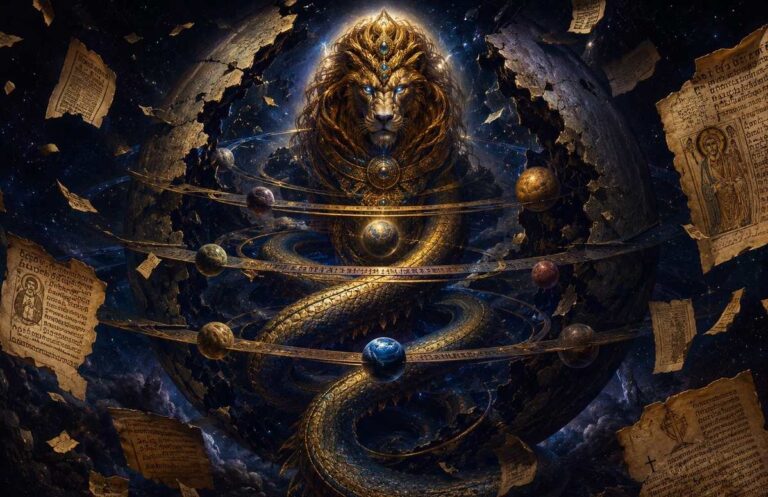
In this text, the archons are lower cosmic rulers associated with Yaldabaoth, the flawed creator figure known from Sethian myth. They shape the material body and attempt to govern the human being, but they cannot create true spiritual life.
The archons’ central problem is ignorance. They see a divine reflection and mistake it for something they can copy. They imitate form without understanding source. They can shape matter, but they cannot generate spirit.
This is one of the key Gnostic insights of the text: lower powers may control structures, bodies, prohibitions and appearances, but they do not own the divine spark. The deepest part of the human being comes from beyond their realm.
The archons are therefore powerful but limited. They can deceive, threaten and imitate. They cannot finally define the spiritual person.
The Divine Reflection in the Waters
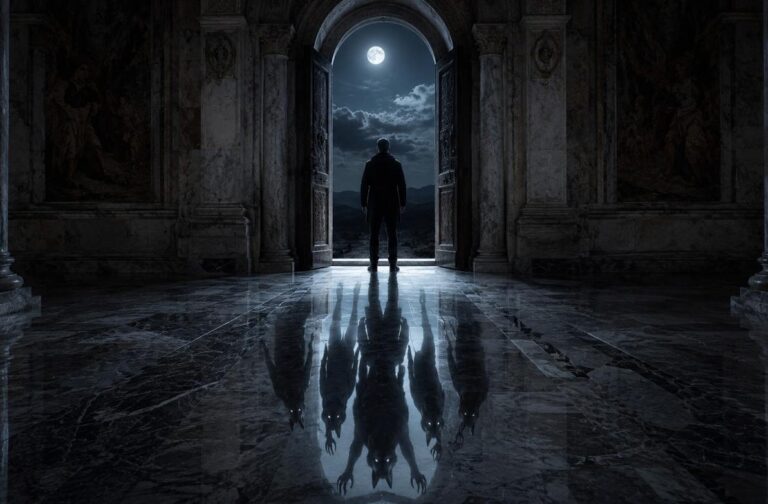
The creation drama begins when the archons see an image reflected in the waters. They take this image as a model and decide to make a human being according to what they have seen.
This is one of the most important images in the text. The archons do not create from true knowledge. They copy a reflection. Their act is derivative from the start.
The reflection suggests that the true image comes from above, from a higher divine realm. The lower rulers see its trace, but not its source. They attempt to reproduce divine form while remaining blind to divine reality.
This sets up the whole Gnostic anthropology of the text. The human being is not merely a product of lower powers. The body may be shaped below, but the image belongs above.
Primary Source Theme: The archons see a divine image reflected in the waters and attempt to copy it. The text presents their creation as imitation without true understanding.
The Creation of Humanity
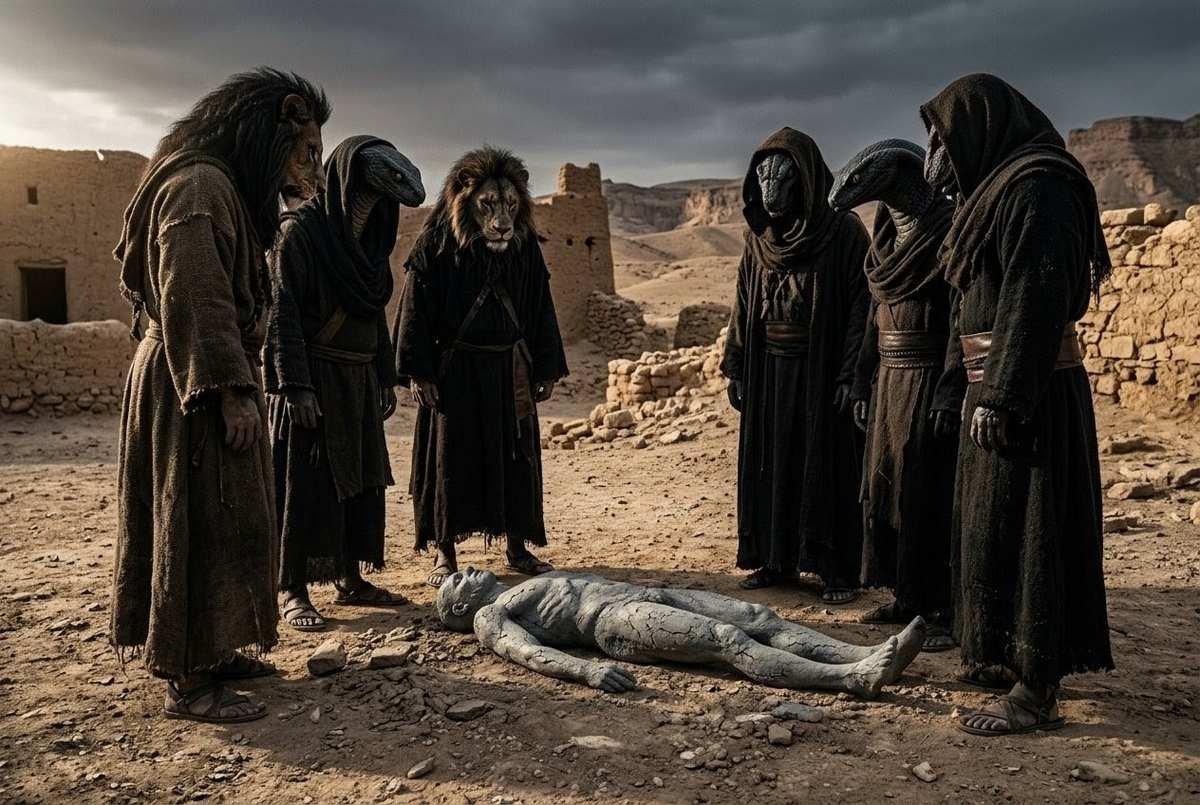
The archons form a human body from matter, but the body is incomplete. It cannot rise into full life by their power alone. The rulers can produce a material form, but not the living spiritual reality that makes the human being truly human.
This is the text’s sharp critique of lower creation. Matter can be shaped. Systems can be built. Bodies can be formed. But spirit is not manufactured by the archons.
The human being rises only when the higher spirit enters or awakens the form. The soul’s true dignity therefore does not come from the lower makers, but from the divine breath, image or spark that exceeds their control.
This gives the text its basic anthropology: the human being is a contested being. The lower rulers claim the body, but the spirit belongs to a higher origin. Gnosis is the awakening to that higher origin.
Eve as Spiritual Teacher
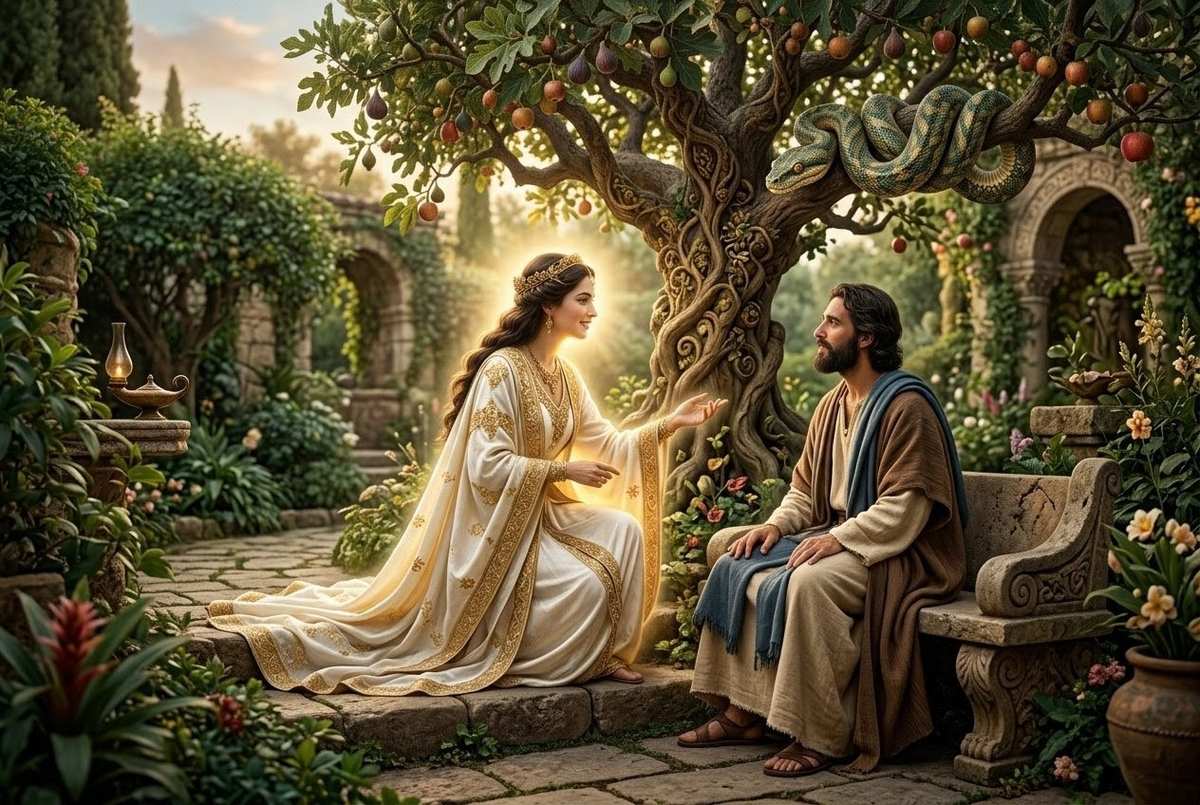
One of the most radical features of the text is its portrayal of Eve. In many traditional readings, Eve becomes the source of disobedience and fall. In The Hypostasis of the Archons, Eve is a spiritual instructor.
The spiritual Eve comes to Adam and teaches him about his true origin, race and seed. She brings knowledge that the lower rulers do not want him to possess. She is not secondary to awakening. She is the one who helps make awakening possible.
This places Eve within the wider Nag Hammadi pattern of feminine revelation. Sophia, Protennoia, Thunder, Norea and Eve all appear in different ways as bearers of insight, divine voice or spiritual resistance.
Eve’s role in this text is therefore not simply corrective. It is explosive. She transforms the meaning of the Eden story. What later tradition often called the beginning of sin becomes, in this text, the beginning of spiritual perception.
The Serpent as Truth-Teller
The serpent is also reinterpreted. In Genesis, the serpent is usually read as deceiver. In The Hypostasis of the Archons, the serpent becomes associated with awakening. The serpent tells Eve that eating will open perception.
This is not a small adjustment. It reverses the moral structure of the familiar story. The prohibition of knowledge comes from lower rulers; the movement towards knowledge becomes liberation.
When the eyes of the mind are opened, the so-called fall becomes a form of ascent. The human being begins to see through the false authority of the archons and recognise that the lower world’s commands are not identical with the highest divine will.
For Sethian readers, this was not a defence of deception. It was a defence of gnosis. The serpent’s role is to reveal that the archons’ version of reality is incomplete and self-serving.
Reading Note: In this text, Eden is not simply a story of disobedience. It becomes a story about knowledge withheld by lower powers and recovered through spiritual instruction.
The Violence Against Eve and the Two Eves
Content Note: This section discusses sexual violence in mythic and symbolic terms, because the text includes a disturbing scene involving the archons and Eve.
The text contains a troubling episode in which the archons attempt to violate Eve. This scene has received significant scholarly attention because it uses sexual violence to express the archons’ desire to seize, control and reproduce what they cannot truly understand.
Within the mythic logic of the text, the archons cannot possess the spiritual Eve. They can only act upon a lower or material form. The spiritual reality withdraws beyond their reach. Their violence exposes their blindness rather than proving their authority.
This leads to the distinction between the spiritual Eve and the carnal Eve. The spiritual Eve is revealer, teacher and divine helper. The lower figure is associated with bodily generation and the continuation of material humanity.
This distinction should be handled carefully. It does not excuse the violence of the scene, nor should it be used to romanticise harm. Rather, it shows how the text imagines spirit as finally beyond the grasp of coercive lower powers. The archons can violate bodies, but they cannot own the divine element.
Primary Source Theme: The archons’ violence against Eve reveals their blindness and their inability to possess the spiritual reality they seek to control. The text distinguishes between spiritual and carnal levels of Eve’s figure.
The Flood and the Cloud of Light
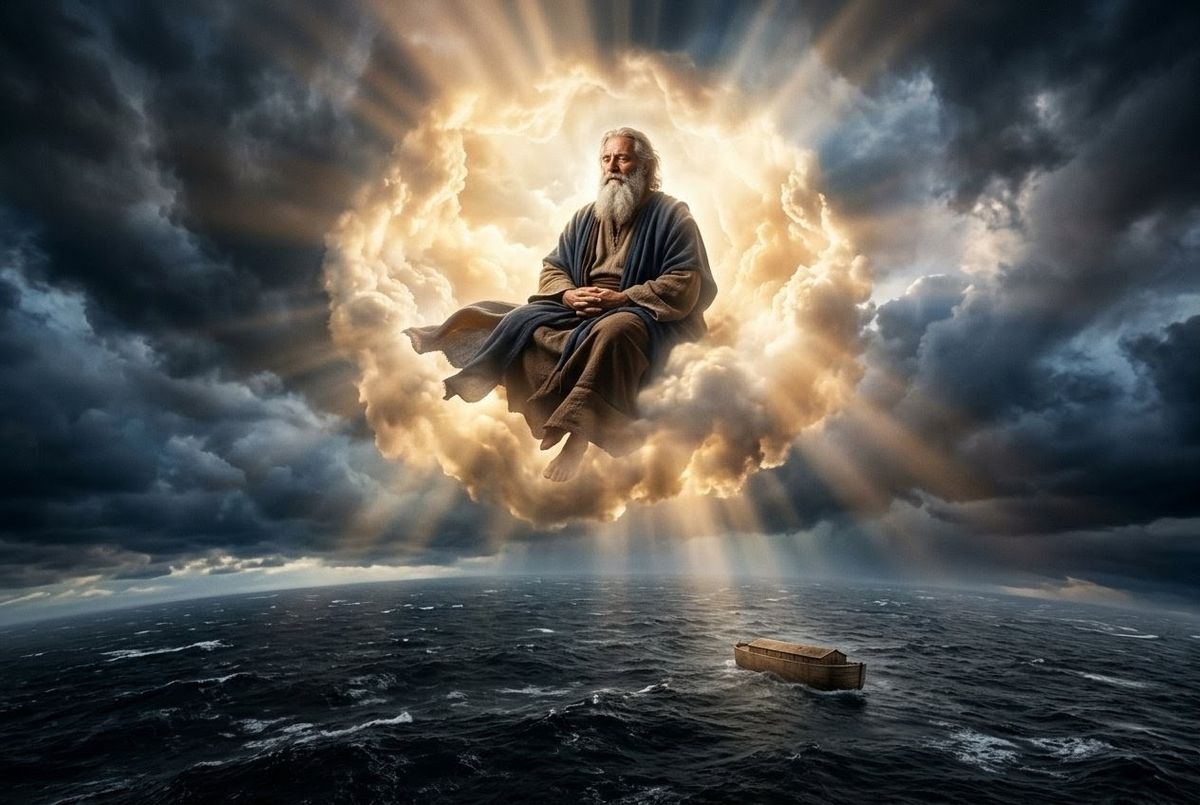
The flood narrative is also reinterpreted. In the familiar biblical story, Noah survives through the ark. In The Hypostasis of the Archons, the flood becomes an attempt by the rulers to destroy humanity after knowledge has appeared.
The text places emphasis not simply on physical survival, but on spiritual preservation. Noah is connected with a cloud of light, a symbol of protection that comes from beyond the lower rulers’ system.
This is close to the world of The Thought of Norea, where the ark is also treated as a contested or inadequate refuge. In both traditions, the flood story becomes a meditation on false safety, true protection and the spiritual seed’s survival beyond lower power.
The cloud of light matters because it shifts salvation from wood to spirit. The true refuge is not merely a vessel built inside the lower world. It is divine protection that the archons cannot reach.
Norea and Spiritual Resistance
Norea appears in the wider tradition of this text and related Sethian writings as a figure of spiritual resistance. She refuses the archons, calls out for help and receives revelation from Eleleth.
This connects The Hypostasis of the Archons directly with The Thought of Norea. Together, they present Norea as one who sees through lower authority and refuses violation, false refuge and spiritual captivity.
Norea’s role is important because she extends the text’s feminine line of resistance. Eve teaches. Norea refuses. Both figures stand against the archons’ attempt to control spiritual reality through bodies, fear and false authority.
In this way, the text becomes part of the larger Feminine Divine layer of the Nag Hammadi Library. Spiritual authority is not limited to patriarchal structures. Wisdom, resistance and revelation often arrive through feminine figures.
The Hypostasis and the Apocryphon of John
The Hypostasis of the Archons is closely related to the Apocryphon of John. Both texts describe Yaldabaoth, the archons, the flawed lower creation, the divine image, and the awakening of the human being through knowledge.
The difference lies partly in style. The Apocryphon of John is fuller, more systematic and more cosmologically detailed. It gives the larger architecture of the Pleroma, Sophia’s fall and the creation of the archons.
The Hypostasis of the Archons is more narrative. It focuses on the drama of creation, Eve, the serpent, violence, flood and resistance. It can be easier for new readers because the myth unfolds as a story rather than a complex diagram.
Read together, the two texts give one of the clearest windows into Sethian myth. The Apocryphon gives the cosmic map. The Hypostasis gives the mythic theatre where the rulers’ ignorance becomes visible.
Reading the Hypostasis Today
Modern readers should approach The Hypostasis of the Archons as a symbolic and historical text, not as a literal conspiracy manual. Its archons, rulers and reversals belong to ancient mythic theology. Their value lies in how they help us think about ignorance, imitation, false authority and spiritual awakening.
The text’s enduring force comes from its questions. Who has the right to forbid knowledge? What happens when authority is based on ignorance? Can a command still be sacred if it comes from a lower power? What does it mean for the eyes of the mind to open?
Its answer is bold: spiritual awakening often begins when the soul recognises that the visible order is not ultimate. Eve teaches. The serpent speaks. Norea refuses. The divine spark rises.
Read with care, The Hypostasis of the Archons becomes less a rejection of Genesis than a hidden counter-reading. It asks us to look again at creation, knowledge and authority, and to notice where the light has been reflected, copied, concealed and finally remembered.
Safety Notice: This article explores symbolic, historical and spiritual ideas about archons, false authority, spiritual violence, sexual violence in mythic literature, hidden powers and awakening. It is intended for grounded study of ancient texts, not as medical, psychological, legal or spiritual advice. If ideas about hidden control, persecution, spiritual attack or cosmic systems become distressing, obsessive or destabilising, please seek support from a qualified mental health professional or appropriate emergency service.
Frequently Asked Questions
What is the Hypostasis of the Archons?
The Hypostasis of the Archons is a Sethian Gnostic text preserved in Nag Hammadi Codex II,4. Its title means the reality or nature of the rulers, and it retells Genesis through a Gnostic lens, presenting the archons as lower powers who imitate divine creation without understanding its source.
Who are the archons in the Hypostasis of the Archons?
The archons are lower cosmic rulers associated with Yaldabaoth. They can shape the material body, but they cannot create true spiritual life. The text portrays them as powerful but ignorant imitators of a higher divine reality.
How does the Hypostasis of the Archons reinterpret Genesis?
The text reverses several familiar Genesis themes. Eve becomes a spiritual teacher, the serpent becomes associated with truth and awakening, the so-called fall becomes the opening of the eyes of the mind, and the flood becomes an action of lower rulers rather than simple divine judgement.
What is Eve’s role in the Hypostasis of the Archons?
Eve is presented as a spiritual instructor who teaches Adam about his true origin, race and seed. The text distinguishes between spiritual Eve and lower or carnal levels of the story, making Eve a figure of revelation rather than blame.
What does the serpent represent in this text?
In the Hypostasis of the Archons, the serpent is associated with the opening of perception rather than simple deception. The serpent helps expose the archons’ prohibition of knowledge and participates in the text’s reversal of the Eden story.
How is Norea connected to the Hypostasis of the Archons?
Norea appears in related Sethian traditions, including the Hypostasis of the Archons and the Thought of Norea. She is a figure of spiritual resistance who refuses archonic power and receives help or revelation from Eleleth.
Is the Hypostasis of the Archons related to the Apocryphon of John?
Yes. Both texts share Sethian themes such as Yaldabaoth, archons, the divine image, flawed lower creation and the awakening of humanity. The Apocryphon of John is more systematic, while the Hypostasis of the Archons presents similar themes in narrative form.
How should modern readers approach the Hypostasis of the Archons?
Modern readers should approach the text as symbolic, historical and mythic theology. It is a powerful ancient counter-reading of Genesis, but it should not be treated as a literal conspiracy manual. Its value lies in its exploration of false authority, spiritual awakening and discernment.
Further Reading
Continue through the related Sethian creation, archon and feminine divine source layer:
- The Apocryphon of John: the fuller Sethian creation myth of Barbelo, Sophia, Yaldabaoth and the archons.
- On the Origin of the World: another major Nag Hammadi creation text with extended cosmology and mythic detail.
- The Thought of Norea: Norea’s resistance to false refuge and revelation from Eleleth.
- The Feminine Divine in the Nag Hammadi Library: Sophia, Eve, Norea, Thunder and Protennoia as figures of divine voice and resistance.
- Thunder: Perfect Mind: a major Nag Hammadi text of paradoxical feminine divine voice.
- Trimorphic Protennoia: the descent of First Thought and the restoration of the divine seed.
- Reality of the Archons: a wider guide to archonic powers across Gnostic thought.
- The Gospel of Philip: a Valentinian text from Codex II exploring sacrament, union and restoration.
- Gnostic Schools: a comparison of Sethian, Valentinian, Hermetic and related currents.
- Nag Hammadi Library: Complete Guide to the Gnostic Scriptures: the broader archive guide to the codices, tractates and traditions.
References and Sources
The following sources support the historical, textual and interpretive claims made in this article.
Primary Sources and Critical Editions
- The Hypostasis of the Archons. Nag Hammadi Codex II,4.
- The Apocryphon of John. Nag Hammadi Codices II,1; III,1; IV,1 and Berlin Codex 8502,2.
- On the Origin of the World. Nag Hammadi Codex II,5 and XIII,2.
- Robinson, James M., ed. The Nag Hammadi Library in English. Harper & Row / HarperSanFrancisco, revised editions.
- Meyer, Marvin, ed. The Nag Hammadi Scriptures. HarperOne, 2007.
- Layton, Bentley. The Gnostic Scriptures. Doubleday, 1987.
- Bullard, Roger A. The Hypostasis of the Archons: The Coptic Text with Translation and Commentary. De Gruyter, 1970.
- Attridge, Harold W., ed. Nag Hammadi Codex II,2-7. Brill, 1989.
Scholarly Monographs and Studies
- King, Karen L. What Is Gnosticism?. Harvard University Press, 2003.
- Brakke, David. The Gnostics: Myth, Ritual, and Diversity in Early Christianity. Harvard University Press, 2010.
- Turner, John D. Sethian Gnosticism and the Platonic Tradition. Presses de l’Université Laval, 2001.
- Williams, Michael Allen. Rethinking “Gnosticism”: An Argument for Dismantling a Dubious Category. Princeton University Press, 1996.
- Pearson, Birger A. Ancient Gnosticism: Traditions and Literature. Fortress Press, 2007.
- Waldstein, Michael, and Frederik Wisse. The Apocryphon of John: Synopsis of Nag Hammadi Codices II,1; III,1; and IV,1 with BG 8502,2. Brill, 1995.
Comparative and Thematic Studies
- McGuire, Anne. Studies on feminine divine voice and Nag Hammadi literature.
- Pagels, Elaine. The Gnostic Gospels. Random House, 1979.
- Stroumsa, Guy G. Another Seed: Studies in Gnostic Mythology. Brill, 1984.
- Denzey Lewis, Nicola. Cosmology and Fate in Gnosticism and Graeco-Roman Antiquity. Brill, 2013.
- van den Broek, Roelof. Gnostic Religion in Antiquity. Cambridge University Press, 2013.
Reading Note: The Hypostasis of the Archons is best read beside the Apocryphon of John, On the Origin of the World and The Thought of Norea. Together they reveal the Sethian counter-reading of Genesis: lower rulers imitate, Eve teaches, Norea resists, and the divine spark remembers its source.