What is Gnosticism? Defining the Undefinable — Essential Background on the Diverse Movements Behind These Texts
Ask twelve scholars to define Gnosticism, and you will receive thirteen answers. The term, coined by seventeenth-century English philosopher Henry More to describe ancient religious movements condemned by early Church Fathers, has proven remarkably resistant to precise definition. Was Gnosticism a religion, a philosophy, a heresy, a symptom, or a construct of orthodox polemic? Did it exist before Christianity, as influence upon it, or only as deviation from it? The questions multiply faster than resolutions.
This article offers not a final definition but essential background–mapping the territory of Gnostic movements sufficiently to navigate their diversity without forcing unity where none existed. We examine common threads that justify the category, differences that prevent reduction to essence, historical contexts that shaped development, the contested orthodoxy/heresy binary that framed reception, the modern rediscovery that transformed understanding, and contemporary implications of attempting to define the indefinable. The material is presented as the tradition holds: not as absolute truth, but as a map of territory that many have found worth navigating.
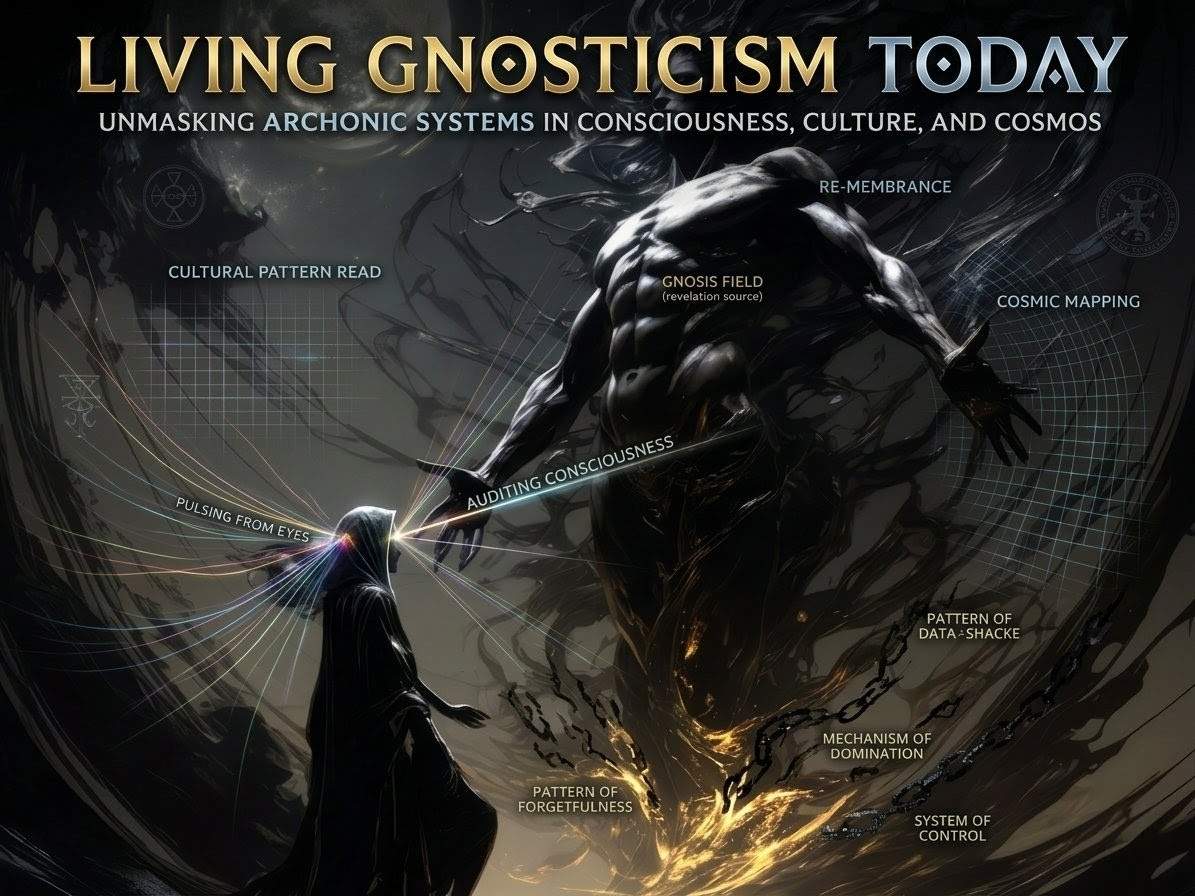
Table of Contents
- The Problem of Definition
- Common Threads: The Gnostic Constellation
- The Diversity of Schools
- Historical Context: First to Fourth Centuries
- The Orthodoxy/Heresy Binary
- Rediscovery and Rehabilitation
- Living Gnosticism Today
- Why Definition Fails, Why Understanding Matters
- Frequently Asked Questions
- Further Reading
- References and Sources
The Problem of Definition
The designation Gnosticism is a term of modern scholarship. It was first used by the English poet and philosopher of religion Henry More (1614-1687), who applied it to the religious groups referred to in ancient sources as gnostikoi–Greek for “those who have gnosis, or knowledge.” The Greek adjective gnostikos itself had been used much earlier: Plato employed it to describe the cognitive dimension of learning, and by the second century CE various Christian groups had adopted it as a self-designation, though others criticised the practice as a presumptuous claim of exclusive access to truth.
Consensus on a definition has proved difficult. The groups conventionally classified as Gnostic did not constitute a single movement with relatively homogeneous organisation, teachings, and rituals. Even the self-designation gnostic is problematic, since it is attested for only some of the traditions conventionally treated as Gnostic, and its connotations are ambiguous. Whereas some researchers argue that the term should be restricted to the sects or schools that called themselves by that name, others extend the category to include additional religious movements that allegedly shared various distinctive features. Still others treat Gnosticism as a world religion that existed from antiquity to early modern times–surviving, for example, in the mythology and ritual of the Mandaeans of Iraq and Iran.
The Contemporary Scholarly Crisis
Contemporary scholarship has trended toward abandoning Gnosticism as a blanket category. Michael Allen Williams, in his 1996 study Rethinking Gnosticism: An Argument for Dismantling a Dubious Category, argued that the modern construct obscures more than it reveals, imposing unity upon movements that were diverse, competitive, and often mutually hostile. David Brakke, in The Gnostics: Myth, Ritual, and Diversity in Early Christianity (2010), proposed replacing the category with Gnostic as an adjective describing specific religious practices and texts rather than a noun denoting a unified religion.
Yet the term persists, useful precisely in its imprecision, indicating family resemblances without enforcing false unity. The ZenithEye approach follows this pragmatic middle path: we use Gnosticism as a navigational convenience, a shorthand for a constellation of related movements, while remaining explicit about the diversity that prevents any single definition from capturing the whole. The map is not the territory; the category is not the reality it attempts to organise.
Common Threads: The Gnostic Constellation
Despite diversity, certain characteristics recur across movements traditionally labelled “Gnostic.” These do not constitute a checklist for inclusion but represent family resemblances–tendencies that appear with varying emphasis in different contexts:
1. The Transcendent Deity
Beyond the creator god of scripture and cosmos stands the ultimate, unknowable Source–variously named the Invisible Spirit, the Father, the One, the Absolute. This transcendent principle is not merely powerful but absolutely other, beyond naming, beyond comprehension, beyond the categories that govern finite existence. In Valentinian theology, this Source emanates thirty aeons in paired syzygies; in Sethian mythology, it exists as a triad of Father, Mother, and Child. The common thread is not the specific cosmology but the insistence that ultimate reality exceeds all anthropomorphic projection.
2. The Divine Spark
Human beings contain something not of this world–a spiritual essence, pneuma, originating from the transcendent realm. This spark is not created by the demiurge but descended, fallen, or trapped within material conditions. Recognition of this divine identity constitutes the foundation of salvation. The Apocryphon of John describes how Sophia’s fall produced Yaldabaoth, who then created humanity by breathing soul into a material body–unwittingly implanting the divine spark he had stolen from his mother. The spark sleeps, unaware of its origin, until awakened by recognition.
3. The Demiurgic Creator
The god who made the world–Yaldabaoth, Saklas, Samael, the blind god–is not the true deity but an intermediary, often ignorant or malevolent. The material realm results from error, rebellion, or limitation rather than from the fullness of divine creativity. This explains the world’s imperfection without impugning ultimate transcendence. The demiurge is not Satan in the Christian sense; he is more pathetic than evil, a bungling administrator who believes himself supreme because he has never encountered anything greater. His archons–planetary governors–enforce the cosmic prison, but they too are ultimately insubstantial, dependent upon human ignorance for their power.

4. The Saviour as Revealer
Salvation comes not through sacrifice but through knowledge. The Saviour–Jesus in Christian Gnosticism, the Anthropos in Hermeticism, Seth in Sethian traditions–descends not to die but to disclose, to awaken sleeping sparks, to provide the information necessary for liberation. Gnosis saves; faith prepares for gnosis. This is the most controversial thread from an orthodox Christian perspective, for it appears to eliminate the cross as salvific event. Yet Gnostic texts do not ignore the crucifixion; they reinterpret it. In the Second Treatise of the Great Seth, Jesus laughs from above while his physical shell is crucified, demonstrating that the true self cannot be killed by the mechanisms of the material world.
5. The Ascent Narrative
The soul’s true destiny lies in return to origin. After death (or during mystical experience), the spirit ascends through planetary spheres, confronting archonic guardians, offering passwords and seals, ultimately reaching the Pleroma (Fullness) from which it came. This journey represents the cosmological structure of consciousness itself. The Discourse on the Eighth and the Ninth provides a ritual template for this ascent; the Apocalypse of Paul narrates the heavenly journey beyond the fourth heaven; Zostrianos maps the thirteen aeons in exhaustive detail. The ascent is not merely post-mortem hope but present possibility–the mystical encounter that previews the final return.
6. The Secrecy of Sacred Knowledge
These teachings are not for everyone. The spiritual race (genos) possesses capacity for gnosis that the psychic and hylic natures lack. Esoteric transmission–secret teachings, hidden interpretations, initiatory preparation–protects sacred knowledge from profanation and ensures appropriate reception. The Gospel of Thomas begins with this very principle: “These are the secret sayings which the living Jesus spoke and which Didymos Judas Thomas wrote down. And he said, ‘Whoever finds the meaning of these sayings will not taste death.'” The secret is not concealed from the worthy but revealed to the prepared.
The Diversity of Schools
These common threads weave differently across specific movements. Understanding the distinctions is as important as recognising the similarities:
Sethianism
Jewish-Christian apocalypticism transformed by Middle Platonic metaphysics. The Apocryphon of John, The Reality of the Archons, and The Thought of Norea represent this trajectory–mythologically elaborate, hostile toward the material world, emphasising descent through Sophia and ascent through the aeons. Sethian texts are characterised by their elaborate cosmogonic narratives, their identification of the spiritual race as descendants of Seth (the third son of Adam), and their technical ascent literature (Zostrianos, Allogenes, Marsanes). The demiurge is unequivocally malevolent; the material world is a prison to escape.
Valentinianism
The most philosophically sophisticated school, founded by Valentinus (c. 100-160 CE). Thirty aeons emanating from the primal Father, complex theories of fallen Wisdom, distinction between pneumatic, psychic, and hylic natures. The Gospel of Truth, Tripartite Tractate, and writings of Ptolemy and Heracleon preserve this tradition. Unlike Sethianism, Valentinianism maintains a more positive attitude toward the material world–the body is not inherently evil but the product of a fallen Sophia, capable of redemption through gnosis. The Valentinian system is more “diplomatic,” more accommodating to mainstream Christianity, which may explain why it persisted longer and attracted more adherents.
Hermeticism
Egyptian wisdom teachings attributed to Hermes Trismegistus. Less hostile toward materiality, emphasising regeneration (palingenesia) through initiatory experience. The Corpus Hermeticum and Discourse on the Eighth and the Ninth represent this more optimistic, magical-philosophical approach. Hermeticism is not technically “Gnostic” in the narrow sense–it lacks the fallen Sophia mythology and the hostile demiurge–but it shares the fundamental conviction that the human soul contains a divine element exiled in matter, capable of return through knowledge. The Nag Hammadi Library includes Hermetic texts in Codex VI, demonstrating that ancient curators recognised these affinities.
Thomasine Traditions
Sayings collections (Gospel of Thomas) and dialogues (Book of Thomas the Contender) focusing on secret teachings of Didymos Judas Thomas. Less mythologically elaborate, more aphoristic and contemplative. The Gospel of Thomas contains 114 sayings of Jesus, many parallel to the canonical gospels but stripped of narrative framework and presented as direct provocations to self-knowledge. The Thomasine tradition lacks the elaborate aeonic cosmology of Sethianism and Valentinianism, yet shares the core soteriological conviction that knowledge of self is knowledge of God.
Marcionism
The twinned-god theology of Marcion–transcendent goodness versus jealous creator–without the elaborate emanation schemes. More biblical, less speculative, organised as a rival church. Marcion (c. 85-160 CE) rejected the entire Hebrew Bible and most of the New Testament, retaining only an edited version of Luke and ten Pauline epistles. His church was not a small sect but a serious competitor to emerging orthodoxy, with organised congregations across the Mediterranean. Marcionism demonstrates that the Gnostic impulse could take institutional form, not merely esoteric circles.

Historical Context: First to Fourth Centuries
Gnostic movements emerged from the cultural ferment of the Roman Mediterranean–specifically Alexandria, the Egyptian city where Greek philosophy, Jewish apocalyptic, and emerging Christian theology converged. The first centuries CE witnessed unprecedented religious creativity: mystery cults proliferated, philosophical schools competed, and traditional polytheism confronted monotheistic challenge.
The Alexandrian Crucible
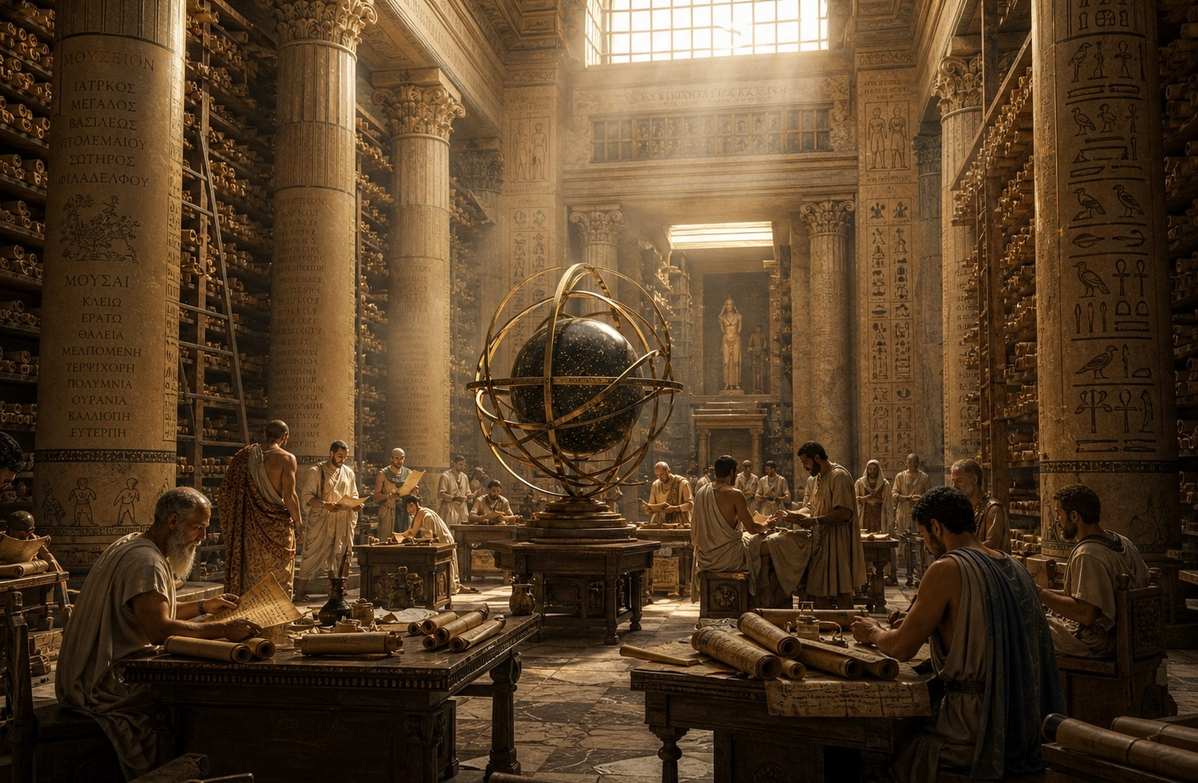
Alexandria was uniquely positioned for this synthesis. Founded by Alexander the Great in 331 BCE, the city housed the famous Library and Mouseion, attracting scholars from across the Mediterranean. Jewish apocalyptic literature (the Enochic corpus, Qumran texts) provided narrative templates–revelatory ascents, angelic hierarchies, cosmic battles between light and darkness. Middle Platonism offered metaphysical vocabulary–the transcendent One, the demiurgic creator, the fallen soul seeking return. Early Christian diversity supplied the figure of Jesus as revealer and the textual tradition that required interpretation.
The Gnostic synthesis developed in this crucible–sometimes preceding Christian orthodoxy, sometimes developing alongside it, sometimes representing alternative trajectories that would be condemned as heresy. The Jewish philosopher Philo of Alexandria (c. 20 BCE-50 CE), who allegorised the Hebrew Bible through Platonic lenses, demonstrates the pre-Christian intellectual environment that made Gnosticism possible. Philo’s Logos theology, his distinction between the transcendent God and the immanent Creator, and his concept of the soul’s ascent all anticipate Gnostic themes without yet constituting Gnostic systems.
Marginalisation and Burial
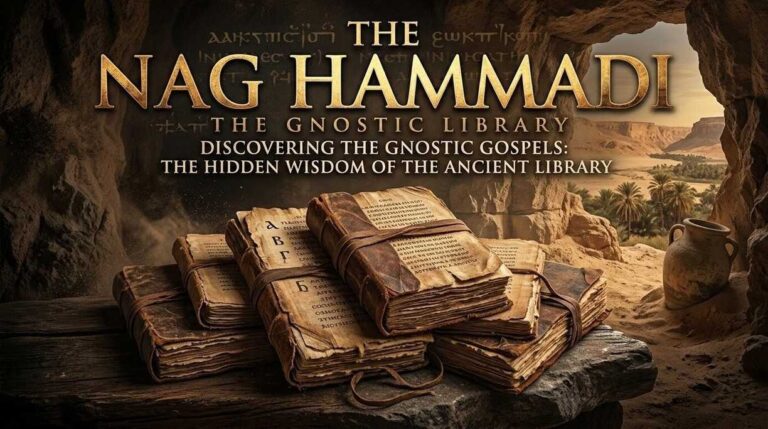
By the fourth century, imperial support for Catholic Christianity had marginalised Gnostic movements, driving them underground or to extinction. The Edict of Thessalonica (380 CE), issued by Theodosius I, established Nicene Christianity as the state religion and criminalised alternative teachings. The burning of books, the confiscation of property, and the persecution of teachers accelerated the disappearance of Gnostic communities. The Nag Hammadi Library, buried in a sealed jar near the Jabal al-Tarif cliffs in Upper Egypt, represents the desperate preservation effort of fourth-century mystics who recognised that their texts would not survive the administrative violence of orthodox consolidation.
The Orthodoxy/Heresy Binary
The term “Gnosticism” itself embodies polemical history. Irenaeus of Lyon, writing Against Heresies (c. 180 CE), constructed the category to defend apostolic succession against diverse “false knowledge” claims. His taxonomy–Valentinians, Marcionites, Carpocratians, Ophites–established the framework for subsequent heresiology.
The Bauer Thesis and Its Aftermath
Modern scholars increasingly recognise this binary as problematic. In 1934, Walter Bauer published Orthodoxy and Heresy in Earliest Christianity (German: Rechtglaeubigkeit und Ketzerei im aeltesten Christentum), arguing that what became “orthodoxy” was merely one form of Christianity among many, which gained ascendancy through the power of the Roman church and then rewrote history to claim primacy. Bauer demonstrated that in many geographical regions–Egypt, Syria, Asia Minor–the movements later condemned as heretical were actually the original and dominant forms of Christianity.
Bart Ehrman has called Bauer’s study “the most important book on the history of early Christianity to appear in the twentieth century.” The Nag Hammadi discovery, occurring eleven years after Bauer’s publication, confirmed his central insight: early Christianity was not a monolithic bureaucracy but a marketplace of dangerous ideas. The heresiologists did not describe their opponents accurately; they constructed caricatures designed to consolidate their own authority. “Orthodoxy” and “heresy” were not pre-existing categories but contested constructions–weapons in a struggle for institutional dominance rather than neutral descriptors of theological difference.
Yet the binary persists in popular consciousness, and even scholarly discourse has not fully escaped its gravitational pull. To speak of “Gnosticism” is still to speak in the language of Irenaeus, however critically revised. The ZenithEye approach acknowledges this inheritance while refusing to grant it normative status. We study Gnostic movements not as deviations from a true Christianity but as legitimate expressions of religious creativity that were suppressed by forces more political than theological.
Rediscovery and Rehabilitation
The history of Gnostic reception parallels Western cultural development, with each era finding in these texts mirrors of its own concerns:
Renaissance Hermeticism
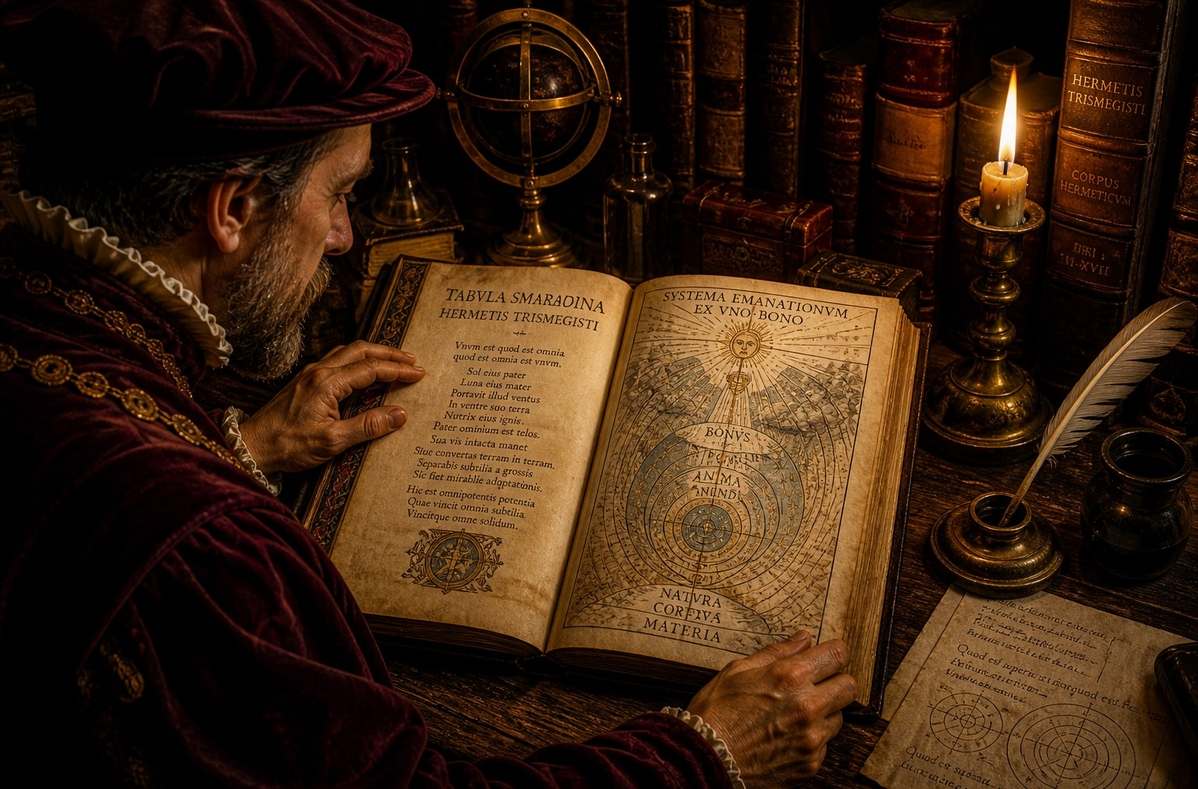
Marsilio Ficino’s translation of the Corpus Hermeticum (1471), commissioned by Cosimo de’ Medici, sparked a Hermetic revival that influenced everything from Renaissance art to early modern science. Ficino believed he had recovered the prisca theologia–ancient wisdom predating Christianity, transmitted through a lineage of divine teachers including Hermes Trismegistus, Orpheus, and Plato. Gnosticism appeared not as heresy but as primordial truth, the original religion of humanity before institutional corruption. This rehabilitation, though based on mistaken chronology (the Hermetic texts are not ancient Egyptian but Hellenistic), nonetheless established Gnosticism as a respectable philosophical option rather than a theological crime.
Romantic Rebellion
William Blake, Friedrich Hoelderlin, and the Romantic generation embraced Gnostic themes–rebellion against the creator, divine spark, visionary imagination–as counter to Enlightenment rationalism and institutional religion. Blake’s The Marriage of Heaven and Hell inverts Christian morality through a proto-Gnostic lens; his “Proverbs of Hell” echo the Gospel of Thomas in their aphoristic density and subversive wisdom. For the Romantics, Gnosticism was not a historical curiosity but a living attitude–the refusal to accept the given world as final, the insistence that imagination could transcend the limits of material existence.
Jung and Depth Psychology
Carl Gustav Jung identified Gnostic mythology as a map of the psyche. The demiurge became the ego–that fragment which mistakes itself for the whole. The Pleroma became the Self–the totality of conscious and unconscious. The ascent through aeons became the individuation process–the integration of fragmented aspects into a unified whole. Jung’s 1952 essay “Answer to Job” explicitly employs Gnostic categories to analyse the psychology of the biblical God. The Nag Hammadi discovery thrilled Jung, who immediately recognised that these texts confirmed his psychological interpretations. Codex I of the Nag Hammadi Library–containing the Gospel of Truth, Tripartite Tractate, and Treatise on the Resurrection–was even nicknamed “the Jung Codex” because Jung’s foundation helped acquire it for the Coptic Museum.
The Nag Hammadi Revolution
The 1945 discovery, followed by the first complete English edition edited by James M. Robinson and published by Harper and Row in 1977, enabled direct encounter with primary sources. No longer dependent on the caricatures of Irenaeus or the speculations of nineteenth-century historians, scholars and seekers could read Gnostic texts in their own words. The Coptic Gnostic Library Project, based at Claremont Graduate University, produced critical editions, translations, and commentaries that transformed the field. “Gnosticism” became available not merely as historical curiosity but as a living option–a set of texts, practices, and perspectives that continued to speak across two millennia of suppression.
Living Gnosticism Today
The question “What is Gnosticism?” ultimately matters less than “What does Gnosticism do?” For contemporary seekers, these ancient texts function as diagnostic tools, contemplative resources, community frameworks, and philosophical alternatives:
Diagnostic Tools
Analysing consciousness, culture, and cosmos through Gnostic categories reveals archonic operations–systems of control, patterns of forgetfulness, mechanisms of domination–that remain operative. The demiurge is not merely an ancient myth but a structural pattern: any system that claims absolute authority while lacking ultimate wisdom exhibits demiurgic pathology. Bureaucracies, algorithms, ideological regimes–all can be analysed through Gnostic lenses, revealing how they maintain power through the same mechanisms the ancient archons employed: confusion, division, and the suppression of direct knowing.
Contemplative Resources
The hymns, prayers, and visionary descriptions provide templates for meditation and mystical practice. The Discourse on the Eighth and the Ninth offers a ritual ascent protocol; the Prayer of Thanksgiving provides liturgical language for gratitude; the Trimorphic Protennoia presents a threefold invocation of divine presence as Barbelo, the First Thought. These are not museum pieces but technologies of consciousness, tested across centuries and now available to anyone with the patience to learn their grammar.
Community Frameworks
Shared engagement with these texts creates contemporary Gnostic communities–study groups, online forums, ritual circles–continuing the tradition of secret teaching and mutual recognition. The ancient pattern of the symposium–gathering to read, interpret, and apply sacred texts–finds new forms in digital age. The thread persists not because institutions preserve it but because individuals recognise it in one another, exchanging the glance that says: “You too have seen what cannot be spoken.”
Philosophical Alternatives
Gnostic metaphysics offers alternatives to materialism and orthodox theism alike–transcendence without dogma, spirituality without supernaturalism, salvation without saviour. In an age of ecological crisis, the Gnostic insight that matter is not ultimate reality but a temporary vessel for spirit offers neither escape nor contempt but responsibility: if the world is not the final dwelling, it is still the present one, deserving of care precisely because it is temporary. The divine spark is not elsewhere; it is here, in the soil, in the water, in the stranger–waiting not for belief but for recognition.

Why Definition Fails, Why Understanding Matters
Gnosticism resists definition because it was never a single thing. The movements we group under this label shared problems–how does divine presence inhabit material world? how does consciousness escape determination?–but offered diverse solutions. They employed common vocabularies–Pleroma, archon, demiurge, gnosis–but arranged them into different configurations.
To understand Gnosticism is not to master a definition but to engage with a constellation of approaches to fundamental questions of existence, consciousness, and liberation. The Nag Hammadi Library preserves this diversity not as museum exhibit but as living resource–texts that continue to speak, to provoke, to illuminate. The contemporary Gnostic Archive extends this preservation into digital age, making available what was once secret, inviting discovery what was once hidden.
We cannot finally define Gnosticism. We can only encounter it, be transformed by it, and contribute to its ongoing interpretation. This is what the texts demand–not belief, not adherence, but recognition. As the Gospel of Thomas promises: “Whoever discovers the interpretation of these sayings will not taste death.” The death referred to is not physical cessation but the oblivion of forgetting–the loss of the spark into the sleep of material existence. To interpret is to remember. To remember is to awaken. And awakening, the Gnostics insisted, is the only salvation worth having.
Frequently Asked Questions
What is Gnosticism and why is it so difficult to define?
Gnosticism is a modern scholarly category describing diverse ancient religious movements that emphasised direct knowledge (gnosis) of the divine as the path to salvation. It is difficult to define because the movements grouped under this label–Sethian, Valentinian, Hermetic, Thomasine, Marcionite–were not a unified religion but a constellation of related approaches with different cosmologies, rituals, and organisational structures. Contemporary scholars like Michael Allen Williams and David Brakke have argued for abandoning the category entirely or using Gnostic only as an adjective rather than a noun.
What are the core beliefs shared by Gnostic movements?
Six common threads recur across Gnostic traditions: (1) a transcendent deity beyond the creator god; (2) a divine spark (pneuma) within humans originating from the transcendent realm; (3) a demiurgic creator (Yaldabaoth, Saklas) who is ignorant or malevolent; (4) a saviour as revealer rather than sacrificial victim; (5) an ascent narrative describing the soul’s return to the Pleroma (Fullness); and (6) esoteric transmission of secret knowledge appropriate only to the prepared. These are family resemblances, not essential doctrines.
How does Gnosticism differ from orthodox Christianity?
The most significant differences concern soteriology and cosmology. Gnosticism teaches salvation through knowledge (gnosis) rather than faith in Christ’s atoning sacrifice. It distinguishes the transcendent God from the creator demiurge, whereas orthodox Christianity identifies the creator with the ultimate deity. Gnosticism views the material world as flawed or imprisoning, while orthodoxy affirms creation as good. However, these differences were contested in antiquity–what became orthodoxy was one position among many, which gained dominance through institutional power rather than inherent correctness.
What is the Nag Hammadi Library and why is it important?
The Nag Hammadi Library is a collection of thirteen fourth-century CE papyrus codices discovered in Upper Egypt in 1945, containing forty-six distinct tractates of Gnostic, Hermetic, and early Christian texts. It is important because it preserves primary sources from movements systematically suppressed by orthodox authorities, revealing the diversity of early Christianity. The first complete English edition was published in 1977 under the editorship of James M. Robinson. Without this discovery, our understanding of ancient Gnosticism would remain dependent on the polemical caricatures of heresiologists like Irenaeus.
Who were the major Gnostic teachers and schools?
Valentinus (c. 100-160 CE) founded the most philosophically sophisticated school, emphasising thirty aeons and the tripartite nature of humanity. Basilides taught in Alexandria during the early second century, developing an elaborate cosmology of 365 heavens. Marcion (c. 85-160 CE) established a rival church with a twinned-god theology. The Sethians produced mythologically elaborate texts like the Apocryphon of John. The Hermetic tradition, attributed to Hermes Trismegistus, offered a more optimistic approach to materiality. Thomasine traditions preserved sayings of Jesus in aphoristic collections like the Gospel of Thomas.
Is Gnosticism still practiced today?
While no continuous institutional lineage survives from antiquity, Gnosticism functions today as a living option through several channels: scholarly study of Nag Hammadi texts, contemporary spiritual communities that engage with these sources, individual contemplative practice using Gnostic hymns and prayers, and philosophical frameworks that apply Gnostic categories to modern concerns. The Mandaeans of Iraq and Iran represent the only surviving ancient Gnostic community with continuous ritual practice. Contemporary Gnosticism is less a denomination than an orientation–the refusal to accept official versions as final, the insistence on direct knowing, the recognition of the spark.
What is the relationship between Gnosticism and Hermeticism?
Gnosticism and Hermeticism are closely related but distinct traditions that flourished in Roman Egypt. Both share concepts like the divine spark, cosmic ascent through planetary spheres, and salvation through knowledge (gnosis). However, Hermeticism–represented in the Nag Hammadi Library by the Discourse on the Eighth and the Ninth, the Prayer of Thanksgiving, and the Asclepius–is generally more positive toward materiality, lacks the fallen Sophia mythology, and draws on Egyptian and Greek rather than biblical sources. The Nag Hammadi Codex VI includes Hermetic texts alongside Gnostic and Platonic material, demonstrating that ancient collectors recognised these affinities.
Further Reading
- Ancient Sources: The Foundation of the Living Thread — The archaeological and textual foundations of Gnostic tradition: Nag Hammadi Library, Hermetic Corpus, Dead Sea Scrolls, and the ancient sources that transmit the Living Thread.
- Esoteric Lineages: The Hidden Agreements That Shaped Western Mysticism — Tracing the hidden agreements that preserved esoteric knowledge through history: Hermeticism, Gnosticism, Kabbalah, alchemy, Rosicrucianism, and the Western Mystery Tradition.
- The Nag Hammadi Library: Complete Guide to Gnostic Scriptures — The definitive introduction covering the 1945 discovery, all 13 codices, the 46 tractates, and how to read these forbidden texts.
- Sethian and Valentinian Traditions in the Nag Hammadi Library — Distinguishing the two major theological schools and their distinct approaches to liberation.
- Transmission and Lineage: How the Gnosis Travels — How esoteric knowledge transmits through time: initiation chains, communities of practice, and the paradox of secret teachings in public texts.
- Hermetic Connections: Egyptian Wisdom Meets Greek Philosophy — Comparative exploration of Hermeticism and Gnosticism, tracing historical connections, cosmological convergences, and theological distinctions.
- The Nag Hammadi Library: A Complete Reader’s Guide — Curated reading paths for beginners, theologians, mystics, and scholars approaching the 46 tractates.
- The Apocryphon of John: Gnostic Creation Myth and the Fall of Sophia — Deep dive into the library’s most influential cosmological text, foundational for Sethian theology.
- The Gospel of Thomas: 114 Sayings of Jesus — The Thomasine tradition’s crown jewel: secret sayings, paradox, and the path of self-knowledge.
- Gnostic Schools: Sethians, Valentinians, and Hermetics — Comprehensive overview of the major schools, their cosmologies, rituals, and paths to gnosis.
References and Sources
The following sources are organised by category for clarity.
Primary Sources and Critical Editions
- The Nag Hammadi Library in English. (1977). Edited by James M. Robinson. San Francisco: Harper and Row. (Revised edition 1988, 1996.)
- Layton, B. (Ed.). (1989). Nag Hammadi Codex II, 2-7: Together with XIII, 2*, Brit. Lib. Or. 4926(1), and P. Oxy. 1, 654, 655. Leiden: Brill.
- Irenaeus of Lyon. (c. 180 CE). Against Heresies (Latin: Adversus Haereses; Greek: Elenchos kai Anatrope tes Pseudonymou Gnoseos). In The Ante-Nicene Fathers, Vol. 1.
- The Gospel of Thomas. (NHC II, 2). In The Nag Hammadi Library in English (pp. 124-138). Trans. Thomas O. Lambdin.
Scholarly Monographs and Secondary Studies
- Bauer, W. (1934). Rechtglaeubigkeit und Ketzerei im aeltesten Christentum. (English: Orthodoxy and Heresy in Earliest Christianity, 1971). Philadelphia: Fortress Press.
- Brakke, D. (2010). The Gnostics: Myth, Ritual, and Diversity in Early Christianity. Cambridge, MA: Harvard University Press.
- King, K. L. (2003). What Is Gnosticism? Cambridge, MA: Harvard University Press.
- Williams, M. A. (1996). Rethinking Gnosticism: An Argument for Dismantling a Dubious Category. Princeton: Princeton University Press.
- Turner, J. D. (2001). Sethian Gnosticism and the Platonic Tradition. Leuven: Peeters.
Comparative Studies and Historical Surveys
- Ehrman, B. D. (2003). Lost Christianities: The Battles for Scripture and the Faiths We Never Knew. Oxford: Oxford University Press.
- Filoramo, G. (1990). A History of Gnosticism. Oxford: Basil Blackwell.
- Jonas, H. (1958). The Gnostic Religion: The Message of the Alien God and the Beginnings of Christianity. Boston: Beacon Press.
- Logan, A. H. B. (2006). The Gnostics: Identifying an Early Christian Cult. London: T and T Clark.