Esoteric Lineages: The Hidden Agreements That Shaped Western Mysticism
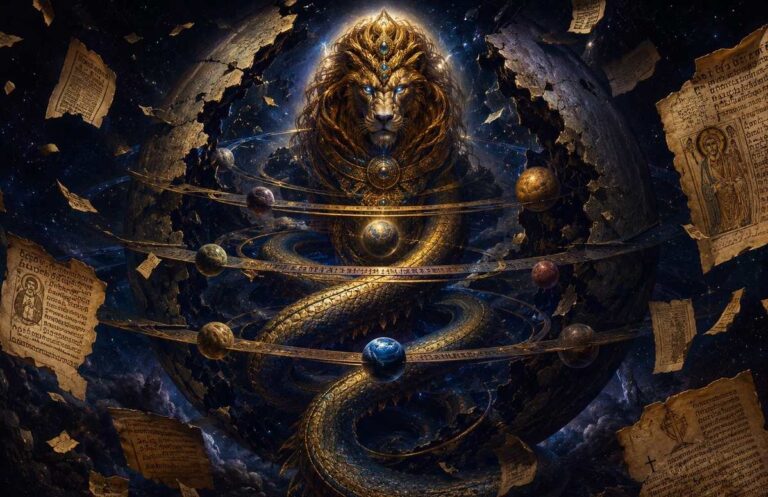
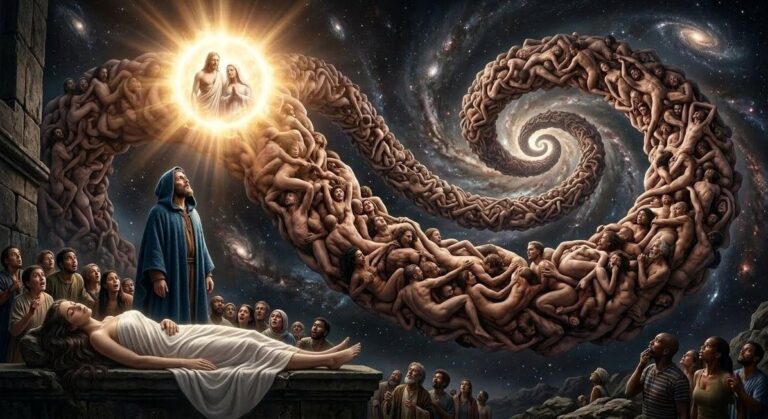
Western esotericism is not one tradition, but a braided transmission of many traditions: Hermetic, Gnostic, Kabbalistic, alchemical, Rosicrucian, Masonic, Theosophical, magical, mystical, philosophical, and psychological. Beneath the official histories of churches, empires, academies, and scientific revolutions, hidden streams of symbolic knowledge continued to move. They changed language, changed clothing, and crossed borders, but the deeper pattern remained: direct knowledge, sacred correspondence, inner transformation, and the search for a wisdom older than institution.
In Plain Terms
Esoteric lineages are the hidden or semi-hidden streams through which spiritual, mystical, magical, and symbolic knowledge has travelled across history. These lineages include texts, teachers, initiatory groups, philosophical schools, ritual systems, artistic symbols, and secret or restricted forms of interpretation.
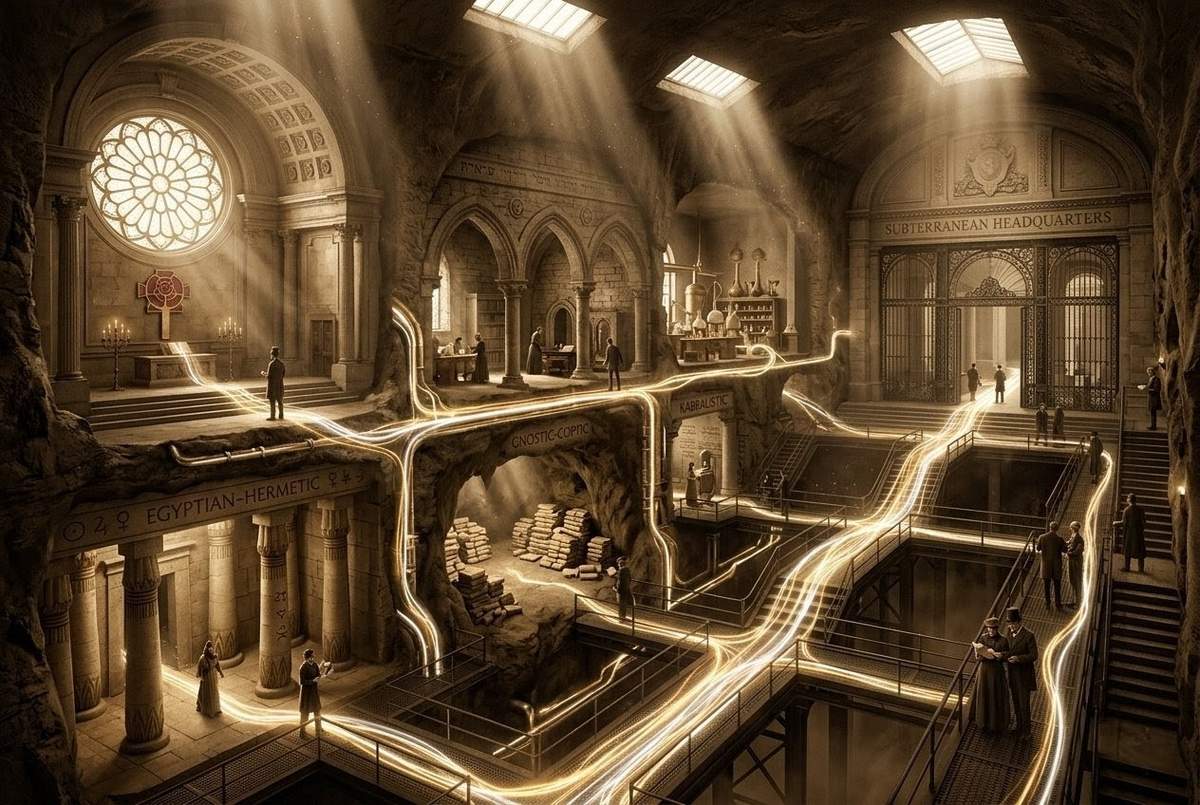
In the Western tradition, several major streams repeatedly meet and reshape one another: Hermeticism, Gnosticism, Kabbalah, alchemy, Rosicrucianism, Freemasonry, Theosophy, and the modern occult revival. Each has its own history, but none developed in total isolation. Alexandria, medieval Spain, Renaissance Florence, early modern Europe, and the nineteenth-century occult revival all became crossroads where older currents were translated into new forms.
The phrase “Hidden Agreements” does not need to mean a literal conspiracy. It points to recurring patterns: symbolic encoding, secrecy, initiation, direct experience, sacred language, cosmic correspondence, and the belief that transformation requires more than public doctrine. These agreements are not always written down. They are carried in symbols, practices, myths, and the trained eye of those who know how to read them.
Primary Sources and Traditions Discussed
- Hermeticism: the Corpus Hermeticum, Hermes Trismegistus, Hellenistic Egypt, cosmic correspondence, the divine mind, and spiritual rebirth.
- Gnosticism: Nag Hammadi, Sethian and Valentinian traditions, archons, the demiurge, the divine spark, gnosis, and liberation from ignorance.
- Kabbalah: medieval Jewish mysticism, the sefirot, Ein Sof, the Zohar, Christian Kabbalah, Lurianic tikkun, and sacred language.
- Alchemy: laboratory practice, symbolic transformation, the magnum opus, Paracelsus, John Dee, Isaac Newton, and Jungian psychological interpretation.
- Rosicrucianism and Freemasonry: the seventeenth-century manifestos, Christian Rosenkreutz, symbolic initiation, moral architecture, reform, and fraternal transmission.
- Theosophy and modern synthesis: Helena Blavatsky, Henry Steel Olcott, universal brotherhood, comparative religion, Eastern and Western esoteric exchange, and the New Age inheritance.
- Modern esoteric study: academic scholarship, digital archives, public access to primary texts, contemporary practice, and the need for discernment.
How to Read These Lineages
Western esotericism should not be read as a single underground church with one doctrine and one secret chain of authority. It is better understood as a family of recurring methods: hidden reading, symbolic correspondence, sacred language, inner transformation, initiation, ascent, purification, and direct knowledge.
Some links between traditions are historically strong. Others are interpretive, symbolic, or retrospective. Renaissance thinkers really did translate and reinterpret Hermetic, Platonic, Jewish, and Christian materials. Christian Kabbalah really did reshape Jewish mystical concepts for new theological purposes. Alchemical symbolism really did influence depth psychology through Jung. But not every claimed lineage is equally solid. A careful reader separates documented transmission from poetic resemblance.
The deeper pattern is not ownership. It is recurrence. Across different languages and centuries, seekers return to similar questions: Is reality layered? Is the human being more than the visible body? Can the soul awaken? Does language conceal sacred power? Can symbols transform consciousness? What has been hidden, and why?
Table of Contents
- The Alexandrian Matrix: Where the Streams First Converged
- Hermeticism: Cosmic Mind and the Ancient Theology
- Gnosticism: The Resistance of the Divine Spark
- Kabbalah: The Hidden Architecture of Divine Emanation
- Alchemy: Laboratory, Soul, and Symbolic Transformation
- Rosicrucianism and Freemasonry: Reform, Initiation, and Fraternal Transmission
- Theosophy and the Modern Synthesis
- The Contemporary Landscape: Open Archives and Living Practice
- The Hidden Agreements: What These Lineages Share
- Related Glossary Terms
- Read Next
- Frequently Asked Questions
- Further Reading
- References and Sources
The Alexandrian Matrix: Where the Streams First Converged
The story of Western esotericism often begins in Hellenistic Egypt, especially Alexandria. This was not because all esoteric traditions were born there, but because Alexandria became one of the ancient world’s great meeting places. Greek philosophy, Egyptian religion, Jewish scripture, apocalyptic speculation, early Christian theology, astrology, medicine, ritual practice, and textual scholarship all passed through the same charged atmosphere.
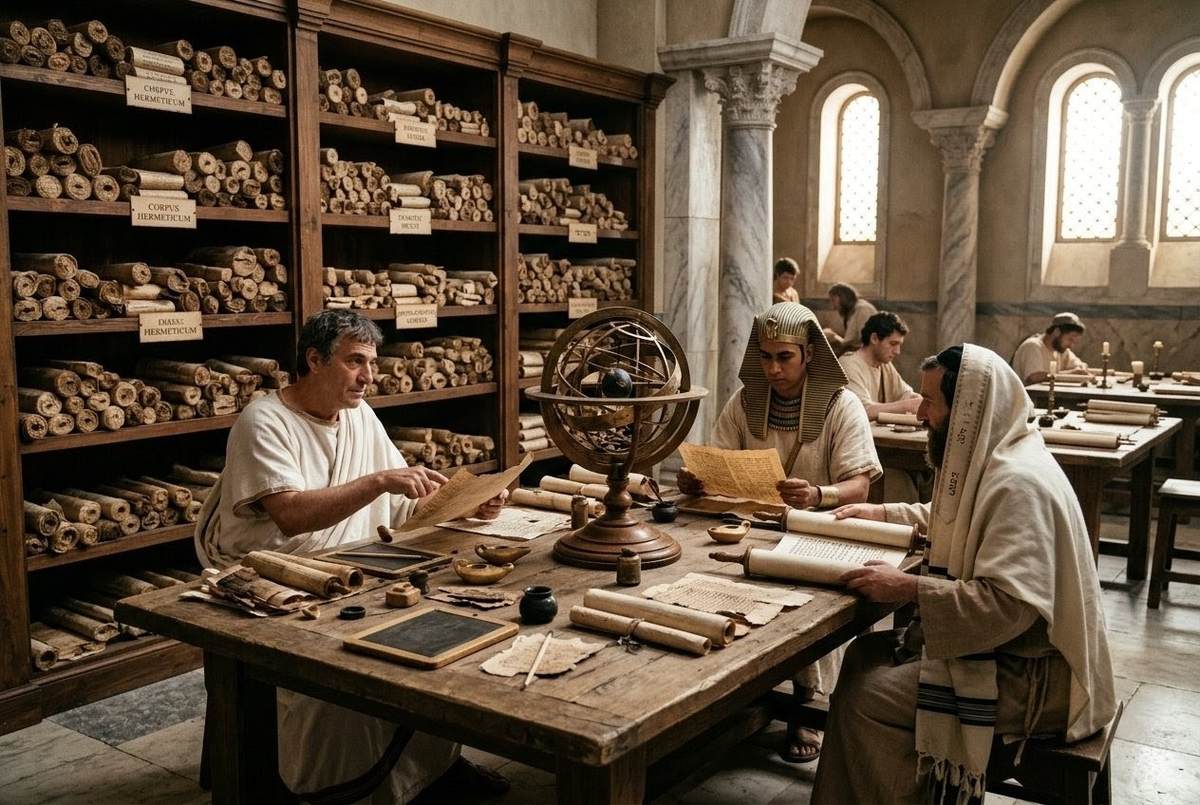
The Library and scholarly culture of Alexandria helped create a world where translation itself became a spiritual event. Hebrew texts could be rendered into Greek. Egyptian wisdom could be interpreted through Platonic vocabulary. Greek philosophical categories could be used to discuss Jewish revelation or Christian salvation. What emerged was not a neat synthesis, but a fertile field of overlapping symbols and metaphysical experiments.
Hermeticism and Gnosticism both belong to this larger Alexandrian and late antique world. They are not identical, but they breathe similar air. Both are concerned with hidden knowledge, divine origin, the soul’s ascent, the limits of ordinary religion, and the possibility of transformation through direct insight.
The Alexandrian matrix established several patterns that would echo through later esotericism: sacred texts that require inner interpretation, public teachings that conceal deeper levels, the use of myth as metaphysical code, and the belief that spiritual knowledge is not merely believed but awakened.
Translation as Transmission
Translation was central to this world. The Septuagint, Jewish apocalyptic literature, philosophical writings, ritual manuals, and Hermetic texts all moved across languages and cultures. Translation did not merely carry words from one tongue into another. It created new interpretive possibilities. A Hebrew idea rendered in Greek might begin to resonate with Plato. An Egyptian god interpreted through Hellenistic philosophy might become a cosmic principle. A scriptural myth might become an initiatory map.
This is one of the hidden engines of esoteric history. Traditions survive not only by staying pure, but by translating themselves without losing their centre. Every translation is a risk. It can clarify, distort, preserve, or transform. The Western esoteric tradition is full of such risky crossings.
Hermeticism: Cosmic Mind and the Ancient Theology
Hermeticism is attributed to Hermes Trismegistus, the “Thrice-Greatest Hermes”, a legendary figure combining Greek Hermes and Egyptian Thoth. The Hermetic texts present a vision of divine mind, cosmic order, spiritual rebirth, and the human being as a creature capable of ascending beyond ordinary limitation.
Renaissance scholars believed Hermes to be an ancient sage older than Plato and perhaps contemporary with Moses. Modern scholarship places the philosophical Hermetic texts mainly in the first centuries CE, in the world of Hellenistic Egypt. That correction does not reduce their importance. It simply locates them historically. The Hermetica are not prehistoric Egyptian scripture, but late antique spiritual philosophy shaped by Egyptian, Greek, and possibly Jewish currents.
Cosimo, Ficino, and the Renaissance Recovery
In 1463, Marsilio Ficino translated the Corpus Hermeticum into Latin at the request of Cosimo de’ Medici. This translation became one of the great sparks of Renaissance esotericism. Ficino and other Renaissance thinkers believed the Hermetic writings preserved an ancient theology, a prisca theologia, that anticipated and harmonised with Christianity.
Later historical research showed that the Hermetic writings were not as ancient as Renaissance scholars believed. Yet their effect on the Renaissance imagination was immense. They offered a spiritual universe in which the human mind could rise toward divine mind, the cosmos was ordered by sympathy and correspondence, and philosophy could become a path of inner transformation.
Hermeticism helped shape astrology, alchemy, ceremonial magic, Renaissance Neoplatonism, and later occult philosophy. It gave Western esotericism one of its central intuitions: the human being is a microcosm, a little world reflecting the greater world. To know oneself deeply is to know the structure of the cosmos. To align the inner with the outer is to participate in divine order.
Core Hermetic Themes
- Cosmic correspondence: the relation between above and below, macrocosm and microcosm, heaven and human being.
- Divine mind: reality as structured by Nous, intellect, or sacred intelligence.
- Spiritual rebirth: transformation through gnosis, purification, and awakening of the higher human.
- Planetary ascent: movement beyond the lower forces that condition ordinary life.
- Theurgy and contemplation: practices through which the soul becomes aligned with divine order.
Gnosticism: The Resistance of the Divine Spark
Gnosticism shares some territory with Hermeticism, but its mood is often sharper. Where Hermetic texts frequently see the cosmos as a divine order through which the soul may ascend, many Gnostic texts treat the material cosmos as a flawed or oppressive structure governed by lower powers. The soul’s task is not simply to harmonise with the world, but to awaken from its false rule.
The Nag Hammadi Library, discovered in Egypt in 1945, transformed the study of Gnosticism by giving scholars access to primary texts rather than only hostile reports by church writers. These writings reveal a wide range of traditions: Sethian, Valentinian, Thomasine, Hermetic, Christian, Jewish, Platonic, mythic, ritual, and philosophical.
Gnosticism is not one single religion with one creed. It is better understood as a cluster of movements and texts centred on direct knowing, the divine origin of the soul, the problem of ignorance, and the need for awakening. Its myths are often dramatic because they describe consciousness under captivity: the spark trapped in matter, the soul forgetful of its origin, the archons guarding the lower order, and the revealer descending to restore memory.
The Gnostic Pattern
- The unknowable source: ultimate reality is beyond ordinary thought, language, and institutional possession.
- The Pleroma: the fullness of divine reality from which spiritual life originates.
- The demiurge and archons: lower powers associated with ignorance, false authority, and bondage to the material order.
- The divine spark: a hidden element within the human being that does not belong entirely to the lower world.
- The revealer: a saving figure who descends to awaken memory and transmit liberating knowledge.
- Gnosis: not mere information, but direct recognition of one’s true origin and freedom.
Survival and Resurfacing
Gnostic ideas did not simply disappear after antiquity. Some themes continued through Manichaeism, medieval dualist movements, mystical Christianity, Renaissance speculation, Romantic literature, modern psychology, and contemporary spirituality. The direct line is not always simple. Sometimes there is transmission. Sometimes there is rediscovery. Sometimes there is resemblance born from similar spiritual questions.
What makes Gnosticism enduring is its radical suspicion of false authority. It asks whether the structures claiming to rule the soul are legitimate. It asks whether suffering should be explained, escaped, sanctified, or awakened from. It asks whether the world as given is the whole truth, or only the outer shell of a deeper drama.
Kabbalah: The Hidden Architecture of Divine Emanation
Kabbalah, meaning “received tradition”, is the great mystical and symbolic stream within Judaism. It emerges in medieval forms in twelfth-century Provence and thirteenth-century Spain, though it draws on earlier Jewish mystical, apocalyptic, liturgical, and scriptural traditions. Its central concern is the hidden life of God, the structure of emanation, sacred language, and the role of human action in cosmic restoration.
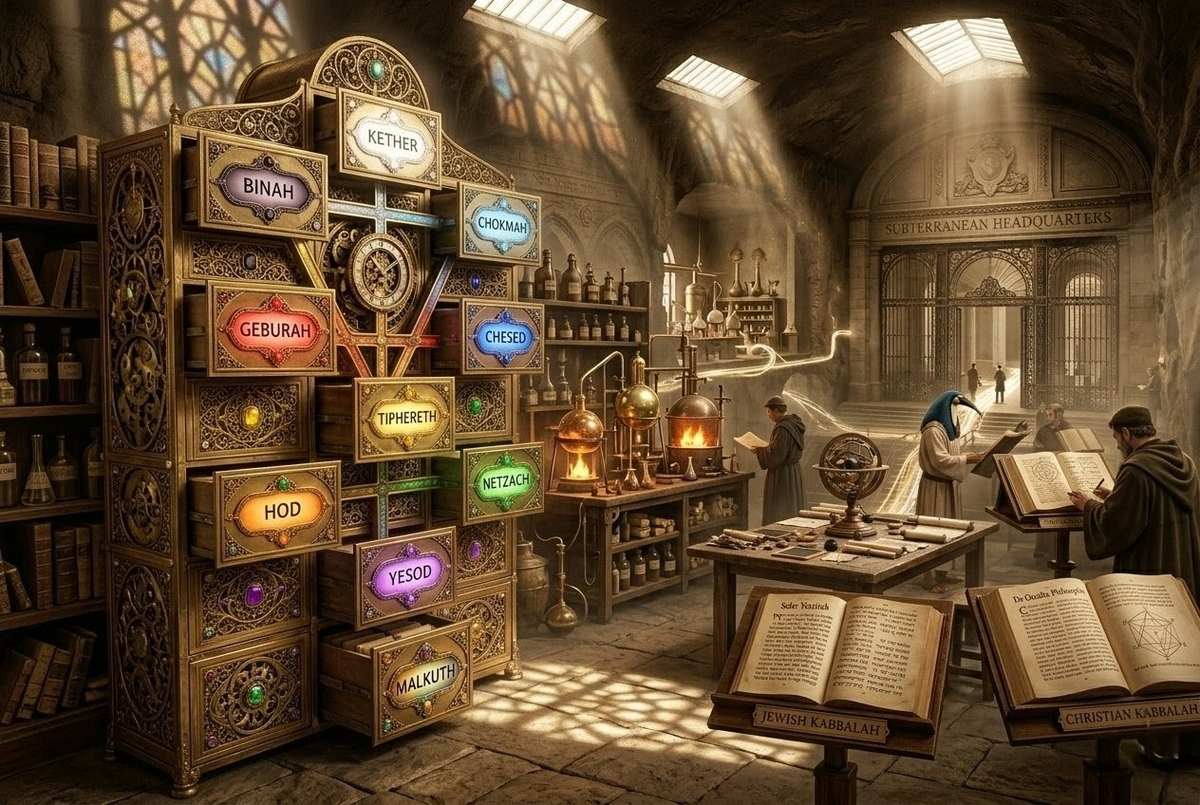
The ten sefirot form the best-known Kabbalistic map. They are divine attributes, emanations, vessels, or modes through which the infinite Ein Sof becomes knowable without ceasing to be infinite. Kabbalah therefore provides a symbolic architecture for the relationship between hidden source and manifest reality.
The Zohar, traditionally attributed to Rabbi Shimon bar Yochai but associated by modern scholarship with thirteenth-century Castile and Moses de Leon, became the central classic of Kabbalah. It reads the Torah as a living body of hidden meanings, layered with erotic, cosmic, linguistic, and mystical significance.
Christian Kabbalah
During the Renaissance, Christian thinkers such as Pico della Mirandola and Johannes Reuchlin adapted Jewish Kabbalistic ideas for Christian theological purposes. This created Christian Kabbalah, a controversial and influential bridge between Jewish mysticism, Christian theology, Hermetic philosophy, and Renaissance magic.
Christian Kabbalah profoundly affected Western esotericism. It brought Hebrew letters, divine names, the sefirot, angelology, and sacred-number speculation into Christian occult philosophy. Later Rosicrucian, Masonic, magical, and occult orders would repeatedly draw from this hybrid inheritance.
Lurianic Kabbalah and the Shattering of the Vessels
In the sixteenth century, Isaac Luria and his circle in Safed developed one of the most powerful symbolic systems in Jewish mysticism. Lurianic Kabbalah speaks of tzimtzum, divine contraction; shevirat ha-kelim, the shattering of the vessels; and tikkun, the repair or restoration of cosmic harmony.
In this myth, divine light overflows the vessels meant to contain it, causing rupture and scattering sparks into the lower worlds. Human action, prayer, ethical life, and mystical intention participate in the gathering and restoration of these sparks. The image resonates strongly with Gnostic and Hermetic concerns, though it belongs to its own Jewish theological world.
Kabbalah teaches that the world is not merely fallen matter to be escaped. It is a fractured field requiring repair. The human being is not only a soul seeking ascent, but a participant in restoration.
Alchemy: Laboratory, Soul, and Symbolic Transformation
Alchemy is often misread as failed chemistry or fantasy about turning lead into gold. Historically, it was far more complex. Alchemy combined practical laboratory work, metallurgy, medicine, cosmology, astrology, Christian symbolism, Islamic science, Hermetic philosophy, and spiritual transformation. Its central premise was that matter and soul could both undergo refinement.
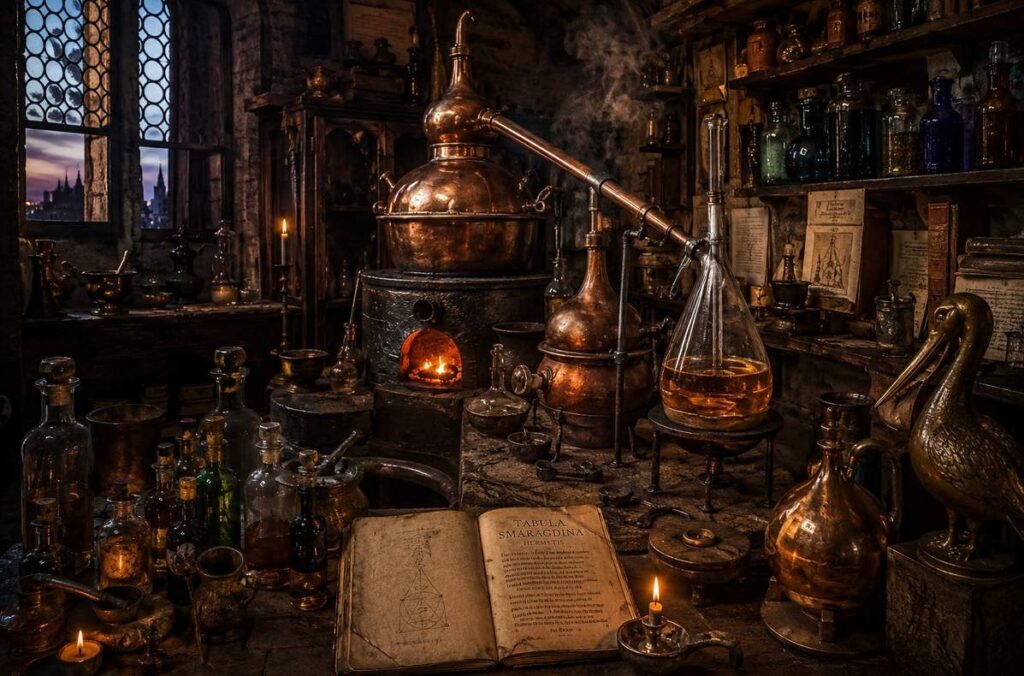
The alchemical magnum opus, the great work, describes a process of transformation through stages often named nigredo (blackening), albedo (whitening), citrinitas (yellowing), and rubedo (reddening). These stages can be read chemically, spiritually, psychologically, or symbolically. The power of alchemy lies partly in that layered structure.
Figures such as Paracelsus, John Dee, and Isaac Newton engaged alchemical materials alongside medicine, mathematics, natural philosophy, and theology. Before the modern split between science and spirit hardened, the investigation of matter could still be treated as a path into divine order.
Jung and the Psychological Revival of Alchemy
In the twentieth century, Carl Jung revived interest in alchemy by reading its symbols as maps of psychological transformation. The alchemical vessel became an image of the psyche. The prima materia, the raw material, became the rejected or chaotic material of the unconscious. The philosopher’s stone became an image of psychic integration or the Self.
Jung’s interpretation is not the only way to read alchemy, and it should not erase the historical reality of laboratory practice. But it revealed why alchemical imagery continues to grip the imagination. The furnace, vessel, blackening, whitening, marriage, death, rebirth, and stone all speak to processes that human beings still undergo inwardly.
Alchemy therefore bridges visible and invisible transformation. It asks whether the world can be refined, whether the soul can be cooked into gold, and whether the despised material at the bottom of experience may contain the beginning of the work.
Rosicrucianism and Freemasonry: Reform, Initiation, and Fraternal Transmission
The early seventeenth century saw the appearance of the Rosicrucian manifestos: the Fama Fraternitatis, the Confessio Fraternitatis, and The Chemical Wedding of Christian Rosenkreutz. These texts announced, or imagined, a hidden brotherhood devoted to the reform of religion, science, medicine, and society through esoteric wisdom.
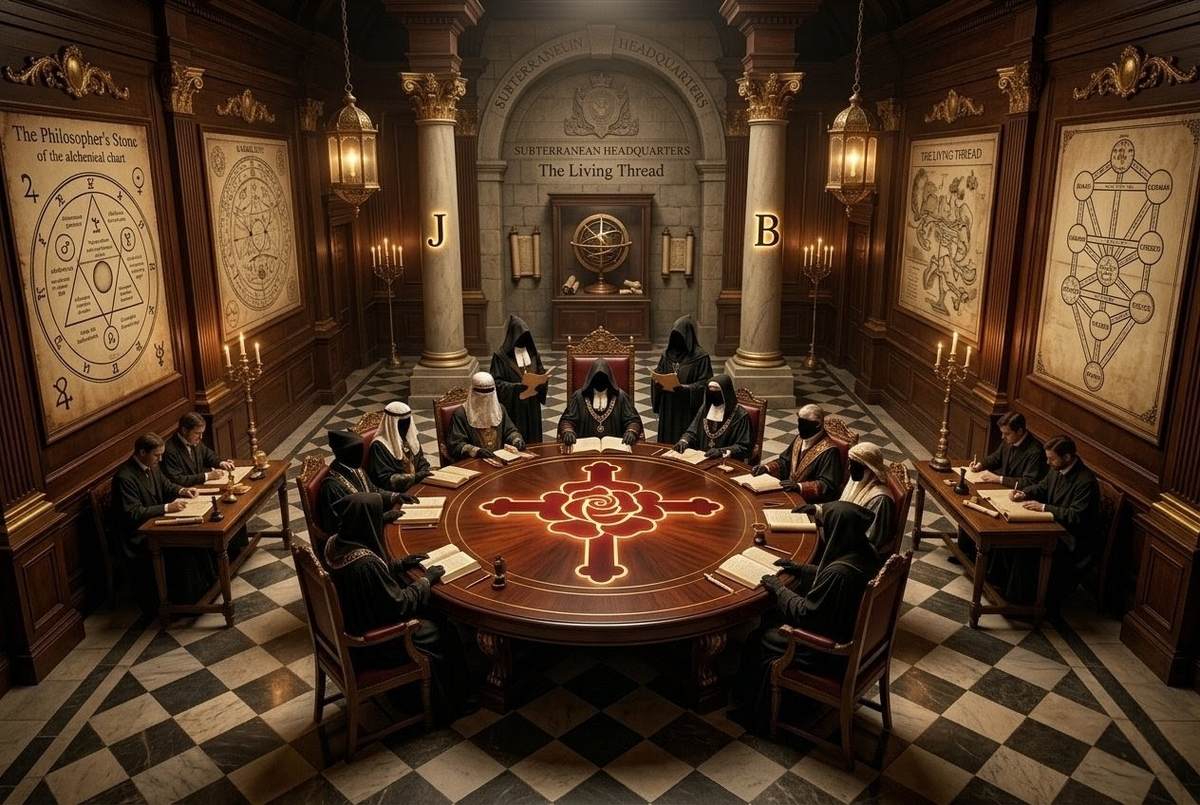
Whether the first Rosicrucian brotherhood existed as a literal organisation remains debated. The manifestos may have been literary provocations, reformist myths, or symbolic invitations rather than minutes from a secret society. Their influence, however, was real. They ignited the imagination of early modern Europe and inspired later Rosicrucian groups, esoteric fraternities, and occult reform movements.
Rosicrucianism brought together Hermetic philosophy, Christian Kabbalah, alchemy, Paracelsian medicine, apocalyptic expectation, and religious reform. It imagined a renewal of knowledge in which science, spirit, and healing were not enemies but parts of a larger restoration.
Freemasonry and Symbolic Architecture
Freemasonry developed as a fraternal and initiatory tradition using the symbolism of stonemasonry, temple-building, geometry, morality, and ritual progression. Its origins are complex, involving operative craft guilds, speculative Masonry, Enlightenment sociability, biblical symbolism, and later esoteric interpretations.
For many members, Freemasonry functioned as a moral and fraternal order rather than an occult school. Yet its symbols, degrees, temple imagery, ritual drama, and language of inner building made it deeply attractive to esoteric readers. Later occult orders would draw heavily on Masonic structures while adding Hermetic, Kabbalistic, Rosicrucian, and magical content.
The Rosicrucian and Masonic currents show how esoteric knowledge can become organised through forms: vows, degrees, chambers, symbols, passwords, moral instruction, ritual drama, and fraternity. These forms can preserve depth, but they can also harden into theatre if the inner work is missing. The temple is only alive if someone is being built inside it.
Theosophy and the Modern Synthesis
The nineteenth century produced a vast esoteric revival. Spiritualism, occultism, comparative religion, Orientalism, new translations, colonial encounters, scientific upheaval, and dissatisfaction with conventional Christianity all helped create the environment in which Theosophy emerged.

The Theosophical Society was founded in New York in 1875 by Helena Petrovna Blavatsky, Henry Steel Olcott, and others. It aimed to form a nucleus of universal brotherhood, encourage comparative study of religion, philosophy, and science, and investigate unexplained laws of nature and latent human powers.
Blavatsky’s Isis Unveiled and The Secret Doctrine helped shape modern occult thought by presenting a sweeping synthesis of ancient wisdom, Eastern religions, Western esotericism, spiritual evolution, hidden masters, cycles of humanity, and comparative myth. Theosophy was not a neutral academic project. It was an esoteric system with bold claims, contested sources, and enormous influence.
Theosophy’s Inheritance
Theosophy shaped much of twentieth-century alternative spirituality. Rudolf Steiner’s Anthroposophy, Alice Bailey’s Arcane School, modern New Age thought, occult orders, esoteric Christianity, comparative mysticism, and many forms of spiritual universalism carry Theosophical influence either directly or indirectly.
Theosophy also changed the scale of esoteric imagination. Older Western traditions often focused on salvation, ascent, inner transformation, divine names, or symbolic practice. Theosophy expanded the frame into vast cosmic evolution: root races, planetary chains, hidden masters, world cycles, and a universal wisdom tradition behind all religions.
This gave modern spirituality a grand map, but also introduced problems: oversimplification of Asian traditions, speculative history, racial theories, and a tendency to flatten diverse traditions into one universal scheme. Theosophy remains powerful because it opened doors. It remains problematic because it sometimes treated living traditions as raw material for synthesis.
The Contemporary Landscape: Open Archives and Living Practice
Today, the old lineages are more accessible than ever. Digital libraries, academic translations, manuscript images, online lectures, open-access scholarship, podcasts, forums, and independent archives have placed material once limited to scholars, priests, initiates, or collectors into public view.

This access is extraordinary. A reader can compare the Corpus Hermeticum, the Nag Hammadi texts, Kabbalistic writings, alchemical emblems, Rosicrucian manifestos, Masonic symbolism, and Theosophical literature without entering a formal order or travelling to a specialist archive. The gates are open. The difficulty is no longer scarcity. It is discernment.
Open access has its own dangers. Esoteric material can be flattened into aesthetic mood, conspiracy fuel, spiritual branding, or self-inflating identity. Primary sources can be quoted without context. Initiatory language can be borrowed without discipline. Symbols can become costumes. Depth can become performance.
The modern reader therefore needs three things: historical grounding, symbolic sensitivity, and psychological honesty. Historical grounding prevents fantasy from pretending to be evidence. Symbolic sensitivity prevents scholarship from killing the living meaning of the material. Psychological honesty prevents the seeker from turning esoteric knowledge into ego theatre.
The Hidden Agreements: What These Lineages Share
Across these traditions, certain patterns recur so often that they form the true hidden agreements of Western esotericism. They are not always formal doctrines. They are shared instincts about reality, knowledge, and transformation.
1. Reality Is Layered
The visible world is not the whole of reality. Whether described as the Pleroma, the sefirot, planetary spheres, angelic worlds, inner alchemical stages, or hidden symbolic levels, esoteric traditions assume depth. The surface matters, but it does not exhaust meaning.
2. Knowledge Transforms
Esoteric knowledge is not simply information. It changes the knower. Gnosis, rebirth, initiation, illumination, tikkun, individuation, and the great work all name forms of transformation in which the person becomes capable of perceiving and inhabiting reality differently.
3. Symbols Are Not Decorations
Symbols are active carriers of meaning. The tree, ladder, serpent, rose, cross, vessel, stone, spark, light, mirror, temple, and word are not merely poetic. They are containers of layered knowledge. To read them well is to enter the tradition’s inner language.
4. Secrecy Can Protect or Corrupt
Secrecy appears throughout esoteric history because some teachings require preparation, and because heterodox teachings often needed protection. Yet secrecy can also produce hierarchy, manipulation, inflation, and abuse. Discernment must ask what secrecy is serving: depth, safety, ego, or control.
5. The Human Being Is a Threshold
The human is not merely an animal, not merely a sinner, not merely a social unit, and not merely a rational machine. In these traditions, the human being is a threshold between worlds: body and spirit, earth and heaven, ignorance and awakening, matter and light.
6. Transmission Must Stay Alive
Traditions survive through texts, but not only through texts. They also survive through practice, contemplation, embodiment, ethical formation, and direct recognition. A dead symbol can be memorised. A living symbol transforms the one who receives it.
The hidden agreements of Western esotericism are not a single secret doctrine, but recurring patterns of transmission: layered reality, symbolic knowledge, inner transformation, direct experience, and the disciplined reading of what the surface conceals.
Related Glossary Terms
These terms help clarify the major lineages and concepts discussed in this overview:
- Esotericism: hidden, inner, initiatory, or restricted forms of religious, philosophical, magical, and symbolic knowledge.
- Hermeticism: a late antique and Renaissance esoteric tradition associated with Hermes Trismegistus, cosmic correspondence, divine mind, and spiritual rebirth.
- Gnosticism: a family of ancient movements and texts centred on direct liberating knowledge, the divine spark, and awakening from ignorance.
- Kabbalah: Jewish mystical tradition concerned with divine emanation, sacred language, the sefirot, and cosmic repair.
- Alchemy: a practical and symbolic tradition of transformation involving matter, medicine, soul, and spiritual refinement.
- Rosicrucianism: an early modern esoteric current associated with reform, hidden brotherhood, alchemy, Christian mysticism, and symbolic initiation.
- Freemasonry: a fraternal initiatory tradition using architectural, moral, biblical, and geometric symbolism.
- Theosophy: a modern esoteric movement founded in 1875 that attempted to synthesise world religions, occult traditions, and spiritual evolution.
- Prisca Theologia: Renaissance idea of an ancient primordial theology behind all true religions and philosophies.
- Transmission: the movement of knowledge through texts, teachers, symbols, rituals, communities, translations, and practice.
Read Next
For the strongest next step, continue into the survival of hidden knowledge itself:
The Living Thread: How Forbidden Knowing Survives
This companion article follows the deeper question of transmission: how esoteric knowledge survives suppression, fragmentation, translation, institutional hostility, and time.
Frequently Asked Questions
What are esoteric lineages?
Esoteric lineages are the streams through which hidden, initiatory, symbolic, mystical, or occult knowledge is transmitted across time. They may involve texts, teachers, rituals, communities, symbols, translations, or schools of interpretation. In Western esotericism, major lineages include Hermeticism, Gnosticism, Kabbalah, alchemy, Rosicrucianism, Freemasonry, Theosophy, and the modern occult revival.
What are the Hidden Agreements in Western esotericism?
The Hidden Agreements are recurring patterns shared across Western esoteric traditions. These include layered reality, symbolic interpretation, direct knowledge, inner transformation, initiatory preparation, sacred language, and the distinction between surface teaching and deeper meaning. They do not need to imply a literal conspiracy. They name the common methods by which hidden wisdom is preserved and recognised.
Why is Alexandria important for Western esotericism?
Alexandria was a major crossroads of Greek, Egyptian, Jewish, and early Christian traditions. In the Hellenistic and late antique worlds, translation, philosophy, ritual, scripture, and mystical speculation met there. Hermeticism and many forms of Gnosticism belong to this broader Alexandrian and Egyptian context, making Alexandria one of the symbolic birthplaces of Western esoteric synthesis.
How do Hermeticism and Gnosticism differ?
Hermeticism often treats the cosmos as a divine order through which the soul can ascend and be reborn. Many Gnostic texts are more suspicious of the material cosmos, seeing it as a flawed or oppressive realm governed by lower powers such as archons. Hermeticism tends to emphasise cosmic harmony and ascent; Gnosticism often emphasises awakening from false authority and liberation of the divine spark.
How did Kabbalah influence Western esotericism?
Kabbalah influenced Western esotericism through its teachings on the sefirot, divine emanation, sacred letters, divine names, and cosmic repair. During the Renaissance, Christian Kabbalists such as Pico della Mirandola and Johannes Reuchlin adapted Jewish mystical concepts into Christian and Hermetic frameworks. These ideas later influenced Rosicrucianism, ceremonial magic, Freemasonry, and occult orders.
What is the connection between alchemy and psychology?
Alchemy was both a practical and symbolic tradition of transformation. In the twentieth century, Carl Jung interpreted alchemical symbols as images of psychological individuation. The stages of the alchemical work, such as nigredo, albedo, and rubedo, became ways of understanding inner transformation, integration of the unconscious, and the emergence of the Self.
Is Western esotericism the same as occultism?
Not exactly. Occultism is one part of Western esotericism, especially associated with hidden forces, ritual magic, orders, and practical occult systems. Western esotericism is broader. It includes Hermeticism, Gnosticism, Kabbalah, alchemy, Christian mysticism, Rosicrucianism, Theosophy, symbolic interpretation, and philosophical traditions of hidden knowledge.
Study Note: This article surveys esoteric traditions for historical, symbolic, and contemplative understanding. It does not claim that all lineages are historically continuous, nor does it treat every esoteric claim as literal fact. Some connections are documented; others are interpretive, symbolic, or retrospective. Serious study requires both openness and discernment: enough imagination to understand why these traditions mattered, and enough grounding to distinguish evidence from atmosphere.
Further Reading
These related articles continue the themes of esoteric transmission, hidden knowledge, Hermeticism, Gnosticism, Kabbalah, alchemy, and symbolic survival:
- The Living Thread: How Forbidden Knowing Survives – How esoteric knowledge survives suppression, fragmentation, translation, and cultural change.
- Transmission and Lineage: How the Gnosis Travels – The movement of hidden knowledge through teachers, texts, symbols, and initiatory chains.
- Hermeticism and Gnosticism: The Egyptian Wisdom Traditions Compared – A careful comparison of two major Alexandrian streams.
- Hermetic Connections in the Nag Hammadi Library – Evidence for Hermetic themes within the Nag Hammadi codices.
- Gnostic Schools: Sethians, Valentinians, Hermetics – A comparative guide to the major Gnostic schools and their differences.
- The Kabbalistic Tree of Life: A Comprehensive Guide – The sefirot, divine emanation, and the symbolic architecture of Kabbalah.
- The Steganographia: Trithemius’s Banned Book of Hidden Writing – Cryptography, angelic communication, hidden writing, and esoteric concealment.
- John Dee’s Mathematical Preface: The Occult Foundation – Mathematics, Hermeticism, Renaissance magic, and the Elizabethan esoteric imagination.
- The Nag Hammadi Library: Complete Guide to Gnostic Scriptures – The complete starting point for the Coptic Gnostic archive.
- What Is Gnosticism? Defining the Undefinable – A grounded introduction to gnosis, myth, diversity, and the difficulty of defining Gnosticism.
References and Sources
The following sources support the historical and esoteric analysis presented in this article.
Primary Sources and Critical Editions
- Ficino, Marsilio, trans. (1463/1471). Corpus Hermeticum. Latin translation commissioned by Cosimo de’ Medici.
- Copenhaver, Brian P., trans. (1992). Hermetica: The Greek Corpus Hermeticum and the Latin Asclepius. Cambridge: Cambridge University Press.
- Robinson, James M., ed. (1990). The Nag Hammadi Library in English. San Francisco: HarperSanFrancisco.
- Meyer, Marvin, ed. (2007). The Nag Hammadi Scriptures: The International Edition. New York: HarperOne.
- Fama Fraternitatis. (1614). Anonymous Rosicrucian manifesto.
- Confessio Fraternitatis. (1615). Anonymous Rosicrucian manifesto.
- The Chemical Wedding of Christian Rosenkreutz. (1616). Attributed to Johann Valentin Andreae.
- Blavatsky, Helena P. (1877). Isis Unveiled. New York: J. W. Bouton.
- Blavatsky, Helena P. (1888). The Secret Doctrine. London: Theosophical Publishing Company.
Hermeticism, Gnosticism, and Kabbalah
- Festugière, André-Jean. (1950-1954). La Révélation d’Hermès Trismégiste. 4 vols. Paris: Gabalda.
- Yates, Frances A. (1964). Giordano Bruno and the Hermetic Tradition. Chicago: University of Chicago Press.
- Brakke, David. (2010). The Gnostics: Myth, Ritual, and Diversity in Early Christianity. Cambridge, MA: Harvard University Press.
- King, Karen L. (2003). What Is Gnosticism? Cambridge, MA: Harvard University Press.
- Scholem, Gershom. (1965). Major Trends in Jewish Mysticism. New York: Schocken Books.
- Idel, Moshe. (1988). Kabbalah: New Perspectives. New Haven: Yale University Press.
- Dan, Joseph. (2007). Kabbalah: A Very Short Introduction. Oxford: Oxford University Press.
Alchemy, Rosicrucianism, and Modern Esotericism
- Jung, C. G. (1944/1968). Psychology and Alchemy. Collected Works, Vol. 12. Princeton: Princeton University Press.
- Yates, Frances A. (1972). The Rosicrucian Enlightenment. London: Routledge.
- Goodrick-Clarke, Nicholas. (2008). The Western Esoteric Traditions: A Historical Introduction. Oxford: Oxford University Press.
- Hanegraaff, Wouter J. (2012). Esotericism and the Academy: Rejected Knowledge in Western Culture. Cambridge: Cambridge University Press.
- Faivre, Antoine. (1994). Access to Western Esotericism. Albany: SUNY Press.
- Versluis, Arthur. (2007). Magic and Mysticism: An Introduction to Western Esotericism. Lanham: Rowman & Littlefield.
- Godwin, Joscelyn. (1994). The Theosophical Enlightenment. Albany: SUNY Press.