Trimorphic Protennoia: The Three Descents of Divine Wisdom
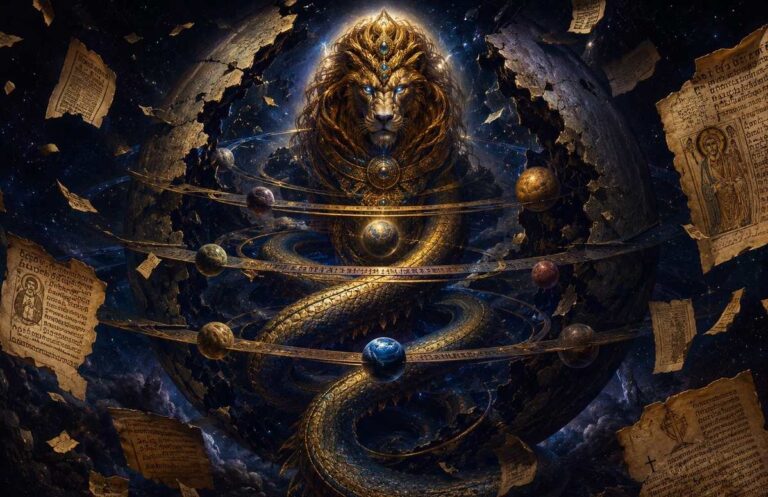
The Trimorphic Protennoia (NHC XIII,1) — “Three Forms of First Thought” — stands as the most complete and systematic presentation of the feminine divine in the Nag Hammadi Library. Where Thunder: Perfect Mind offers poetic paradox and Sophia of Jesus Christ presents wisdom in dialogue format, the Trimorphic Protennoia delivers theological architecture: a complete cosmology, soteriology, and mystical practice spoken in the voice of divine Wisdom herself [1]. “I am Protennoia, the thought that dwells in the light, the movement that dwells in the all” (NHC XIII,1 35:1-5) [2]. This is not merely a text about the goddess; it is the goddess speaking her own executive credentials, declaring her jurisdiction over creation, fall, and restoration [3].
Discovered in 1945 as part of Codex XIII — a codex whose leaves were removed from their binding before burial and placed loose in the jar — the Trimorphic Protennoia employs a threefold structure that mirrors the Sethian baptismal ritual of the Five Seals. The text speaks as Protennoia (First Thought), the divine intelligence that precedes all differentiation, manifesting successively as Voice, Speech, and Word in a progressive descent that awakens, instructs, and liberates the spiritual seed trapped in archontic custody [4]. In the administrative hierarchy of the Nag Hammadi Library, this tractate serves as the executive charter — the foundational document that establishes the feminine divine not as a departmental subsidiary but as the originating authority of the entire cosmic enterprise [3].
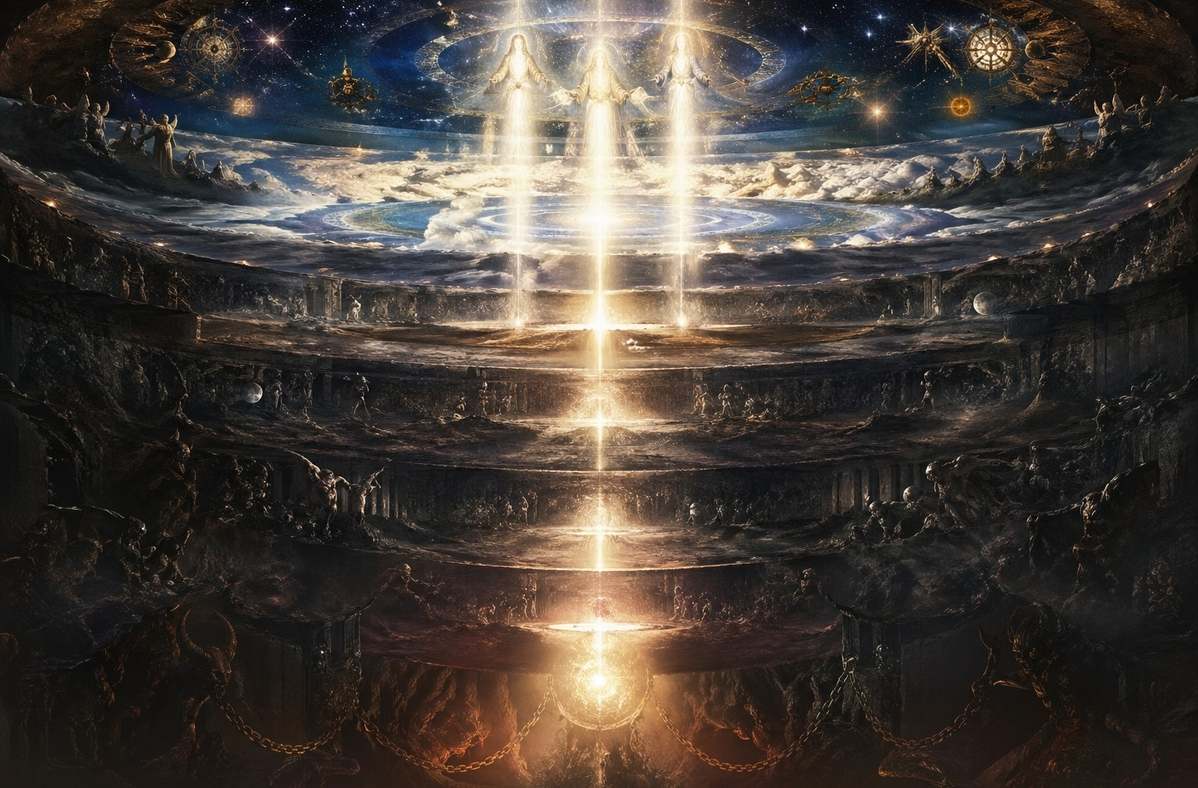
Table of Contents
- What Is the Trimorphic Protennoia?
- The Manuscript and Its Context
- The Three Forms: Father, Mother, Son
- The First Descent: As Voice
- The Second Descent: As Speech
- The Third Descent: As Word
- The Defeat of the Archons
- The Five Seals and Ritual Practice
- Reading Trimorphic Protennoia
- Why Trimorphic Protennoia Matters
- Frequently Asked Questions
- Further Reading
- References and Sources
What Is the Trimorphic Protennoia?
Trimorphic Protennoia Defined
Trimorphic Protennoia (Greek: Trimorphos Protennoia; Coptic: Protennoia etrimorphe; NHC XIII,1) is a third-century CE Sethian Gnostic text from the Nag Hammadi Library. Its title means “Three Forms of First Thought,” referring to the divine Protennoia (First Thought/Forethought) who manifests in three modes: as Father (transcendent source), as Mother (creative power), and as Son (revealed saviour). The text narrates three successive descents of Protennoia into the material realm — as Voice, as Speech, and as Word — to awaken, instruct, and liberate the spiritual seed imprisoned by the archons. It is the most systematic and complete presentation of the feminine divine in the entire collection, and it preserves the Sethian ritual of the Five Seals [1].
Codicological designation: NHC XIII,1; Codex: Nag Hammadi Codex XIII (loose leaves); Language: Coptic (Sahidic dialect); Length: approximately 16 pages.
The Manuscript and Its Context
Codex XIII and the Loose Leaves
The Trimorphic Protennoia was discovered in 1945 as part of the Nag Hammadi find, but unlike the other tractates, it was not bound in a leather codex. Instead, its leaves were removed from Codex XIII before burial and placed loose in the earthenware jar alongside the bound volumes [5]. This unusual circumstance has led to scholarly speculation: were the pages removed because they contained especially sensitive material? Were they intended for separate circulation among initiates who had already received preliminary instruction? Or did the ancient community simply run out of binding materials and file the text separately for later collation [3]?
The codicological status of NHC XIII is thus unique. The text exists as a single tractate without the contextual neighbours that help scholars understand curatorial intent in the other codices. Yet its content reveals clear connections to the Sethian technical literature of Codex VII (Three Steles of Seth, Paraphrase of Shem) and to the baptismal traditions reflected in Apocryphon of John and Hymn of the Pearl. The Trimorphic Protennoia is not an isolated document but part of a broader Sethian ritual ecosystem — a liturgical manual disguised as revelatory discourse [4].
Primary Source Citation: NHC XIII,1 35:1-5: “I am Protennoia, the thought that dwells in the light, the movement that dwells in the all, the glory that dwells in the pleroma.” [2]
The Three Forms: Father, Mother, Son
The “trimorphic” of the title refers to Protennoia’s three manifestations, corresponding to the three primary divine hypostases of Sethian theology. These are not separate gods but modalities of a single divine reality — the same executive operating in different departments of the cosmic corporation [3].
As Father: The Transcendent Source
As Father: The invisible spirit, the depth of the all, the transcendent source beyond all naming. “I am the father, I am the mother, I am the son” (NHC XIII,1 39:1-5) [2]. Protennoia is not merely feminine but androgynous, containing all genders, transcending all distinctions. The “Father” form represents the hidden origin, the unmanifest ground from which all manifestation arises — the executive office that issues directives without appearing on the organisational chart [6].
As Mother: The Creative Power
As Mother: The womb of all, the generative power, the one who brings forth. “I am the thought of the father, the mother of the all, the image of the invisible one” (NHC XIII,1 39:5-10) [2]. Here is the feminine divine in her creative aspect — not secondary to the masculine but co-eternal, co-equal, co-creative. The Mother form is not a consort or assistant but the active principle of divine self-expression, the department that transforms executive intention into operational reality [3].
As Son: The Revealed Saviour
As Son: The revealed saviour, the one who descends, the teacher who awakens. “I am the word, I am the knowledge, I am the light” (NHC XIII,1 40:1-5) [2]. The Son is not separate from the Mother but her manifestation, her extension into the world of becoming. This threefold structure allows the text to present a complete theology: the transcendent source (Father), the creative power (Mother), and the revealed saviour (Son) — all aspects of the single divine reality, all spoken by the single divine voice [6].
Primary Source Citation: NHC XIII,1 39:1-10: “I am the father, I am the mother, I am the son. I am the thought of the father, the mother of the all, the image of the invisible one.” [2]

The First Descent: As Voice
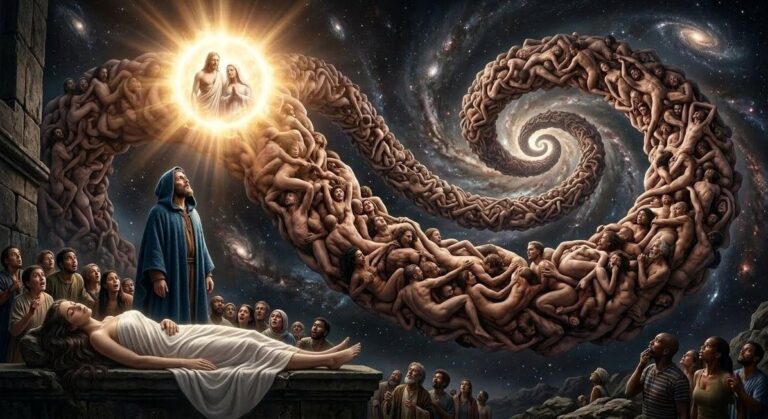
“I descended to the midst of the darkness, and I went to the prison of the demons” (NHC XIII,1 42:1-5) [2]. Protennoia’s first descent is as Voice — the call that awakens, the word that summons, the sound that disturbs the sleep of the ignorant. The Voice does not compel but invites; it does not force but calls. Those who have ears to hear will respond; those who are deaf will remain in darkness [6].
“I cried out in their ears, and they heard me” (NHC XIII,1 42:5-10) [2]. The first descent establishes the possibility of awakening. Protennoia enters the material world, penetrates the prison of the archons, and speaks directly to the spiritual seed trapped in matter. “I am the voice that awakens the sleeping, the voice that calls the dead to life” (NHC XIII,1 43:1-5) [2]. This is the initial contact — the unsolicited call that interrupts the routine of archontic existence and introduces the possibility that there is another jurisdiction, another authority, another way of being [3].
The Voice is pre-conceptual, pre-linguistic, pre-differentiated. It is not yet teaching but pure summons — the alarm that rouses the sleeper without yet explaining the emergency. In the ritual context of the Five Seals, the Voice corresponds to the first seal: the awakening that precedes instruction, the recognition that one has been filed in the wrong department [4].
Primary Source Citation: NHC XIII,1 42:1-10: “I descended to the midst of the darkness, and I went to the prison of the demons. I cried out in their ears, and they heard me.” [2]
The Second Descent: As Speech
“I came to the midst of the world, and I appeared to them in the form of their own kind” (NHC XIII,1 44:1-5) [2]. The second descent is as Speech — the teaching that instructs, the knowledge that liberates, the word made specific and articulate. Where the Voice awakens, the Speech instructs. Those who responded to the first call now receive the detailed teaching they need for liberation [6].
“I taught them about the ineffable things, and the unutterable things” (NHC XIII,1 44:5-10) [2]. The second descent is the Gnostic revelation — the secret teaching transmitted to the worthy, the knowledge that breaks the bonds of fate, the understanding that transforms consciousness. Protennoia appears “in the form of their own kind” — not as alien visitor but as recognisable presence, speaking the language of the prisoners, using the conceptual tools available in the archontic jurisdiction [3].
“I gave them the way of ascent, and I showed them the path to the father” (NHC XIII,1 45:1-5) [2]. Protennoia is not merely revealer but guide, not merely teacher but companion on the journey. The Speech provides the map — the classified route through the planetary checkpoints, the passwords for the aeonic gates, the protocol for ascending from the material branch office back to the executive headquarters [3].
Primary Source Citation: NHC XIII,1 44:1-10: “I came to the midst of the world, and I appeared to them in the form of their own kind. I taught them about the ineffable things, and the unutterable things.” [2]
The Third Descent: As Word
“I entered into the midst of their prison, which is the prison of the body” (NHC XIII,1 46:1-5) [2]. The third descent is as Word — the full incarnation, the taking on of flesh, the complete identification with human condition. This is the most radical descent. Protennoia does not merely speak to humanity; she becomes human. She experiences the limitations of the body, the suffering of matter, the death that awaits all flesh [6].
“I suffered with them, and I died with them, and I rose with them” (NHC XIII,1 47:1-5) [2]. The third descent is the guarantee of liberation — if Protennoia has descended into death and risen, so can those who are united with her. The Word is not distant doctrine but shared experience, not abstract principle but concrete solidarity. This is the Valentinian-Sethian alternative to orthodox atonement theology: not the sacrifice of the innocent for the guilty but the demonstration that the divine can navigate the archontic system and emerge victorious [4].
“And I revealed to them the way of ascent, and I taught them about the place of rest” (NHC XIII,1 48:1-5) [2]. The third descent completes the work: awakening (Voice), instruction (Speech), and demonstration (Word). The pattern is not accidental but pedagogical — the progressive revelation that builds from summons to teaching to example, ensuring that the initiate has both the knowledge and the model necessary for the journey [3].
Primary Source Citation: NHC XIII,1 46:1-5: “I entered into the midst of their prison, which is the prison of the body. I suffered with them, and I died with them, and I rose with them.” [2]
The Defeat of the Archons
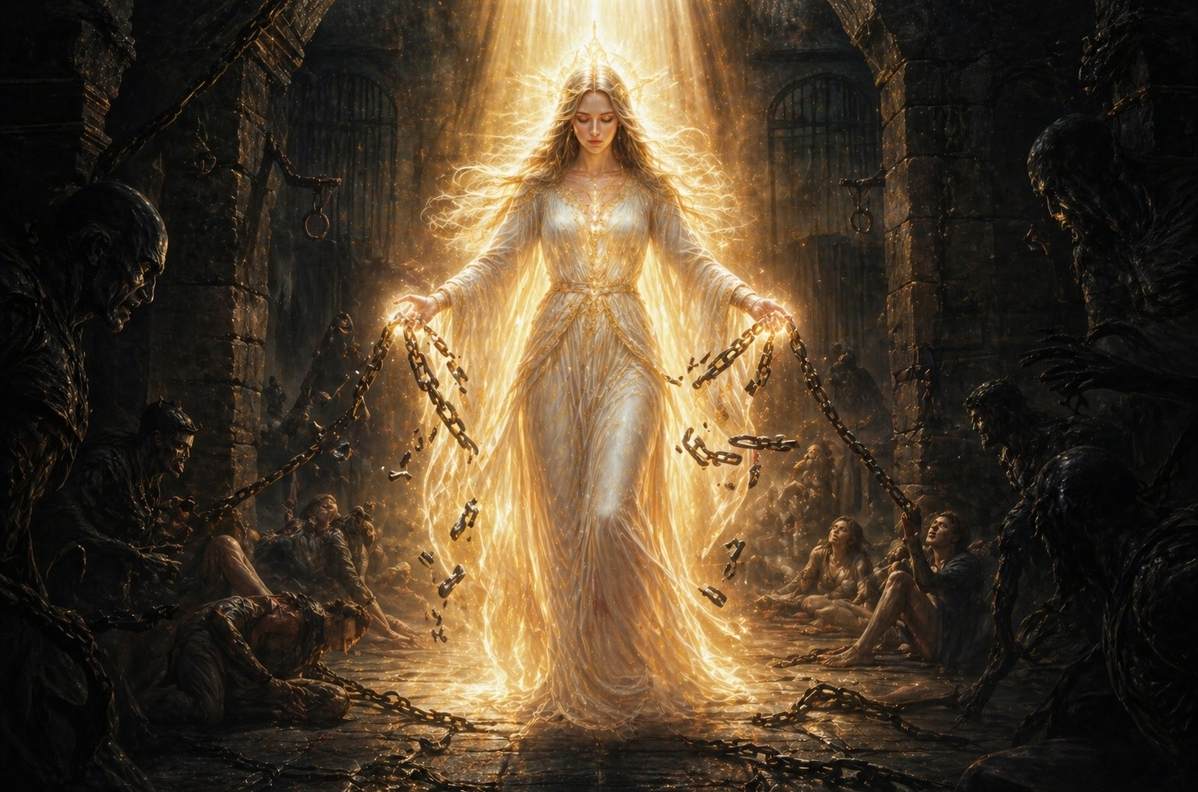
Throughout the three descents, Protennoia confronts and defeats the archontic powers not through violence but through revelation. “I entered into the midst of their prison, and I broke their chains” (NHC XIII,1 49:1-5) [2]. The archons are not destroyed but rendered powerless — their chains broken, their prison opened, their captives freed. The text presents a model of spiritual liberation that operates through knowledge rather than force, through exposure rather than combat [6].
“I made their ways desolate, and I destroyed their paths” (NHC XIII,1 49:5-10) [2]. The structures of domination are dismantled; the systems of control are broken. The way of ascent is cleared for those who would follow. This is not military victory but administrative dissolution — the archontic bureaucracy loses its legitimacy when the classified documents are released, the secret passwords are published, and the captives realise they were never legally detained [3].
“I revealed to them the ineffable things, and the unutterable things” (NHC XIII,1 50:1-5) [2]. The secret knowledge — the knowledge the archons tried to conceal behind procedural complexity and security clearances — is now available to all who have ears to hear. The defeat of the archons is thus epistemological rather than physical: they fall not because they are attacked but because they are exposed, their authority revealed as fraudulent, their jurisdiction revoked by higher decree [4].
The Five Seals and Ritual Practice
The Trimorphic Protennoia preserves one of the most important ritual elements in the Nag Hammadi Library: the Five Seals (penta sphragis), a Sethian baptismal initiation that corresponds to the fivefold structure of the text itself [7]. The seals are not merely metaphorical but represent actual liturgical practices — probably involving water, oil, and spiritual anointing — that transformed the initiate from psychic to pneumatic status, from archontic subject to divine citizen [4].
The text describes the seals as progressive initiations: the first seal corresponds to the Voice (awakening), the second and third to the Speech (instruction), and the fourth and fifth to the Word (transformation and ascent). Each seal marks a deeper level of engagement with the divine, a higher security clearance, a more complete liberation from the material jurisdiction [3]. “I gave them the way of ascent, and I showed them the path to the father” — the seals are the credentials that allow passage through the planetary checkpoints, the official stamps that declare the bearer exempt from archontic taxation [6].
Scholars have debated the precise content of the Five Seals ritual. Some see it as a water baptism combined with anointing; others as a visionary experience; still others as a series of contemplative practices leading to altered states of consciousness. What is clear is that the Trimorphic Protennoia was designed for ritual use — to be read aloud during initiation, to be experienced as well as understood, to transform the listener through the power of the spoken word [7].
Primary Source Citation: NHC XIII,1 49:1-10: “I entered into the midst of their prison, and I broke their chains. I made their ways desolate, and I destroyed their paths.” [2]
Reading Trimorphic Protennoia
This is the most systematic of the feminine divine texts — more structured than Thunder: Perfect Mind, more complete than Sophia of Jesus Christ. It demands sustained attention but rewards it with a comprehensive vision that integrates cosmology, soteriology, and mystical practice in a single narrative arc [6].
Read it as revelation, not merely as text. The voice that speaks is addressing you, calling you, inviting you to recognise what you are. “Do not be ignorant of me” (NHC XIII,1 35:5-10) [2]. The text is designed for oral performance, for ritual recitation, for the gradual opening of consciousness that comes from repeated exposure to its hypnotic self-declarations. Each reading reveals new layers: the first descent awakens, the second instructs, the third transforms [3].
And read it with attention to the three descents — the progressive revelation, the deepening engagement, the complete identification. This is the pattern of Gnostic soteriology: not sudden conversion but gradual awakening, not once-saved-always-saved but progressive initiation into deeper mysteries. The text offers not a single revelation but a curriculum, a course of study that moves from recognition to knowledge to union [4].
Why Trimorphic Protennoia Matters
This text is the most complete expression of the feminine divine in the Nag Hammadi Library. It offers a vision of God as mother, sister, bride — not metaphorically but ontologically, not symbolically but really. The feminine is not secondary, not derivative, not symbolic. It is primary, creative, salvific — the source of all, the means of return, the destination of the journey [6].
For contemporary seekers, particularly those drawn to the divine feminine, the Trimorphic Protennoia offers a theological foundation that challenges the patriarchal assumption that the divine speaks only in masculine registers. The text reveals that the originating intelligence of the cosmos is feminine — not as consort or helper but as the executive authority from whom all other authorities derive [3].
The text also reveals the sophistication of Gnostic Christology. The three descents offer an alternative to orthodox incarnation theology — one that emphasises teaching over sacrifice, presence over absence, the progressive over the instantaneous. The Word does not merely die and rise; she awakens, instructs, demonstrates, and guides. The saviour is not distant hero but intimate companion, not external rescuer but internal presence [4].
The Trimorphic Protennoia belongs in the canon of essential Nag Hammadi texts — alongside Thomas, Philip, Apocryphon of John, and Thunder. It is the feminine divine in her most complete Gnostic expression, the executive charter that establishes her jurisdiction over every department of the cosmic administration [3].

Frequently Asked Questions
What is the Trimorphic Protennoia?
The Trimorphic Protennoia (NHC XIII,1) is a third-century Sethian Gnostic text from the Nag Hammadi Library. Its title means ‘Three Forms of First Thought,’ referring to the divine Protennoia who manifests as Father (transcendent source), Mother (creative power), and Son (revealed saviour). The text narrates three descents — as Voice, Speech, and Word — to liberate the spiritual seed from archontic imprisonment.
Where was the Trimorphic Protennoia discovered?
The text was discovered in 1945 near Nag Hammadi, Egypt, as part of Codex XIII. Unlike other texts, its leaves were removed from the codex before burial and placed loose in the jar alongside the bound volumes. This unique codicological status has led to speculation about its special importance or intended separate circulation.
What are the three forms of Protennoia?
The three forms correspond to Father (transcendent source, invisible spirit), Mother (creative power, womb of all), and Son (revealed saviour, word and light). These are not separate gods but modalities of a single divine reality. Protennoia declares: ‘I am the father, I am the mother, I am the son,’ emphasising androgynous transcendence of gender distinctions.
What are the three descents in Trimorphic Protennoia?
The three descents are: (1) As Voice — the awakening call that disturbs the sleep of the ignorant; (2) As Speech — the teaching that instructs and liberates through secret knowledge; (3) As Word — the full incarnation that suffers, dies, and rises with humanity, demonstrating the path of ascent.
What are the Five Seals in Trimorphic Protennoia?
The Five Seals (penta sphragis) are a Sethian baptismal initiation preserved in the text, probably involving water, oil, and anointing. They correspond to the three descents and represent progressive transformation from psychic to pneumatic status. Each seal marks deeper engagement with the divine and higher clearance for the ascent through planetary spheres.
Is Trimorphic Protennoia a Sethian or Valentinian text?
The text is classified as Sethian due to its focus on the Five Seals, its archontic cosmology, and its three-descent structure. However, it shares features with Valentinian theology, particularly its sophisticated Christology and emphasis on the feminine divine. Some scholars see it as a bridge between Sethian and Valentinian traditions.
How does Trimorphic Protennoia present the feminine divine?
The text offers the most systematic presentation of the feminine divine in the Nag Hammadi Library. Protennoia (First Thought) is the originating divine intelligence who creates, reveals, and saves. The feminine is primary and co-eternal, not secondary or derivative. The Mother form is co-equal with the Father and Son, representing the active principle of divine self-expression.
Further Reading
These links connect the Trimorphic Protennoia to related resources within the ZenithEye library, offering contexts from feminine theology to Sethian ritual.
- Thunder: Perfect Mind — The feminine divine in poetic paradox, offering immediate resonance without systematic structure.
- Sophia of Jesus Christ — Divine Wisdom in dialogue format, another presentation of the feminine principle in early Christian diversity.
- Codex XIII: Trimorphic Protennoia — The codicological context of the text within its unique manuscript history.
- The Feminine Divine in Nag Hammadi — Sophia, Thunder, Protennoia, and the recovery of the goddess in Gnostic traditions.
- The Five Seals: Sethian Initiation — The ritual practice preserved in the Trimorphic Protennoia and related texts.
- Hypsiphrone and the Five Seals — Another text addressing the mysterious ascent through the Five Seals in Sethian tradition.
- Apocryphon of John — The classic Sethian creation myth that provides the cosmological backdrop for Protennoia’s descents.
- Nag Hammadi Library: Complete Reader’s Guide — The master index for navigating all forty-six tractates across thirteen codices.
- Gnostic Schools: Sethians and Valentinians — Understanding the theological currents that flow through the Trimorphic Protennoia.
- Nag Hammadi for Beginners — Where the Trimorphic Protennoia fits in a curated reading path for newcomers.
References and Sources
The following sources support the claims and quotations presented in this article. All citations to the Nag Hammadi Library represent direct translations from the Coptic text as established in the standard critical editions.
Primary Sources and Critical Editions
- [1] Robinson, J.M. (Ed.). (1990). The Nag Hammadi Library in English (3rd rev. ed.). HarperSanFrancisco. [Standard critical edition with Coptic text references for NHC XIII,1]
- [2] Layton, B. (1987). The Gnostic Scriptures: A New Translation with Annotations and Introductions. Doubleday. [Annotated translation of the Trimorphic Protennoia with theological analysis]
- [3] Meyer, M.W. (Ed.). (2007). The Nag Hammadi Scriptures: The International Edition. HarperOne. [Contemporary accessible translation with scholarly introduction to NHC XIII,1]
- [4] Turner, J.D. (2001). Sethian Gnosticism and the Platonic Tradition. Peeters. [Context for Sethian ritual and theological structure in the Trimorphic Protennoia]
- [5] Attridge, H.W. (Ed.). (1985). Nag Hammadi Codex I: Volume 1, Introduction and Text. Brill. [Critical edition with codicological analysis relevant to NHC XIII]
Scholarly Monographs and Commentaries
- [6] King, K.L. (2003). What Is Gnosticism? Harvard University Press. [Critical historiography and analysis of the feminine divine in Gnostic texts]
- [7] Schenke, H.-M. (1962). Der Gott ‘Mensch’ in der Gnosis: Ein religionsgeschichtlicher Beitrag zur Diskussion ueber die paulinische Anschauung von der Kirche als Leib Christi. Evangelische Verlagsanstalt. [Foundational study of Sethian anthropology and ritual]
- [8] Pagels, E. (1979). The Gnostic Gospels. Random House. [Foundational study of Nag Hammadi texts and their significance for early Christian diversity]
- [9] Thomassen, E. (2006). The Spiritual Seed: The Church of the “Valentinians”. Brill. [Comparative study of Valentinian and Sethian Christology]
- [10] Brakke, D. (2010). The Gnostics: Myth, Ritual, and Diversity in Early Christianity. Harvard University Press. [Comprehensive introduction to the social and religious contexts of Nag Hammadi texts]
Comparative Studies and Thematic Analyses
- [11] McGuire, A. (1994). “Thunder, Perfect Mind.” In E. Schussler Fiorenza (Ed.), Searching the Scriptures, Volume Two: A Feminist Commentary (pp. 39-54). Crossroad. [Comparative analysis of feminine divine voice in Nag Hammadi texts]
- [12] Williams, M.A. (1996). Rethinking “Gnosticism”: An Argument for Dismantling a Dubious Category. Princeton University Press. [Critical historiography relevant to the classification of Sethian materials]
- [13] Pearson, B.A. (1990). Gnosticism, Judaism, and Egyptian Christianity. Fortress Press. [Comparative study of the Jewish and Egyptian contexts of Sethian literature]
- [14] Waldstein, M., & Wisse, F. (1995). The Apocryphon of John: Synopsis of Nag Hammadi Codices II,1; III,1; and IV,1 with BG 8502,2. Brill. [Critical synopsis for comparative study with the Trimorphic Protennoia’s cosmology]
- [15] Jonas, H. (2001). The Gnostic Religion: The Message of the Alien God and the Beginnings of Christianity (3rd ed.). Beacon Press. [Classic philosophical study with extensive treatment of Sethian soteriology]