Deciphering the Esoteric Meaning
The term “esoteric” carries with it an air of mystery that has captivated seekers, scholars, and spiritual aspirants for millennia. Derived from the Greek esōterikos–meaning “inner” or “further inside”–this concept points toward knowledge that resides at the very edge of collective human understanding. Unlike exoteric teachings, which are openly available and widely disseminated, esoteric wisdom requires dedication, initiation, and often a profound transformation of consciousness to access. It is not hidden through elitism but through the nature of consciousness itself: some truths cannot be told; they must be grown into.
Historically, the esoteric was deeply intertwined with ancient Greek philosophy, which sought to unveil the hidden architecture of the universe. It formed the mystical heart of numerous religious traditions, offering pathways to direct experience of the divine that transcended dogma and ritual. Today, whilst less shrouded in myth and magic, the esoteric continues to represent humanity’s relentless pursuit of understanding that which lies beyond the veil of ordinary perception. This article explores the origins of esoteric thought, its evolution across different philosophical and spiritual traditions, and its enduring impact on both individual seekers and broader society.
Table of Contents
- Historical Foundations: From Delphi to the Renaissance
- Distinguishing Esoteric from Exoteric
- Domains of Esoteric Exploration
- The Esoteric Temperament: Minds Beyond the Mainstream
- The Contemporary Relevance of Esoteric Wisdom
- The Perennial Invitation
- Frequently Asked Questions
- Further Reading
- References and Sources
Historical Foundations: From Delphi to the Renaissance
Ancient Greece: The Birthplace of Inner Wisdom
In classical antiquity, the connection between esoteric meaning and philosophical inquiry was paramount. Greek philosophers such as Plato and Pythagoras maintained that true wisdom–sophia–could only emerge through rigorous introspection and the systematic study of both self and cosmos. For these thinkers, esoteric knowledge was not merely intellectual accumulation but a transformative process of awakening. Pythagoras’s school at Croton operated as a mystery cult as much as a philosophical academy, with initiates bound by silence and graduated through years of purification before receiving the higher teachings. Plato’s allegory of the cave describes precisely this structure: the prisoner who turns from shadow to light undergoes not merely a change of opinion but a painful reorientation of the entire perceptual apparatus.
The Oracle at Delphi stands as one of history’s most potent symbols of esoteric transmission. Pilgrims journeyed to this sacred site seeking counsel from the Pythia, the priestess who served as mouthpiece for the god Apollo. Yet the Oracle’s pronouncements were notoriously ambiguous–cryptic riddles requiring specialised interpretation. This deliberate obscurity ensured that only those possessing the necessary spiritual preparation and intellectual discernment could unlock the deeper truths concealed within the veiled utterances. The famous inscription Gnothi seauton (Know thyself) above the temple entrance was not a suggestion for self-improvement but a warning: without self-knowledge, no oracle can be understood; with it, no oracle is necessary.
The Medieval Alchemical Tradition
During the Middle Ages, esoteric pursuits found expression through alchemy–a discipline that modernity has too often dismissed as primitive chemistry. In truth, medieval alchemists were sophisticated philosopher-scientists who viewed material transformation as a mirror for spiritual evolution. Their quest for the Philosopher’s Stone–that legendary substance capable of transmuting base metals into gold and conferring immortality–was never merely about material gain. Rather, it represented the soul’s potential for perfection and the alchemist’s own inner transmutation from leaden ignorance to golden enlightenment.
The alchemical opus proceeded through stages–nigredo (blackening), albedo (whitening), citrinitas (yellowing), and rubedo (reddening)–each representing both a chemical process and a psychological transformation. The alchemist did not merely observe these changes in the retort but experienced them in the psyche. The laboratory was the body; the experiment was the soul. This understanding of alchemy as inner work, developed most fully by Carl Jung in the twentieth century, recovers what the materialist reading had forgotten: that the alchemists were psychologists before psychology existed, mapping the territory of the soul with the only tools available–fire, water, salt, and mercury.
Renaissance Hermeticism and the Recovery of Ancient Wisdom
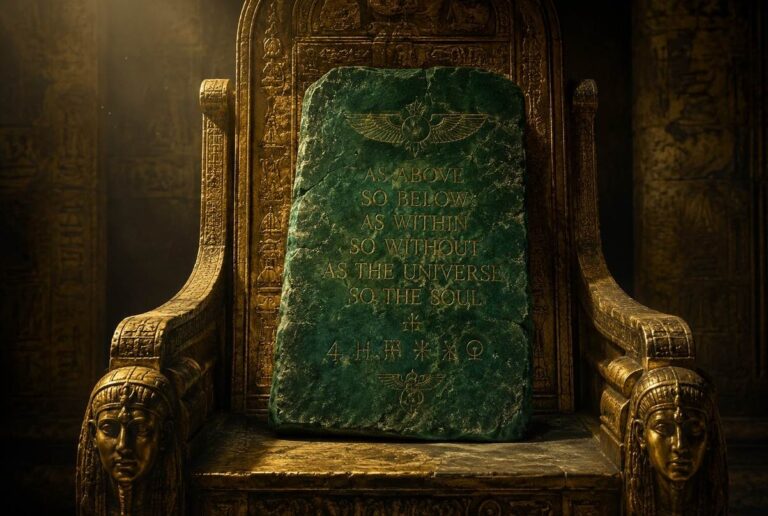
The Renaissance witnessed a remarkable resurgence of esoteric interest, particularly through the Hermetic tradition. Attributed to the mythical figure of Hermes Trismegistus (“Thrice-Greatest Hermes”), this body of teachings synthesised Egyptian, Greek, and Jewish mystical elements into a coherent spiritual philosophy. In 1462, the Italian physician, priest, and scholar Marsilio Ficino was commissioned by Cosimo de’ Medici to translate the Corpus Hermeticum–a collection of texts attributed to Hermes Trismegistus that had recently arrived in Florence. Ficino’s translation, completed in 1463, was reprinted at least twenty-two times over the next century and a half, catalysing a revolution in European thought.
Renaissance scholars such as Ficino and Giovanni Pico della Mirandola championed Hermetic wisdom, arguing that hidden knowledge could be accessed through contemplative practice, meditation upon sacred symbols, and the careful study of ancient texts. Pico’s audacious 900 Theses (1486), proposed when he was just twenty-three years old, attempted to synthesise all schools of thought–Platonic, Aristotelian, Pythagorean, Kabbalistic, and Christian–into a single philosophical system. The Church condemned several theses as heretical, but the intellectual ambition revealed the Renaissance conviction that truth was not the monopoly of any single tradition but the common inheritance of all who sought it with sufficient rigour and humility.
Distinguishing Esoteric from Exoteric
Understanding the esoteric requires clarity regarding its counterpart: the exoteric. These terms delineate not merely different subjects, but fundamentally different modes of knowledge transmission and reception. The distinction applies across diverse fields. In science, for instance, cutting-edge theoretical physics–string theory, quantum entanglement, multiverse hypotheses–might be considered esoteric due to its inaccessibility to non-specialists. Conversely, basic Newtonian mechanics taught in schools represents exoteric knowledge: widely disseminated and readily comprehensible.
Esoteric Knowledge
Access: Private, restricted access.
Requirement: Requires initiation or preparation.
Nature of Content: Often symbolic or allegorical.
Impact on Knower: Transformative of the knower–focuses on inner transformation or gnosis.
Core Concern: Concerned with ultimate truths–hidden or spiritual meanings.
Exoteric Knowledge
Access: Public, widely available.
Requirement: Requires no special preparation.
Nature of Content: Typically literal and direct–superficial or readily apparent meaning.
Impact on Knower: Informative only.
Core Concern: Concerned with practical application–surface-level teachings or social discourse.
The distinction is not a hierarchy of value but a taxonomy of function. Exoteric knowledge builds the vessel; esoteric knowledge fills it with light. Neither is sufficient without the other. The danger arises when exoteric knowledge claims to be complete, or when esoteric knowledge refuses to engage with the practical world. The integrated seeker moves between both, using exoteric discipline to stabilise the insights that esoteric practice reveals.
Domains of Esoteric Exploration
The landscape of esoteric study is vast and varied, encompassing numerous traditions and practices that share a common recognition: spiritual truth cannot be fully captured in doctrinal formulations but must be directly experienced through disciplined practice under qualified guidance.
Esoteric Spiritual Traditions
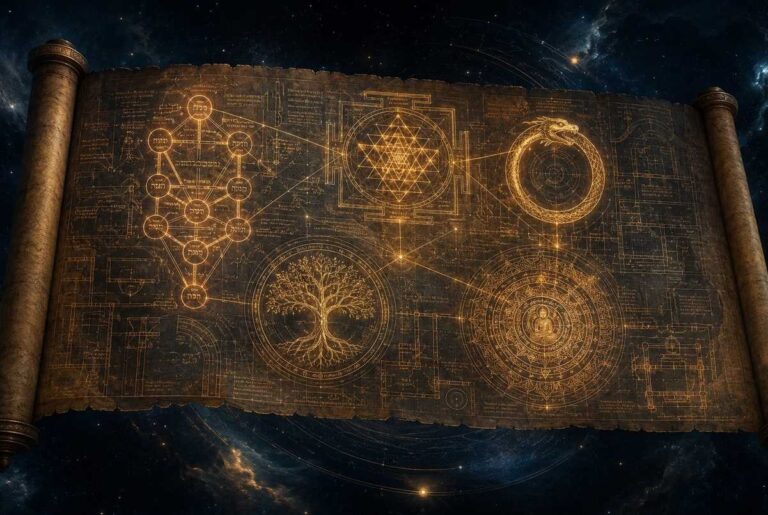
Many of the world’s religions harbour inner teachings reserved for dedicated practitioners. Kabbalah (Judaism) offers the mystical interpretation of Hebrew scriptures, exploring the nature of the divine through the symbolic architecture of the Tree of Life (Etz Chaim). Sufism (Islam) represents the mystical dimension of Islam, emphasising direct experiential knowledge of God (ma’rifa) through practices such as dhikr (remembrance) and sama (sacred listening). Tantra (Hinduism and Buddhism) provides sophisticated systems of practice utilising ritual, meditation, and symbolic mapping of the subtle body to achieve spiritual liberation (moksha or nirvana).
Secret Societies and Fraternal Orders
Organisations such as Freemasonry, the Rosicrucians, and historically the Illuminati (Bavarian and otherwise) have preserved esoteric teachings through graded systems of initiation. These societies employ ritual, symbolism, and oath-bound secrecy to transmit wisdom across generations. Whilst popular culture often portrays such groups through a lens of conspiracy and suspicion, their historical function has typically involved the preservation of philosophical and spiritual knowledge during periods of orthodox intolerance. The secrecy was not a weapon but a shield–protecting fragile insights from those who would misunderstand or destroy them.
Ancient Knowledge and Archaeo-Mysticism
The study of antiquity frequently reveals practices and beliefs that appear esoteric to modern sensibilities. The decipherment of Egyptian hieroglyphs following Jean-François Champollion’s breakthrough announcement on September 27, 1822, opened access to texts describing complex afterlife journeys and transformative rituals. Similarly, the recovery of Sumerian and Babylonian tablets has illuminated Mesopotamian cosmologies and temple practices that were once the exclusive province of priestly elites. These recoveries demonstrate that what we call “esoteric” was often, in its own time, the standard theology of a civilisation–hidden from us not by ancient design but by the accidents of history and the loss of language.
Artistic Esotericism: The Surrealist Example
The twentieth century witnessed the emergence of explicitly esoteric artistic movements. Surrealism, founded by André Breton in 1924, positioned itself as a countercultural response to the dominance of rationalism and industrial technology. Drawing upon occult symbolism, alchemical imagery, and psychoanalytic theory, the Surrealists sought to liberate creativity from conscious control. Victor Brauner’s painting “The Surrealist” (1947) depicts the artist as magus–borrowing motifs from the tarot’s Juggler-Magician card, with the figure standing behind a magical table displaying the traditional signs of the four suits. The painting is a visual testament to the movement’s self-conception as heirs to the esoteric tradition, wielding imagination as the juggler manipulates his baton.
The Esoteric Temperament: Minds Beyond the Mainstream
To describe a person as “esoteric” suggests more than mere interest in obscure subjects. It implies a distinctive mode of perception–an orientation toward the hidden dimensions of reality that renders the individual somewhat alien to conventional society. Such persons may possess unusual intuitive capacities, idiosyncratic belief systems, or simply a refusal to accept surface explanations. The esoteric temperament is not superiority but difference: the capacity to hold questions that others have learned to suppress, to tolerate ambiguity that others find unbearable, and to follow threads of meaning that lead away from the consensus.
The tragic case of Giordano Bruno (1548–1600) illustrates both the risks and the prophetic nature of esoteric insight. This Dominican friar turned philosopher espoused cosmological views–including the infinity of the universe and the plurality of worlds–that directly contradicted Aristotelian physics and Catholic doctrine. Bruno’s embrace of Hermetic philosophy and his denial of the Trinity led to his condemnation as a heretic. He was burned at the stake in Rome’s Campo de’ Fiori, a martyr to intellectual freedom. Yet history has vindicated many of Bruno’s “esoteric” speculations. His vision of an infinite cosmos anticipated modern cosmology by centuries, suggesting that today’s heresies may become tomorrow’s orthodoxies–and that the esoteric temperament, however persecuted, often sees around corners that the mainstream cannot yet approach.
The Contemporary Relevance of Esoteric Wisdom
Carl Jung and the Psychology of the Deep
The Swiss psychiatrist Carl Gustav Jung (1875–1961) demonstrated that esoteric exploration could yield insights of profound scientific and therapeutic value. Jung’s concept of the collective unconscious–a stratum of the psyche containing inherited archetypal patterns–echoed ancient esoteric teachings regarding a universal mind or anima mundi. Through his investigation of alchemical symbolism, Gnostic texts, and Eastern meditation systems, Jung identified archetypes: universal patterns such as the Mother, the Father, the Shadow, and the Self that structure human experience across cultures. His approach validated the esoteric premise that symbolic knowledge, properly interpreted, reveals fundamental truths about consciousness and reality.
Jung’s engagement with Gnostic materials represents perhaps the most significant modern resonance of these ancient traditions. He recognised in Gnostic mythology a sophisticated map of the psyche–a description of interiority that anticipated his own discoveries regarding the unconscious, individuation, and archetypes. The Gnostic distinction between the spiritual spark (pneuma) and the counterfeit spirit parallels Jung’s differentiation between the Self and the ego-complex. Where the twentieth century rediscovered the map of interiority that Gnostics drafted millennia earlier, Jung served as the cartographer who translated ancient symbols into the language of modern psychology.
Srinivasa Ramanujan: The Mathematician and the Goddess
The story of Srinivasa Ramanujan (1887–1920) offers a striking example of esoteric cognition yielding empirical discovery. This self-taught Indian mathematician attributed his extraordinary insights to the Hindu goddess Namagiri, who he claimed appeared to him in dreams and dictated complex mathematical formulae. Working with G. H. Hardy at Cambridge, Ramanujan provided rigorous proofs for many of these “revealed” theorems, contributing foundational work to number theory, infinite series, and modular forms. His election as a Fellow of the Royal Society–one of the youngest in history–suggests that esoteric sources of knowledge, however inexplicable by conventional standards, can produce results of undeniable objective value.
The Ramanujan case challenges the materialist assumption that knowledge must come from either rational deduction or empirical observation. It suggests a third source: the intuitive download, the revealed insight, the pattern that arrives complete rather than being constructed step by step. Whether one interprets this as contact with a deity, access to the collective unconscious, or the exceptional functioning of a prodigious brain, the phenomenon remains: esoteric cognition can generate exoteric results that satisfy the most rigorous standards of verification.
The Perennial Invitation
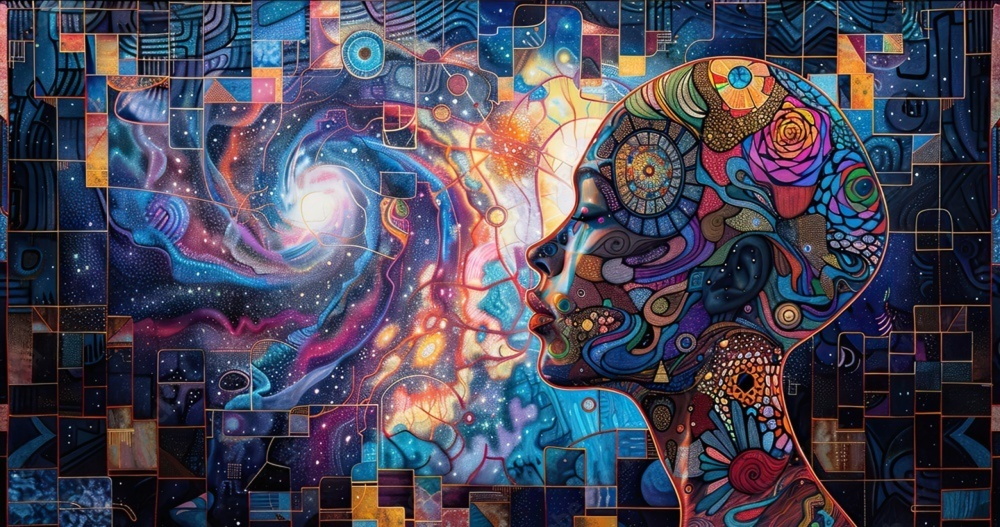
The esoteric tradition represents humanity’s refusal to accept that reality is exhausted by appearances. From the shadowed porticoes of Delphi to the dream-state mathematics of Ramanujan, it constitutes an unbroken current of seeking–an acknowledgement that profound truths require profound preparation to receive. The path is not a rejection of reason but its transcendence: the rational mind builds the ladder; the esoteric mind climbs it; the awakened mind realises there was never a wall.
In an age of information overload and surface-level engagement, the esoteric reminds us that certain knowledge remains veiled not through elitism, but through the nature of consciousness itself. Some truths cannot be told; they must be grown into. The path remains open for those possessing sufficient curiosity, courage, and commitment to venture beyond the familiar horizons of the exoteric world. As the Hermetic tradition holds: the lips of wisdom are closed, except to the ears of understanding. The invitation is perennial; the response is always now.

Frequently Asked Questions
What does ‘esoteric’ actually mean?
The term ‘esoteric’ derives from the Greek esoterikos, meaning ‘inner’ or ‘further inside.’ It refers to knowledge that requires dedication, initiation, or transformation of consciousness to access, as opposed to ‘exoteric’ knowledge, which is openly available and widely disseminated. Esoteric wisdom is often symbolic or allegorical, concerned with ultimate truths and inner transformation (gnosis), rather than practical application or surface-level information.
What is the difference between esoteric and exoteric knowledge?
Esoteric knowledge is private, requires preparation or initiation, is often symbolic, and is transformative of the knower. Exoteric knowledge is public, requires no special preparation, is typically literal, and is merely informative. The distinction is not a hierarchy of value but a taxonomy of function: exoteric knowledge builds the vessel; esoteric knowledge fills it with light. Both are necessary for integrated understanding.
Is alchemy just primitive chemistry or something more?
Alchemy was never merely primitive chemistry. Medieval alchemists were philosopher-scientists who viewed material transformation as a mirror for spiritual evolution. The quest for the Philosopher’s Stone represented the soul’s potential for perfection. Carl Jung demonstrated that alchemical stages–nigredo, albedo, citrinitas, rubedo–correspond to psychological processes of transformation. The laboratory was the body; the experiment was the soul.
Who was Hermes Trismegistus and is he real?
Hermes Trismegistus (‘Thrice-Greatest Hermes’) is a mythical figure combining the Greek god Hermes with the Egyptian god Thoth. The texts attributed to him–the Corpus Hermeticum–were actually written in Alexandria between the 1st and 3rd centuries CE, synthesising Egyptian, Greek, Jewish, and early Christian elements. Though not a historical person, the figure embodies the synthesis of traditions that characterises the Hermetic tradition.
What is the significance of Carl Jung’s work for esotericism?
Jung’s concept of the collective unconscious and his study of alchemical symbolism, Gnostic texts, and Eastern meditation validated the esoteric premise that symbolic knowledge reveals fundamental truths about consciousness. He identified archetypes–universal patterns such as the Mother, the Shadow, and the Self–that structure human experience across cultures. Jung served as a bridge between ancient esoteric maps and modern psychology, demonstrating that these traditions describe interiority with precision.
Can esoteric knowledge be dangerous?
Esoteric knowledge can be destabilising when approached without proper preparation or guidance. The dissolution of ordinary frameworks of meaning–whether through mystical experience, psychedelic states, or intensive meditation–can produce psychological crisis rather than liberation. Historical esoteric traditions employed initiation, gradual exposure, and teacher-student relationships precisely to manage these risks. The contemporary seeker should approach advanced practices with caution, discernment, and professional support when needed.
How can I begin exploring esoteric traditions safely?
Begin with established contemplative practices–meditation, mindful awareness, sacred reading–that build the foundation of attention and self-knowledge without requiring advanced techniques. Study the history and context of traditions before attempting their practices. Seek qualified guidance where possible. Start with exoteric discipline (regular practice, ethical conduct, intellectual study) before attempting esoteric methods. The path is not a race; patience is itself a practice.
Further Reading
These links connect the deciphering of esoteric meaning to related resources within the ZenithEye library, offering context on Hermeticism, Kabbalah, contemplative practice, and the broader landscape of hidden wisdom.
- Hermetic Connections in the Nag Hammadi Library — How the Hermetic tradition intersects with Gnostic scriptures and Egyptian wisdom.
- The Tree of Life: Kabbalistic Architecture Explained — The symbolic architecture of Jewish mysticism and its map of divine emanation.
- Modern Resonances: 9 Ways Ancient Gnosis Illuminates Crisis — How Jung and contemporary depth psychology recover the esoteric map of interiority.
- Contemplative Techniques: The Thread’s Practical Foundation — Methods from the world’s mystical traditions for training the attention that esoteric practice requires.
- The All-Seeing Eye Decoded: From Ancient Egypt to Freemasonry — The evolution of esoteric symbolism across cultures and centuries.
- The Living Thread: How Forbidden Knowing Survives — The historical mechanisms by which esoteric knowledge has been preserved through persecution and suppression.
- Nag Hammadi Library: Complete Guide to 46 Gnostic Scriptures — Primary-source access to the texts that revolutionised our understanding of ancient esotericism.
- Archons: The Ruling Powers That Shape Reality — Understanding the forces that constrain consciousness and the esoteric path of liberation.
- The Alchemy of Attention: 4 Contemplative Techniques — Practical methods for cultivating the attention that precedes and sustains esoteric insight.
- The Thread: Five Gateways to Direct Knowing — The complete map of ZenithEye’s pillars, from historical survival of Gnosis to contemplative practice.
References and Sources
The following sources support the claims and historical data presented in this article. Primary research follows standard academic conventions; esoteric sources by original publication date where available.
Primary Research and Critical Reviews
- Cambridge Dictionary. (n.d.). “Esoteric.” Retrieved from https://dictionary.cambridge.org/
- Kingsley, P. (1995). Ancient Philosophy, Mystery, and Magic: Empedocles and Pythagorean Tradition. Oxford: Clarendon Press.
- Bowden, H. (2005). Classical Athens and the Delphic Oracle: Divination and Democracy. Cambridge: Cambridge University Press.
- Principe, L. M. (2013). The Secrets of Alchemy. Chicago: University of Chicago Press.
- Yates, F. A. (1964). Giordano Bruno and the Hermetic Tradition. London: Routledge & Kegan Paul.
Renaissance and Hermetic Studies
- Cordry, C. (2024). The Book That Ignited a Renaissance. Substack.
- Van Woercom, M. (2021). Marsilio Ficino and His Translation of Corpus Hermeticum VI. Final Thesis, KNAW.
- Copenhaver, B. P. (2025). 900 Conclusions. Cambridge, MA: Harvard University Press.
- Faivre, A. (1994). Access to Western Esotericism. Albany: State University of New York Press.
Comparative Studies and Thematic Analyses
- Idel, M., & McGinn, B. (Eds.). (2016). Mystical Union in Judaism, Christianity, and Islam: An Ecumenical Dialogue. New York: Continuum.
- Bogdan, H. (2007). Western Esotericism and Rituals of Initiation. Albany: SUNY Press.
- Hornung, E. (2001). The Secret Lore of Egypt: Its Impact on the West. Ithaca: Cornell University Press.
- Choucha, N. (1991). Surrealism and the Occult. Rochester: Destiny Books.
- Rowland, I. D. (2008). Giordano Bruno: Philosopher/Heretic. Chicago: University of Chicago Press.
- Jung, C. G. (1968). Psychology and Alchemy (2nd ed.). Princeton: Princeton University Press. (Original work published 1944)
- Kanigel, R. (1991). The Man Who Knew Infinity: A Life of the Genius Ramanujan. New York: Charles Scribner’s Sons.
Safety Notice: This article explores esoteric frameworks for understanding consciousness and spirituality. It does not constitute medical, psychological, or spiritual advice. If you experience psychological distress, dissociation, or symptoms of psychosis related to spiritual practice, please contact professional emergency services or a trauma-informed therapist. Contemplative practices complement but do not replace clinical mental health treatment.