
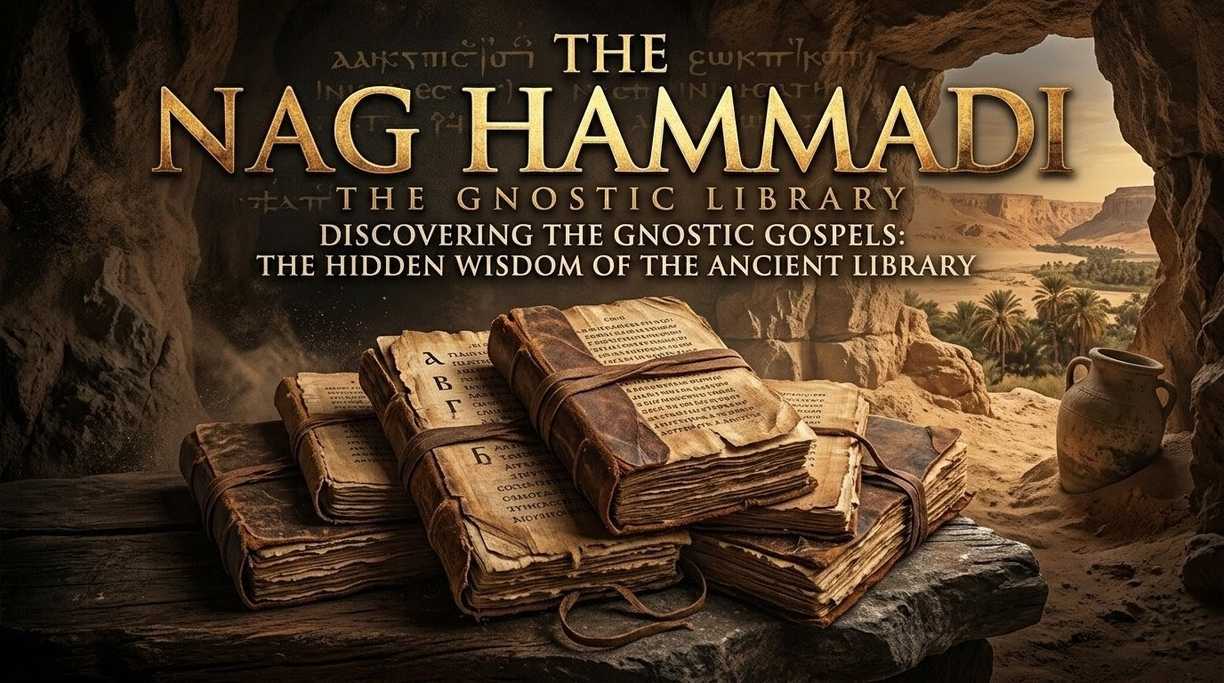
Nag Hammadi for Academics: A Scholarly Approach
Nag Hammadi for Academics demands more than cursory reading—it requires rigorous methodological frameworks that treat these forty-six tractates as historical artefacts embedded in complex material, linguistic, and social contexts. The discovery at Nag Hammadi in 1945 did not merely add new texts to the corpus of early Christian literature; it fundamentally destabilised established narratives about the development of Christian orthodoxy by revealing the administrative complexity of second- through fourth-century theological diversity. For scholars approaching these codices as objects of philological, codicological, and historical-critical investigation, this pathway provides the technical protocols necessary for serious academic engagement. [1][2]
The academic approach operates as archival reconstruction—reassembling not merely the texts but the entire material and social apparatus of their production, transmission, and burial. This requires familiarity with Coptic philology (Sahidic dialect), the history of religions school (Religionsgeschichtliche Schule), codicological analysis of leather-bound papyrus manufacture, and the contested historiographical category of “Gnosticism” itself. The pathway examines the physical form of the codices (quire formation, scribal hands, binding techniques), the conservation history that has preserved them, and the scholarly debates—such as the Thomas Question and the Valentinus attribution—that continue to reshape the field. [3][4]
Contents
- Academic Methodologies: What Is This Path?
- Textual Criticism and the Coptic Language
- Codicology and Material Culture
- The History of Religions Context
- Theological and Philosophical Analysis
- Gender and Social History
- Key Scholarly Debates: Thomas, Valentinus, Sethianism
- Research Methodologies and Digital Humanities
- The Ongoing Revolution: Contemporary Scholarship
- Frequently Asked Questions
- Further Reading
- References and Sources
Academic Methodologies: What Is This Path?
Definition: The Scholarly Archive
Nag Hammadi for Academics is a methodological pathway through the 46 tractates of the Nag Hammadi Library (13 codices, discovered 1945) designed for scholars employing historical-critical, philological, codicological, and social-historical approaches. It treats the texts not as spiritual curiosities or theological alternatives but as material artefacts embedded in fourth-century Egyptian monastic culture, requiring expertise in Coptic (Sahidic dialect), textual criticism (lectio difficilior), and the history of religions school. The pathway addresses physical codicology (papyrus manufacture, quire formation, scribal hands), the contested category of “Gnosticism,” scholarly debates (Thomas’s independence, Valentinian diversity, Sethianism as construct), and digital humanities approaches (Coptic Scriptorium, IIIF manuscript images).
The academic approach distinguishes itself from the beginner’s path (experiential engagement) and the theologian’s path (doctrinal analysis) by insisting on material and institutional grounding. The Nag Hammadi codices are not disembodied ideas but leather-bound papyrus books manufactured in monastic scriptoria, buried c. 360–400 CE (likely at the Pachomian monastery of Chenoboskion), and subjected to sixteen centuries of environmental degradation before modern conservation. Understanding these administrative details—the bureaucratic procedures of ancient textual production and modern archival preservation—is prerequisite to any serious scholarly claim. [5][6]
Textual Criticism and the Coptic Language
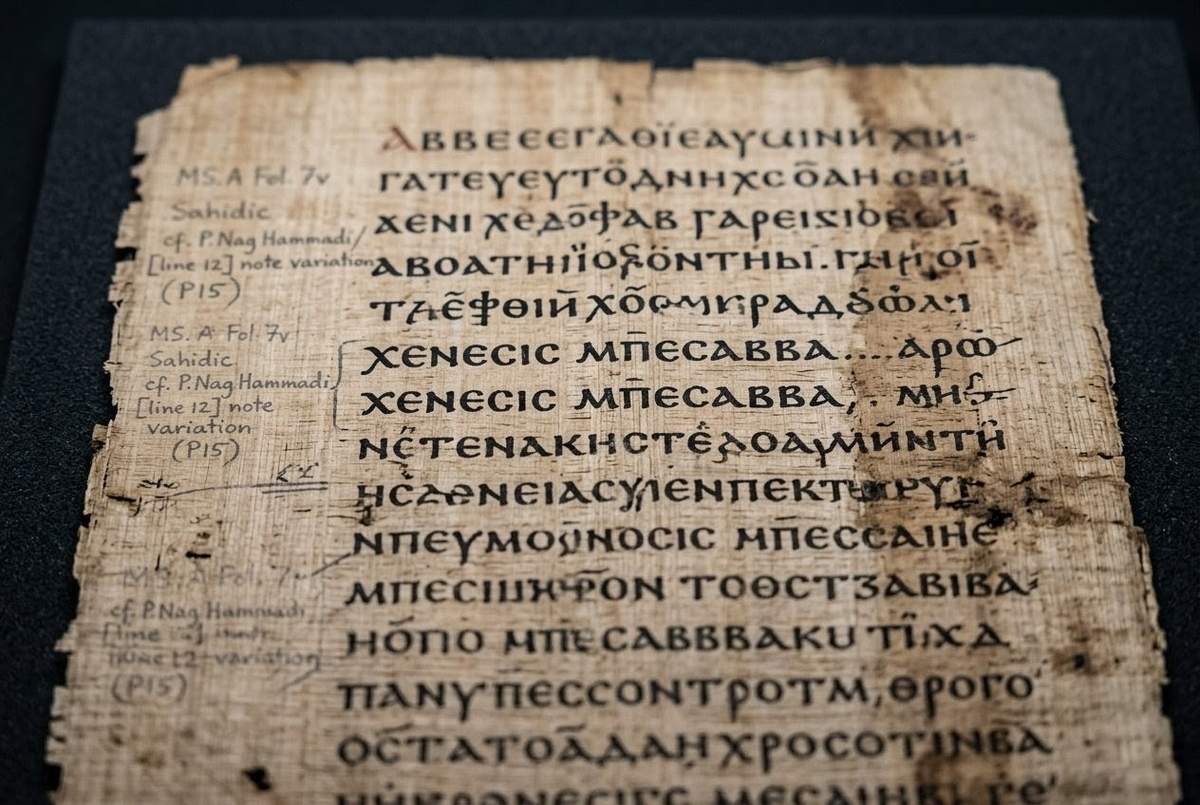
The Nag Hammadi texts survive exclusively in Coptic translation, primarily in the Sahidic dialect of Upper Egypt. This presents immediate philological challenges: the Coptic versions represent translations (often multiple generations removed) from Greek originals, some possibly composed in Greek, others in Syriac or Semitic languages. The scholar must attend to lectio difficilior—the more difficult reading is often original, since scribes tend to simplify rather than complicate. [7][8]
Primary Source Citation: The multiple versions of the Apocryphon of John (three in the library—NHC II,1; III,1; IV,1—plus a fourth in the Berlin Codex 8502,2) provide a laboratory for studying textual transmission. Longer versions are not necessarily later; they may represent expansion of earlier terse originals, or preservation of material abridged in other branches. The short version (NHC III,1/BG 8502,2) may represent an earlier stratum (c. 150 CE), while the long version (NHC II,1/IV,1) adds the Zoroastrian melothesia (II 15:29–19:11) and Pronoia monologue (II 30:11–31:25) by the late second century.
Philological tools are essential: Bentley Layton’s Coptic Grammar and Thomas O. Lambdin’s Introduction to Sahidic Coptic remain standard equipment. The Coptic etymological approach—tracing words back to Egyptian, Greek, or Semitic roots—reveals theological nuances invisible in English translation. The term ⲛⲟⲩⲧⲉ (noute, “god”), for example, carries Egyptian theological resonance even in Christian contexts, encoding layers of administrative meaning from pharaonic temple theology to monastic scribal practice. [9][10]
Codicology and Material Culture
The physical form of the Nag Hammadi codices matters as much as their content. These are leather-bound papyrus books (codices, not scrolls), dating to the mid-fourth century CE, manufactured using Coptic binding techniques (chain stitches through the spine). Their physical characteristics reveal monastic production contexts—likely the Pachomian monastery of Chenoboskion near the burial site. [11][12]
Codicological analysis examines quire formation (5-7 bifolia creating gatherings of 20-28 pages), pagination (rare in original; modern scholarly pagination standard), scribal hands (at least 50 distinct hands identified), and binding techniques (leather thongs through cover boards). The conservation history traces how these materials survived sixteen centuries of Egyptian climate, agricultural disturbance, and sometimes heavy-handed modern conservation (1950s glass-plate pressing versus 1970s humidification techniques). [13][14]
The cartonnage—papyrus scraps glued together to form the covers—contains documentary texts (contracts, letters, accounts) providing dating evidence and social context. These mundane administrative documents, often overlooked by theologians, contain crucial evidence for the historical placement of the library, functioning as the “filing system” that anchors the sacred texts in fourth-century Egyptian bureaucracy. [15][16]

The History of Religions Context
Hans Jonas’s The Gnostic Religion (1958) established the phenomenological approach, seeking the “spiritual principle” underlying diverse mythological expressions—existentialist interpretation emphasising the “alien God” and the “human situation.” More recent scholarship, represented by David Brakke’s The Gnostics (2010), has shifted toward social history: not “What is Gnosticism?” but “Who were the Gnostics?” and “What did they do?” This represents a fundamental reorientation from essence to function, from theology to sociology. [17][18]
The academic must navigate the contested category of “Gnosticism” itself. Michael Allen Williams’s Rethinking “Gnosticism” (1996) and David Brakke’s What Is Gnosticism? argue that the term obscures more than it reveals, grouping together diverse texts (Valentinian, Sethian, Hermetic) with little historical connection. The Nag Hammadi library is not a “Gnostic bible” but a collection of disparate writings assembled for monastic study and spiritual exercise—an administrative miscellany rather than a systematic canon. [19][20]
Religionsgeschichtliche analysis traces diverse roots: Jewish apocalyptic (Enochic ascent traditions), Middle Platonist philosophy (emanation, hypostases, noetic realms), Egyptian temple theology (Thoth-Hermes wisdom, demonology), Christian kerygma (Johannine Logos, Pauline mysticism), and Persian cosmic dualism (light/darkness, Archons). The Apocryphon of John weaves these threads into a coherent (if complex) administrative narrative—Genesis exegesis, Platonic ontology, and Egyptian demonology functioning as cross-departmental collaboration in cosmological speculation. [21][22]
Theological and Philosophical Analysis
Despite social history’s ascendancy, the Nag Hammadi texts remain significant for history of theology. The Tripartite Tractate offers sophisticated Trinitarian engagement contemporary with the Council of Nicaea (325 CE), presenting the Logos in three dispensations: with angels as fellow angel, with humanity as human being, with the Pleroma as perfect Son. This is not adoptionism but complex divine accommodation—more radical than Chalcedon yet philosophically coherent. [23][24]
Primary Source Citation: “The Father is the source of all things, the unbegotten, the incomprehensible.” Valentinian Exposition (NHC XI,5) demonstrates the extreme negative theology (apophatic language) approaching later Christian mysticism—philosophical sophistication contemporaneous with Nicene orthodoxy but developing alternative administrative protocols.
Philosophical analysis reveals engagement with contemporary Platonism. The doctrine of the aeons, the Pleroma’s structure, and the anthropology of the “spark” echo Middle Platonic concerns. Scholars like John Turner and Einar Thomassen trace specific philosophical vocabularies, demonstrating these texts participate in the philosophical koine of the Roman Empire—not “mythological” in a pejorative sense but systematic metaphysics employing narrative form. [25][26]
Gender and Social History
The prominence of feminine imagery in texts like Thunder: Perfect Mind and the Gospel of Philip has generated extensive feminist scholarship. Elisabeth Schüssler Fiorenza, Karen King, and Antti Marjanen examine women’s roles in these communities, debating whether they reflect actual female leadership or symbolic appropriation of feminine imagery for male theological projects. [27][28]
Social history investigates the communities reading these texts. Were they elitist circles of “spirituals” (pneumatikoi) within larger Christian congregations, as Valentinian sources suggest? Were they monastic communities engaged in contemplative ascent, as Allogenes and Zostrianos imply? Or marginal sectarians rejected by the emerging catholic church? The administrative question concerns institutional location: where did these texts function within fourth-century Christianity’s bureaucratic hierarchy—mainstream, heterodox, or subversive? [29][30]

Key Scholarly Debates: Thomas, Valentinus, Sethianism
The Thomas Question
Is the Gospel of Thomas independent of the Synoptic Gospels, preserving authentic Jesus tradition, or a second-century composition dependent on canonical texts? The Jesus Seminar and scholars like John Dominic Crossan argue for independence and early dating (c. 50–100 CE); others like Simon Gathercole emphasise secondary Syriac-dependent character (c. 120–140 CE). This debate affects how Thomas functions in historical Jesus research—primary source or tertiary elaboration. [31][32]
Valentinus and Valentinianism
Did Valentinus write the Gospel of Truth? Scholarly consensus has shifted away from this attribution, emphasising instead the diversity of “Valentinian” traditions. Ismo Dunderberg’s work reveals a spectrum from “orthodox” to radical Valentinianism, questioning whether “Valentinian” designates a school, a loose network, or a modern scholarly construct imposed on diverse texts. The administrative problem: do we file these under single authorship, collective tradition, or miscellaneous correspondence? [33][34]
Sethianism as a Category
John Turner identifies a “Sethian” corpus (characterised by Seth, Barbelo aeon, Five Seals), but was “Sethianism” a historical movement or modern scholarly construct? The texts may represent literary tradition rather than specific community. Hypsiphrone (NHC XI,4) and related ascent texts suggest systematic theology but not necessarily organised “church.” The category’s utility versus its anachronism remains debated—whether to file these under “Sethian Department” or “Miscellaneous Technical Literature.” [35][36]
Research Methodologies and Digital Humanities
For advanced students, research begins with the Coptic Gnostic Library edition (Nag Hammadi Studies, Brill, 1975–1995), providing Coptic texts with English translations and extensive apparatus. The Patrologia Coptica and Corpus Scriptorum Christianorum Orientalium offer editions of individual tractates with philological commentary. [37][38]
Secondary literature requires navigation: New Testament studies, Patristics, Egyptology, History of Religions. Key journals include Nag Hammadi Studies, Journal of Early Christian Studies, Vigiliae Christianae, Archiv für Religionsgeschichte. The Society of Biblical Literature hosts annual Nag Hammadi sessions. [39][40]
Digital humanities approaches are increasingly significant. The Coptic Scriptorium project provides searchable Coptic texts; the International Image Interoperability Framework (IIIF) offers high-resolution manuscript images for remote examination. Computational analysis of vocabulary and style promises new insights into authorship and textual relationships—algorithmic assistance for the archival bureaucracy. [41][42]
The Ongoing Revolution: Contemporary Scholarship
Eighty years after the discovery, the Nag Hammadi Library continues generating scholarly controversy. Each generation reinterprets these texts through its own methodological lenses: Jonas’s existentialist readings (1950s), the Messina Colloquium’s definitional debates (1966), Pagels’s political readings (1979), Williams/Brakke’s category critiques (1990s–2010s), and current postcolonial and gender studies approaches. [43][44]
For serious scholars, these texts offer not answers but better questions: about early Christianity’s diversity, philosophy and religion in late antiquity, the survival of ancient wisdom beneath Egyptian sands. The academic approach demands patience, philological precision, and openness to the strange—the willingness to let ancient voices challenge modern assumptions about what religion is and does. The archive remains open; the filing system awaits new administrative protocols. [45][46]
Frequently Asked Questions
What is the Nag Hammadi for Academics pathway
Nag Hammadi for Academics is a scholarly methodology for approaching the 46 tractates of the Nag Hammadi Library using historical-critical, philological, codicological, and social-historical frameworks. Unlike the beginner’s path (experiential) or theologian’s path (doctrinal), this approach treats texts as material artefacts embedded in fourth-century Egyptian monastic culture, requiring expertise in Coptic language (Sahidic dialect), textual criticism, and the contested category of Gnosticism. It examines physical codicology (papyrus manufacture, scribal hands), conservation history, scholarly debates, and digital humanities approaches.
Do I need to know Coptic to study Nag Hammadi academically
For serious academic work, yes. While excellent English translations exist (Robinson 1977, Meyer 2007), philological analysis requires reading the Coptic (Sahidic dialect) to identify textual variants, etymological nuances, and scribal errors. Essential tools include Bentley Layton’s Coptic Grammar and Lambdin’s Introduction to Sahidic Coptic. The Coptic Scriptorium project now provides searchable digital texts, lowering access barriers. However, substantial research is possible using critical editions with apparatus (the Brill Coptic Gnostic Library) without full Coptic fluency.
What is the Thomas Question in scholarship
The Thomas Question asks whether the Gospel of Thomas is independent of the Synoptic Gospels (preserving authentic Jesus tradition from c. 50-100 CE) or dependent on canonical texts (second-century composition c. 120-140 CE). The Jesus Seminar and scholars like Crossan argue for independence and early dating; Gathercole and others emphasise Syriac-dependent secondary character. This affects Thomas’s function in historical Jesus research—primary source versus tertiary elaboration—and remains unresolved despite extensive scholarly debate.
Is Gnosticism a valid scholarly category
This is heavily debated. Michael Allen Williams (Rethinking Gnosticism, 1996) and David Brakke (What Is Gnosticism?) argue the term obscures more than it reveals, grouping diverse texts (Valentinian, Sethian, Hermetic) with little historical connection. Brakke proposes ‘biblical demiurgical tradition’ as alternative. Others defend ‘Gnosticism’ as heuristic construct. Current consensus favours more precise terminology: Sethianism, Valentinianism, or specific text names rather than umbrella categories. The Nag Hammadi library is not a ‘Gnostic bible’ but a miscellaneous collection assembled for monastic study.
What codicological evidence do we have about the Nag Hammadi codices
The 13 codices are leather-bound papyrus books (not scrolls) dating to mid-fourth century CE, manufactured using Coptic binding techniques. At least 50 distinct scribal hands are identified. Quires consist of 5-7 bifolia (folded sheets) creating 20-28 page gatherings. The cartonnage (papyrus scrap covers) contains documentary texts (contracts, letters) providing dating evidence. Codex I (Jung Codex) was kept separately in Switzerland; Codex XII is most damaged. Conservation history includes 1950s glass-plate pressing and 1970s humidification techniques.
What are the major scholarly debates in current Nag Hammadi studies
Current debates include: (1) The Thomas Question—independence versus dependence on Synoptics; (2) Valentinus attribution—whether Valentinus wrote Gospel of Truth (consensus: probably not); (3) Sethianism as category—historical movement versus scholarly construct; (4) Gender and leadership—whether feminine imagery reflects actual women’s roles or symbolic appropriation; (5) Social location—elitist circles, monastic communities, or marginal sectarians; (6) Methodological approaches—phenomenological (Jonas) versus social-historical (Brakke) versus digital humanities (computational analysis).
What digital resources are available for Nag Hammadi research
Key digital resources include: (1) The Coptic Scriptorium—searchable Coptic texts with linguistic annotation; (2) International Image Interoperability Framework (IIIF)—high-resolution manuscript images for remote examination; (3) The Brill Coptic Gnostic Library—critical editions with apparatus (subscription required); (4) Claremont Colleges Digital Library—Nag Hammadi papyrus images; (5) ACOR (American Center of Oriental Research)—conservation photography. These enable computational analysis of vocabulary, style, and authorship without physical manuscript access.
Further Reading
The following articles provide essential resources for academic engagement with the Nag Hammadi Library:
- The Coptic Gnostic Library: Codicology and Conservation — Technical analysis of the physical manuscripts, scribal hands, quire formation, and modern preservation efforts—essential for material culture approaches.
- Gnostic Technical Glossary: Key Terms Explained — Master essential Coptic and Greek terminology: archons, aeons, pleroma, demiurge, gnosis, syzygy, and more—standard equipment for philological analysis.
- Nag Hammadi for Beginners: A 10-Text Journey — Curated reading path for newcomers, providing basic orientation before advanced scholarly engagement—complementary to the academic approach.
- Nag Hammadi for Theologians: A Doctrine-Focused Path — Systematic theological engagement with Valentinian and Sethian systems for scholars seeking doctrinal analysis alongside historical-critical methods.
- Reading Coptic Texts: A Guide for Non-Specialists — Practical introduction to Sahidic Coptic for researchers without formal philological training—bridging resource for interdisciplinary scholars.
- Nag Hammadi Library: The Complete Reader’s Guide — Comprehensive navigational tool examining codicology, scribal practices, and material history of all 46 tractates.
- The Discovery at Nag Hammadi: How the Gnostic Library Was Found — Full archaeological and historical story of the 1945 discovery, the codices’ journey through antiquities markets, and scholarly publication history.
- Timeline of Gnosticism: From Ancient Texts to Modern Discovery — Chronological map from Valentinian school to 1945 unearthing, including Messina Colloquium (1966), Pagels’s Gnostic Gospels (1979), and category debates (1996–present).
- The Apocryphon of John: Sethian Cosmology Revealed — Critical edition analysis of the most theologically significant tractate, with textual variants across three recensions.
- Gnostic Schools: Sethians, Valentinians, and Hermetics — Guide to the theological traditions, addressing the contested categorisation of texts into schools and movements.
References and Sources
The following sources support the claims and quotations presented in this article. All citations to the Nag Hammadi Library represent direct translations from the Coptic text as established in the standard critical editions.
Primary Sources and Critical Editions
- [1] Robinson, J.M. (Ed.). (1977). The Nag Hammadi Library in English. San Francisco: Harper & Row. (Standard English translation)
- [2] Layton, B. (Ed.). (1989). Nag Hammadi Codex II, 2-7 together with XIII, 2*, Brit. Lib. Or.4926(1), and P.Oxy. 1, 654, 655. Leiden: Brill. (Critical edition)
- [3] Waldstein, M., & Wisse, F. (1995). The Apocryphon of John: Synopsis of Nag Hammadi Codices II,1; III,1; and IV,1 with BG 8502,2. Leiden: Brill. (Textual synopsis)
- [4] Attridge, H.W., & Pagels, E. (1985). “The Tripartite Tractate.” In B. Layton (Ed.), Nag Hammadi Codex I (The Jung Codex). Leiden: Brill. (Critical edition)
- [5] Layton, B. (1987). The Gnostic Scriptures. Garden City, NY: Doubleday. (Translation and commentary)
Coptic Philology and Textual Criticism
- [6] Layton, B. (2011). A Coptic Grammar with Chrestomathy and Glossary: Sahidic Dialect. Wiesbaden: Harrassowitz. (Standard grammar)
- [7] Lambdin, T.O. (1983). Introduction to Sahidic Coptic. Macon, GA: Mercer University Press. (Pedagogical introduction)
- [8] Funk, W.-P. (2013). “The Translation of the Nag Hammadi Texts: Some Reflections.” Journal of Coptic Studies, 15, 45-66. (Translation methodology)
- [9] Schenke, H.-M. (2012). “The Coptic Dialect of the Nag Hammadi Texts.” In A.B. Kaufman (Ed.), Coptic Studies. Leuven: Peeters. (Dialect analysis)
- [10] Crum, W.E. (1939). A Coptic Dictionary. Oxford: Clarendon Press. (Lexical reference)
Codicology and Material Culture
- [11] Robinson, J.M. (1979). “The Discovery of the Nag Hammadi Codices.” Biblical Archaeologist, 42(4), 206-224. (Archaeological report)
- [12] Emmel, S. (1984). “Nag Hammadi Codex III, 5: The Dialogue of the Saviour.” In Nag Hammadi Studies. Leiden: Brill. (Codicological analysis)
- [13] Willis, W.H. (1968). “The New Collections of Papyri at the J. P. Morgan Library.” American Journal of Archaeology, 72(1), 37-41. (Conservation context)
- [14] Bagnall, R.S. (1992). “The Dangers of Literacy: New Evidence from Papyri.” Ancient History Bulletin, 6(3), 121-129. (Social history of texts)
- [15] Turner, E.G. (1977). The Typology of the Early Codex. Philadelphia: University of Pennsylvania Press. (Book history)