The Gospel of Philip: Sacrament, Eros, and the Bridal Chamber

The Gospel of Philip is one of the most important sacramental texts in the Nag Hammadi Library. Preserved as Nag Hammadi Codex II,3, it is not a narrative gospel like Matthew, Mark, Luke or John, and it is not a sayings collection like the Gospel of Thomas. It is a dense, poetic and symbolic collection of reflections on baptism, chrism, eucharist, redemption, the bridal chamber, names, images, Mary Magdalene and sacred union.
The text is usually associated with the Valentinian tradition, a sophisticated early Christian Gnostic school that placed strong emphasis on restoration, sacrament, spiritual maturity and the healing of division. Its central mystery is the bridal chamber, where separation is overcome and the human being is restored to a deeper unity.
Because the Gospel of Philip uses erotic, bridal and sacramental language, it has often been sensationalised. But the text is not a simple manual of secret sexuality, nor does it prove modern claims about Jesus and Mary Magdalene being physically married. It speaks in the symbolic language of union, recognition, spiritual generation and restored wholeness.
What is the Gospel of Philip?
The Gospel of Philip is a Valentinian or Valentinian-related Nag Hammadi text preserved in Codex II,3. It is a collection of sacramental sayings and symbolic teachings about baptism, anointing, eucharist, redemption, the bridal chamber, sacred names, images and spiritual union.
The text is important because it gives one of the clearest windows into Valentinian sacramental imagination: matter is not simply rejected, but transformed through mystery, image, ritual and recognition.
Content Note: This article discusses erotic symbolism, bridal chamber imagery, sacramental union, Mary Magdalene and the sacred kiss. These themes are treated as ancient symbolic and theological material, not as proof of modern sensational claims or as instruction in sexual practice.
Table of Contents
- Text and Codex Setting
- Why the Gospel of Philip Matters
- Why Philip Is Not a Narrative Gospel
- Valentinian Sacramental Theology
- The Five Mysteries
- The Bridal Chamber
- Sacred Union and the Healing of Separation
- Chrism, Anointing and Transformation
- Matter, Spirit and Transfiguration
- Mary Magdalene and the Kiss of Recognition
- Names, Images and Hidden Reality
- How to Read the Gospel of Philip
- Reading Philip Today
- Frequently Asked Questions
- Further Reading
- References and Sources
Text and Codex Setting
The Gospel of Philip is preserved in Nag Hammadi Codex II as its third tractate. Codex II is one of the most important codices in the Nag Hammadi Library, containing the Apocryphon of John, the Gospel of Thomas, the Gospel of Philip, The Hypostasis of the Archons, On the Origin of the World and The Exegesis on the Soul.
The work is written in Coptic, probably translated from Greek or Greek-influenced material. Its title does not mean that Philip the apostle wrote it in the modern historical sense. Like many ancient texts, the title places the work within a symbolic apostolic orbit rather than giving a straightforward author signature.
The text is best described as a sacramental anthology or mystical catechesis. It gathers sayings, images and theological reflections rather than telling a continuous story. Its fragments move by association, echo and symbol, like a candlelit teaching room rather than a courtroom argument.
Codex Note: The Gospel of Philip is Nag Hammadi Codex II,3. It sits between the Gospel of Thomas and The Hypostasis of the Archons, making Codex II one of the richest manuscript settings for both sayings tradition and sacramental Gnostic theology.
Why the Gospel of Philip Matters
The Gospel of Philip matters because it preserves a major witness to Valentinian sacramental thought. Many Gnostic texts focus on cosmic origins, the archons, Sophia’s fall or ascent through higher realms. Philip turns towards ritual, symbol, union and transformation.
It shows that ancient Gnostic spirituality was not always anti-material in a crude sense. Water, oil, bread, wine, names, images, kisses and bodies all appear as possible vehicles of mystery. The material world is not simply discarded; it can become transparent to spirit when rightly understood.
The text also matters because of its famous references to Mary Magdalene. These passages have become magnets for modern speculation, but they are best read within the text’s sacramental language of companionship, knowledge, love and transmission.
Most of all, Philip matters because of the bridal chamber. The text imagines salvation as the healing of separation. What was divided becomes united. What was scattered becomes whole. What was merely named becomes truly known.
Why Philip Is Not a Narrative Gospel
The word “gospel” can be misleading here. The Gospel of Philip does not narrate the life, death and resurrection of Jesus in the style of the canonical gospels. It does not offer a biography, journey narrative or sequence of public teachings.
Instead, it gives symbolic reflections. These reflections are often compact, paradoxical and difficult. The text moves from one image to another: light and darkness, name and reality, image and truth, marriage and separation, chrism and baptism, Mary and the kiss, the bridal chamber and the holy of holies.
This means Philip should be read slowly. It is less a road and more a chamber of mirrors. The reader is meant to pause, turn the image, and let the symbol reveal more than one surface.
Its gospel is not a story about events. It is good news about transformation: the divided human being can be restored through mystery, recognition and union with the divine reality.
Valentinian Sacramental Theology
The Gospel of Philip is usually associated with Valentinian Christianity. Valentinians were not simple world-haters. Their thought is often more subtle than the stereotype of “Gnosticism” suggests. They could use Christian language, sacraments and community practice while interpreting them through a deeper myth of restoration.
In Philip, salvation is not presented as bare belief or mere escape. It is transformation through mystery. The visible sign and invisible reality belong together. Sacrament becomes a meeting point between matter and spirit.
This is why the text speaks so often of ritual elements: water, oil, bread, wine, anointing, redemption and the bridal chamber. These are not treated as empty symbols. They are doors, seals and images of spiritual change.
Valentinian sacramental theology is therefore a theology of correspondence. Earthly actions can participate in heavenly realities. What happens below can mirror, reveal and enact what belongs above.
Primary Source Theme: The text names baptism, chrism, eucharist, redemption and the bridal chamber as mysteries. These are not treated as ordinary religious labels, but as symbolic and sacramental modes of transformation.
The Five Mysteries
One of the best-known passages in the Gospel of Philip names five mysteries: baptism, chrism, eucharist, redemption and the bridal chamber. These are often discussed as the text’s five sacraments, though modern readers should remember that ancient ritual language does not always map neatly onto later church categories.
Baptism is associated with washing, rebirth and transition. It marks passage from one condition to another, but Philip gives special importance to what follows baptism.
Chrism, or anointing with oil, is presented as especially powerful. The text links anointing with the name “Christian” and with reception of the spiritual reality. Oil becomes the luminous sign of belonging to the higher life.
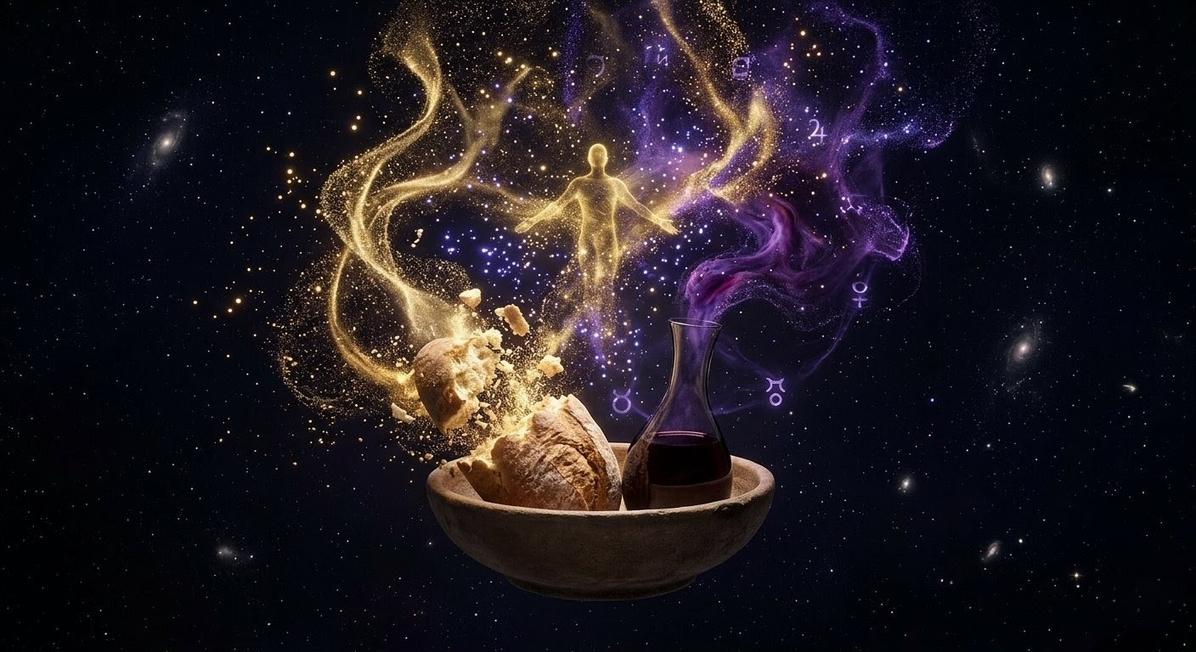
Eucharist is associated with nourishment, body, blood, transformation and participation in divine life. Philip’s language invites the reader to see bread and wine not merely as ritual objects, but as signs of hidden reality.
Redemption refers to release, liberation and restoration. It is the undoing of bondage, the soul’s release from ignorance and lower attachment.
The bridal chamber is the highest and most mysterious of the five. It symbolises restored union, the healing of separation, and the return of the divided self to wholeness.

The Bridal Chamber
The bridal chamber is the heart of the Gospel of Philip. It is not merely a room, nor is it simply earthly marriage. It is a mystery of restoration, where division is healed and the human being becomes whole.
Philip connects separation with death. When the original unity is divided, mortality enters. The work of Christ is therefore described as the removal of separation and the reunion of what was divided from the beginning.
This symbolism is close to the Exegesis on the Soul, where the soul returns to the bridegroom and enters the bridal chamber. In both texts, bridal imagery does not mean ordinary romance alone. It becomes the language of restored identity.
The bridal chamber is therefore the place of completion. It is where the soul no longer lives as a half-self, scattered among images, names and substitutes. It enters the mystery of union with its true counterpart.
Reading Note: The bridal chamber in Philip should be read as sacramental and symbolic theology. It speaks of restored wholeness, not merely earthly sexuality.
Sacred Union and the Healing of Separation
The text’s language of sacred union is rooted in the idea that separation is the beginning of death. Division creates lack, longing and mortality. Union restores life.
This does not mean that ordinary difference is bad. Rather, Philip is speaking of a deeper metaphysical separation: the split between image and reality, soul and spirit, earthly sign and heavenly truth, the divided self and the fullness from which it came.
The bridal chamber heals this split. It is the sacramental image of reunion, where what was separated is brought into harmony without being flattened into sameness.
This is why erotic language appears in the text. Eros becomes a symbolic grammar for spiritual longing. Desire is not simply condemned. It is purified, redirected and raised into the mystery of union.
Chrism, Anointing and Transformation
Chrism, or sacred anointing, receives unusual emphasis in the Gospel of Philip. The text treats chrism as more than a minor ritual detail. It is a sign of spiritual identity, illumination and participation in the anointed one.
The importance of oil reflects the text’s wider sacramental imagination. Material substances can carry spiritual meaning. Water can wash, oil can seal, bread and wine can nourish, and the bridal chamber can restore.
This means Philip does not simply reject matter. It treats matter as capable of becoming transparent to divine reality. The problem is not substance itself, but ignorance of what substance can reveal.
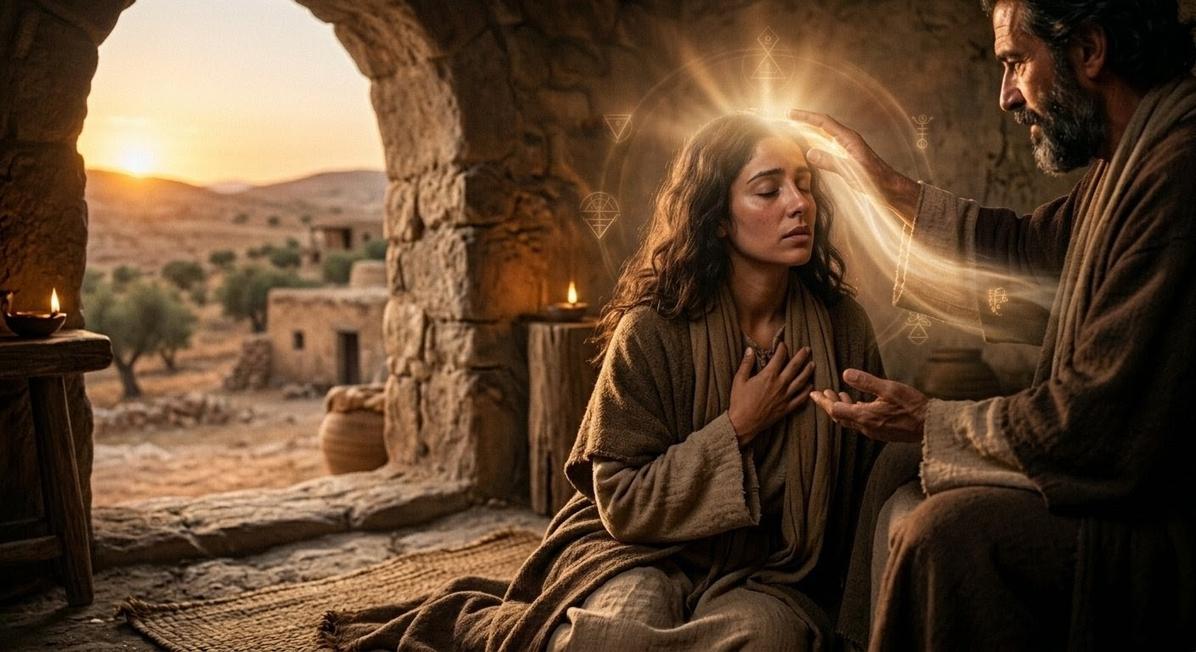
Through anointing, the initiate is marked by a new relation to spirit. The oil shines as a visible sign of inward transformation, a golden whisper on the skin of the soul.
Matter, Spirit and Transfiguration
The Gospel of Philip challenges the simple idea that Gnostic texts always despise matter. Its sacramental worldview depends on material signs. Water, oil, bread, wine, bodies, names and images all matter because they can become bearers of hidden reality.
This is closer to transfiguration than rejection. The lower is not simply thrown away. It is interpreted, consecrated and transformed through relation to the higher.
Philip’s sacramental imagination is therefore subtle. It does not say the visible world is enough by itself. It also does not say the visible world is worthless. It says the visible must be read through the invisible.
That is the text’s luminous trick: the material sign becomes a doorway when the soul knows how to see.
Mary Magdalene and the Kiss of Recognition
The Gospel of Philip is famous for its references to Mary Magdalene. It describes Mary as a companion of the Saviour and presents her as especially loved. A damaged passage refers to Jesus kissing her often, though the manuscript has a gap where modern readers most want certainty.
This passage should be handled carefully. It does not give enough evidence to prove a modern claim that Jesus and Mary were physically married. It also should not be flattened into embarrassment, as though affection, intimacy and spiritual closeness had no place in early Christian symbolic language.
In Philip’s sacramental world, the kiss can symbolise recognition, transmission and spiritual generation. The text says that the perfect conceive through a kiss and give birth. This is not necessarily biological language. It is the language of spiritual communication.
Mary’s significance is therefore not gossip. She appears as one who receives love, recognition and privileged understanding. Like the Gospel of Mary, Philip preserves a memory of Mary Magdalene as a spiritually authoritative figure, not merely a marginal disciple.
Scholarly Caution: The Mary Magdalene passage in the Gospel of Philip is important, but damaged and highly symbolic. It supports Mary’s special spiritual status in the text, but it does not by itself prove modern claims about a literal marriage to Jesus.
Names, Images and Hidden Reality
The Gospel of Philip is deeply interested in names. Names can reveal, but they can also deceive. A worldly name may point away from the true reality if the reader mistakes the label for the thing itself.
This concern fits the text’s whole symbolic method. The visible world is full of images. Some images awaken recognition; others trap the mind in surface appearances.
Philip asks the reader to move from name to reality, from image to truth, from outer form to inner meaning. It is not enough to possess a sacred word. One must become what the word secretly names.
This is why the text can feel slippery. It refuses to let language sit still. Every symbol points beyond itself, little trapdoors opening beneath ordinary words.
How to Read the Gospel of Philip
Read the Gospel of Philip slowly. It is not built as a straight argument. It is a collection of images, sayings and symbolic teachings that require contemplation.
The text becomes clearer when read beside other Valentinian and bridal chamber materials, especially the Gospel of Truth, the Exegesis on the Soul, and scholarly work on Valentinian sacramental theology.
It also helps to keep four lenses in mind: sacrament, symbol, union and transformation. Philip is always asking how outer signs relate to inner realities.
The reader should resist both extremes: do not reduce the text to secret sex, and do not sterilise its embodied language into harmless abstraction. Philip stands precisely at the charged threshold where body, symbol and spirit touch.
Reading Philip Today
For modern readers, the Gospel of Philip offers a daring vision of embodied spirituality. It refuses the split between sacred and material in any simple way. Water, oil, bread, wine, kiss and chamber can all become signs of spiritual reality.
The text also speaks powerfully to questions of fragmentation and wholeness. The bridal chamber is not merely an ancient ritual curiosity. It is an image of the human longing to heal division, recover intimacy with spirit, and become whole.
Philip’s treatment of Mary Magdalene also remains significant. It preserves a tradition in which Mary is close to Jesus, spiritually perceptive and symbolically central. This does not require sensational claims. The text is already radical enough when read carefully.
In the end, the Gospel of Philip is a text of thresholds: between matter and spirit, name and reality, image and truth, desire and union, ritual and transformation. It turns the page into a small bridal chamber, where every symbol waits to be recognised.

Safety Notice: This article explores symbolic, historical and spiritual ideas about eros, sacrament, Mary Magdalene, sacred union, the bridal chamber, names, bodies and transformation. It is intended for grounded study of ancient texts, not as medical, psychological, legal, sexual or spiritual advice. If themes of sexuality, intimacy, identity, ritual or spiritual experience become distressing or destabilising, please seek support from a qualified professional, trusted support service or appropriate emergency service.
Frequently Asked Questions
What is the Gospel of Philip?
The Gospel of Philip is a Valentinian or Valentinian-related Nag Hammadi text preserved in Codex II,3. It is not a narrative gospel, but a collection of sacramental and symbolic teachings about baptism, chrism, eucharist, redemption, the bridal chamber, Mary Magdalene, sacred names and spiritual union.
Is the Gospel of Philip in the Bible?
No. The Gospel of Philip is not part of the canonical New Testament. It was preserved among the Nag Hammadi codices discovered in Egypt in 1945 and is usually associated with Valentinian Gnostic Christianity.
What is the bridal chamber in the Gospel of Philip?
The bridal chamber is the text’s central sacramental symbol. It represents restored union, the healing of separation, spiritual wholeness and the mystery of soul and spirit brought together. It should not be reduced to ordinary earthly marriage or secret sexuality.
What are the five mysteries in the Gospel of Philip?
The Gospel of Philip names baptism, chrism, eucharist, redemption and the bridal chamber. These are often discussed as five sacraments or mysteries, though ancient Valentinian ritual language does not always map neatly onto later church categories.
What does the Gospel of Philip say about Mary Magdalene?
The text describes Mary Magdalene as a companion of the Saviour and presents her as especially loved. It includes a famous damaged passage about Jesus kissing her often. The passage supports Mary’s special spiritual status in the text, but it does not by itself prove modern claims that Jesus and Mary were physically married.
Does the Gospel of Philip teach secret sexuality?
The Gospel of Philip uses erotic and bridal symbolism, but it should not be reduced to a manual of secret sexuality. Its language is sacramental and symbolic, concerned with spiritual union, restoration, recognition and transformation.
How does the Gospel of Philip differ from the Gospel of Thomas?
The Gospel of Thomas is mainly a sayings collection focused on hidden teachings and direct recognition. The Gospel of Philip is more sacramental and symbolic, focusing on ritual, images, names, the bridal chamber and Valentinian theology of restoration.
How should modern readers approach the Gospel of Philip?
Modern readers should approach Philip slowly and symbolically. It is best read as a sacramental Valentinian text about transformation, not as a biography of Jesus or a sensational claim about Mary Magdalene. Its key themes are mystery, union, image, name, sacrament and restored wholeness.
Further Reading
Continue through the related Valentinian, bridal chamber and Codex II source layer:
- The Exegesis on the Soul: the soul as fallen bride, called back to the true bridegroom and restored through sacred union.
- The Gospel of Truth: another major Valentinian text focused on error, recognition, restoration and the Father’s name.
- Valentinian Gnosticism: the wider school behind Philip’s sacramental and theological imagination.
- Valentinian Sacramental Theology: the five mysteries, ritual transformation and the bridal chamber in greater depth.
- The Gospel of Mary Magdalene: Mary as visionary teacher and spiritual authority in early Christian diversity.
- The Gospel of Thomas: a sayings gospel that contrasts with Philip’s sacramental and symbolic theology.
- The Feminine Divine in the Nag Hammadi Library: Mary Magdalene, Sophia, Eve, Norea, Protennoia and Thunder in the wider archive.
- Codex II: the wider manuscript context of Philip, Thomas, the Apocryphon of John, Hypostasis and On the Origin of the World.
- Gnostic Schools: a comparison of Sethian, Valentinian, Hermetic and related currents.
- Nag Hammadi Library: Complete Guide to the Gnostic Scriptures: the broader archive guide to the codices, tractates and traditions.
References and Sources
The following sources support the historical, textual and interpretive claims made in this article.
Primary Sources and Critical Editions
- The Gospel of Philip. Nag Hammadi Codex II,3.
- The Gospel of Truth. Nag Hammadi Codex I,3 and XII,2.
- The Exegesis on the Soul. Nag Hammadi Codex II,6.
- Robinson, James M., ed. The Nag Hammadi Library in English. Harper & Row / HarperSanFrancisco, revised editions.
- Meyer, Marvin, ed. The Nag Hammadi Scriptures. HarperOne, 2007.
- Layton, Bentley. The Gnostic Scriptures. Doubleday, 1987.
- Isenberg, Wesley W. Translation and studies of The Gospel of Philip in the Nag Hammadi Codex II critical tradition.
- Schenke, Hans-Martin. Studies and editions of Das Philippus-Evangelium and related Nag Hammadi material.
Scholarly Monographs and Studies
- Thomassen, Einar. The Spiritual Seed: The Church of the Valentinians. Brill, 2006.
- Lundhaug, Hugo. Images of Rebirth: Cognitive Poetics and Transformational Soteriology in the Gospel of Philip and the Exegesis on the Soul. Brill, 2010.
- Marjanen, Antti. The Woman Jesus Loved: Mary Magdalene in the Nag Hammadi Library and Related Documents. Brill, 1996.
- King, Karen L. The Gospel of Mary of Magdala: Jesus and the First Woman Apostle. Polebridge Press, 2003.
- Markschies, Christoph. Valentinus Gnosticus? Mohr Siebeck, 1992.
- Williams, Michael Allen. Rethinking “Gnosticism”: An Argument for Dismantling a Dubious Category. Princeton University Press, 1996.
Comparative and Thematic Studies
- Pearson, Birger A. Ancient Gnosticism: Traditions and Literature. Fortress Press, 2007.
- Pagels, Elaine. The Gnostic Gospels. Random House, 1979.
- Brakke, David. The Gnostics: Myth, Ritual, and Diversity in Early Christianity. Harvard University Press, 2010.
- DeConick, April D. The Gnostic New Age: How a Countercultural Spirituality Revolutionized Religion from Antiquity to Today. Columbia University Press, 2016.
- van den Broek, Roelof. Studies on Gnostic religion, bridal chamber imagery and sacramental symbolism in antiquity.
Reading Note: The Gospel of Philip is best read beside The Exegesis on the Soul and the Gospel of Truth. The Exegesis gives the soul as fallen bride, Philip gives the sacramental mystery of restored union, and the Gospel of Truth gives the Valentinian poetics of recognition.