Valentinian Sacramental Theology: Beyond the Bridal Chamber
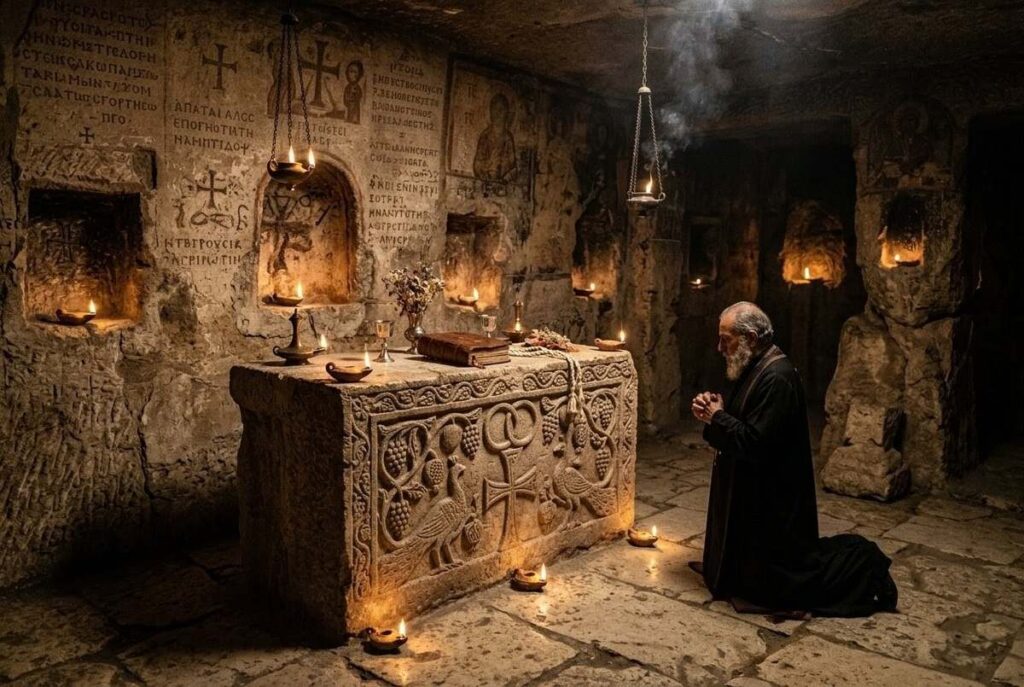
Valentinian sacramental theology is one of the most distinctive and delicate parts of the Valentinian tradition. Unlike forms of early Christianity that treated ritual mainly as public boundary or communal obligation, Valentinian sources often read sacrament as a symbolic and transformative mystery: a visible act pointing towards invisible restoration.
The key terms are familiar from wider Christianity: baptism, chrism, eucharist, redemption and bridal chamber. But in Valentinian texts, especially the Gospel of Philip and the Codex XI ritual fragments associated with A Valentinian Exposition, these rites are interpreted through the language of Pleroma, image, name, syzygy, spiritual seed and return.
The highest mystery is the bridal chamber. This does not need to be reduced to ordinary marriage, literal sexual ritual or romantic mysticism. In its deepest symbolic sense, the bridal chamber represents restored union: the divided self reunited with its heavenly counterpart, the image returning to its truth, and the soul entering a mode of wholeness that the lower world cannot provide.
What is Valentinian Sacramental Theology?
Valentinian sacramental theology is the interpretation of Christian rites such as baptism, chrism, eucharist, redemption and bridal chamber through the Valentinian language of spiritual restoration. These rites are not treated merely as outward ceremonies, but as symbolic actions that reveal and enact the soul’s return to its divine source.
The theme matters because it shows Valentinian Christianity as embodied, communal and ritualised. Gnosis was not only an idea to understand. It could also be a mystery to receive, a name to remember, an image to restore and a union to enter.
Content Note: This article discusses ancient symbolic ideas about sacrament, initiation, bridal chamber imagery, spiritual union, embodiment and salvation. The surviving evidence is fragmentary and sometimes mediated through hostile witnesses, so ritual details should be read with caution rather than treated as a complete recoverable liturgy.
Table of Contents
- Sources and Evidence
- Why Valentinian Sacramental Theology Matters
- Valentinianism Was Not Simply Anti-Ritual
- The Five Mysteries: Baptism, Chrism, Eucharist, Redemption and Bridal Chamber
- Baptism: Passage, Cleansing and New Identity
- Chrism: Anointing, Seal and Spiritual Strengthening
- Eucharist: Participation, Nourishment and Transformation
- Redemption: Release and Belonging
- The Bridal Chamber: Archetype of Union
- Syzygy and the Restoration of Wholeness
- Threefold Humanity and Sacramental Capacity
- Body, Flesh and the Transformation of Matter
- Comparison with Sethian Initiation
- Reading Valentinian Sacrament Today
- Frequently Asked Questions
- Further Reading
- References and Sources
Sources and Evidence
The main Nag Hammadi source for Valentinian sacramental theology is the Gospel of Philip, preserved as Nag Hammadi Codex II,3. It gives dense symbolic reflections on baptism, chrism, eucharist, redemption, bridal chamber, names, images, union and transformation.
Additional evidence comes from the Codex XI material associated with A Valentinian Exposition, especially the short ritual fragments on anointing, baptism and eucharist. These fragments are valuable, but damaged. They show sacramental language in use, yet they do not give a full step-by-step rite.
Ancient heresiological writers, especially Irenaeus, also report Valentinian redemption practices. These reports are important but must be handled carefully because they come from opponents of the movement, not neutral insiders.
Taken together, the sources suggest that Valentinian Christianity did not simply abandon ritual. It reinterpreted ritual through a deeper symbolic grammar of restoration, spiritual identity and return to the Fullness.
Source Note: The strongest internal witnesses are the Gospel of Philip and the Codex XI sacramental fragments. Irenaeus preserves additional reports about Valentinian redemption rites, but his testimony is hostile and should be used critically.
Why Valentinian Sacramental Theology Matters
Valentinian sacramental theology matters because it prevents a shallow reading of Gnosticism as pure anti-body escape. The Valentinian sources do not simply say matter is worthless and ritual is useless. They often treat visible signs as capable of carrying invisible meaning.
Oil, water, bread, wine, names, kisses, images and bridal symbolism become part of a language of transformation. The material element is not worshipped as final, but neither is it dismissed as nothing. It becomes transparent to a deeper reality.
This is especially important for understanding the Gospel of Philip. Its sacramental language is not random decoration. It reflects a world where salvation is restoration of image, name and union, and where rites dramatise the soul’s return to its lost fullness.
The result is a subtle middle path. Valentinian sacrament is not ordinary ritualism, but neither is it ritual rejection. It is visible poetry for invisible repair.
Valentinianism Was Not Simply Anti-Ritual
Some modern readers imagine Gnosticism as entirely anti-institutional and anti-ritual. That picture does not fit the Valentinian evidence very well.
Valentinian communities seem to have used Christian language, scriptural interpretation and sacramental forms, while giving them a distinctive theological meaning. The outer rite mattered because it pointed to an inner transformation.
This does not mean Valentinian ritual was identical to what later became orthodox practice. The same signs could be read differently. Baptism was not only washing. Chrism was not only oil. Eucharist was not only memorial. Bridal chamber was not ordinary marriage.
The visible sign was a doorway. The mystery lay in what the awakened perception could recognise through it.
The Five Mysteries: Baptism, Chrism, Eucharist, Redemption and Bridal Chamber
The Gospel of Philip famously associates the Lord’s mysteries with five terms: baptism, chrism, eucharist, redemption and bridal chamber. These should not be treated as a simple modern checklist, but they do show a recognisable sacramental pattern in Valentinian symbolism.
Baptism marks passage, cleansing and the beginning of new identity.
Chrism, or anointing, marks strengthening, illumination and seal.
Eucharist expresses participation, nourishment and union with divine life.
Redemption, or apolytrosis, expresses release from the lower order and belonging to the higher source.
The bridal chamber becomes the supreme symbol of restored union, where separation is overcome and the image is completed.
In Plain Terms
Valentinian sacramental theology treats ritual as symbolic transformation. Baptism, anointing, eucharist, redemption and bridal chamber are not merely external acts. They point to the soul’s restoration: cleansed, sealed, nourished, released and reunited with its heavenly truth.
Baptism: Passage, Cleansing and New Identity
Baptism in Valentinian sacramental thought is more than a washing rite. It marks passage from ignorance towards recognition, from old identity towards new belonging.
Water is a powerful symbol because it can cleanse, dissolve, bury, birth and reveal. In baptism, the person enters a sign of death and rebirth, but in Valentinian interpretation this can also mean awakening from the false identity shaped by the lower world.
The Codex XI baptism fragments suggest that Valentinian baptism could be associated with transformation and clothing in light. Because the fragments are damaged, we should not reconstruct the full rite too confidently, but the direction is clear: baptism points beyond surface washing to a deeper change of state.
Baptism therefore prepares the soul for recognition. It is a threshold rite, a crossing from forgetfulness into the possibility of restored identity.
Chrism: Anointing, Seal and Spiritual Strengthening
Chrism, or anointing with oil, receives special importance in Valentinian sources. The Gospel of Philip gives anointing a high place in the sacramental sequence, and the Codex XI fragments preserve related anointing material.
Oil is a rich symbol. It softens, shines, heals, consecrates and marks. In Christian tradition more broadly, anointing is linked with Spirit, kingship, healing and belonging. Valentinian interpretation draws this symbolism inward, towards illumination and spiritual identity.
The anointing can be understood as a seal: not a legal stamp in a crude sense, but a mark of belonging and transformation. The person is no longer merely defined by the lower order. They are marked by a higher relation.
The anointing signifies the strengthening of the spiritual person with light, recognition and belonging.

Primary Source Theme: In Valentinian sacramental language, anointing is not merely oil on the body. It points to illumination, seal, belonging and inward transformation.
Eucharist: Participation, Nourishment and Transformation
The Valentinian eucharist should not be reduced either to ordinary memorial or to crude literalism. In the surviving sources, bread and wine become symbolic vehicles of participation in divine life.
The Gospel of Philip uses sacramental language to explore how earthly elements can reveal heavenly realities. The visible meal points beyond itself. It nourishes not only the body, but the understanding of the one who receives it with gnosis.
This is not simple rejection of matter. Bread and wine become signs through which matter is made transparent to spirit. The element does not remain flat. It becomes luminous in the sacramental imagination.
For Valentinian theology, eucharist participates in the wider work of restoration: the divided is gathered, the earthly is lifted into meaning, and nourishment becomes a hint of the Fullness.
Redemption: Release and Belonging
Redemption, or apolytrosis, is one of the more difficult Valentinian sacramental themes because much of our evidence comes through hostile reports, especially Irenaeus.
In broad terms, redemption signifies release. It marks the soul as belonging not finally to the present age, but to the higher source. It is a ritual and symbolic declaration that the person’s deepest identity is not owned by the world of deficiency.
Irenaeus reports formulas connected with Valentinian redemption rites, including language of being established and redeemed from the present age. Because he writes as an opponent, his details should be used critically, but his testimony still shows that redemption was an important Valentinian sacramental idea.
It is better to avoid overheated claims about “automatic immunity” or guaranteed passage as if the rite were a magical ticket. The richer reading is that redemption symbolises release from false belonging and restoration to the true source.
Scholarly Caution: Reports about Valentinian redemption rites are partly preserved by opponents such as Irenaeus. They are important evidence, but should not be treated as transparent insider descriptions of every Valentinian community.

The Bridal Chamber: Archetype of Union
The bridal chamber, or nymphon, is the most evocative and most easily misunderstood Valentinian sacrament. It is central to the Gospel of Philip, where bridal imagery becomes a symbol of restored union.
At the surface, the language sounds nuptial. But it should not be reduced to ordinary marriage, secret sexual ritual or romantic allegory alone. The bridal chamber points to a deeper union between the divided self and its heavenly truth.
In Valentinian symbolism, separation is one of the marks of deficiency. The soul is divided from its source, the image from its original, the human from its angelic counterpart, the earthly self from its pleromatic identity.
The bridal chamber becomes the mystery where division is healed. It is the sacramental image of wholeness, where the fragmented spark is restored to relation with the Fullness.
Syzygy and the Restoration of Wholeness
The idea of syzygy, or paired relation, is central to Valentinian thought. Aeons often appear in complementary pairs, and this paired structure suggests that divine life is relational rather than isolated.
The bridal chamber applies this pattern to salvation. The soul’s restoration is imagined as reunion with what completes it. That may be described as an angelic counterpart, heavenly image or true partner in the Pleroma, depending on the source and interpretive frame.
This should not be flattened into modern soul-mate language. The syzygy is not simply romance in ancient costume. It is a metaphysical symbol of wholeness: the divided returns to its truth.
In plain language, the bridal chamber says: the self you know in the lower world is incomplete. Salvation is not merely forgiveness or escape. It is reunion with the fullness of what you are in God.

Threefold Humanity and Sacramental Capacity
Valentinian theology often works with a threefold anthropology: spiritual, psychic and material. This framework shaped how Valentinians understood response to truth, ritual and salvation.
The spiritual, or pneumatic, are associated with the divine seed and deeper recognition of the Pleroma.
The psychic are associated with soul, faith, moral formation and a more gradual participation in salvation.
The material are associated with the level of matter, ignorance and dissolution.
Modern readers should treat this framework carefully. It should not be used as a spiritual caste system or a way to label living people. Read symbolically, it describes different layers of human life and different degrees of openness to truth.
In sacramental theology, the threefold pattern helps explain why the same rite might be understood differently by different participants. The visible action is one thing. The depth of recognition is another.
Body, Flesh and the Transformation of Matter
Valentinian sacramental theology should not be read as simple contempt for the body. The sources are more subtle. They distinguish corruptible flesh from transformed or perfected life, and they often treat material signs as capable of carrying spiritual reality.
This is why sacraments matter. Water, oil, bread, wine and touch are not ignored. They are re-read. Matter becomes a veil, but also a sign. The lower world can obscure the divine, but the awakened eye can also perceive the divine through symbolic form.
The Gospel of Philip is especially important here because it refuses crude separation between visible and invisible. Image, name and reality are entangled. What is seen can become a doorway to what is hidden.
This gives Valentinian sacrament its strange beauty. It does not worship matter as final. It lets matter become translucent.
Comparison with Sethian Initiation
Valentinian sacramental theology can be compared with Sethian initiation themes such as the Five Seals. Both traditions use ritual and symbolic language of transformation, protection, ascent and restoration.
But the emphasis differs. Sethian texts often frame salvation through ascent, heavenly descent, sacred names, seals and the soul’s movement beyond hostile powers.
Valentinian sources often emphasise restoration through relation: syzygy, bridal chamber, image, name, sacrament, Church, Fullness and the healing of deficiency.
Neither should be simplified into a single mechanism. Both are complex. But the Valentinian current tends to sound more nuptial and restorative, where the broken relation is healed and the lost image is restored to its source.
Reading Valentinian Sacrament Today
Modern readers should approach Valentinian sacramental theology slowly. It is easy to distort it in two directions: either by literalising everything into secret ceremonies, or by flattening everything into vague metaphor.
The better path is to read sacrament as symbolic participation. A visible sign can carry a hidden meaning. A ritual can dramatise an inner transformation. A name can reveal identity. A bridal image can speak of union beyond ordinary social categories.
This also means caution is necessary. The bridal chamber should not be sensationalised. Redemption should not be treated as magical escape paperwork. Anointing should not be turned into mechanical protection. The sources are profound, but fragmentary and symbolic.
Read carefully, Valentinian sacramental theology becomes a luminous grammar of restoration. Water opens the gate. Oil catches the light. Bread and wine become signs of participation. Redemption releases false belonging. The bridal chamber gathers the divided self back into wholeness. Ritual, at its best, becomes the body learning how to remember the Pleroma.
Safety Notice: This article explores symbolic, historical and spiritual ideas about sacrament, initiation, spiritual identity, bridal chamber imagery, sacred union, ritual and salvation. It is intended for grounded study of ancient texts, not as medical, psychological, legal, sexual or spiritual advice. Do not use ancient sacramental or anthropological categories to rank, pressure or control living people. If themes of initiation, hidden status, teacher authority, ritual pressure or spiritual hierarchy become distressing or destabilising, seek support from a qualified professional, trusted support service or appropriate safeguarding body.
Frequently Asked Questions
What is Valentinian sacramental theology?
Valentinian sacramental theology is the interpretation of rites such as baptism, chrism, eucharist, redemption and bridal chamber through the Valentinian language of spiritual restoration. These rites are treated as symbolic actions that reveal and enact the soul’s return to divine Fullness.
What are the main Valentinian sacraments?
The main sacramental terms associated with Valentinian sources are baptism, chrism, eucharist, redemption and bridal chamber. The Gospel of Philip gives these mysteries special importance, while Codex XI preserves related fragments on anointing, baptism and eucharist.
What is the Valentinian bridal chamber?
The bridal chamber, or nymphon, is the supreme symbol of restored union in Valentinian theology. It should not be reduced to ordinary marriage or secret sexual ritual. It represents the reunion of the divided self with its heavenly truth and the restoration of wholeness in the Pleroma.
What does chrism mean in Valentinian theology?
Chrism means anointing with oil. In Valentinian symbolism it points to illumination, seal, consecration, belonging and spiritual strengthening. It marks the person as participating in a higher reality rather than being defined only by the lower world.
What is apolytrosis or redemption?
Apolytrosis means redemption or release. In Valentinian contexts it symbolises release from false belonging to the present age and restoration to the higher source. Much evidence for redemption rites comes from hostile witnesses such as Irenaeus, so details should be read carefully.
Did Valentinians reject Christian sacraments?
No. Valentinian sources suggest that many Valentinians retained and reinterpreted Christian sacramental forms. They read baptism, anointing, eucharist, redemption and bridal imagery through a deeper symbolic framework of spiritual transformation and restoration.
Are the Valentinian ritual details fully recoverable?
No. The surviving evidence is fragmentary and sometimes comes through hostile reports. We can identify major sacramental themes and symbolic meanings, but we cannot confidently reconstruct every ritual gesture, formula or community practice.
How should modern readers approach Valentinian sacramental theology?
Modern readers should approach it as symbolic, historical and theological material. It is best read beside the Gospel of Philip, A Valentinian Exposition, the Gospel of Truth and the Tripartite Tractate, with caution around sensational claims, ritual reconstruction and spiritual hierarchy.
Further Reading
Continue through the related Valentinian, sacramental and Nag Hammadi source layer:
- The Gospel of Philip: the primary Nag Hammadi source for Valentinian sacrament, bridal chamber, chrism, names and images.
- A Valentinian Exposition: Codex XI material connecting Valentinian cosmology with sacramental fragments on anointing, baptism and eucharist.
- The Gospel of Truth: the poetic Valentinian meditation on joy, error, recognition and the Father’s name.
- The Tripartite Tractate: the broad Valentinian system of Father, Pleroma, deficiency, threefold humanity and restoration.
- The Treatise on the Resurrection: a pastoral Valentinian letter on death, resurrection and spiritual transformation.
- Interpretation of Knowledge: Valentinian community, spiritual gifts, teachers, humility and the body of truth.
- Valentinian Gnosticism: the wider school of Pleroma, deficiency, spiritual seed, sacrament and restoration.
- The Five Seals: Sethian initiation imagery as a useful contrast to Valentinian sacramental symbolism.
- Sethian and Valentinian Traditions: a comparison of two major Gnostic currents in the Nag Hammadi Library.
- Nag Hammadi Library: Complete Guide to the Gnostic Scriptures: the broader archive guide to the codices, tractates and traditions.
References and Sources
The following sources support the historical, textual and interpretive claims made in this article.
Primary Sources and Critical Editions
- The Gospel of Philip. Nag Hammadi Codex II,3.
- A Valentinian Exposition. Nag Hammadi Codex XI,2.
- On the Anointing. Nag Hammadi Codex XI.
- On Baptism. Nag Hammadi Codex XI.
- On the Eucharist. Nag Hammadi Codex XI.
- Irenaeus of Lyons. Against Heresies, especially Book I, as an ancient hostile witness to Valentinian redemption practices.
- Robinson, James M., ed. The Nag Hammadi Library in English. Harper & Row / HarperSanFrancisco, revised editions.
- Meyer, Marvin, ed. The Nag Hammadi Scriptures. HarperOne, 2007.
- Layton, Bentley. The Gnostic Scriptures. Doubleday, 1987.
- Turner, John D. Studies and editions of Codex XI Valentinian materials in the Coptic Gnostic Library tradition.
Scholarly Monographs and Studies
- Thomassen, Einar. The Spiritual Seed: The Church of the Valentinians. Brill, 2006.
- Dunderberg, Ismo. Beyond Gnosticism: Myth, Lifestyle, and Society in the School of Valentinus. Columbia University Press, 2008.
- Markschies, Christoph. Valentinus Gnosticus? Mohr Siebeck, 1992.
- King, Karen L. What Is Gnosticism?. Harvard University Press, 2003.
- Williams, Michael Allen. Rethinking “Gnosticism”: An Argument for Dismantling a Dubious Category. Princeton University Press, 1996.
- Brakke, David. The Gnostics: Myth, Ritual, and Diversity in Early Christianity. Harvard University Press, 2010.
Comparative and Thematic Studies
- Pagels, Elaine. The Gnostic Gospels. Random House, 1979.
- Pagels, Elaine. The Gnostic Paul: Gnostic Exegesis of the Pauline Letters. Fortress Press, 1975.
- Pearson, Birger A. Ancient Gnosticism: Traditions and Literature. Fortress Press, 2007.
- Logan, A.H.B. Gnostic Truth and Christian Heresy: A Study in the History of Gnosticism. T&T Clark, 1996.
- van den Broek, Roelof. Gnostic Religion in Antiquity. Cambridge University Press, 2013.
- Rudolph, Kurt. Gnosis: The Nature and History of Gnosticism. HarperSanFrancisco, 1987.
Reading Note: Valentinian Sacramental Theology is best read beside the Gospel of Philip and A Valentinian Exposition. Philip gives the symbolic heart of the bridal chamber, A Valentinian Exposition gives the fragmentary Codex XI ritual layer, and the wider Valentinian system gives the cosmological meaning of restoration.