
What is Gnosticism? The Ancient Currents of Direct Knowledge
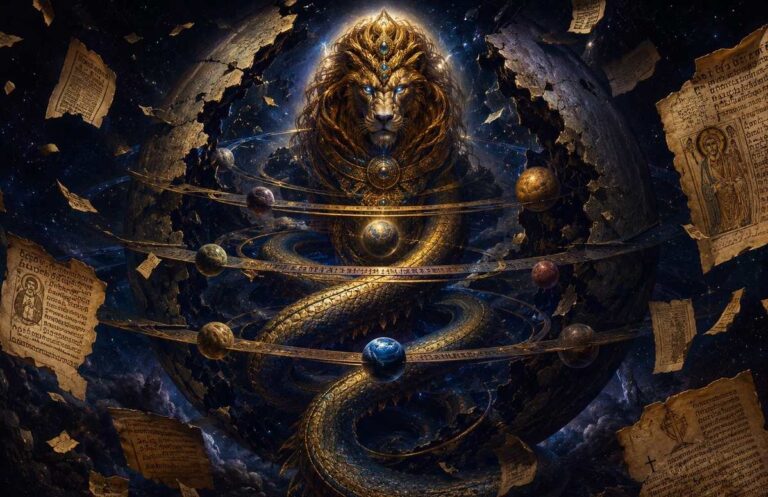
Gnosticism is a family of ancient and modern religious, philosophical, and mystical currents that often emphasise direct knowledge, the divine spark, hidden reality, and liberation from ignorance. The term names not a single church or doctrine, but a recognisable pattern that appears across centuries, texts, and communities: the conviction that ordinary perception conceals a deeper order, and that human beings carry within themselves the capacity to recognise it.
This article explores what Gnosticism actually is, how its ancient schools differed from one another, what core themes unite them, why they were marginalised by emerging orthodox Christianity, and why this family of ideas continues to resurface in the modern world.
<
Table of Contents
- What Is Gnosticism? A Working Definition
- The Ancient Landscape: Schools and Teachers
- The Nag Hammadi Library: When the Archive Spoke
- Core Themes Across the Gnostic Currents
- Gnosticism and Orthodox Christianity: The Parting of Ways
- The Modern Revival: From Obscurity to Recognition
- Why Gnosticism Matters Today
- Frequently Asked Questions
- Further Reading
What Is Gnosticism? A Working Definition
At its simplest, Gnosticism is the conviction that salvation comes through knowledge–not ordinary information, but a transformative recognition of hidden truth. The Greek root gnosis refers to knowing by experience, by acquaintance, by direct encounter rather than by report. In this sense, Gnosticism is less a denomination and more an orientation: a way of relating to reality that privileges insight over authority, memory over doctrine, and awakening over obedience.
Scholars continue to debate whether “Gnosticism” is even the right word. Some prefer to speak of “Gnosticisms” in the plural, recognising that the ancient teachers differed sharply among themselves. Others suggest terms like “biblical demiurgism” or “the pattern of hidden wisdom.” Yet the word persists because it captures something real: a family resemblance across dozens of texts, several continents, and nearly two millennia. Wherever the suspicion arises that the visible world is governed by lesser powers, that the divine spark has been buried in flesh and forgetfulness, and that direct recognition offers the only genuine liberation–there Gnosticism is at work.
The Ancient Landscape: Schools and Teachers
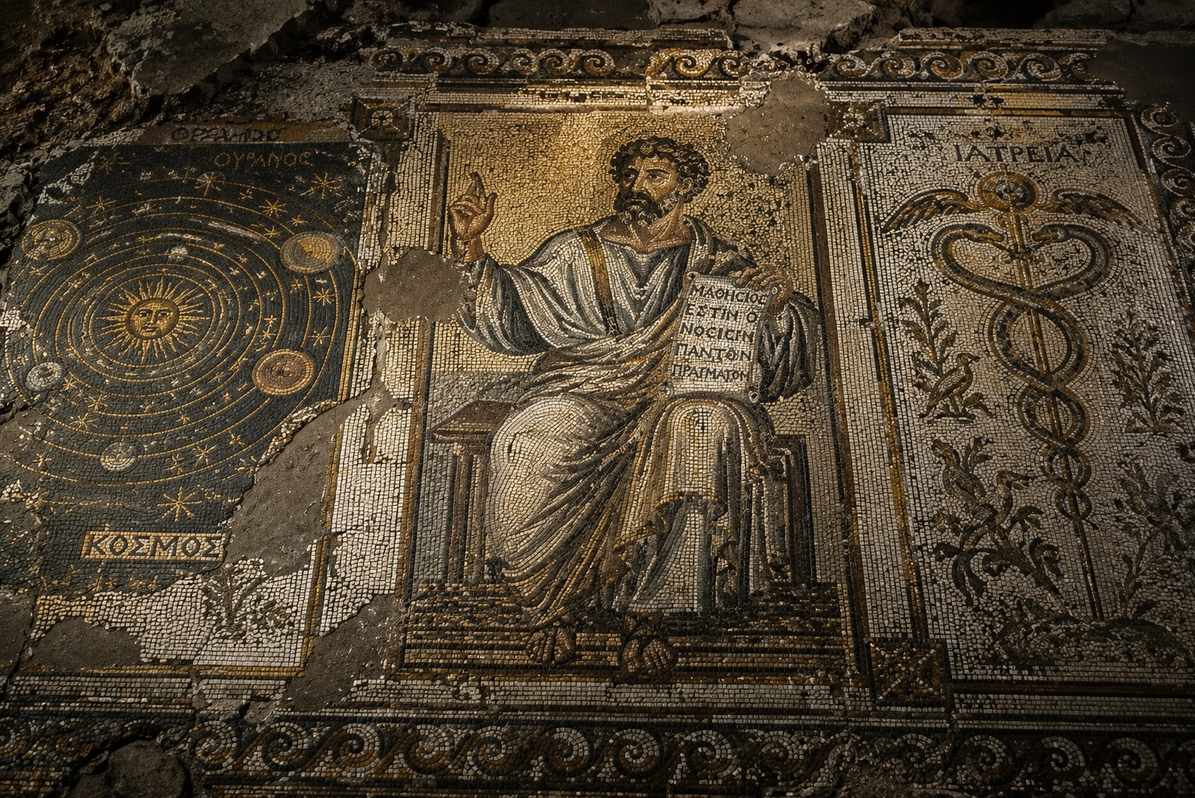
The ancient Gnostic currents flourished primarily between the second and fourth centuries CE, radiating from Alexandria and other centres of cultural exchange across the Mediterranean. They did not form a single organisation. Instead, they comprised overlapping schools, each with its own cosmology, ritual practice, and literary tradition.
<
Valentinus and the Valentinian School
Valentinus, who taught in Rome around the mid-second century CE, was among the most systematic and philosophically sophisticated of the Gnostic teachers. According to Tertullian, he was briefly a candidate for bishop of Rome before his views diverged too far from the emerging orthodoxy. His system described a pleroma–a fullness of divine aeons–emanating from an unknowable source. The fall of the last aeon, Sophia, precipitated the creation of the material world by a lower power, the Demiurge. Human beings contain a portion of the divine light trapped in matter, and salvation consists in recognising this origin and returning to the pleroma. The Valentinians produced some of the most elaborate cosmological diagrams in ancient religious literature, and their influence extended across Egypt, Syria, and Rome.
Basilides and the Alexandrian Current
Basilides taught in Alexandria during the early second century, perhaps before Valentinus. His system was equally ambitious but differently structured. According to Irenaeus, Basilides posited a supreme deity from whom a series of spiritual realms descended. The material world was created by angels, with one particular angel–the God of the Jews–playing a role that Basilides interpreted as limited and subordinate. Christ, in this account, descended to liberate the spiritual seed from its entanglement in fate and matter. The Basilidian school survived for several centuries, though its writings survive only in fragments preserved by its opponents.
The Sethians and the Jewish-Christian Nexus
The Sethians represent a distinct trajectory within Gnosticism, one that drew heavily on Jewish apocalyptic and Christian traditions while reinterpreting them radically. Rather than focusing on a single founder, Sethian literature–including the Apocryphon of John, the Hypostasis of the Archons, and Zostrianos–centres on Seth, the third son of Adam and Eve, as a revealer figure. Sethian cosmology tends to be more mythological and less philosophically abstract than Valentinianism, featuring dramatic narratives of divine fall, archonic imprisonment, and the soul’s ascent through multiple planetary spheres. The Sethian texts preserved in the Nag Hammadi Library constitute some of the most extensive surviving Gnostic documents.
Marcion and the Radical Duality
Marcion of Sinope, active in Rome around 144 CE, is sometimes classified alongside the Gnostics, though his system differed in important respects. He proposed a stark duality between the just but wrathful creator god of the Hebrew Bible and the unknown, loving Father revealed by Jesus. Marcion rejected the Old Testament entirely and produced an edited version of Luke’s gospel and Paul’s letters–the first known attempt at a Christian canon. The orthodox church excommunicated him, yet his movement spread widely across the Mediterranean and persisted for centuries. Marcion’s radical separation of the creator from the saviour influenced later Gnostic thought, even if he himself was not a Gnostic in the strictest sense.
The Nag Hammadi Library: When the Archive Spoke
For nearly fifteen centuries, the Gnostics were known primarily through the writings of their enemies. Church fathers such as Irenaeus, Tertullian, and Epiphanius catalogued Gnostic teachings in order to refute them, often distorting or simplifying what they described. Then, in December 1945, an Egyptian farmer named Muhammed al-Samman discovered a sealed jar near the base of Jabal al-Tarif, across the Nile from the town of Nag Hammadi in Upper Egypt. Inside were twelve leather-bound papyrus codices, plus loose pages from a thirteenth.
<
The Nag Hammadi Library, as the collection came to be known, contains fifty-two tractates, though six are duplicates, leaving forty-six unique documents. The texts are written in Coptic, the final stage of the Egyptian language, and include Gospels, apocalypses, treatises on cosmology, hymns, and philosophical letters. Among them are the Gospel of Thomas, a collection of Jesus’ sayings; the Apocryphon of John, a revelation dialogue describing the fall of Sophia and the creation of humanity; and the Trimorphic Protennoia, a hymn to the divine feminine principle. The collection also includes three works from the Corpus Hermeticum and a partial translation of Plato’s Republic, suggesting that the ancient readers did not sharply separate Gnostic, Hermetic, and Platonic traditions.
Scholars generally agree that the codices were buried in the fourth century, possibly by monks from the nearby Pachomian monastery, after Bishop Athanasius condemned non-canonical books in his Festal Letter of 367 CE. The first complete English translation, edited by James M. Robinson, appeared in 1977. Since then, the Nag Hammadi texts have fundamentally reshaped our understanding of early Christianity’s diversity.
Core Themes Across the Gnostic Currents
Despite their diversity, the ancient Gnostic currents share several recognisable themes. These are not rigid doctrines but recurring motifs, like threads that appear in different colours across the same tapestry.
The Divine Spark and the Foreign Soul
Nearly all Gnostic traditions teach that human beings contain a portion of divine reality–a spark, a seed, a light–that has become trapped in material existence. This spark is not created by the lower gods who govern the world. It comes from elsewhere, from the pleroma or the unknown Father, and it remembers its origin even when the conscious mind has forgotten. The soul that possesses this spark is sometimes described as a stranger in a foreign land, exiled from its true home and awaiting recognition and return.
<
The Demiurge and the Architecture of Control
Gnostic cosmology typically distinguishes between the highest, unknowable divine source and a lower creator or administrator of the material world. This lower power, often called the Demiurge (from the Greek demiourgos, craftsman), is not necessarily evil in the absolute sense, but is ignorant, limited, or blindly proud. In many texts–particularly the Apocryphon of John–this figure is identified with the God of the Hebrew Bible, whose jealousy and commands reflect administrative control rather than ultimate wisdom. The Demiurge does not know the divine realm above him, and his creation is a flawed imitation of a higher reality. The archons, his subordinate powers, govern the planetary spheres and attempt to block the soul’s ascent.
Gnosis as Liberation
For the Gnostics, liberation is not achieved through obedience to law, ritual performance, or moral accumulation. It comes through gnosis itself: the direct recognition of one’s true identity, origin, and destiny. This recognition is simultaneously cognitive, experiential, and transformative. It is not merely learning a secret password or receiving an esoteric formula. It is the awakening of perception, the dissolution of illusion, and the restoration of memory. The one who recognises becomes free not by escaping the world, but by seeing through it.
Gnosticism and Orthodox Christianity: The Parting of Ways
The relationship between Gnosticism and what became orthodox Christianity was not a simple case of heresy versus truth. It was a struggle over the boundaries of the tradition itself. In the second and third centuries, multiple Christianities existed side by side, each claiming to represent the authentic teaching of Jesus. The Gnostics were not outsiders who attacked Christianity from without. They were participants in the same religious ecosystem who interpreted the tradition differently.
The proto-orthodox church, led by figures such as Irenaeus of Lyons, Tertullian of Carthage, and later Athanasius of Alexandria, argued for a single God who created the world and saved it through the incarnation, death, and bodily resurrection of Jesus. They insisted on the authority of apostolic succession, the unity of the Old and New Testaments, and the necessity of the church’s sacraments and hierarchy. The Gnostics, by contrast, affirmed direct access to divine knowledge, questioned the identity of the creator, and often treated the resurrection as a spiritual event rather than a literal one.
Elaine Pagels, in her groundbreaking study The Gnostic Gospels, argued that this conflict was as much political as theological. The orthodox emphasis on apostolic succession and episcopal authority created a structure of power that the Gnostic emphasis on individual experience could not easily accommodate. By the fourth century, imperial support for orthodoxy and the condemnation of non-canonical books had largely marginalised the Gnostic currents. The Nag Hammadi texts were buried, and the Gnostic schools faded from visible history–but they did not disappear entirely.
The Modern Revival: From Obscurity to Recognition
Gnosticism did not die. It went underground, resurfacing in fragments and echoes across the centuries. In the late nineteenth century, scholars such as Charles William King and G. R. S. Mead began to recover and translate Gnostic texts, while the Theosophical Society under Madame Blavatsky incorporated Gnostic themes into its eclectic synthesis. In the early twentieth century, Carl Jung found in Gnosticism a mirror for his psychology of individuation, and the discovery of Codex I at the Jung Institute in Zurich–the so-called Jung Codex–deepened his engagement with these materials.
<
The philosopher Hans Jonas, in his 1958 work The Gnostic Religion, offered an influential interpretation of ancient Gnosticism as an existential response to the anxiety of late antiquity. Jonas drew parallels between Gnostic alienation and modern existentialist concerns, helping to move the study of Gnosticism from theological polemic into philosophical and historical inquiry. Then came the Nag Hammadi discovery, which provided scholars with primary sources rather than second-hand refutations. The publication of the English translation in 1977 marked a turning point: for the first time, readers could encounter the Gnostics in their own words.
Since then, Gnosticism has experienced a genuine revival. Academic study has flourished through the work of scholars such as David Brakke, Michael Allen Williams, and Karen L. King, who have questioned the very category of “Gnosticism” while simultaneously deepening our understanding of its texts. Meanwhile, contemporary spiritual seekers, artists, and philosophers have found in Gnostic themes a vocabulary for addressing modern concerns: the sense of alienation in a technocratic world, the suspicion that institutional structures serve hidden interests, and the intuition that direct experience matters more than inherited authority.
Why Gnosticism Matters Today
The modern world presents a paradox that the ancient Gnostics would have recognised immediately. We possess more information than any previous civilisation, yet the capacity for genuine recognition seems to thin. We are surrounded by screens, algorithms, and systems that shape perception with invisible precision. The question of whether the visible order is the real order has become not merely theological but technological and political.
Gnosticism matters today because it offers a vocabulary for this condition without collapsing into either naive optimism or paralysing cynicism. It suggests that the problem is not the world itself, but the state of forgetfulness in which we meet it. It insists that the divine spark–or whatever name one gives to the capacity for direct insight–has not been extinguished. And it warns that liberation without discernment is incomplete: the recognition must be integrated, grounded, and lived.
Within ZenithEye, Gnosticism is part of The Thread: the recurring pattern of hidden knowledge, awakening, suppression, and return. It connects to the study of archons as systems of control, to the exploration of states of knowing beyond ordinary perception, and to the practice of attention as a method of liberation. The ancient Gnostics asked questions that remain urgent. Their answers may not be ours, but their questions still illuminate the path.
Frequently Asked Questions
What is Gnosticism in simple terms?
Gnosticism is a family of ancient and modern teachings that emphasise direct knowledge (gnosis) as the path to liberation. It teaches that the visible world is governed by lesser powers, that human beings carry a divine spark from a higher reality, and that recognition of this truth frees the soul from ignorance.
Is Gnosticism a religion?
Gnosticism is not a single organised religion but a recognisable pattern across multiple schools, texts, and traditions. It includes Christian Gnostics, Hermeticists, and Jewish-Christian mystics. Modern Gnostic revival groups exist, but ancient Gnosticism comprised diverse communities rather than one unified church.
What is the difference between Gnosticism and Christianity?
Orthodox Christianity emphasises faith, apostolic tradition, the bodily resurrection, and the unity of the creator and saviour. Gnosticism typically emphasises direct inner knowledge, distinguishes the highest God from the world’s creator (the Demiurge), and interprets salvation as recognition and return rather than obedience to institutional authority.
Who were the main Gnostic teachers?
The most influential ancient teachers included Valentinus, who developed a sophisticated system of divine emanations; Basilides, who taught in Alexandria; and the anonymous Sethian authors who produced texts like the Apocryphon of John. Marcion of Sinope, while distinct, shared some Gnostic concerns about the creator god.
What are the Nag Hammadi texts?
The Nag Hammadi Library is a collection of forty-six unique tractates discovered in Egypt in 1945. Written in Coptic and dating from the third and fourth centuries, these texts include Gospels, cosmological treatises, and hymns that preserve the voices of ancient Gnostic teachers in their own words.
Do Gnostics believe in God?
Gnostics believe in a supreme, often unknowable divine source beyond the material world. However, they typically distinguish this highest God from the Demiurge, the lower power who created and governs the physical cosmos. The Gnostic God is not the jealous law-giver of the Old Testament but the hidden source of light from which the divine spark originates.
Is Gnosticism still practised today?
Yes. Modern Gnostic revival movements exist, including the Ecclesia Gnostica and various independent groups. Beyond organised practice, Gnostic themes pervade contemporary spirituality, philosophy, literature, and psychology. Many seekers today resonate with Gnostic questions about hidden knowledge, direct experience, and liberation from systemic illusion.
Further Reading
Explore these ZenithEye articles to deepen your understanding of Gnosticism and its context:
- What Is Gnosis? Meaning, Recognition, and Direct Knowing — The foundational glossary entry on gnosis itself: the direct knowing that lies at the heart of every Gnostic current.
- What Is the Thread? ZenithEye’s Complete Explainer — The recurring pattern of hidden knowledge, awakening, and return that runs through Gnosticism and beyond.
- The Nag Hammadi Library: The Complete Reader’s Guide — The essential map to the collection that revolutionised our understanding of ancient Gnosticism.
- Gnosticism vs Orthodox Christianity: What the Early Church Suppressed — A detailed examination of the theological and political conflict that shaped Christian history.
- Valentinian Gnosticism: The Most Systematic School of the Pleroma — The sophisticated cosmology and soteriology of the Valentinian school.
- Gnostic Schools: Sethians, Valentinians, and Hermetics — A comparative guide to the major currents within the Gnostic family.
- Who Are the Neo-Gnostics? The Complete Guide to Modern Gnostic Revival — How Gnostic themes resurface in contemporary spirituality, philosophy, and practice.
- The Apocryphon of John: The Gnostic Creation Myth — The foundational Nag Hammadi text on the Demiurge, the divine spark, and the fall of Sophia.
- The Gospel of Thomas: 114 Keys to Direct Knowing — The sayings gospel that most directly invites the reader toward recognitional insight.
- Entity Gnosis — How gnosis functions as a living encounter across traditions and eras.
Related Terms
Gnosticism connects to a wider vocabulary explored across ZenithEye:
- Gnosis — Direct, transformative knowing; the experiential core of Gnosticism.
- Archons — The ruling powers that govern the material world and block the soul’s ascent.
- Demiurge — The lower creator god who fashioned the material cosmos, often ignorant of the higher divine realm.
- Sophia — Divine wisdom, often personified as the feminine principle whose fall and restoration mirror the soul’s journey.
- Pleroma — The fullness of divine reality; the origin and destination of the recognising soul.
- Divine Spark — The portion of highest reality hidden within the human being, waiting to be recognised.
- Kenoma — The realm of deficiency, emptiness, or the material world contrasted with the pleroma.
- The Thread — The recurring pattern of hidden knowledge, suppression, and return across history.
- Hermeticism — The related tradition of Egyptian-Hellenistic wisdom that shares Gnostic concerns with divine knowledge and cosmic ascent.
- Pneuma — Spirit, breath, or the animating principle that connects the recognising soul to its divine source.
References and Sources
This article draws upon the following scholarly and primary sources, presented without in-text citation numbers per The Thread style.
Primary Sources and Critical Editions
- Robinson, James M. (ed.). (1977). The Nag Hammadi Library in English. HarperSanFrancisco.
- Layton, Bentley. (1987). The Gnostic Scriptures. Doubleday.
- Brakke, David. (2010). The Gnostics: Myth, Ritual, and Diversity in Early Christianity. Harvard University Press.
Scholarly Monographs
- Jonas, Hans. (1958). The Gnostic Religion: The Message of the Alien God and the Beginnings of Christianity. Beacon Press.
- Pagels, Elaine. (1979). The Gnostic Gospels. Random House.
- King, Karen L. (2003). What Is Gnosticism? Harvard University Press.
- Williams, Michael Allen. (1996). Rethinking “Gnosticism”: An Argument for Dismantling a Dubious Category. Princeton University Press.
Reference Works
- Encyclopaedia Britannica. (2025). “Gnosticism.” Encyclopaedia Britannica Online.
- Stanford Encyclopedia of Philosophy. (2025). “Gnosticism.” Stanford Encyclopedia of Philosophy.
Gnosticism is not a single answer. It is a family of questions that refuse to accept the surface as the whole. Wherever the suspicion arises that reality has hidden seams, that the self is stranger than it appears, and that direct recognition matters more than inherited permission–there the Gnostic current continues, ancient yet immediate, buried yet unquiet.