The Five Seals: Sethian Initiation Mysteries
The Five Seals are one of the most important and mysterious ritual themes in Sethian Gnosticism. They appear across several Nag Hammadi texts as signs of initiation, purification, spiritual protection and restoration to the realm of light.
Modern readers should approach them with care. The ancient evidence is scattered, symbolic and fragmentary. No surviving Sethian text gives a neat ritual manual in the modern sense. Instead, the Five Seals appear through baptismal language, anointing, sacred names, garments of light, ascent imagery and the restoration of the spiritual person to their higher origin.
In the Sethian imagination, to receive the seals is to be marked as belonging to a source higher than the lower powers. The seals do not create the divine spark from nothing. They reveal, protect and confirm what already belongs to the Pleroma, the divine Fullness.
What are the Five Seals?
The Five Seals are a Sethian Gnostic initiatory and symbolic pattern associated with baptism, anointing, sacred naming, garments of light and spiritual restoration. They appear in texts such as the Apocryphon of John, Trimorphic Protennoia, Zostrianos and related Sethian materials.
They are best understood as ritual language for transformation and return: the spiritual person is cleansed, marked, protected and restored to their higher identity among the seed of Seth and the realm of light.
Table of Contents
- Text and Source Setting
- Why the Five Seals Matter
- The Central Mystery of Sethian Initiation
- The Fivefold Pattern
- Water, Washing and Living Waters
- Anointing, Chrism and the Dew of Light
- Spirit, Name and Awakening
- The Garment of Light
- The Final Seal and the Seed of Seth
- Ritual Context and Performance
- Protection, Archons and Ascent
- From Ritual to Contemplative Recognition
- Reading the Five Seals Today
- Frequently Asked Questions
- Further Reading
- References and Sources
Text and Source Setting
The Five Seals are not preserved in one single, complete ritual handbook. They are glimpsed across Sethian and related Nag Hammadi texts, especially the Apocryphon of John, Trimorphic Protennoia, Zostrianos, Allogenes and the fragmentary Hypsiphrone.
This scattered evidence is part of the mystery. The texts assume a ritual world that is only partly visible to us. They speak of sealing, baptism, living water, anointing, light, names, garments and ascent, but they do not always explain these elements for outsiders. That suggests the Five Seals belonged to a living symbolic and initiatory environment, not merely to abstract speculation.
The phrase “seal” itself is important. In antiquity, a seal could mark ownership, authenticity, protection, authority or belonging. In Sethian spiritual language, a seal marks the initiate as belonging to the higher realm rather than to the lower powers.
Source Note: The Five Seals appear as a ritual and symbolic theme across several Sethian texts. Because the evidence is fragmentary, the exact historical sequence should be reconstructed cautiously rather than treated as a fully preserved manual.
Why the Five Seals Matter
The Five Seals matter because they show that Sethian Gnosticism was not only a system of ideas. It also had ritual imagination. The soul’s return was not merely explained. It was washed, named, anointed, clothed and sealed.
This matters for understanding Nag Hammadi spirituality as a lived path. Many readers focus on the mythic drama of Sophia, Yaldabaoth and the archons. The Five Seals move us into practice: how does the spiritual person pass from ignorance to recognition, from lower identity to luminous belonging?
The answer is not merely intellectual. Gnosis is knowing, but in these texts it is also transformation. The initiate receives a new relation to the body, the cosmos, divine names, sacred light and the community of the immovable race.
The Five Seals therefore sit at the crossroads of myth, ritual and anthropology. They tell us what Sethian texts believed the human being could become when the divine spark is restored to its true origin.
The Central Mystery of Sethian Initiation
In Sethian thought, the human being is not only a body moving through the material world. The human being contains a spiritual element from beyond the lower powers. This element is often described as seed, spark, light or pneumatic identity.
The problem is forgetfulness. The soul becomes entangled in lower identity, governed by fear, compulsion, ignorance and the systems symbolised by the archons. The Five Seals answer this problem through a pattern of restoration.
Each seal marks a stage of transformation. Water cleanses. Oil consecrates. Spirit awakens. Light clothes. The final seal confirms belonging. These are not merely external actions in the symbolic world of the texts. They are signs of a changed state of being.
The initiate is no longer understood as ordinary material property of the lower order. The initiate is recognised as belonging to the realm of light, the seed of Seth, the divine Fullness and the higher source beyond the archons.
Primary Source Theme: The Five Seals express the Sethian movement from forgetfulness to recognition, from lower identity to spiritual belonging, and from archonic rule to restoration in the realm of light.
The Fivefold Pattern
Because no single surviving text lists the Five Seals in a simple modern outline, any reconstruction must remain careful. Still, the repeated ritual language across Sethian materials points towards a fivefold pattern involving washing, anointing, spiritual baptism, luminous investiture and final sealing.
These should not be treated as rigid steps preserved with modern ceremonial precision. They are better understood as recurring ritual-symbolic movements. Together, they describe how the spiritual person is cleansed, empowered, awakened, clothed in light and confirmed as belonging to the divine realm.
The following sections describe this pattern as a careful interpretive reconstruction, not as a claim that every ancient Sethian group performed the same rite in exactly the same way.
Water, Washing and Living Waters
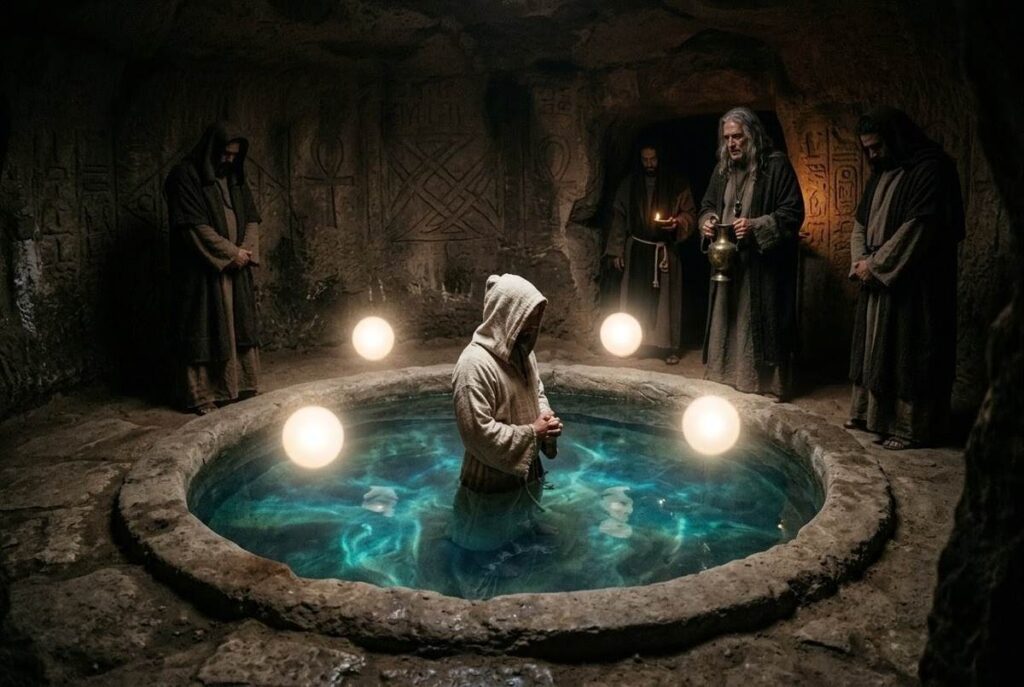
The first movement is water. In many ancient religious traditions, water marks purification, passage and new beginning. In Sethian texts, water is not only physical cleansing. It belongs to the spiritual language of living waters, heavenly baptism and the washing away of lower identity.
Water removes what has attached itself to the soul. It marks a break with ignorance, archonic identification and the heaviness of the lower world. But it is not only negative. It also begins the return to life.
In the symbolic logic of the Five Seals, water says: the old identification is not final. What has been stained by forgetfulness can be cleansed. What has been claimed by the lower world can be reclaimed by the source.
This is why baptismal imagery appears so naturally in Sethian texts. The soul enters water not to become merely respectable, but to awaken to a deeper origin than the world of the archons.
Anointing, Chrism and the Dew of Light
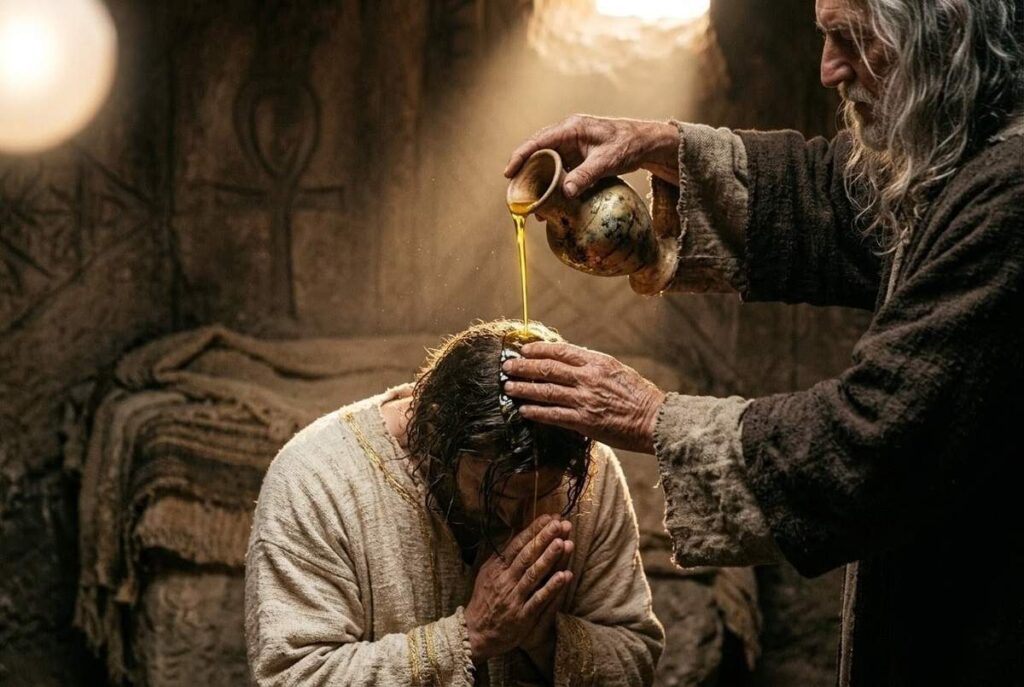
The second major movement is anointing. In ancient ritual worlds, oil could mark healing, consecration, kingship, priesthood and divine favour. In Gnostic sacramental language, chrism becomes a sign of spiritual empowerment and luminous identity.
The Gospel of Philip, a Valentinian rather than strictly Sethian text, famously gives chrism special importance. This does not mean Sethian and Valentinian rites were identical. It does show that anointing held deep symbolic power across several Gnostic traditions.
In the Five Seals pattern, oil can be read as the seal of consecration. Water washes away lower attachment; oil establishes belonging to the higher realm. The initiate is not merely cleansed. The initiate is marked as luminous, chosen and restored.
Some traditions speak in terms of the “dew of light” or heavenly substance. This language suggests that anointing is not only a physical action, but a symbol of divine radiance descending onto and into the initiate.
Comparative Note: Chrism and anointing appear across multiple Gnostic sacramental worlds. Sethian sealing language should be compared with Valentinian texts carefully, without assuming that all groups practised the same rite in the same way.
Spirit, Name and Awakening
The third movement concerns spirit, sacred naming and awakening. After cleansing and consecration, the initiate receives a deeper relation to the spiritual realm. This is where baptism becomes more than washing. It becomes recognition.
In Sethian texts, sacred names often matter intensely. Names are not labels casually attached to divine powers. They are markers of access, memory and spiritual orientation. To know the divine names is to know one’s way through the map of the higher realm.
This does not need to be reduced to magic in the shallow sense. It is closer to a theology of recognition. The soul learns the names of the reality it belongs to. By doing so, it stops mistaking the lower order for the whole of existence.
The seal of spirit therefore awakens the hidden faculty of gnosis. The initiate begins to perceive what was invisible before: the higher source, the false limits of archonic rule and the divine identity concealed beneath ordinary selfhood.
The Garment of Light
The garment of light is one of the most beautiful symbols in Gnostic literature. It appears in several ancient traditions as a sign of restored identity, heavenly origin and protection during ascent.
In the Five Seals pattern, the garment of light suggests that the initiate is clothed in a new mode of being. The soul no longer wears only the heavy garments of ignorance, fear and lower identity. It is vested in light, recognised by the higher realm and prepared for return.
This garment should not be understood as ordinary clothing. It is a spiritual body, a luminous identity, a sign that the person has been restored to their true origin. The garment reveals what the lower world had hidden.
In symbolic terms, the garment of light says: you are not only the personality shaped by the archonic world. You are clothed in a deeper nature, one that belongs to the Fullness.
The Final Seal and the Seed of Seth
The final seal confirms the initiate’s belonging. In Sethian language, this belonging is often linked with the seed of Seth, the immovable race and the divine lineage that preserves the true knowledge of origin.
A seal marks identity. It says that the person is known, protected and recognised. In the Sethian world, this means the spiritual person is not finally subject to the lower powers that claim rule over the material cosmos.
This final sealing gathers the previous movements together. Water cleansed. Oil consecrated. Spirit awakened. Light clothed. The final seal confirms the whole transformation as belonging to the divine source.
The seed of Seth is not a modern racial category. It is a symbolic and theological identity. It names those who remember their origin in the higher realm and belong to the line of spiritual restoration.
Ritual Context and Performance
How were the Five Seals performed? The honest answer is that we do not know in full. The surviving texts give powerful clues but not a complete ritual script. They speak of baptism, anointing, seals, names and heavenly powers. Scholars reconstruct possible practices from these fragments, but certainty is limited.
The ritual may have included actual water, oil, spoken names, prayer, vesting and communal recognition. It may also have included visionary or contemplative elements. In ancient esoteric traditions, ritual action and inner transformation were not sharply separated. What happened to the body, the voice and the imagination could all belong to one sacred process.
The repeated connection between sealing and ascent suggests that the ritual was understood as preparation for passage through the cosmic order. The initiate was marked as someone who belonged to a higher source and could pass beyond the claims of the lower rulers.
Whether performed in water, spoken in liturgy or interiorised through visionary ascent, the Five Seals express the same core idea: the spiritual person can be restored to the light from which they came.
Protection, Archons and Ascent
In Sethian cosmology, the soul must pass through a cosmos governed by lower powers. These powers, often called archons, are associated with ignorance, control and the structures that keep the soul bound to forgetfulness.
The Five Seals are often interpreted as protection for this ascent. They mark the soul as belonging to the higher realm and therefore not finally under archonic authority. The sealed person carries the signs of a deeper origin.
It is tempting to turn this into a literal map of planetary checkpoints, but the surviving evidence should be handled carefully. Some ancient ascent traditions do imagine the soul passing through hostile heavens or planetary spheres. Sethian texts share this atmosphere, but the exact details vary.
Symbolically, the meaning is clear. The seals protect the awakened identity from forces of forgetfulness. They declare that the soul is not owned by the powers that once shaped its lower life.
Reading Note: Archons and ascent can be read historically, cosmologically and symbolically. The safest modern reading treats the seals as ancient ritual language for protection, recognition and freedom from lower forms of identity.
From Ritual to Contemplative Recognition
Across the Sethian corpus, there appears to be a movement from ritual language towards contemplative ascent. Texts such as Zostrianos, Allogenes and Marsanes place increasing emphasis on visionary ascent, mental purification and the direct perception of higher realities.
This does not necessarily mean ritual disappeared. More likely, ritual and contemplation formed a shared field. External actions, spoken names and inner ascent could all express the same transformation from lower identity to spiritual recognition.
For modern readers, this matters because the Five Seals should not be treated only as lost ceremony. They can also be read as a symbolic map of inner restoration: cleansing, consecration, awakening, luminous identity and final belonging.
This symbolic reading does not replace historical study. It complements it. The ancient texts preserve ritual memory; the modern reader can approach that memory with care, humility and grounded imagination.
Reading the Five Seals Today
Read the Five Seals as a sacred pattern rather than as a simple checklist. The ancient ritual world is not fully recoverable, and pretending otherwise flattens the mystery. But the pattern itself remains powerful.
The first movement cleanses. The second consecrates. The third awakens. The fourth clothes in light. The fifth confirms belonging. Together, these movements describe the restoration of the spiritual person from confusion into remembered origin.
For grounded modern study, the Five Seals are best approached through three lenses. Historically, they belong to Sethian ritual and initiation. Symbolically, they speak of protection and return. Contemplatively, they describe the soul’s movement from lower identity into luminous recognition.
The heart of the teaching is not fear of the archons. It is confidence in the deeper origin of the soul. The sealed one is not merely escaping. The sealed one is remembering where they truly belong.
Safety Notice: This article explores symbolic, historical and spiritual ideas about seals, archons, ascent, spiritual protection, initiation and hidden identity. It is intended for grounded study of ancient texts, not as medical, psychological, legal or spiritual advice. If ideas about hidden powers, cosmic systems, ritual protection or spiritual identity become distressing, obsessive or destabilising, please seek support from a qualified mental health professional or appropriate emergency service.
Frequently Asked Questions
What are the Five Seals in Sethian Gnosticism?
The Five Seals are a Sethian Gnostic ritual and symbolic pattern associated with baptism, anointing, sacred naming, garments of light and spiritual restoration. They mark the initiate as belonging to the higher realm rather than to the lower powers.
Where are the Five Seals mentioned in the Nag Hammadi Library?
The Five Seals are referenced across Sethian and related Nag Hammadi texts, including the Apocryphon of John, Trimorphic Protennoia, Zostrianos, Allogenes and the fragmentary Hypsiphrone. No single surviving text gives a complete modern ritual manual, so reconstruction must remain cautious.
Were the Five Seals an actual ritual?
They likely reflect real ritual and initiatory language in Sethian communities, including baptismal and anointing imagery. However, the exact ancient performance is debated because the evidence is scattered and fragmentary. The seals should be read as both ritual language and symbolic theology.
What does sealing mean in this context?
In ancient religious language, a seal could mark belonging, protection, authenticity and recognition. In Sethian texts, sealing identifies the spiritual person as belonging to the realm of light and the seed of Seth rather than to the lower archonic order.
What is the Garment of Light?
The Garment of Light is a symbol of restored spiritual identity. It represents the soul clothed in luminous belonging, protected from lower powers and prepared for return to the divine Fullness. It is not ordinary clothing, but a sign of transformed identity.
How are the Five Seals related to the archons?
The Five Seals are often understood as protection during the soul’s ascent through the lower cosmic powers. Symbolically, they mark freedom from ignorance, fear and false identity. They show that the spiritual person is not finally owned by the archonic realm.
Are the Five Seals the same as Christian sacraments?
No. They share broad ancient ritual language with baptism, anointing and sealing, but the Sethian Five Seals belong to a distinct Gnostic cosmology involving the Pleroma, the seed of Seth, archons, ascent and spiritual restoration. They should not be equated directly with later orthodox sacramental systems.
How should modern readers understand the Five Seals?
Modern readers should approach the Five Seals historically, symbolically and contemplatively. Historically, they belong to Sethian ritual language. Symbolically, they describe cleansing, protection and return. Contemplatively, they map the soul’s movement from lower identity into luminous recognition.
Further Reading
Continue through the related Sethian and Nag Hammadi source layer:
- The Holy Book of the Great Invisible Spirit: a major Sethian source for the Great Invisible Spirit, Seth, the immovable race and the Five Seals.
- The Apocryphon of John: the foundational Sethian creation text, including the revelation of the divine realm, Yaldabaoth, archons and the path of restoration.
- Trimorphic Protennoia: the threefold descent of First Thought and one of the key texts for understanding Sethian sealing and awakening language.
- The Three Steles of Seth: Sethian hymns of ascent and praise centred on the immovable race.
- Zostrianos: a major Sethian ascent text through the aeons.
- Allogenes: a Sethian ascent text focused on the unknowable divine source.
- Hypsiphrone: a fragmentary text associated with ascent and sealing imagery.
- The Gospel of Philip: a Valentinian text useful for comparing chrism, anointing and sacramental language.
- Ascent Literature in the Nag Hammadi Library: the wider context of heavenly ascent, archons and spiritual passage.
- Nag Hammadi Library: Complete Guide to the Gnostic Scriptures: the broader archive guide to the codices, tractates and traditions.
References and Sources
The following sources support the historical, textual and interpretive claims made in this article.
Primary Sources and Critical Editions
- The Apocryphon of John. Nag Hammadi Codices II,1; III,1; IV,1; and Berlin Codex 8502,2.
- Trimorphic Protennoia. Nag Hammadi Codex XIII,1.
- Zostrianos. Nag Hammadi Codex VIII,1.
- Allogenes. Nag Hammadi Codex XI,3.
- Hypsiphrone. Nag Hammadi Codex XI,4.
- The Holy Book of the Great Invisible Spirit. Nag Hammadi Codices III,2 and IV,2.
- Robinson, James M., ed. The Nag Hammadi Library in English. Harper & Row / HarperSanFrancisco, revised editions.
- Meyer, Marvin, ed. The Nag Hammadi Scriptures. HarperOne, 2007.
- Layton, Bentley. The Gnostic Scriptures. Doubleday, 1987.
Scholarly Monographs and Studies
- Turner, John D. Sethian Gnosticism and the Platonic Tradition. Presses de l’Université Laval, 2001.
- Turner, John D. “Ritual in Gnosticism,” in Gnosticism and Later Platonism. Society of Biblical Literature, 2000.
- Brakke, David. The Gnostics: Myth, Ritual, and Diversity in Early Christianity. Harvard University Press, 2010.
- King, Karen L. The Secret Revelation of John. Harvard University Press, 2006.
- Williams, Michael Allen. Rethinking “Gnosticism”: An Argument for Dismantling a Dubious Category. Princeton University Press, 1996.
- Pearson, Birger A. Ancient Gnosticism: Traditions and Literature. Fortress Press, 2007.
- Logan, Alastair H. B. Gnostic Truth and Christian Heresy. T&T Clark, 1996.
Comparative Studies and Context
- DeConick, April D., Gregory Shaw and John D. Turner, eds. Practicing Gnosis: Ritual, Magic, Theurgy and Liturgy in Nag Hammadi, Manichaean and Other Late Antique Literature. Brill, 2013.
- Rasimus, Tuomas. Paradise Reconsidered in Gnostic Mythmaking. Brill, 2009.
- Waldstein, Michael, and Frederik Wisse. The Apocryphon of John: Synopsis of Nag Hammadi Codices II,1; III,1; and IV,1 with BG 8502,2. Brill, 1995.
- Pagels, Elaine. The Gnostic Gospels. Random House, 1979.
- Buckley, Jorunn Jacobsen. Female Fault and Fulfilment in Gnosticism. University of North Carolina Press, 1986.
Reading Note: The Five Seals are best read beside The Holy Book of the Great Invisible Spirit, Trimorphic Protennoia, The Three Steles of Seth and the Apocryphon of John. Together, these texts reveal the Sethian pattern of washing, naming, anointing, luminous identity, protection and return.