The Nag Hammadi Library: A Reader’s Map to the Gnostic Scriptures
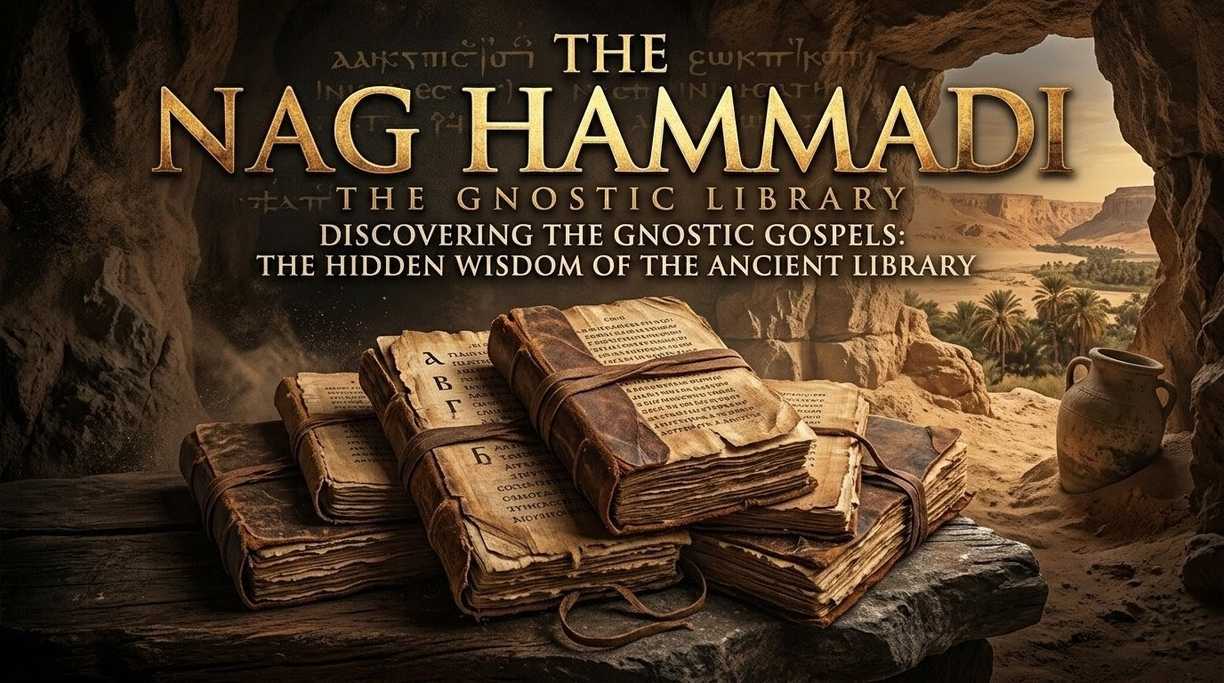
The Nag Hammadi Library stands as the most significant archaeological discovery in the study of early Christian diversity — a complete archive of forbidden texts buried for sixteen centuries beneath the administrative oversight of orthodox bureaucracy. For contemporary readers seeking orientation within this vast collection, a comprehensive Nag Hammadi library readers guide is not merely helpful but essential. The fifty-two tractates preserved in thirteen leather-bound codices represent multiple theological departments operating independently of the imperial Church — Sethian cosmologists, Valentinian sacramental theologians, Hermetic philosophers, and wisdom tradents who preserved sayings of Jesus outside the canonical filing system [1].
Discovered in December 1945 near the town of Nag Hammadi in Upper Egypt, this collection challenges the assumption that early Christianity was a uniform movement with a single headquarters and standard operating procedures. Instead, the library reveals a period of extraordinary creativity — roughly the second to fourth centuries CE — when multiple Christianities competed for adherents, each offering different answers to the questions of divine origin, human destiny, and the path to salvation [2]. The texts are not a single coherent canon but a curated archive of alternatives, buried perhaps by monks who recognised their value even as they judged them heretical [3].
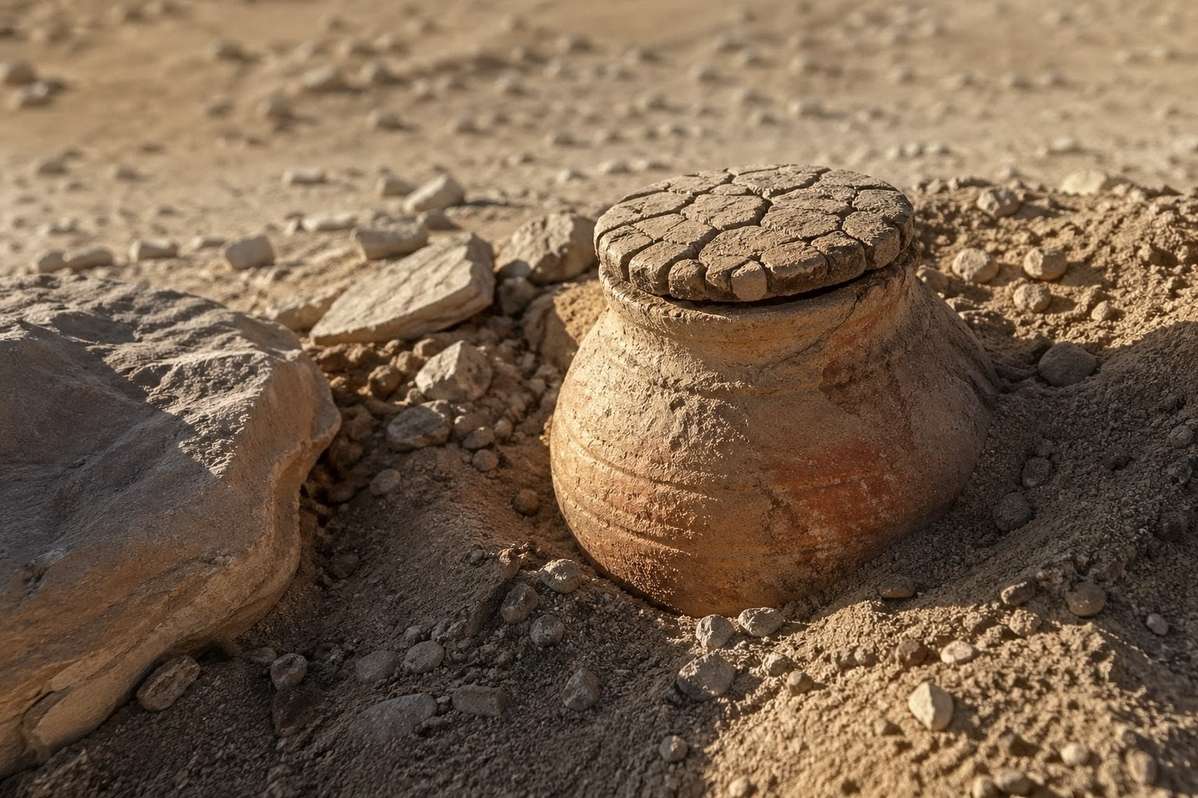
Table of Contents
- What Is the Nag Hammadi Library?
- The Discovery at Jabal al-Tarif
- The Structure of the Collection
- Navigating the Library: Reading Paths
- The Thirteen Codices: A Brief Survey
- Thematic Collections
- What This Guide Offers
- Why the Nag Hammadi Library Matters Today
- Frequently Asked Questions
- Further Reading
- References and Sources
What Is the Nag Hammadi Library?
The Nag Hammadi Library Defined
The Nag Hammadi Library (also called the Chenoboskion Manuscripts or the Gnostic Gospels) is a collection of thirteen fourth-century CE leather-bound papyrus codices discovered in 1945 near Nag Hammadi, Egypt. Containing fifty-two tractates (forty-six unique texts), the library preserves Coptic translations of Greek originals composed between the first and fourth centuries CE. The collection includes gospels, acts, letters, wisdom literature, apocalypses, and philosophical treatises from diverse Gnostic, Valentinian, Sethian, and Hermetic traditions [1].
Codicological designation: NHC I-XIII; Discovery: 16 December 1945; Language: Coptic (Sahidic and Lycopolitan dialects); Current location: Coptic Museum, Cairo.
The library takes its name from the nearest modern town, Nag Hammadi, though the actual discovery site lies several kilometres away at the base of the Jabal al-Tarif cliff face. The thirteen codices were buried together in a sealed earthenware jar, likely by monks from the nearby Pachomian monastery who sought to protect these texts from destruction during fourth-century anti-heretical campaigns [3]. The burial was not an act of preservation for future scholars but an emergency filing procedure — a hasty attempt to hide classified materials from the ecclesiastical authorities who were consolidating their administrative control over Christian doctrine [4].
Primary Source Citation: NHC II,2 32:1-10: “These are the secret sayings which the living Jesus spoke and which Didymos Judas Thomas wrote down. And he said, ‘Whoever finds the interpretation of these sayings will not experience death.'” [1]
The Discovery at Jabal al-Tarif
Muhammad Ali and the Sealed Jar
On 16 December 1945, a peasant boy named Muhammad Ali al-Samman was digging for fertiliser near the base of the Jabal al-Tarif cliffs when his mattock struck something hard. Uncovering a large sealed jar, he hesitated to open it — fearing it might contain a jinn — but eventually smashed the vessel with his mattock. Inside lay not a spirit but books: thirteen leather-bound codices containing papyrus pages covered in an ancient script he could not read [3].
The story of the discovery has become legendary in biblical scholarship, though the details remain contested. Muhammad Ali and his brothers reportedly divided the find, burned some pages for kindling, and sold the codices piecemeal to local antiquities dealers. Eventually, the collection came to the attention of French scholar Jean Doresse, who recognised its significance and alerted the academic world. The codices were subsequently acquired by the Coptic Museum in Cairo, where they remain today — a testament to the chaotic journey of forbidden knowledge from desert burial to museum display [4].
The Thirteen Codices
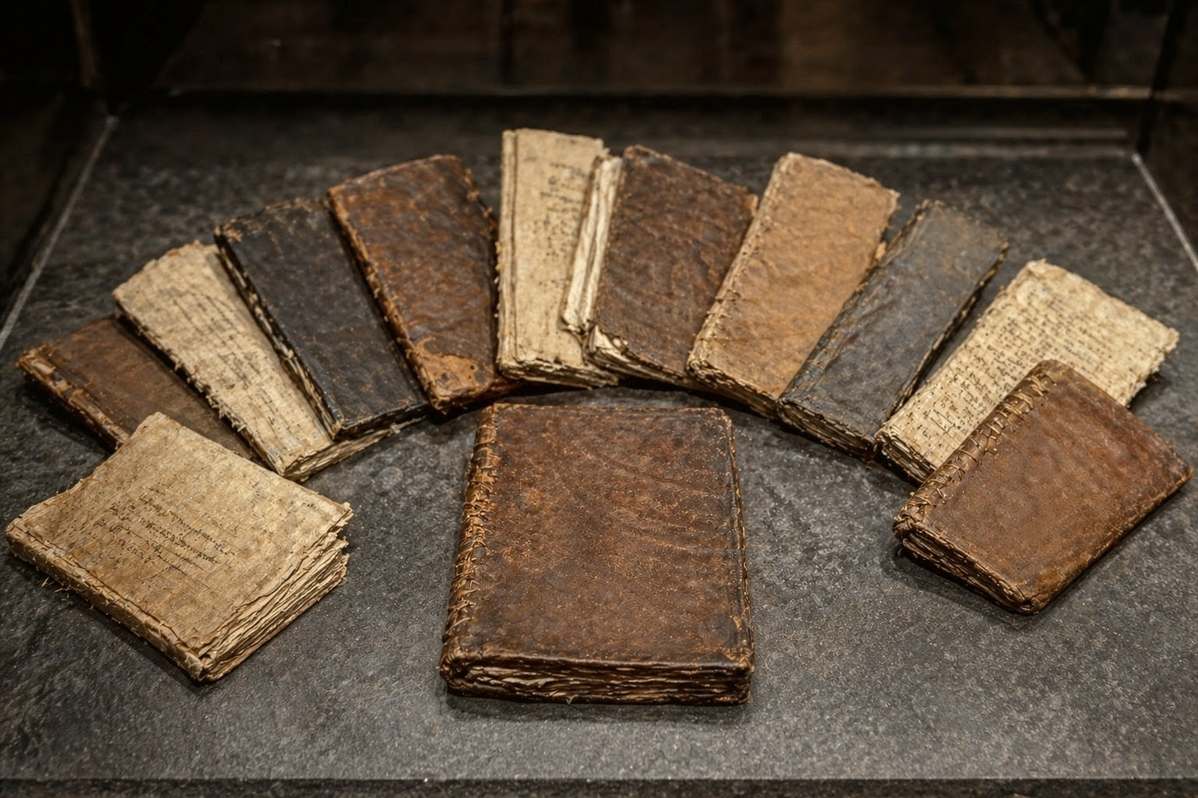
The library comprises thirteen codices (ancient books) plus a separate collection of leaves from Codex XIII that were removed before burial and placed in the jar as loose pages. The codices are designated NHC I through NHC XIII (Nag Hammadi Codex I-XIII) in scholarly literature. They vary in size, state of preservation, and scribal quality. Some are professionally copied with elegant hands; others show signs of amateur production, suggesting a community that valued content over presentation — a grassroots insurgency rather than an officially sanctioned publication programme [5].
The texts were originally composed in Greek, then translated into Coptic for Egyptian readers. The Sahidic dialect predominates, though some texts show Lycopolitan features. The translations vary in quality: some are polished literary renderings, while others are awkward, literal, and occasionally incomprehensible without reference to the Greek originals that have since been lost [1]. This linguistic diversity adds another layer of complexity for modern readers, who must navigate not only alien theological concepts but also the occasional bureaucratic incompetence of ancient translators [2].
The Structure of the Collection
Codicological Overview
Each codex contains between one and eight tractates, for a total of fifty-two texts. Of these, forty-six are unique; six are duplicates or variant versions of texts found elsewhere in the library (for example, the Apocryphon of John appears in three versions: NHC II,1; III,1; and IV,1) [1]. The codices range from the relatively intact NHC II (154 pages) to the severely damaged NHC XII, where only fragments survive [5].
The physical arrangement of texts within each codex suggests deliberate curation rather than random accumulation. Codex II, for instance, places the accessible Gospel of Thomas between the cosmological Apocryphon of John and the sacramental Gospel of Philip, creating a rhythm between narrative and instruction, myth and practice [6]. Codex VII groups technical Sethian texts together, suggesting a specialist’s dossier rather than a general introduction. These arrangements offer clues about the ancient communities that produced and used these books — communities with their own curatorial logic, their own reading protocols, their own sense of which texts belonged together in a single volume [4].
The Fifty-Two Texts
The tractates span an extraordinary range of genres and theological perspectives. Sayings collections like the Gospel of Thomas preserve the raw data of Jesus’ teaching without narrative framework. Cosmological myths like the Apocryphon of John narrate the fall of Sophia and the birth of the demiurge Yaldabaoth. Apocalypses like the Apocalypse of Paul describe visionary journeys through planetary spheres. Hermetic dialogues like the Discourse on the Eighth and Ninth guide the reader through celestial ascent. And philosophical treatises like the Teachings of Silvanus offer practical ethics drawn from Stoic and Christian sources [2].
This diversity is the library’s defining feature. Unlike the New Testament, which presents itself as a unified canon with consistent theological messaging, the Nag Hammadi Library is a conversation — sometimes harmonious, often discordant — between competing visions of God, humanity, and salvation. To enter this archive is to enter a theological free market where no single authority has a monopoly on truth [7].
Primary Source Citation: NHC VI.2 13:1-5: “I am the one who is honoured, and who is praised, and who is despised scornfully. I am the whore, and the holy one. I am the wife and the virgin. I am the mother and the daughter…” [1]
Navigating the Library: Reading Paths
The Nag Hammadi Library is not designed for sequential reading. The texts demand to be approached thematically, strategically, according to the reader’s background and interests. Below are four recommended entry points, each offering a different trajectory through the collection [6].
For Newcomers
Start with the Gospel of Thomas — 114 sayings of Jesus without narrative framework, demanding interpretation rather than belief. Then read Thunder: Perfect Mind, a poem of staggering beauty spoken by the divine feminine. These two texts offer immediate resonance without requiring background in Gnostic mythology. They are the public-facing documents of the library — the materials cleared for general distribution before one applies for advanced security clearance [8].
For Theologians
Begin with the Apocryphon of John — the classic Gnostic creation myth explaining how spirit became trapped in matter, and how the demiurge Yaldabaoth fashioned this flawed world. Follow with On the Origin of the World and Hypostasis of the Archons for variations on the archontic theme. Then turn to the Tripartite Tractate and Valentinian Expositions for the most sophisticated theological systems in the collection — dense, technical, and rewarding for those with patience [9].
For Mystics
The Discourse on the Eighth and Ninth offers a Hermetic guide to celestial ascent through the planetary spheres. Allogenes and Marsanes provide more technical (and challenging) Sethian ascent literature. For a more accessible mystical entry, try the Gospel of Philip, where the bridal chamber (nymphōn) appears as the highest sacrament — a mystical union that transcends physical sexuality while incorporating its intensity [10].
For Scholars
The duplicate versions of the Apocryphon of John (NHC II,1; III,1; IV,1) offer a unique opportunity for textual comparison across codices. The fragmentary remains of Codex XII present codicological challenges that illuminate ancient book production. And the scribal features of the collection — hands, bindings, page layouts — provide material evidence for the communities that produced and used these texts [5].
The Thirteen Codices: A Brief Survey
Each codex offers a distinct window into early Christian diversity. The following survey provides orientation, noting accessibility and thematic focus for each volume [1].
Codex I (The Jung Codex)
Contains: Prayer of the Apostle Paul, Apocryphon of James, Gospel of Truth, Treatise on the Resurrection, Tripartite Tractate. Focus: Valentinian theology and elegant meditation on resurrection. This codex offers intermediate complexity — accessible to readers with basic familiarity with Gnostic concepts, but rewarding for those who appreciate sophisticated theological prose [9].
Codex II
Contains: Apocryphon of John, Gospel of Thomas, Gospel of Philip, Hypostasis of the Archons, On the Origin of the World, Exegesis on the Soul, Book of Thomas the Contender. Focus: The most famous texts — Thomas, Philip, and the classic creation myths. This is the primary entry point for newcomers, offering the greatest diversity with the most accessible presentation [6].
Codex III
Contains: Apocryphon of John, Gospel of the Egyptians, Eugnostos the Blessed, Sophia of Jesus Christ, Dialogue of the Saviour. Focus: Sethian cosmology and dialogue format. Intermediate complexity, with the Dialogue of the Saviour offering an accessible entry into the question-and-answer genre [2].
Codex IV
Contains: Apocryphon of John, Gospel of the Egyptians. Focus: Duplicate versions useful for textual comparison. This codex is primarily of scholarly interest, offering variant readings that illuminate the fluidity of Gnostic textual transmission before standardisation [5].
Codex V
Contains: Eugnostos the Blessed, Apocalypse of Paul, First Apocalypse of James, Second Apocalypse of James, Apocalypse of Adam. Focus: Apocalyptic literature and James traditions. Intermediate to advanced complexity, with the apocalypses demanding familiarity with Jewish and Christian visionary conventions [11].
Codex VI
Contains: Acts of Peter and the Twelve Apostles, Thunder: Perfect Mind, Authoritative Teaching, Concept of Our Great Power, Plato’s Republic, Discourse on the Eighth and Ninth, Prayer of Thanksgiving, Asclepius. Focus: Thunder (essential), Hermetic texts, and an eclectic mix that crosses traditional boundaries. Accessible to intermediate, with something for every interest [10].
Codex VII
Contains: Paraphrase of Shem, Second Treatise of the Great Seth, Apocalypse of Peter, Teachings of Silvanus, Three Steles of Seth. Focus: Sethian technical theology and critique of martyrdom. Advanced complexity — this is the specialist’s dossier, requiring patience and prior familiarity with Sethian categories [8].
Codex VIII
Contains: Zostrianos, Letter of Peter to Philip. Focus: Extensive Sethian ascent text. Intermediate complexity — Zostrianos is long and demanding, but the Letter of Peter to Philip offers a more accessible framing device [12].
Codex IX
Contains: Melchizedek, Thought of Norea, Testimony of Truth. Focus: Fragmentary, challenging, unique perspectives. Advanced complexity — these texts are among the most difficult in the library, rewarding only for dedicated readers with substantial background [5].
Codex X
Contains: Marsanes. Focus: Technical Sethian Platonism. Advanced and heavily damaged — many passages require scholarly reconstruction. This is the most fragmentary single-text codex, offering glimpses of a sophisticated metaphysical system now largely lost [12].
Codex XI
Contains: Interpretation of Knowledge, Valentinian Expositions, Allogenes, Hypsiphrone. Focus: Valentinian technical texts and Allogenes. Advanced complexity — Allogenes is among the most difficult tractates in the collection, requiring extensive knowledge of Platonic and Sethian categories [9].
Codex XII
Contains: Sentences of Sextus, Gospel of Truth, fragments. Focus: Poorly preserved, scholarly interest mainly. Advanced — the fragmentary state means many passages are illegible, making this codex frustrating for general readers but invaluable for codicologists [5].
Codex XIII
Contains: Trimorphic Protennoia, On the Origin of the World. Focus: Three Forms of First Thought — feminine divine theology. Intermediate to advanced — the Trimorphic Protennoia offers a sophisticated presentation of the divine feminine as First Thought, Voice, and Sound [13].
Primary Source Citation: NHC II,1 10:15-20: “Now the archon who is weak has three names. The first name is Yaldabaoth, the second is Saklas, and the third is Samael. And he is impious in his arrogance which is in him. For he said, ‘I am God and there is no other God beside me,’ for he is ignorant of his strength, the place from which he had come.” [1]
Thematic Collections
Beyond the codex structure, the library can be navigated thematically. The following collections group texts by genre and theological focus, offering alternative pathways through the material [6].
Sayings Gospels
Gospel of Thomas and Gospel of Philip — wisdom collections without narrative framework. These texts strip away the editorial apparatus of the canonical gospels to reveal the raw sayings, demanding direct interpretation from the reader [8].
Creation Myths
Apocryphon of John, Hypostasis of the Archons, and On the Origin of the World — accounts of how the world came to be and why it is broken. These texts invert Genesis, making the serpent the hero and the creator god a bumbling demiurge who issues regulations he cannot enforce [7].
The Feminine Divine
Thunder: Perfect Mind, Trimorphic Protennoia, Sophia of Jesus Christ — divine wisdom in female form. These texts challenge the patriarchal assumption that the divine speaks only in masculine registers, offering alternative channels for encountering sacred presence [13].
Ascent Literature
Discourse on the Eighth and Ninth, Allogenes, Marsanes, Zostrianos — guidebooks for the journey through planetary spheres to the divine realm. These texts require the most advanced preparation, offering celestial maps for those ready to navigate the aeonic bureaucracy [12].
Apocalypses
Apocalypse of Paul, Apocalypse of Peter, Apocalypse of Adam, First and Second Apocalypse of James — revealed visions of cosmic structure and ultimate destiny. These texts employ the literary conventions of Jewish apocalyptic while redirecting them toward Gnostic soteriology [11].
Hermetic Connections
Discourse on the Eighth and Ninth, Asclepius, Prayer of Thanksgiving — Egyptian wisdom meeting Greek philosophy. These texts reveal the porous boundaries between Gnosticism and Hermeticism, showing how ancient seekers borrowed freely across departmental lines [10].
Primary Source Citation: NHC II,3 69:1-5: “The Lord did everything in a mystery, a baptism and a chrism and a eucharist and a redemption and a bridal chamber.” [1]
What This Guide Offers
This library contains commentary and interpretation, not full translations. The complete texts are available in scholarly editions: Marvin Meyer’s The Nag Hammadi Scriptures, David Brakke’s The Gnostics, or the original Nag Hammadi Library in English edited by James Robinson [1][2].
We do not reproduce Coptic texts or copyrighted translations. What we offer is guidance — context, structure, interpretation, and the thread that connects these ancient voices to contemporary spiritual seeking. Each article in this guide provides historical background, theological analysis, and practical suggestions for reading, along with verified links to related resources within the ZenithEye library [6].
The guide is designed for multiple reading speeds. Skim the codex summaries for a quick orientation. Follow the thematic collections for a curated journey. Dive into individual tractates for deep immersion. And return to the reading paths whenever you need a new direction — the library rewards repeated visits, each layer of familiarity revealing depths invisible to the first-time visitor [8].
Why the Nag Hammadi Library Matters Today
The Nag Hammadi Library is not a safe text. It will challenge your assumptions about Christianity, about God, about the nature of reality and the destiny of the soul. It will introduce you to alien gods, cosmic catastrophes, and salvation through knowledge rather than faith. It will suggest that the official version of religion — the one endorsed by the administrative headquarters — may be a local interpretation rather than the universal truth it claims to be [7].
But for those who have sensed that official religion does not tell the whole story, that there is something more to know, that the divine is stranger and closer than orthodoxy admits — these texts offer companionship. You are not the first to wonder. You are not the first to seek the thread that leads out of the labyrinth. The ancient seekers who compiled these codices, who copied them by hand in secret, who buried them in a jar to protect them from destruction — they understood that knowledge is not a commodity to be distributed by the authorised channels but a living force that finds its way to those who are ready to receive it [4].
Primary Source Citation: NHC I,3 18:15-20: “This is the book of the living, who are written among the living, who are written in the book of life…” [1]

Frequently Asked Questions
What is the Nag Hammadi Library?
The Nag Hammadi Library is a collection of thirteen fourth-century CE leather-bound codices discovered in 1945 near Nag Hammadi, Egypt. Containing fifty-two tractates (forty-six unique texts) in Coptic, it preserves previously unknown gospels, creation myths, apocalypses, and philosophical treatises from diverse Gnostic, Valentinian, Sethian, and Hermetic traditions of the second to fourth centuries CE.
When was the Nag Hammadi Library discovered?
The library was discovered on 16 December 1945 by Muhammad Ali al-Samman, a peasant boy digging for fertiliser near the Jabal al-Tarif cliffs in Upper Egypt. He unearthed a sealed jar containing thirteen leather-bound codices that had been buried for approximately sixteen centuries.
How many texts are in the Nag Hammadi Library?
The library contains fifty-two tractates across thirteen codices. Of these, forty-six are unique texts; six are duplicate or variant versions of texts found elsewhere in the collection. The most famous include the Gospel of Thomas, Apocryphon of John, Gospel of Philip, and Thunder: Perfect Mind.
What are the most important texts in Nag Hammadi?
The most influential texts include the Gospel of Thomas (114 sayings of Jesus), the Apocryphon of John (classic Gnostic creation myth), the Gospel of Philip (Valentinian sacramental theology), and Thunder: Perfect Mind (poem of the divine feminine). Codex II contains the most accessible and widely studied collection.
Is the Nag Hammadi Library Christian?
The library contains primarily Christian texts, but with significant diversity. Some texts are recognisably Christian (gospels, acts, apocalypses); others blend Christian elements with Jewish apocalyptic, Platonic philosophy, Hermetic spirituality, and Egyptian wisdom. The collection reveals a period when Christian identity was fluid and contested rather than uniform.
What is the difference between Sethian and Valentinian texts?
Sethian texts (Apocryphon of John, Hypostasis of the Archons, Zostrianos) feature elaborate cosmological myths involving Sophia’s fall, the demiurge Yaldabaoth, and aeonic hierarchies. Valentinian texts (Gospel of Philip, Tripartite Tractate, Valentinian Expositions) offer more sophisticated sacramental theology with a three-tiered anthropology (pneumatic, psychic, hylic). Both share a focus on secret knowledge (gnosis) but express it through different symbolic systems.
How should beginners approach the Nag Hammadi Library?
Beginners should start with the Gospel of Thomas (accessible sayings) and Thunder: Perfect Mind (poetic, immediate). Then progress to the Apocryphon of John for foundational cosmology. The ZenithEye library offers curated reading paths for newcomers, theologians, mystics, and scholars, as well as a complete reading order for systematic study.
Further Reading
These resources provide orientation, context, and pathways for continuing your engagement with the Nag Hammadi Library.
- The Nag Hammadi Discovery: A Buried Library Revealed — The full story of the 1945 discovery and its significance for biblical scholarship.
- What is Gnosticism? Defining the Undefinable — Essential background on the diverse movements behind these texts.
- Codex II: The Crown Jewels — The most accessible entry point containing Thomas, Philip, and the Apocryphon of John.
- Gnostic Schools: Sethians, Valentinians, and Hermetics — Understanding the theological currents that flow through the library.
- Nag Hammadi for Beginners: A 10-Text Journey — A curated reading path for newcomers with no prior background.
- The Complete Nag Hammadi Reading Order — The definitive sequence for reading all forty-six tractates systematically.
- The Feminine Divine in Nag Hammadi — Sophia, Thunder, and the recovery of the goddess in early Christian diversity.
- Creation Myths in Nag Hammadi — How the world came to be and why it is broken according to Sethian cosmology.
- Ascent Literature in Nag Hammadi — Guidebooks for the journey through planetary spheres to the divine realm.
- The Nag Hammadi Library: A Complete Guide to the Gnostic Scriptures — Comprehensive navigation of the entire collection with detailed commentary.
References and Sources
The following sources support the claims and quotations presented in this article. All citations to the Nag Hammadi Library represent direct translations from the Coptic text as established in the standard critical editions.
Primary Sources and Critical Editions
- [1] Robinson, J.M. (Ed.). (1990). The Nag Hammadi Library in English (3rd rev. ed.). HarperSanFrancisco. [Standard critical edition with Coptic text references for all thirteen codices]
- [2] Meyer, M.W. (Ed.). (2007). The Nag Hammadi Scriptures: The International Edition. HarperOne. [Contemporary accessible translations with scholarly introductions to each tractate]
- [3] Layton, B. (1987). The Gnostic Scriptures: A New Translation with Annotations and Introductions. Doubleday. [Annotated translations with codicological and theological analysis]
- [4] Kasser, R., Meyer, M.W., & Wurst, G. (Eds.). (2006). The Gospel of Judas. National Geographic. [Critical edition with historical context for Nag Hammadi related discoveries]
- [5] Attridge, H.W. (Ed.). (1985). Nag Hammadi Codex I: Volume 1, Introduction and Text. Brill. [Critical edition with detailed codicological analysis]
Scholarly Monographs and Commentaries
- [6] Pagels, E. (1979). The Gnostic Gospels. Random House. [Foundational study of Nag Hammadi texts and their significance for early Christian diversity]
- [7] King, K.L. (2003). What Is Gnosticism? Harvard University Press. [Critical historiography and analysis of the diverse movements represented in the library]
- [8] Brakke, D. (2010). The Gnostics: Myth, Ritual, and Diversity in Early Christianity. Harvard University Press. [Comprehensive introduction to the social and religious contexts of Nag Hammadi texts]
- [9] Thomassen, E. (2006). The Spiritual Seed: The Church of the “Valentinians”. Brill. [Detailed analysis of Valentinian texts in the Nag Hammadi collection]
- [10] Turner, J.D. (2001). Sethian Gnosticism and the Platonic Tradition. Peeters. [Context for the Sethian cosmological and ascent texts in the library]
Comparative Studies and Thematic Analyses
- [11] Jonas, H. (2001). The Gnostic Religion: The Message of the Alien God and the Beginnings of Christianity (3rd ed.). Beacon Press. [Classic philosophical study of Gnosticism with extensive reference to Nag Hammadi materials]
- [12] Rudolph, K. (1987). Gnosis: The Nature and History of Gnosticism. HarperSanFrancisco. [Comprehensive historical overview of Gnostic movements and texts]
- [13] McGuire, A. (1994). “Thunder, Perfect Mind.” In E. Schussler Fiorenza (Ed.), Searching the Scriptures, Volume Two: A Feminist Commentary (pp. 39-54). Crossroad. [Feminist theological analysis of the feminine divine in Nag Hammadi]
- [14] Williams, M.A. (1996). Rethinking “Gnosticism”: An Argument for Dismantling a Dubious Category. Princeton University Press. [Critical historiography relevant to the classification of Nag Hammadi materials]
- [15] Pearson, B.A. (1990). Gnosticism, Judaism, and Egyptian Christianity. Fortress Press. [Comparative study of the Jewish and Egyptian contexts of Nag Hammadi texts]