Codex VI: The Mixed Theological Collection
Codex VI: The Hermetic Gateway of the Nag Hammadi Library

Codex VI occupies a unique position within the Nag Hammadi library as the point where Gnostic Christianity meets classical philosophy and Egyptian Hermeticism. While other codices preserve distinct theological traditions–Sethian, Valentinian, or otherwise–Codex VI gathers materials from multiple streams: a Christian apocryphon, a thundering divine proclamation, Platonic dialogue, and culminating in four Hermetic texts that anchor the collection in the wisdom tradition of Thoth-Hermes. This is the executive headquarters where multiple departments compare notes on the single project of human transformation.
This eclecticism is not accidental. The scribes who compiled Codex VI recognised that gnosis transcends sectarian boundaries. Truth appears in the words of Jesus, in the thunder of Isis, in the geometry of Plato, and in the ascent through planetary spheres described by Hermes Trismegistus. The codex is an argument by juxtaposition: wisdom is where you find it, regardless of which division files the report.
What is Codex VI?
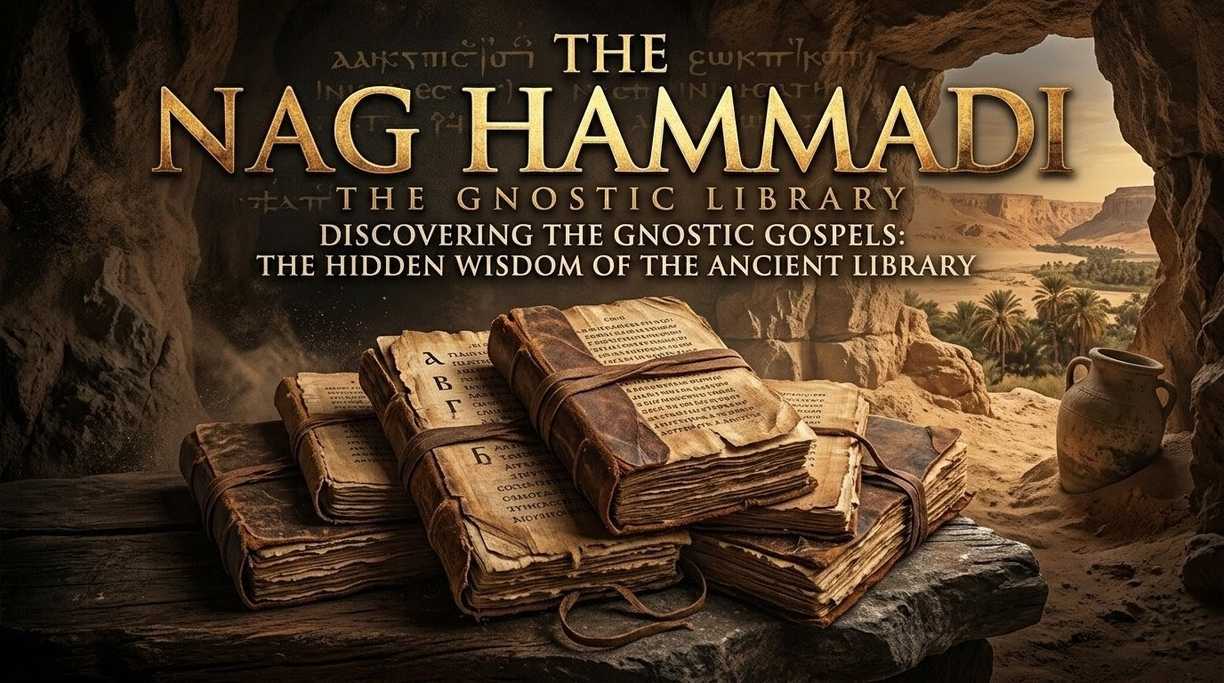
Nag Hammadi Codex VI (NHC VI) is the sixth volume in the thirteen-codex library discovered in 1945. Dating to the mid-fourth century CE, it contains eight tractates demonstrating the intellectual cosmopolitanism of late antique Gnostic communities. The codex uniquely combines Christian narrative (Acts of Peter), Sethian/Isis revelation (Thunder: Perfect Mind), Platonic philosophy (Republic excerpt), apocalyptic theology (Concept of Our Great Power), and culminating in three Hermetic texts (Discourse on the Eighth and Ninth, Prayer of Thanksgiving, Asclepius) that preserve the Egyptian wisdom tradition attributed to Hermes Trismegistus.
The Eight Tractates: A Multi-Departmental Archive
1. The Acts of Peter and the Twelve Apostles (VI,1)
This brief narrative opens Codex VI with a parable-like story. The apostles arrive at a city and meet a pearl merchant named Lithargoel, who tests their faith by sending them on a journey to a distant mountain. Only Peter persists, and upon arrival discovers that Lithargoel is Jesus himself, disguised as the merchant. This is the security clearance test–the field operatives must prove their commitment before accessing the classified materials.
The story operates on multiple levels: as encouragement to persevere in the spiritual life, as a meditation on the cost of discipleship, and as an allegory of the soul’s journey toward recognition. The pearl, of course, is the familiar Gnostic symbol for the self hidden within the shell of material existence. “He appeared to us as a merchant,” Peter recounts, “but he was testing us.” The theme of divine disguise runs throughout Gnostic literature–the saviour who appears as a stranger, the master who poses as a servant, the light that conceals itself in darkness. This is the chief executive conducting field inspections incognito.
2. Thunder: Perfect Mind (VI,2)
If the Acts of Peter is narrative, Thunder is proclamation. A divine feminine voice speaks, identifying herself with every possible condition of existence: “I am the first and the last. I am the honoured and the scorned. I am the whore and the holy one. I am the wife and the virgin.” The text is a masterpiece of paradox, designed to shatter conceptual limitations–the filing system that dissolves its own categories.
The divine feminine here is not a consort or a mother but the ground of being itself, the source from which all polarities emerge and to which they return. She is Isis, she is Barbelo, she is the wisdom that was before creation. “I am the knowledge of my inquiry,” she declares, “and the finding of those who seek after me.” This is thealogy as epistemology–the divine is not merely to be worshipped but to be recognised as the structure of consciousness itself. The departmental heads of all divisions report to this executive.
Primary Source: NHC VI,2 13:5-10: “I am the first and the last. I am the honoured and the scorned. I am the whore and the holy one. I am the wife and the virgin.”
3. Authoritative Teaching (VI,3)
A shift in register: now we encounter philosophical exposition on the soul’s journey. The text describes the soul’s descent into matter, its entrapment by passions and false opinions, and its arduous ascent back to the divine through knowledge and discipline. “The soul is a precious thing,” the text insists, “and it came to be in a contemptible body.” The body is not evil but unsuitable–a temporary lodging that the soul must learn to use without identifying with it. The teaching is Stoic in its ethics, Platonic in its metaphysics, Gnostic in its soteriology. This is the training manual for field operatives assigned to difficult postings.
4. The Concept of Our Great Power (VI,4)
This apocalyptic text divides history into three ages: the age of the flood (under the rule of Saklas), the present age (under the rule of Yaldabaoth), and the future age (the consummation). It presents a theology of providence in which the Great Power–a divine figure similar to the Sethian Autogenes–guides history toward its appointed end. Those who receive the seal of the Great Power will survive the coming dissolution and inherit the new world. This is the long-term strategic planning document, the corporate forecast covering multiple fiscal epochs.
5. Plato, Republic 588a-589b (VI,5)
A fascinating inclusion: an extract from Plato’s Republic, the famous image of the soul as a composite creature–human, lion, and many-headed beast–representing reason, spiritedness, and appetite. The text is accompanied by a brief Gnostic gloss that interprets the Platonic psychology in terms of the soul’s entrapment in matter. The inclusion demonstrates the easy commerce between Greek philosophy and Gnostic theology in late antiquity. Plato was not an enemy but a precursor, a philosopher who had approached the truth from a different angle. The Gnostic gloss suggests that the Greeks, too, had their prophets–the pagans had their own departmental intelligence analysts.

6-8. The Hermetic Texts
Codex VI concludes with three texts from the Corpus Hermeticum–the ancient Egyptian wisdom tradition attributed to Hermes Trismegistus (Thrice-Greatest Hermes), the syncretic figure combining the Greek god Hermes with the Egyptian Thoth. These represent the foreign office archives, the diplomatic cables from another tradition that share the same ultimate destination.
The Discourse on the Eighth and the Ninth (VI,6): A dialogue between Hermes and his son Tat describing mystical ascent through the planetary spheres (the seven spheres of the Ogdoad) to the divine realm beyond (the Ennead). The text includes ritual instructions–directions for prayer, the use of incense, and the invocation of powers. It is one of the few surviving descriptions of Hermetic ritual practice, the exit visa procedures from the planetary branch offices to the pleromatic headquarters.
Primary Source: NHC VI,6 52:1-5: “My father, yesterday you promised that you would bring my mind into the eighth and then you would bring me into the ninth.”
The Prayer of Thanksgiving (VI,7): A beautiful hymn of gratitude following successful initiation: “We give thanks to you, every soul and heart reaches up to you, O ineffable Name.” The prayer concludes with a communal meal–the krater or mixing bowl–that seals the spiritual union achieved through the ascent. This is the celebration upon clearance approval, the departmental party following successful audit.
Asclepius 21-29 (VI,8): An excerpt from the Latin Asclepius (known to the scribes in Coptic translation), describing the creation of the cosmos through divine word and the establishment of fate under the stars. The text articulates the Hermetic vision of a living cosmos animated by divine reason, in which human beings participate through knowledge. This is the cosmological briefing from the Egyptian diplomatic corps.
Hermeticism and Gnosticism: Shared Filing Systems
The presence of Hermetic texts in a Gnostic codex raises important questions about the relationship between these traditions. Hermeticism was not “Gnostic” in the specific sense of demiurgical mythology–it lacks the fallen Sophia, the ignorant archons, the divine spark trapped in matter. Yet it shares with Gnosticism several fundamental principles that suggest a common administrative centre:
The Priority of Knowledge
Salvation comes through gnosis, not faith or ritual observance. Both traditions agree that understanding transforms, that knowledge liberates, that recognition of one’s true nature constitutes the goal of spiritual life. This is the security clearance granted through comprehension rather than seniority.
Cosmic Ascent
The soul must pass through planetary spheres to reach the divine. Both Hermeticism and Gnosticism share the cosmological map of seven planetary realms governed by powers, through which the soul must navigate to reach the realm beyond. These are the standard exit procedures from the material branch office.
The Divinity of Humanity
Humans are not creatures but gods in potential, capable of union with the divine mind. Both traditions reject the radical ontological distinction between creator and created, affirming instead a continuum of being in which humanity participates in divinity. This is the personnel file that identifies each operative as heir to the executive suite.
Rebirth
The Hermetic palingenesia (rebirth) parallels the Gnostic anastasis (resurrection). Both describe a transformation of consciousness that occurs through knowledge, a regeneration that makes the initiate a new being. This is the promotion that follows successful completion of the training programme.
The compilers of Codex VI clearly saw these traditions as complementary. The Christian Gnostic finds in Hermeticism a philosophical framework; the Hermeticist finds in Gnosticism a narrative of cosmic fall and restoration. Together they form a comprehensive spirituality–mythological, philosophical, and ritual. The executive headquarters maintains diplomatic relations with multiple departments.

Reading Codex VI: Multiple Modes of Attention
This codex demands multiple modes of attention. Read the Acts of Peter as narrative–as story, parable, encouragement. Read Thunder aloud, letting the rhythms work on your breath and attention. Read the Platonic extract philosophically, testing its psychology against your own experience. And read the Hermetic texts as manuals–practical guides to transformation that can still be used, adapted, made alive.
The progression matters: from Christian story through divine proclamation, philosophical analysis, apocalyptic vision, classical wisdom, and finally to the ritual ascent. The codex is structured as a path, moving from the familiar to the transcendent, from narrative to experience. This is the complete onboarding process, from orientation through advanced training to field certification.
“Enter into the race of the immutable,” the Discourse on the Eighth and the Ninth concludes, “and become a guide to those who are worthy.” Codex VI preserves the wisdom of those who made this journey–and extends the invitation to those who would follow. The executive headquarters is recruiting; the security clearance examinations are open to all who can pass the tests.
Primary Source: NHC VI,6 61:5-10: “Enter into the race of the immutable, and become a guide to those who are worthy.”

Frequently Asked Questions
What is Codex VI in the Nag Hammadi Library?
Codex VI is the sixth volume in the thirteen-codex Nag Hammadi Library, containing eight tractates that uniquely combine Christian narrative (Acts of Peter), Sethian/Isis revelation (Thunder: Perfect Mind), Platonic philosophy (Republic excerpt), apocalyptic theology (Concept of Our Great Power), and three Hermetic texts (Discourse on the Eighth and Ninth, Prayer of Thanksgiving, Asclepius) representing the wisdom tradition of Thoth-Hermes.
What makes Codex VI different from other Nag Hammadi codices?
Unlike other codices that preserve single traditions (Sethian or Valentinian), Codex VI gathers materials from multiple streams: Christian apocryphon, divine feminine proclamation, Platonic dialogue, and Hermetic wisdom. This eclecticism demonstrates that Gnostic communities valued truth regardless of source, collecting wisdom from Jesus, Isis, Plato, and Hermes Trismegistus alike.
What are the Hermetic texts in Codex VI?
Codex VI contains three Hermetic texts: (1) The Discourse on the Eighth and Ninth–a dialogue on mystical ascent through planetary spheres with ritual instructions; (2) The Prayer of Thanksgiving–a hymn of gratitude following initiation; (3) Asclepius 21-29–an excerpt on cosmic creation and fate. These preserve the Egyptian wisdom tradition attributed to Hermes Trismegistus.
What is Thunder: Perfect Mind about?
Thunder: Perfect Mind (NHC VI,2) presents a divine feminine voice declaring paradoxical identities: ‘I am the first and the last… the whore and the holy one… the wife and the virgin.’ It is Isis, Barbelo, the ground of being itself–designed to shatter conceptual limitations and initiate recognition of the divine structure of consciousness.
How do the Hermetic and Gnostic traditions relate in Codex VI?
While Hermeticism lacks specific Gnostic mythology (fallen Sophia, hostile archons), both share: (1) salvation through knowledge (gnosis), (2) cosmic ascent through planetary spheres, (3) human potential for divine union, and (4) transformation through rebirth. Codex VI treats them as complementary–Gnosticism providing narrative, Hermeticism providing philosophical framework and ritual method.
What is the Discourse on the Eighth and Ninth?
The Discourse on the Eighth and Ninth (NHC VI,6) is a Hermetic dialogue between Hermes Trismegistus and his son Tat describing mystical ascent. The ‘eighth’ is the sphere of fixed stars (ogdoad), the ‘ninth’ is the realm beyond cosmos (ennead). It includes rare ritual instructions–prayer, incense, invocations–for achieving spiritual rebirth.
How should one read Codex VI for spiritual insight?
Read Codex VI sequentially as a designed path: Acts of Peter as narrative parable, Thunder aloud for vibrational effect, Authoritative Teaching as philosophical psychology, Concept of Our Great Power as apocalyptic framework, Plato as classical wisdom, and the Hermetic texts as practical manuals. Each tractate builds toward the ritual ascent described in the Discourse on the Eighth and Ninth.
Further Reading
- Thunder: Perfect Mind — The divine feminine proclamation of paradox that shatters conceptual limitations and initiates recognition of the ground of being.
- The Discourse on the Eighth and Ninth — The Hermetic dialogue on mystical ascent through planetary spheres, including rare ritual instructions for spiritual rebirth.
- The Complete Nag Hammadi Reading Order — A comprehensive guide to all forty-six tractates across thirteen codices, with suggested reading paths for seekers, scholars, and mystics.
References and Sources
The following sources support the claims and quotations presented in this article. All citations to the Nag Hammadi Library represent direct translations from the Coptic text as established in the standard critical editions.
Primary Sources and Critical Editions
- [1] Robinson, J.M. (Ed.). (1977). The Nag Hammadi Library in English. Harper & Row. — Standard English translation of Codex VI tractates.
- [2] Meyer, M. (2007). The Nag Hammadi Scriptures. HarperOne. — Scholarly translation with introduction to Hermetic and Gnostic parallels.
- [3] Layton, B. (1987). The Gnostic Scriptures. Doubleday. — Critical edition with theological analysis of Thunder and Hermetic texts.
- [4] Funk, W.P., Schenke, H.M., & Bethge, H.G. (1999). Nag Hammadi Deutsch, Band 2. Walter de Gruyter. — German critical edition with Coptic text and line numbering.
- [5] Mahé, J.P. (1978-1982). Hermès en Haute-Egypte. Presses Universite Laval. — Definitive study of Hermetic texts in Nag Hammadi.
Scholarly Monographs and Specialist Studies
- [6] Turner, J.D. (2001). Sethian Gnosticism and the Platonic Tradition. Presses Universite Laval. — Analysis of philosophical elements in NHC VI.
- [7] King, K.L. (2005). What is Gnosticism? Harvard University Press. — Theoretical framework for understanding eclectic collections.
- [8] Copenhaver, B.P. (1992). Hermetica. Cambridge University Press. — Critical edition of Corpus Hermeticum with analysis of NHC VI parallels.
- [9] Perkins, P. (1984). Gnosticism and the New Testament. Fortress Press. — Contextualisation within early Christian diversity.
- [10] Salaman, C. (2000). The Way of Hermes. Duckworth. — Study of Hermetic practice and ritual in NHC VI.
Comparative Studies and Thematic Analyses
- [11] Ehrman, B.D. (2003). Lost Scriptures: Books that Did Not Make It into the New Testament. Oxford University Press.
- [12] Fowden, G. (1986). The Egyptian Hermes. Cambridge University Press. — Historical study of Hermeticism and Gnosticism in Egypt.
- [13] Sevrin, J.M. (1990). Le dossier baptismal sétilien. Presses Universite Laval. — Analysis of ritual elements in NHC VI.
- [14] Tardieu, M. (1984). Écrits gnostiques: Codex VI. Bibliothèque copte de Nag Hammadi, section “Textes,” 11.
- [15] Williams, M.A. (1996). Rethinking “Gnosticism”. Princeton University Press. — Theoretical analysis of Hermetic-Gnostic relationships.