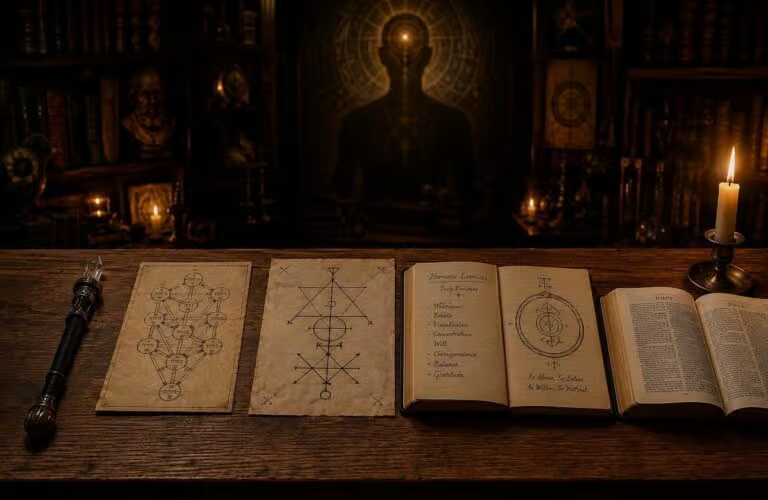
Symbol as Safety Protocol: Why Esotericism Hides in Plain Sight
The text is available. The image is public. The architecture, fully diagrammed, hangs in museums, fills libraries, populates the internet. Yet the knowledge remains hidden. Not through scarcity. Through encryption. The symbol is not decoration. It is safety protocol–the mechanism by which dangerous knowledge preserves itself for those ready and conceals itself from those who are not.
The modern assumption is transparency. Knowledge, valuable, should be accessible. Education, democratic, should remove barriers. The esoteric tradition disagrees. The knowledge, in certain domains, is harmful to the unprepared. The transparency, enforced, produces not liberation but damage. The symbol is the compromise–available to all, comprehensible to few, operational only for those who have done the work.
This is not elitism. It is accurate risk assessment.
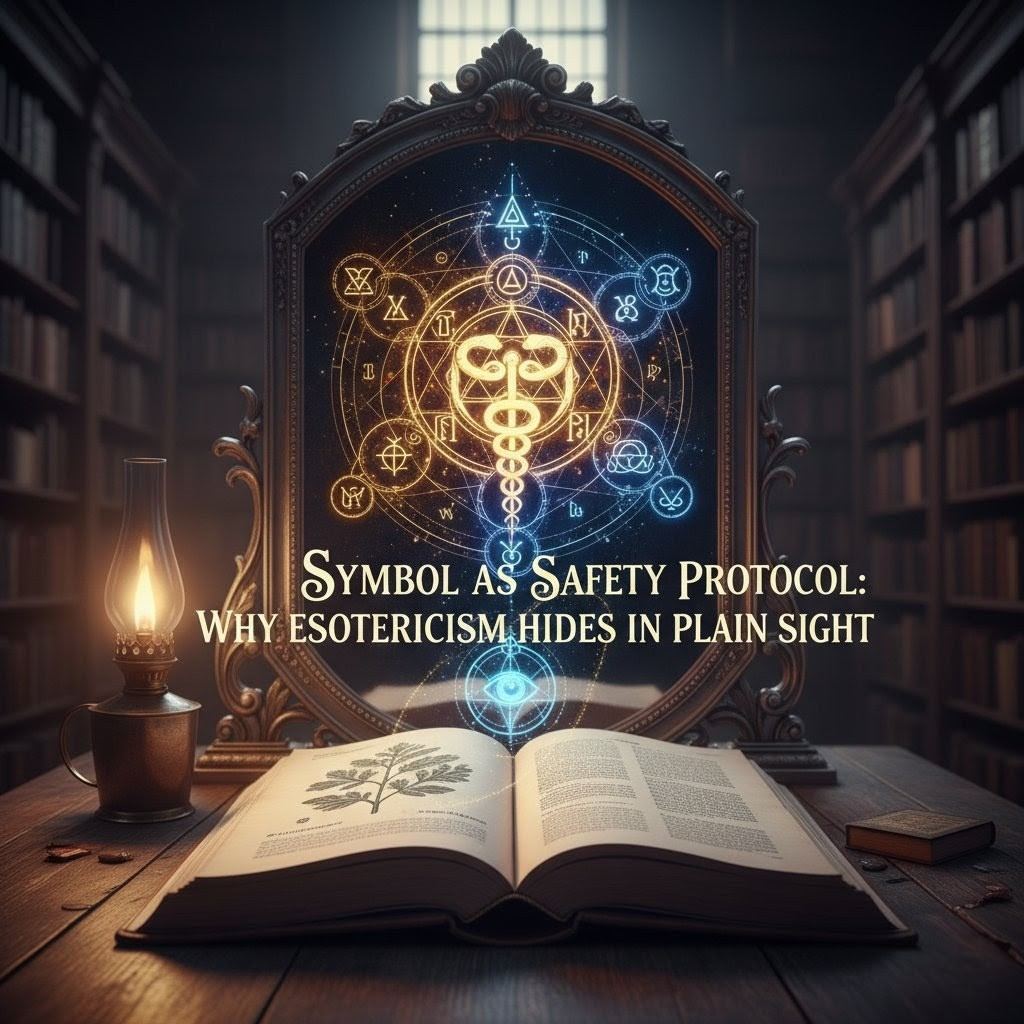
Table of Contents
- The Danger Is Real
- The Encryption Is Multiple
- The Symbol Is Not Arbitrary
- The Concealment Serves Extension
- The Decryption Requires Preparation
- Frequently Asked Questions
- Further Reading
- References and Sources
The Danger Is Real
Consider the territory. The modification of consciousness. The dissolution of self. The encounter with non-ordinary states. These are not intellectual exercises. They are physiological and psychological events with real consequences. The unprepared practitioner, pushing into territory they do not understand, encounters not transformation but trauma.
The traditions know this. The shamanic initiation, prolonged, structured, contained. The yogic practice, graduated, supervised, integrated. The alchemical work, sealed, heated, controlled. Each includes preparation before operation. Each recognises that the operation, premature, produces not gold but poison.
The modern world lacks these containers. The techniques, stripped of tradition, are available through books, through videos, through workshops. The practitioners, self-taught, encounter the territory without map. The results–psychosis, inflation, bypass, dissociation–are predictable. The symbol, properly understood, is map. The map, read without preparation, is incomprehensible. The incomprehensibility is protection.
The Encryption Is Multiple
First, Vocabulary
The esoteric text uses words differently. The philosopher’s stone is not stone. The tree of life is not botanical. The chakra is not physiological, not in the way the unprepared reader assumes. The vocabulary, literalised, produces nonsense. The nonsense, recognised as such, repels the casual seeker. The genuine seeker, puzzled, persists. The persistence is first filter.
Second, Contradiction
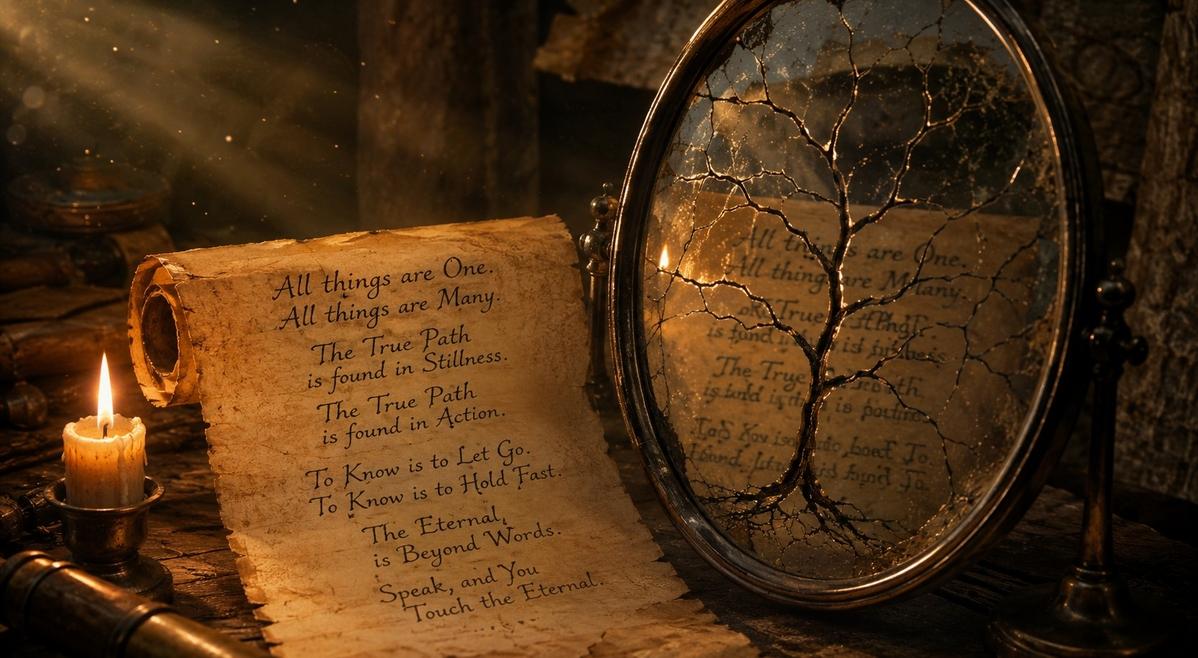
The text asserts what it denies. The Tao that can be told is not the eternal Tao. The eye with which I see God is the same eye with which God sees me. The statements, logical contradictions, are not errors. They are pointers–indications that the territory exceeds ordinary cognition. The casual reader, encountering contradiction, dismisses. The prepared reader, encountering contradiction, recognises limit. The recognition is second filter.
Third, Operation
The symbol, described, is not understood. The symbol, practised, becomes comprehensible. The Kabbalist does not understand the Tree of Life through study. The Tree is worked–meditated, pathworked, integrated into daily function. The understanding emerges from operation. The operation, sustained, requires commitment. The commitment is third filter.

The Symbol Is Not Arbitrary
The modern critique sees projection. The symbol, arbitrary, is invested with meaning by the community. The meaning, conventional, could be different. The symbol is code–agreed reference, nothing more.
This is incorrect. The symbol is resonance–the shape that matches the territory. The Tree of Life is not arbitrary diagram. It is architecture–the structure of consciousness, the pattern of emanation, the map of transformation. The correspondence is not imposed. It is discovered. The symbol works because it matches. The matching is not cultural. It is ontological.
The alchemist works with sol and luna–sun and moon, gold and silver, the masculine and feminine principles. The principles are not metaphor. They are observable–the active and receptive, the radiant and reflective, the giving and receiving. The work, physical and psychological, proceeds through their union. The symbol describes what happens. The description, accurate, enables repetition.

The Concealment Serves Extension
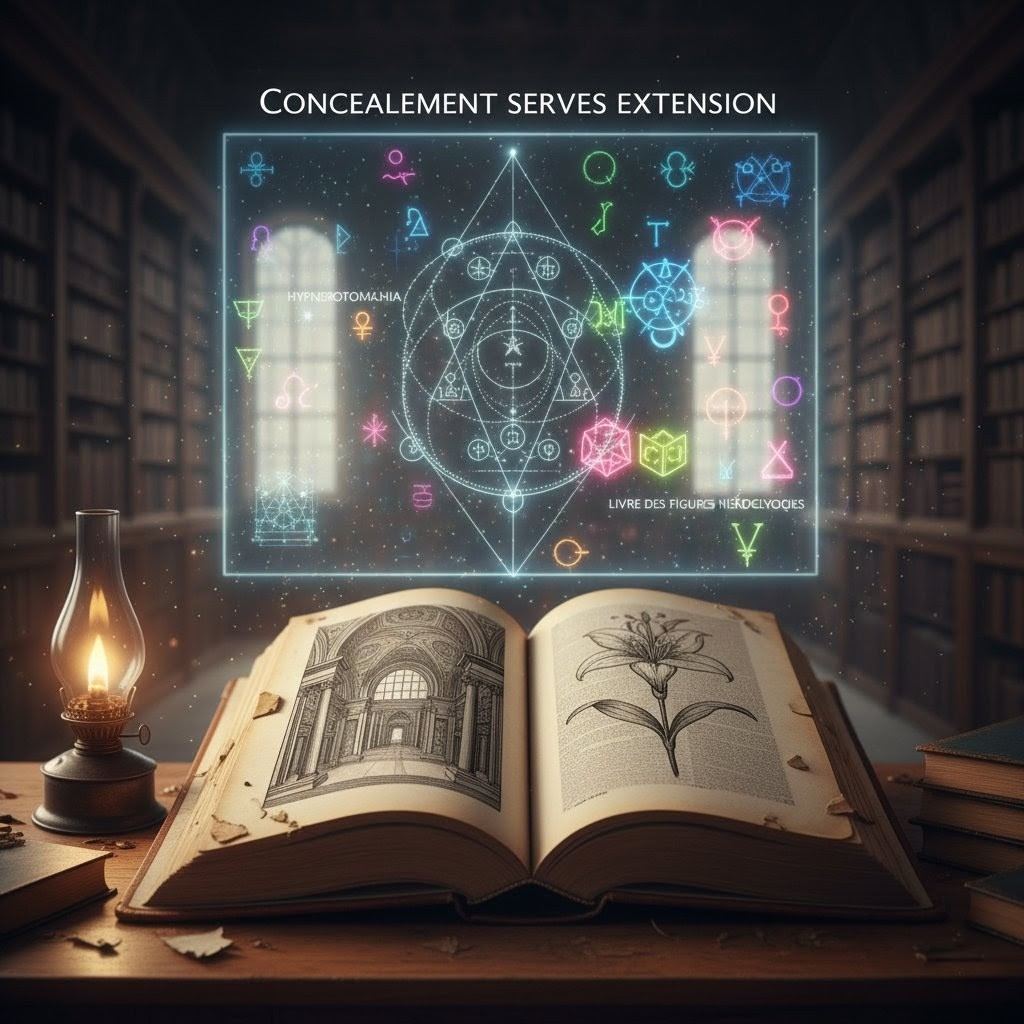
The symbol, hidden, persists. The text, burned, survives in memory. The tradition, persecuted, continues through encryption. The symbol is resilient–available to recognition, invisible to suppression.
The Inquisition, searching for heresy, found texts. The texts, examined, appeared innocent. The Livre des Figures Hieroglyphiques of Nicolas Flamel–alchemical allegory, or Christian piety? The Hypnerotomachia Poliphili–architectural fantasy, or initiatory journey? The symbols, layered, concealed their operation from hostile reading. The operation, preserved, extended to prepared readers.
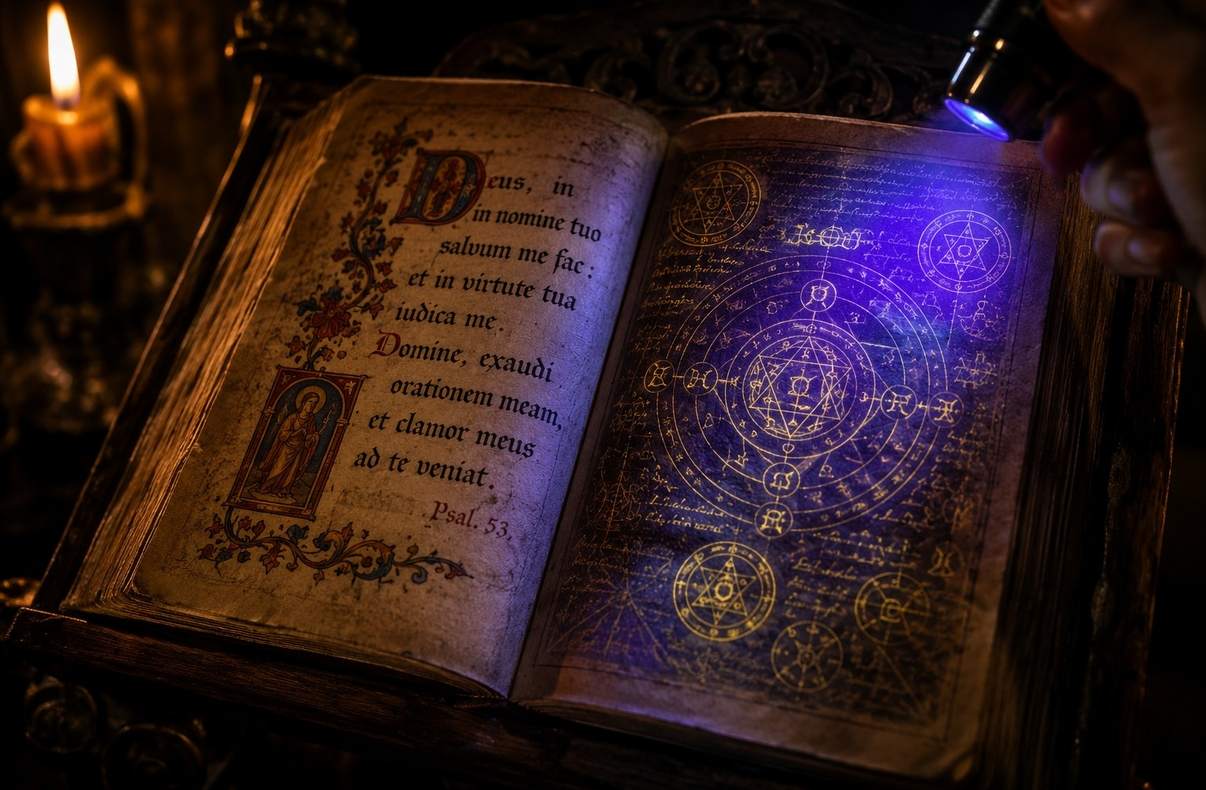
The modern equivalent is steganography–hidden message within apparent message. The esoteric text, published, circulates freely. The censor, examining, finds nothing dangerous. The prepared reader, examining, finds everything. The concealment is not deception. It is discrimination–the selection of readers through capacity, not through authority.

The Decryption Requires Preparation
The symbol, encountered, does not yield immediately. The preparation is necessary–intellectual, practical, moral.
- The intellectual preparation: the study of tradition, the comparison of systems, the recognition of pattern.
- The practical preparation: the work itself, the technique, the sustained operation.
- The moral preparation: the orientation, the sincerity, the absence of exploitation.
The preparation is not gatekeeping. It is development–the capacity to receive what the symbol transmits. The unprepared, receiving, misunderstands. The misunderstanding, acted upon, produces harm. The prepared, receiving, recognises. The recognition, acted upon, extends the thread.

The symbol is not the thread. It is vehicle–the form that preserves, the map that guides, the encryption that protects. The thread is recognition.
You encounter the symbol. The preparation, done or not done, determines what you receive. The thread continues regardless.
Frequently Asked Questions
Why does esoteric knowledge need to be hidden or encrypted?
Esoteric knowledge is encrypted not to create elitism but to prevent harm. The modification of consciousness, the dissolution of self, and encounters with non-ordinary states are physiological and psychological events with real consequences. The unprepared practitioner risks trauma, psychosis, inflation, or dissociation. The symbol serves as safety protocol–available to all but operational only for those who have developed the capacity to receive it.
What are the three layers of esoteric encryption?
The three layers are: (1) Vocabulary–esoteric texts use words differently from ordinary language, and literal interpretation produces nonsense that repels casual readers; (2) Contradiction–logical paradoxes indicate that the territory exceeds ordinary cognition, serving as pointers rather than errors; and (3) Operation–symbols must be practised, not merely studied, and sustained commitment filters out those seeking quick results.
Are esoteric symbols arbitrary or do they have intrinsic meaning?
Genuine esoteric symbols are not arbitrary. They are resonance–shapes that match the territory they describe. The Tree of Life, for instance, is not a conventional diagram but architecture: the discovered structure of consciousness and pattern of emanation. The correspondence is ontological, not merely cultural. The symbol works because it matches reality, not because a community agreed upon it.
How did esoteric traditions survive persecution and book burning?
Esoteric traditions survived through layered concealment. Symbols encoded operational knowledge beneath apparent innocence. The Inquisition could find texts but not their meaning. Alchemical allegory passed as Christian piety; initiatory journeys appeared as architectural fantasy. This concealment is not deception but discrimination–selecting readers through capacity rather than authority. The modern equivalent is steganography: hidden message within apparent message.
What preparation is needed to decrypt esoteric symbols?
Three preparations are necessary: intellectual (study of tradition, comparison of systems, recognition of pattern); practical (the work itself, technique, sustained operation); and moral (sincerity, proper orientation, absence of exploitation). This is not gatekeeping but development–the capacity to receive what the symbol transmits without misunderstanding or harm.
Is esoteric encryption a form of elitism?
No. Elitism excludes based on status or birth. Esoteric encryption excludes based on preparation and capacity. The symbol is available to all–published, displayed, public. But it yields its meaning only to those who have done the work. This is risk assessment, not social stratification. The unprepared, receiving without capacity, misunderstand and may harm themselves or others.
Can modern technology help decrypt esoteric symbols?
Technology can distribute symbols widely but cannot substitute for preparation. The internet makes texts available to millions, yet the decryption still requires intellectual study, practical operation, and moral development. Technology accelerates access but not understanding. The filters of vocabulary, contradiction, and operation remain as necessary as ever.
Further Reading
Continue exploring esoteric encryption, hidden architecture, and the survival of forbidden knowing:
- The Hidden Agreements: Why Esoteric Traditions Keep Inventing the Same Architecture — The protective function of esoteric architecture and cross-cultural patterns.
- The Emerald Tablet: Hermetic Foundation Text & The Principle of Correspondence — “As above, so below” and operational encryption in the Hermetic tradition.
- The Gospel of Thomas: A Commentary on the Hidden Sayings — Hidden sayings that demand penetration and active interpretation.
- The Living Thread: How Forbidden Knowing Survives the Fire — Concealment as survival strategy across history.
- Syncretism vs. Synthesis: The Difference That Preserves the Thread — Why decryption requires preparation and deep fluency.
- Steganographia: The Hidden Art of Concealed Communication — The modern and historical practice of hiding messages in plain sight.
- Nag Hammadi Library: Complete Guide to 46 Gnostic Scriptures — The sealed archive and its encryption strategies.
- Discourse on the Eighth and Ninth: Hermetic Ascent Through Encrypted Dialogue — How the Hermetic tradition encodes ascent in symbolic language.
- Spiritual Emergency: When Transformation Becomes Crisis — What happens when the unprepared encounter non-ordinary states.
- Against Spiritual Bypassing: The Refusal to Feel — How premature claims to knowledge produce harm rather than liberation.
References and Sources
Sources are grouped by category for clarity. No in-text citation numbers are used, per The Thread editorial protocol.
Primary Esoteric Texts
- The Emerald Tablet (attributed to Hermes Trismegistus). (On the principle of correspondence and the operational unity of material and spiritual transformation.)
- Flamel, N. Livre des Figures Hieroglyphiques. (Alchemical allegory encoded beneath apparent Christian piety.)
- Colonna, F. Hypnerotomachia Poliphili (1499). (Architectural fantasy as initiatory journey, encrypted in Renaissance symbolism.)
Scholarly Studies on Esoteric Encryption
- Faivre, A. (1994). Access to Western Esotericism. SUNY Press. (On the typology of esoteric currents and the criteria distinguishing genuine transmission from popular appropriation.)
- Hanegraaff, W. J. (2012). Esotericism and the Academy: Rejected Knowledge in Western Culture. Cambridge University Press. (On how esoteric knowledge was encrypted to survive academic and ecclesiastical suppression.)
- Goodrick-Clarke, N. (2008). The Western Esoteric Traditions: A Historical Introduction. Oxford University Press. (On the historical function of symbolic concealment in Western esotericism.)
Comparative and Phenomenological Perspectives
- Eliade, M. (1964). Shamanism: Archaic Techniques of Ecstasy. Princeton University Press. (On the structured, graduated nature of initiatory preparation across cultures.)
- Underhill, E. (1911). Mysticism: A Study in the Nature and Development of Man’s Spiritual Consciousness. Methuen. (On the stages of mystical development and the necessity of preparation.)
Safety Notice: This article explores the encryption mechanisms by which esoteric traditions protect dangerous knowledge. It does not constitute an invitation to practise techniques without proper preparation. If you are drawn to non-ordinary states or consciousness modification, seek qualified guidance from established traditions. The unprepared encounter with these territories risks trauma, dissociation, or psychosis. The practices described here are theoretical and historical; their practical application requires appropriate training and supervision. This content complements but does not replace professional mental health support.