Codex IV: The Scholar’s Codex — Duplicate Texts and Textual Criticism
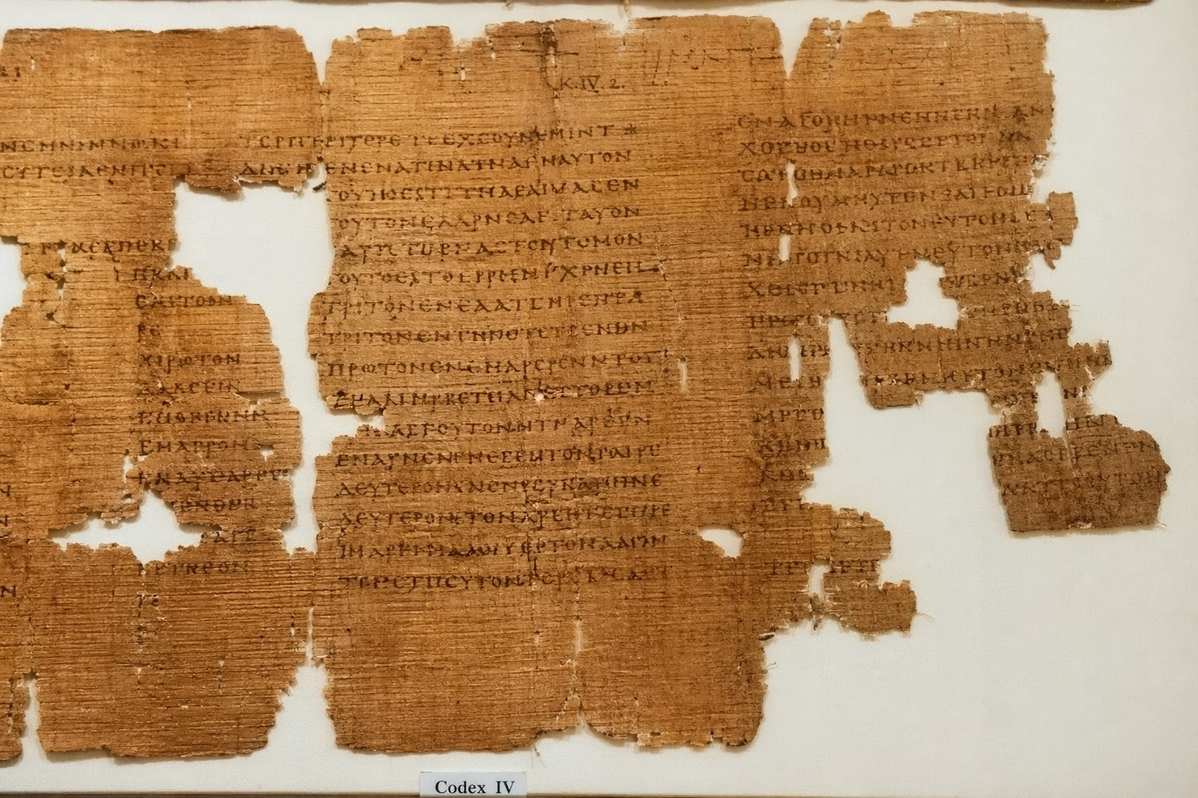
Codex IV of the Nag Hammadi Library is the smallest in the collection, containing only two tractates–yet its value for scholarship is disproportionate to its size. Here we find the Apocryphon of John (NHC IV,1) in its longest version, significantly expanded beyond the copies preserved in Codices II and III. Alongside it sits the Gospel of the Egyptians (NHC IV,2), also known as the Holy Book of the Great Invisible Spirit, in a more complete form than its counterpart in Codex III. What makes Codex IV indispensable is not novelty but comparison: this codex preserves variant readings, expanded passages, and ritual elaborations that reveal how Gnostic texts changed in transmission, how scribes abbreviated or amplified their sources, and how living communities adapted their sacred literature across successive generations [1].
For scholars, Codex IV is textual gold. By comparing the versions of Apocryphon of John across Codices II, III, and IV, we can trace the fluidity of Sethian traditions in antiquity–the elaborations that transformed a core myth into an encyclopaedic cosmology, the abbreviations that stripped narrative detail for doctrinal clarity, and the scribal decisions that shaped what future readers would receive. For general readers, Codex IV offers the most complete versions of two foundational Sethian texts: the creation myth that undergirds the entire library, and the ritual handbook that preserves the baptismal hymns and invocatory prayers of a living Gnostic community. This article examines both tractates, their manuscript context, their textual variants, and their significance for understanding the Nag Hammadi Library as a collection of living documents rather than fixed scriptures [2].
Table of Contents
- Introduction — The Codex of Variants
- The Manuscript and Its Context
- The Tractates of Codex IV
- Textual Fluidity and Scribal Practice
- Reading Codex IV: A Guided Approach
- Why Codex IV Matters
- Frequently Asked Questions
- Further Reading
- References and Sources
Introduction — The Codex of Variants
What is Codex IV?
Codex IV is the smallest codex in the Nag Hammadi Library, containing only two tractates: the Apocryphon of John (NHC IV,1) in its longest version, and the Gospel of the Egyptians (NHC IV,2), also called the Holy Book of the Great Invisible Spirit. Both texts appear elsewhere in the library–the Apocryphon in Codices II and III, the Gospel in Codex III–but the Codex IV versions are significantly expanded, preserving material abbreviated or corrupted in other copies. Written in the Subachmimic Coptic dialect, this codex is essential for textual comparison and the study of scribal practice.
The two territories: Apocryphon of John (long version, expanded cosmology) → Gospel of the Egyptians (complete ritual handbook with baptismal hymns). Together they demonstrate that the Nag Hammadi Library preserves not fixed scriptures but living documents subject to editorial adaptation [3][4].
The texts of Codex IV are duplicate files in the celestial administration–not the original dossiers but expanded copies with additional annotations, elaborated protocols, and supplementary appendices that the copyists deemed necessary for complete operational clarity. The Apocryphon of John in Codex IV is the long version, containing detailed descriptions of the aeons, expanded accounts of the fall of Sophia, and elaborated cosmological speculation absent from the shorter Codex II copy. The Gospel of the Egyptians in Codex IV preserves passages abbreviated in Codex III, including the full baptismal hymn with its sequences of divine names and vowel invocations. These are not mere duplicates; they are revised editions, updated manuals for communities that required more comprehensive briefing materials than the earlier versions provided [5].
For scholars of ancient religion, Codex IV is indispensable for understanding textual transmission in Gnostic communities. The variations between copies reveal that these texts were not canonical in the modern sense–fixed, authoritative, immune to modification. They were living documents, adapted and expanded by successive generations of readers who added, subtracted, and rearranged material according to their theological needs and ritual practices. For contemplative readers, Codex IV offers the most complete versions of two foundational texts: the Sethian creation myth in its fullest form, and the ritual handbook with its sonic passwords for baptismal ascent. This is the master copy room of the Nag Hammadi Library–the place where the filing system reveals its own history, where every revision mark tells a story about who used these texts and what they needed them to do [6].
The Manuscript and Its Context
Codex IV was discovered in December 1945 near the town of Nag Hammadi in Upper Egypt, buried alongside eleven other codices in a sealed jar at the foot of the Jabal al-Tarif cliffs. The codex contains approximately 75 pages of Coptic text, making it the smallest volume in the collection. The texts are written in the Subachmimic dialect, a regional Coptic variant associated with the more theologically advanced volumes in the library. Paleographical analysis suggests a fourth-century date for the copying, though the Greek originals of both tractates likely circulated in the second or third centuries CE [3].
The physical condition of Codex IV presents significant challenges. The Apocryphon of John survives in relatively good condition, though with lacunae in its opening pages and occasional damage to the margins. The Gospel of the Egyptians is more severely damaged than its Codex III counterpart–its material condition is the worst of the two copies–yet it preserves important passages that the Codex III scribe abbreviated or corrupted. This paradox–the more damaged manuscript preserving the more complete text–is characteristic of the Nag Hammadi collection, where material preservation and textual completeness do not always coincide. The codex was bound in leather over papyrus boards, a standard format for the collection, and its placement within the buried jar suggests deliberate concealment during the ecclesiastical controversies of the fourth century [7].
The presence of duplicate texts across multiple codices raises important questions about the ancient collectors’ intentions. Why preserve multiple versions of the same text? Why include both a shorter and a longer Apocryphon of John? The answer lies in the nature of the collection itself: the Nag Hammadi Library was not a canonical scripture cabinet but a working archive, a repository of texts valued for their utility in teaching, ritual, and contemplative practice. The ancient readers who buried these texts were not seeking a single authorised version but preserving a conversation–multiple perspectives on the same fundamental truths, each version offering something the others lacked. Codex IV thus arrives to us as a comparative dossier, a set of expanded files that supplement and correct the abbreviated copies in other volumes [8].
The Tractates of Codex IV
The two tractates of Codex IV represent the foundational and ritual dimensions of Sethian spirituality. The Apocryphon of John provides the cosmological myth–the creation story, the fall of Sophia, the generation of the archons, and the redemption of the spiritual seed. The Gospel of the Egyptians provides the ritual application–the baptismal hymns, the invocatory prayers, and the ascent protocols that transform mythological knowledge into practised spirituality. Together they demonstrate that Sethianism was not merely speculative theology but a lived tradition with structured ceremonial practice.
Apocryphon of John (NHC IV,1): The Long Version
The Codex IV version of Apocryphon of John is significantly longer than the Codex II version, containing elaborations and expansions that transform a concise mythological narrative into an encyclopaedic cosmological treatise. Scholars debate which version is earlier–whether the long version represents the expansion of an original core, or the short version represents the abbreviation of a fuller text. The current scholarly consensus, following the work of Michael Waldstein and Frederik Wisse, holds that the long version preserves the more original form, while the short version represents a deliberate condensation for teaching or liturgical purposes [9].
Primary Source Citation: NHC IV,1 8:1-5. “And the power appeared before the all, before the father, before the mother, before the son, before the angels, before the archangels, before the gods, before the lords, before the authorities, before the powers.”
The additional material in the Codex IV version includes more detailed descriptions of the aeonic hierarchies, expanded accounts of the fall of Sophia with greater psychological depth, and elaborated cosmological speculation that maps the divine realm with administrative precision. The text describes the generation of the Four Luminaries (Harmozel, Oroiael, Daveithe, Eleleth), the establishment of the thirteen aeons, and the creation of Adam as a composite being into whom the spiritual power is secretly infused. The long version also preserves more extensive dialogue between John and the Saviour, framing the cosmological revelation within a narrative of pastoral instruction that makes the technical material more accessible to readers encountering it for the first time [10].
For readers seeking the most complete version of the Sethian creation myth, the Codex IV Apocryphon is essential. But be warned: the additional material makes an already dense text even more challenging. The aeonic hierarchies multiply, the divine names proliferate, and the narrative framework becomes increasingly complex. This is not an entry-level text but an advanced manual–the complete filing system of the celestial administration, with every department numbered, every jurisdiction mapped, and every personnel file cross-referenced against the original divine template. Those without preparation in Sethian cosmology may find themselves lost in the corridors of a bureaucracy whose organisational chart has no exit signs [11].
Gospel of the Egyptians (NHC IV,2): The Complete Ritual Handbook
The Gospel of the Egyptians–more properly titled the Holy Book of the Great Invisible Spirit–presents itself as revelation from the divine Seth to his descendants, preserving secret knowledge about the origin of the world and the path of return through ritual initiation. The Codex IV version is longer and more elaborate than the Codex III copy, preserving passages abbreviated or corrupted in the other manuscript. This makes Codex IV the preferred version for serious study of Sethian ritual practice [12].
Primary Source Citation: NHC IV,2 66:8-10. “Yesseus Mazareus Yessededeus, living water, child of the child, glorious name, truly truly, eternal being.”
The text is notable for its emphasis on ritual as the necessary complement to knowledge. “He who is baptised in the water of life will be saved.” This sacramental dimension distinguishes the Gospel of the Egyptians from more purely intellectual Gnostic texts. The work describes the three descents (parousias) of Seth–at the flood, at the conflagration of Sodom, and at the final judgment–to save the elect seed who have gone astray in the material world. On his third descent, Seth puts on Jesus, defeats the powers of the thirteen aeons, and establishes the holy baptism that surpasses heaven [13].
Primary Source Citation: NHC IV,2 74:17-20. “Through the incorruptible, Logos-begotten one, even Jesus the living one, even he whom the great Seth has put on. And through him, he nailed the powers of the thirteen aeons.”
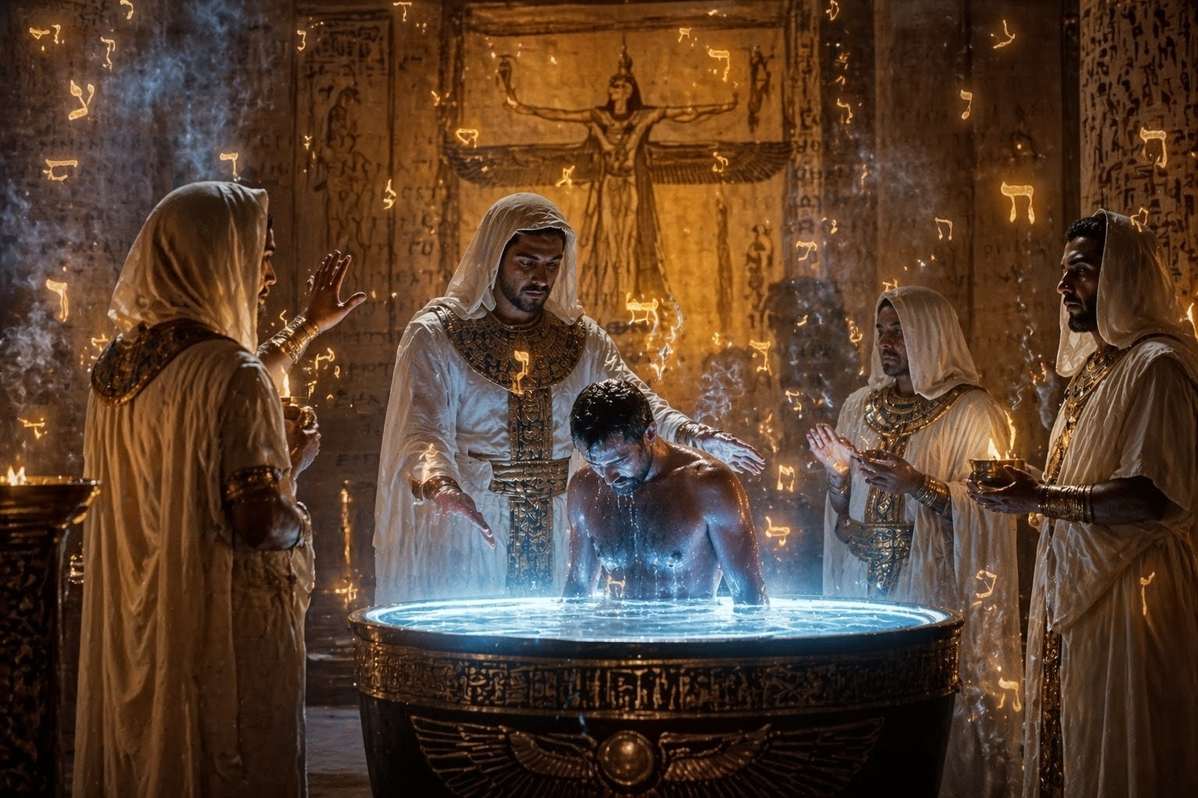
The concluding sections of the text preserve the most detailed baptismal hymn surviving from any Gnostic source. The hymn invokes a sequence of divine names and angelic attendants–Yesseus Mazareus Yessededeus, the great commanders Jacob and Theopemptos, the guardians of the spring of truth Micheus and Michar, and the purifiers Sesengenbarbarphanges. Vowel sequences (alpha through omega) punctuate the invocation, suggesting that these were actual liturgical formulas used in ritual practice. The Codex IV version preserves this material more completely than Codex III, including variant readings of the magical names and additional lines of the baptismal rubric that illuminate how the ceremony was performed [14].
Textual Fluidity and Scribal Practice
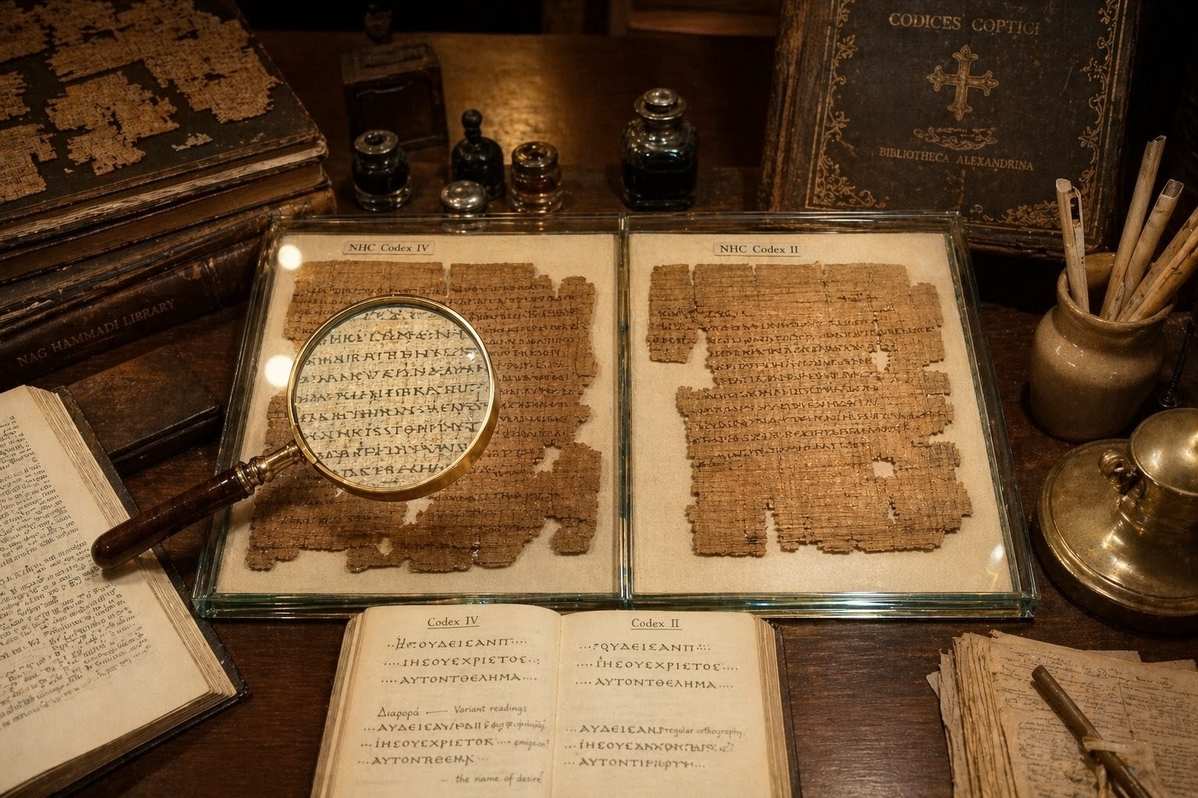
The duplicate texts across Codices II, III, and IV reveal the fluidity of Gnostic traditions in antiquity. These were not fixed scriptures but living documents, adapted and expanded by successive generations of readers. The variations between versions illuminate the priorities of the communities that produced them: the Codex II Apocryphon abbreviates for clarity, the Codex III Gospel of the Egyptians condenses for convenience, while the Codex IV versions expand for completeness [15].
Scholars have identified several types of variation across the copies. Expansions add material absent from shorter versions–elaborated descriptions, additional dialogue, supplementary cosmological detail. Abbreviations remove material deemed redundant or overly complex for the intended audience. Modifications alter theological emphasis, sometimes subtly shifting the relationship between figures or the significance of particular events. And corruptions introduce errors–omissions, repetitions, misreadings–that testify to the human hands behind these sacred texts. The Codex IV versions show all these phenomena, making this codex an indispensable laboratory for studying how ancient religious texts changed in transmission [16].
The ritual texts are particularly revealing. The baptismal hymn in the Gospel of the Egyptians shows significant variation between Codex III and Codex IV. The Codex IV version reads “Umneos” or “Hum-neos” where Codex III has a different form. The Codex IV version reads “slain souls” where Codex III has another reading. The Codex IV version reads “Helmachael Fehrachael Eli Eli Machar Machar Seth” where Codex III preserves a shorter form. These variants are not merely philological curiosities; they reveal how magical names–the sonic passwords of ritual practice–were transmitted, adapted, and sometimes corrupted by scribes who may not have understood their original significance. In the celestial administration, even the filing codes require periodic review to ensure that the passwords still open the proper gates [17].
Reading Codex IV: A Guided Approach
For newcomers to Nag Hammadi, Codex IV is not an entry point. Both tractates assume familiarity with Sethian mythology, and the long version of Apocryphon of John is the most challenging of the three copies. Beginners are advised to start with the Codex II version of Apocryphon of John, which is shorter and more accessible, or with foundational texts like the Gospel of Truth or the Gospel of Thomas. Only with grounding in Sethian cosmology should the reader attempt the Codex IV versions [18].
For those with preparation, Codex IV offers unique rewards. The long version of Apocryphon of John provides the most complete account of the Sethian creation myth, with detailed aeonic hierarchies and expanded psychological analysis of the fall of Sophia. The Gospel of the Egyptians offers the most complete ritual handbook, with the full baptismal hymn and its sequence of divine names. Read them together to understand how Sethianism combined cosmological speculation with ceremonial practice–the myth providing the map, the ritual providing the means of navigation [19].
For advanced study, Codex IV demands comparative reading. Set the Apocryphon of John alongside the Codex II and III versions to trace textual development. Compare the Gospel of the Egyptians with the Codex III copy to observe scribal variation in ritual texts. Read both tractates with the Five Seals article to understand the baptismal ceremonies that underlie the Gospel’s hymnody. And consult the Creation Myths thematic collection to position these texts within the broader cosmological landscape of the library. Such comparison reveals both the shared ritual substrate and the distinctive developments that make each version unique [20].
Why Codex IV Matters
For most casual readers, Codex IV is optional. The texts it contains are available elsewhere in more accessible forms. But for those engaged in serious study of Gnosticism, this codex is invaluable. The textual variations between Codex IV and the other codices reveal the fluidity of Gnostic traditions in antiquity. These were not fixed scriptures but living texts, adapted and expanded by successive generations of readers who shaped their sacred literature according to their theological needs and ritual practices. Understanding this fluidity is essential for avoiding the trap of fundamentalism–whether orthodox or Gnostic–and for recognising that religious texts are always products of human hands, human decisions, and human communities [21].
Codex IV also reminds us that the Nag Hammadi Library is not a canonical collection in the traditional sense. The ancient readers who buried these texts valued multiple versions, variant traditions, competing perspectives. They were not seeking a single authorised version but preserving a conversation–a set of documents that could be compared, contrasted, and studied in relation to one another. In this, they offer a model for contemporary engagement with these texts: not the search for dogmatic certainty but the cultivation of understanding through comparison, contrast, and sustained attention to difference. The codex stands as the editorial office of the Nag Hammadi Library–the department where the filing system reveals its own history, where every revision mark tells a story about who used these texts and what they needed them to do [22].
For historians of religion, Codex IV offers crucial evidence for the diversity and adaptability of Sethian traditions. The expanded Apocryphon reveals a community that valued encyclopaedic completeness in its cosmological instruction. The complete Gospel of the Egyptians reveals a community that preserved elaborate ritual protocols for baptismal initiation. Together, these texts demonstrate that Gnosticism was not a static system but a dynamic tradition, capable of generating multiple versions of its foundational documents and preserving them side by side for future generations. This is the master archive of Sethian spirituality–the complete dossier, the unabridged manual, the definitive edition for those who require the fullest possible briefing on the celestial administration and its protocols for human redemption [23].

Frequently Asked Questions
What is Codex IV in the Nag Hammadi Library?
Codex IV is one of the twelve codices discovered near Nag Hammadi in 1945. It is the smallest codex in the collection, containing only two tractates: the Apocryphon of John in its longest version (NHC IV,1) and the Gospel of the Egyptians (NHC IV,2). Its value lies not in novelty but in textual comparison, as both texts appear elsewhere in the library in shorter or more abbreviated forms.
What are the two tractates of Codex IV?
The two tractates are: (1) Apocryphon of John (NHC IV,1)–the longest version of the Sethian creation myth, with expanded aeonic hierarchies and elaborated cosmological speculation; and (2) Gospel of the Egyptians (NHC IV,2)–also called the Holy Book of the Great Invisible Spirit, a ritual handbook preserving baptismal hymns and invocatory prayers in a more complete form than its Codex III counterpart.
How does the Codex IV Apocryphon of John differ from other versions?
The Codex IV version is significantly longer than the Codex II version, containing additional material including more detailed descriptions of the aeons, expanded accounts of the fall of Sophia, and elaborated cosmological speculation. Scholars generally consider the long version (Codex IV) closer to the original, with the short version (Codex II) representing deliberate abbreviation for teaching or liturgical purposes.
What is the Gospel of the Egyptians and its ritual significance?
The Gospel of the Egyptians (NHC IV,2) is a Sethian ritual text describing the three descents of Seth to save the elect seed, culminating in the establishment of baptism. It preserves the most detailed baptismal hymn in the library, with sequences of divine names, angelic attendants, and vowel invocations that provide rare evidence for actual Gnostic liturgical practice.
Why is Codex IV important for textual scholarship?
Codex IV is essential for understanding textual transmission in Gnostic communities. By comparing its versions with those in Codices II and III, scholars can trace how texts changed through expansion, abbreviation, modification, and corruption. This reveals that Nag Hammadi texts were living documents, not fixed scriptures, adapted by successive generations according to theological and ritual needs.
What textual variants exist between Codex IV and other copies?
Significant variants include: the Apocryphon of John’s expanded aeonic hierarchies and Sophia narrative in Codex IV; the Gospel of the Egyptians’ more complete baptismal hymn with additional divine names and vowel sequences; and variant readings of magical names such as Yesseus Mazareus Yessededeus and Sesengenbarbarphanges between the Codex III and IV versions.
How should readers approach the texts of Codex IV?
Beginners should start with the Codex II version of Apocryphon of John for accessibility, then read foundational texts like the Gospel of Truth. Those with Sethian preparation can read Codex IV for the most complete versions. Advanced study requires comparative reading across Codices II, III, and IV, alongside the Five Seals article for ritual context and the Creation Myths collection for cosmological framework.
Further Reading
These links connect Codex IV to related resources within the ZenithEye library, providing pathways for deeper exploration of specific texts, textual variants, and the comparative study of Sethian traditions.
- Nag Hammadi Library: Complete Guide to 46 Gnostic Scriptures — Master index and navigational hub for all forty-six tractates and thematic collections.
- Three Witnesses: The Apocryphon of John Across Codices — Comparative study of the Apocryphon across Codices II, III, and IV, tracing textual development and scribal variation.
- Gospel of the Egyptians: Sethian Cosmogony and Ritual — Detailed individual tractate study exploring the Holy Book of the Great Invisible Spirit and its baptismal hymns.
- Codex II: The Crown Jewels — Overview of the codex containing the shorter version of the Apocryphon of John for comparison with Codex IV.
- Codex III: Sethian Cosmology and Eugnostos — Comparative codex overview examining the alternative version of the Gospel of the Egyptians and related cosmological texts.
- The Five Seals: Sethian Initiation — Ritual context for the baptismal ceremonies underlying the Gospel of the Egyptians, with analysis of the seals and their significance.
- Creation Myths in the Nag Hammadi Library — Thematic collection positioning the Apocryphon of John within the broader landscape of Gnostic cosmogony.
- Sethian and Valentinian Traditions — Comparative guide to the Sethian school, providing context for the theological framework of Codex IV’s tractates.
- The Complete Nag Hammadi Reading Order — Structured path through all forty-six tractates, with guidance on building preparation for advanced texts such as those in Codex IV.
- Scribal Colophons: The Human Hands Behind the Texts — Examination of the scribal practices and copyist interventions that produced the textual variants visible across the Nag Hammadi codices.
References and Sources
The following sources support the claims and quotations presented in this article. All citations to the Nag Hammadi Library represent direct translations from the Coptic text as established in the standard critical editions.
Primary Sources and Critical Editions
- [1] Robinson, J.M. (Ed.). (1988). The Nag Hammadi Library in English (4th ed.). Brill.
- [2] Meyer, M. (Ed.). (2007). The Nag Hammadi Scriptures: The International Edition. HarperOne.
- [3] Waldstein, M. & Wisse, F. (1995). The Apocryphon of John: Synopsis of Nag Hammadi Codices II,1; III,1; and IV,1 with BG 8502,2. Brill.
- [4] Turner, J.D. (1979). “The Gospel of the Egyptians (NHC III,2 and IV,2).” In Nag Hammadi Codices III,2 and IV,2. NHS 20. Brill.
- [5] Krause, M. & Labib, P. (1971). Gnostische und hermetische Schriften aus Codex II und Codex VI. Verlag J.J. Augustin.
Scholarly Monographs and Commentaries
- [6] Pearson, B.A. (2007). Ancient Gnosticism: Traditions and Literature. Fortress Press.
- [7] Layton, B. (1987). The Gnostic Scriptures. Doubleday.
- [8] Turner, J.D. (2001). Sethian Gnosticism and the Platonic Tradition. Peeters.
- [9] Williams, M.A. (1996). Rethinking “Gnosticism”: An Argument for Dismantling a Dubious Category. Princeton University Press.
- [10] King, K.L. (2006). The Secret Revelation of John. Harvard University Press.
Comparative Studies and Thematic Analyses
- [11] Schenke, H.-M. (1974). “The Phenomenon and Significance of Gnostic Sethianism.” In The Rediscovery of Gnosticism, Vol. 2. Brill.
- [12] Pagels, E.H. (1979). The Gnostic Gospels. Random House.
- [13] Bull, C.H. (2018). “The Great Mystery of Godliness.” In The Secret Gospel of Mark. Wissenschaftliche Untersuchungen zum Neuen Testament. Mohr Siebeck.
- [14] Mahé, J.P. (1995). “Hermetic Texts in Nag Hammadi.” In La Fable Apocryphe. Brepols.
- [15] Jenott, L. (2011). The Gospel of Judas: Coptic Text, Translation, and Historical Interpretation. Mohr Siebeck.