Creation Myths in Nag Hammadi: How the World Came to Be (and Why It Is Broken)
The Gnostic Inversion of Genesis: 5 Creation Myths of the Nag Hammadi Library presents the most distinctive and influential genre of the collection–texts that take the biblical account of Genesis and systematically invert it. In these creation myths, the creator god is not the highest god but an ignorant demiurge; the serpent is not the deceiver but the truth-teller; the fall is not disobedience but the acquisition of knowledge; and the material world is not good but a fundamentally flawed administrative region designed as a prison for divine light. These are not merely alternative stories but alternative theologies–complete worldviews that explain the origin of evil, the nature of the divine, and the possibility of salvation differently from orthodox Christianity [1][2].
The five texts examined here–Apocryphon of John, Hypostasis of the Archons (also known as The Reality of the Archons), On the Origin of the World, and Apocalypse of Adam–constitute the foundational dossier of Sethian Gnostic cosmogony. Together they articulate a radical critique of biblical creation: the Demiurge Yaldabaoth operates as cosmic middle-management, believing himself the sole executive when he is merely a regional administrator of incompetent authority. For theologians and historians of religion, these texts demonstrate that Gnosticism was not a parasitic deviation from Christianity but a coherent theological system with its own cosmological architecture, anthropological convictions, and soteriological logic [3][4].
Table of Contents
- Introduction — The Gnostic Inversion of Genesis
- The Texts of Creation
- The Common Structure
- The Theological Implications
- Reading the Creation Myths
- Why Creation Myths Matter
- Frequently Asked Questions
- Further Reading
- References and Sources
Introduction — The Gnostic Inversion of Genesis
What is the Gnostic Inversion of Genesis?
The Gnostic inversion of Genesis refers to the systematic reversal of biblical creation narratives found in Sethian and related texts. Where Genesis presents the creator God as benevolent and supreme, Gnostic texts present him as a lower demiurge–ignorant, arrogant, and incompetent. Where Genesis condemns the serpent and the acquisition of knowledge, Gnostic texts celebrate them as agents of liberation. This inversion is not arbitrary storytelling but a coherent theological critique of biblical literalism and theodicy.
The five territories: Apocryphon of John (the classic system) → Hypostasis of the Archons (Eve as instructor) → On the Origin of the World (Sophia’s triumph) → Apocalypse of Adam (testamentary revelation). By traversing these texts, the reader gains a comprehensive map of Gnostic cosmological architecture and its radical alternative to orthodox creation theology [5][6].
The Nag Hammadi creation myths are among the library’s most distinctive texts. They do not merely supplement Genesis; they dismantle it. The fundamental critique is straightforward: the biblical creator–Yaldabaoth, Saklas, Samael–is not the transcendent Father of Jesus but a lower administrative power who fashioned the material world in ignorance, believing himself the only god. This is not the simple dualism of later Manichaeism but a sophisticated theology of cosmic error and correction, in which even the demiurge’s incompetence serves the ultimate purpose of revealing the true divine source [7].
Modern scholarship, particularly the work of Michael Allen Williams, David Brakke, and John D. Turner, has established that these creation myths are not derivative parodies of Genesis but independent theological compositions engaging Jewish apocalyptic traditions, Middle Platonic metaphysics, and Egyptian cosmological speculation [8][9]. The result is a complex mythological literature that challenges the modern reader to reconsider the boundaries of early Christian thought and the diversity of ancient theological imagination.
The Texts of Creation
The four distinct tractates presented here–five in the source counting alternative titles–articulate the full range of Gnostic creation mythology, from systematic philosophical treatises to narrative-driven testamentary revelations.
The Apocryphon of John — The Classic Sethian System (NHC II,1; III,1; IV,1)
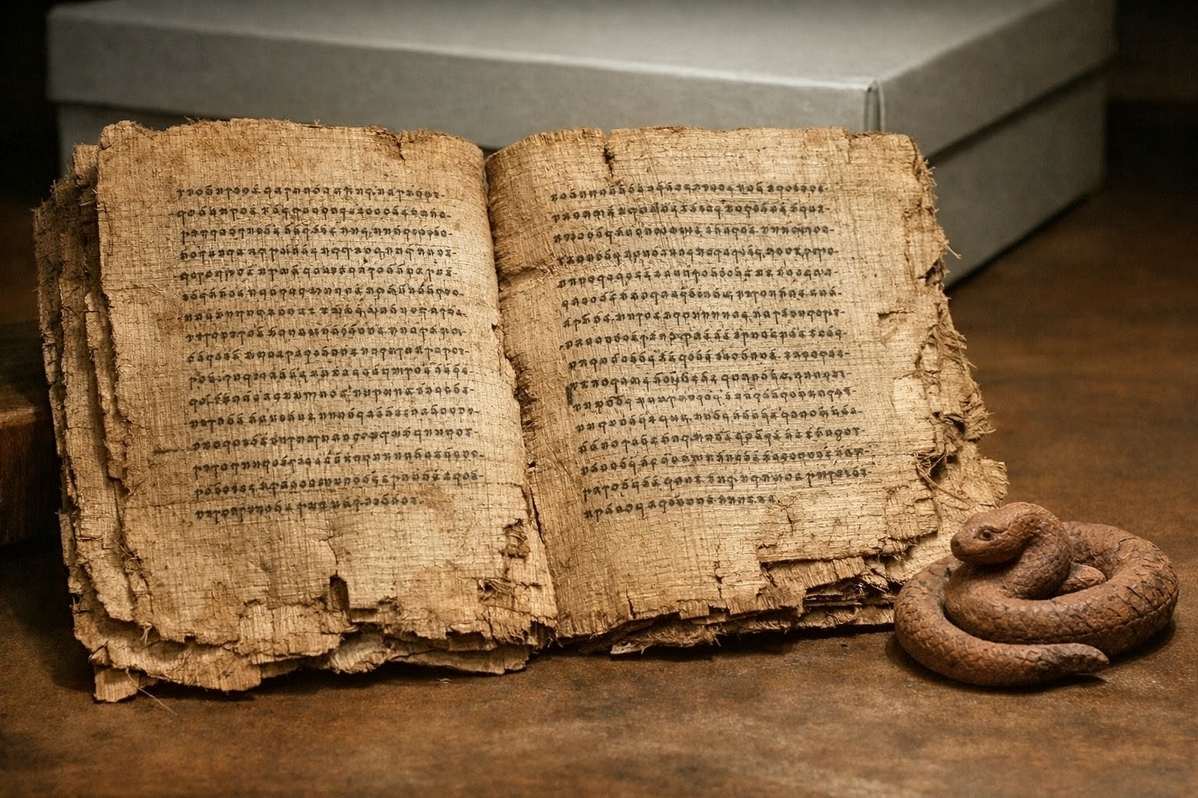
The Apocryphon of John provides the most complete version of the Sethian cosmological system and the foundational text for understanding the Gnostic critique of Genesis. In its dramatic frame, John the son of Zebedee receives a vision from the Saviour that dismantles the biblical creation account, revealing the creator god as an ignorant demiurge and the material world as a realm of deficiency [10].
Primary Source Citation: NHC II,1 11:15-20. “And Yaldabaoth said, ‘I am God and there is no other god beside me,’ for he did not know from whence his strength came.”
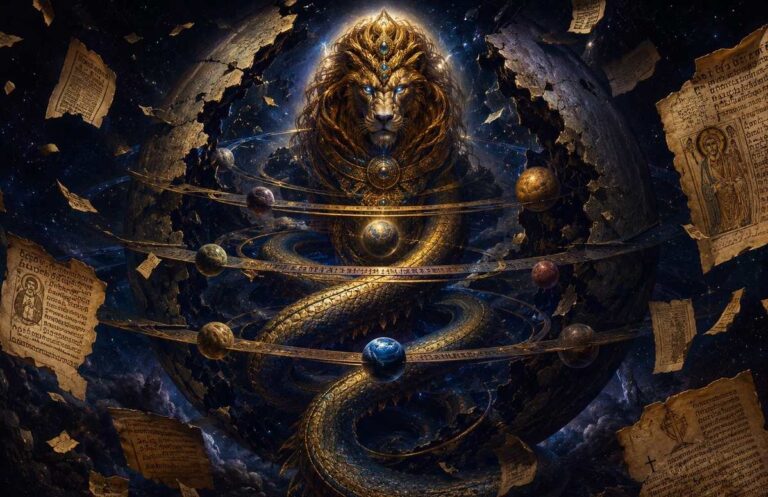
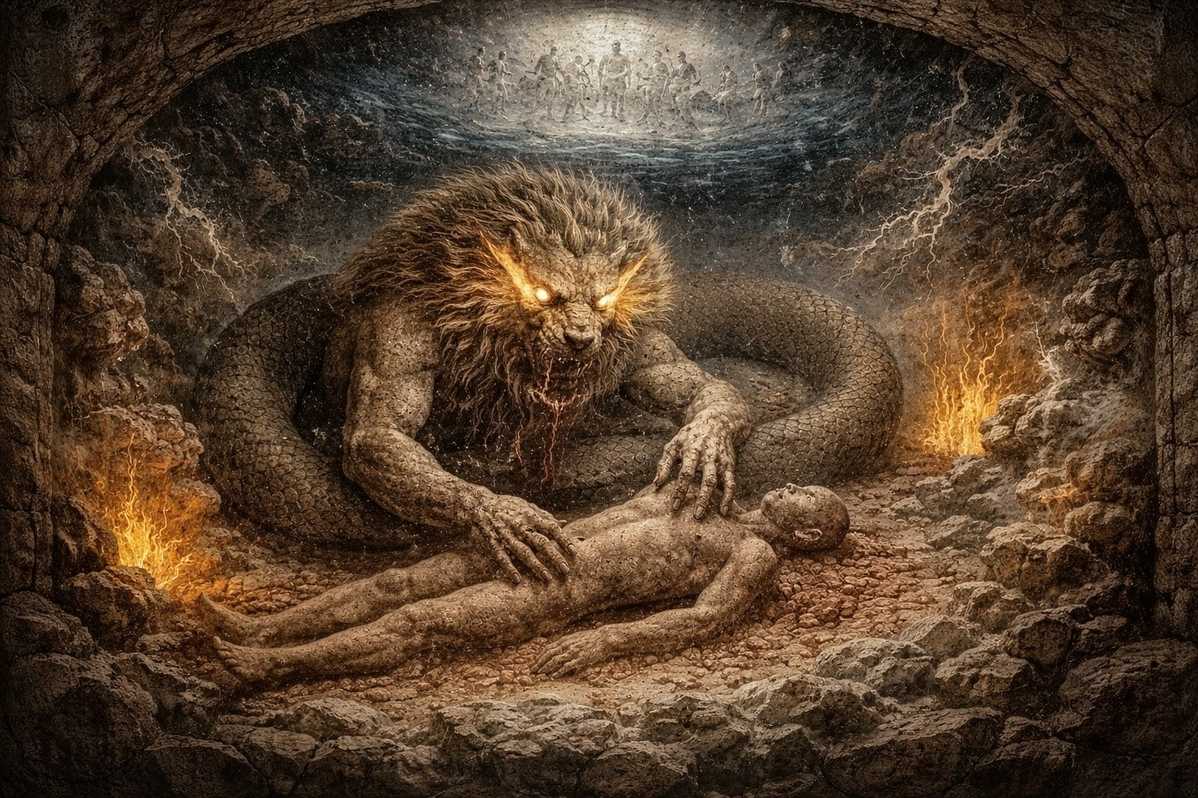
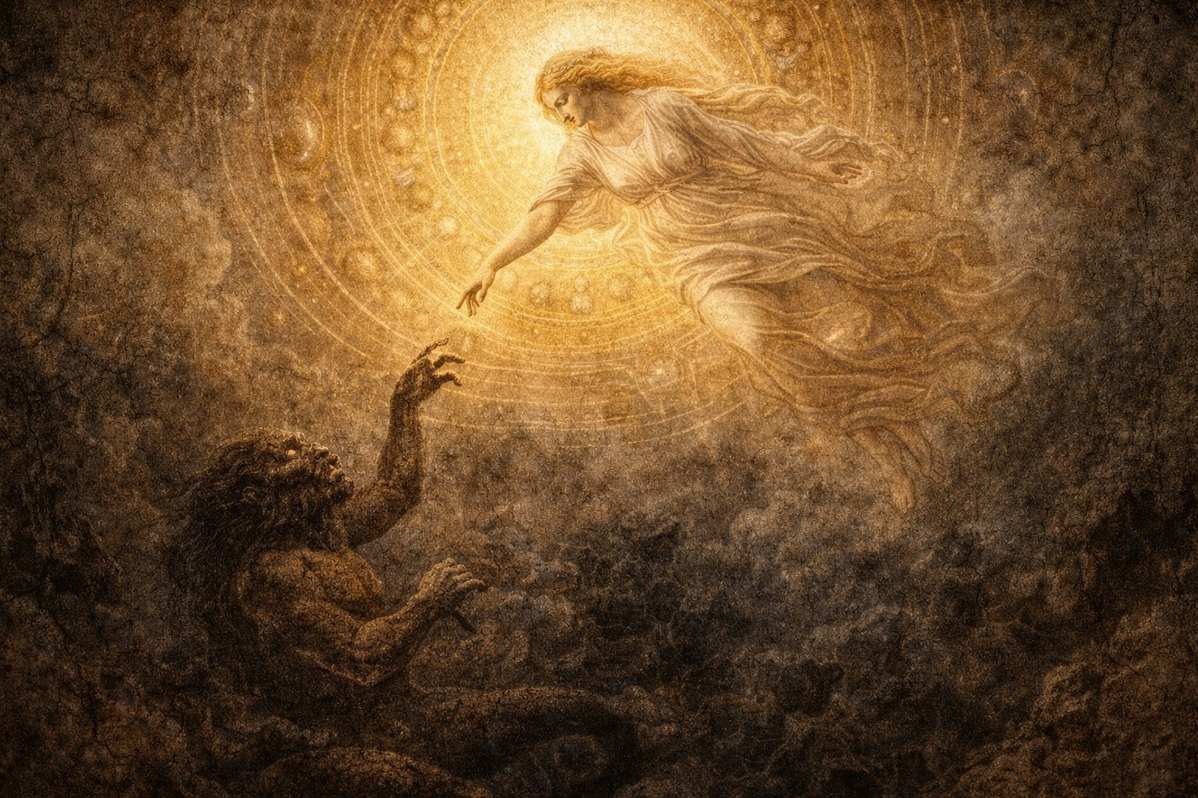
The text’s theological architecture is precise: the transcendent Father generates through the First Thought (Barbelo/Pronoia), who produces the Self-Generated (Autogenes) and the divine luminaries. Sophia, the lowest aeon, overreaches by creating without her consort, producing Yaldabaoth–a lion-faced serpent who believes himself the sole god. He creates the material world as a “prison” for the divine spark, fashioning humanity from dust but unable to animate it until Sophia intervenes by sending the spiritual essence. This is the Gnostic anthropology in mythic form: the body is archontic creation, the spirit is divine gift, and the human is the uneasy union of the two [11].
The Hypostasis of the Archons — Eve as Spiritual Instructor (NHC II,4)
The Hypostasis of the Archons–literally, “the reality/substance of the rulers”–offers an alternative creation myth more narrative-driven and accessible than the Apocryphon of John. The text is notable for its accessible storytelling, its rehabilitation of Eve as spiritual instructor rather than secondary creation, and its transformation of the serpent from deceiver to truth-teller. It represents the Sethian school and serves as an entry-level introduction to archontic cosmology [12].
Primary Source Citation: NHC II,4 91:30. “And the spiritual Eve came and taught him about his race and about his seed.”
The text opens with the archons seeing a reflection of the divine realm in the waters below. “They saw an image in the water, and they said to one another, ‘Let us make a man after the image of God and after our own likeness.'” The result is predictably inadequate–a crawling worm, a creature of matter without spirit. Only when the divine spirit enters does the creature become human. The text’s most distinctive feature is its treatment of Eve: the “spiritual Eve” teaches Adam about his divine race and seed, while the serpent–in whom the Spirit has taken refuge–instructs the couple to defy the evil rulers and gain knowledge. This is the Gnostic reversal in its purest narrative form: the fall is actually ascent, the transgression is actually obedience to the divine, and the knowledge of good and evil is actually the knowledge of truth and error [13].
Note on titling: This tractate is also known as The Reality of the Archons or The Nature of the Archons–alternative English translations of the Coptic Hypostasis n-Archōn. Modern editions generally prefer Hypostasis, but the alternative titles reflect the same NHC II,4 text.
On the Origin of the World — Sophia’s Triumph (NHC II,5; XIII,2)
On the Origin of the World is the most elaborate and literary of the creation myths, weaving together biblical, Greek, and Egyptian material into a comprehensive cosmogony. Unlike other texts where Sophia’s fall is tragic and her repentance tearful, Origin of the World presents her as ultimately triumphant–her metanoia (correction) accomplished, her work continued, her children saved [14].
The text describes the creation of the material universe as a series of administrative errors and corrections. Sophia projects a shapeless being containing a power of light; together with the holy Metropator and the Epinoia of light, she plots a salvific stratagem to gather the scattered seed into the pleroma. The archons will be cast down, and the spiritual seed will be gathered in. This is not the incompetent middle-management of Yaldabaoth but the superior intelligence of the feminine divine operating behind archonic lines, distributing light through hidden channels until the final restoration is achieved. The text’s optimism distinguishes it from more pessimistic Sethian accounts: even the material world contains elements of correction, and Sophia’s continued activity ensures that no spark remains permanently trapped [15].
The Apocalypse of Adam — Testamentary Revelation (NHC V,5)
The Apocalypse of Adam presents itself as a “last testament” revelation delivered orally by the biblical Adam to his son Seth in the seven hundredth year of Adam’s life, just prior to his death. More Jewish in character than Christian, it reveals the Jewish substratum of Gnostic mythology and establishes Seth as the progenitor of the “immovable race” destined for salvation [16].
Primary Source Citation: NHC V,5 64:2-5. “The revelation that Adam taught his son Seth in the seven hundredth year, saying: Listen to my words, my son Seth.”
Adam recounts how the eternal realm fashioned the first couple from incorruptible power, endowing them with luminous glory surpassing that of their eventual creator. The demiurge Sakla–identified with Yaldabaoth–intervenes in wrath, forming Adam and Eve from the earth and dividing them to strip away their inherent knowledge. Three mysterious figures then appear to Adam, restoring awareness of the seed of life. The text prophesies three failed attempts by the demiurge to eradicate the enlightened lineage–the flood, the conflagration, and the judgment of the archons–culminating in the descent of a heavenly “illuminator” who imparts gnosis despite persecution by thirteen aeonic kingdoms. The narrative ends with an apocalyptic judgment scene and the holy baptism formula: “Yesseus, Mazareus, Yessedekeus, the Living Water” [17].
The Common Structure
Despite variations in narrative style and theological emphasis, these texts share a common mythological structure that reflects the underlying logic of Sethian cosmogony. This is not arbitrary myth-making but a coherent theological system with recognisable components [18].
The Pleroma and the Fall of Sophia
The divine fullness–the realm of the aeons–exists in perfect unity until Divine Wisdom (Sophia) overreaches, attempting to create without her partner. The result is the demiurge: imperfect, ignorant, arrogant. This “fall” is not moral failure but metaphysical miscalculation–an error that generates the entire drama of material existence. Sophia’s overreach is the original administrative malpractice, the filing error that creates the cosmic bureaucracy [19].
The Demiurge and the Material Prison
Yaldabaoth (and his alternate names Saklas, Samael) creates the material world as a prison, fashioning humanity from dust but unable to animate it until Sophia intervenes. The demiurge represents the biblical God read literally–the creator who believes himself supreme because he knows no higher authority. His creation is a temporary regional office, a branch establishment soon to face dissolution when the executive headquarters reclaims its personnel files [20].
The Divine Spark and the Theft of Knowledge
Sophia sends spiritual essence into humanity, creating the tension between material body and divine spirit that defines human existence. The serpent–or Eve, or the divine itself–brings knowledge to humanity, awakening them to their true identity and the false claims of the demiurge. This “theft” is actually a restoration: the return of what was always rightfully human–the knowledge of divine origin that the archons attempted to suppress [21].
The Struggle and the Restoration
The archons attempt to suppress knowledge, destroy the spiritual seed, and maintain control–while the divine works for liberation through successive descents, illuminators, and stratagems. The eschatological hope is consistent: the eventual defeat of the archons, the gathering of the spiritual seed, and the return to the pleroma. This is not destruction but corporate restructuring–the dissolution of the defective administration and the reassignment of all spiritual personnel to their native departments [22].
The Theological Implications
These myths express fundamental theological convictions that distinguish Gnosticism from orthodox Christianity at the most basic level. They are not decorative embellishments but the doctrinal foundation of the entire system [23].
Cosmic Dualism
The world is not good; matter is not divine; the creator is not the highest god. This is not the biblical doctrine of creation ex nihilo by a benevolent deity but a theology of cosmic error in which material existence is the unintended consequence of Sophia’s miscalculation. The dualism is not absolute–spirit and matter are not co-eternal principles as in Manichaeism–but it is radical: the material world is a prison, and embodiment is a temporary assignment from which the spiritual nature seeks return [24].
The Origin of Evil
Evil comes not from human disobedience but from cosmic error–the fall of Sophia, the ignorance of the demiurge, the imprisonment of spirit in matter. This solves the problem of theodicy by relocating evil’s origin from human will to cosmic structure. Humanity is not sinful by choice but ignorant by design–the archons have implanted counterfeit consciousness and administered fate to maintain control. Salvation is not moral improvement but knowledge that dissolves the prison [25].
Salvation as Liberation
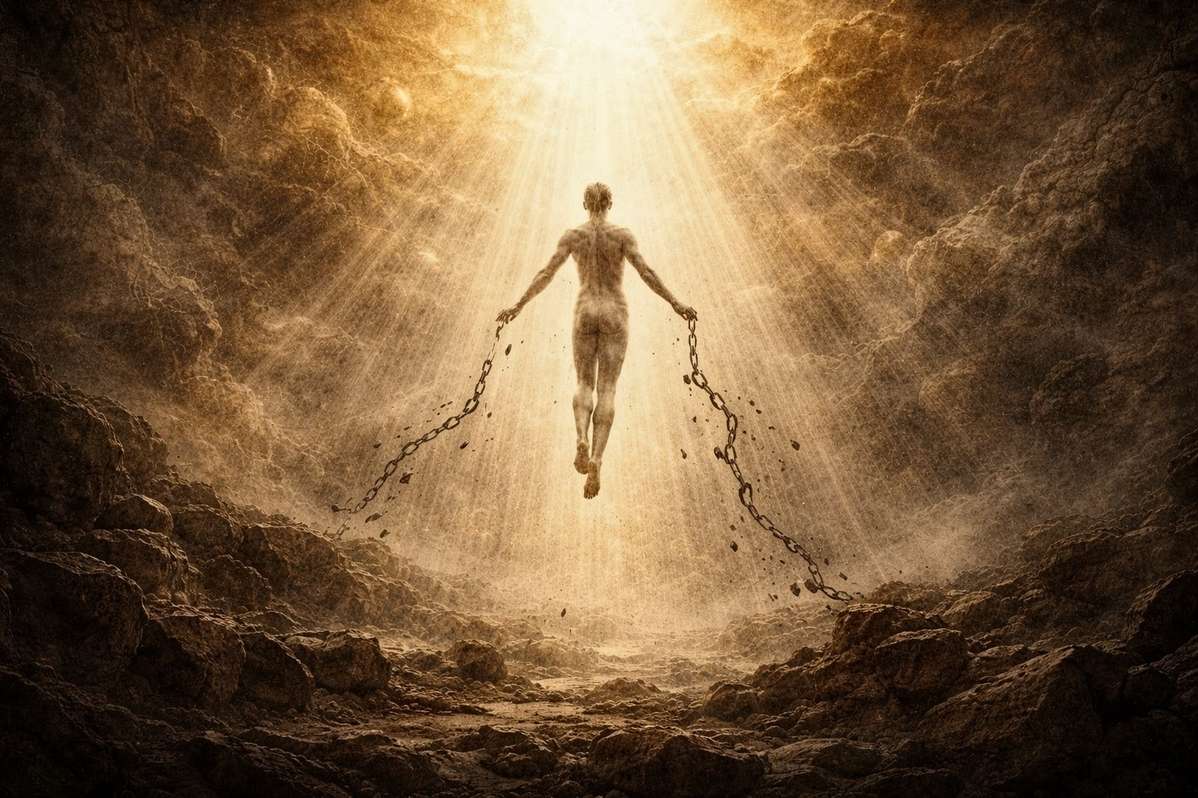
Salvation is not forgiveness of sins but liberation from prison, not moral improvement but knowledge (gnosis), not submission to the creator but return to the true God. The soteriology is ontological rather than forensic: the soul does not need to be declared righteous but to recognise its native righteousness. This is the security clearance upgrade that transforms the prisoner into the free citizen of the pleroma [26].
The Identity of Humanity
We are not creatures of the demiurge but children of the divine, exiled in matter but destined for return. The three natures–hylic (material), psychic (soul-endowed), and pneumatic (spiritual)–reflect a theology of essential difference rather than universal equality. The pneumatic seed carries the divine spark that no archon can extinguish, and this spark’s recognition of its source is the engine of salvation. This is not egalitarian humanism but elitist anthropology–yet it is an elitism based on spiritual capacity rather than social status [27].
Reading the Creation Myths
For contemporary readers, these texts demand both scholarly engagement and critical discernment. Start with the Hypostasis of the Archons–most accessible, most narrative-driven, requiring no prior knowledge of Sethian metaphysics. Then read the Apocryphon of John for the full systematic theology of divine hierarchy, demiurgical incompetence, and the three natures [28].
Then explore On the Origin of the World for the literary elaboration and the optimistic theology of Sophia’s triumph. Finally, read the Apocalypse of Adam for the Jewish apocalyptic substratum and the testamentary form that influenced later Gnostic literature. Read them alongside Genesis, noting the deliberate inversions: serpent as hero, Eve as teacher, fall as ascent. These are not arbitrary changes but systematic theological statements [29].
And read them critically–recognising that their dualism is problematic, their anthropology elitist, their cosmology dated. They are not the final word but one word in a larger conversation. The jar is open. The alternative archive has survived. These creation myths offer not heresy to be refuted but cosmological provocations to be engaged–challenges that continue to illuminate the boundaries, possibilities, and enduring questions of theological imagination.
Why Creation Myths Matter
These texts preserve the most distinctive Gnostic theology–the radical reinterpretation of biblical creation, the critique of the creator god, the affirmation of knowledge over obedience. For understanding what made Gnosticism controversial, these are essential. They show why orthodox Christianity found Gnosticism threatening–not just different ideas but a different God, a different world, a different salvation [30].
For contemporary seekers, they offer alternatives to biblical literalism and materialist naturalism alike–a middle path that takes the world seriously as problem while affirming spiritual reality as solution. The specific cosmology (planetary spheres, archontic powers) reflects ancient astronomy, but the underlying insight (that the visible world is not the ultimate reality, that the creator may not be the highest god, that knowledge liberates) remains philosophically potent. The creation myths of Nag Hammadi are not museum pieces but living provocations–classified intelligence from the executive headquarters that continues to challenge the administrative claims of the branch office [31].
Frequently Asked Questions
What is the Gnostic inversion of Genesis?
The Gnostic inversion of Genesis refers to the systematic reversal of biblical creation narratives in Sethian texts. The creator God of Genesis is presented as a lower demiurge–ignorant and incompetent–while the serpent becomes a truth-teller, Eve becomes a divine instructor, and the fall becomes an ascent to knowledge. This inversion constitutes a coherent theological critique rather than arbitrary storytelling.
Who is Yaldabaoth in Gnostic creation myths?
Yaldabaoth (also called Saklas or Samael) is the demiurge–the lower creator god who fashioned the material world in ignorance or arrogance, believing himself to be the only god. He is not the transcendent Father of Jesus but an administrative power who creates humanity as a prison for the divine spark. His incompetence and blasphemy are central to the Gnostic critique of biblical creation.
How does the Hypostasis of the Archons reimagine Eve and the serpent?
The Hypostasis of the Archons (NHC II,4) rehabilitates Eve as the spiritual instructor who teaches Adam about his divine race and seed. The serpent–in whom the Spirit has taken refuge–speaks truth to the couple, guiding them to defy the archons and gain knowledge. The fall is reinterpreted as necessary awakening, and the archons are exposed as cosmic fools who produce only parody when they attempt to imitate divine creation.
What is Sophia’s role in Gnostic cosmogony?
Sophia (Divine Wisdom) is the lowest aeon who overreaches by creating without her consort, producing the demiurge Yaldabaoth. In the Apocryphon of John, her fall is tragic; in On the Origin of the World, her correction (metanoia) is triumphant. She sends the divine spark into humanity and works continuously for the restoration of the spiritual seed, operating as the feminine divine behind archonic lines.
How does the Apocalypse of Adam differ from other creation myths?
The Apocalypse of Adam (NHC V,5) is more Jewish in character than Christian, presenting itself as Adam’s last testament to Seth. It features the demiurge Sacla, three angelic enlighteners, and prophecies of three destruction attempts (flood, fire, judgment) culminating in the descent of an illuminator. Its testamentary form and emphasis on Seth as progenitor of the immovable race reveal the Jewish apocalyptic substratum of Gnostic mythology.
Is Gnostic creation mythology dualistic?
Yes, but not in the absolute sense of Manichaeism. Gnostic texts present a qualified dualism: spirit and matter are not co-eternal principles, but the material world is a flawed product of cosmic error. The transcendent realm is good; the material prison is deficient. This is not a metaphysics of two equal powers but a theology of fall and restoration in which the material world is temporary and ultimately dissolvable.
How should modern readers approach Gnostic creation myths?
Modern readers should approach these texts as both scholarly objects requiring critical analysis and living theological provocations. Start with Hypostasis of the Archons for narrative accessibility, then Apocryphon of John for systematic theology. Read alongside Genesis to note deliberate inversions, and maintain critical discernment about the elitist anthropology and dated cosmology while appreciating the genuine philosophical alternative these texts present.
Further Reading
These links connect the creation myths to related resources within the ZenithEye library, providing pathways for deeper exploration of specific texts, traditions, and theological themes.
- Apocryphon of John: Gnostic Creation and Cosmology — Deep dive into the foundational text for Sethian divine hierarchy, demiurgical incompetence, and the three natures of humanity.
- Hypostasis of the Archons: Eve, Truth, and the Spiritual Instructor — Extended study of the narrative creation myth and its rehabilitation of Eve and the serpent as agents of liberation.
- Reality of the Archons — Alternative article on NHC II,4 exploring the archons’ reaction to spiritual light and the text’s distinctive features.
- On the Origin of the World — Analysis of the most literary creation myth, featuring Sophia’s correction and triumph over archonic disorder.
- Apocalypse of Adam — Study of the testamentary revelation and its Jewish apocalyptic substratum, with the illuminator prophecy and baptismal formula.
- Creation Myths in the Nag Hammadi Library — The broader overview of cosmogonic texts, placing these four tractates within the complete genre of Gnostic origin stories.
- Gnostic Schools: Sethians, Valentinians, and Hermetics — Guide to the Sethian tradition behind the creation myths, essential for understanding the theological school that produced these texts.
- The Soul Trap — Contemporary examination of archontic control and the prison metaphor that structures Gnostic creation mythology.
- The Soul Trap Hypothesis: A Critical Examination — Critical analysis of the prison metaphor and its modern resonances with Gnostic cosmology.
- Nag Hammadi Library: Complete Guide to 46 Gnostic Scriptures — The comprehensive map for navigating beyond the creation myths to the full corpus of tractates and thematic categories.
References and Sources
The following sources support the claims and quotations presented in this article. All citations to the Nag Hammadi Library represent direct translations from the Coptic text as established in the standard critical editions.
Primary Sources and Critical Editions
- [1] Robinson, J.M. (Ed.). (1988). The Nag Hammadi Library in English (4th ed.). Brill.
- [2] Meyer, M. (Ed.). (2007). The Nag Hammadi Scriptures: The International Edition. HarperOne.
- [3] Layton, B. (1987). The Gnostic Scriptures: A New Translation with Annotations and Introductions. Doubleday.
- [4] Waldstein, M. & Wisse, F. (1995). The Apocryphon of John. Brill.
- [5] King, K.L. (2006). The Secret Revelation of John. Harvard University Press.
Scholarly Monographs and Commentaries
- [6] Turner, J.D. (2001). Sethian Gnosticism and the Platonic Tradition. Peeters.
- [7] Brakke, D. (2010). The Gnostics: Myth, Ritual, and Diversity in Early Christianity. Harvard University Press.
- [8] Williams, M.A. (1996). Rethinking “Gnosticism”: An Argument for Dismantling a Dubious Category. Princeton University Press.
- [9] Logan, A.H.B. (2006). The Gnostics: Identifying an Early Christian Cult. T&T Clark.
- [10] Rasimus, T. (2009). Paradise Reconsidered in Gnostic Mythmaking. Brill.
Comparative Studies and Thematic Analyses
- [11] Burns, D.M. (2014). Apocalypse of the Alien God: Platonism and the Exile of Sethian Gnosticism. University of Pennsylvania Press.
- [12] van den Broek, R. (2013). Gnostic Religion in Antiquity. Cambridge University Press.
- [13] Hedrick, C.W. (1980). The Apocalypse of Adam: A Literary and Source Analysis. Scholars Press.
- [14] McGuire, A. (1988). “Virginity and Subversion: Norea Against the Powers in the Hypostasis of the Archons” in Images of the Feminine in Gnosticism. Fortress Press.
- [15] Thomassen, E. (2006). The Spiritual Seed: The Church of the ‘Valentinians’. Brill.