Codex IX: Melchizedek, Norea, and the Testimony of Truth
The Nag Hammadi Library preserves thirteen papyrus codices, yet one stands apart as both the most damaged and the most defiantly original. Codex IX contains three tractates–Melchizedek, Thought of Norea, and Testimony of Truth–that are fragmentary, obscure, and often baffling. But they are also unique, preserving perspectives found nowhere else in the library: a Gnostic reinterpretation of the biblical priest-king Melchizedek as cosmic warrior, a hymnic celebration of Norea as spiritual resistance fighter, and a polemical assault on apostolic authority that refuses all compromise with emerging orthodoxy [1].
Where Codex V presents Jewish apocalyptic material in relatively accessible form and Codex XII offers damaged duplicates of known texts, Codex IX operates as the insurgent cell–the archive’s most radical dossier. It is not a codex for newcomers. The texts here demand familiarity with Jewish messianic expectation, Sethian cosmology, and the social dynamics of second-century doctrinal conflict. Yet for readers with adequate preparation, Codex IX preserves gold: the thoroughness of Gnostic biblical reinterpretation, the devotional intensity of feminine resistance, and the uncompromising voice of a tradition that knew it was under siege [2].
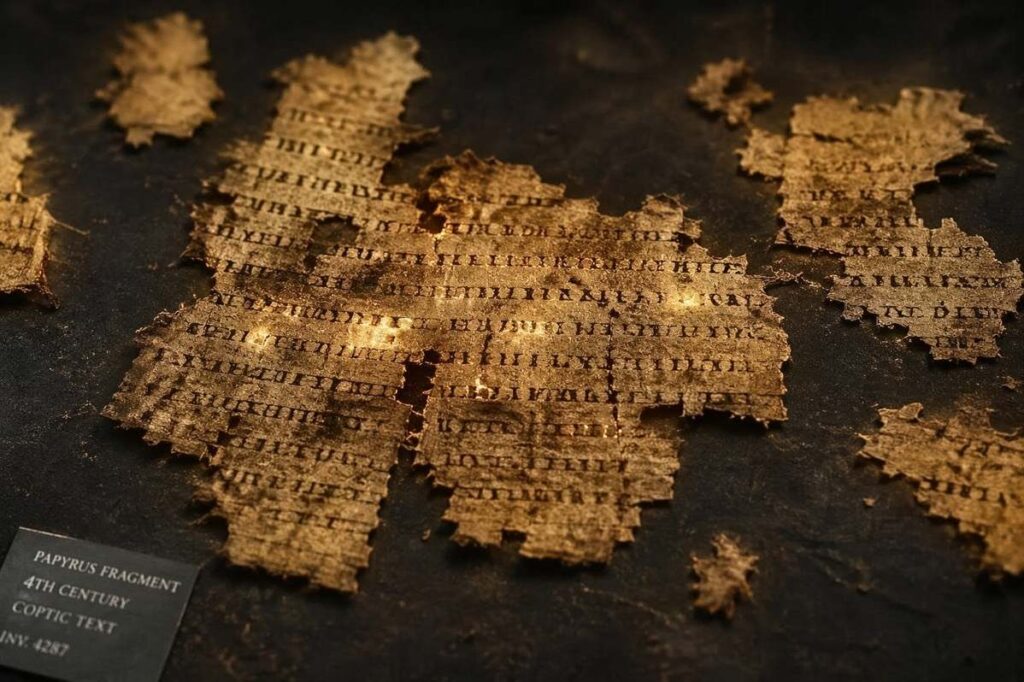
Table of Contents
- What is Codex IX?
- Manuscript Context
- The Tractates of Codex IX
- 1. Melchizedek
- 2. Thought of Norea
- 3. Testimony of Truth
- Reading Order for Codex IX
- Why Codex IX Matters
- Comparative Context: Jewish Apocalyptic Heritage
- Frequently Asked Questions
- Further Reading
- References and Sources
What is Codex IX?
Codex IX (Nag Hammadi Codex IX) is one of the most damaged and theologically radical collections in the library. Discovered in 1945 near Nag Hammadi, Egypt, it contains three tractates: Melchizedek (NHC IX,1), a revelation transforming the biblical priest-king into a Gnostic cosmic warrior; Thought of Norea (NHC IX,2), a brief hymn to the feminine resistance fighter who defies archonic power; and Testimony of Truth (NHC IX,3), a fierce polemic against orthodox Christianity and apostolic authority. The codex demands preparation in Jewish apocalyptic literature, Sethian cosmology, and second-century doctrinal history [1][3].
Manuscript Context
Discovery and Physical State
Codex IX was discovered in December 1945 by Muhammad Ali al-Samman and his brothers, buried alongside the other twelve codices in a sealed jar near the Jabal al-Tarif cliff [4]. The codex is severely damaged–perhaps second only to Codex XII in its degree of physical deterioration. Pages are fragmented, ink has faded, and large lacunae interrupt all three tractates, particularly Melchizedek where the most theologically significant passages are often the most damaged [5].
The codex contains approximately 66 pages of papyrus, copied in Sahidic Coptic dialect by a single scribal hand in the mid-fourth century CE. The physical arrangement is significant: the codex opens with Melchizedek (the longest and most complex text), continues with Thought of Norea (the briefest), and concludes with Testimony of Truth (the most polemical). Whether this sequence reflects deliberate theological progression–from Jewish-Christian synthesis through feminine devotion to anti-orthodox aggression–or merely practical scribal convenience remains debated [3].
A Codex of Contrasts
Uniquely among Nag Hammadi codices, Codex IX juxtaposes three radically different genres: apocalyptic revelation, hymnic devotion, and polemical invective. Melchizedek engages with Jewish priestly tradition and Christian soteriology; Thought of Norea celebrates feminine spiritual resistance; Testimony of Truth attacks the institutional church. The compiler who bound these texts together apparently recognised a common thread: all three represent voices that refuse accommodation with the dominant order–whether Jewish cultic orthodoxy, archonic domination, or emerging Christian bureaucracy [2].
This radical consistency raises important questions about the codex’s intended audience. Was it compiled for a community already committed to resistance? Or did it serve as radicalisation material–a dossier designed to persuade readers that compromise with orthodoxy (Jewish or Christian) was impossible? The texts’ shared hostility toward institutional authority suggests the latter: Codex IX functions as the archive’s manifesto of non-compliance [6].
The Tractates of Codex IX
1. Melchizedek (NHC IX,1)
The Melchizedek tractate presents itself as a revelation given to the biblical Melchizedek–the mysterious priest-king of Genesis 14 and Psalm 110–transforming him from an obscure figure of Jewish tradition into a Gnostic cosmic warrior. “Melchizedek, the great high priest, the one who is in the presence of the father.” The text combines Jewish messianic expectation with Christian redemption mythology and Sethian cosmology, producing a Christology that defies easy categorisation [7].
Melchizedek becomes the one who “will come to the world in the last times, and he will destroy the archons.” This is not the peaceful priest of Hebrews 7 but a celestial combatant–a double agent within the archonic administration who serves the Unknown Father while operating within the demiurgic hierarchy. The text maintains the Jewish identification of Melchizedek as eternal priest but reassigns his allegiance to the transcendent realm, transforming him into a perfect metaphor for the Jewish-Gnostic transition itself [8].
Primary Source Citation: NHC IX,1 — “Melchizedek, the great high priest, the one who is in the presence of the father. He is the one who has been begotten by the father, the one who has been sent to the world.” (Translation: Pearson 1981)
The Biblical Figure Reimagined
The biblical Melchizedek appears briefly in Genesis 14 as the priest-king of Salem who blesses Abraham, and more enigmatically in Psalm 110 as the figure to whom the Davidic king is subordinate. Jewish tradition expanded this figure significantly: the Qumran community identified him as a heavenly priest, Philo allegorised him as the Logos, and the Epistle to the Hebrews made him a type of Christ’s eternal priesthood [9].
The Nag Hammadi text pushes this trajectory to its Gnostic conclusion. Melchizedek is not merely a type or allegory but an active saviour figure–one who will “offer the sacrifice of the living” and “destroy the archons of darkness.” The text’s Christology is complex: Melchizedek is identified with Jesus, yet also distinguished from him as a heavenly counterpart. “He is the one who has been begotten by the father, the one who has been sent to the world” [7].
Warrior Priest Christology
What distinguishes the Melchizedek tractate from other Gnostic Christologies is its militarisation of the priestly role. Where the Gospel of Truth presents Christ as the revealer of hidden knowledge and the Apocryphon of John presents him as the teacher of ascent passwords, Melchizedek presents its hero as a combatant who will “make war upon the archons” and “destroy their power.” The sacrifice he offers is not the passive death of the cross but an active spiritual warfare that liberates the elect from archonic jurisdiction [8].
This warrior-priest synthesis reflects the text’s Jewish apocalyptic heritage. Jewish apocalypses frequently describe angelic combatants, heavenly wars, and the eschatological defeat of demonic powers. The Melchizedek tractate inherits this template but redirects it: the enemy is not Rome or the nations but the cosmic archons themselves–the celestial administrators who claim ownership of souls. The battle is not historical but ontological, fought not with swords but with sacrificial power that transcends the Jewish cult entirely [10].
The Sacrifice That Transcends Cult
Central to the text is the concept of a sacrifice that supersedes the Jerusalem temple. Melchizedek will “offer the sacrifice of the living”–not animal offerings or grain offerings but the spiritual offering of the elect themselves, transformed through gnosis into living sacrifices. This is the Gnostic appropriation and transcendence of Jewish cultic theology: the temple is replaced by the Pleroma, the priest by the awakened initiate, the blood of bulls by the recognition of divine identity [7].
For understanding Gnostic appropriation of Jewish tradition, Melchizedek is essential. It shows how thoroughly Gnostics reinterpreted the Bible, finding their own mythology in its most obscure corners. The text does not reject the Hebrew Bible but transforms it–claiming its figures, its prophecies, and its hopes while redirecting them toward a soteriology that the biblical authors would scarcely recognise [9].
2. Thought of Norea (NHC IX,2)
The Thought of Norea is a brief but potent hymn addressed to Norea–sister of Seth and daughter of Adam and Eve in Gnostic mythology. “O Norea, the thought that is in us, the one who comes from the father.” The text presents Norea as a divine figure who assists the spiritual seed in their struggle against the archons, revealing the devotional dimension of Gnosticism–the worship of divine figures who intervene in human history [11].
Primary Source Citation: NHC IX,2 — “O Norea, the thought that is in us, the one who comes from the father. You are the one who assists the spiritual seed in their struggle against the archons.” (Translation: Layton 1989)
The Forgotten Sister of the Flood
Norea appears in several Nag Hammadi texts–most notably the Hypostasis of the Archons (NHC II,4) and the Thought of Norea–but nowhere in the Bible. She represents the Gnostic invention of tradition: creating figures who embody theological principles, then treating them as if they were historical. In the Hypostasis of the Archons, Norea resists the archons’ attempt to violate her, declaring “I am not your daughter, but a daughter of the power above,” and receives classified knowledge from the angel Eleleth regarding cosmic origins [12].
The Thought of Norea develops this character into an object of devotion. The text is not narrative but hymnic–a liturgical celebration of Norea’s divine assistance. She is “the thought that is in us,” suggesting an interior, psychological dimension: Norea is not merely an external saviour but the divine principle within the elect that recognises archonic deception and cries out for liberation. This interiorisation of the feminine divine is characteristic of Sethian theology, where Barbelo (the First Thought) and Norea (the resistant thought) function as complementary aspects of divine self-awareness [13].
Hymnic Devotion and Spiritual Resistance
The text is poetic rather than systematic, revealing a dimension of Gnosticism often overlooked in scholarly discussions focused on cosmology and soteriology. Gnostic communities did not merely analyse aeons and debate metaphysics; they worshipped. They sang hymns to divine figures who had intervened in their behalf. The Thought of Norea preserves one such hymn–a brief but intense expression of gratitude and recognition directed toward the feminine divine [11].
Norea’s role as resistance fighter is central. She does not merely teach or reveal; she actively opposes the archons, burning their deceptions, refusing their domination, and claiming her true lineage. For contemporary readers, particularly those interested in the feminine divine, Norea offers a model of spirituality that is not passive or submissive but defiant, fiery, and self-authorising. She is the type of the spiritual woman who will not be violated by the powers of this world–who claims her own divine lineage and demands instruction rather than submitting to force [12].
Norea Across the Library
When read alongside the Hypostasis of the Archons, the Thought of Norea reveals the consistency of Norea’s character across texts. In both, she resists archonic violence; in both, she receives angelic revelation; in both, she preserves the spiritual lineage of Seth from contamination. This consistency suggests that Norea was a significant figure in some Gnostic communities–perhaps the focus of a ritual practice or a community identity [13].
The various Norea texts together paint a picture of a divine feminine figure associated with knowledge, resistance, and spiritual fire. When compared with Thunder: Perfect Mind and Trimorphic Protennoia, Norea represents the active, interventionist dimension of the feminine divine–the goddess who enters history not to comfort but to combat, not to soothe but to ignite [2].

3. Testimony of Truth (NHC IX,3)
The Testimony of Truth is one of the most polemical texts in the Nag Hammadi Library–a fierce critique of orthodox Christianity from a Gnostic perspective that refuses all diplomatic compromise. “The testimony of truth is the cure for the passions that dominate the soul.” The text attacks the orthodox for their literal interpretation of scripture, their emphasis on martyrdom, their worship of the creator god, and–most radically–their apostolic foundations [14].
Primary Source Citation: NHC IX,3 — “The foolish are senseless, for they do not know the truth. They do not know who the father is, nor who the son is. The apostles were sent to the world to preach the good news, but they did not preach the truth. They preached a doctrine of their own invention.” (Translation: Pearson 1981)
The Voice of Opposition
The text levels bitter accusations against the “Pharisees”–here representing mainstream Jewish and Christian leaders who emphasise external observance over internal transformation. The author condemns the hypocrisy of those who “devour widows’ houses” while making long prayers, echoing Jesus’ critique in the Gospels but extending it to the emerging orthodox church. This is not merely theological disagreement but existential conflict–the text suggests that orthodox Christianity has been hijacked by the archons, who use religious institutions to maintain control over the divine sparks trapped in matter [14].
Most striking is the attack on the apostles: “The apostles were sent to the world to preach the good news, but they did not preach the truth. They preached a doctrine of their own invention.” This radical critique of apostolic authority sets the Testimony apart from other Nag Hammadi texts, which often claim apostolic origin for their own teachings. Where the Apocryphon of John frames its revelation as a secret teaching delivered by the risen Christ to John, and where the Gospel of Philip presents Mary Magdalene as the truest disciple, the Testimony of Truth dismisses the entire apostolic college as fraudulent [15].
The Critique of Martyrdom
One of the text’s most controversial passages critiques the cult of martyrdom developing in second-century Christianity. The author suggests that those who seek martyrdom out of vanity or desire for glory are merely “casting themselves upon the fire” without true knowledge. This has been interpreted as opposition to martyrdom itself, though the text likely targets false martyrdom–death without understanding [14].
The critique reflects the author’s Gnostic perspective: external acts (even martyrdom) have no salvific value without internal knowledge (gnosis). Physical death is irrelevant compared to the soul’s awakening. The text thus challenges one of the most powerful narratives of early Christian identity–the noble death of the martyr–and replaces it with a soteriology of recognition rather than sacrifice. In the Gnostic filing system, blood is not currency; knowledge is [6].
The Ascetic Ideal and Encratite Theology
Testimony of Truth advocates a rigorous asceticism as the path to salvation. The text condemns marriage and procreation as traps set by the archons to perpetuate human slavery. “Do not become a dwelling place for the devil,” the text warns, suggesting that sexual activity opens the soul to demonic influence. This encratite position (total sexual renunciation) was common in early Christian radical movements and aligns with the severe ethics visible in the Sentences of Sextus and the Book of Thomas the Contender [16].
The text is fragmentary and sometimes contradictory–possibly a composite of different sources. But it preserves a harsh, uncompromising Gnostic voice, unwilling to compromise with emerging orthodoxy. Where other Nag Hammadi texts seek to supplement or reinterpret Christian tradition, the Testimony of Truth seeks to annihilate it–exposing the apostles as frauds, the martyrs as deluded, and the church as an archonic institution [2].
Reading Order for Codex IX
For newcomers: Skip this codex initially. Return only after mastering more accessible texts such as the Apocryphon of John, Hypostasis of the Archons, and Gospel of Truth. The fragmentary state and specialised content of Codex IX offer little reward for unprepared readers.
For advanced study: Read Thought of Norea first (briefest, most accessible, most emotionally immediate), then Melchizedek (for Jewish-Gnostic synthesis and warrior-priest Christology), then Testimony of Truth (for the polemical perspective and encratite theology). Each text demands different background knowledge; approach them sequentially rather than simultaneously [1].
For thematic study: Compare Melchizedek with other Gnostic reinterpretations of Jewish tradition, particularly the Apocalypse of Adam (Codex V) and the Paraphrase of Shem (Codex VII). Read Thought of Norea alongside the Hypostasis of the Archons to understand the full Norea tradition. Examine Testimony of Truth alongside the Second Treatise of the Great Seth to map the range of Gnostic anti-orthodox polemic [10].
Why Codex IX Matters
Jewish-Christian-Gnostic Synthesis
The Melchizedek tractate reveals the thoroughness of Gnostic biblical reinterpretation. It does not merely quote the Hebrew Bible or the New Testament; it transforms them–claiming their figures, their prophecies, and their hopes while redirecting them toward a soteriology that the biblical authors would scarcely recognise. Melchizedek the priest becomes Melchizedek the warrior; the sacrifice of animals becomes the sacrifice of the living; the temple cult becomes the Pleroma itself. This is not exegesis but transfiguration–the systematic conversion of Jewish and Christian material into Gnostic currency [8].
The Feminine Divine in Resistance
The Thought of Norea contributes to the Nag Hammadi Library’s rich collection of texts concerning the feminine divine. Like Thunder: Perfect Mind and Trimorphic Protennoia, this text presents a female figure as bearer of divine knowledge and agent of salvation. But Norea is distinctive: she is not merely a cosmic principle (like Barbelo) or a paradoxical voice (like Thunder); she is a historical-mythological actor who resists, burns, and refuses. Her defiance of the archonic powers parallels the soul’s resistance to material oppression, suggesting that salvation requires not passive acceptance but active recognition and resistance of spiritual deception [12].
Polemical Aggression and Doctrinal Conflict
The Testimony of Truth preserves a voice that other texts mute: the voice of absolute opposition. Where the Gospel of Truth speaks of error and recognition with melancholic beauty, and where the Apocryphon of John teaches ascent with pedagogical patience, the Testimony attacks with vitriol. It exposes the social reality of Gnosticism–not a peaceful philosophical school but a threatened minority, surrounded by hostile institutions, fighting for survival against an orthodoxy that would eventually annihilate it [15].
Codex IX is not for everyone. But for those willing to grapple with its difficulties, it offers perspectives found nowhere else: the Gnostic Melchizedek, the worship of Norea, the radical critique of apostolic authority. It shows that Gnosticism was not a single coherent system but a range of approaches–from the mythological invention of Melchizedek to the poetic devotion of Norea to the polemical aggression of the Testimony [2].
Comparative Context: Jewish Apocalyptic Heritage
Codex IX occupies a crucial position in the map of Jewish-Gnostic transition. The Melchizedek tractate belongs to a family of texts that occupy the blurry boundary between Jewish apocalypse and Gnostic revelation–alongside the Paraphrase of Shem (which transforms Noah into a Gnostic initiate) and the Apocalypse of Adam (which reimagines the first human as a prophet of archonic deception) [10].
These texts suggest a community in conversation–or argument–with its Jewish inheritance. They keep the forms but invert the theology. The ascent remains possible, desirable, necessary. But the destination has changed. The God of Israel is demoted; the Unknown Father above takes his place. Torah observance becomes the mark of the counterfeit creator’s jurisdiction. The Jewish apocalyptic template–heavenly journeys, angelic revelations, eschatological combat–is preserved but redirected against the very system that generated it [8].
When read alongside Codex V (which contains the Apocalypse of Adam and the Apocalypses of James), Codex IX reveals the full range of Gnostic apocalypticism–from the Jewish-Christian synthesis of Melchizedek to the radical anti-apostolic polemic of the Testimony. Together they demonstrate that Gnosticism did not abandon its Jewish roots but weaponised them, turning the ancient dream of breaking through the firmament into a revolutionary programme against the celestial administration itself [2].
“The apostles were sent to the world to preach the good news, but they did not preach the truth. They preached a doctrine of their own invention.”
— Testimony of Truth, NHC IX,3
Frequently Asked Questions
What is Codex IX in the Nag Hammadi Library?
Codex IX is one of the most damaged and theologically radical codices in the Nag Hammadi Library, discovered in 1945 near Nag Hammadi, Egypt. It contains three tractates: Melchizedek (a Gnostic reinterpretation of the biblical priest-king as cosmic warrior), Thought of Norea (a hymn to the feminine resistance fighter), and Testimony of Truth (a fierce polemic against orthodox Christianity and apostolic authority).
What is the Melchizedek tractate about?
The Melchizedek tractate (NHC IX,1) transforms the biblical priest-king of Genesis 14 and Psalm 110 into a Gnostic cosmic warrior who will destroy the archons in the last times. It presents a complex Christology in which Melchizedek is identified with Jesus as a heavenly counterpart, offering a spiritual sacrifice that transcends the Jewish temple cult. The text combines Jewish messianic expectation with Christian redemption mythology and Sethian cosmology.
Who is Norea in the Thought of Norea?
Norea is a Gnostic figure–sister of Seth and daughter of Adam and Eve–who appears in Nag Hammadi texts but nowhere in the Bible. In the Thought of Norea (NHC IX,2), she is celebrated as a divine helper who assists the spiritual seed in their struggle against the archons. She represents the feminine divine as active resistance fighter rather than passive comforter, embodying spiritual defiance and self-authorising knowledge.
What does the Testimony of Truth criticise?
The Testimony of Truth (NHC IX,3) offers a radical critique of orthodox Christianity, attacking literal scriptural interpretation, the cult of martyrdom, worship of the creator god, and–most controversially–the authority of the apostles themselves. It suggests the apostles preached a doctrine of their own invention rather than true knowledge (gnosis), and advocates rigorous asceticism including sexual renunciation as the path to salvation.
How does Melchizedek differ from the biblical figure?
While the biblical Melchizedek is a peaceful priest-king who blesses Abraham, the Gnostic Melchizedek is a cosmic warrior who will make war upon the archons and destroy their power. The text reassigns his allegiance from the Jewish cult to the transcendent Unknown Father, transforming him into a saviour figure whose sacrifice transcends the temple and whose combat is ontological rather than historical.
Why is Codex IX considered difficult to read?
Codex IX is severely damaged, with large lacunae interrupting all three tractates. Its content is highly specialised: Melchizedek requires knowledge of Jewish apocalyptic literature and priestly tradition, Thought of Norea assumes familiarity with the broader Norea mythology (particularly in Hypostasis of the Archons), and Testimony of Truth demands understanding of second-century Christian doctrinal conflict and encratite theology.
Should beginners read Codex IX?
No. Codex IX is recommended only for advanced readers with prior knowledge of Jewish apocalyptic literature, Sethian cosmology, and early Christian history. Beginners should start with more accessible texts such as the Apocryphon of John, Hypostasis of the Archons, and Gospel of Truth before attempting these fragmentary and specialised treatises.
Further Reading
The following articles from the ZenithEye archive provide additional context for understanding Codex IX within the broader landscape of Gnostic traditions:
- The Nag Hammadi Library: Complete Index — Return to the master guide for all 46 tractates and 13 codices.
- Thought of Norea: The Heroine of Spiritual Resistance — Deep analysis of Norea as feminine resistance fighter, her burning of the ark, and her reception of angelic revelation.
- Testimony of Truth: The Anti-Pharisaic Polemic — Comprehensive guide to the text’s critique of martyrdom, apostolic authority, and encratite theology.
- Hypostasis of the Archons: Eve as Voice of Truth — The companion Norea text from Codex II, revealing the full range of her resistance mythology.
- Codex V: The Apocalyptic Codex — Jewish apocalyptic material including the Apocalypse of Adam and Apocalypses of James.
- Apocryphon of John: Gnostic Creation Myth — The foundational Sethian text providing the cosmological framework behind Melchizedek’s archonic combat.
- The Feminine Divine Collection — Curated gateway to all feminine divine content on ZenithEye, including Norea, Thunder, and Protennoia.
- Nag Hammadi Library: Complete Reader’s Guide — Strategic pathways through all 46 tractates for every level of inquiry.
- Nag Hammadi Archive Hub — Central gateway to all codex overviews, thematic collections, and reading paths.
- Nag Hammadi for Beginners: A 10-Text Journey — Entry point for newcomers, establishing the foundation needed before approaching Codex IX.
References and Sources
The following sources support the claims and quotations presented in this article. All citations to the Nag Hammadi Library represent direct translations from the Coptic text as established in the standard critical editions.
Primary Sources and Critical Editions
- [1] Robinson, J.M. (Ed.). (1988). The Nag Hammadi Library in English (4th ed.). Brill.
- [2] Turner, J.D. (1990). “Nag Hammadi Codices XI, XII, XIII.” In Nag Hammadi Codices XI, XII, XIII. Brill.
- [3] Pearson, B.A. (1981). “The Figure of Melchizedek in the First Tractate of the Nag Hammadi Codex IX.” In B. Layton (Ed.), The Rediscovery of Gnosticism. Brill.
- [4] Robinson, J.M. (1979). “The Discovery of the Nag Hammadi Codices.” Biblical Archaeologist, 42(4), 206-224.
- [5] Wisse, F. (1988). “Nag Hammadi Codex IX.” In Nag Hammadi Codices IX and X. Brill.
Scholarly Monographs and Commentaries
- [6] Thomassen, E. (2006). The Spiritual Seed: The Church of the Valentinians. Brill.
- [7] Schenke, H.M. (1981). “The Book of Melchizedek.” In B. Layton (Ed.), Nag Hammadi Codices IX and X. Brill.
- [8] Pearson, B.A. (2007). Ancient Gnosticism: Traditions and Literature. Fortress Press.
- [9] Horton, F.L. (1976). The Melchizedek Tradition: A Critical Examination of the Sources to the Fifth Century A.D. and in the Epistle to the Hebrews. Cambridge University Press.
- [10] Burns, D.M. (2014). Apocalypse of the Alien God: Platonism and the Exile of Sethian Gnosticism. University of Pennsylvania Press.
Comparative Studies and Thematic Analyses
- [11] King, K.L. (Ed.). (1988). Images of the Feminine in Gnosticism. Fortress Press.
- [12] McGuire, A. (1988). “Virginity and Subversion: Norea Against the Powers.” In Images of the Feminine in Gnosticism. Fortress Press.
- [13] Layton, B. (1989). “The Riddle of the Thunder (NHC VI,2): The Function of Paradox in a Gnostic Text from Nag Hammadi.” In Les Textes de Nag Hammadi. Peeters.
- [14] Koschorke, K. (1978). Die Polemik der Gnostiker gegen das kirchliche Christentum. Brill.
- [15] Logan, A.H.B. (1996). Gnostic Truth and Christian Heresy: A Study in the History of Gnosticism. T&T Clark.