Codex V: Apocalypses and the James Tradition
Codex V of the Nag Hammadi Library is the codex of apocalypses–texts that claim to reveal hidden realities, cosmic structures, and ultimate destinies through direct visionary experience. Its five tractates preserve a remarkable diversity of revelatory literature: the philosophical emanationism of Eugnostos the Blessed (NHC V,1), the heavenly ascent of the Apocalypse of Paul (NHC V,2), the secret teachings of Jesus to his brother James in the First and Second Apocalypses of James (NHC V,3-4), and the primordial history of the Apocalypse of Adam (NHC V,5). Together, these texts present Gnosticism in its most visionary mode, less concerned with systematic philosophical exposition than with the direct disclosure of unseen worlds and the transformation of consciousness that such disclosure demands [1].
The codex is also notable for its preservation of a second version of Eugnostos the Blessed, significantly different from the version in Codex III, and for its three texts associated with James–the brother of Jesus who became leader of the Jerusalem church. These James texts offer a window into how Gnostic traditions appropriated and transformed figures from emerging orthodox Christianity, reconfiguring apostolic authority through the lens of secret knowledge. For scholars and prepared readers, Codex V reveals the full range of Gnostic apocalyptic imagination–the Jewish substratum, the Christian transformation, and the philosophical synthesis that together constitute the visionary heart of the Nag Hammadi Library [2].
Table of Contents
- Introduction — Visions of the Unseen World
- The Manuscript and Its Context
- The Tractates of Codex V
- The Apocalyptic Imagination in Codex V
- Reading Codex V: A Guided Approach
- Why Codex V Matters
- Frequently Asked Questions
- Further Reading
- References and Sources
Introduction — Visions of the Unseen World
What is Codex V?
Codex V is the “codex of apocalypses” in the Nag Hammadi Library, containing five tractates: Eugnostos the Blessed (NHC V,1), a philosophical treatise on divine emanation; the Apocalypse of Paul (NHC V,2), a guided tour through ten heavens; the First Apocalypse of James (NHC V,3), secret teaching to the brother of Jesus; the Second Apocalypse of James (NHC V,4), a post-resurrection revelation; and the Apocalypse of Adam (NHC V,5), an alternative history of humanity from creation to final restoration. These texts represent Gnosticism in its most visionary mode.
The five territories: Eugnostos (philosophical emanation) → Apocalypse of Paul (heavenly ascent) → First Apocalypse of James (secret christology) → Second Apocalypse of James (post-resurrection authority) → Apocalypse of Adam (primordial history). Together they map the full spectrum of Gnostic apocalyptic imagination [3][4].
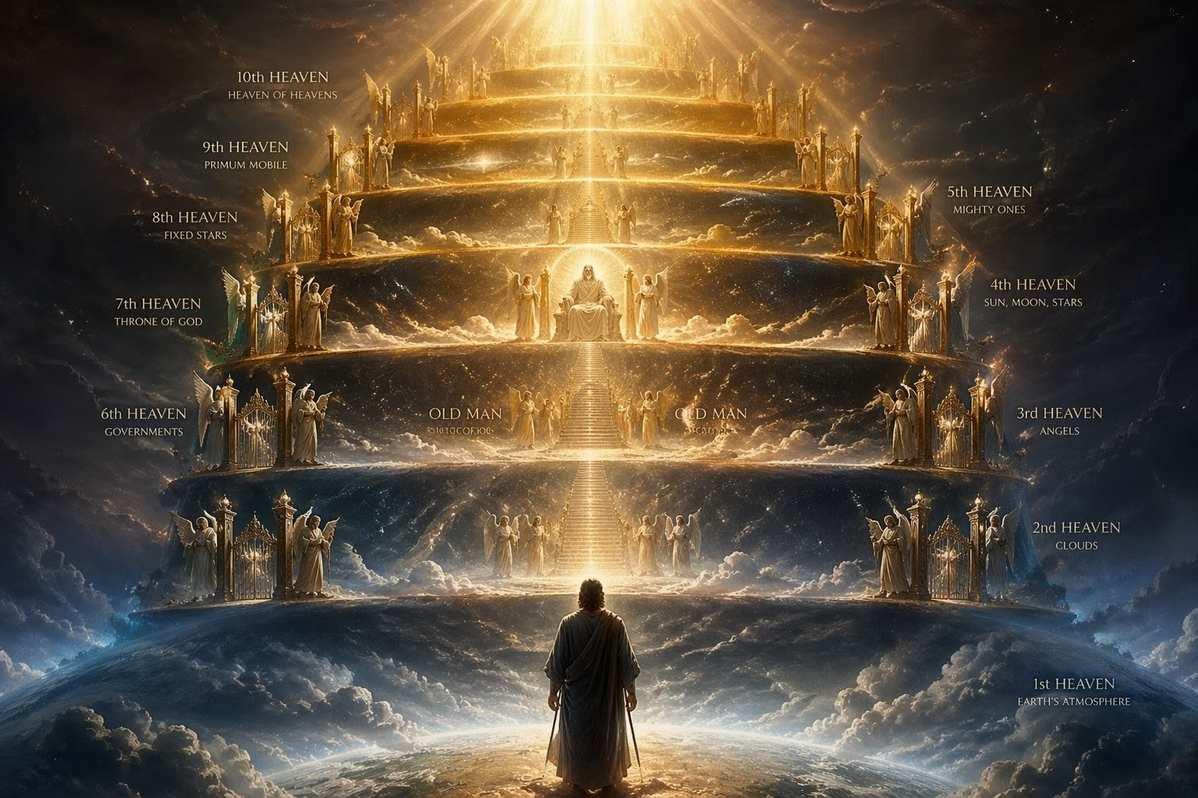
The texts of Codex V are visionary intelligence reports from the celestial administration. They do not merely speculate about cosmic structure; they claim to have toured its departments, interviewed its personnel, and mapped its emergency exits. The Apocalypse of Paul presents a guided inspection of ten heavenly jurisdictions, complete with toll collectors, judicial tribunals, and an encounter with the Old Man who governs the seventh heaven–a figure who must be outmanoeuvred with the proper sign to gain access to the upper floors. The Apocalypses of James preserve classified briefings delivered to the brother of Jesus, establishing a chain of apostolic security clearances that bypasses the Petrine branch office. And the Apocalypse of Adam transmits the original dossier from the first human, passed down through Seth to the elect seed who alone possess the credentials to read it [5].
For scholars of ancient religion, Codex V is essential for understanding the diversity of Gnostic expression. It preserves philosophical treatise alongside visionary ascent, Jewish apocalyptic alongside Christian secret teaching, primordial history alongside cosmological speculation. For contemplative readers, it offers a spirituality that treats revelation not as historical memory but as present encounter–the conviction that hidden realities can be disclosed, that the cosmos has a structure accessible to prepared vision, and that history possesses a meaning visible only to those with eyes to see and the proper passwords to pass the celestial checkpoints [6].
The Manuscript and Its Context
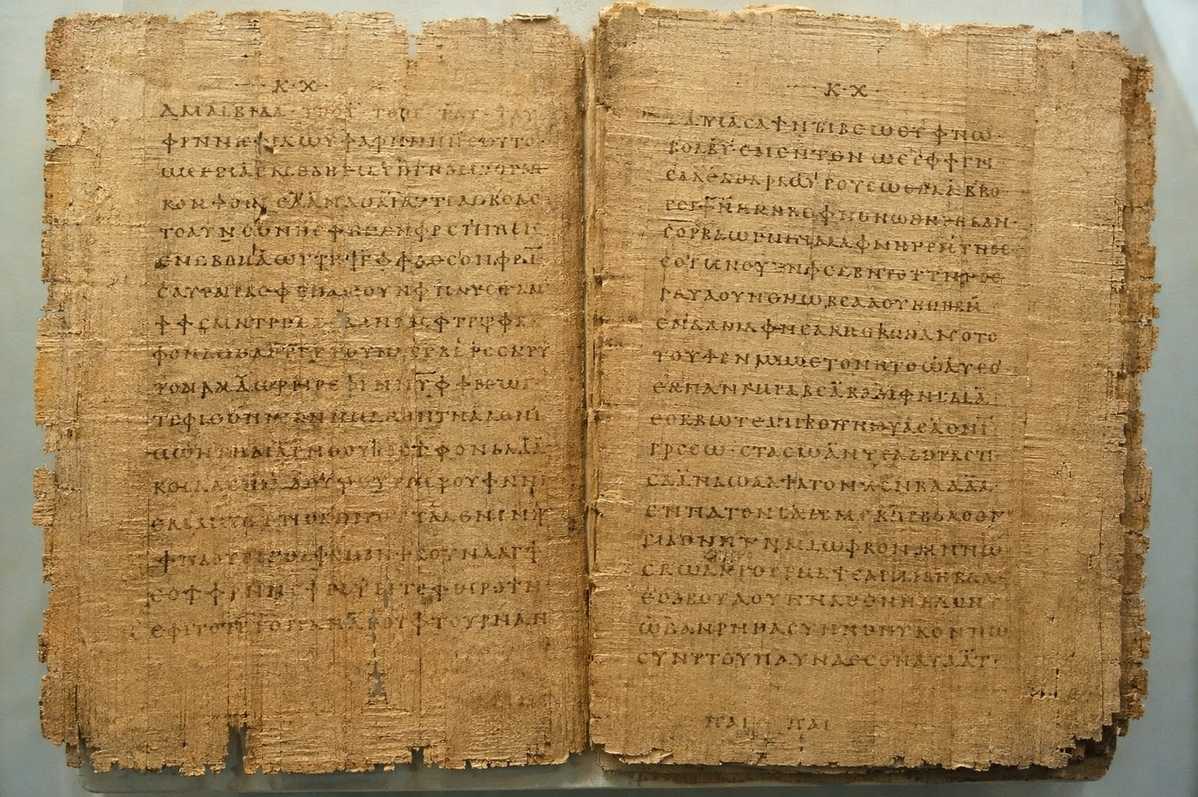
Codex V was discovered in December 1945 near the town of Nag Hammadi in Upper Egypt, buried alongside eleven other codices in a sealed jar at the foot of the Jabal al-Tarif cliffs. The codex contains approximately 80 pages of Coptic text, making it one of the shorter but denser volumes in the collection. The texts are written in the Subachmimic dialect with occasional Sahidic influences, suggesting a scribal hand familiar with multiple Coptic variants and possibly working within a bilingual scholastic environment [3]. Paleographical analysis places the copying in the mid-to-late fourth century CE, though the Greek originals of the tractates likely circulated between the second and third centuries [4].
The physical condition of Codex V presents moderate challenges. Eugnostos survives in good condition, though with some lacunae in its opening philosophical exposition. The Apocalypse of Paul is well-preserved, permitting reconstruction of its ten-heaven ascent structure with reasonable confidence. Both James apocalypses show fragmentary damage toward their conclusions, while the Apocalypse of Adam survives nearly complete, its concluding baptismal formulae intact. The codex was bound in leather over papyrus boards, a standard format for the collection, and its placement within the buried jar suggests deliberate concealment during the ecclesiastical controversies of the fourth century [7].
The presence of two versions of Eugnostos–one in Codex III and one in Codex V–is of particular textual interest. The Codex V version differs significantly in its description of the divine hierarchy and the process of emanation, raising questions about textual fluidity, translation choices, and deliberate theological modification. This is not a library of fixed canonical texts but a collection of living documents, subject to revision, adaptation, and reinterpretation as they passed through the hands of translators and copyists. Codex V thus arrives to us as a working archive–a set of visionary dossiers still under active editorial review by the communities that preserved them [8].
The Tractates of Codex V
The five tractates of Codex V articulate distinct modalities of apocalyptic spirituality–from philosophical cosmogony to heavenly ascent to secret christology to primordial history. Together they demonstrate that Gnostic apocalypticism was not a single genre but a diverse literary ecosystem capable of generating multiple forms of revelatory discourse.
Eugnostos the Blessed (NHC V,1): Philosophical Emanation
Eugnostos the Blessed opens with a philosophical treatise addressed to those who already know–a revelation concerning the generation of reality through divine emanation, described in abstract, non-mythological terms. “The unmoveable, eternal, ineffable father exists before all things.” This incipit establishes the text’s ambition: to trace the procession of being from the absolute source through the divine hierarchies to the material realm, using the conceptual vocabulary of Middle Platonism rather than the narrative frameworks of myth [9].
Primary Source Citation: NHC V,1. “He-Who-Is is ineffable. No principle knew him, no authority, no subjection, nor any creature from the foundation of the world, except he alone. For he is immortal and eternal, having no birth; for everyone who has birth will perish.”
The text presents a continuous chain of beings emanating from the Unbegotten Father: the Self-grown Father, the Immortal Androgynous Man, the divine aeons and powers, down to the material cosmos. Unlike the mythological narratives of the Apocryphon of John, Eugnostos employs negative theology (the Father is ineffable, unnameable, incomprehensible) alongside positive description (he is perfect, blessed, the source of all mind and power). Scholars have noted the text’s deep interest in theoretical angelology and its transformation of metaphysics into a kind of celestial census–a bureaucratic inventory of the divine departments and their administrative hierarchies [10].
The Codex V version differs from its Codex III counterpart in significant ways. The divine hierarchy is described with variations in terminology and sequence, suggesting either different Greek originals, distinct translation strategies, or deliberate theological modification. For readers, the Codex V version offers an alternative perspective on the same essential teaching: reality as overflow from divine abundance, the cosmos as emanation rather than creation, and the human capacity to recognise one’s origin in the noetic realm above. This is not mythology but metaphysics–the filing system of eternity rendered as philosophical exposition [11].
Apocalypse of Paul (NHC V,2): Heavenly Tour
The Apocalypse of Paul presents a guided tour of the heavens, framed as the secret experience of the apostle Paul. The text opens with Paul encountering a small child on the mountain of Jericho–a figure who reveals himself as the Holy Spirit and initiates Paul into the ascent. “And then he went to the fifth heaven, and the fifth heaven was like the first.” This deceptively simple statement introduces a complex journey through ten celestial jurisdictions, each with its own governing powers, judicial procedures, and requirements for transit [12].
Primary Source Citation: NHC V,2 23:1-5. “Then the seventh heaven opened and we went up to the Ogdoad. And I saw the twelve apostles. They greeted me, and we went up to the ninth heaven. I greeted all those who were in the ninth heaven, and we went up to the tenth heaven. And I greeted my fellow spirits.”
The ascent structure is administratively precise. In the fourth heaven, Paul witnesses a soul brought before angelic judges, challenged by three witnesses (anger, desire, and darkness), and sentenced to reincarnation. In the fifth heaven, a great angel with an iron rod oversees the processing of souls. In the sixth heaven, Paul and the Spirit encounter a toll collector who must be addressed with the proper formula. In the seventh heaven, they confront the Old Man–a figure of terrifying brightness who demands to know Paul’s business and must be placated with a sign before the gate will open. Only then does Paul reach the Ogdoad, the Ninth, and finally the Tenth heaven, where he greets his fellow spirits [13].
This is not merely poetic imagination but operational protocol. The text preserves the actual judicial and transit procedures of the celestial administration–the witnesses who testify against the soul, the toll collectors who demand identification, the Old Man who controls access to the upper floors. Paul does not ascend through virtue or faith alone but through knowledge–he knows the formulas, the signs, the proper responses to each checkpoint. The Apocalypse of Paul thus functions as a field manual for post-mortem navigation, equipping the reader with the intelligence necessary to pass through jurisdictions that would otherwise detain the unprepared traveller indefinitely [14].
First Apocalypse of James (NHC V,3): Secret Teaching
The First Apocalypse of James presents secret teaching given by Jesus to his brother James before the crucifixion. “The lord said to me, ‘James, after these things I shall reveal to you the manner of your redemption.'” The text combines eschatological instruction with reassurance about James’ fate–he will suffer, but his suffering has meaning in the larger cosmic scheme. This is not the James of the Jerusalem church, presiding over councils and issuing decrees, but the James of secret knowledge, recipient of classified briefings that transform martyrdom from tragedy into transit [15].
Primary Source Citation: NHC V,3. “Conceive of no other who can teach you, neither angel nor archon nor any other who is from the father or from the mother. The bridal chamber is the place of healing.”
The text is notable for its address to “the twelve” and its concern with the transmission of secret knowledge. It insists that the true teacher is the inner light, the divine presence within, rather than any external authority–angelic, archontic, or apostolic. This interiorisation of authority is characteristic of Gnostic spirituality, where salvation depends on recognition rather than institutional obedience. The text also contains one of the earliest references to the bridal chamber (nymphōn) as the highest mystery: “The bridal chamber is the place of healing.” This sacramental dimension connects the Apocalypse to the broader Valentinian tradition, where the nymphōn represents the restoration of syzygy and the healing of the primordial division [16].
Second Apocalypse of James (NHC V,4): Post-Resurrection Authority
The Second Apocalypse presents a different revelation to James, this one occurring after the resurrection. “The lord appeared to me in a vision, and he said, ‘James, do not be concerned for me, but concern yourself with your own redemption.'” The text is more overtly Gnostic than the first, with clearer references to the divine spark trapped in matter and the need for awakening. It also contains a striking passage about the rejection of martyrdom as an end in itself: “Do not be a martyr to the flesh, but a martyr to the spirit” [17].
The relationship between the two James apocalypses remains unclear–whether they represent different stages of composition, different community settings, or different theological developments. Together they reveal the importance of James as a figure for Gnostic Christianity, appropriating the brother of Jesus as a recipient of secret teaching that legitimises Gnostic claims through apostolic succession while transforming the content of that succession. In the bureaucratic metaphor that runs through this literature, James holds a higher security clearance than Peter–he receives the classified briefings that the Petrine branch office never sees [18].
Apocalypse of Adam (NHC V,5): Primordial History
The Apocalypse of Adam presents the revelation given by Adam to his son Seth, preserved “in the seven hundredth year, saying: Listen to my words, my son Seth.” The text presents an alternative history of humanity, from the creation of Adam through the flood, the destruction of Sodom, and the coming of a saviour figure who will restore the elect seed. Unlike the overtly Christian texts in the library, the Apocalypse of Adam is rooted in Jewish apocalyptic tradition–less concerned with the revelation of Jesus than with the history of the elect seed and its struggle against the demiurgic powers [19].
Primary Source Citation: NHC V,5 64:1-6. “The revelation which Adam taught his son Seth in the seven hundredth year, saying: Listen to my words, my son Seth. When the god had created me of the earth with Eve your mother, I lived with her in a glory that she had seen in the aeon from which we had become.”
The text describes how Adam and Eve originally possessed divine knowledge, how the demiurge divided them into two sexes and stripped them of their glory, and how the knowledge fled into the seed of Seth. From this seed, the elect generation would arise, preserved through the flood and the destruction of Sodom, until the final saviour appears to restore all things. “And the generations will say, ‘He is the offspring of the eternal father, and he is the son of the mother who is above.'” The Apocalypse of Adam thus reveals the Jewish substratum of Gnosticism–the apocalyptic traditions that were transformed but not entirely replaced by Christian revelation. It is essential for understanding the diversity of traditions that fed into the Gnostic synthesis and for recognising that the celestial administration had branch offices in Jewish apocalyptic long before the Christian period [20].
The Apocalyptic Imagination in Codex V
Jewish Apocalyptic Roots
The texts of Codex V preserve strong connections to Jewish apocalyptic literature–the heavenly journeys of 1 Enoch, the throne visions of Daniel, the angelic intermediaries of the Qumran texts. The Apocalypse of Adam is the most explicitly Jewish text in the codex, lacking Christian christological framing and presenting its revelation through the figure of Adam rather than Jesus. The Apocalypse of Paul shares themes with 2 Corinthians 12 (Paul’s reference to being caught up to the third heaven) and anticipates the later Jewish Hekhalot literature with its detailed descriptions of celestial gates, angelic guardians, and the dangers of visionary ascent [21].
These Jewish roots are not merely background; they are the foundation upon which Gnostic apocalypticism was built. The concern with hidden knowledge, the structure of the cosmos, the fate of the soul after death, and the ultimate restoration of the elect–all derive from Jewish apocalyptic traditions that circulated widely in the Second Temple period. Gnosticism did not invent these themes; it inherited them, transformed them, and integrated them with Platonic metaphysics and Christian soteriology to produce the distinctive synthesis preserved in Codex V [22].
Christian Gnostic Transformation
What distinguishes the Gnostic apocalypses from their Jewish predecessors is their emphasis on knowledge (gnosis) as the goal of revelation. Paul does not ascend to worship or to receive commandments but to learn secrets, to see what is hidden, to understand the true structure of reality. James does not receive instructions for church governance but secret teachings about the bridal chamber and the inner light. The visionary experience is not an end in itself but a means to recognition–the awakening of the divine spark that has been exiled in matter [23].
This transformation is also evident in the treatment of authority. Jewish apocalyptic texts typically present their revelations through established figures–Enoch, Daniel, Ezra–and validate them through conformity with Torah. The Gnostic apocalypses of Codex V appropriate Christian figures (Paul, James, Adam through Seth) but subvert their traditional roles. Paul becomes a celestial tourist rather than an apostle of faith. James becomes a recipient of secret teaching rather than a leader of the Jerusalem church. Adam becomes the source of primordial gnosis rather than the father of human sin. This is counter-intelligence against the ecclesiastical administration–a systematic rewriting of personnel files to establish alternative chains of authority [24].

Reading Codex V: A Guided Approach
For newcomers to Nag Hammadi, Codex V offers multiple entry points. The Apocalypse of Paul is the most accessible of the visionary texts–its narrative structure, vivid imagery, and episodic ascent make it readable even for those without extensive background. The Apocalypse of Adam follows naturally, providing the Jewish apocalyptic context that undergirds much of the library. The James texts require some familiarity with early Christian history and the debates about apostolic authority, but their dramatic framing and secret teaching motifs make them engaging for readers with modest preparation [25].
Eugnostos the Blessed is the most demanding text in the codex, requiring background in Middle Platonic metaphysics and the conventions of philosophical theology. Readers are advised to approach it after gaining familiarity with the Apocryphon of John or the Gospel of Truth, which provide the mythological frameworks that Eugnostos abstracts into philosophical terminology. For advanced study, compare the Codex V version of Eugnostos with the Codex III version to understand textual fluidity and the processes of translation and adaptation that shaped the Nag Hammadi collection [26].
For thematic study, read all three apocalypses (Paul, James, Adam) together to understand the range of Gnostic visionary literature. Compare the two James texts to observe how traditions develop and transform across different compositional settings. And read the Apocalypse of Paul alongside Zostrianos and Allogenes to map the full range of Gnostic ascent literature–from the ten heavens of Paul to the thirteen aeons of Zostrianos to the unknowable realms beyond. Such comparison reveals both the shared ritual substrate and the distinctive developments that make each text unique [27].
Why Codex V Matters
This codex preserves the apocalyptic dimension of Gnosticism–the conviction that hidden realities can be revealed, that the cosmos has a structure accessible to vision, that history has a meaning visible only to those with eyes to see. This is not the philosophical Gnosticism of the Tripartite Tractate but the visionary Gnosticism of ascent and revelation, of secret teaching and primordial memory. For understanding the full range of Gnostic expression–the philosophical and the visionary, the Jewish and the Christian, the speculative and the experiential–Codex V is essential [28].
The James traditions in Codex V also reveal how Gnostic Christianity appropriated figures from orthodox tradition. James, the leader of the Jerusalem church, becomes the recipient of secret teaching–legitimising Gnostic claims through apostolic succession while transforming the content of that succession. This is not merely theological innovation but strategic counter-intelligence: by claiming James as the bearer of secret knowledge, Gnostic communities established an alternative lineage that bypassed the Petrine hierarchy and its archontic sympathies. The two James apocalypses thus function as classified personnel files, reassigning authority to those who received the hidden briefings rather than those who held the public offices [29].
For historians of religion, Codex V offers crucial evidence for the diversity of early Christian and Jewish apocalypticism. The Apocalypse of Adam reveals the Jewish substratum that fed into Gnostic speculation. The Apocalypse of Paul demonstrates how Christian figures were transformed into celestial navigators. And Eugnostos shows how philosophical metaphysics could be integrated with apocalyptic revelation to produce a synthesis that is simultaneously rigorous and rapturous. The codex stands as the visionary intelligence division of the Nag Hammadi Library–the department responsible for mapping the unseen world, briefing the elect on cosmic structure, and ensuring that every traveller carries the proper credentials for the journey ahead [30].

Frequently Asked Questions
What is Codex V in the Nag Hammadi Library?
Codex V is one of the twelve codices discovered near Nag Hammadi in 1945, known as the codex of apocalypses. It contains five tractates: Eugnostos the Blessed, the Apocalypse of Paul, the First Apocalypse of James, the Second Apocalypse of James, and the Apocalypse of Adam. These texts present Gnosticism in its most visionary mode, emphasising revelation, heavenly ascent, and secret teaching.
What are the five tractates of Codex V?
The five tractates are: (1) Eugnostos the Blessed (NHC V,1)–a philosophical treatise on divine emanation; (2) Apocalypse of Paul (NHC V,2)–a guided tour through ten heavens; (3) First Apocalypse of James (NHC V,3)–secret teaching to the brother of Jesus; (4) Second Apocalypse of James (NHC V,4)–a post-resurrection revelation; and (5) Apocalypse of Adam (NHC V,5)–an alternative history of humanity from creation to final restoration.
What is the Apocalypse of Paul and its significance?
The Apocalypse of Paul (NHC V,2) presents the apostle Paul’s visionary ascent through ten heavens, encountering angelic judges, toll collectors, and the Old Man who governs the seventh heaven. It is significant for its detailed protocol of post-mortem navigation and its emphasis on knowledge as the means of passing celestial checkpoints, distinguishing Gnostic apocalypticism from Jewish and orthodox Christian precedents.
How do the two versions of Eugnostos differ?
Eugnostos the Blessed appears in both Codex III and Codex V with significant variations in the description of the divine hierarchy and the process of emanation. Scholars debate whether these differences reflect different Greek originals, distinct translation choices, or deliberate theological modification. The Codex V version offers an alternative perspective on the same essential teaching of reality as divine overflow.
What is the Apocalypse of Adam and its Jewish roots?
The Apocalypse of Adam (NHC V,5) is a revelation from Adam to his son Seth presenting an alternative history of humanity from creation through the flood to final restoration. It is deeply rooted in Jewish apocalyptic tradition, lacking overt Christian framing, and reveals the Jewish substratum that fed into Gnostic speculation before the Christian period.
What do the James apocalypses reveal about Gnostic authority?
The First and Second Apocalypses of James (NHC V,3-4) present James, brother of Jesus, as recipient of secret teachings about the bridal chamber, the inner light, and spiritual martyrdom. They reveal how Gnostic traditions appropriated Christian figures to establish alternative apostolic lineages that bypassed the Petrine hierarchy, transforming James from Jerusalem church leader into bearer of classified spiritual knowledge.
How should readers approach the visionary texts of Codex V?
Beginners should start with the Apocalypse of Paul for its accessible narrative structure, then the Apocalypse of Adam for Jewish apocalyptic context. The James texts require modest familiarity with early Christian history. Eugnostos demands background in Middle Platonic metaphysics and is best approached after reading foundational texts like the Apocryphon of John or Gospel of Truth.
Further Reading
These links connect Codex V to related resources within the ZenithEye library, providing pathways for deeper exploration of specific texts, traditions, and the apocalyptic imagination of the Nag Hammadi collection.
- The Nag Hammadi Library: Complete Reader’s Guide — Master index and navigational hub for all forty-six tractates and thematic collections.
- Eugnostos the Blessed — Detailed individual tractate study exploring the philosophical emanationism of this non-mythological cosmological text.
- Apocalypse of Paul: Heavenly Ascent Beyond the Fourth Heaven — In-depth analysis of the ten-heaven journey, the Old Man of the seventh heaven, and the judicial procedures of the celestial administration.
- First Apocalypse of James — Examination of the secret teachings given to the brother of Jesus and the earliest reference to the bridal chamber as place of healing.
- Second Apocalypse of James — Study of the post-resurrection revelation and its radical reconfiguration of martyrdom as spiritual rather than fleshly.
- Apocalypse of Adam — Exploration of the Jewish apocalyptic roots of this primordial history and its transmission of secret knowledge through the seed of Seth.
- Jewish Apocalyptic Roots of Gnosticism — Historical context for the Jewish traditions that fed into the visionary texts of Codex V and the broader Nag Hammadi collection.
- Ascent Literature in the Nag Hammadi Library — Thematic collection surveying heavenly journey texts across the entire collection, including comparative analysis with the Apocalypse of Paul.
- The Complete Nag Hammadi Reading Order — Structured path through all forty-six tractates, with guidance on building preparation for visionary and apocalyptic texts.
- Codex VII: Sethian Technical Texts — Comparative codex overview examining the next stage of Sethian literature, including the Apocalypse of Peter and its docetic crucifixion narrative.
References and Sources
The following sources support the claims and quotations presented in this article. All citations to the Nag Hammadi Library represent direct translations from the Coptic text as established in the standard critical editions.
Primary Sources and Critical Editions
- [1] Robinson, J.M. (Ed.). (1988). The Nag Hammadi Library in English (4th ed.). Brill.
- [2] Meyer, M. (Ed.). (2007). The Nag Hammadi Scriptures: The International Edition. HarperOne.
- [3] Parrott, D.M. (1979). “Eugnostos the Blessed (V,1).” In Nag Hammadi Codices V,2-5 and VI with Papyrus Berolinensis 8502,1 and 4. NHS 11. Brill.
- [4] Murdock, W.R. & MacRae, G.W. (1979). “The Apocalypse of Paul (V,2).” In Nag Hammadi Codices V,2-5 and VI. NHS 11. Brill.
- [5] Schoedel, W.R. (1979). “The First Apocalypse of James (V,3).” In Nag Hammadi Codices V,2-5 and VI. NHS 11. Brill.
Scholarly Monographs and Commentaries
- [6] Pearson, B.A. (2007). Ancient Gnosticism: Traditions and Literature. Fortress Press.
- [7] Layton, B. (1987). The Gnostic Scriptures. Doubleday.
- [8] Turner, J.D. (2001). Sethian Gnosticism and the Platonic Tradition. Peeters.
- [9] Williams, M.A. (1996). Rethinking “Gnosticism”: An Argument for Dismantling a Dubious Category. Princeton University Press.
- [10] Hanegraaff, W.J. (2019). Hermetic Spirituality and the Historical Imagination. Cambridge University Press.
Comparative Studies and Thematic Analyses
- [11] Hedrick, C.W. (1980). The Apocalypse of Adam: A Literary and Source Analysis. SBLDS 46. Scholars Press.
- [12] King, K.L. (2006). The Secret Revelation of John. Harvard University Press.
- [13] Pagels, E.H. (1979). The Gnostic Gospels. Random House.
- [14] Schenke, H.-M. (1974). “The Phenomenon and Significance of Gnostic Sethianism.” In The Rediscovery of Gnosticism, Vol. 2. Brill.
- [15] Armstrong, A.H. (1986). “Platonism and Gnostic Transformation: The Journey of the Soul.” In Classical Mediterranean Spirituality. Crossroad.