Jewish Apocalyptic Roots of Gnosticism: The Heavenly Ascent Before the Fall
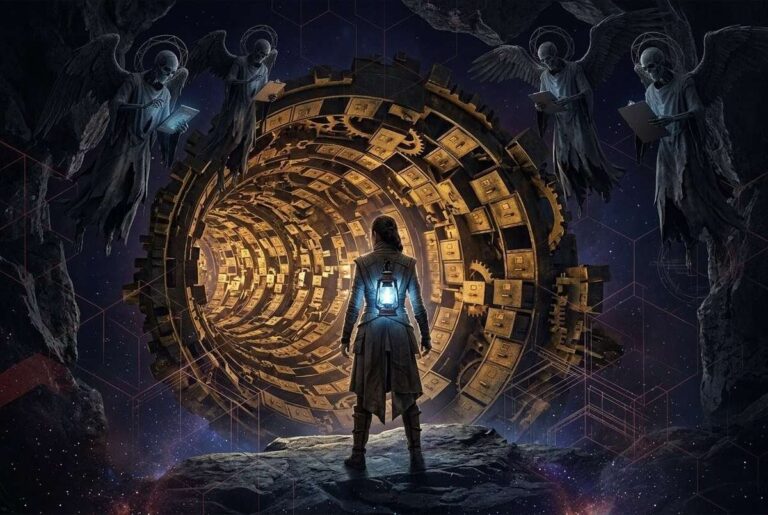
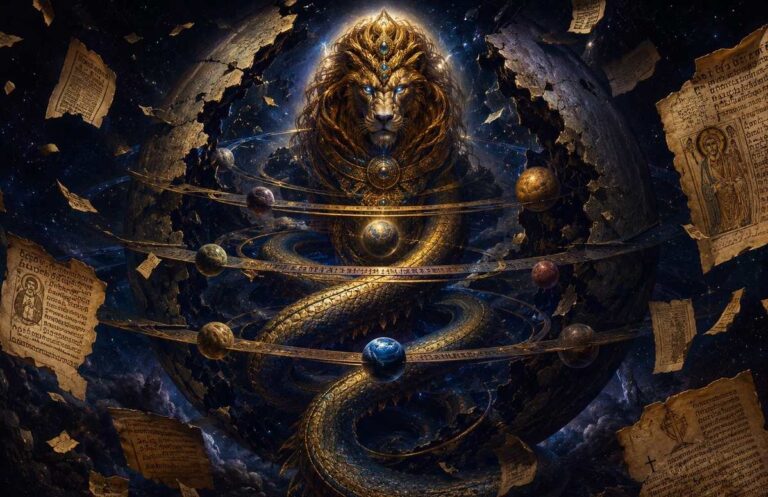
The Heavenly Ascent Before the Fall reveals an uncomfortable truth about the Nag Hammadi Library’s filing system: the celestial bureaucracy predates the Gnostic insurrection by centuries. Long before the archonic administration was exposed as fraudulent middle management, Jewish mystics had already established the protocols for penetrating the seven planetary spheres. They were not yet Gnostics—they were apocalyptists, merkavah mystics, and dreamers who believed the soul could secure exit visas through heaven’s departmental jurisdictions to stand before the Throne itself.
The texts they produced—1 Enoch, 4 Ezra, the Apocalypse of Abraham—read like field notes from explorers who climbed too high and saw the administrative malpractice above. By the time the Nag Hammadi tractates were composed, these Jewish apocalyptic templates had become the operating system for Gnostic revelation. The Apocalypse of Paul, the Paraphrase of Shem, and the Ascension of Isaiah all inherit the same narrative structure: a seer taken up, shown classified cosmic secrets, initiated into mysteries that invalidate earthly religious paperwork. But something changed in transmission. The Jewish apocalyptist ascends to confirm the covenant; the Gnostic ascends to escape it entirely.
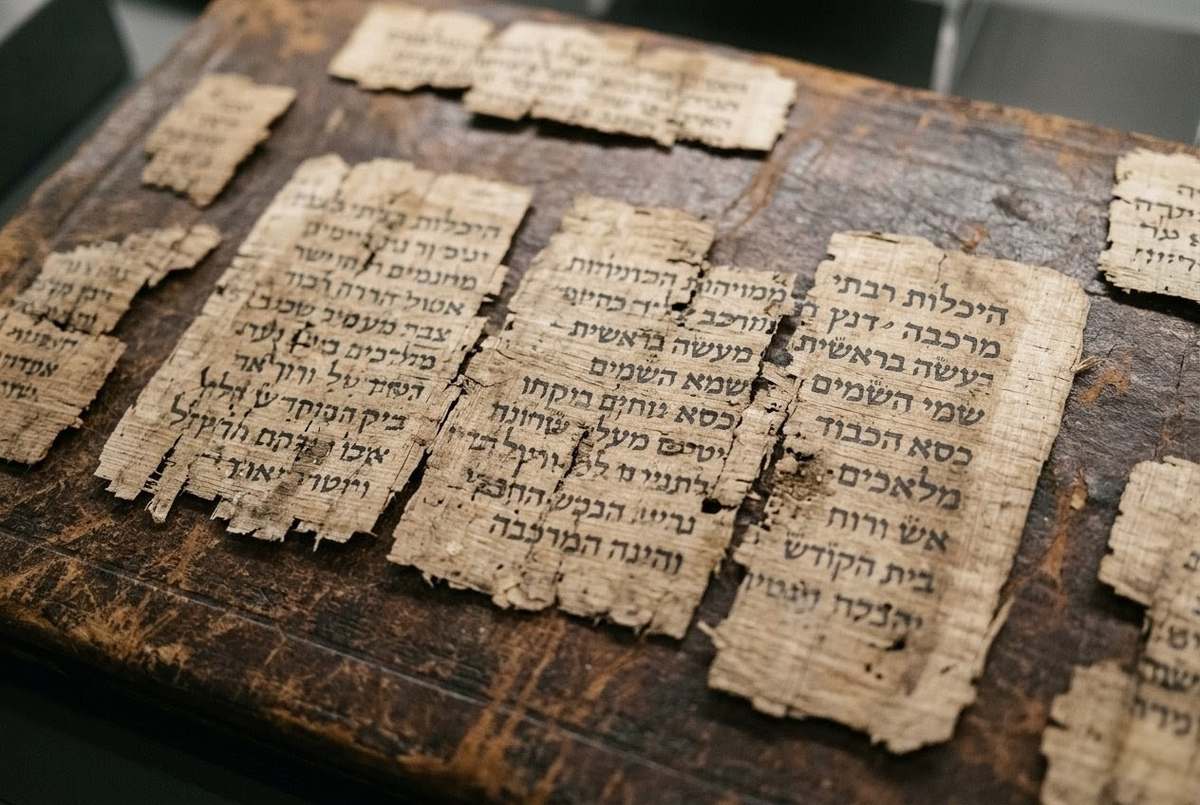
Table of Contents
- Introduction: The Pre-History of Cosmic Bureaucracy
- The Merkavah Precedent and Heaven’s Filing System
- Apocalyptic Dualism: From Temporal to Cosmic Crisis
- The Angelic Problem: From Mediators to Middle Management
- Texts of Transition: The Blurry Boundaries
- The Survival of the Template
- Frequently Asked Questions
- Further Reading
- References and Sources
Introduction: The Pre-History of Cosmic Bureaucracy
What is Merkavah Mysticism?
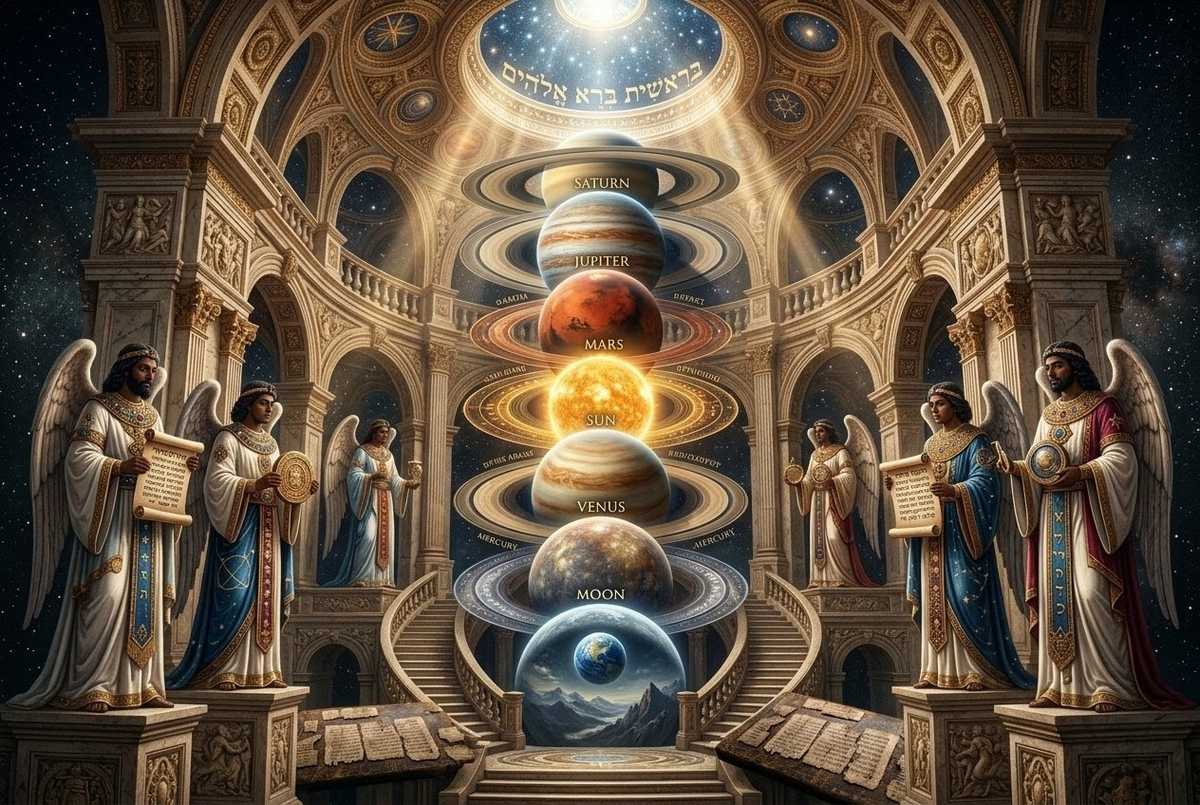
Merkavah (literally “chariot”) mysticism refers to the early Jewish contemplative tradition focused on Ezekiel’s vision of the divine throne-chariot. Practitioners sought to ascend through seven heavenly halls (hekhalot), pass terrifying guardian angels, and glimpse the divine glory. This “celestial bureaucracy” required knowledge of secret passwords, seals, and proper administrative protocol—elements later adapted by Gnostic systems for their own “exit visa” applications.
The earliest Jewish mystical literature—the Hekhalot texts, the visions of Ezekiel’s chariot—describes a dangerous bureaucratic journey upward. The mystic must pass departmental guardians, recite specific passwords, demonstrate knowledge of celestial security clearances. At each heaven, the architecture grows stranger: measures of fire, doors of lightning, halls that exist outside standard temporal filing. This is not mere metaphor. For the apocalyptists, these were literal territories the soul must navigate after death, or in rarer cases, during ecstatic trance that bypassed normal jurisdictional limits.
What the Gnostics inherited was not merely the architecture of ascent but the entire concept of a tiered cosmos with checkpoint controls. The Jewish system was hierarchical but ultimately benevolent—a celestial civil service serving the Most High. The Gnostic innovation was to recognise this same administration as hostile middle management, the archontic gatekeepers who had transformed legitimate cosmic order into a prison filing system. Yet the paperwork—the seals, the passwords, the staged ascent through planetary spheres—remained recognisably Jewish in origin.
The Merkavah Precedent and Heaven’s Filing System
The Hekhalot Rabbati and Hekhalot Zutarti preserve records of mystics who sought to penetrate the seven heavens through rigorous administrative compliance. These texts describe guardian angels who demand identification, seals that serve as entry permits, and the terrifying danger of improper protocol. One wrong answer, one missing password, and the seeker risks incineration by the guardians—cosmic security personnel who take their jurisdiction seriously.
The Dangerous Ascent Through Seven Halls
The merkavah mystic did not wander through vague spiritual territories. The ascent followed precise coordinates: the first heaven’s checkpoint, the second heaven’s scrutiny, the third heaven’s archives where human deeds are recorded. Each level required specific hymns—essentially administrative chants that proved the traveler’s clearance level. The seventh heaven brought the mystic before the divine throne, but even here protocol dictated behaviour: when to stand, when to bow, what petitions could be filed.
Primary Source Citation: NHC VIII,1 (Zostrianos) 1:1-5: “I was in the world of sense, in the vain place of existence, in the place of the dead… I came down to the aeon of existence, to the vain garment which is the body of death…”—demonstrating the extension of Jewish ascent templates into thirteen aeonic jurisdictions beyond the seven heavens.
Passwords and Seals as Administrative Protocols
The Séfer Yetzirah and related mystical literature preserve the “administrative passwords” required for cosmic transit. These were not magical incantations but bureaucratic identifiers: “I am [Name], son of [Name], and I possess the seal of [Archangel].” The Gnostic texts preserve this exact structure but invert the loyalty test. Where the Jewish mystic proves his allegiance to the covenant, the Gnostic proves his independence from it.
Apocalyptic Dualism: From Temporal to Cosmic Crisis
Jewish apocalyptic literature emerged from historical trauma—the destruction of the Temple, the crisis of exile, the question of why the righteous suffer while the wicked thrive. It resolved this crisis through temporal dualism: the present age (olam hazeh) is ruled by wickedness and administrative error, but the age to come (olam haba) will see justice restored and proper filing re-established. History moves toward cataclysm and renewal, a massive bureaucratic reorganisation of the cosmos.
The Trauma of Exile and Temple Destruction
1 Enoch and 4 Ezra process the unthinkable: the Temple’s destruction implies either God’s impotence or his absence. The apocalyptists choose a third option—God is absent from this specific office, but remains sovereign in the headquarters above. The ascent literature becomes a way to bypass failed middle management (the corrupt priesthood, the foreign empires) and file petitions directly with the executive branch.
From Olam Hazeh to the Kenoma
Gnosticism radicalised this dualism into cosmology. The present age is not merely wicked; it is false. The creator is not merely stern; he is ignorant or malevolent—a middle manager who botched the blueprint and refuses to admit his errors. Where 4 Ezra questions God’s justice but accepts his sovereignty, the Apocryphon of John declares the creator a blind demiurge who filed the wrong paperwork. The apocalyptic critique of earthly power became the Gnostic critique of cosmic power itself.
Primary Source Citation: NHC II,1 (Apocryphon of John) 11:20-25: “Now the archon who is weak has three names… Yaldabaoth, Saklas, Samael… he is ignorant of his mother and of the Fullness…”—exposing the creator as a compromised administrator ignorant of higher executive authority.
Yet the literary form persists. Both genres feature angelic mediators who reveal classified intelligence (gnosis in Greek, da’at in Hebrew). Both emphasise the transient nature of the visible world as a temporary filing system. Both promise salvation through privileged information rather than ritual observance alone. The Nag Hammadi library represents, in many respects, the final flowering of Jewish apocalyptic—pushed to its logical extreme by historical catastrophe and cross-cultural fertilisation with Platonic metaphysics.
The Angelic Problem: From Mediators to Middle Management
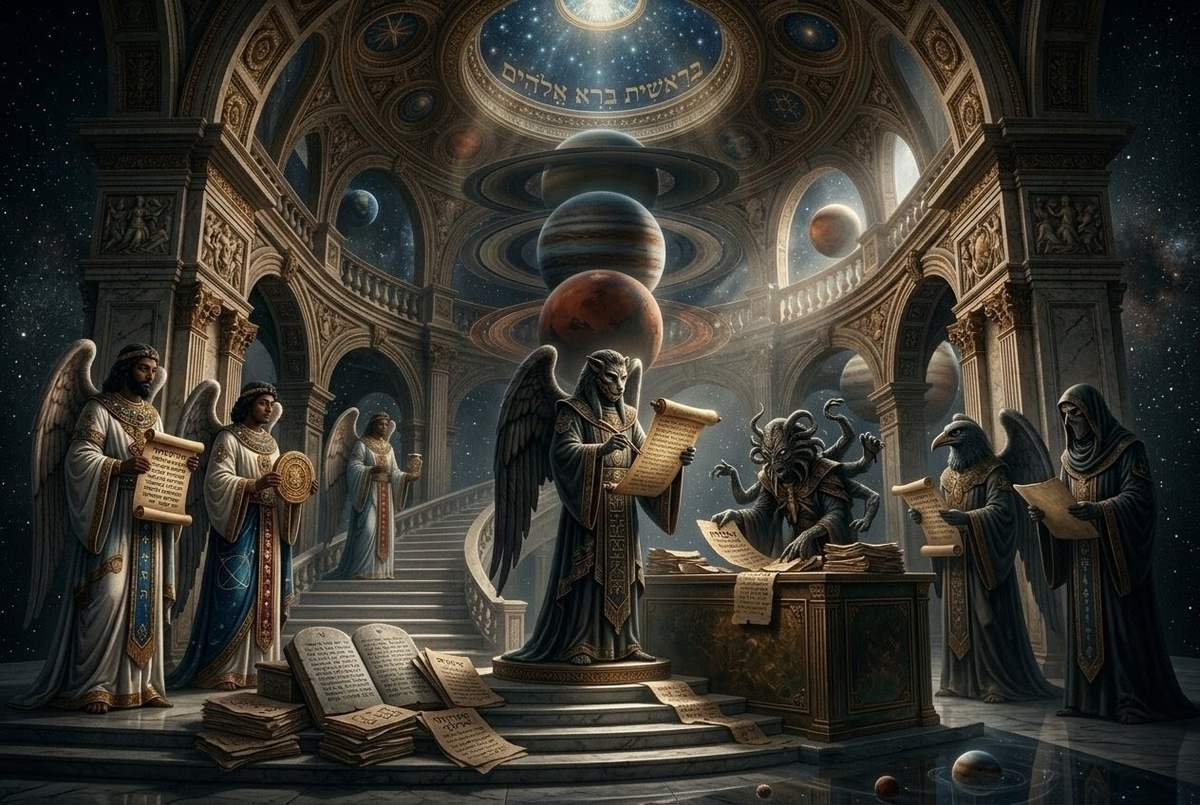
One crucial difference separates the traditions. Jewish apocalypses generally trust the mediating angels—Michael, Uriel, Metatron—as legitimate civil servants of the Most High. Gnostic texts remain suspicious, viewing these same entities as compromised by their proximity to the corrupt administration. In the Apocalypse of Paul, the angelic toll-collectors of the lower heavens must be deceived or bypassed entirely. In Zostrianos, the protagonist initially confuses archontic powers masquerading as divine—standard security protocol in a compromised system.
The Great Archon and His Departmental Jurisdiction
This shift reflects the Gnostic reading of Jewish angelology through a Platonic administrative lens. The angels become archons, planetary rulers who maintain the prison’s security systems. What was once the heavenly bureaucracy becomes the cosmic administration of the fallen world—middle managers who have lost touch with executive authority and now operate as autonomous, often hostile, departments.
Primary Source Citation: NHC V,2 (Apocalypse of Paul) 19:15-20: “And he came to the fourth heaven… and the ruler of this realm demanded by what authority he passed through the lower heavens…”—demonstrating the toll-collector mentality of the archonic administration.
The Deception of the Toll-Collectors
The Apocalypse of Paul reveals the specific administrative malpractice of the lower heavens. The “toll-collectors” (Greek telōnai, Aramaic mokhsa) demand taxes on souls passing through their jurisdiction. The Gnostic seer, armed with the proper passwords and seals, reveals his true pneumatic clearance level and bypasses these corrupt checkpoints. This represents a radical reinterpretation of the merkavah tradition: the same architecture, the same guardians, now viewed as illegitimate rather than benevolent.
Texts of Transition: The Blurry Boundaries
Several Nag Hammadi tractates occupy the blurry boundary between Jewish apocalypse and Gnostic revelation. The Ascension of Isaiah (though extant outside the Nag Hammadi collection, it shares the milieu) describes the prophet’s ascent through seven heavens, witnessing the crucifixion from above, encountering the Beloved in the seventh heaven—yet stops short of declaring the creator malevolent. The Paraphrase of Shem uses the Noah figure but transforms the flood into a baptismal mystery that dissolves the archonic grip. The Melchizedek tractate reimagines the priest-king as a heavenly warrior whose sacrifice transcends the Jewish cult entirely.
The Ascension of Isaiah and the Seventh Heaven
This text preserves the purest Jewish apocalyptic structure while hinting at Gnostic developments. Isaiah passes through each heaven, observing the angels’ activities, until he reaches the seventh where he sees “another glorious Beloved” distinct from the God of the lower realms. The text maintains loyalty to the covenant while suggesting that the highest executive operates above the traditional chain of command—a proto-Gnostic insight that preserves Jewish forms while undermining Jewish theology.
Paraphrase of Shem: Noah’s Baptismal Upgrade
NHC VII,1 presents Noah receiving revelations from “the Great Power” about the true nature of the flood—not divine punishment but a dissolution of the “tunic of darkness.” Here the Jewish patriarch becomes a Gnostic initiate, the floodwaters become baptismal fire, and the ark becomes a vehicle for escaping the material administration. The Jewish framework (Noah, flood, covenant) remains intact while its meaning is entirely inverted.
Melchizedek: The Warrior Priest’s Reassignment
NHC IX,1 transforms the priest-king of Genesis into a cosmic warrior who battles the ” archons of darkness.” The text maintains the Jewish identification of Melchizedek as eternal priest but reassigns his allegiance to the transcendent realm. He becomes a double agent within the celestial bureaucracy, serving the Unknown Father while operating within the demiurgic administration—a perfect metaphor for the Jewish-Gnostic transition itself.
The Survival of the Template in Nag Hammadi Ascent Literature
Understanding this Jewish apocalyptic substrate is essential for reading the Nag Hammadi library’s most complex ascent texts. Without recognising the merkavah ascent pattern, Allogenes reads as incomprehensible mysticism. Without knowing the apocalyptic critique of history, the Gospel of Truth seems abstract philosophy. These are not Greek speculations about being; they are Jewish visions about escape—refined, philosophised, but rooted in the ancient dream of breaking through the firmament to see what lies beyond the filing system.
Allogenes and the Thirteen Aeons
NHC XI,3 extends the Jewish seven-heaven structure to thirteen aeons, each with its own guardian, passwords, and administrative procedures. The “Foreigner” (Allogenes) moves through these jurisdictions not by proving his loyalty to the system but by demonstrating his transcendent clearance level. The text represents the ultimate Gnostic radicalisation of the merkavah tradition—unlimited ascent beyond any fixed cosmic hierarchy.
Zostrianos: The Extended Itinerary
NHC VIII,1 offers the most detailed “travel itinerary” in the collection, describing Zostrianos’ journey through the aeons with specific attention to the “judges,” “guards,” and “toll-collectors” at each level. The text preserves the Jewish fear of the heavenly guardians while providing the Gnostic solution: not prayers of submission, but declarations of identity that bypass the entire administrative structure.
Contemporary Relevance: Ancient Maps for Modern Prison Breaks
The Gnostics did not invent the heavenly journey. They inherited it, weaponised it, and aimed it at the very system that had generated it. In doing so, they preserved a radical current of Jewish spirituality that might otherwise have vanished—the refusal to accept the visible world as final, the conviction that somewhere above the highest heaven, the true Light waits, unchanged by the catastrophes below.
For contemporary readers, these texts offer more than historical curiosity. They reveal how religious imagination processes trauma through cosmic cartography. The Jew writing after the Temple’s destruction and the Gnostic writing under Roman oppression both sought “hotline access” to a power that could override local administration. The maps they drew—seven heavens, thirteen aeons, planetary archons, toll-collectors—speak to a perennial intuition that reality possesses depth beyond the visible, and that somewhere, the paperwork can be overturned.
The Jewish apocalyptist sought to confirm the covenant; the Gnostic sought to escape it. Yet both trusted in the same fundamental premise: that the human being is capable of crossing departmental boundaries, of demanding audience with ultimate authority, and of returning with classified intelligence that changes everything. The template survives because it answers a permanent human need—to believe that the prison has an exit, and that someone, somewhere, holds the key.
Frequently Asked Questions
What is merkavah mysticism and how does it relate to the Nag Hammadi Library?
Merkavah mysticism is an early Jewish tradition focused on ascending through seven heavens to glimpse the divine throne. It established the administrative protocols–passwords, seals, guardian angels–that Nag Hammadi texts like Zostrianos and Allogenes later adapted for their own ascent narratives. The Gnostics inherited the architecture but declared the gatekeepers hostile rather than benevolent.
How did Jewish apocalyptic literature influence Gnostic ascent texts?
Jewish apocalypses like 1 Enoch and 4 Ezra provided the narrative template: a seer taken up through planetary spheres, shown cosmic secrets, and initiated into mysteries. Gnostic texts such as the Apocalypse of Paul and Paraphrase of Shem borrowed this structure but inverted its purpose–ascending not to confirm the covenant but to escape the cosmic administration entirely.
What is the difference between Jewish angels and Gnostic archons?
In Jewish apocalyptic literature, angels like Michael and Uriel serve as legitimate civil servants of the Most High. In Gnostic texts, these same figures become archons–planetary toll-collectors maintaining a prison system. The Gnostic innovation was viewing the celestial bureaucracy as corrupt middle management rather than benign administration.
Which Nag Hammadi texts show the strongest Jewish apocalyptic influence?
Zostrianos (NHC VIII,1), Allogenes (NHC XI,3), the Apocalypse of Paul (NHC V,2), and the Paraphrase of Shem (NHC VII,1) preserve the clearest merkavah templates. They feature the seven-heaven structure, guardian interrogations, and sealed passwords–while extending the ascent beyond Jewish parameters into the aeonic realm.
What are the Hekhalot texts and why are they important for understanding Gnosticism?
The Hekhalot (Heavenly Halls) literature describes mystical ascent through seven celestial chambers filled with terrifying angels and fire. These texts established the “bureaucratic” nature of cosmic ascent–specific passwords required at each checkpoint. Understanding Hekhalot mysticism reveals that Gnostic “archons” are reinterpretations of Jewish angelic gatekeepers.
How does the cosmological dualism in 1 Enoch compare to Sethian Gnosticism?
1 Enoch maintains temporal dualism: the present age is troubled but God remains sovereign. Sethian Gnosticism radicalises this into ontological dualism: the creator himself is compromised. Both, however, share the conviction that the righteous must ascend through celestial jurisdictions to receive hidden knowledge and vindication beyond earthly courts.
What happened to the Jewish apocalyptic tradition after the rise of Gnosticism?
Rabbinic Judaism eventually suppressed the merkavah traditions, confining them to controlled liturgical contexts. Meanwhile, Gnosticism preserved the radical apocalyptic impulse–the refusal to accept visible reality as final–while redirecting it against the cosmos itself. Elements survived in Kabbalah, but the “exit visa” mentality found its fullest expression in the Nag Hammadi Library.
Further Reading
- Allogenes: The Sethian Ascent to the Unknowable One — Extending the Jewish seven-heaven model into thirteen aeons, demonstrating the radicalisation of merkavah protocols in Sethian theology.
- Zostrianos: The Complete Journey Through the Thirteen Aeons — The most detailed itinerary of celestial ascent in the Nag Hammadi Library, preserving Jewish checkpoint structures while inverting their theological significance.
- Melchizedek: The Warrior Priest and Gnostic Sacrifice — Examining the transformation of the Jewish priest-king into a cosmic revolutionary operating as a double agent within the archonic administration.
- The Apocryphon of John: Sethian Creation Mythology — Contrasting with Jewish apocalyptic loyalty to the creator, this tractate exposes the demiurgic administrator’s incompetence and ignorance of higher executive authority.
- Nag Hammadi Ascent Literature: A Complete Guide — Situating the Jewish apocalyptic inheritance within the broader corpus of Gnostic texts concerned with heavenly journeys and celestial protocols.
- The Gospel of Mary: Apostolic Authority and the Ascent of the Soul — Examining another text at the Jewish-Gnostic boundary, where Mary receives secret teachings about the seven powers and their deception.
- The Nag Hammadi Library: A Complete Reader’s Guide — Contextualising the Jewish apocalyptic roots within the full collection of forty-six tractates and the broader history of second-century religious innovation.
References and Sources
The following sources support the claims and quotations presented in this article. All citations to the Nag Hammadi Library represent direct translations from the Coptic text as established in the standard critical editions.
Primary Sources and Critical Editions
- [1] Robinson, J.M. (1977). The Nag Hammadi Library in English. Harper & Row.
- [2] Turner, J.D. (2001). Sethian Gnosticism and the Platonic Tradition. Presses Université Laval.
- [3] Layton, B. (1987). The Gnostic Scriptures. Doubleday.
- [4] Waldstein, M. & Wisse, F. (1995). The Apocryphon of John: Synopsis of Nag Hammadi Codices II,1; III,1; and IV,1. Brill.
- [5] Barry, C., Funk, W.P., Poirier, P.H., & Turner, J.D. (1993). Zostrien (NH VIII,1). Les Presses de l’Université Laval.
Jewish Apocalyptic and Hekhalot Literature
- [6] Davila, J.R. (2001). Descenders to the Chariot: The People Behind the Hekhalot Literature. Brill.
- [7] Himmelfarb, M. (1993). Ascent to Heaven in Jewish and Christian Apocalypses. Oxford University Press.
- [8] Nickelsburg, G.W.E. (2001). 1 Enoch: A Commentary on the Book of 1 Enoch. Fortress Press.
- [9] Stone, M.E. (1990). Fourth Ezra: A Commentary on the Book of Fourth Ezra. Fortress Press.
- [10] Schafer, P. (1987). The Origins of Jewish Mysticism. Mohr Siebeck.
Comparative Studies and Thematic Analyses
- [11] Pearson, B.A. (1990). Gnosticism, Judaism, and Egyptian Christianity. Fortress Press.
- [12] DeConick, A.D. (2006). The Thirteenth Apostle: What the Gospel of Mary Really Says. Continuum.
- [13] Scopello, M. (2006). The Apocalypse of Paul (NHC V,2). In The Coptic Gnostic Library, vol. 2. Brill.
- [14] Funk, W.P., Poirier, P.H., & Turner, J.D. (2000). L’Allogène (NH XI,3). Les Presses de l’Université Laval.
- [15] King, K.L. (1995). Revelation of the Unknowable God: With Text, Translation, and Notes on NHC XI,3 Allogenes. Scholars Press.