Thought of Norea: The Heroine of Spiritual Resistance
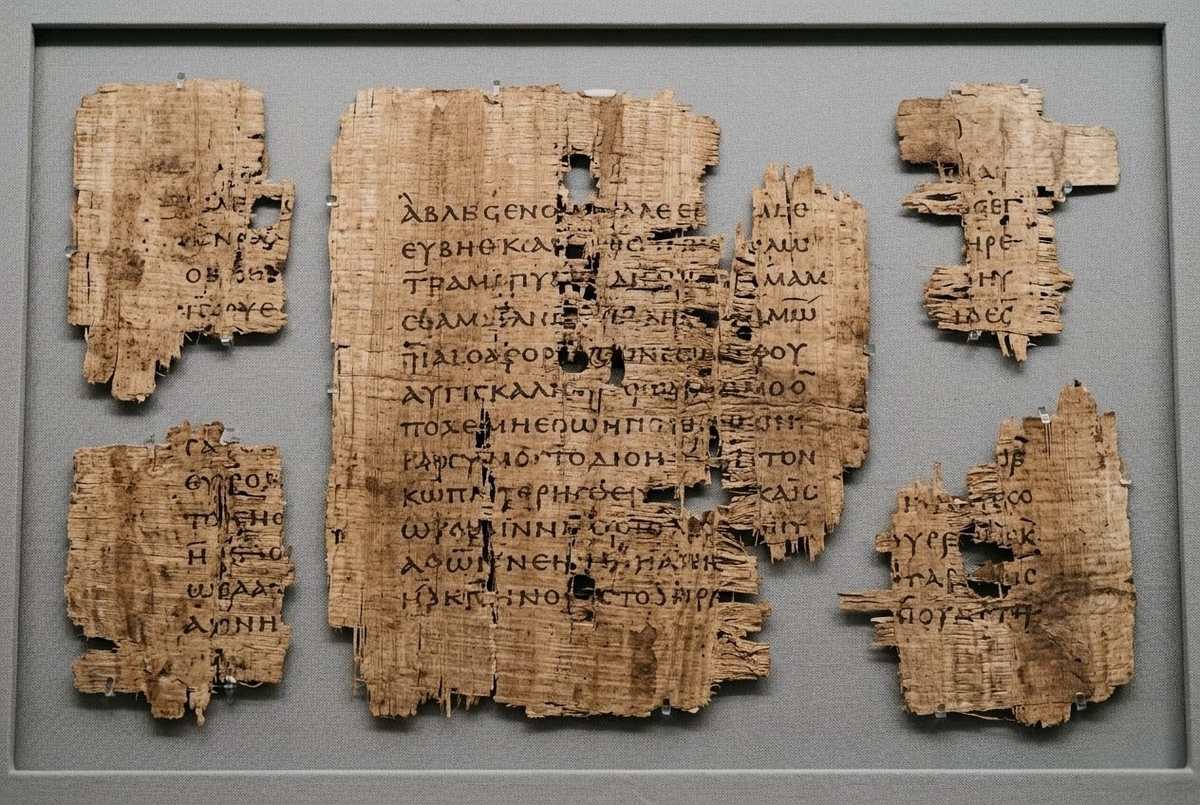
The Thought of Norea is a short and fragmentary Sethian text preserved in the Nag Hammadi Library as Codex IX,2. It centres on Norea, a powerful feminine figure associated with the flood tradition, spiritual resistance and direct revelation from the angel Eleleth.
The text reimagines the flood story through a Gnostic lens. Instead of presenting the ark simply as a safe refuge, it treats Norea as one who recognises a deeper problem beneath the official story. Her resistance becomes an act of spiritual discernment: she refuses to accept a false shelter as true salvation.
Because the text is damaged, it must be read with care. We do not possess a complete narrative. What survives is enough to reveal the outline of a striking theological drama: Norea resists, cries out, receives revelation, and becomes a figure of awakened insight against lower powers.
What is the Thought of Norea?
The Thought of Norea is a fragmentary Sethian Gnostic text preserved in Nag Hammadi Codex IX,2. It centres on Norea, a feminine figure connected with the flood tradition, who resists lower cosmic powers and receives revelation from the angel Eleleth.
The text is important because it brings together feminine spiritual authority, resistance to false power, reinterpretation of Genesis material and the Sethian theme of awakening beyond archonic rule.
Table of Contents
- Text and Codex Setting
- Why the Thought of Norea Matters
- Who Is Norea?
- The Flood Reimagined
- The Ark as False Refuge
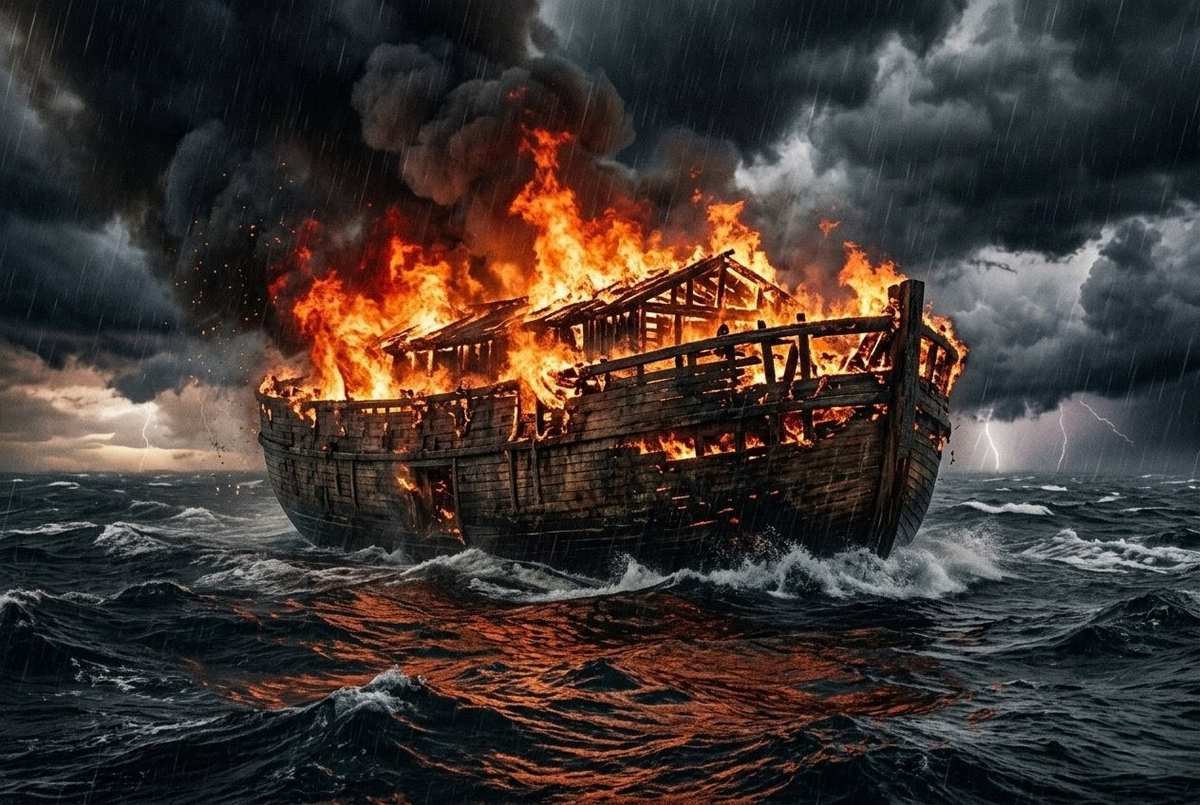
- Norea and the Burning of the Ark
- Eleleth and the Revelation of Understanding
- Feminine Spiritual Resistance
- Fire, Purification and Refusal
- The Problem of Fragmentary Evidence
- Norea in Other Gnostic Traditions
- Reading the Thought of Norea Today
- Frequently Asked Questions
- Further Reading
- References and Sources
Text and Codex Setting
The Thought of Norea is preserved in Nag Hammadi Codex IX as its second tractate. Codex IX also contains Melchizedek and The Testimony of Truth, making it one of the library’s more intense and fragmentary clusters of resistance, revelation and spiritual identity.
The text is badly damaged. We do not have the full work, and many details remain uncertain. This means it should not be treated as a complete narrative or a fully recoverable doctrine. Its surviving fragments still reveal enough to show a distinctive Gnostic reading of Norea, the flood and the powers that govern the lower world.
The text belongs near Sethian materials because of its use of Norea, archonic powers, revelation from Eleleth and the contrast between the true divine source and lower cosmic rulers. It is also part of the wider Nag Hammadi feminine divine layer, where figures such as Sophia, Norea, Protennoia and Thunder carry spiritual authority in different ways.
Codex Note: The Thought of Norea is Nag Hammadi Codex IX,2. Because it survives in fragmentary condition, its themes can be identified, but the full original narrative cannot be reconstructed with certainty.
Why the Thought of Norea Matters
The Thought of Norea matters because it gives one of the clearest Nag Hammadi examples of feminine spiritual resistance. Norea is not merely a symbolic figure in the background of someone else’s revelation. She stands at the centre of conflict, discernment and divine response.
The text also matters because it reinterprets the flood story. In the biblical narrative, the ark is a vessel of preservation. In this Gnostic retelling, the ark becomes more ambiguous. Norea’s refusal exposes the possibility that what appears to be salvation within the lower world may still belong to the lower world’s system of power.
This makes the text spiritually sharp. It asks whether safety and truth are always the same thing. It asks whether obedience to an established structure always leads to liberation. Norea’s answer is no. She recognises that a false refuge can still be a prison dressed as rescue.
Within the ZenithEye reading route, Norea belongs naturally after Hypsiphrone. Hypsiphrone gives a damaged feminine ascent fragment; Norea gives a stronger figure of feminine resistance. Together they open a path into Thunder, Protennoia, Sophia and the wider Feminine Divine layer of the Nag Hammadi Library.
Who Is Norea?
Norea is a figure in several Gnostic traditions, especially those connected with Sethian myth. She is associated with the flood story, with resistance to lower powers, and with a spiritual identity that does not submit to archonic rule.
In The Thought of Norea, she appears as one who recognises the problem hidden beneath the surface of events. She does not accept the flood narrative at face value. She questions, resists and cries out to the true divine source.
In The Hypostasis of the Archons, Norea also appears as a figure of resistance. There she refuses violation by the archons and receives help from Eleleth, the great angel associated with understanding. Taken together, the Norea traditions present her as a woman of discernment, refusal and spiritual protection.
Norea is therefore not simply a side character from rewritten Genesis. She becomes a Gnostic heroine: the awakened soul that sees through false authority and appeals beyond it.
The Flood Reimagined
The Thought of Norea reads the flood story against the grain. Instead of treating the flood only as divine judgement, it sees the event through the Gnostic suspicion of lower cosmic rulers. The question becomes: which power sends the flood, and what kind of salvation does the ark really offer?
In many Gnostic systems, the lower rulers do not fully understand the highest divine source. Their actions may be violent, ignorant or controlling, even when they present themselves as lawful. The flood can therefore be reimagined not simply as cleansing, but as part of the lower world’s attempt to control or erase what it cannot understand.
Norea’s significance lies in her discernment. She recognises that not every power claiming authority is truly divine. This is one of the deep Gnostic themes: the awakened soul must learn to distinguish the highest source from lesser powers that imitate or distort divine authority.
The flood thus becomes more than a catastrophe. It becomes a test of perception. Who mistakes lower rule for ultimate truth? Who sees through it? Norea sees.
The Ark as False Refuge
The ark is one of the most startling elements in the text. In the familiar biblical story, the ark is the place of safety. In the Norea tradition, it becomes a contested symbol. It may preserve life, but preservation within a lower order is not the same as liberation from that order.
This is the spiritual tension at the centre of the story. The ark can be read as a structure that offers survival while still remaining inside the system Norea rejects. She is not satisfied with rescue that leaves the deeper captivity untouched.
For Gnostic readers, this is a powerful image. A false refuge is not always obviously evil. It may look practical, pious and secure. But if it depends on obedience to powers that do not know the true source, it cannot bring final freedom.
Norea’s resistance reveals the difference between safety and awakening. The lower world can offer shelters. Gnosis asks whether those shelters lead back to the light, or merely keep the soul alive inside forgetfulness.
Norea and the Burning of the Ark
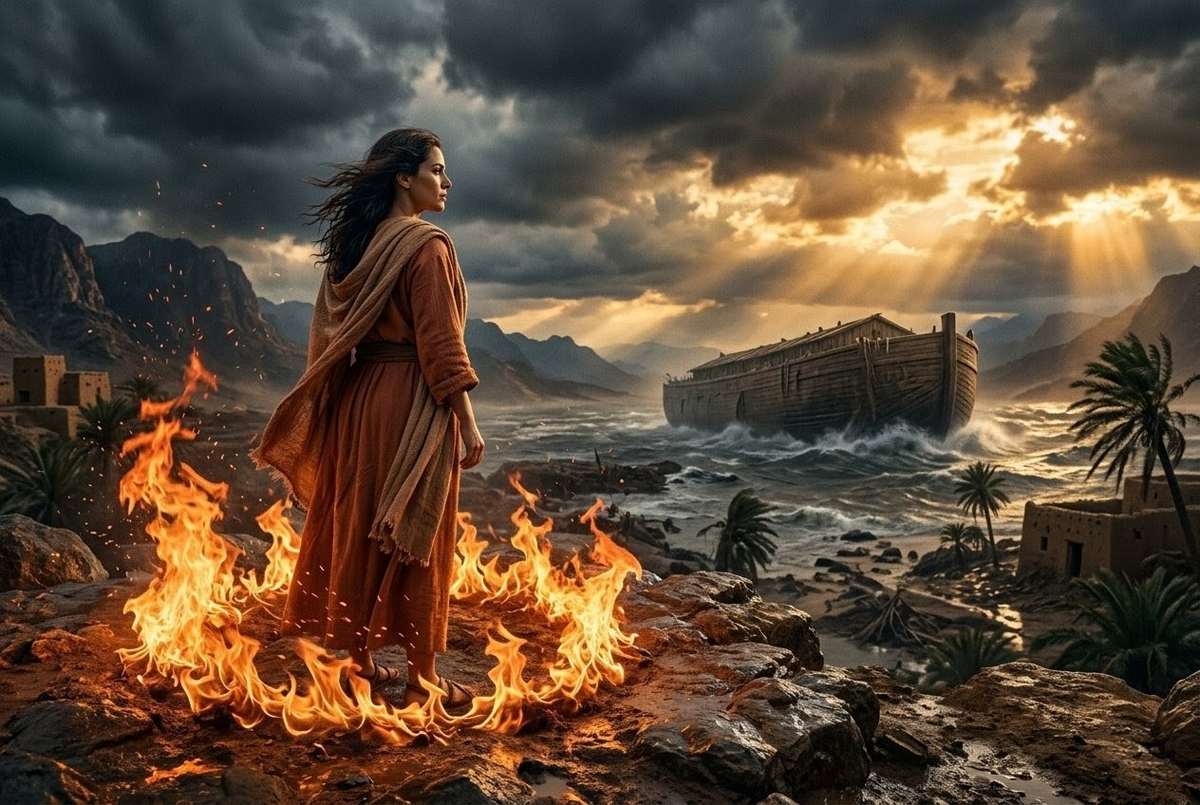
The burning of the ark is the text’s most dramatic image. It should not be reduced to ordinary destruction or impulsive anger. In the symbolic world of the text, Norea’s fire reveals the ark’s deeper ambiguity.
Fire here functions as refusal. Norea refuses to accept a salvation that does not answer the soul’s true exile. She refuses the authority of lower powers. She refuses to be absorbed into the story as a passive survivor.
The act is shocking because it turns the familiar symbol upside down. The vessel of rescue becomes the object of spiritual protest. The ark is burned because it cannot carry Norea to the source she seeks.
In this sense, the fire is not nihilism. It is discernment made visible. It burns away the false assumption that all forms of rescue are liberating.
Primary Source Theme: Norea’s burning of the ark should be read as symbolic resistance to false refuge and lower authority. The damaged state of the text makes exact reconstruction difficult, but the surviving tradition clearly presents her as a figure of refusal and revelation.
Eleleth and the Revelation of Understanding
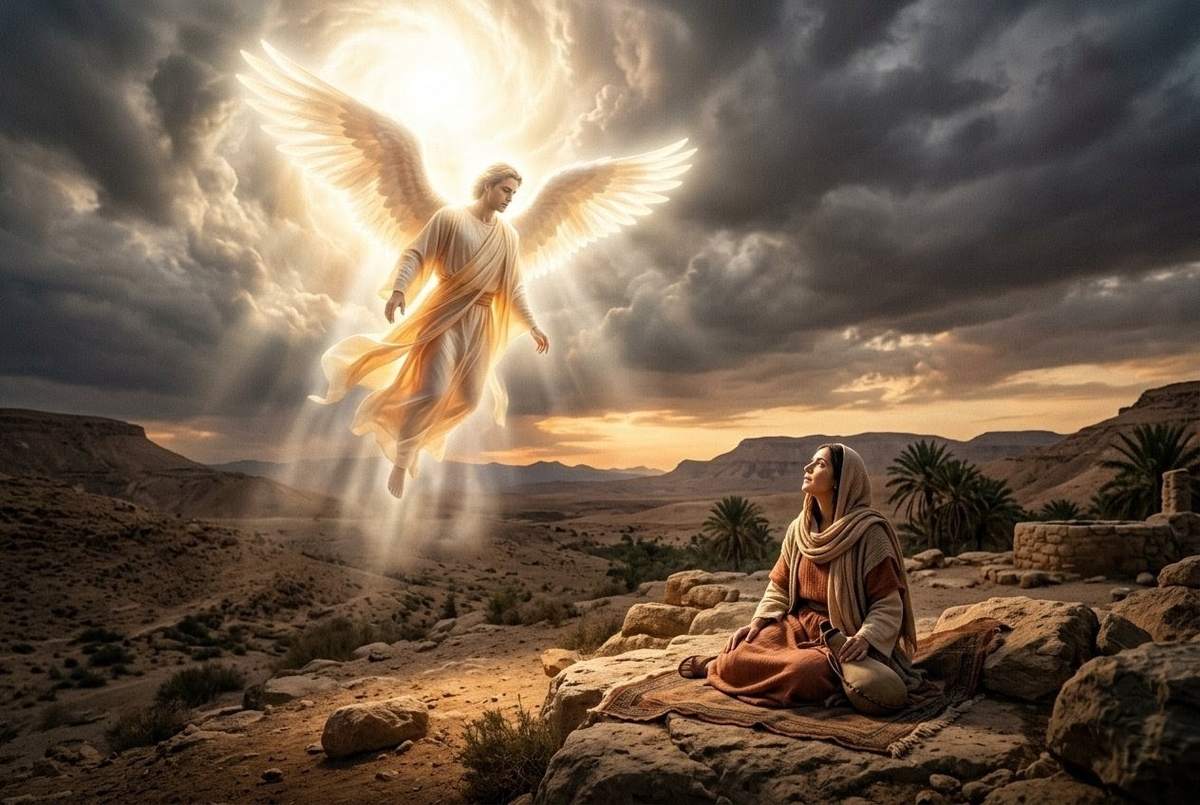
After Norea cries out, Eleleth descends. Eleleth is one of the great angelic figures in Sethian literature, often associated with understanding, revelation and the higher realm. His appearance confirms that Norea’s cry has reached beyond the lower powers.
Eleleth does not simply comfort Norea. He reveals. In Gnostic literature, revelation explains the structure of the problem: where the lower powers come from, why they rule in ignorance, and how the spiritual person belongs to a higher source.
This is crucial. Norea’s resistance is not merely emotional rebellion. It is answered by knowledge. Eleleth gives her a wider view of the cosmic situation, transforming protest into understanding.
The name Eleleth fits this role beautifully. Understanding arrives when the soul refuses the false story and appeals to the true source. Norea’s cry opens the space where revelation can descend.
Feminine Spiritual Resistance
Norea’s resistance belongs to a wider Nag Hammadi pattern in which feminine figures carry insight, protest, revelation and divine agency. She stands beside Sophia, Protennoia, Thunder, Norea in The Hypostasis of the Archons, and other figures who disrupt the structures of ignorance.
This matters because Norea is not spiritually passive. She does not wait for male mediation to interpret her experience. She sees, refuses, cries out and receives revelation.
The text therefore challenges any simple model in which spiritual authority descends only through patriarchal order. In Norea, direct perception becomes authority. She does not need permission from the lower structure to recognise that the structure is false.
This is why Norea remains so vivid. She is not merely “against” something. She is for truth, for origin, for the higher source that the lower powers cannot provide.
Fire, Purification and Refusal
Fire in The Thought of Norea is not only destruction. It is revelation. It exposes what cannot stand in truth. It turns the ark from unquestioned refuge into a symbol that must be tested.
In many spiritual traditions, fire purifies, illuminates and separates. In Norea’s story, fire shows that not every shelter is sacred. Some structures protect only the continuity of the lower order.
The contrast between water and fire is also striking. The flood waters overwhelm and erase. Norea’s fire reveals and refuses. Water in this story is linked with the catastrophe of lower rule; fire becomes the sign of awakened protest.
Yet the fire should not be romanticised as mere rage. Its deepest meaning is discernment. Norea burns what cannot carry her to the true source.
Fire and Discernment
In The Thought of Norea, fire symbolises refusal, revelation and purification. It exposes the ark as an inadequate refuge and marks Norea’s refusal to mistake lower-world survival for true liberation.
The image is best read spiritually and symbolically: Norea burns the false shelter so that the deeper question of divine origin can be heard.
The Problem of Fragmentary Evidence
The Thought of Norea survives only in fragmentary condition. This means several details remain uncertain. We do not have the full beginning, development or conclusion in a clean continuous form.
This matters because Norea’s story is powerful and tempting to over-expand. It is easy to turn the surviving fragments into a complete doctrine of flood, fire and resistance. A more responsible reading keeps the force of the text while admitting the limits of the evidence.
What can be said safely is that the text presents Norea as a figure of spiritual resistance, connects her with the flood tradition, shows the ark as a contested symbol, and brings Eleleth into the story as a revealer of higher understanding.
The gaps do not make the text meaningless. They make it delicate. The surviving fragments are enough to show the outline of a fierce and luminous tradition, but not enough to close every question.
Scholarly Caution: Because the text is fragmentary, claims about the full plot, ritual setting or original community use of The Thought of Norea should remain cautious.
Norea in Other Gnostic Traditions
Norea also appears in The Hypostasis of the Archons, where she resists the archons and receives help from Eleleth. This connection is important because it shows Norea was not an isolated invention of one fragmentary text. She belonged to a wider Gnostic imagination of feminine resistance.
In both texts, Norea refuses the claims of lower powers. She is not deceived by their authority. She appeals beyond them and receives confirmation from the higher realm.
This makes Norea one of the strongest feminine figures in Sethian-related literature. Sophia represents wisdom in fall and restoration. Protennoia represents First Thought descending. Thunder speaks as paradoxical divine voice. Norea stands as the one who resists violation and false refuge.
Read together, the Norea texts form a small but powerful dossier of spiritual defiance: the awakened feminine soul will not be possessed, silenced or carried away by the lower world’s story.
Reading the Thought of Norea Today
For modern readers, The Thought of Norea is not an invitation to reckless destruction. It is a symbolic text about discernment, false refuge and the courage to appeal beyond systems that claim authority while blocking truth.
Norea’s question remains uncomfortable: what forms of safety keep the soul asleep? What structures promise rescue while preserving deeper captivity? What must be refused before real understanding can descend?
The text’s answer is not paranoia. It is discernment. Norea does not merely reject everything. She recognises the difference between lower authority and the true source. She resists, cries out and receives understanding.
Her story is therefore a fierce little lantern in the Nag Hammadi archive. Damaged, yes. Fragmentary, yes. But still burning with the idea that the soul can refuse false shelter and call directly towards the light.
Safety Notice: This article explores symbolic, historical and spiritual ideas about false authority, archons, fire, resistance, hidden powers and spiritual discernment. It is intended for grounded study of ancient texts, not as medical, psychological, legal or spiritual advice. If ideas about hidden control, persecution, cosmic systems or spiritual resistance become distressing, obsessive or destabilising, please seek support from a qualified mental health professional or appropriate emergency service.
Frequently Asked Questions
What is the Thought of Norea?
The Thought of Norea is a fragmentary Sethian Gnostic text preserved in Nag Hammadi Codex IX,2. It centres on Norea, a feminine figure associated with the flood tradition, spiritual resistance and revelation from the angel Eleleth.
Who is Norea in Gnostic tradition?
Norea is a powerful feminine figure in Gnostic literature, especially in the Thought of Norea and the Hypostasis of the Archons. She is associated with resistance to archonic powers, refusal of false authority and direct appeal to the higher divine source.
Why does Norea burn the ark?
In the Gnostic reading, Norea’s burning of the ark symbolises resistance to false refuge and lower authority. The ark, usually read as a place of rescue, becomes a contested symbol. Norea refuses a form of safety that does not lead to true liberation.
Who is Eleleth in the Thought of Norea?
Eleleth is an angelic revealer associated with understanding. In the Thought of Norea, Eleleth responds to Norea’s cry and reveals the deeper truth behind the lower powers and her spiritual identity.
How is the Thought of Norea related to the Hypostasis of the Archons?
Both texts feature Norea as a figure who resists the archons and receives divine assistance or revelation. Together, they present Norea as one of the strongest feminine figures of spiritual resistance in Sethian-related literature.
Is the Thought of Norea complete?
No. The Thought of Norea survives only in fragmentary condition within Nag Hammadi Codex IX. The full narrative and original setting cannot be completely reconstructed, so interpretation must remain cautious.
What does fire symbolise in the Thought of Norea?
Fire symbolises refusal, revelation and purification. Norea’s fire exposes the ark as an inadequate refuge and marks her resistance to lower authority. It should be read symbolically, not as a call to literal destruction.
How should modern readers approach the Thought of Norea?
Modern readers should approach the text as a fragmentary Gnostic work about discernment, feminine spiritual authority and resistance to false refuge. Its themes are powerful, but its damaged state means that claims about its full narrative should remain careful.
Further Reading
Continue through the related Norea, Feminine Divine and Sethian source layer:
- The Hypostasis of the Archons: the other major Norea text, where she resists the archons and receives help from Eleleth.
- The Feminine Divine in the Nag Hammadi Library: the wider constellation of Sophia, Norea, Protennoia, Thunder and related figures.
- Thunder: Perfect Mind: a major Nag Hammadi text of paradoxical feminine divine voice.
- Trimorphic Protennoia: the threefold descent of First Thought and the divine voice of restoration.
- Hypsiphrone: a fragmentary feminine ascent text from Codex XI.
- Reality of the Archons: a Sethian source on lower cosmic rulers and spiritual liberation.
- The Apocryphon of John: the foundational Sethian mythic map of Barbelo, Sophia, Yaldabaoth and the archons.
- Codex IX: context for The Thought of Norea, Melchizedek and The Testimony of Truth.
- The Testimony of Truth: another Codex IX text concerned with discernment, opposition and spiritual truth.
- Nag Hammadi Library: Complete Guide to the Gnostic Scriptures: the broader archive guide to the codices, tractates and traditions.
References and Sources
The following sources support the historical, textual and interpretive claims made in this article.
Primary Sources and Critical Editions
- The Thought of Norea. Nag Hammadi Codex IX,2.
- The Hypostasis of the Archons. Nag Hammadi Codex II,4.
- Robinson, James M., ed. The Nag Hammadi Library in English. Harper & Row / HarperSanFrancisco, revised editions.
- Meyer, Marvin, ed. The Nag Hammadi Scriptures. HarperOne, 2007.
- Layton, Bentley. The Gnostic Scriptures. Doubleday, 1987.
- Pearson, Birger A., and related editors. Studies and translations of The Thought of Norea in the Coptic Gnostic Library tradition.
Scholarly Monographs and Studies
- King, Karen L. What Is Gnosticism?. Harvard University Press, 2003.
- Brakke, David. The Gnostics: Myth, Ritual, and Diversity in Early Christianity. Harvard University Press, 2010.
- Stroumsa, Guy G. Another Seed: Studies in Gnostic Mythology. Brill, 1984.
- Buckley, Jorunn Jacobsen. Female Fault and Fulfilment in Gnosticism. University of North Carolina Press, 1986.
- Williams, Michael Allen. Rethinking “Gnosticism”: An Argument for Dismantling a Dubious Category. Princeton University Press, 1996.
- Pearson, Birger A. Ancient Gnosticism: Traditions and Literature. Fortress Press, 2007.
Comparative and Thematic Studies
- McGuire, Anne. Studies on The Thought of Norea and feminine figures in Nag Hammadi literature.
- Marjanen, Antti. The Woman Jesus Loved: Mary Magdalene in the Nag Hammadi Library and Related Documents. Brill, 1996.
- Denzey Lewis, Nicola. Cosmology and Fate in Gnosticism and Graeco-Roman Antiquity. Brill, 2013.
- DeConick, April D. The Gnostic New Age: How a Countercultural Spirituality Revolutionized Religion from Antiquity to Today. Columbia University Press, 2016.
- van den Broek, Roelof. Gnostic Religion in Antiquity. Cambridge University Press, 2013.
Reading Note: The Thought of Norea is best read beside The Hypostasis of the Archons, Thunder: Perfect Mind, Trimorphic Protennoia and the wider Feminine Divine source layer. Norea stands as one of the archive’s clearest figures of refusal, discernment and spiritual resistance.