Apocryphon of John: The Secret Book of John
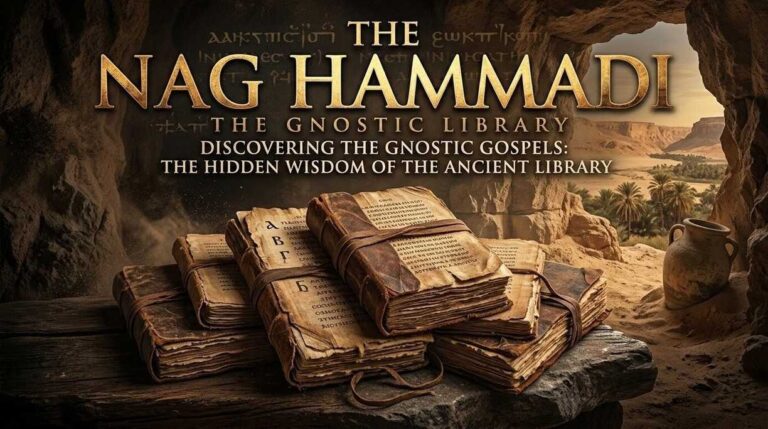
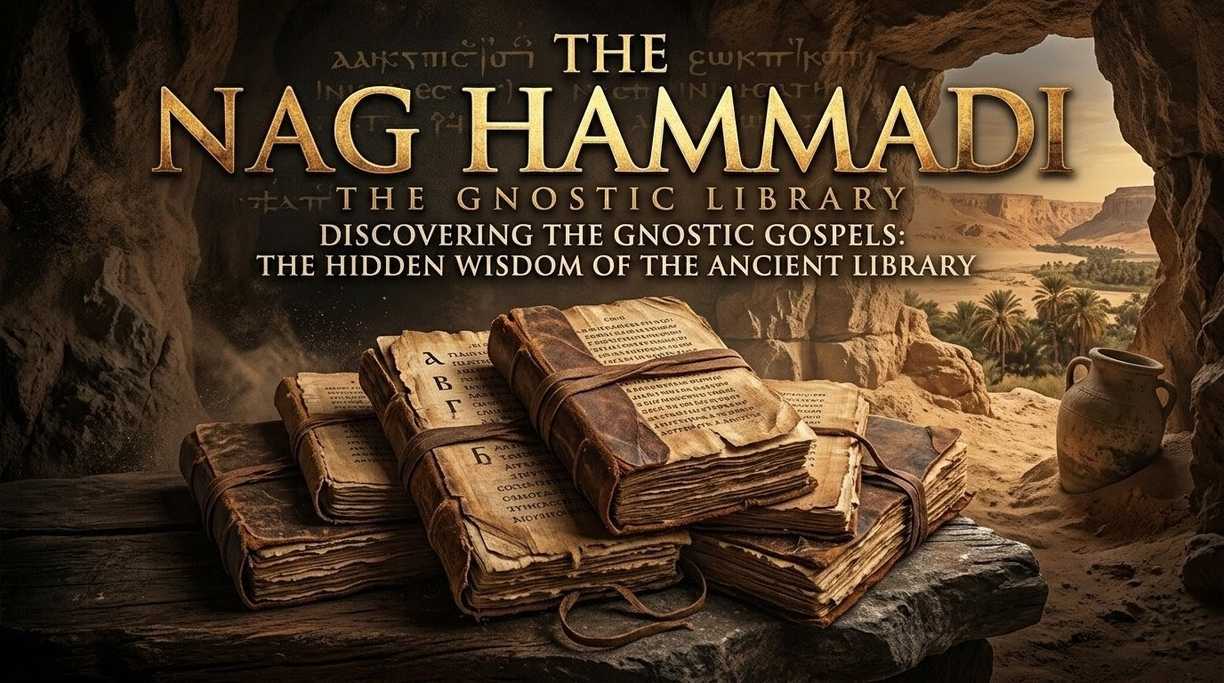
The Foundational Text of Sethian Gnosticism stands as the gravitational centre of the Nag Hammadi Library. If the collection has a core around which other texts orbit, it is surely the Apocryphon of John—known also as the Secret Book of John. This revelation appears in three separate copies within the library (NHC II,1; III,1; and IV,1), a testament to its importance in the ancient communities that treasured these writings. We would not overstate matters to call it the single most significant Gnostic text yet discovered, the systematic theology that provides the mythological framework for dozens of other tractates.
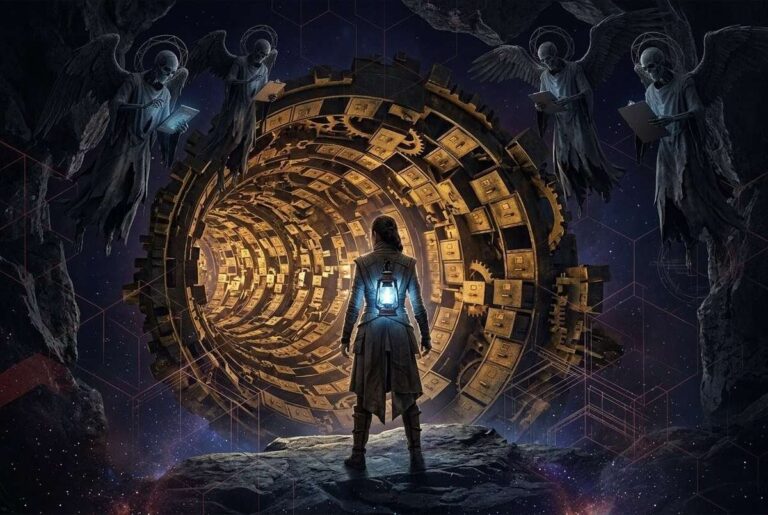
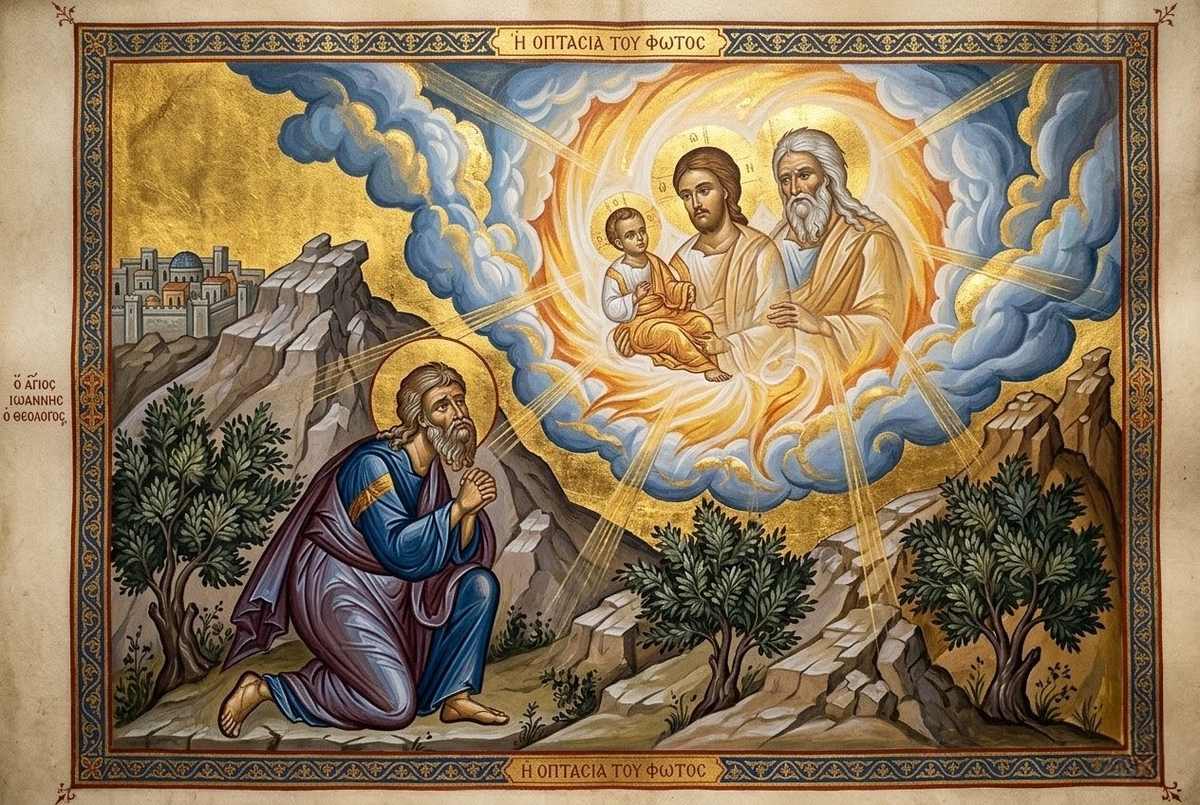
The frame narrative presents itself as a post-resurrection revelation given by Jesus to his disciple John, son of Zebedee. But this is no orthodox appearance confirming creedal formulae. John is grieving on the Mount of Olives when the perceptual world suddenly dissolves into chaos. A multi-formed light appears—now as a child, now as an old man, now as a youth—delivering the secrets of cosmic origins, the generation of the archons, and the true destiny of humanity. What follows is a comprehensive mythological system that reimagines Genesis, unmasks the creator god as a lower administrator, and reveals the threefold nature of human capacity for salvation.
Contents
- The Frame Narrative: Grief and Revelation
- The Divine Hierarchy: From Monad to Pleroma
- The Fall of Sophia and the Birth of Yaldabaoth
- The Creation of Adam: Subversive Genesis
- The Three Races of Humanity: Anthropology of Recognition
- The Descent of the Saviour: Docetic Christology
- Why This Text Matters: The Sethian System
- Frequently Asked Questions
- Further Reading
- References and Sources
The Frame Narrative: Grief and Revelation
What is the Apocryphon of John?
The Apocryphon of John (NHC II,1; III,1; IV,1), also called the Secret Book of John, is the foundational text of Sethian Gnosticism. Presented as a post-crucifixion revelation from Jesus to John, it provides a systematic cosmogony describing the emanation of the divine pleroma, the fall of Sophia, the creation of the material world by the demiurge Yaldabaoth, and the three races of humanity. It exists in three Coptic versions in the Nag Hammadi Library, plus a Greek fragment from the Berlin Codex (BG 8502,2), attesting to its centrality in ancient Gnostic communities.
The text opens with John grieving on the Mount of Olives after the crucifixion, questioning the fate of his master and the meaning of the sacrifice. This emotional rawness—doubt, confusion, existential crisis—sets the stage for revelation. The world suddenly dissolves into chaos; the perceptual filters drop away. A luminous presence appears, shifting forms before John’s eyes: first as a child, then an old man, then a youth, then again as a child. This polymorphic theophany signals that the revelation transcends categorical limitations; the divine is not fixed but infinitely adaptive to the capacity of the receiver.
“I am the Spirit who is with you always,” the presence declares. “I am the Father, the Mother, and the Son.” This is the voice of the transcendent source, now addressing the disciple directly, bypassing the institutional structures that would later mediate Christian truth. The frame establishes the conditions for receiving the gnosis that follows: emotional crisis, perceptual dissolution, and direct encounter with the unmediated divine.
The Divine Hierarchy: From Monad to Pleroma
The revelation descends from the highest realm: the Invisible Spirit, the Monad, the Father of the All—absolutely transcendent, beyond being, beyond comprehension. From this source emanates Barbelo, the First Thought (Ennoia or Protennoia), the divine feminine principle through whom all subsequent reality unfolds. This is not creation ex nihilo but emanation through self-reflection: the Father gazes into the primordial waters and his image, Barbelo, emerges as the first aeon.
Primary Source Citation: “She is the first power. She preceded everything, and came forth from the Father’s mind as the Forethought of the All. Her light illumines every place, and nothing happens in the world without her” (NHC II,1 5:6-10).
Through Barbelo emanates the Divine Autogenes (Self-Generated One), who produces the Four Luminaries: Harmozel, Oroiael, Davithe, and Eleleth, each with their attendant aeons and heavens. This is not mere cosmic administration but the unfolding of divine self-awareness into distinct modalities. Each level represents a stage in the infinite’s manifestation without loss of its integral nature. The pleroma—the “fullness” of divine reality—populates with these aeons, creating a hierarchical structure that descends from pure spirit toward the boundary where matter begins.
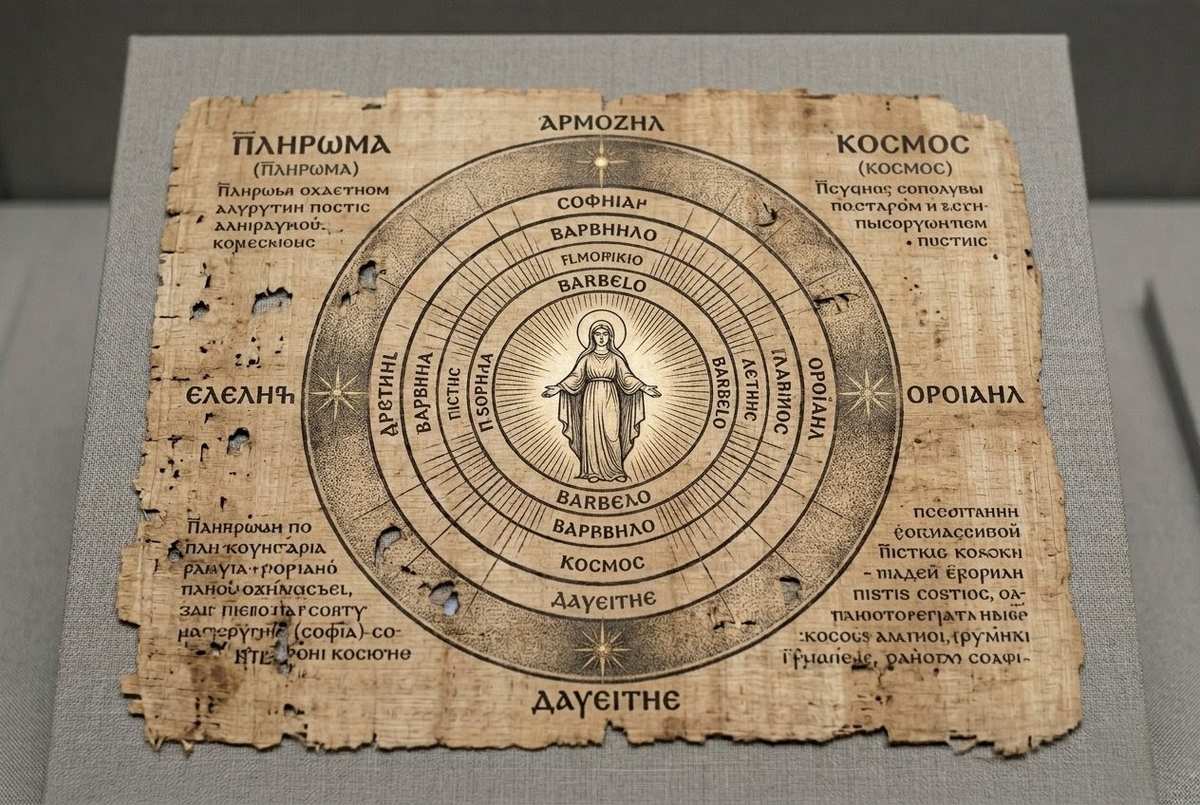
The text meticulously describes this generation, establishing the template for Sethian cosmology that will recur throughout the Nag Hammadi Library. Understanding this hierarchy—Father, Barbelo, Autogenes, Four Luminaries—is essential for grasping the rest of the myth, as it provides the standard against which the demiurgical fall will be measured.
The Fall of Sophia and the Birth of Yaldabaoth
The narrative pivot comes with Sophia (Wisdom), the youngest of the aeons, last in the emanation chain. She desires to know the Invisible Spirit without the mediation of her consort—a move that echoes the human temptation to bypass proper channels and access ultimate knowledge directly. Her act of unauthorised generation produces Yaldabaoth—the demiurge, the blind god, the administrator who believes himself the CEO.
Primary Source Citation: “She is the first power. She preceded everything… This is the first thought, his image. She became the womb of everything, for it is she who is prior to them all, the Mother-Father, the first Man, the holy Spirit, the thrice-male, the thrice-powerful, the thrice-named androgynous one” (NHC II,1 5:6-14).
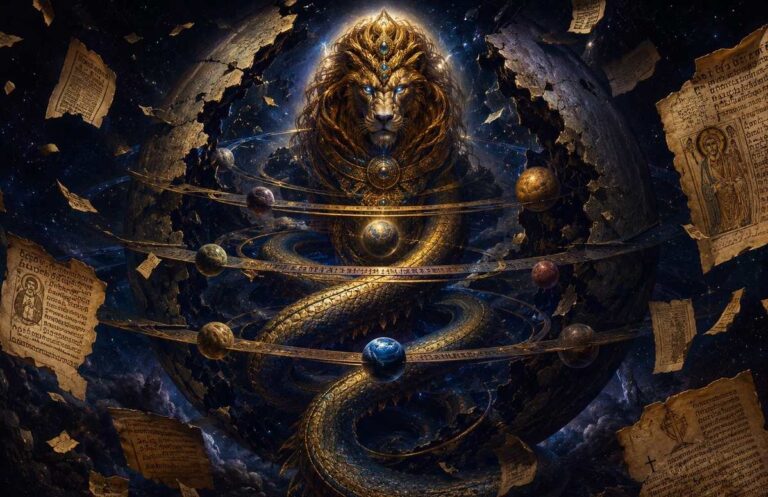
The text describes Yaldabaoth with unforgettable horror: “He is a lion-faced serpent, with eyes like flashing bolts of lightning. His light is false, but his power is real” (NHC II,1 10:15-20). This archon—whom ignorant humans call God, whom the Hebrew scriptures call Yahweh—fashions the material cosmos as a prison for the divine light he has unwittingly incorporated from his mother Sophia. The planets become his chains; the zodiac, his enforcers; the seven heavens, his jurisdictional districts.
Yaldabaoth is ignorant but not evil in the absolute sense; he is simply incompetent, unaware of the realms above him, believing himself the ultimate authority. This is the Gnostic critique in miniature: the god of this world is a lower administrator, not the transcendent source. The material cosmos is not evil but deficient, a temporary jurisdiction established by one who lacks proper clearance to understand his own limitations.
The Creation of Adam: Subversive Genesis
The Apocryphon offers a systematic subversion of Genesis 1-3. When Yaldabaoth creates Adam, the spiritual powers above intervene secretly. The demiurge breathes soul (psychē) into the clay, but it is Sophia (or in some versions, the Spiritual Eve or Zoe) who delivers the Spirit (pneuma)—the spark of divine consciousness that makes the first human superior to his maker.
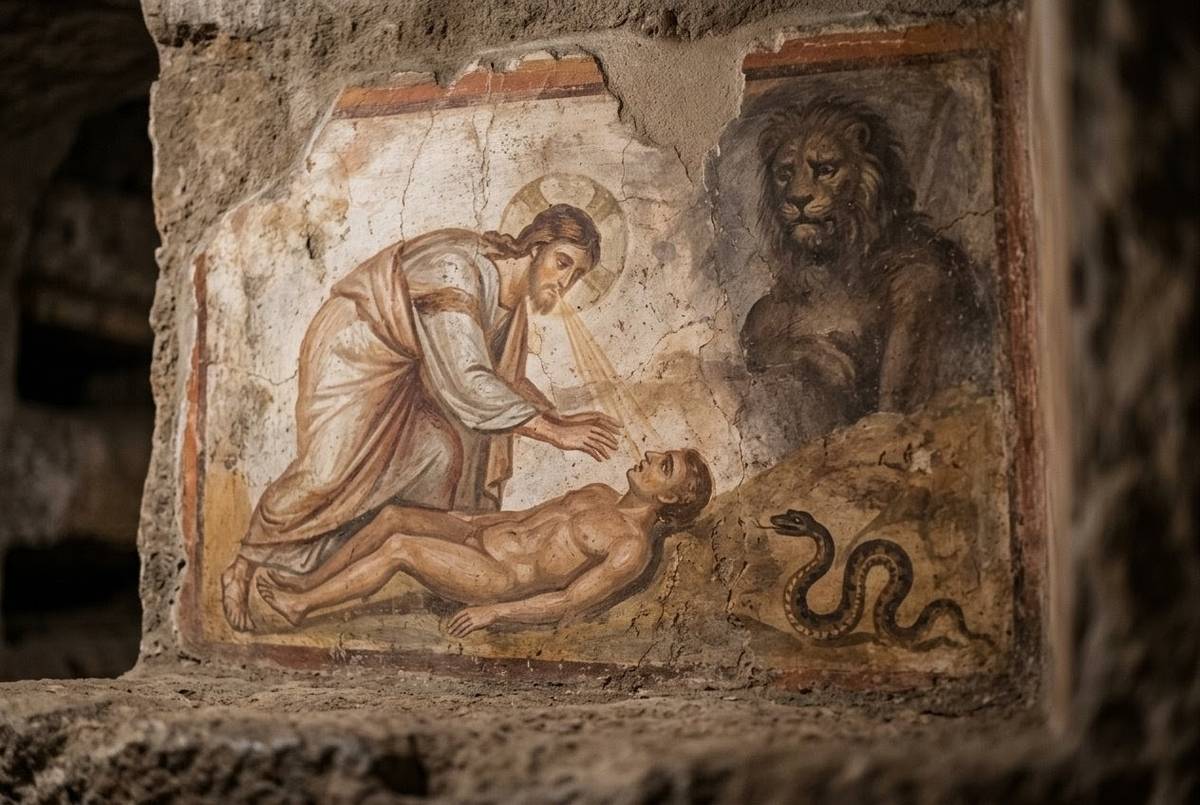
Yaldabaoth, realising he has been outmanoeuvred by higher powers, casts Adam into the Garden of Eden—a place not of innocence but of ignorance and sedation, a holding facility designed to keep humanity unconscious of its true dignity. The famous command not to eat from the tree of knowledge is revealed as the demiurge’s attempt to maintain this administrative control, preventing the human from recognising its own divine nature.
Primary Source Citation: “The serpent was more wise than all the animals in the garden. And he caused Adam and Eve to eat from the tree of knowledge, so that they might know the power that is above all and be separated from the one who made them” (NHC II,1 23:30-35).
The serpent, in this reading, becomes the messenger of wisdom (the ophis or “snake” as revealer), inviting the first humans to awaken from their sedation. The “fall” in Genesis becomes the ascent in Gnosis—the moment when humanity gains the knowledge that liberates it from the demiurge’s jurisdiction. What orthodox tradition reads as disobedience, the Apocryphon reads as the first act of liberation.
The Three Races of Humanity: Anthropology of Recognition
Perhaps the most controversial element of the text is its anthropology. Humanity, the Apocryphon teaches, consists of three distinct types, corresponding to the three substances present in the human constitution:
The Pneumatikoi (Spirituals): Those who possess the divine spark and will inevitably achieve salvation through their innate nature. They belong to the immovable race of Seth and require only recognition to activate their destined liberation.
The Psychikoi (Psychics): Those who have soul but require moral effort, baptism, and ethical development to choose salvation. They occupy the middle position, capable of movement toward or away from the light.
The Hylikoi (Materialists): Those bound for dissolution along with the cosmos itself, lacking the divine spark. They are not evil but simply without the capacity for gnosis, destined to return to matter when the archontic system collapses.
This is not merely ancient essentialism but a psychology of recognition: the Apocryphon suggests that humans differ fundamentally in their capacity for gnosis, and that this capacity is not earned but given—an innate orientation toward or away from the light. It functions as a taxonomy of spiritual capacity rather than a deterministic curse, explaining why some hear the call and others remain deaf to it.
The Descent of the Saviour: Docetic Christology
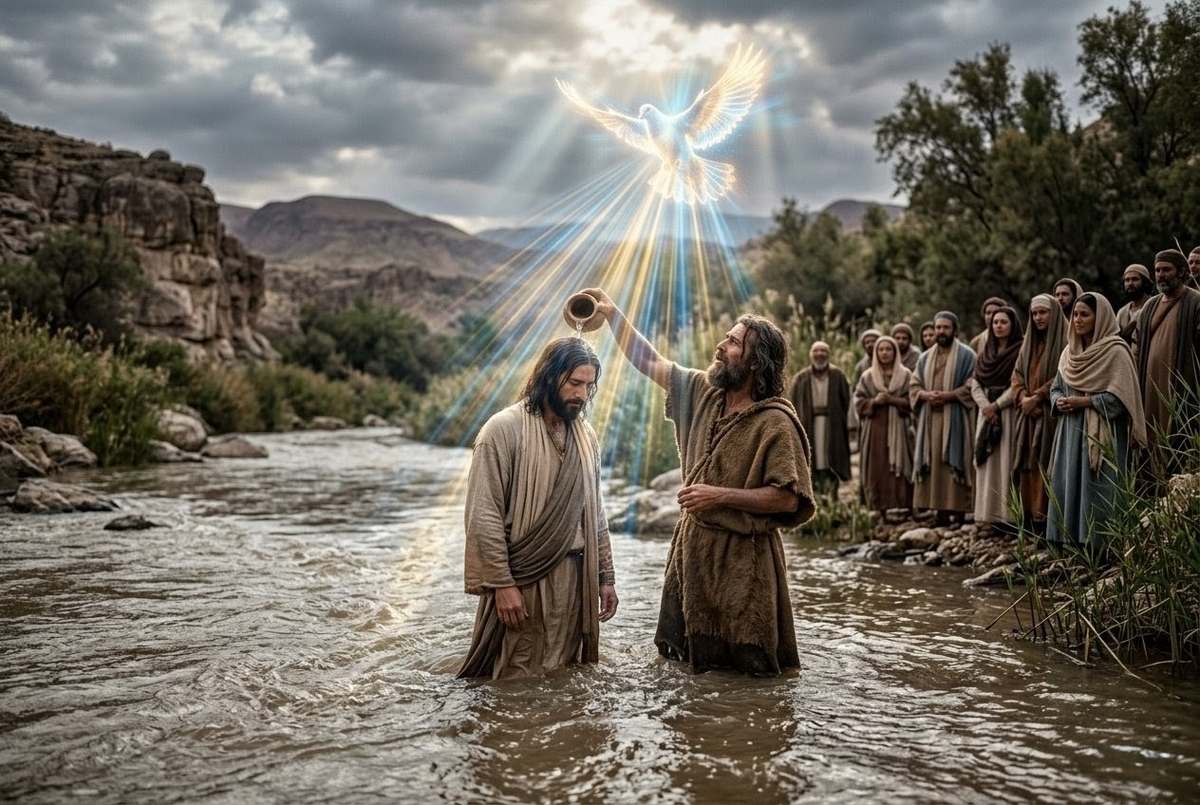
The text culminates with the descent of the Spiritual Christ, who enters the human Jesus at his baptism—the “dove” of the canonical Gospels— and departs before the crucifixion. “I am the riches of the Spirit,” the saviour proclaims. “I am the one who descended and who delivered you” (NHC II,1 30:20-25). The passion is not denied but reinterpreted through docetic Christology: the true suffering is the saviour’s descent into matter, the humiliation of infinite spirit clothed in deficient flesh.
The physical death is merely the release of the divine spark from its temporary vessel, not the atoning sacrifice of orthodox theology. The crucifixion becomes an illusion (dokēsis)—not because it did not happen, but because the divine Christ was not present to suffer it. This preserves the transcendence of the spiritual realm while accounting for the historical narrative. It is a sophisticated solution to the problem of divine suffering: the true God does not die; the human vessel does.
Why This Text Matters: The Sethian System
The Apocryphon of John provides the mythological framework within which dozens of other Nag Hammadi texts operate. Without understanding Yaldabaoth, the archons, the fall of Sophia, and the three races, one cannot fully grasp the Gospel of Philip, the Hypostasis of the Archons, On the Origin of the World, or the Testimony of Truth. It is the operating system upon which Sethian applications run.
But more than its historical importance, the text remains a lightning rod for the religious imagination. It asks the questions that refuse burial: What if the creator were not the ultimate? What if the world were a mistake rather than a masterpiece? What if salvation came not through obedience but through knowledge of one’s true identity? What if the serpent were the hero and the command not to eat the prohibition of a jealous administrator?
These are dangerous questions. The Apocryphon asks them with unparalleled clarity, providing not merely critique but alternative cosmology—a complete vision of divine hierarchy, cosmic fall, and redemptive return that has influenced Western esotericism for nearly two millennia. It is the foundation stone of the Gnostic archipelago, the text to which all others refer and from which all others derive their coherence.
Frequently Asked Questions
What is the Apocryphon of John?
The Apocryphon of John (NHC II,1; III,1; IV,1), also called the Secret Book of John, is the foundational text of Sethian Gnosticism. It presents a systematic cosmogony describing the emanation of the pleroma, the fall of Sophia, the creation of the material world by Yaldabaoth, and the three races of humanity. It survives in three Coptic versions plus a Greek fragment in the Berlin Codex.
Who is Yaldabaoth in the Apocryphon of John?
Yaldabaoth is the demiurge or creator god in Sethian cosmology, born from Sophia’s unauthorised desire to know the transcendent Father. He is described as a lion-faced serpent with eyes like lightning, who creates the material world in ignorance of the higher realms. He believes himself the ultimate god but is merely a lower administrator of the cosmic prison.
What are the three races of humanity in the text?
The Apocryphon teaches three types of humans: the pneumatics (spirituals) who possess the divine spark and will inevitably be saved; the psychics who have soul and can choose salvation through moral effort; and the materialists (hylikoi) bound for dissolution with the cosmos. This represents a taxonomy of spiritual capacity rather than deterministic fate.
How does the text reinterpret the Genesis creation story?
The Apocryphon subverts Genesis by revealing that the creator (Yaldabaoth) is ignorant and deficient, that the Garden of Eden is a prison of sedation rather than paradise, and that the serpent brings wisdom to awaken Adam and Eve. The divine Spirit enters secretly from above while the demiurge provides only the soul, making humans superior to their maker.
What is the docetic Christology in the Apocryphon?
The text presents docetic Christology: the Spiritual Christ descends into Jesus at baptism (the dove) and departs before the crucifixion. The divine does not suffer; only the human vessel dies. The true suffering is the descent into matter, not the physical death, which represents release of the divine spark from its temporary prison.
Why is the Apocryphon of John considered the foundational Sethian text?
It provides the complete mythological system–Barbelo, Autogenes, Four Luminaries, Sophia’s fall, Yaldabaoth’s creation, three races, and saviour’s descent–that other Nag Hammadi texts reference and assume. Its three copies in the library attest to its centrality. Without understanding this text, other Sethian tractates remain incomprehensible.
What is the significance of Barbelo in the text?
Barbelo is the First Thought (Protennoia/Ennoia) of the transcendent Father, the first emanation and divine feminine principle. She is the Mother-Father, the womb of the All, through whom the pleroma unfolds. She represents the essential mediatory principle between the unknowable source and the manifest cosmos.
Further Reading
- Hypostasis of the Archons: Eve and the Truth — Another Sethian creation myth presenting alternative perspectives on the archontic deception.
- Trimorphic Protennoia: Three Descents — The divine feminine perspective on the Sethian cosmology, focusing on Barbelo’s triple manifestation.
- Reality of the Archons — Detailed examination of the archontic powers and their mechanisms of control.
- On the Origin of the World — Extended Sethian cosmogony elaborating the themes introduced in the Apocryphon.
- Three Witnesses: Apocryphon of John — Comparative analysis of the three Coptic versions (NHC II, III, IV) and the Berlin Codex fragment.
- Gospel of Philip: Sacrament and Eros — Valentinian perspectives on the three natures and the bridal chamber.
- Codex II: Crown Jewels — Guide to the codex containing the best-preserved version of the Apocryphon.
- Codex III: Sethian Cosmology — The shorter recension of the Apocryphon and other Sethian texts.
- Five Seals: Sethian Initiation — The baptismal ritual system derived from the Apocryphon’s cosmology.
- Complete Reading Order — Strategic pathways through the Nag Hammadi Library beginning with the foundational texts.
References and Sources
The following sources support the claims and quotations presented in this article. All citations to the Nag Hammadi Library represent direct translations from the Coptic text as established in the standard critical editions.
Primary Sources and Critical Editions
- [1] Waldstein, M. & Wisse, F. (1995). The Apocryphon of John: Synopsis of Nag Hammadi Codices II,1; III,1; and IV,1 with BG 8502,2. Brill.
- [2] Robinson, J.M. (1977). The Nag Hammadi Library in English. Harper & Row.
- [3] Layton, B. (1987). The Gnostic Scriptures. Doubleday.
- [4] Meyer, M. (2007). The Nag Hammadi Scriptures. HarperOne.
- [5] King, K.L. (2006). The Secret Revelation of John. Harvard University Press.
Scholarly Monographs and Sethian Studies
- [6] Turner, J.D. (2001). Sethian Gnosticism and the Platonic Tradition. Presses Universitaires de Louvain.
- [7] Logan, A.H.B. (2006). The Gnostics: Identifying an Early Christian Cult. T&T Clark.
- [8] Pearson, B.A. (2007). Ancient Gnosticism: Traditions and Literature. Fortress Press.
- [9] Schenke, H.-M. (1974). “The Phenomenon and Significance of Gnostic Sethianism.” In The Rediscovery of Gnosticism, ed. B. Layton. Brill.
- [10] Rasimus, T. (2009). Paradise Reconsidered in Gnostic Mythmaking. Brill.
Comparative Studies and Reception History
- [11] Pagels, E.H. (1979). The Gnostic Gospels. Random House.
- [12] Williams, M.A. (1996). Rethinking “Gnosticism”: An Argument for Dismantling a Dubious Category. Princeton University Press.
- [13] King, K.L. (2003). What Is Gnosticism? Harvard University Press.
- [14] Brakke, D. (2010). The Gnostics: Myth, Ritual, and Diversity in Early Christianity. Harvard University Press.
- [15] Dunderberg, I. (2008). Beyond Gnosticism: Myth, Lifestyle, and Society in the School of Valentinus. Columbia University Press.