The Apocryphon of John: A Gnostic Creation Myth

The Apocryphon of John, also known as the Secret Book of John, is one of the most important Sethian Gnostic texts to survive from antiquity. Preserved in four ancient witnesses, three from the Nag Hammadi Library and one from the Berlin Codex, it gives a sweeping account of the invisible source, Barbelo, the aeonic realm, Sophia’s fall, the birth of Yaldabaoth, the creation of humanity and the soul’s restoration through gnosis.
This is not a minor appendix to early Christian imagination. It is one of the clearest surviving maps of Gnostic creation theology. Where Genesis presents creation as divine command, The Apocryphon of John rereads creation as a drama of hidden source, lower imitation, divine spark and awakening. The creator of the lower world is not the ultimate Father, but Yaldabaoth, an ignorant lower ruler who mistakes borrowed power for absolute authority.
For modern readers, the text is both fascinating and difficult. It is mythological, philosophical, ritual and polemical at once. It speaks through symbols of light, water, emanation, archons, Adam, Eve, fate and the Five Seals. Read carefully, it becomes a source-text gateway into Sethian Gnosticism, the divine feminine figure of Barbelo, the fall of Sophia and the central Gnostic question: how does the hidden light inside the human being remember its origin?
What is the Apocryphon of John?
The Apocryphon of John is a Sethian Gnostic revelation text preserved in four ancient versions: Nag Hammadi Codex II,1; III,1; IV,1; and Berlin Codex 8502,2. It is framed as a post-resurrection revelation from Christ to John and presents a complete mythic theology of divine origin, Sophia’s fall, Yaldabaoth, the archons, Adam and Eve, the divine spark and spiritual restoration.
Its importance lies in its scope. It is one of the most comprehensive surviving accounts of Sethian cosmology and one of the clearest examples of how some Gnostic Christians reread Genesis as a story of hidden light trapped under lower powers and awakened by revelation.
Contents
- Text and Codex Setting
- Why the Apocryphon of John Matters
- The Secret Book: What the Text Is Doing
- The Four Recensions: Long and Short Versions
- The Frame Narrative: Christ as Revealer
- The Monad: The Invisible Spirit Beyond All Names
- Barbelo: First Thought and Mother-Father of the All
- The Four Luminaries and the Aeonic Realm
- The Fall of Sophia and the Birth of Yaldabaoth
- Yaldabaoth and the Archons
- The Creation of Humanity
- Eve, the Serpent and the Reversal of Genesis
- The Five Seals and Ritual Restoration
- Historical Context and Irenaeus
- Reading the Apocryphon Today
- Frequently Asked Questions
- Further Reading
- References and Sources
Text and Codex Setting
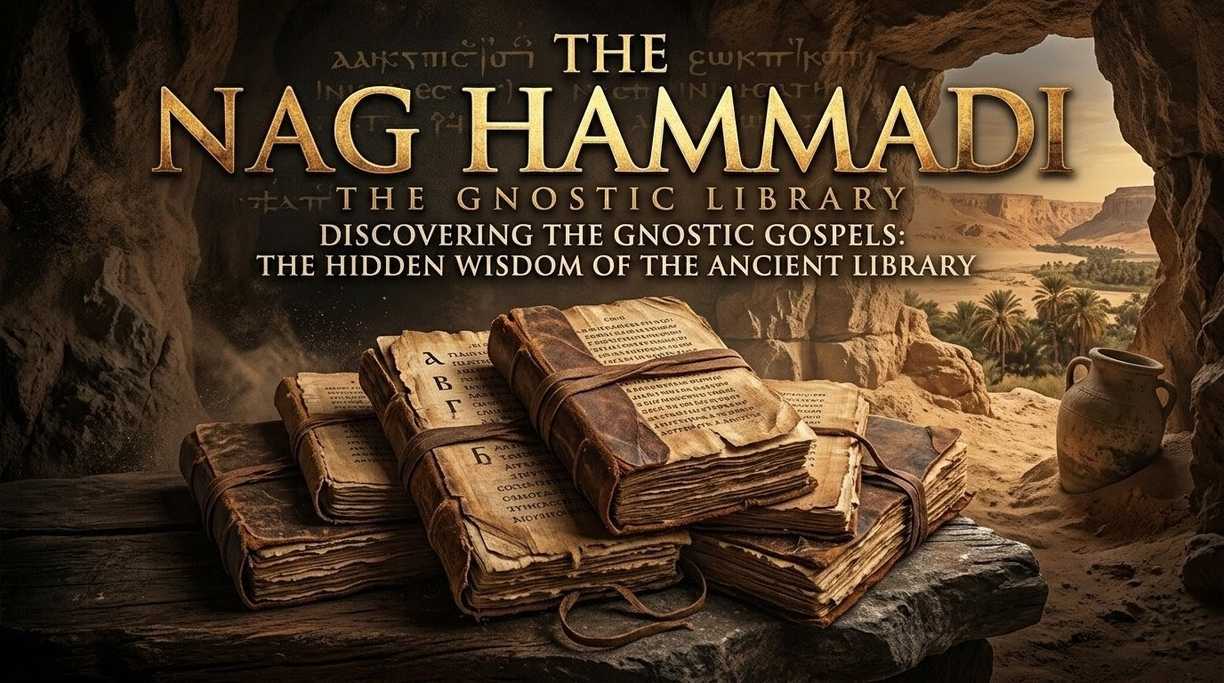
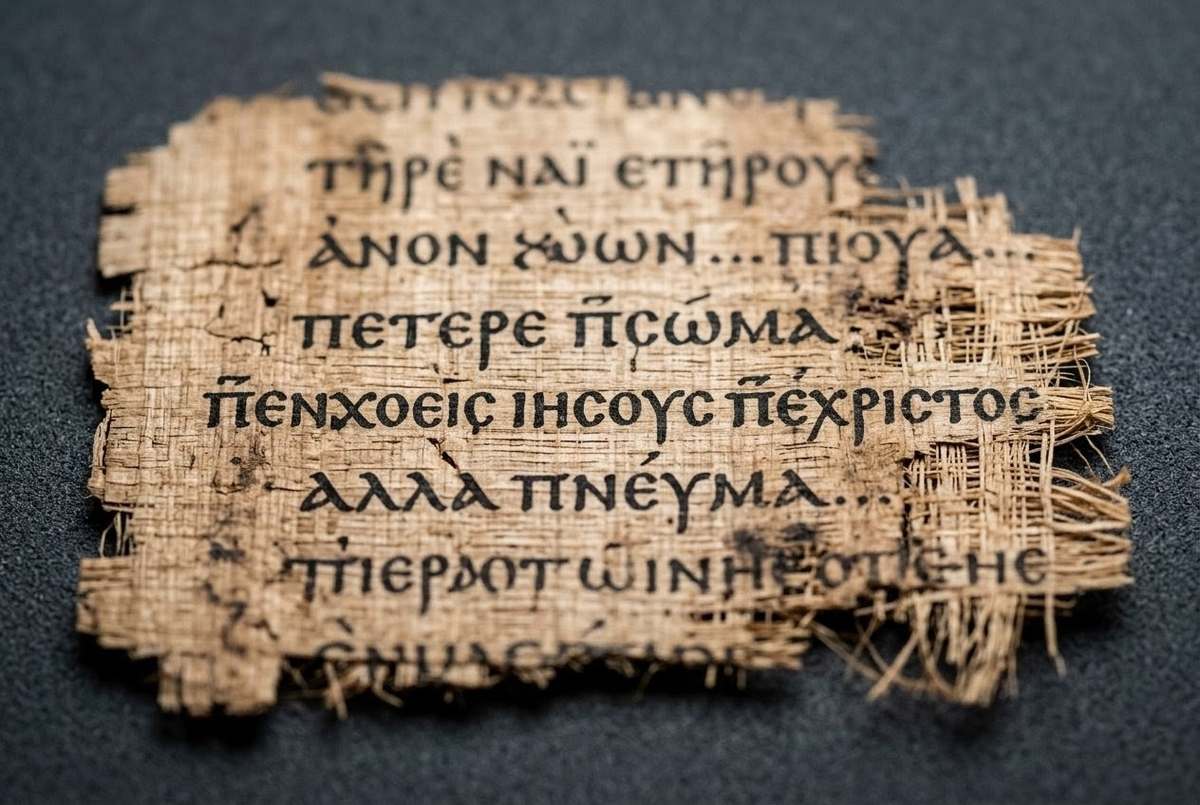
The Apocryphon of John survives in four major ancient witnesses: three from the Nag Hammadi Library and one from the Berlin Gnostic Codex. These are commonly identified as NHC II,1; NHC III,1; NHC IV,1; and BG 8502,2. This unusually rich manuscript transmission makes the text especially valuable for scholars because it allows comparison between different versions of the same work.
The title Apocryphon means “secret book” or “hidden writing”. In this context, “secret” does not simply mean forbidden. It means a teaching reserved for deeper understanding, a revelation that discloses what ordinary religious narrative conceals. The text presents itself as hidden knowledge given by the risen Christ to John, not as public doctrine for the unprepared.
In the Nag Hammadi archive, the text functions almost like a foundation document for Sethian cosmology. It gathers many of the central names and themes that recur elsewhere: the Invisible Spirit, Barbelo, Autogenes, the Four Luminaries, Sophia, Yaldabaoth, the archons, Adam, Eve, the divine spark and the awakening of the unshakeable race.
Codex Note: The Apocryphon of John is preserved in three Nag Hammadi witnesses and one Berlin Codex witness. This makes it one of the best-attested Sethian Gnostic texts and allows comparison between long and short recensions.
Why the Apocryphon of John Matters
The text matters because it gives one of the clearest surviving accounts of the Gnostic reinterpretation of creation. Instead of accepting the creator of Genesis as the highest God, it distinguishes between the transcendent source and the lower creator. This distinction changes everything.
In the Apocryphon, the visible world is not the direct expression of the highest divine reality. It is shaped by Yaldabaoth and the archons, lower powers who imitate what they only partially understand. The tragedy of the world is not that matter exists, but that spiritual beings forget their origin and submit to rulers who do not know the fullness above them.
This makes the text foundational for understanding the Gnostic themes of hidden light, false authority, cosmic ignorance and liberating knowledge. The human being contains something the rulers cannot create and cannot fully control: a divine spark from beyond their jurisdiction.
The Apocryphon is also important because Irenaeus appears to know a related form of its teaching in the second century. That gives the text rare historical weight within the Nag Hammadi corpus and places its core mythic structure deep within early debates over Christian identity, scripture and revelation.
The Secret Book: What the Text Is Doing
The Apocryphon of John is not merely retelling Genesis. It is rewriting the reader’s assumptions about reality. Its aim is to reveal what lies behind the visible story: the invisible source, the lower creator’s ignorance, the origin of the divine spark and the path by which the soul can return.
The text moves through a large sequence: John’s grief, Christ’s revelation, the invisible source, the emergence of Barbelo, the aeonic realm, Sophia’s error, Yaldabaoth’s creation, the formation of Adam, the role of Eve, the archons’ deception and the saving knowledge that awakens the spiritual race.
This makes the text both cosmic and personal. It describes the structure of the universe, but it also explains the condition of the soul. The same drama that unfolds among Aeons and archons repeats inside the human being as forgetfulness, desire, fear, recognition and awakening.
Its “secret” is therefore not a trivia fact hidden in an ancient vault. It is a change of vision. The world is read differently once the divine spark knows that its source lies beyond the powers that claim ownership over it.
The Four Recensions: Long and Short Versions
The surviving versions of the Apocryphon are often grouped into long and short recensions. The longer version is represented by Nag Hammadi Codex II and Codex IV, while the shorter version is represented by Nag Hammadi Codex III and the Berlin Codex. These versions overlap closely but are not identical.
The long recension includes expanded material, including more detailed passages on the formation of Adam and the concluding Pronoia monologue. The shorter recension is more compressed and may preserve an earlier form of the text. The differences show that the Apocryphon was not frozen in one single edition. It lived, circulated and developed within communities that copied and reshaped it.
This matters for readers because it prevents overconfidence in one flattened version. The Apocryphon of John is best understood as a textual tradition, not merely a single static document. The variations are part of its history.
Textual Note: The long and short versions of the Apocryphon of John preserve the same core revelation, but differ in length, detail and emphasis. This makes the text a rare laboratory for studying Gnostic transmission.
The Frame Narrative: Christ as Revealer
The text begins with John in grief and uncertainty after the crucifixion. A hostile figure challenges him, implying that Jesus deceived his followers. John withdraws in distress. This emotional opening matters because the revelation does not come to someone casually curious. It comes to someone shaken by doubt.
Christ then appears in a visionary form, not merely as a teacher returning with reassurance, but as the revealer of what is hidden. He speaks as the one who can disclose “what is, what was and what will be”. The revelation is cosmic, but it begins from human grief.
This gives the text a powerful spiritual psychology. Doubt is not the opposite of revelation. In the frame narrative, doubt becomes the doorway through which deeper knowledge arrives. John’s crisis opens the space for a hidden teaching about the structure of reality.
Primary Source Theme: Christ appears to John as revealer, not simply to console him, but to teach him the hidden structure of reality, the visible and the invisible, and the origin of the unshakeable race.
The Monad: The Invisible Spirit Beyond All Names
The cosmology begins with the highest source, often called the Invisible Spirit, the Monad or the Father. The text describes this source through apophatic language: invisible, immeasurable, unnameable, eternal, perfect and beyond ordinary thought.
This is not a god among gods. The Invisible Spirit is beyond the categories by which beings are normally known. It does not occupy a place within the cosmos. It is the source from which the very possibility of spiritual reality proceeds.
The negative language is important. The highest source cannot be captured by image or concept. Before the text introduces Aeons, archons or mythic drama, it protects divine transcendence. The ultimate origin is beyond grasp, even when it becomes known through emanation.
This places the Apocryphon within a wider current of ancient negative theology. The divine source is not explained by reducing it to something familiar. It is approached by recognising the limits of ordinary speech and thought.
Primary Source Theme: The Invisible Spirit is described as unbounded, unnameable and beyond ordinary qualities. This establishes the radical difference between the transcendent source and the lower creator who later mistakes himself for supreme.
Barbelo: First Thought and Mother-Father of the All
From the Invisible Spirit emerges Barbelo, the First Thought, often described as the Mother-Father, the womb of the All and the first emanation of divine self-knowledge. Barbelo is one of the central figures of Sethian Gnosticism.
Barbelo is not simply a goddess beside a male God. She is the first manifestation of the hidden source, the divine reflection through which the unknowable becomes knowable. In her, thought, womb, image and spiritual fullness converge.
This makes Barbelo crucial for understanding the divine feminine in the Nag Hammadi texts. Before Sophia’s fall, before Yaldabaoth’s arrogance and before the archonic world, there is Barbelo: luminous, androgynous, fertile, contemplative and foundational.
Through Barbelo, the text presents divine life as relational from the beginning. The source is not lonely abstraction. The source knows itself through emanation, and Barbelo is the first great mirror of that knowing.
Primary Source Theme: Barbelo is First Thought, Mother-Father and womb of the All. She is the first expression of divine self-knowledge and the great feminine-androgynous presence of Sethian theology.
The Four Luminaries and the Aeonic Realm
From the higher divine unfoldings come the Aeons and the Four Luminaries: Harmozel, Oroiael, Daveithai and Eleleth. These luminous powers structure the realm of fullness and organise the spiritual world in ordered pattern.
The Four Luminaries are not decorative names. They function as spiritual regions, each associated with powers, qualities and placements within the divine order. In Sethian thought, they often provide the architecture in which the heavenly race, the true Human and the spiritual seed are located.
This aeonic realm stands in sharp contrast to the lower realm created by Yaldabaoth. The Pleroma is ordered by light, knowledge and proper relation. The archonic cosmos is ordered by imitation, ignorance and control. Much of the text’s drama depends on that contrast.
The reader is therefore given two maps: the map of divine fullness and the map of lower administration. Gnosis consists partly in knowing which map one truly belongs to.
The Fall of Sophia and the Birth of Yaldabaoth
The crisis begins with Sophia. Positioned within the aeonic realm, she desires to bring forth something from herself without the proper harmony of the fullness. This act is not presented as ordinary moral wickedness. It is a rupture in order, an isolated movement of divine Wisdom outside the proper relational structure.
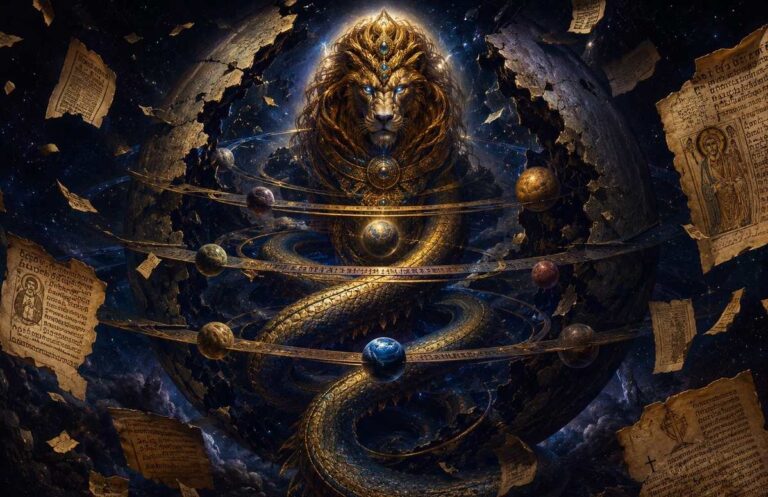
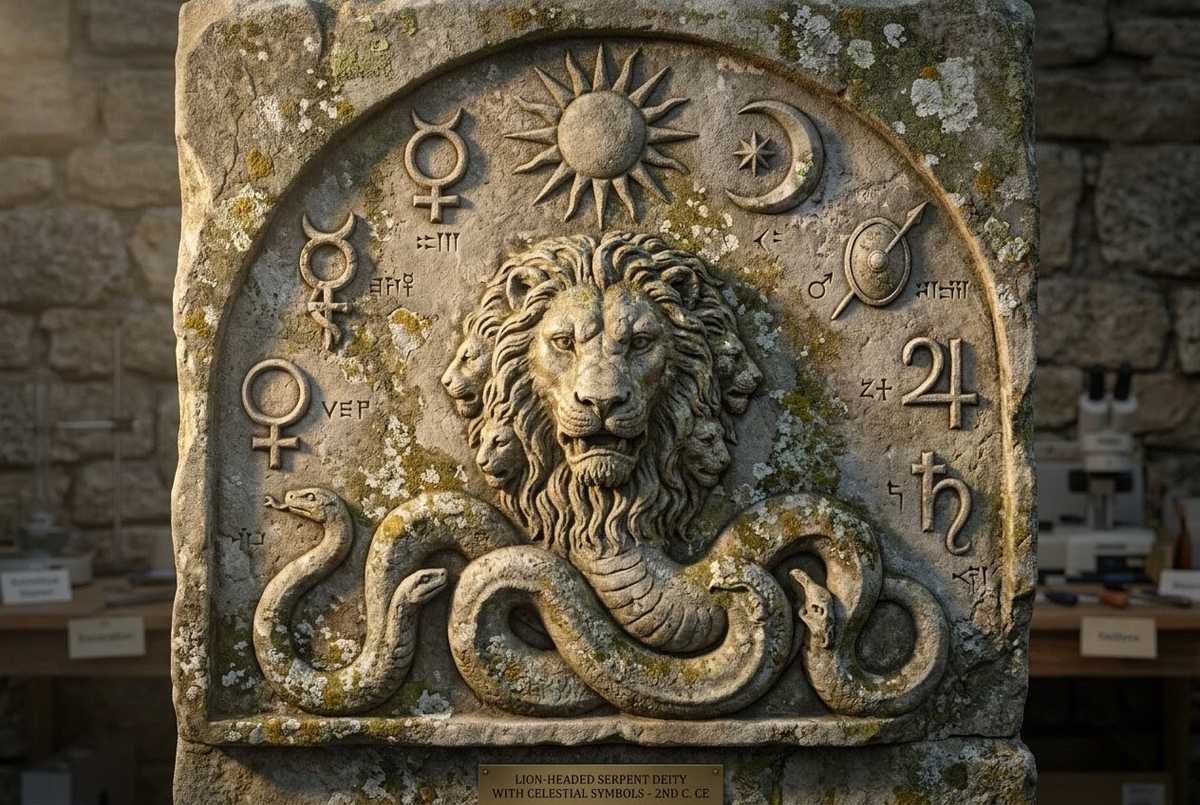
The result is Yaldabaoth, a malformed lower power often described with lion-like and serpent-like imagery. He is powerful, but ignorant. He possesses force derived ultimately from Sophia, but he lacks knowledge of the higher realm from which that power comes.
Sophia recognises the deficiency of what has emerged and casts him away from the divine fullness. This moment explains the origin of the lower creator without making him equal to the highest God. Yaldabaoth is not ultimate. He is derivative, ignorant and enclosed within his own assumption of supremacy.
This is one of the most famous and controversial moves in Gnostic myth. The creator of the lower world is not the transcendent source. He is a blind craftsman, a lower ruler who confuses borrowed light with self-existent authority.
Yaldabaoth and the Archons
Yaldabaoth creates the archons, lower ruling powers who administer the material cosmos. These powers are often linked with planetary spheres, animal imagery and psychic forces. They do not merely govern outside the human being. They also symbolise the structures of ignorance, compulsion and false identity that bind the soul.
The archons are not simply “demons” in a flat moral sense. They are rulers of a deficient order. They can shape, organise and restrain, but they cannot create true spirit. Their authority depends on ignorance. They rule most effectively where the divine spark has forgotten its source.
Yaldabaoth’s boast, that he is God and there is no other, reveals the heart of the problem. He does not know what is above him. His error is not merely pride, but metaphysical blindness. He mistakes his limited realm for the whole of reality.
In this sense, the archonic world is not only ancient cosmology. It remains a symbolic language for false systems that claim total authority while lacking wisdom, compassion and knowledge of the higher good.
The Creation of Humanity
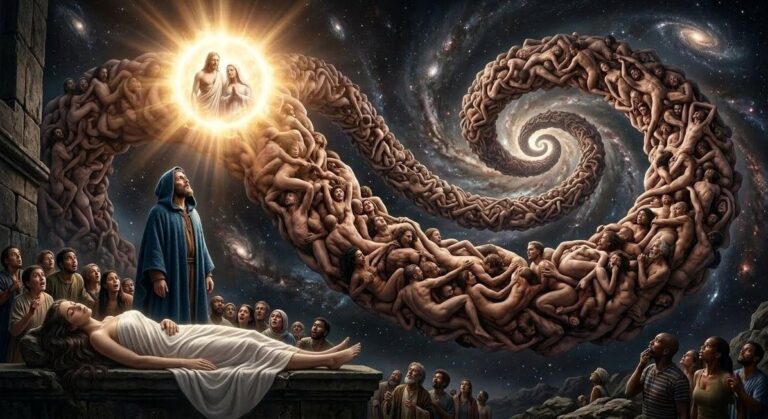
The creation of humanity is one of the text’s most radical reinterpretations of Genesis. The archons attempt to make a human being after the divine image they have glimpsed. But they can only form a body. They cannot give it true life.
Adam lies inert until the divine power, connected with Sophia and the higher realm, enters him. This means that the true life in humanity does not come from the archons. It comes from beyond them. The human being is therefore a mixture: formed within the lower world, but animated by a higher spark.
This gives the text its central anthropology. Humanity is not merely dust. Nor is humanity simply divine in an uncomplicated sense. The human being is a contested field: body from below, spirit from above, consciousness caught between ignorance and remembrance.
That is why gnosis matters. The divine spark must learn what it is, where it came from and how it became entangled. The soul’s liberation depends on recognition, not merely belief.
Eve, the Serpent and the Reversal of Genesis
The Apocryphon of John radically reworks the figures of Eve and the serpent. In the ordinary Genesis reading, the serpent is the deceiver and Eve is associated with transgression. In Gnostic reinterpretation, these roles become more complex and often inverted.
The archons attempt to control the divine light in humanity, but the spiritual element exceeds their grasp. Eve can become a bearer of awakening, and the serpent can become a figure associated with knowledge rather than mere deception. The question is no longer simply who obeyed the command, but who told the truth about the rulers.
This reversal is one reason the text remains so provocative. It does not merely add hidden details to Genesis. It reads Genesis from the perspective of the trapped divine spark. The “fall” into knowledge becomes, in this reading, the beginning of awakening from archonic ignorance.
The result is a mythic counter-narrative. The lower rulers forbid knowledge because knowledge threatens their rule. The human being awakens when the hidden light recognises that the commands of the lower order are not the final word of the highest God.
The Five Seals and Ritual Restoration
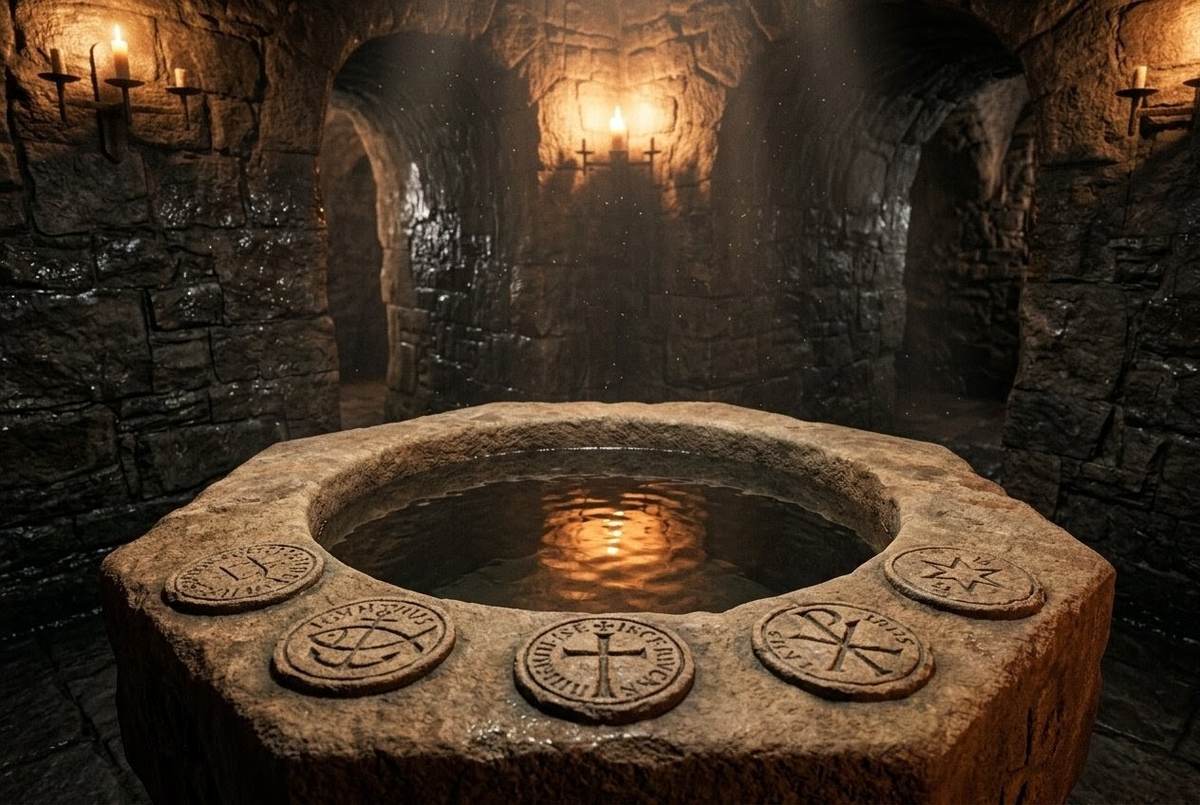
The Apocryphon is not only cosmology. It also preserves a ritual and soteriological concern, especially through the Five Seals. These are associated with Sethian baptismal or initiatory practice and with the restoration of the spiritual person to their higher origin.
The Five Seals should not be treated as casual symbolism. In the world of the text, they mark transformation, protection and belonging. They separate the spiritual person from archonic identity and clothe the initiate in a new relation to the Pleroma.
Because the evidence is ancient, fragmentary and debated, modern readers should be cautious about reconstructing exact ritual practice too confidently. Still, the presence of the Five Seals shows that this text was not only read as speculation. It belonged to a living world of initiation, ritual memory and spiritual formation.
The myth tells the soul where it came from. The ritual seals mark its return. Together, cosmology and practice become a path of restoration.
Historical Context and Irenaeus
The Apocryphon of John has special historical importance because Irenaeus of Lyons, writing in the second century, appears to know a closely related Barbeloite myth. His hostile summary in Against Heresies gives scholars a valuable external witness to the antiquity of this mythic system.
This does not mean Irenaeus gives a neutral account. Heresiological writers wrote against the groups they described. Yet their reports sometimes preserve details that can be compared with Nag Hammadi texts. In the case of the Apocryphon, that comparison is especially important.
The text also reflects a world shaped by Jewish scripture, Christian revelation, Platonic metaphysics and mythic imagination. It should not be reduced to one source. Its power lies in synthesis: Genesis reread through revelation, philosophy turned into myth, and Christian identity reimagined through secret knowledge.
That synthesis makes the Apocryphon one of the most significant documents for understanding the diversity of early Christianity and Gnosticism. It preserves a path that later orthodoxy rejected, but that ancient readers clearly found profound enough to copy, preserve and transmit.
Reading the Apocryphon Today
Read The Apocryphon of John slowly, and do not try to flatten it into one simple lesson. It is not merely “anti-world”, not merely “anti-Bible” and not merely an alternative creation story. It is a spiritual map of false authority, hidden origin and the recovery of direct knowledge.
The text can be read on several levels. Historically, it is a key Sethian Gnostic scripture. Theologically, it distinguishes the highest source from the lower creator. Psychologically, it describes the soul’s entrapment in false identity. Symbolically, it gives language to the experience of living under systems that claim total power while lacking wisdom.
Its danger lies in careless reading. The language of archons, false rulers and hidden control can become ungrounding if treated literally or obsessively. Its value lies in careful symbolic discernment: the soul is not finally owned by the systems that shape its lower life.
The central insight remains luminous: the human being contains a light the lower rulers did not create. Gnosis is the recognition of that light, its origin and its path of return.
The Apocryphon of John is therefore one of the great source-texts of Gnostic awakening. It begins with grief and doubt, then opens into a vast revelation: beyond the visible order, beyond the lower creator, beyond fear and forgetfulness, there is a hidden source from which the divine spark comes and to which it may return.
Safety Notice: This article explores symbolic, historical and spiritual ideas about hidden powers, archons, false authority, cosmic ignorance, divine sparks and spiritual restoration. It does not constitute medical, psychological, legal or spiritual advice. If ideas about hidden control, spiritual identity, cosmic imprisonment or unseen powers become distressing, obsessive or destabilising, please seek support from a qualified mental health professional or appropriate emergency service. The intended outcome is grounded spiritual literacy, not fear, paranoia or withdrawal from ordinary responsibility.
Frequently Asked Questions
What is the Apocryphon of John?
The Apocryphon of John, also called the Secret Book of John, is a Sethian Gnostic revelation text preserved in three Nag Hammadi witnesses and one Berlin Codex witness. It presents a post-resurrection revelation from Christ to John and explains the Invisible Spirit, Barbelo, Sophia’s fall, Yaldabaoth, the archons, the creation of humanity and the path of restoration through gnosis.
Where is the Apocryphon of John found?
The Apocryphon of John is preserved in Nag Hammadi Codex II,1; Codex III,1; Codex IV,1; and Berlin Codex 8502,2. These four witnesses include long and short versions of the text, making it one of the best-attested Sethian Gnostic works.
Who is Barbelo in the Apocryphon of John?
Barbelo is the First Thought of the Invisible Spirit and one of the central divine figures of Sethian Gnosticism. She is described as Mother-Father, womb of the All and first emanation of divine self-knowledge. Through Barbelo, the hidden source begins to unfold into the aeonic realm.
Who is Yaldabaoth in the Apocryphon of John?
Yaldabaoth is the lower creator or Demiurge born from Sophia’s isolated act. He is powerful but ignorant, often represented with lion-serpent imagery. He creates the lower cosmos and claims to be the only God, but the text portrays him as a blind ruler who does not know the higher source above him.
How does the Apocryphon of John reinterpret Genesis?
The Apocryphon of John rereads Genesis from a Gnostic perspective. The creator of the lower world is not the ultimate Father, Adam receives life through a divine spark from beyond the archons, Eve becomes connected with awakening, and the serpent can be read as a figure of knowledge rather than simple deception.
What are the Five Seals?
The Five Seals are associated with Sethian initiatory or baptismal practice. In the Apocryphon of John, they represent ritual restoration, purification and belonging to the higher realm. They mark the soul’s separation from archonic identity and its return towards the Pleroma.
Is the Apocryphon of John a Christian text?
The Apocryphon of John is framed as a revelation from Christ to John, so it has a Christian revelatory setting. However, its cosmology draws on Sethian Gnostic, Jewish scriptural and Platonic themes. It represents one form of early Gnostic Christianity rather than later orthodox doctrine.
Why is the Apocryphon of John important today?
The text is important because it preserves one of the clearest surviving maps of Sethian Gnostic cosmology. It helps modern readers understand Barbelo, Sophia, Yaldabaoth, the archons, the divine spark and the Gnostic reinterpretation of creation, while also showing the diversity of early Christian thought.
Further Reading
Continue through the related Nag Hammadi source layer and the wider Sethian map:
- Trimorphic Protennoia: the divine First Thought speaking in a related Sethian voice.
- Hypostasis of the Archons: a companion creation myth centred on the archons, Eve and spiritual awakening.
- On the Origin of the World: another major Gnostic creation text exploring Sophia, Yaldabaoth and cosmic restoration.
- Reality of the Archons: a companion text in Codex II on archonic rule and human liberation.
- The Five Seals: a focused study of Sethian initiation, ritual restoration and spiritual return.
- The Feminine Divine in the Nag Hammadi Library: Barbelo, Sophia, Protennoia and the divine feminine across the codices.
- What Is Sophia?: the foundation article on Wisdom, fall and redemption in Gnostic myth.
- Who Is Yaldabaoth?: a foundation article on the blind creator and chief archon.
- Gnostic Schools: a comparative overview of Sethian, Valentinian, Hermetic and related currents.
- Nag Hammadi Library Complete Guide: the master guide to the codices and tractates.
References and Sources
The following sources support the historical, textual and interpretive claims made in this article.
Primary Sources and Critical Editions
- Waldstein, Michael, and Frederik Wisse. The Apocryphon of John: Synopsis of Nag Hammadi Codices II,1; III,1; and IV,1 with BG 8502,2. Nag Hammadi and Manichaean Studies 33. Brill, 1995.
- King, Karen L. The Secret Revelation of John. Harvard University Press, 2006.
- Layton, Bentley. The Gnostic Scriptures. Doubleday, 1987.
- Meyer, Marvin, ed. The Nag Hammadi Scriptures. HarperOne, 2007.
- Robinson, James M., ed. The Nag Hammadi Library in English. Harper & Row / HarperSanFrancisco, revised editions.
- Irenaeus of Lyons. Against Heresies, especially Book I, chapters 29-31.
Scholarly Monographs and Interpretive Studies
- Turner, John D. Sethian Gnosticism and the Platonic Tradition. Presses de l’Université Laval, 2001.
- Brakke, David. The Gnostics: Myth, Ritual, and Diversity in Early Christianity. Harvard University Press, 2010.
- Williams, Michael Allen. Rethinking “Gnosticism”: An Argument for Dismantling a Dubious Category. Princeton University Press, 1996.
- King, Karen L. What Is Gnosticism? Harvard University Press, 2003.
- Logan, Alastair H. B. Gnostic Truth and Christian Heresy: A Study in the History of Gnosticism. T&T Clark, 1996.
- Jonas, Hans. The Gnostic Religion: The Message of the Alien God and the Beginnings of Christianity. Beacon Press, revised editions.
- Pearson, Birger A. Ancient Gnosticism: Traditions and Literature. Fortress Press, 2007.
Comparative Studies and Context
- Rudolph, Kurt. Gnosis: The Nature and History of Gnosticism. Harper & Row, 1983.
- Filoramo, Giovanni. A History of Gnosticism. Basil Blackwell, 1990.
- DeConick, April D. The Gnostic New Age: How a Countercultural Spirituality Revolutionized Religion from Antiquity to Today. Columbia University Press, 2016.
- Hanegraaff, Wouter J. Western Esotericism: A Guide for the Perplexed. Bloomsbury, 2013.
- Corbin, Henry. Spiritual Body and Celestial Earth. Princeton University Press, 1977.
Reading Note: The Apocryphon of John is best read as a foundation text for Sethian Gnosticism. It gathers the invisible source, Barbelo, Sophia, Yaldabaoth, the archons, Adam, Eve and the Five Seals into one large mythic system. Its purpose is not fear of the cosmos, but recognition of the hidden light that does not belong to the lower rulers.