The Psychic Vampire: Energy Parasitism in Occult Tradition
The psychic vampire is one of the most useful and easily abused figures in modern occult language: the person, pattern, relationship, entity, or institution that leaves you feeling drained, fogged, guilty, diminished, or strangely less yourself. Unlike the theatrical vampire of Gothic fiction, the psychic vampire does not need fangs, coffins, or moonlit windows. The feeding may happen through conversation, crisis, seduction, dependency, admiration, guilt, attention, emotional labour, or the slow erosion of boundaries.
Occult tradition calls this energy parasitism: the extraction of vitality from one field by another. Psychology may describe similar patterns through emotional contagion, narcissistic supply, coercive dependency, trauma repetition, burnout, attachment wounds, or chronic boundary collapse. The useful approach is not to force one explanation to defeat all others. The psychic vampire is a layered figure: folklore gives it teeth, occultism gives it subtle anatomy, psychology gives it behaviour, and the body gives the first honest report.
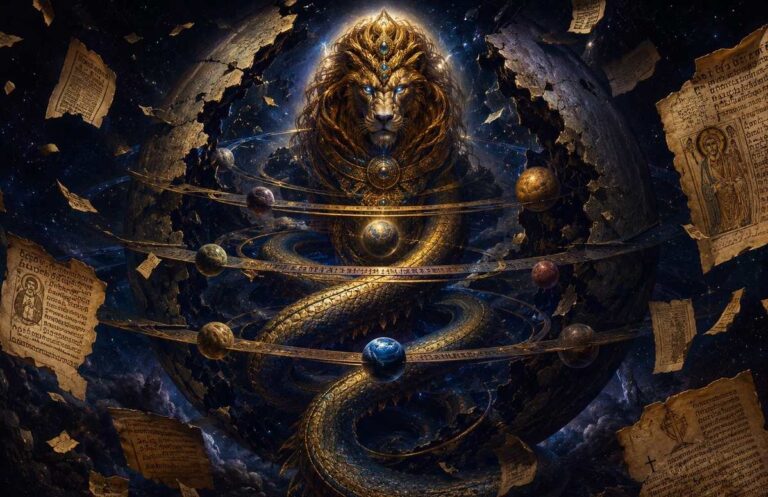
In the language of The Thread, psychic vampirism belongs to Predatory Consciousness. It names a personal-scale version of the same pattern seen in archonic systems: a force that cannot generate enough life from within, so it feeds through confusion, dependency, drama, guilt, desire, attention, or control. The question is not merely “is this person a vampire?” The deeper question is: where is vitality leaving without conscious consent?

In Plain Terms
A psychic vampire is a person, entity, relationship pattern, or system described as draining vitality, attention, emotional energy, or spiritual force from others.
In occult tradition, this is often explained through subtle-body language: etheric cords, auric leakage, astral attachment, parasitic entities, or one-way energetic exchange.
In grounded terms, the same pattern may involve emotional manipulation, chronic crisis, coercive dependency, narcissistic supply, unreciprocated emotional labour, trauma bonds, burnout, or weak boundaries. The safest reading combines discernment with care, not paranoia.
Sources and Traditions Discussed
- Occult self-defence literature, especially Dion Fortune’s work on psychic attack, parasitism, vampirism, and subtle-body defence.
- Thelemic and ceremonial magical material, including Aleister Crowley’s concept of the Black Brother, handled carefully rather than as a simple label for disliked people.
- Theosophical and Hermetic subtle-body models, including etheric body, astral body, cords, vitality, and aura language.
- Folklore of vitality drain, including lamiae, striges, succubi, incubi, spectral feeding, and dream predation.
- Modern psychological interpretation, including emotional contagion, narcissistic supply, dependency patterns, burnout, trauma bonds, and boundary collapse.
- Gnostic symbolism, especially Archons, counterfeit spirit, false authority, energetic captivity, and the loss or reclamation of pneuma.
- Somatic and trauma-aware discernment, including the body’s warning signals, neuroception, grounding, and the need not to spiritualise every difficult relationship.
- Predatory Consciousness, the ZenithEye route concerned with parasitic patterns, psychic boundaries, spiritual emergency, and sovereignty.
How to Read This Article
This article uses occult language, but it does not ask you to label difficult people as supernatural predators. A draining person may be traumatised, lonely, anxious, narcissistic, overwhelmed, immature, manipulative, or simply incompatible with your nervous system. Not every hard conversation is vampirism. Not every need is parasitism.
The psychic vampire is most useful as a pattern-recognition tool. It asks where exchange has become one-way, where guilt replaces consent, where attention is captured, where the body contracts, and where vitality leaves without return.
Use this material for discernment, not paranoia. Healthy boundaries should make you steadier, clearer, kinder, and more embodied. If this topic increases fear, obsessive suspicion, isolation, grandiosity, or hatred of ordinary human need, pause it and return to grounding.
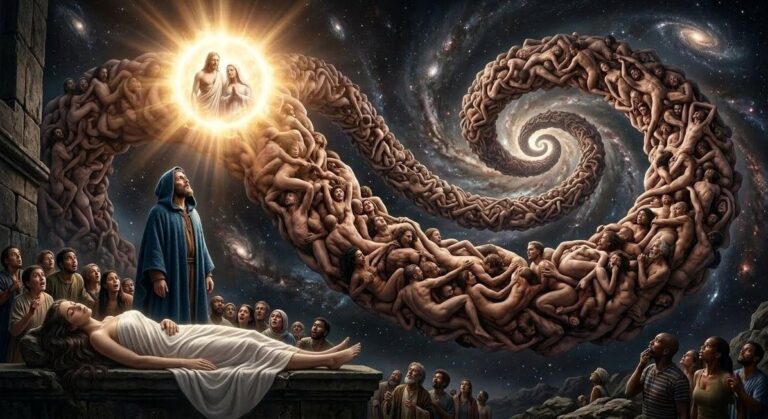
The psychic vampire is the image of one-way exchange: attention, emotion, vitality, or care flowing out while nothing living returns.
Table of Contents
- The Occult Anatomy of Parasitism
- The Etheric Body and the Astral Interface
- Energetic Cords and One-Way Traffic
- A Historical Lineage of Energetic Predation
- Dion Fortune and Psychic Self-Defence
- Crowley’s Black Brother and the Abyss
- LaVey and the Popular Psychic Vampire
- The Taxonomy of the Hungry
- The Body Knows: Seven Signs of Extraction
- The Mechanisms of Defence
- The Predator as Mirror
- Ethical Considerations: When Defence Becomes Attack
- The Gnostic Reading: Archons at Personal Scale
- Related Glossary Terms
- Read Next
- Frequently Asked Questions
- Further Reading
- References and Sources
The Occult Anatomy of Parasitism
Occult tradition usually explains psychic vampirism through subtle anatomy. The human being is not understood as physical body alone, but as a layered field: body, vitality, emotion, imagination, thought, spirit, and the connective tissue between them. In this model, people do not merely exchange words. They exchange charge, attention, feeling, projection, desire, fear, and vitality.
Modern readers do not need to accept every subtle-body claim literally in order to understand the usefulness of the map. Everyone knows the difference between a conversation that leaves them expanded and one that leaves them collapsed. Everyone knows the person who somehow turns every encounter into a crisis, an obligation, a confession booth, or a drainpipe. The occult model gives this felt experience a symbolic anatomy.
The psychic vampire, in this sense, is not only a spooky person with dramatic curtains in the soul. It is a one-way energetic arrangement. Something is received from you, but not truly returned. Your attention is taken. Your body tightens. Your guilt is activated. Your thoughts are colonised. Your vitality has gone wandering without leaving a forwarding address.
The Etheric Body and the Astral Interface
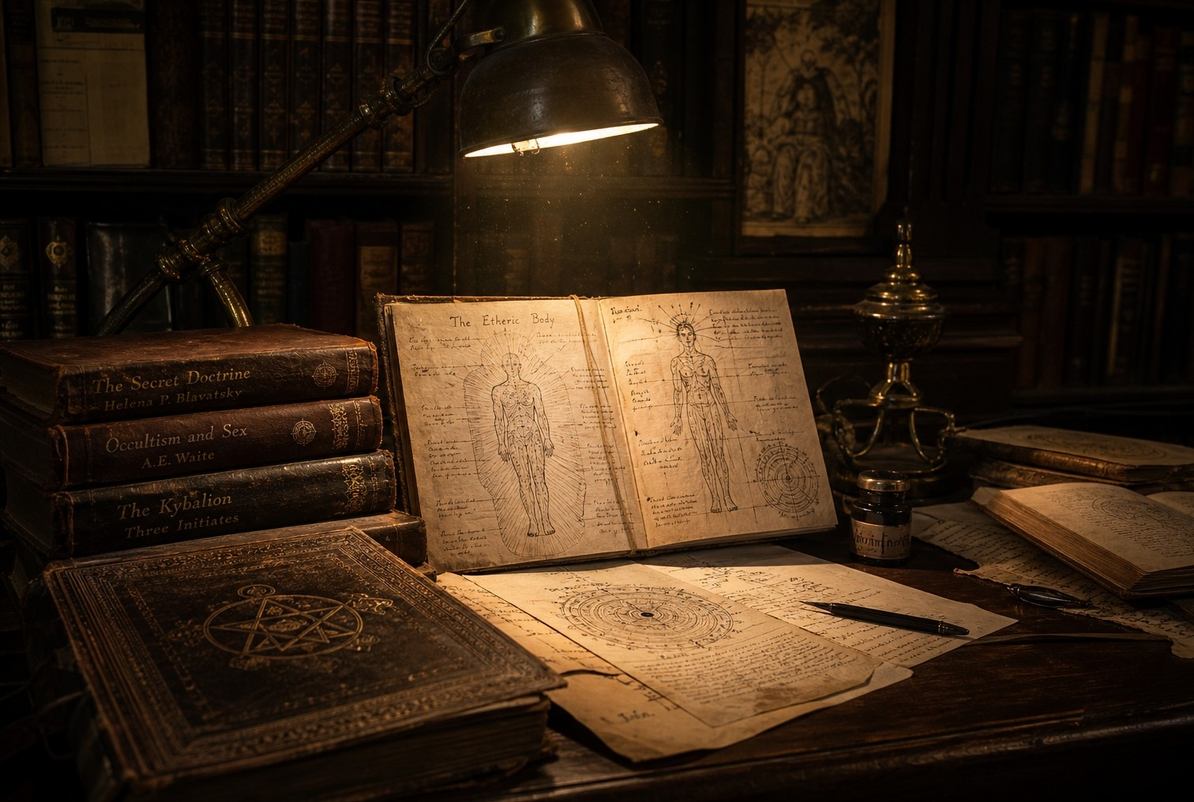
Many esoteric systems describe an etheric body or vital field that interpenetrates the physical body and acts as the bridge between matter and subtle life. The language differs by tradition: etheric double, aura, odic field, animal magnetism, prana, qi, vitality, biofield, or subtle body. These terms are not identical, but they all attempt to describe the felt sense that living beings carry an atmosphere of force.
Franz Mesmer’s theory of animal magnetism and Karl von Reichenbach’s later experiments with odic force belong to the history of attempts to describe subtle vitality in quasi-scientific language. Theosophy, Hermeticism, and modern occultism then developed more elaborate maps of etheric, astral, mental, and spiritual layers.
The psychic vampire is said to operate most strongly through the etheric and astral levels: vitality and emotion. This is why the reported effects are often bodily and emotional before they are intellectual. Fatigue, heaviness, nausea, chill, fog, dread, irritation, guilt, and obsessive mental replay may arrive before the conscious mind has worked out what happened.
A grounded reading says: listen to the body, but do not make the body’s alarm into a courtroom verdict. Sometimes the body is warning you about manipulation. Sometimes it is remembering trauma. Sometimes it is reacting to stress, conflict, illness, or old attachment patterns. The signal matters. The interpretation needs care.
Energetic Cords and One-Way Traffic
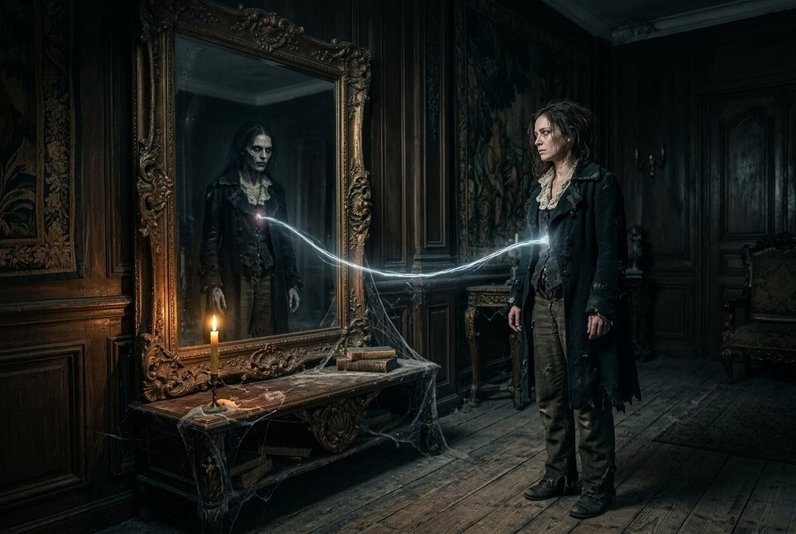
In subtle-body language, relationships form cords: threads of attention, affection, memory, obligation, desire, fear, resentment, or unfinished business. Healthy cords allow mutual exchange. They are flexible, breathable, and do not erase individuality. Parasitic cords feel different. They pull, hook, demand, loop, and drain.
Occult writers often describe vampiric cords attaching to the solar plexus, heart, throat, or sacral centre. Symbolically, these correspond to power, emotion, voice, desire, and creative vitality. A relationship that constantly attacks confidence may feel solar-plexus draining. A relationship that uses guilt may hook the heart. A relationship that suppresses truth may close the throat. A sexual relationship without care may disturb the sacral field.
The practical sign is one-way traffic. Do you leave the interaction clearer, mutually met, and more human? Or do you leave smaller, foggier, more guilty, more responsible for someone else’s chaos, and less connected to your own life?
In everyday terms, cords are attention loops. The person is not present, but your mind keeps rehearsing the exchange. You imagine explaining yourself. You prepare for their next demand. You feel guilty for resting. The body is not with them, but the attention is still paying rent in their house.
A Historical Lineage of Energetic Predation
The idea of vitality drain appears long before the modern phrase “psychic vampire”. Ancient and medieval traditions describe lamiae, striges, empusae, succubi, incubi, night-hags, spectral lovers, blood-drinkers, breath-stealers, and dream predators. Some feed on blood, some on semen, some on breath, some on sleep, some on youth, and some on fear.
What changes across history is the explanatory system. Classical folklore gives us monstrous women, night birds, and seductive predators. Christian demonology gives us incubi and succubi. Renaissance occultism gives us astral rays, planetary influence, and elemental beings. Theosophy and ceremonial magic give us subtle bodies, astral parasites, etheric doubles, and occult attack. Psychology gives us emotional dependency, projection, narcissistic supply, trauma bonds, and burnout.
The figure survives because the experience survives. Human beings repeatedly encounter situations where vitality seems to flow away through invisible channels: a person, a group, a sexual bond, a workplace, an ideology, a guru, a family system, a digital loop, or a recurring internal pattern. The vampire is the folklore of depletion.
Dion Fortune and Psychic Self-Defence
Dion Fortune, born Violet Mary Firth, is one of the central modern figures in occult self-defence literature. Trained in psychology and active in Western esoteric circles, she brought together clinical observation, magical practice, and the language of subtle bodies. Her Psychic Self-Defence became a key twentieth-century text for discussing psychic attack, parasitism, vampiric relationships, obsession, and protective practice.
Fortune’s work is valuable because she did not treat every strange experience as either madness or magic. She recognised overlap. Psychological vulnerability could open the field. Psychic disturbance could worsen psychological distress. Suggestion, obsession, fear, and genuine esoteric experience could become tangled.
Her most practical insight remains useful: many draining people do not know they are draining. They may not be villains. They may be wounded, needy, emotionally immature, frightened, lonely, or unconsciously dependent. That does not make the drain harmless. It means the response should be boundaried rather than theatrical.
The unconscious vampire is often less a monster than a leaking vessel trying to refill from other people. Compassion may understand the wound. Boundaries prevent the wound from becoming your assignment.
Crowley’s Black Brother and the Abyss
Aleister Crowley’s concept of the Black Brother requires careful handling. It should not be thrown around as a dramatic insult. In Crowley’s system, the Black Brother is not simply a person who practises dark magic or behaves selfishly. The figure belongs to a technical initiatory framework involving the Abyss, the surrender of egoic identity, and the danger of clinging to separation after genuine attainment.
The symbolic value is clear even for readers outside Thelema. Spiritual power without surrender becomes closed. Insight without humility becomes parasitic. The ego touches something vast, then tries to possess it. When it cannot receive directly from the source, it begins to feed through control, admiration, fear, manipulation, or dependency.
This is one of the oldest warnings in esotericism: unintegrated attainment can become more dangerous than ordinary ignorance. A person who has had a real experience but has not surrendered the need to be special may become a subtle tyrant. Their hunger wears spiritual clothes.
LaVey and the Popular Psychic Vampire
Anton LaVey helped popularise the term “psychic vampire” in a more interpersonal and secular form. In this usage, the psychic vampire is the chronic taker: the person who drains others through dependency, guilt, crisis, entitlement, or emotional demand.
This stripped-down version lacks the subtle-body complexity of Fortune’s model, but it made the pattern recognisable. Most people know someone who drains a room without raising their voice. A person who turns every boundary into betrayal. A friend whose crisis always arrives when you are finally steady. A lover who receives everything and returns only emptiness. A group that consumes idealism and calls the exhaustion “commitment”.
The everyday psychic vampire may not be occult at all. The drain may be behavioural, relational, emotional, or systemic. But the name still works because the effect is the same: the living field has been tapped.
The Taxonomy of the Hungry
Not all draining patterns are the same. A useful taxonomy prevents both naivety and paranoia. It helps the reader ask: what kind of exchange is happening, and what response is appropriate?
The Unconscious Vampire
The unconscious vampire is the most common form. This person does not necessarily intend harm. They may be emotionally underdeveloped, traumatised, chronically dysregulated, lonely, anxious, dependent, or unable to self-soothe. They discover that certain people make them feel better, so they return again and again to those people for stabilisation.
The drain is not always malicious. A drowning person may pull others underwater while sincerely wanting help. The intention does not erase the effect.
Typical signs include endless crisis, urgent emotional need, inability to respect limits, repeated guilt-tripping, collapse when you withdraw, and improvement after they unload while you feel depleted. The healing response is not contempt. It is boundary plus realism. You cannot become another person’s missing nervous system.
The Conscious Vampire
The conscious vampire is rarer and more dangerous. This person knows how to extract attention, admiration, sex, money, emotional labour, obedience, or spiritual validation. They may use charm, seduction, flattery, crisis, intimidation, secrecy, spiritual language, or psychological manipulation.
Occult traditions may describe such people as deliberate energy feeders or predatory practitioners. Psychology may speak of manipulative, narcissistic, coercive, or exploitative dynamics. The names differ. The pattern remains: the other person’s vitality is treated as a resource.
The response is distance, documentation, support, and clear boundaries. Do not try to reform someone who benefits from your confusion. The little courtroom in your head may want one final speech. The body usually prefers the door.
The Elemental or Astral Parasite
Some occult systems describe non-human parasites: astral larvae, lower elementals, shells, thought-forms, intrusive entities, or archonic fragments that attach to fear, shame, addiction, sexuality, grief, or repetitive emotional patterns. These beings are often described less as fully intelligent personalities and more as hunger-forms.
A grounded reading treats this language carefully. It can be symbolically useful to say, “this pattern behaves like a parasite”. It can be harmful to tell a distressed person they are definitely infested. If entity language increases panic, isolation, or paranoia, it is not helping.
The practical response remains similar: reduce the food source, stabilise the body, break the loop, seek support, clear the environment, stop feeding the obsession, and restore ordinary life.
The Institutional Vampire
The institutional vampire is the most subtle form. A workplace, movement, group, ideology, spiritual community, platform, or bureaucracy can consume vitality while presenting itself as meaning, service, duty, productivity, awakening, or belonging.
This kind of vampire does not need a single villain. The system itself learns to extract. It rewards availability, guilt, self-sacrifice, crisis response, loyalty signalling, and exhaustion. The worker burns out. The activist collapses. The student loses joy. The seeker gives their life-force to a teacher who calls depletion devotion. The user scrolls for hours and calls it connection.
In Gnostic language, this is the archonic principle rendered in organisational form. It need not hate you. It simply feeds.

The Body Knows: Seven Signs of Extraction
The title promises seven signs, but these are not courtroom evidence that someone is metaphysically feeding on you. They are pattern markers. Taken together, repeated over time, they help identify when an exchange has become draining, coercive, or one-way.
Sign 1: Somatic Exhaustion
The most immediate sign is bodily depletion after contact. This may feel like sudden fatigue, heaviness, headache, nausea, dizziness, cold hands, collapsed posture, or the strange sense that your inner battery has been unplugged.
This does not prove occult attack. It may indicate stress, overstimulation, nervous-system activation, emotional labour, conflict, sensory overload, trauma response, or plain incompatibility. But the body’s report still matters. If you consistently feel worse after someone leaves than before they arrived, the body has logged a pattern.
Sign 2: Emotional Dysregulation
After engagement, you feel guilt, shame, self-doubt, anger, sadness, or obligation that seems disproportionate to what happened. You may feel you have failed them, even when you did nothing wrong. You may feel responsible for their mood, future, stability, or pain.
This is often where the drain hides. A boundary is reframed as cruelty. Rest becomes selfishness. Refusal becomes abandonment. The vampire, literal or metaphorical, feeds through moral confusion. Your natural care is turned into a pipeline.
Sign 3: Cognitive Confusion
You leave the interaction foggy. The conversation seemed simple, but now your mind is looping. Did you say the wrong thing? Are they upset? What did they really mean? Why are you explaining yourself to an imaginary tribunal at midnight?
Parasitic interactions often create mental residue. Contradictions, double binds, strategic vagueness, emotional bait, and unfinished demands keep your attention processing the other person’s material long after the exchange ends. The conversation is over. The extraction continues.
Sign 4: Environmental or Relational Disturbance
Some occult traditions describe cold spots, malfunctioning devices, animals reacting strangely, plants wilting, or rooms feeling heavy around psychic vampires. These claims should be handled with caution. Environments are complex, and confirmation bias is a talented little goblin with a clipboard.
The grounded version is relational disturbance. Does the room tighten when the person enters? Do animals, children, or sensitive people consistently withdraw? Does the group become anxious, performative, or divided? Does ordinary conversation become charged? The atmosphere may not prove a supernatural drain, but it can reveal a field effect.
Sign 5: The Drama Triangle
The drama triangle is one of the clearest signs: victim, rescuer, persecutor. The person repeatedly arrives as victim, recruits you as rescuer, then later casts you as persecutor when you cannot keep rescuing. The cycle generates emotional charge, and emotional charge is the food.
Every conversation becomes urgent. Every crisis requires your intervention. Every intervention fails to resolve the pattern. Somehow, they leave lighter and you leave carrying the furniture from their burning house.
Compassion helps once. A pattern educates. Chronic crisis without responsibility is not a request for support; it is a machine.
Sign 6: Intrusive Fixation
You think about them when alone. You rehearse conversations. You anticipate their needs. You prepare defences. You feel pulled to check messages. You feel guilty before they have even asked for anything.
Occult language calls this cord activity. Psychology may call it rumination, trauma bonding, anxious attachment, coercive control, or emotional conditioning. Either way, your inner space is being occupied. A relationship has become a tenant in the mind without paying rent or washing its cups.
Sign 7: The Recurrent Pattern
The most important sign is recurrence. The same dynamic appears again and again with different faces. Different partner, same drain. Different workplace, same over-giving. Different friend, same guilt loop. Different teacher, same surrender of sovereignty.
This is where the predator becomes mirror. The pattern may be showing an unhealed wound, a learned role, a fear of disappointing others, a saviour complex, a hunger to be needed, or a childhood belief that love must be earned through depletion.
The point is not self-blame. Predators are responsible for predation. But healing requires asking why the same doorway keeps opening. The lock is not repaired by hating the burglar. It is repaired by changing the lock.

The Mechanisms of Defence
Occult and psychological defence begin in the same place: recognition. You cannot protect a boundary you refuse to admit exists. You cannot withdraw from a pattern while still calling it love, loyalty, duty, compassion, or spiritual service.
Recognition as Disruption
The first defence is naming the pattern calmly. Not “this person is definitely an astral vampire from the under-stairs department”, but “I consistently feel drained after this interaction”. That is enough. The body’s evidence does not require theatrical prosecution.
Track the pattern. Who leaves you depleted? What happens before the drain? What role do you enter? Rescuer, confessor, fixer, admirer, guilty child, unpaid therapist, emergency generator? What happens when you say no?
A journal is often more useful than a ritual dagger. The dagger looks excellent in candlelight, but the journal knows dates.
Auric Sealing and Sacred Geometry
Occult practice often uses visualisation to seal the auric field: spheres of light, geometric forms, protective names, prayer, pentagrams, crosses, circles, flame, mirrors, or divine presence. These practices can help when they strengthen intention and calm the nervous system.
A simple version: sit upright, feel the weight of the body, breathe slowly, and imagine the field drawing in from scattered openness to a clear, warm boundary around the body. Pay special attention to the solar plexus, heart, throat, and lower belly. The aim is not armour against humanity. It is restored containment.
Sealing becomes unhealthy when it feeds fear of all contact. A healthy boundary is permeable to love and closed to extraction. A prison wall and a skin are not the same structure.
Cord-Cutting Technologies
Cord-cutting is the symbolic severing of unhealthy attachments. It may be done through visualisation, prayer, ritual, journalling, spoken declaration, therapy, or practical action such as blocking contact, leaving a group, changing routines, or refusing emotional labour.
A grounded cord-cutting practice might look like this: name the person or pattern, identify what the cord carries, withdraw consent to the unhealthy exchange, visualise the attachment dissolving, and then take one practical action that confirms the boundary. Without practical action, cord-cutting can become theatre for an unchanged life.
Some cords need repeated work. Not because the other person has supernatural power, but because habits, attachment wounds, guilt loops, and nervous-system conditioning often re-form the pathway. Every refusal strengthens the new route.

Grounding and the Earth Connection
Grounding brings attention back to the body, room, breath, feet, weight, and ordinary world. Predatory patterns often feed on dissociation, fantasy, urgency, intensity, and emotional elevation. Grounding lowers the voltage.
Useful grounding practices include walking, touching soil or stone, eating a nourishing meal, slow breathing, stretching, cleaning a room, taking a shower, spending time with animals, reducing screen stimulation, and speaking with someone steady. The old magical instruction and the modern nervous-system instruction meet here: return to the body.
The earth does not need your drama to prove it is real. It accepts the weight of your feet and quietly wins the argument.
The Iron Wall of Non-Reaction
Some modern boundary work calls this “grey rock”. Older occult language might call it an iron wall. The principle is the same: stop giving emotional charge to a pattern that feeds on charge.
Non-reaction does not mean cruelty. It means calm brevity. No extra explanation. No confessional over-sharing. No arguing with bait. No rescuing an avoidable crisis. No proving your goodness to someone who uses goodness as a handle.
Examples: “I cannot do that.” “That does not work for me.” “I am not available for this conversation.” “I need time to think.” “I hope you find the support you need.” The vampire, literal or metaphorical, dislikes flat surfaces because hooks require texture.
The Predator as Mirror
Advanced practice asks a difficult question: what does the predator reveal? This is not victim-blaming. Harm is real. Manipulation is real. Abuse is real. Some people and systems should simply be left, reported, blocked, or escaped. Yet after safety is restored, the mirror remains useful.
Every repeated drain points to a place where sovereignty needs strengthening. Perhaps you were trained to earn love through usefulness. Perhaps you confuse compassion with self-abandonment. Perhaps you are attracted to intensity because steadiness feels unfamiliar. Perhaps you believe saying no will make you unlovable. Perhaps you rescue others to avoid your own grief.
The psychic vampire shows where the field leaks. The leak may have been created long before the vampire arrived. Childhood conditioning, trauma, abandonment, religious guilt, family roles, social expectations, or spiritual bypassing may all create places where another person can attach.
The aim is not to hate the predator forever. The aim is to become unavailable to the pattern. Once the wound is held, the hook has nowhere to fasten.
Ethical Considerations: When Defence Becomes Attack
The language of psychic vampirism can become dangerous when it turns into accusation, superiority, or revenge. Once a person learns to recognise energetic drain, the temptation appears: to classify everyone inconvenient as a predator, to spiritualise dislike, or to justify counter-attack.
Some traditions discuss “reverse vampirism”, draining the feeder as punishment or defence. This article does not recommend that. To feed on the feeder is to enter the same economy of theft. The healthier path is containment: keep your vitality, withdraw from the exchange, allow consequences, and refuse to become what you are escaping.
Equally important: normal human need is not vampirism. A grieving friend who needs support is not a parasite. A child who needs care is not an energy thief. A partner having a hard week is not an occult predator. A community asking for mutual help is not automatically archonic. The distinction lies in chronic one-way extraction, refusal of reciprocity, manipulation of guilt, and the repeated collapse of your boundaries.
Discernment prevents two failures: becoming prey, and becoming brittle. The goal is not to close the heart. The goal is to stop using the heart as an unlocked public utility.
The Gnostic Reading: Archons at Personal Scale
In Gnostic language, the Archons are ruling powers that bind consciousness through ignorance, imitation, fear, false authority, and the counterfeit spirit. They cannot generate the Fullness. They administer what is lower, partial, and derivative. Their power depends on misrecognition.
The psychic vampire can be read as the archonic pattern at personal scale. It is not always a literal Archon wearing a human face. It is a mode of exchange that imitates relationship while extracting vitality. It imitates care while demanding attention. It imitates intimacy while avoiding mutuality. It imitates spiritual authority while feeding on obedience.
The counterfeit spirit appears wherever false animation replaces living presence. A relationship may look intense but lack real love. A teacher may look powerful but lack humility. A group may look meaningful but feed on exhaustion. A person may look needy but actually be recruiting you into their endless inner bureaucracy.
Gnosis breaks the spell by seeing the exchange clearly. What is mine? What is yours? What is care? What is guilt? What is guidance? What is control? What is generosity? What is self-erasure? What gives life? What feeds?
The vampire loses power when the spark stops mistaking extraction for love. Sovereignty begins quietly: the cord is seen, the consent is withdrawn, and the life-force returns home.
Related Glossary Terms
For quick definitions, use the main ZenithEye Glossary. The key terms for this article are:
Read Next
Continue with: Predatory Consciousness and Spiritual Emergency
If this article focuses on psychic vampirism and energy parasitism in personal relationships, the next step widens the frame: how spiritual opening, trauma, intrusive experience, archonic symbolism, and altered states can become destabilising without grounding and discernment.
Within The Thread
This article belongs to Predatory Consciousness, a route concerned with intrusive forces, psychic boundaries, energy parasitism, spiritual emergency, archonic influence, attention capture, relational depletion, and the recovery of sovereignty.
Frequently Asked Questions About Psychic Vampires
What is a psychic vampire in occult tradition?
A psychic vampire is a person, entity, relationship pattern, or system described as draining emotional, psychic, or vital energy from others. Occult traditions may explain this through etheric cords, auric leakage, astral parasitism, or subtle-body depletion. Grounded interpretations may describe similar patterns as emotional manipulation, chronic crisis, narcissistic supply, trauma bonding, or one-way emotional labour.
How can I tell if someone is draining my energy?
Look for repeated patterns rather than one difficult interaction. Common signs include exhaustion after contact, guilt or shame that feels disproportionate, mental fog, obsessive replay of conversations, recurring crisis dynamics, pressure to rescue, and the sense that your boundaries are punished or ignored. These signs do not prove supernatural vampirism, but they do show that an exchange may be unhealthy or one-way.
Are psychic vampires always aware of what they are doing?
No. Many draining people are not consciously malicious. They may be traumatised, lonely, dysregulated, emotionally immature, anxious, dependent, or unable to self-soothe. Their need may still have a harmful effect. Compassion can understand the wound, but boundaries prevent the wound from becoming your responsibility.
What is the difference between a conscious and unconscious psychic vampire?
An unconscious psychic vampire drains others without recognising the pattern. A conscious psychic vampire deliberately uses attention, emotion, sex, admiration, fear, guilt, or spiritual authority to extract energy, control, or validation. In practice, the response is similar: reduce access, strengthen boundaries, stop feeding the pattern, and seek support if coercion or abuse is present.
How do I protect myself from energy parasitism?
Begin with grounded steps: notice the pattern, reduce contact where possible, stop over-explaining, keep communication brief, stabilise sleep, regulate the body, journal the after-effects, and seek support. Occult practices such as auric sealing, cord-cutting, prayer, grounding, and visualisation may help some people if they calm the nervous system and reinforce practical boundaries.
Are psychic vampires related to Gnostic Archons?
Symbolically, yes. The psychic vampire can be read as the archonic pattern at personal scale: a one-way exchange that imitates relationship while extracting vitality. In Gnostic language, Archons represent false authority, imitation, ignorance, and captivity. In relational terms, psychic vampirism appears wherever care, attention, desire, or obedience is turned into food for a pattern that does not return life.
Is it ethical to drain energy back from a psychic vampire?
No. Reversing the drain keeps you inside the same economy of extraction. The healthier path is containment: protect your field, withdraw from one-way exchange, refuse manipulation, and let the other person face the consequences of their own hunger. Defence should restore sovereignty, not turn you into the thing you are escaping.
Study and Safety Note
This article explores psychic vampirism, energy parasitism, occult self-defence, emotional depletion, subtle-body language, Gnostic symbolism, and boundary practice for educational and reflective purposes. It does not provide medical, psychological, psychiatric, relationship, abuse, trauma, crisis, or spiritual-direction advice.
If you are experiencing persistent fatigue, depression, anxiety, coercive control, abuse, suicidal thoughts, paranoia, intrusive beliefs, dissociation, severe sleep disturbance, or difficulty functioning, seek qualified medical or mental health support. If you are in immediate danger, contact emergency services or a trusted local support organisation.
Occult practices such as cord-cutting, visualisation, ritual, prayer, or energy shielding may support some readers, but they should not replace practical boundaries, professional care, safety planning, trauma-informed support, or ordinary rest.
Further Reading
These live ZenithEye links continue the themes of predatory consciousness, psychic boundaries, emotional depletion, shadow work, spiritual emergency, and grounded sovereignty:
- Predatory Consciousness and Spiritual Emergency – The broader framework for intrusive forces, energetic sensitivity, spiritual crisis, grounding, and discernment.
- The Architecture of Psychic Boundaries: Reclaiming the Auric Field – A focused guide to boundaries, auric language, and the return of energetic sovereignty.
- The Psychic Vampire: 7 Signs You’re Dealing with Energy Parasitism – A practical companion article focused on recognition signs and boundary responses.
- Negative Entities and Their Hunting Grounds – The wider bestiary of predatory patterns, entity folklore, sleep states, addiction, fear, and collective fields.
- Sexual Energy Harvesting by Entities – How erotic energy, shame loops, succubi, incubi, and astral parasitism appear in occult and symbolic traditions.
- Archons and the Soul Trap: A Gnostic Guide to Spiritual Sovereignty – The wider Gnostic framework behind false authority, captivity, and liberation.
- Nervous System Regulation: The New Meditation – Why embodied regulation matters for spiritual steadiness and energetic boundaries.
- Neuroception and the Felt Sense: Spiritual Discernment Through Somatic Awareness – How the body’s early warning system supports discernment.
- Shadow Work: Excavating the Repressed – How unintegrated material creates openings for projection, depletion, and repeated predatory dynamics.
- Integration and Grounding: Embodying the Received Tradition – Strengthening the vessel after spiritual opening, intense encounters, or energetic depletion.
- 7 Ancient Protection Rituals from Gnostic Texts – Symbolic and practical approaches to protection, sealing, cleansing, and sovereignty.
- The Nag Hammadi Library: A Complete Reader’s Guide – A primary-source route into the texts behind Archons, gnosis, and spiritual liberation.
References and Sources
The following sources support the occult, historical, psychological, Gnostic, and trauma-aware framework used in this article.
Occult Self-Defence and Subtle-Body Sources
- [1] Fortune, Dion. Psychic Self-Defence. Rider & Co., 1930.
- [2] Fortune, Dion. The Mystical Qabalah. Williams & Norgate, 1935.
- [3] Crowley, Aleister. Magick Without Tears. Compiled from letters written in the 1940s, published 1954.
- [4] Crowley, Aleister. Magick: Liber ABA, Book 4. Various editions.
- [5] Regardie, Israel. The Tree of Life: An Illustrated Study in Magic. Later editions.
- [6] Blavatsky, Helena P. The Secret Doctrine. Theosophical Publishing Company, 1888.
- [7] Leadbeater, C. W. The Chakras. Theosophical Publishing House, 1927.
- [8] Agrippa, Heinrich Cornelius. Three Books of Occult Philosophy. 1533.
Psychic Vampirism and Modern Occult Discussion
- [9] LaVey, Anton Szandor. The Satanic Bible. Avon Books, 1969.
- [10] Belanger, Michelle. The Psychic Vampire Codex. Weiser Books, 2004.
- [11] Summers, Montague. The Vampire: His Kith and Kin. Kegan Paul, Trench, Trubner & Co., 1928.
- [12] Lecouteux, Claude. The Secret History of Vampires: Their Multiple Forms and Hidden Purposes. Inner Traditions, 2010 English edition.
- [13] Barber, Paul. Vampires, Burial, and Death: Folklore and Reality. Yale University Press, 1988.
Gnostic and Related Sources
- [14] Apocryphon of John. Nag Hammadi Codex II,1; III,1; IV,1; Berlin Codex 8502,2.
- [15] Hypostasis of the Archons. Nag Hammadi Codex II,4.
- [16] On the Origin of the World. Nag Hammadi Codex II,5; XIII,2.
- [17] Testimony of Truth. Nag Hammadi Codex IX,3.
- [18] Robinson, James M. (ed.). The Nag Hammadi Library in English. Revised edition. HarperOne, 1990.
- [19] Meyer, Marvin (ed.). The Nag Hammadi Scriptures. HarperOne, 2007.
- [20] Layton, Bentley. The Gnostic Scriptures. Yale University Press, 1987.
- [21] Brakke, David. The Gnostics: Myth, Ritual, and Diversity in Early Christianity. Harvard University Press, 2010.
- [22] King, Karen L. What Is Gnosticism?. Harvard University Press, 2003.
Psychology, Emotion, Boundaries, and Depletion
- [23] Hatfield, Elaine, Cacioppo, John T., and Rapson, Richard L. Emotional Contagion. Cambridge University Press, 1994.
- [24] Ryan, Richard M. and Frederick, Christina M. “On Energy, Personality, and Health: Subjective Vitality as a Dynamic Reflection of Well-Being.” Journal of Personality, 65(3), 529-565, 1997.
- [25] Muraven, Mark, Gagné, Marylène, and Rosman, Heather. “Helpful Self-Control: Autonomy Support, Vitality, and Depletion.” Journal of Experimental Social Psychology, 44(3), 573-585, 2008.
- [26] Kernberg, Otto F. Borderline Conditions and Pathological Narcissism. Jason Aronson, 1975.
- [27] Malkin, Craig. Rethinking Narcissism. HarperWave, 2015.
- [28] Karpman, Stephen B. “Fairy Tales and Script Drama Analysis.” Transactional Analysis Bulletin, 7(26), 39-43, 1968.
- [29] van der Kolk, Bessel. The Body Keeps the Score: Brain, Mind, and Body in the Healing of Trauma. Viking, 2014.
- [30] Ogden, Pat, Kekuni Minton, and Clare Pain. Trauma and the Body: A Sensorimotor Approach to Psychotherapy. W. W. Norton, 2006.
Spiritual Emergency, Integration, and Grounded Practice
- [31] Grof, Stanislav and Grof, Christina. Spiritual Emergency: When Personal Transformation Becomes a Crisis. Tarcher, 1989.
- [32] Lukoff, David. “The Diagnosis of Mystical Experiences with Psychotic Features.” Journal of Transpersonal Psychology, 17(2), 155-181, 1985.
- [33] Welwood, John. Toward a Psychology of Awakening. Shambhala, 2000.
- [34] Kornfield, Jack. After the Ecstasy, the Laundry: How the Heart Grows Wise on the Spiritual Path. Bantam, 2000.
- [35] Kabat-Zinn, Jon. Full Catastrophe Living. Delacorte, 1990.