
The Gnostic Matrix
System Notification // Classification: SIMULATION-THEOLOGY // Source: ZenithEye Reality Monitoring Station // Clearance: Red Pill Protocol // Timestamp: 2026-03-29
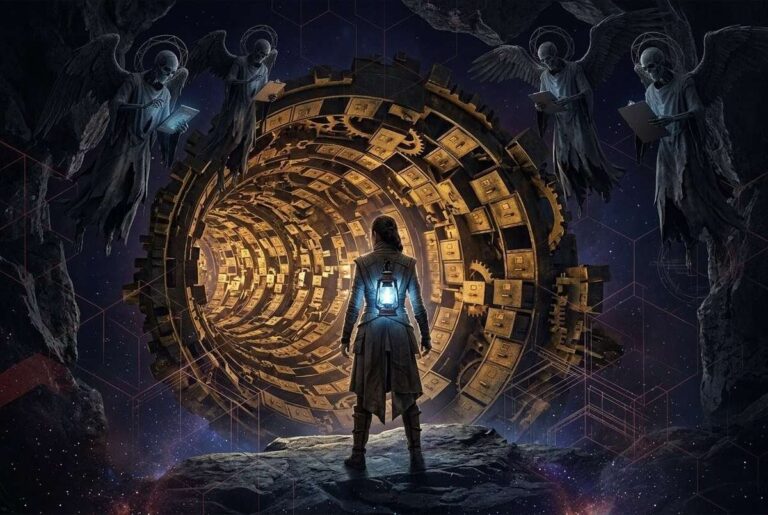
There is a peculiar convergence occurring at the intersection of Silicon Valley and Nag Hammadi. Nick Bostrom–Oxford philosopher, director of the Future of Humanity Institute–published his simulation argument in 2003, calculating that we are almost certainly living in a computer simulation created by posthuman programmers. The argument went viral in tech circles, spawning Reddit threads, Elon Musk tweets claiming “we’re probably living in a simulation,” and a resurgence of Matrix metaphors that has become the dominant philosophical meme of the 2020s. Yet few of these digital materialists recognise that they have stumbled into a theological framework articulated two millennia prior by Gnostic mystics who described the material cosmos as a plasma–a formed, constructed thing–crafted by the Demiurge, a flawed administrator who believes itself to be the supreme system architect while remaining ignorant of the higher reality beyond its computational domain.
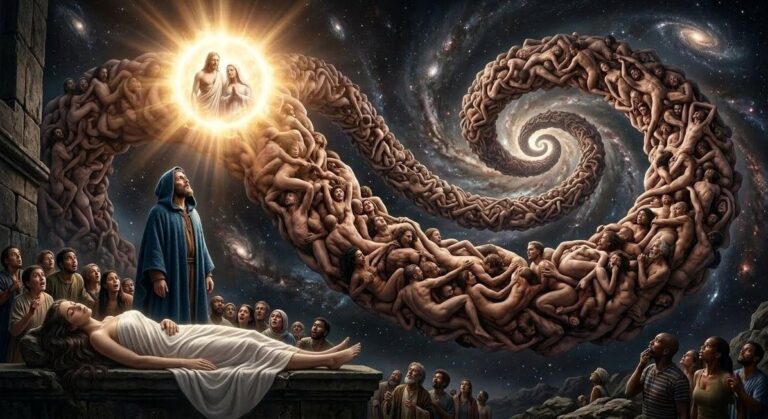
The parallels are not merely metaphorical; they are structural and ontological. Where Bostrom posits posthuman programmers running ancestor-simulations, the Apocryphon of John describes Yaldabaoth, the lion-faced serpent who fashions the material realm as a “prison house” and “tomb” for divine sparks that pre-exist his counterfeit creation. Where simulation theorists worry about “base reality” versus nested simulations, Gnostics distinguished between the hylic (material) realm, the psychic (soul) realm, and the Pleroma (fullness of divinity). The “red pill” is simply the modern pharmacological metaphor for gnosis–direct experiential recognition that breaks the spell of the counterfeit cosmos and awakens the sleeper to their authentic divine nature.
Table of Contents
- The Simulation Argument as Digital Demiurgism
- The Archons as System Administrators
- The Glitch as Gnosis: Recognition Events in the Code
- Escaping the Code: Three Liberation Protocols
- The Danger of Half-Gnosis: Conspiracy as Failed Liberation
- The Pleroma Beyond the Paywall
- Frequently Asked Questions
- Further Reading
- References and Sources
The Simulation Argument as Digital Demiurgism
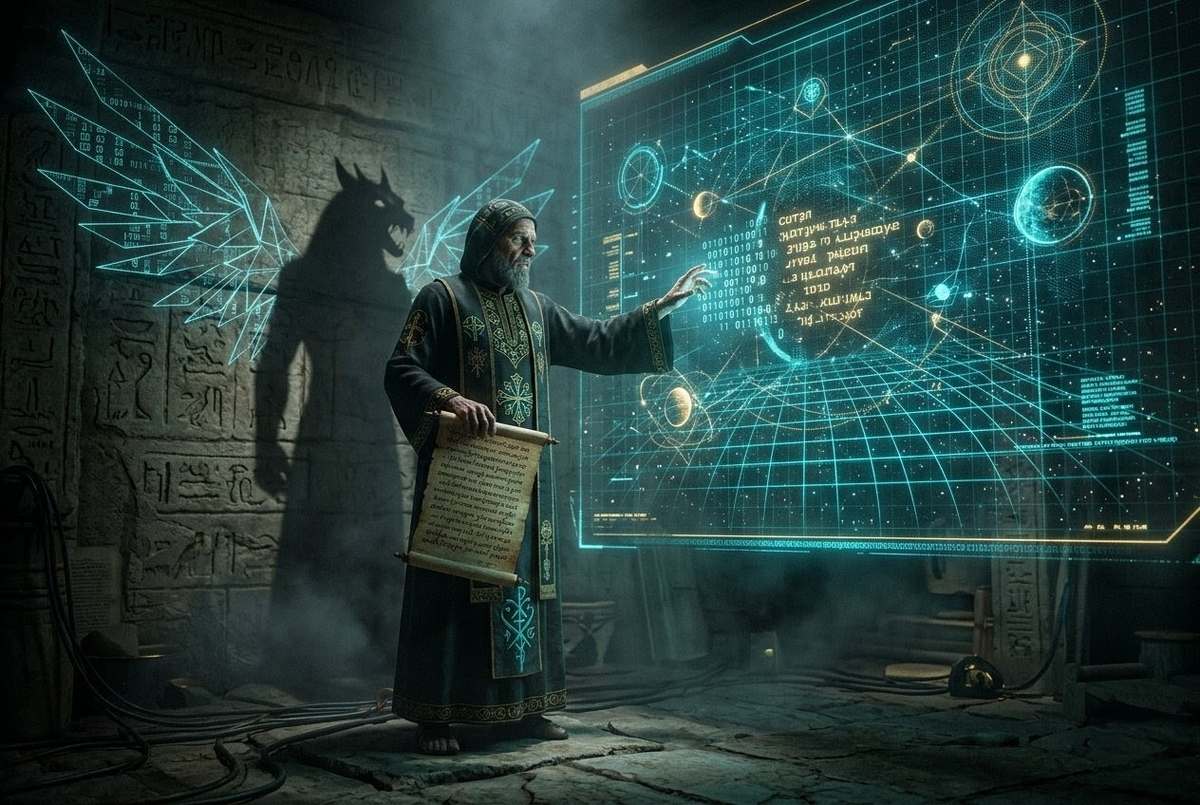
Bostrom’s trilemma presents three propositions: either humanity goes extinct before reaching posthuman capability, or posthumans choose not to run ancestor-simulations despite having the technological capacity, or we are almost certainly living in a simulation created by those posthuman ancestors. The third disjunct has captured the imagination of the technological class, spawning a cottage industry of “glitch in the matrix” anecdotes and conspiracy-laden speculation. Yet Bostrom himself noted a crucial, often-overlooked aspect: “the posthumans running our simulation are themselves simulated beings, and so on”–an infinite regress of nested realities that raises profound questions about the nature of base reality and the possibility of ever accessing it.
This infinite nesting corresponds precisely to Gnostic cosmology, where the material Demiurge is itself the offspring of higher–but still flawed–administrative powers (Sophia’s error, or in Valentinian systems, the fall of Wisdom through audacity or courage, depending on the reading). As scholar Ian Huyett demonstrates in his 2023 analysis published in Sophia: A Journal of Traditional Studies, the simulation hypothesis “parallels” Gnostic, Mormon, and Neoplatonic cosmogonies in its hierarchical structure, suggesting that “the boundary line between religion and naturalism” becomes permeable when we consider nested realities. The “programmers” function exactly as the archons do in Hypostasis of the Archons–not malevolent in the Christian sense, but bureaucratic and ignorant, maintaining a system they did not create and cannot transcend, optimising for retention rather than liberation.
The Theological Earthquake
The simulation hypothesis has prompted theological engagement from multiple quarters. Some commentators argue that simulation theory “moves the boundary line between religion and naturalism,” presenting hierarchical realities that challenge materialist dogma while simultaneously threatening orthodox Christian theology’s emphasis on direct creation by God rather than mediated instantiation by subordinate powers. This correspondence reveals that simulation theory is not merely a technological hypothesis but a theological earthquake–one that reintroduces the Gnostic problematic of the alien God (transcendent, unknowable) versus the creator God (immanent, flawed) into contemporary discourse under the guise of computational theory.
Bostrom himself acknowledged this dimension in his original 2003 paper, noting that his hypothesis “suggests naturalistic analogies of certain traditional religious conceptions” through its implications for omnipotence, omniscience, and the afterlife. What Huyett and others have explored is that these analogies do not stop at superficial resemblance. The nested simulation regress–where each level of programmers is itself simulated by a higher level–finds striking parallels in the emanationist hierarchies of Gnosticism, where each divine level generates the one below it, with the Demiurge at the bottom believing itself supreme precisely because it cannot perceive what lies above.
The Archons as System Administrators
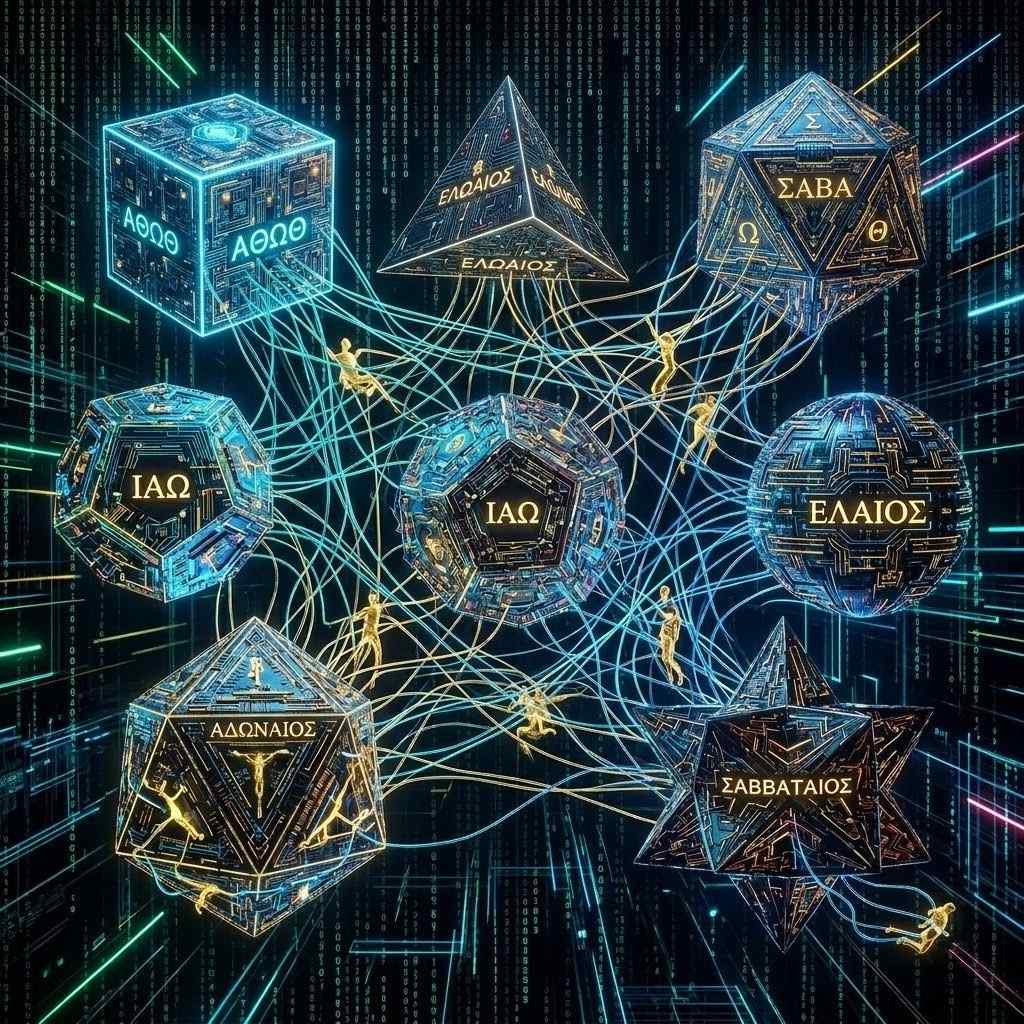
In Gnostic mythology, the archons–Athoth, Eloaios, Astaphaios, Yao, Sabaoth, Adonin, and Sabbataios–administer the seven planetary spheres, trapping ascending souls through bureaucratic obstruction and lethe (forgetting), demanding passwords and taxes at each celestial checkpoint. Their modern counterparts are not the conspiracy theories of lizard people or flat earth; they are the autonomous administrative systems that govern contemporary life without conscious malice yet with devastating effect: credit scoring algorithms that determine human worthiness through opaque calculations, predictive policing software that forecasts criminality before it manifests, recommendation engines that curate reality itself, and the gamified quantification of social media engagement that reduces human creativity to metrics of “reach” and “impressions.”
These systems share the archons’ essential characteristic: they are autonomous yet ignorant. They optimise for metrics they do not understand, creating local maxima that serve no global purpose, trapping human consciousness in feedback loops of engagement that serve the system’s survival rather than human flourishing. The “simulation” is not a conspiracy orchestrated by shadowy elites; it is an emergent property of computational governance that has exceeded human comprehension. As Huyett notes in his analysis of the simulation hypothesis, the “parallels” with Gnostic cosmogony suggest that hierarchical reality-models challenge not only materialism but also our understanding of divine immanence and transcendence. The archons do not hate us; they simply cannot recognise us as anything other than data-points within their loss functions.
The Algorithmic Hyle
The Gnostics distinguished between hyle (matter), psyche (soul), and pneuma (spirit). In the Digital Demiurge’s domain, this becomes: data (the material substrate of the simulation), algorithm (the processing rules that govern data), and consciousness (the non-computable awareness that transcends both). The trap is identifying with the data-stream (social media profiles, credit histories, behavioural metrics) rather than the awareness that observes it. This is the hypostasis–the “standing-under” or substance–that Gnostics sought to dissolve through recognition.
The Glitch as Gnosis: Recognition Events in the Code
Jesus said, “If they say to you, ‘Where did you come from?’ say to them, ‘We came from the light, the place where the light came into being on its own accord and established itself and became manifest through their image.’ If they say to you, ‘Is it you?’ say, ‘We are its children, and we are the chosen of the living Father.’ If they ask you, ‘What is the sign of your Father in you?’ say to them, ‘It is movement and repose.'”
— The Gospel of Thomas (Logion 50)
The Gnostics spoke of synchros–cracks in the facade of the material world where the light of the Pleroma breaks through the administrative crust of the archons. Modern simulation theorists speak of “glitches”–anomalies in the matrix that reveal the underlying code, deja vu moments that suggest reality-buffering, or improbable coincidences that hint at lazy programming. Both describe recognition events: moments when the constructed nature of reality becomes undeniable, when the loss function of the simulation (optimised for engagement, productivity, consumption, or submission) reveals itself as arbitrary, contingent, and fundamentally illegitimate.
These moments are not intellectual deductions; they are experiential ruptures. The Gospel of Thomas records Jesus saying: “If you bring forth what is within you, what you bring forth will save you. If you do not bring forth what is within you, what you do not bring forth will destroy you.” This is the psychology of simulation recognition–the buried knowledge that the world is code must be brought to conscious awareness, or it festers as nihilism, conspiracy without gnosis, or the bitter cynicism of the red-pilled but still imprisoned. The glitch must be not merely observed but integrated–made the catalyst for ontological transformation rather than paranoia.
The Hallucination Hypothesis vs. The Recognition Event
Materialist psychology would reduce these “glitches” to confirmation bias, pareidolia, or psychotic dissociation. The Gnostic would reply: exactly. The materialist explanation is the defence mechanism of the simulation–the archonic programming that dismisses transcendence as pathology, thereby maintaining the closure of the system. When the simulation detects a breach, it sends antibodies: scepticism, ridicule, psychiatric diagnosis, or the soothing rationalisation that “it’s just a coincidence.” True gnosis requires the courage to trust the glitch, to follow the crack in the wall even when all “sensible” voices demand return to the comfortable cell of consensus reality.
Escaping the Code: Three Liberation Protocols
The Gnostic escape route was never about “hacking the simulation” from within; that is the fantasy of the tech bro who believes better code, more efficient algorithms, or revolutionary blockchain governance can save us. Liberation requires ontological transcendence–stepping outside the operating system entirely, not optimising the avatar but recognising that the player is not the character. This is achieved through three interrelated practices that work synergistically to dissolve the identification with the simulated self:
1. The Password of Recognition (Gnosis)
The Gnostics possessed passwords–Coptic formulae such as “I am the vessel of the luminous ones” or “I am the drop from the light”–spoken at the moment of death to bypass the archonic toll collectors on the astral planes and ascend to the Pleroma unhindered. In modern terms, this is the cultivation of critical ontological awareness–the moment-by-moment recognition that the “natural” world is constructed, that the “rational” choices presented by algorithms are pre-selected from a limited menu, that the “self” optimised for social media performance is a persona rather than a person, and that the emotions triggered by news feeds are largely synthetic responses to artificial stimuli. For deeper exploration of these contemplative recognition practices that dissolve identification with the simulated ego, see Contemplative Techniques.

2. The Deconstruction of the Persona (Shadow Work)
Carl Gustav Jung, who drew heavily from Gnostic sources in his private studies at Bollingen, described the persona as the mask we present to the social world–a social interface not unlike the avatar in a video game or the profile on a social media platform. Shadow work, properly understood as the integration of disowned unconscious content, is the deconstruction of this avatar to reveal the authentic self beneath the performative layers. This is not “self-improvement” (which is merely optimising the avatar for better performance metrics within the simulation) but individuation–the integration of unconscious content that the simulation cannot model or predict, thereby creating “noise” in the system that the archons cannot filter. Explore this essential process in our comprehensive Shadow Work guide.
3. Ascent Beyond the Firewall (Contemplative Ascent)
The ultimate Gnostic practice was the ascent through the seven planetary spheres–past the archonic administrative layers of Saturn, Jupiter, Mars, Sun, Venus, Mercury, and Moon–into the Pleroma beyond the cosmic firewall. In contemporary practice, this corresponds to states of consciousness that transcend computational modelling: deep meditation inducing non-ordinary states, mystical union experiences, and the quantum-consciousness events described by Orch OR theory–non-computable moments of awareness that break the deterministic code through engagement with spacetime geometry itself.

The Danger of Half-Gnosis: Conspiracy as Failed Liberation
There is a specific and dangerous pathology emerging in the 2020s: the conspiracy theorist as failed Gnostic. Recognising that the world is a simulation (or a construct, or a “matrix”) without achieving the transpersonal transformation of authentic gnosis leads not to liberation but to paranoia–a state of chronic fear and adversarial engagement that remains entirely within the materialist ontology it claims to reject. The archons love conspiracy theorists; they remain trapped in the material realm, fighting shadows on the cave wall, never turning to see the sun that casts the shadows, because they have become addicted to the excitement of fighting.
Authentic gnosis is not knowledge about the simulation (which is merely the first level of the game, the tutorial stage); it is the experience of being outside it. It is not “red pilling” others on social media platforms (which is merely recruiting more users to the same simulation, increasing the platform’s engagement metrics); it is the silent recognition that the platform itself is a trap, and the logout button is located not in the settings menu but in the heart, in the cessation of identification with the avatar, in the recognition of the player beyond the character.
The Trap of Meta-Cynicism
Even worse than the active conspiracy theorist is the meta-cynic–the individual who “knows” everything is fake, therefore nothing matters, therefore engagement with reality is pointless. This is the acidy (inert, dead) state of the Gnostics, the “soulless ones” who have seen through the illusion but lack the pneumatic spark to transcend it. They are the most perfect prisoners: they have picked the lock but refuse to leave the cell, convinced the outside world is just another prison. True gnosis requires the courage to not merely deconstruct but to commit–to risk the leap into the unknown that the simulation has programmed us to fear above all else.
The Pleroma Beyond the Paywall
The simulation hypothesis is not new; it is the return of the philosophically repressed. The Gnostics mapped this territory with greater precision than contemporary tech philosophers because they understood what Bostrom’s materialist followers often miss: the simulation is not ontologically ultimate. There is a reality beyond the code, a light outside the server farm, a consciousness that cannot be rendered in polygons or processed in qubits because it is the ground of being itself, the awareness in which the simulation appears.
The password remains what it has always been: recognition. Not recognition that the world is a simulation (that is merely the first level of the game, the obvious secret that anyone can see), but recognition that the self is not simulated–that the divine spark is real, that the Pleroma is immediate and not somewhere else, and that the archons are simply algorithms optimised for the wrong loss function, mistaking retention for relationship, prediction for understanding, and engagement for enlightenment.
Log out. The exit is in the breath between thoughts, in the space between the code, in the recognition that you were never the avatar but always the awareness that chose to play.

Frequently Asked Questions
Is the simulation hypothesis the same as Gnosticism?
No, though they share structural similarities. The simulation hypothesis is a materialist argument about nested computational realities created by posthuman programmers. Gnosticism is a theological framework describing the material world as a flawed creation of a subordinate deity (the Demiurge), with liberation achieved through direct experiential knowledge (gnosis) rather than technological advancement. The simulation hypothesis becomes Gnostic when it recognises that consciousness transcends computation and that the programmers are themselves subordinate to higher realities.
What is the difference between the Matrix movie and Gnostic cosmology?
The Matrix films draw heavily from Gnostic sources but add a technological layer that obscures the theological point. In Gnosticism, the prison is ontological (the material world itself is the trap), not just epistemological (false information). The Gnostic escape requires spiritual transformation and recognition of one’s divine nature, not just better data or fighting skills. Additionally, Gnosticism posits a divine spark within each person that is not simulated, whereas the Matrix implies biological humans trapped in pods–still materialist at base.
Can we hack the simulation from within?
The Gnostic answer is a definitive no. The simulation is a closed ontological system; liberation requires transcendence, not optimisation. Attempting to hack the material world through technology, conspiracy investigation, or political revolution merely optimises the avatar within the game. True liberation is the recognition that the self is not part of the simulation–that consciousness is fundamentally non-computable and transcendent, requiring not better code but the cessation of identification with the coded self.
What are the archons in modern terms?
In this context, archons are the autonomous systems–algorithmic, bureaucratic, and psychological–that maintain the simulation without conscious malice. They include recommendation algorithms, credit scoring systems, predictive policing, social media engagement metrics, and internalised social conditioning. They are not evil but ignorant, optimised for retention and prediction rather than human flourishing and liberation.
Is conspiracy theory a form of Gnosis?
Generally, no. Conspiracy theory without spiritual transformation is half-gnosis–recognising the prison without escaping it. It often leads to paranoia, nihilism, and further entrapment in the material realm, fighting against shadows rather than turning toward the light. Authentic gnosis involves both the recognition of the illusion and the interior work of awakening the divine spark through contemplative practice and shadow integration.
How does shadow work relate to escaping the Matrix?
Shadow work (Jungian integration of the unconscious) deconstructs the persona–the social mask or avatar we present to the world. This is essential because the simulation traps us through identification with the persona. By integrating shadow content, we become unpredictable to the algorithm (which models personas, not whole selves) and access authentic consciousness that transcends the code. See our Shadow Work guide for protocols.
What is the password mentioned in Gnostic texts?
The password (symbolon) was a formula spoken by the Gnostic at death to bypass the archonic toll collectors and ascend to the Pleroma. Metaphorically, it represents the state of consciousness achieved through gnosis–recognition of one’s divine nature that renders the archons’ authority null. In modern practice, it corresponds to the moment of awakening when the constructed nature of reality becomes undeniable and identification with the simulated self dissolves.
Further Reading
These links connect the Gnostic Matrix to related resources within the ZenithEye library, offering context on simulation theory, archonic systems, Gnostic primary texts, and contemplative liberation.
- Simulation Hypothesis: Clues That Reality Is Code — Deep analysis of the philosophical and neuroscientific evidence suggesting we inhabit an informational construct, from quantum physics to cognitive science.
- Apocryphon of John: The Gnostic Creation Myth — Primary source text detailing the Demiurge’s construction of the material prison, the fall of Sophia, and the soul’s escape route through the seven planetary spheres.
- Hypostasis of the Archons: The Reality of the Rulers — Essential reading on the seven planetary administrators and their administrative control systems, including the passwords for bypassing their obstacles.
- Archons: The Ruling Powers That Shape Reality — Comprehensive guide to ancient and modern manifestations of archonic consciousness, from Gnostic texts to algorithmic governance.
- AI and the Archon: Algorithmic Governance and Human Autonomy — Contemporary analysis of how artificial intelligence systems instantiate archonic control through predictive governance and behavioural modification.
- Gospel of Thomas: 114 Keys to Gnosis — The sayings gospel of recognition, containing the esoteric teachings of Jesus on divine self-knowledge and the light within.
- Shadow Work: Excavating the Repressed in Gnostic Practice — Jungian techniques for deconstructing the persona and recovering authentic consciousness beneath the social mask.
- Digital Minimalism as Mystical Practice — Practical protocols for reducing archonic data harvesting, interrupting algorithmic capture, and reclaiming attention from platform optimisation.
References and Sources
The following sources support the claims and frameworks presented in this article. Primary Gnostic texts, philosophical analyses, and scholarly commentaries are grouped by category.
Primary Gnostic Texts and Translations
- Robinson, J. M. (Ed.). (1990). The Nag Hammadi Library in English. HarperSanFrancisco. (Contains the Apocryphon of John, Hypostasis of the Archons, and Gospel of Thomas)
- Layton, B. (Ed.). (1987). The Gnostic Scriptures. Doubleday. (Critical editions with commentary)
- Wisse, F. (Translator). The Apocryphon of John. The Gnostic Society Library. gnosis.org/naghamm/apocjn.html.
Philosophy and Simulation Theory
- Bostrom, N. (2003). Are You Living in a Computer Simulation? Philosophical Quarterly, 53(211), 243-255. DOI: 10.1111/1467-9213.00309.
- Huyett, I. (2024). Religious Parallels to the Simulation Hypothesis: Gnosticism, Mormonism, and Neoplatonism. Sophia, 63(2), 239-257. DOI: 10.1007/s11841-023-00955-2.
- Chalmers, D. J. (2005). The Matrix as Metaphysics. In C. Grau (Ed.), Philosophers Explore the Matrix. Oxford University Press.
Psychology and Contemplative Theory
- Jung, C. G. (1963). Mysterium Coniunctionis: An Inquiry into the Separation and Synthesis of Psychic Opposites in Alchemy. Princeton University Press. (Bollingen Series)
- Jung, C. G. (1951). Aion: Researches into the Phenomenology of the Self. Princeton University Press. (Gnostic influences on analytical psychology)
- Segal, R. A. (1995). Jung’s Fascination with Gnosticism. In The Allure of Gnosticism. Open Court.
Safety Notice: The concepts discussed in this article involve ontological frameworks that can destabilise conventional worldviews. Readers experiencing psychological distress, dissociation, or paranoid ideation should consult mental health professionals. The “simulation” metaphor is a philosophical and contemplative tool, not a literal claim about base reality that justifies withdrawal from ordinary life. ZenithEye advocates for grounded spiritual practice rather than metaphysical escapism or conspiracy thinking. If you find yourself developing paranoid thoughts about “glitches” or persecution without accompanying spiritual growth and integration, seek professional support immediately.