
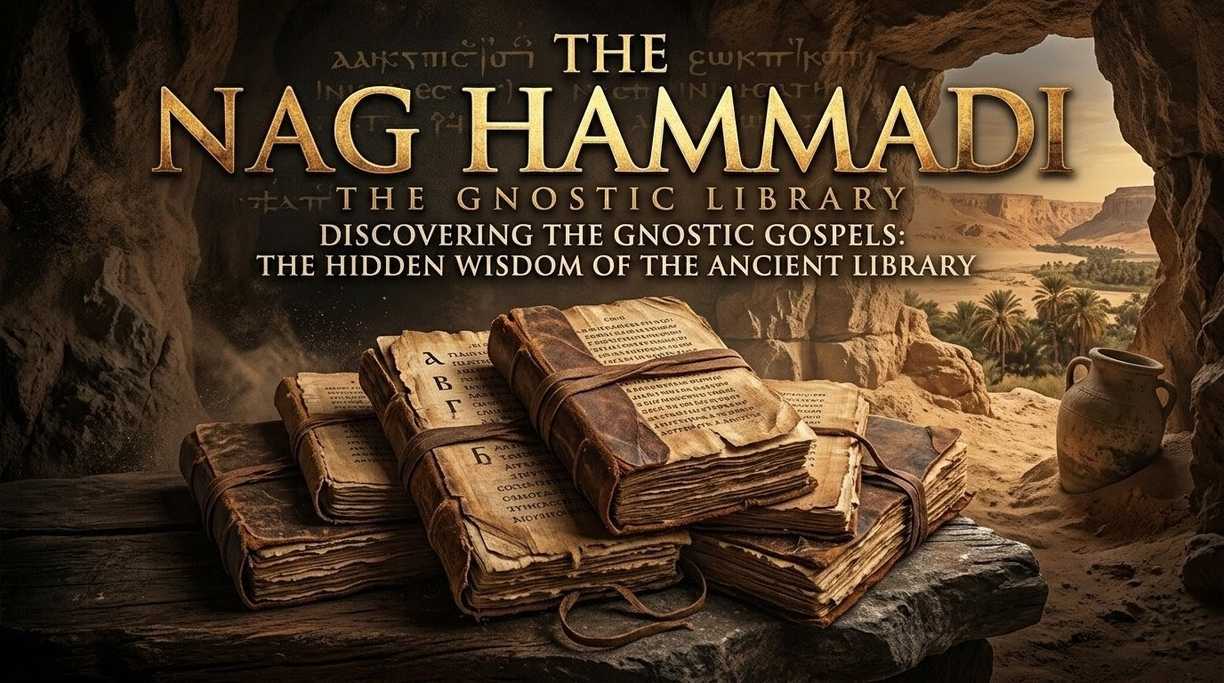
The Authoritative Teaching: The Soul’s Descent and Return to Light
The Authoritative Teaching (NHC VI,3)–also known as the Authentikos Logos or Authoritative Discourse–stands as one of the most psychologically penetrating texts in the Nag Hammadi Library. Occupying pages 22 through 35 of Codex VI, this first-person allegory narrates the soul’s descent from the “seed of the Father” into material captivity and her subsequent liberation through recognition, repentance, and ascent [1]. Unlike the elaborate aeonic genealogies of Sethian cosmogony or the technical metaphysics of Platonising treatises, the Authoritative Teaching presents a deeply personal narrative of spiritual exile and return, employing the metaphor of a noblewoman stripped of her garments and enslaved in a foreign land [7].
For scholars of early Christianity, the text offers a crucial case study in classification: it lacks the typical Gnostic cosmogony (no demiurge, no fallen Sophia) yet emphasises the evil of the material world, the divine origin of the soul, and salvation through revealed knowledge [8]. For the contemporary reader, it provides a stark allegory of identity loss and recovery–the bureaucratic nightmare of discovering one has been living under false jurisdiction, and the arduous process of reclaiming one’s true citizenship papers [10]. This article examines the codicological context, the descent narrative, the conditions of captivity, the awakening through recognition, the contested ascent, and the enduring scholarly debates about the text’s theological affiliation.
Table of Contents
- What Is the Authoritative Teaching?
- The Manuscript and Its Context
- The Soul’s Descent into Egypt
- Captivity in the Foreign Land
- The Awakening: Recognition and Repentance
- The Ascent: Contested Return
- Theological Context and Classification
- Why the Authoritative Teaching Matters
- Frequently Asked Questions
- Further Reading
- References and Sources

What Is the Authoritative Teaching?
What is the Authoritative Teaching in the Nag Hammadi Library?
The Authoritative Teaching (NHC VI,3) is a first-person allegorical treatise from the Nag Hammadi Library, preserved in fourth-century CE Coptic translation. Composed originally in Greek (likely second or third century), it narrates the soul’s descent from the “seed of the Father” into material captivity (“Egypt”) and her subsequent liberation through recognition, repentance, and ascent past adversarial powers. The text employs the metaphor of a noblewoman stripped of her garments and enslaved, emphasising psychological transformation–forgetting and remembering one’s true identity–rather than elaborate cosmic mythology. Sharing features with both Sethian and Valentinian traditions yet resisting easy classification, it likely served as catechetical preparation for baptismal initiation [1][7].
The text takes its conventional title from the opening lines, which present the discourse as authoritative instruction for those seeking liberation from material bondage. The Coptic Authentikos Logos means “authentic” or “authoritative” discourse–a claim to revealed truth that bypasses human opinion and derives directly from the divine source [1]. The manuscript itself, written in Sahidic Coptic with occasional Greek loanwords, dates to the fourth century CE, though the Greek original likely circulated in Alexandria or Egypt during the late second or early third century [7].
The most significant damage to the manuscript affects the opening lines on pages 22-28, where the soul’s pre-exilic condition and initial descent are partially obscured [1]. Nevertheless, the remaining pages preserve a coherent narrative: the soul established in the Father’s seed, her gradual enticement by material pleasures, her enslavement in the foreign land, her awakening through the bridegroom’s intervention, and her final ascent clothed in bridal garments [8]. This narrative arc distinguishes the Authoritative Teaching from the mythological frameworks of the Apocryphon of John (NHC II,1) or the Hypostasis of the Archons (NHC II,4), offering instead a psychological allegory that anticipates later Christian mystical literature [10].
Primary Source Citation: NHC VI,3 22:1-10 (reconstructed opening). “I was established in the seed of the Father… before I had come forth from the place of rest.” Translation: George W. MacRae, The Nag Hammadi Library in English, ed. James M. Robinson, 4th rev. ed. (Leiden: Brill, 1996).
The Manuscript and Its Context
Codex VI: The Hermetic and Philosophical Compendium
The Authoritative Teaching occupies the third position in Codex VI, a manuscript that functions as a philosophical dossier rather than a sectarian manifesto [6]. Preceding it are the Acts of Peter and the Twelve Apostles (VI,1) and Thunder: Perfect Mind (VI,2); following it are the Concept of Our Great Power (VI,4), a fragment of Plato’s Republic (VI,5), the Discourse on the Eighth and the Ninth (VI,6), the Prayer of Thanksgiving (VI,7), and the Asclepius (VI,8) [6]. This curatorial arrangement suggests that the ancient compiler understood the Authoritative Teaching as participating in a shared discourse about the soul’s condition and its relationship to divine truth–a discourse that included apostolic romance, divine paradox, metaphysical abstraction, and Hermetic philosophy [9].
The presence of the Authoritative Teaching alongside explicitly Hermetic materials raises important questions about its theological milieu. While the text employs archontic imagery and ascent narrative typical of Gnostic soteriology, its absence of elaborate cosmogony and its emphasis on ethical transformation align it with the practical spirituality of the Teachings of Silvanus (NHC VII,4) and the Exegesis on the Soul (NHC II,6) [10]. The codex thus reveals a community interested not merely in speculative cosmology but in the lived experience of spiritual liberation–the practical question of how the soul, having fallen into materiality, finds its way home [14].
Classification Challenges
The text resists modern taxonomic efficiency with an obstinacy that would frustrate any archival administrator. George W. MacRae, its English translator, argued that the Authoritative Teaching is Gnostic because of its emphasis on the evil of the material world, the divine origin of the soul, and salvation through revealed knowledge–yet he conceded that it lacks the self-assurance of unquestionably Gnostic treatises [8]. Ulla Tervahauta, in the first monograph devoted to the text, classifies it as “Platonic Early Christianity,” arguing that its author was familiar with both New Testament and Gnostic literature but chose to produce a Christian homily [7]. Roelof van den Broek analyses its Platonic terminology and suggests an Alexandrian provenance in the mid-third century, possibly contemporary with Porphyry [9].
Madeleine Scopello defends a Gnostic reading, focusing on the soul as a feminine figure who moves from prostitution to bridal union–a narrative she interprets as the “Gnostic myth of the soul” [7]. Yet this interpretation has been criticised for ignoring the text’s Christian allusions and its parallels with Origen’s concept of the soul’s fall [7]. The scholarly deadlock suggests that the Authoritative Teaching belongs to the borderlands of early Christian literature–a text that modern categories of “Gnostic,” “Christian,” and “Platonic” cannot adequately capture [14].
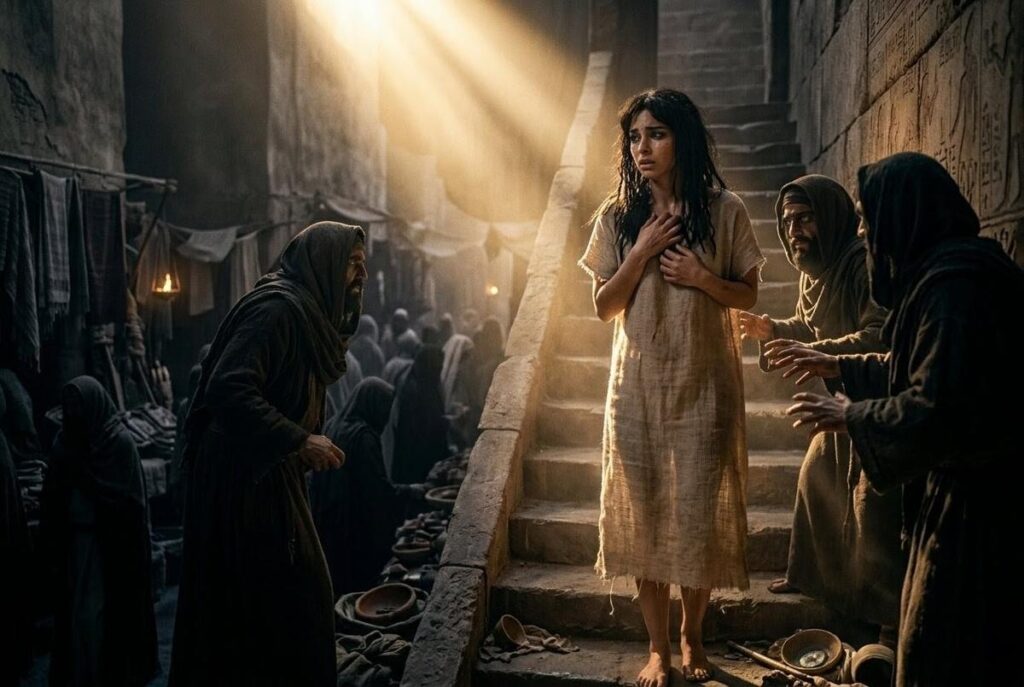
Primary Source Citation: NHC VI,3 25:15-20. “That one then will fall into drinking much wine in debauchery. For wine is the debaucher. Therefore she does not remember her brothers and her father, for pleasure and sweet profits deceive her.” Translation: George W. MacRae, The Nag Hammadi Library in English.
The Soul’s Descent into Egypt
The narrative opens with the soul dwelling in privileged circumstances, “established in the seed of the Father” [1]. This initial posting represents not fully realised divinity but potentiality–the soul possesses the “aroma” or fragrance of the Pleroma but not yet its full diplomatic immunity. The text describes a community of spiritual kinship: the soul has “brothers” and a “Father” who constitute her true family, establishing an administrative identity that renders her invisible to hostile forces [8].
Enticement and Capture
The descent occurs through a series of unfortunate administrative decisions. The adversary “spies on us, lying in wait for us like a fisherman, wishing to seize us” [1]. He places many foods before the soul’s eyes–tunics, money, pride, vanity, envy, beauty of body, and ignorance–wishing to make her desire one of them and taste just a little, so that he may seize her with hidden poison and bring her out of freedom into slavery [1]. The text describes this as being “made drunk” by wine and debauchery–a state of cognitive impairment where the victim loses the ability to read her own identification papers.
The “garments” stripped from her represent her spiritual protections–the bureaucratic credentials that rendered her invisible to hostile forces. Without these, she becomes visible to the adversarial authorities, subject to their jurisdiction, and vulnerable to their administrative demands. The text emphasises that this is gradual accommodation rather than sudden catastrophe: the soul descends through a series of small compromises, each seeming reasonable until she finds herself in full captivity, having “left modesty behind” and forgotten her brothers and her father [1].
Distinction from the Sophia Myth
This descent narrative differs crucially from the Sophia myth found in other Nag Hammadi texts such as the Apocryphon of John (NHC II,1) [5]. Here, the soul is not a divine hypostasis–the personification of Wisdom herself–but an individual spiritual essence. Her fall is not cosmic tragedy affecting the structure of reality, but personal misadventure resulting from curiosity, desire, and poor boundary maintenance [7]. Where Sophia’s fall generates the material universe as a botched construction project, the soul’s fall is simply a case of wandering into the wrong neighbourhood and getting ensnared by the adversary’s fishing hook [1].
This psychological focus distinguishes the Authoritative Teaching from the metaphysical heavy lifting of Sethian cosmogony. The text offers a user’s manual for the soul rather than a blueprint of the universe–a focus on lived experience of captivity and liberation rather than theoretical knowledge of aeonic emanations [10]. The soul is not a cosmic actor but a traveller who has lost her passport in hostile territory, and the text serves as both warning and guide for those who might follow her path [14].
Captivity in the Foreign Land
Once descended, the soul finds herself in “Egypt”–the traditional designation for material existence, here imagined as a particularly corrupt administrative zone with lax labour laws and aggressive immigration enforcement [1]. The text describes her condition in terms that would alarm any human rights observer: she dwells in a “house of poverty,” struck by matter at her eyes, wishing to make her blind. She becomes a “brother” to lust and hatred and envy, and a material soul [1].
The Conditions of Servitude
The deepest tragedy is cognitive: she has forgotten her former existence and come to believe that the foreign land is her native country. This is the adversary’s most effective tactic–not physical restraint, but identity erasure. The soul no longer remembers her brothers and her father; she accepts the jurisdiction of authorities who have no legitimate claim over her [1]. She “conducts herself in uncleanness, pursuing many desires, covetousnesses, while fleshly pleasure draws her in ignorance” [1]. This is Gnosticism as administrative horror: the fear that one has been living under the wrong jurisdiction one’s entire life, filing the wrong tax returns and applying for the wrong permits.
The text employs a striking commercial metaphor: the “dealers in bodies” who shaped the soul’s material form sit down and weep because they were not able to do any business with her invisible spiritual body [1]. They thought they were her shepherds who fed her, but they did not realise that she knows another way, hidden from them–a route to liberation that her true shepherd taught her in knowledge [1]. This economic imagery reveals the text’s assessment of material existence as a marketplace where souls are trafficked, and where the true currency is knowledge of one’s origin.
The Indestructible Spark
Yet even in this compromised position, the text insists the soul retains a “spark” of the divine–described as a recollection or fragrance of the Pleroma that cannot be extinguished by adversarial dampening systems [1]. This spark functions as an internal homing device, a residual memory of citizenship that persists even when all external documentation has been confiscated. It serves as the ground for eventual liberation, the basis for hope even in the depths of bureaucratic forgetfulness [8].
The text describes the soul’s hidden strength with paradoxical imagery: “Our hearts are set on the things that exist, though we are ill (and) feeble (and) in pain. But there is a great strength hidden within us” [1]. This strength is not muscular power but ontological resilience–the soul’s capacity to survive material captivity because she belongs to a realm that matter cannot touch. Like a diplomat imprisoned without her papers, she retains her citizenship even when her passport has been stolen; the truth of her identity depends not on documents but on origin [14].
The Awakening: Recognition and Repentance
The turning point occurs when the soul “comes to herself”–an echo of the prodigal son’s realisation in Luke 15:17, though the Authoritative Teaching develops this recognition through its own distinctive imagery [7]. The soul who has tasted the sweet passions “realized that sweet passions are transitory. She had learned about evil; she went away from them and she entered into a new conduct” [1]. This awakening is not self-generated but results from external intervention: the bridegroom secretly fetches the word and applies it to her eyes as a medicine to make her see with her mind and perceive her kinsmen and learn about her root [1].
Prevenient Grace and Bureaucratic Intervention
This “word” functions as the Gnostic equivalent of prevenient grace–the soul cannot initiate her own rescue; she requires diplomatic intervention from the home office to break the spell of false identification [8]. Yet she must respond to the call. “Repentance” (metanoia)–literally “changing one’s mind”–is the necessary condition for return. This is not merely sorrow for past errors but a complete reorientation of consciousness, the recognition that one has been living a lie under false pretences [10].
The text describes the soul’s new conduct with ascetic precision: she despises this life because it is transitory, looks for foods that will take her into life, and leaves behind deceitful foods [1]. She learns about her light, stripping off this world while her true garment clothes her within [1]. This transformation is not achieved through philosophical speculation alone but through a practical change in behaviour–the soul must reject the foods of the adversary and seek the nourishment that leads to life, even when this means enduring hunger and thirst in the present [1].
Ritual Transformation: Stripping and Clothing
The text describes the soul’s response in ritual terms: she strips off the garments of the foreign land (the contaminated clothing of material identity) and puts on her former glory. Her “bridal clothing is placed upon her in beauty of mind, not in pride of flesh” [1]. This clothing metaphor suggests strong connections to baptismal practices–the initiate descends into water as a foreigner (material person) and rises as a child of light, having shed the soiled uniform of captivity [10].
The Authoritative Teaching likely served as preparation for such initiation, explaining to catechumens the spiritual transformation they were about to undergo [7]. The text functions as a travel advisory for those planning to defect from adversarial jurisdiction: expect identity confusion, remember your original citizenship, and ensure your paperwork is in order before attempting the border crossing. The bridal garment is not merely clothing but the uniform of restored dignity–the official attire of one who has regained her place in the executive headquarters [14].
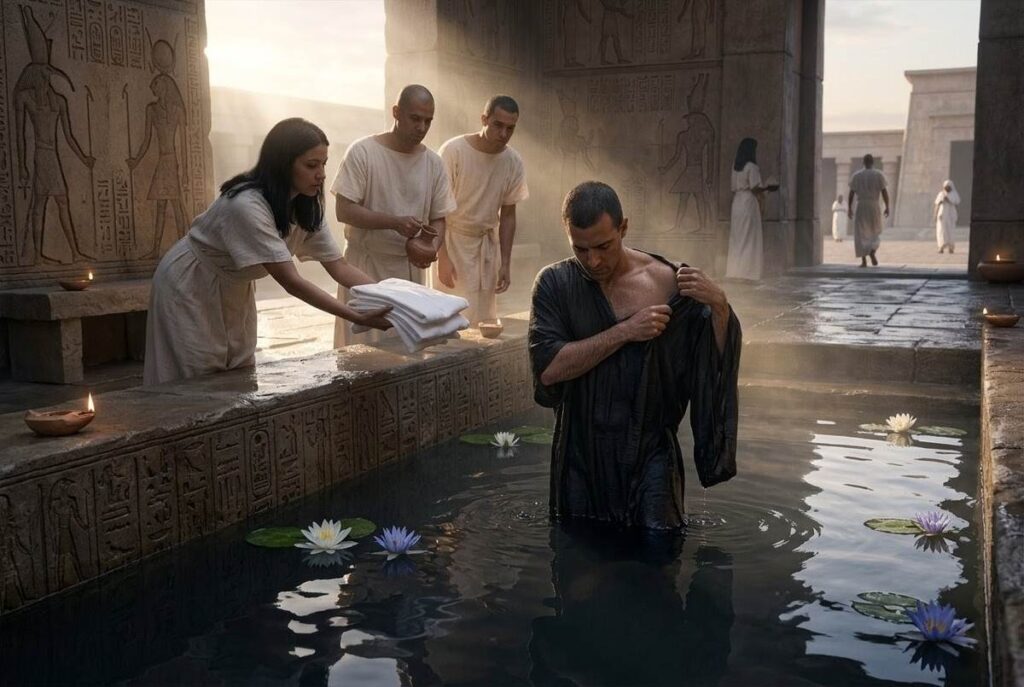
Primary Source Citation: NHC VI,3 32:25-33:5. “She learns about her light, as she goes about stripping off this world, while her true garment clothes her within, (and) her bridal clothing is placed upon her in beauty of mind, not in pride of flesh.” Translation: George W. MacRae, The Nag Hammadi Library in English.
The Ascent: Contested Return
The soul’s return is not unopposed. The adversary, realising that his captive is escaping custody, lies in wait “like a fisherman, wishing to seize us, rejoicing that he might swallow us” [1]. The ascent requires navigation through a great contest where adversaries contend against the soul, attempting to detain her in the worlds that are in the heavens where universal death exists [1].
The Contest with Adversaries
The text preserves the language of athletic contest–the soul is a “contestant” in a great competition brought about by the Father, who wished to reveal his wealth and glory by making the contestants appear and leave behind the things that had come into being [1]. The adversaries are described as “ignorant” and “sons of the devil” who do not seek after God and who persecute those who ask about salvation [1]. When the soul refuses to stop asking, they kill her by their cruelty, thinking they have done a good thing [1].
When challenged by these hostile officials, the soul declares her true lineage: “We have already known the Inscrutable One from whom we have come forth” [1]. Such affirmations function both as magical protection (the verbal equivalent of a passport stamp) and as identity claims that render the soul impervious to adversarial accusation. The text suggests that knowing who you are–maintaining accurate documentation of your divine citizenship–is the primary defence against bureaucratic detention [8]. The soul looks toward her dwelling-place, “the place which our conduct and our conscience look toward, not clinging to the things which have come into being, but withdrawing from them” [1].
The Bridal Chamber Reception
The ascent culminates in reunion with the “bridal chamber” or bridal bed–terminology suggesting that the soul’s return is understood as nuptial union with the divine [1]. The bridegroom who secretly applied the word to her eyes as medicine now receives her in glory: “In return for all the shame and scorn, then, that she received in this world, she receives ten thousand times the grace and glory” [1]. This Valentinian-sounding language in a text otherwise showing Sethian influences demonstrates the fluid boundaries between traditions in the Nag Hammadi library [13].
The soul is not merely returning home; she is entering into marriage with the divine realm, achieving through union what she had lost through wandering [7]. The bridal clothing placed upon her in beauty of mind represents not merely restoration but transformation–the soul returns not as she left, but clothed in the glory of recognition, her mind beautified by the knowledge she has gained through exile [10]. This is not the same soul who descended; she has been educated by suffering, refined by contest, and prepared for union through the very trials that sought to destroy her [14].

Primary Source Citation: NHC VI,3 33:20-25. “In return for all the shame and scorn, then, that she received in this world, she receives ten thousand times the grace and glory.” Translation: George W. MacRae, The Nag Hammadi Library in English.
Theological Context and Classification
The Authoritative Teaching resists filing in any single theological cabinet. Its presence in Codex VI–alongside Hermetic philosophical treatises, Platonic excerpts, and Christian apostolic romance–suggests that ancient compilers recognised its affinity with non-sectarian wisdom traditions [9]. Yet its adversarial mythology and ascent narrative align it with Gnostic soteriologies; its bridal chamber terminology echoes Valentinian sacramental theology; and its emphasis on the soul’s pre-existence and fall recalls Platonic psychology [7].
The text’s emphasis on psychological transformation (forgetting and remembering) over cosmological speculation (emanations and aeons) places it closer to the practical spirituality of the Exegesis on the Soul (NHC II,6) than to the metaphysical heavy lifting of the Apocryphon of John [2][5]. It offers a user’s manual for the soul rather than a blueprint of the universe–a focus on lived experience of captivity and liberation rather than theoretical knowledge of cosmic structures [10]. This practical orientation may explain why the text appears in Codex VI rather than among the more systematically theological collections in Codices I or XI [13].
For modern scholars, the classification debate matters less than the text’s demonstration that early Christian spirituality encompassed a wide spectrum of approaches to the soul’s destiny [14]. Whether Gnostic, Platonic, or simply early Christian, the Authoritative Teaching preserves a vision of salvation that is at once deeply personal and cosmically significant–the story of an individual soul whose fall and return mirrors the condition of all who find themselves exiled in material existence [7].
Why the Authoritative Teaching Matters
The Authoritative Teaching matters because it preserves one of the most accessible and psychologically acute narratives in the Nag Hammadi Library. Where the Apocryphon of John requires readers to master complex aeonic genealogies, and the Trimorphic Protennoia demands familiarity with Sethian metaphysics, the Authoritative Teaching presents its theology through the universal language of story–a traveller who loses her way, forgets her identity, and must find the courage to return home [1][10].
For scholars of early Christianity, the text illuminates the fluid boundaries between Gnostic, Platonic, and mainstream Christian traditions in second- and third-century Egypt [9]. Its presence in Codex VI alongside Hermetic and Platonic materials suggests that ancient readers did not maintain the rigid sectarian categories modern scholarship sometimes imposes [14]. The community that preserved this text valued the soul’s journey whether it was narrated by Hermes Trismegistus, the apostle Peter, or an anonymous Christian homilist [10].
Furthermore, the text challenges any simplistic equation of Gnosticism with world-denial or elitism. Its emphasis on ethical transformation, its compassion for the soul’s suffering, and its ultimate message of grace–“ten thousand times the grace and glory” in return for earthly shame–suggest a spirituality concerned not with cosmic escape but with the restoration of right relationship [1]. The Authoritative Teaching reminds us that even in the most bureaucratic of archontic systems, the soul retains an indestructible spark of the divine, and that the bridegroom still applies the word as medicine to eyes blinded by material deception [8].
Frequently Asked Questions
What is the Authoritative Teaching in the Nag Hammadi Library?
The Authoritative Teaching (NHC VI,3), also called Authentikos Logos or Authoritative Discourse, is a first-person allegorical treatise describing the soul’s descent from divine light into material captivity (‘Egypt’) and subsequent liberation. Written as a narrative of a noblewoman stripped of her garments and enslaved, it emphasises psychological transformation–forgetting and remembering one’s true identity–rather than elaborate cosmic mythology.
How does the soul fall into captivity in the Authoritative Teaching?
The soul descends from the ‘seed of the Father’ through enticement by material pleasures and gradual accommodation to sensory existence. The adversary lies in wait like a fisherman, placing foods before her eyes–money, pride, vanity, envy–until she tastes one and is seized by hidden poison. She becomes drunk with debauchery, forgets her brothers and father, and finds herself enslaved in the foreign land.
What does ‘Egypt’ symbolise in the Authoritative Teaching?
Egypt represents material existence as a hostile administrative zone where the soul suffers poverty, blindness, and enslavement. It symbolises the adversary’s jurisdiction where the soul, stripped of her spiritual credentials, forgets her divine origin and becomes a ‘brother’ to lust, hatred, and envy.
How is the soul saved in the Authoritative Teaching?
Salvation occurs through recognition (realising that sweet passions are transitory), repentance (metanoia–a complete change of conduct), and ascent past adversarial powers. The bridegroom applies the word to her eyes as medicine, breaking the spell of forgetfulness. The soul strips off the world and receives bridal clothing in beauty of mind.
What are the ‘garments’ mentioned in the Authoritative Teaching?
The garments represent the soul’s spiritual protections and divine credentials. When stripped of these through descent into materiality, she becomes vulnerable to adversarial capture. Restoration involves stripping off the contaminated garments of the world and being clothed in her true garment within, with bridal clothing placed upon her in beauty of mind.
What is the significance of the ‘bridal chamber’ in the text?
The bridal chamber represents the culmination of the soul’s ascent–nuptial union with the divine realm. The bridegroom who applied the word as medicine to her eyes now receives her in glory, giving her ‘ten thousand times the grace and glory’ in return for earthly shame. This suggests fluid boundaries between Valentinian and other Christian traditions.
Is the Authoritative Teaching Gnostic, Christian, or Platonic?
Scholars debate this vigorously. George MacRae argues it is Gnostic; Ulla Tervahauta classifies it as Platonic Early Christianity; Roelof van den Broek suggests Platonic Christianity from Alexandria; Madeleine Scopello defends a Gnostic reading. The text resists modern categories, suggesting early Christian spirituality encompassed a wide spectrum of approaches.
Further Reading
These links connect the Authoritative Teaching to related resources within the ZenithEye library, offering pathways into soul allegories, baptismal theology, and the broader landscape of Nag Hammadi scholarship.
- The Exegesis on the Soul: An Allegory of Exile and Return — Compare this parallel allegory of the soul’s fall and restoration in a different codex.
- The Apocryphon of John: Gnostic Creation and Salvation — Study the cosmic framework of archontic captivity underlying soul imprisonment.
- The Hypostasis of the Archons: Eve and the Truth of Genesis — Explore archontic powers and the theme of liberation through recognition.
- The Gospel of Mary Magdalene — Compare the soul’s ascent through hostile powers and the triumph over archonic authorities.
- Codex VI: The Hermetic Compendium — Examine the manuscript context of this text alongside Hermetic and philosophical materials.
- The Gospel of Philip — Explore Valentinian bridal chamber (nymphon) theology and sacramental transformation.
- The Concept of Our Great Power — Study another text from Codex VI with distinctive theological perspective.
- Nag Hammadi Library: The Complete Guide — Contextualise the Authoritative Teaching within the full collection of forty-six tractates.
References and Sources
The following sources support the claims and quotations presented in this article. All citations to the Nag Hammadi Library represent direct translations from the Coptic text as established in the standard critical editions.
Primary Sources and Critical Editions
- [1] NHC VI,3: The Authoritative Teaching (Authentikos Logos). Tr. George W. MacRae. In The Nag Hammadi Library in English, ed. James M. Robinson. 4th rev. ed. Leiden: Brill, 1996. Coptic text preserved on pages 22-35 of Codex VI.
- [2] NHC II,6: The Exegesis on the Soul. Tr. William C. Robinson, Jr. In The Nag Hammadi Library in English, ed. James M. Robinson. 4th rev. ed. Leiden: Brill, 1996.
- [3] NHC VI,4: The Concept of Our Great Power. Tr. John D. Turner and Orval S. Wintermute. In The Nag Hammadi Library in English, ed. James M. Robinson. 4th rev. ed. Leiden: Brill, 1996.
- [4] NHC VI,6: The Discourse on the Eighth and the Ninth. Tr. Peter A. Dirkse, James Brashler, and Douglas M. Parrott. In The Nag Hammadi Library in English, ed. James M. Robinson. 4th rev. ed. Leiden: Brill, 1996.
- [5] NHC II,1: The Apocryphon of John. Tr. Michael Waldstein and Frederik Wisse. In The Nag Hammadi Library in English, ed. James M. Robinson. 4th rev. ed. Leiden: Brill, 1996.
Scholarly Monographs and Commentaries
- [6] Robinson, James M., ed. The Nag Hammadi Library in English. 4th rev. ed. Leiden: Brill, 1996.
- [7] Tervahauta, Ulla. A Story of the Soul’s Journey in the Nag Hammadi Library: A Study of Authentikos Logos (NHC VI,3). Wissenschaftliche Untersuchungen zum Neuen Testament 2. Reihe 386. Tubingen: Mohr Siebeck, 2015.
- [8] MacRae, George W. “Authoritative Teaching (NHC VI,3): Translation and Introduction.” In Nag Hammadi Codices V,2-5 and VI with Papyrus Berolinensis 8502,1 and 4, ed. Douglas M. Parrott. Nag Hammadi Studies 11. Leiden: Brill, 1979.
- [9] Van den Broek, Roelof. “The Authentikos Logos: A New Document of Christian Platonism.” Vigiliae Christianae 33 (1979): 260-82.
- [10] Brakke, David. The Gnostics: Myth, Ritual, and Diversity in Early Christianity. Cambridge, MA: Harvard University Press, 2010.
Comparative Studies and Thematic Analyses
- [11] Ménard, Jacques E. L’Authentikos Logos. Bibliotheque copte de Nag Hammadi, Section “Textes” 2. Quebec: Les Presses de l’Universite Laval, 1977.
- [12] Pagels, Elaine. The Gnostic Gospels. New York: Random House, 1979.
- [13] Thomassen, Einar. The Spiritual Seed: The Church of the “Valentinians.” Leiden: Brill, 2006.
- [14] Williams, Michael Allen. Rethinking “Gnosticism”: An Argument for Dismantling a Dubious Category. Princeton: Princeton University Press, 1996.
- [15] King, Karen L. The Secret Revelation of John. Cambridge, MA: Harvard University Press, 2006.