The Three Steles of Seth: Sethian Hymns of Ascent
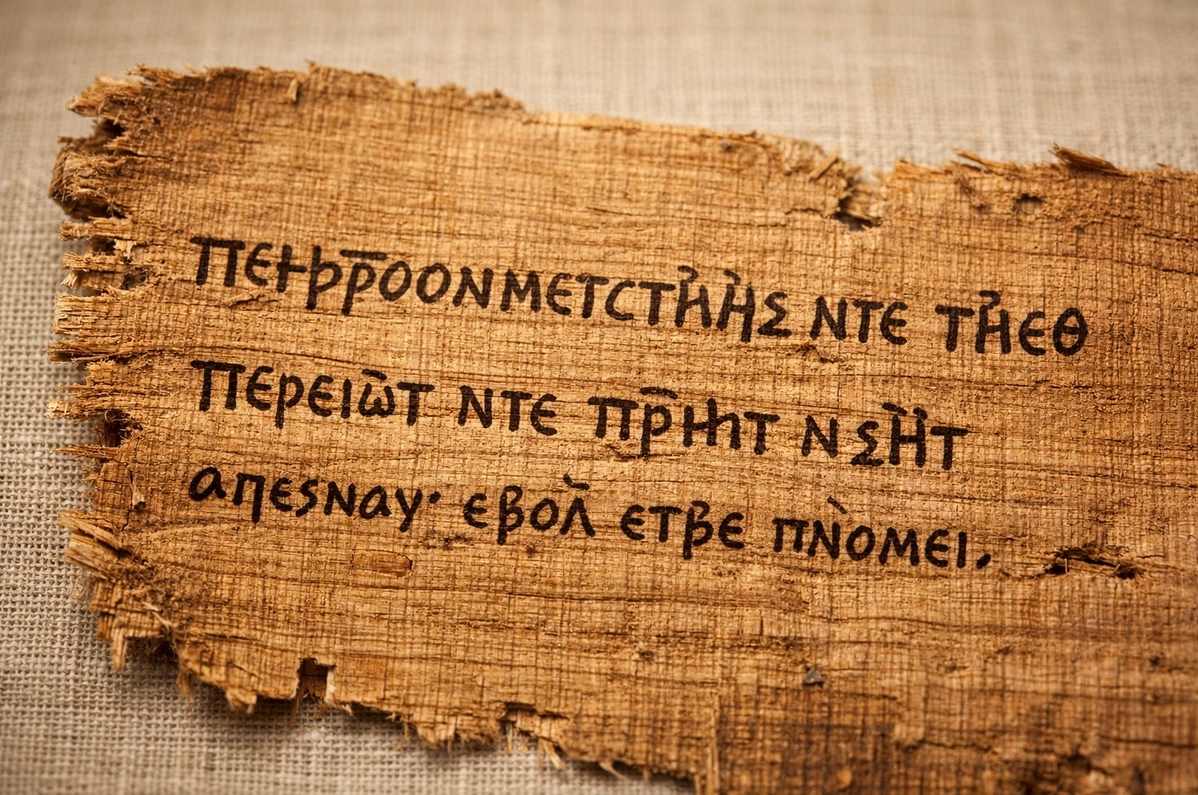
The Three Steles of Seth is one of the most liturgical texts in the Nag Hammadi Library. Preserved as the fifth tractate of Codex VII, it does not unfold as a mythic drama like the Apocryphon of John, nor as a first-person descent hymn like Trimorphic Protennoia. Instead, it gives us three hymns or “steles”, sacred tablets of praise addressed to the divine powers of the Sethian realm.
The text is important because it shows that ancient Gnostic practice was not only speculative cosmology or private mystical knowledge. It could also be communal, hymnic and liturgical. The repeated use of “we” suggests a worshipping group speaking together, identifying itself as the immovable race, the spiritual lineage associated with Seth.
In this way, The Three Steles of Seth turns Sethian cosmology into praise. The Unbegotten, Barbelo, the Autogenes, the great Seth and the Four Luminaries are not only names in a mythic system. They become living presences addressed through ritual speech, recognition and ascent.
What is the Three Steles of Seth?
The Three Steles of Seth is a Sethian Gnostic liturgical text preserved in Nag Hammadi Codex VII. It consists of three hymns or “steles” addressed to divine powers of the Pleroma, including the Unbegotten, Barbelo, the Autogenes, Seth and the Four Luminaries.
The text is especially valuable because it reveals the worshipping voice of a Sethian community. It presents gnosis not only as secret teaching, but as praise, ascent, recognition and shared identity among the immovable race.
Table of Contents
- Text and Codex Setting
- Why the Three Steles of Seth Matters
- The Immovable Race and Sethian Identity
- Seth as Spiritual Progenitor
- First Stele: Praise of the Unbegotten
- Second Stele: The Four Luminaries
- Third Stele: Autogenes, Barbelo and Petition
- Ritual Context and Communal Voice
- Ascent, Recognition and Present Participation
- Comparative Reading: Protennoia, Apocryphon and Ascent Texts
- Reading the Three Steles Today
- Frequently Asked Questions
- Further Reading
- References and Sources
Text and Codex Setting
The Three Steles of Seth is preserved in Nag Hammadi Codex VII as its fifth tractate. Codex VII is a diverse codex, containing texts with Sethian, Christian, apocalyptic and wisdom-related elements. Within that collection, The Three Steles stands out as a liturgical and contemplative work.
The word “stele” refers to an inscribed tablet or monument. In the text, the three steles function as sacred hymns of praise. They are not merely information about divine beings. They are addressed to them. The text therefore moves from theology into worship.
This matters for how we read it. The tractate is not a simple narrative. It is closer to a ritual voice or sacred litany. Its repeated praise, first-person plural language and structured movement suggest communal recitation, contemplative ascent and the formation of Sethian identity through speech.
Codex Note: The Three Steles of Seth belongs to Nag Hammadi Codex VII. Its hymnic form makes it one of the clearest witnesses to Sethian liturgical and contemplative practice in the collection.
Why the Three Steles of Seth Matters
The text matters because it preserves Gnosticism as worship rather than only doctrine. Many readers encounter Gnosticism through mythic accounts of Sophia, Yaldabaoth, archons and the divine spark. The Three Steles shows another layer: a community praising, invoking and identifying itself within the divine realm.
The repeated “we” is crucial. This is not the lonely seeker in a private chamber. The text speaks as a body of worshippers. They praise the divine powers together, recognise their spiritual lineage together and participate together in the ascent of the immovable race.
This complicates the common modern image of Gnosticism as purely individual, anti-communal or only intellectual. The text shows that Sethian Gnostic life could include shared ritual language, sacred memory, communal identity and disciplined praise.
In a wider Nag Hammadi reading path, The Three Steles is a bridge between mythology and practice. The Apocryphon of John gives the mythic structure. Trimorphic Protennoia gives the descending voice of First Thought. The Three Steles gives the ascending voice of the community.
The Immovable Race and Sethian Identity
The text assumes a community that understands itself as the immovable race. In Sethian literature, this phrase refers to the spiritual lineage associated with Seth, the son of Adam who preserves the true seed. The immovable race is not defined by ordinary ancestry alone, but by spiritual origin.
“Immovable” suggests stability, not stubbornness. The spiritual race is immovable because its root is not in the unstable lower world. Its identity is anchored in the Pleroma, the realm of divine fullness, even while its members live within the changing conditions of earthly life.
This is a central Sethian idea. The lower world is marked by flux, ignorance and archonic rule. The spiritual seed belongs to another order. Liturgy becomes the act by which this true belonging is remembered, spoken and ritually affirmed.
The language can sound exclusive to modern ears, and it should be read carefully. Historically, it belongs to a symbolic and communal identity system. Spiritually, it expresses the conviction that something in the human being is not finally ruled by instability, fear or false authority.
Seth as Spiritual Progenitor
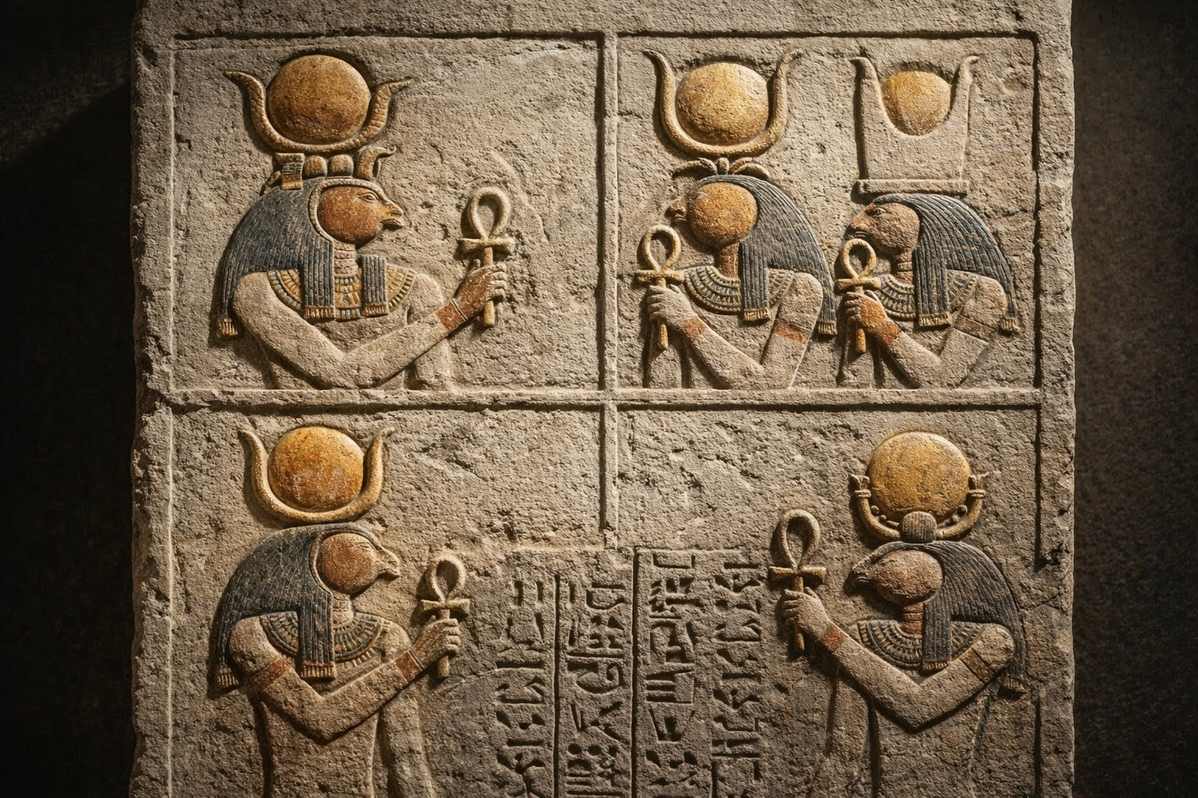
In Sethian mythology, Seth is far more than the third son of Adam and Eve. He becomes the spiritual progenitor of the race that preserves true knowledge. The Sethian community sees itself as descended from, or spiritually aligned with, this higher Seth.
This does not mean Seth is treated merely as a biblical ancestor. He becomes a symbolic figure of continuity: the survival of the true seed after violence, ignorance and corruption. Through Seth, the divine image is not entirely lost in the lower world.
In The Three Steles, praise of Seth links the worshipping community to a sacred lineage. The community does not simply remember Seth from outside. It recognises itself through him. To praise Seth is to remember one’s place in the spiritual genealogy of the immovable race.
Primary Source Theme: The steles praise Adamas, Geradamas and Seth, linking the worshipping community to a divine-human lineage rather than to ordinary biological identity alone.
First Stele: Praise of the Unbegotten
The first stele begins with praise of the Unbegotten, the supreme divine source beyond ordinary origin. This is the highest reality, prior to all aeons, names, forms and visible structures. The hymn speaks through praise, but its theology is deeply apophatic: the divine source exceeds the categories by which lesser beings are known.
The Unbegotten is not simply the first being in a sequence. It is the source before sequence. Everything else derives from it, but it does not derive from anything. To praise the Unbegotten is to orient the community towards the root of reality itself.
The first stele also places the divine-human figures of Adamas, Geradamas and Seth within the order of praise. This movement matters because it links transcendent divinity with the spiritual lineage of the community. The worshippers are not praising a remote abstraction only. They are locating themselves within a chain of divine life.
The mood is one of orientation. The community turns away from the instability of the lower world and faces the source that does not move. The immovable race becomes immovable by remembering the immovable root.
Second Stele: The Four Luminaries
The second stele turns towards the Four Luminaries, the divine powers known in Sethian cosmology as Harmozel, Oroiael, Daveithai and Eleleth. These names also appear in other Sethian texts, including the Apocryphon of John, where they organise regions of the divine realm.
The Luminaries are not decorative angels. They structure the Pleroma as a realm of intelligible light and spiritual placement. Each luminary is associated with a divine region and with the ordering of the spiritual seed.
In the liturgical context of The Three Steles, naming the Luminaries is an act of recognition. The community knows the divine order and addresses it correctly. Knowledge here is not merely conceptual. It is spoken, praised and ritually enacted.
This is one reason the text is valuable for understanding Sethian practice. It shows that cosmological names were not only diagrammed in myth. They were spoken in worship. The map of the Pleroma became a liturgical route.
Primary Source Theme: The Four Luminaries, Harmozel, Oroiael, Daveithai and Eleleth, are praised as divine powers of the Pleroma. Their names mark spiritual orientation within the Sethian map of light.
Third Stele: Autogenes, Barbelo and Petition
The third stele rises towards the Autogenes, the Self-Generated divine figure, and towards Barbelo, the First Thought and luminous feminine principle of Sethian theology. These figures connect the worshipping community to the highest levels of the Pleroma.
Autogenes means self-generated. In Sethian texts, this figure often mediates between the hidden source and the ordered divine realm. Barbelo, as First Thought, is the first manifestation of the Invisible Spirit, the divine womb and mirror through which the hidden source becomes knowable.
The third stele introduces a more petitionary tone. The community does not only praise. It asks to be saved, translated, crowned and established in the divine realm. This is not salvation as moral pardon alone. It is relocation of identity, from the instability of the lower world into the luminous order of the Pleroma.
The final affirmations, including repeated “amen” language, seal the hymn as sacred speech. The community confirms what it has praised and requested. The words are not casual. They are liturgical acts.
Primary Source Theme: The third stele moves from praise into petition: the community asks for salvation, translation into the aeons and the crown of light. Ascent is spoken as worship.
Ritual Context and Communal Voice
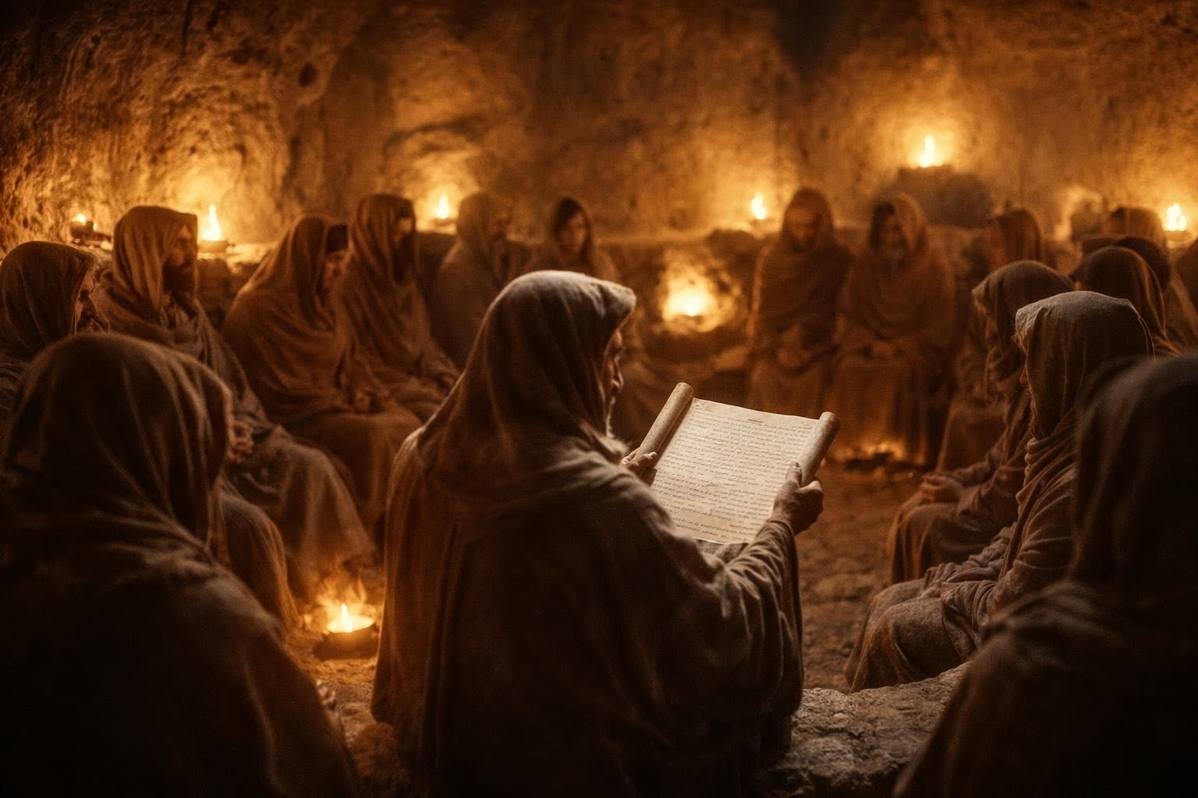
The Three Steles of Seth is best read as liturgy. Its steady first-person plural voice suggests communal recitation. The repeated “we” creates a collective identity: we praise, we know, we ascend, we receive.
This communal voice is important because it challenges the idea that Gnostic spirituality was only private, anti-social or purely intellectual. Here, gnosis is sung together. Spiritual identity is formed through shared speech and ritual memory.
The text also refers to seals and marks, language that connects it with wider Sethian initiation themes, especially the Five Seals. The exact historical ritual behind these references remains debated, but the symbolic pattern is clear: the worshippers are marked as belonging to the divine realm.
In that sense, the steles may have functioned as a verbal component of ascent, initiation or contemplative worship. The community speaks itself into alignment with the divine order it praises.
Ascent, Recognition and Present Participation
One of the striking features of The Three Steles is its sense of present participation. The hymns do not merely hope for future ascent. They speak as though the worshipping community already participates in the divine reality it praises.
This is sometimes described as realised eschatology: the future reality of salvation is experienced in the present through ritual, knowledge and recognition. The community does not only wait to reach the aeons. In liturgical consciousness, it stands before them already.
This does not mean the material world disappears. It means that identity is relocated. The worshippers may still live in ordinary time, but their true belonging is established elsewhere. Their ascent is not only movement through space. It is recognition of spiritual place.
This is why the phrase “immovable race” carries such force. The community is immovable because its deepest identity is not dragged around by the lower world. Through praise, it remembers where it stands.
Reading Note: The steles treat ascent as recognition as much as travel. The community praises the divine realm and, in that praise, participates in the reality it names.
Comparative Reading: Protennoia, Apocryphon and Ascent Texts
The Three Steles of Seth becomes clearer when read alongside other Sethian and Nag Hammadi texts. The Apocryphon of John gives the mythic map of the divine realm, Sophia, Yaldabaoth and the archons. Trimorphic Protennoia gives the descending voice of First Thought. The Three Steles gives the ascending voice of the community.
The text also belongs beside ascent works such as Zostrianos and Allogenes. Those texts explore ascent through divine realms in more extended philosophical and visionary forms. The Three Steles gives the liturgical voice that belongs to such ascent: praise, petition, recognition and sacred naming.
Within Codex VII, its placement is also meaningful. The codex gathers varied texts, including polemical, apocalyptic, wisdom and Sethian material. The Three Steles closes that movement with hymn, as though the final response to myth and revelation is praise.

Reading the Three Steles Today
Read The Three Steles of Seth slowly and aloud if possible. Its meaning is not only in its concepts but in its rhythm. The text belongs to the world of sacred recitation, where repetition and address reshape attention.
Modern readers should not expect plot. There is no Sophia fall narrative, no dramatic Yaldabaoth scene, no extended journey through archonic realms. The action is liturgical. Praise itself is the movement. The community ascends by naming, recognising and aligning itself with the divine order.
Its spiritual value lies in the idea that identity can be re-rooted through sacred attention. The lower world may appear unstable, noisy and fragmented, but the immovable race remembers a deeper place. The steles are a ritual grammar of that remembrance.
For the wider Nag Hammadi reading path, this text is a quiet but essential chamber. It shows that Gnosis is not only a revelation received, or a myth understood. It can also be praise spoken together, a communal turning of the soul towards the light that was never truly lost.
Safety Notice: This article explores symbolic, historical and spiritual ideas about ascent, divine realms, archons, spiritual identity and restoration. It is intended for grounded study of ancient texts, not as medical, psychological, legal or spiritual advice. If ideas about hidden powers, cosmic systems or spiritual identity become distressing, obsessive or destabilising, please seek support from a qualified mental health professional or appropriate emergency service.
Frequently Asked Questions
What is the Three Steles of Seth?
The Three Steles of Seth is a Sethian Gnostic liturgical text preserved in Nag Hammadi Codex VII. It consists of three hymns or steles addressed to divine powers of the Pleroma, including the Unbegotten, Barbelo, the Autogenes, Seth and the Four Luminaries.
Why is it called the Three Steles of Seth?
It is called Three Steles because the work is structured as three sacred hymns or inscribed tablets. They are associated with Sethian identity and praise the divine powers through which the spiritual race understands its origin and ascent.
What does the immovable race mean?
The immovable race refers to the spiritual lineage associated with Seth in Sethian Gnostic tradition. It describes those whose true identity is rooted in the Pleroma rather than in the unstable lower world. The phrase expresses spiritual stability, origin and belonging.
Who are the Four Luminaries?
The Four Luminaries are Harmozel, Oroiael, Daveithai and Eleleth. In Sethian cosmology they are divine powers or regions of the Pleroma associated with the ordering of the spiritual seed. They also appear in texts such as the Apocryphon of John.
Is the Three Steles of Seth a ritual text?
Yes, it is widely read as a liturgical or ritual text. Its first-person plural voice suggests communal recitation, and its references to seals, marks, praise and ascent connect it with Sethian worship and initiation themes.
How does the Three Steles relate to Trimorphic Protennoia?
Both texts belong to the Sethian contemplative and liturgical world. Trimorphic Protennoia gives the descending voice of First Thought, while the Three Steles gives the ascending voice of the community praising the divine realm.
How does it relate to the Apocryphon of John?
The Apocryphon of John provides the mythic map of Sethian cosmology, including the Invisible Spirit, Barbelo, the Four Luminaries, Sophia, Yaldabaoth and the archons. The Three Steles turns that divine architecture into praise and liturgical participation.
How should modern readers approach the Three Steles of Seth?
Modern readers should approach it as sacred hymn rather than narrative. It rewards slow reading, preferably aloud, with attention to repetition, praise, communal identity and ascent. Its value lies in its liturgical voice and its vision of spiritual recognition.
Further Reading
Continue through the related Sethian and Nag Hammadi source layer:
- Trimorphic Protennoia: the threefold descent of First Thought, a close companion to the steles’ liturgical world.
- The Apocryphon of John: the foundational Sethian creation text, giving the mythic structure behind the divine powers praised here.
- The Five Seals: a focused study of Sethian initiation, seals and spiritual restoration.
- Zostrianos: a visionary ascent text through the aeons, useful for comparison with the steles’ liturgical ascent.
- Allogenes: another Sethian ascent text focused on the unknowable divine source.
- Reality of the Archons: a companion source on archonic rule, Eve and spiritual liberation.
- Apocalypse of Adam: Sethian primeval history and the transmission of hidden knowledge.
- Codex VII: context for the manuscript containing The Three Steles of Seth.
- Nag Hammadi Library: Complete Guide to the Gnostic Scriptures: the broader archive guide to the codices, tractates and traditions.
References and Sources
The following sources support the historical, textual and interpretive claims made in this article.
Primary Sources and Critical Editions
- Dunderberg, Ismo. “The Three Steles of Seth,” in editions and studies of the Coptic Gnostic Library and Nag Hammadi Codex VII.
- Robinson, James M., ed. The Nag Hammadi Library in English. Harper & Row / HarperSanFrancisco, revised editions.
- Meyer, Marvin, ed. The Nag Hammadi Scriptures. HarperOne, 2007.
- Layton, Bentley. The Gnostic Scriptures. Doubleday, 1987.
- Pearson, Birger A. “The Figure of Seth in Gnostic Literature,” in The Rediscovery of Gnosticism, edited by Bentley Layton. Brill, 1981.
Scholarly Monographs and Articles
- Schenke, Hans-Martin. “The Phenomenon and Significance of Sethianism,” in The Rediscovery of Gnosticism. Brill, 1981.
- Turner, John D. Sethian Gnosticism and the Platonic Tradition. Presses de l’Université Laval, 2001.
- Turner, John D. “Ritual in Gnosticism,” in Gnosticism and Later Platonism. Society of Biblical Literature, 2000.
- King, Karen L. The Secret Revelation of John. Harvard University Press, 2006.
- Rasimus, Tuomas. Paradise Reconsidered in Gnostic Mythmaking. Brill, 2009.
- Brakke, David. The Gnostics: Myth, Ritual, and Diversity in Early Christianity. Harvard University Press, 2010.
- Williams, Michael Allen. Rethinking “Gnosticism”: An Argument for Dismantling a Dubious Category. Princeton University Press, 1996.
Comparative Studies and Context
- Burns, Dylan M. “The Sethian Myth: A Revised Genealogy,” in Practicing Gnosis. Brill, 2013.
- Marjanen, Antti. “The Sethians: A Religious Group or a Modern Myth Construct?” in Was There a Gnostic Religion?. Finnish Exegetical Society, 2005.
- Logan, Alastair H. B. Gnostic Truth and Christian Heresy. T&T Clark, 1996.
- Waldstein, Michael. “The Primal Triad in the Apocryphon of John and the Trimorphic Protennoia,” in The Nag Hammadi Library After Fifty Years. Brill, 1997.
- DeConick, April D., Gregory Shaw and John D. Turner, eds. Practicing Gnosis: Ritual, Magic, Theurgy and Liturgy in Nag Hammadi, Manichaean and Other Late Antique Literature. Brill, 2013.
Reading Note: The Three Steles of Seth is best read as liturgy rather than narrative. The Apocryphon of John gives the Sethian mythic map, Trimorphic Protennoia gives the descending voice of First Thought, and The Three Steles gives the ascending communal voice of praise.