

Teachings of Silvanus: Practical Wisdom for Spiritual Life
The Teachings of Silvanus (NHC VII,4) operates within the Nag Hammadi Library as a **professional development manual**—a systematic guide to cognitive hygiene and personnel management for those seeking to align their material instruments with spiritual objectives. Unlike the emergency resistance protocols of Sethian tractates or the diplomatic corps of Valentinian literature, this text offers practical instruction for daily operations within a hostile administrative environment.
Preserved in Codex VII, the text presents itself as correspondence from Silvanus—possibly the companion of Paul or a symbolic training coordinator—to his “son” (a junior operative). The following analysis examines its distinctive approach to body-as-instrument protocols, mental vigilance (nepsis) as security clearance, and its striking identification of Christ with the intellect as internal navigation system.
Contents
- The Teachings of Silvanus: A Practical Manual
- Christian Wisdom Literature and Personnel Training
- The Body as Instrument: Maintenance Protocols
- Mental Discipline and Cognitive Security
- Christ as Intellect: Internal Navigation System
- Prayer as Converse: Communication Protocols
- Spiritual Warfare: Threat Assessment and Defence
- The Two Ways: Administrative Pathways
- Social Ethics: External Operations
- Manuscript History and Codex VII Context
- Frequently Asked Questions
- Further Reading
- References and Sources
The Teachings of Silvanus: A Practical Manual
What are the Teachings of Silvanus?
The Teachings of Silvanus (NHC VII,4) is a Christian wisdom text from the Nag Hammadi Library, presenting practical ethical instruction blended with Gnostic insights. Written as a letter from Silvanus to his spiritual “son,” it offers guidance on body discipline, mental vigilance (nepsis), prayer, and spiritual warfare. The text dates from the second or third century CE and represents a bridge between mainstream Christian ethics and Gnostic spirituality.
The tractate distinguishes itself within the library’s collection through its **operational focus**. Where other texts speculate upon cosmological filing systems or jurisdictional hierarchies of the archons, Silvanus concentrates upon the **individual operative’s** daily maintenance schedule—how to manage the personnel file of the self while stationed within a compromised branch office (the material world).
The text’s genre—wisdom instruction (paraenesis)—places it alongside Proverbs, Sirach, and the Didache, yet its content reveals distinctively Gnostic security protocols: the duality of flesh and spirit, the necessity of self-knowledge (gnosis), and the urgency of awakening from material sleep. It functions as a **training manual** for those who possess pneumatic clearance but require practical guidance on maintaining cognitive hygiene amid archonic surveillance.

Christian Wisdom Literature and Personnel Training
The text adopts the epistolary format of senior personnel instructing junior staff. Silvanus addresses his reader as “my son”—standard administrative protocol in ancient wisdom literature, establishing a chain of custody for classified knowledge. This instructional genre serves as **Standard Operating Procedure** (SOP) documentation, transferring operational expertise from experienced agents to those newly granted security clearances.
Yet the content transcends mere ethical instruction. The text operates as **counter-intelligence briefing**, warning that the material environment is not neutral territory but an active hostile administration where “death is living before you while you live” [NHC VII,4 91:2-3]. This urgency transforms the manual from polite advice into survival documentation for personnel operating behind enemy lines.
The Body as Instrument: Maintenance Protocols
A central operational concern involves **proper utilisation of the physical vehicle**. The text rejects the extreme encratite position that would destroy or mortify the flesh, instead advocating **instrumental management**: “Your body is your servant; do not make it your master” [NHC VII,4 107:3-5]. This represents moderate asceticism—a **maintenance schedule** rather than termination protocols.
Primary Source Citation: “Your body is your servant; do not make it your master. For the body is not the master of itself, but the soul is its master. If you give your body over to the service of the soul, it becomes a good servant” [NHC VII,4 107:3-8].
The text recognises the body as neither evil (requiring systematic excision) nor ultimate (permitting indulgent hospitality services), but as a **tool** requiring disciplined calibration. The goal is mastery—maintaining the body in functional condition for spiritual advancement while preventing its passions from hijacking operational control. This represents sophisticated **personnel management**: the soul as administrator, the body as administrative assistant.
Moderate Asceticism as Operational Protocol
Unlike the radical enkratia of Testimony of Truth or the Book of Thomas the Contender, Silvanus permits the body its necessary functions while insisting upon supervisory oversight. The hylic nature of the flesh does not disqualify it from service; it merely requires proper **chain of command**. This practical approach suggests a community engaged with daily life rather than withdrawn into desert isolation protocols.
Mental Discipline and Cognitive Security
The text elevates **mental vigilance** (nepsis) as the primary security clearance protocol. “Watch your mind,” Silvanus instructs; “do not allow it to become a dwelling place for demons” [NHC VII,4 93:5-7]. This establishes the nous (mind/intellect) as the **central processing unit** requiring constant threat assessment and firewall maintenance.
Primary Source Citation: “Watch your mind, my son, and guard it against the hostile entities that lie in wait within its chambers. For many are those who seek to plunder it, and its gates are the entry points of robbers” [NHC VII,4 93:5-10].
This focus upon nepsis anticipates later Eastern Orthodox philokalic traditions, suggesting continuity between Gnostic and Byzantine **cognitive security protocols**. The text proposes that thoughts are not neutral data but active vectors—either drawing the soul toward the Pleroma or compromising its personnel file with archonic malware. Spiritual practice thus requires constant **discernment** (diakrisis) between angelic and demonic inspirations.
Nepsis: Vigilance as Security Protocol
Nepsis (Greek: “watchfulness” or “sobriety”) constitutes the foundational discipline of patristic and Gnostic spirituality. In Silvanus, it functions as cognitive cybersecurity—the continuous monitoring of mental processes to prevent unauthorized access by hostile entities. This faculty operates as the soul’s immune system, distinguishing legitimate traffic from archonic intrusion attempts.
Christ as Intellect: Internal Navigation System
Perhaps the text’s most striking theological innovation involves its **identification of Christ with the intellect**. “Knock on yourself as upon a door,” Silvanus advises, “and walk upon yourself as upon a straight road. For if you walk on this road, it is impossible for you to go astray. And this road is the mind” [NHC VII,4 106:28-32]. This **intellectualist Christology** positions Christ not as external bureaucrat but as internal navigation software.
Primary Source Citation: “This mind is the Christ who spoke in the prophets and proclaimed in the Gospels. He is the one who guides the soul toward the truth and establishes it in the Pleroma” [NHC VII,4 106:15-19].
To follow Christ, in this operational schema, is to align one’s consciousness with the Intellectus—the rational principle of divine truth implanted within the pneumatic personnel class. This represents **internalised authority**: rather than seeking hotline access to distant departmental managers, the operative discovers that the CEO (Christ) has already established headquarters within the nous itself.

Prayer as Converse: Communication Protocols
The text provides specific **communication protocols** for engaging with higher administrative authority. Readers are instructed to “pray in the place of rest”—a condition of interior tranquility free from distracting cognitive noise. This contemplative approach emphasises **presence over petition**, establishing direct hotline access without the need for elaborate paperwork (vocal formulae).
“Truly, prayer is the mind’s converse with God,” the text declares [NHC VII,4 84:15-17]. This definition assumes that prayer constitutes primarily a **shift in consciousness**—raising the nous to aethyric frequencies—rather than merely the recitation of approved administrative forms. The operative moves from kenoma (emptiness) to Pleroma (fullness) through attentive silence rather than vocal busywork.
Spiritual Warfare: Threat Assessment and Defence
Silvanus employs **military imagery** to describe the spiritual life. The Christian operative functions as a soldier conducting **internal counter-insurgency** against passions and the demonic entities that incite them. Yet this warfare remains primarily **cognitive**—a struggle for control of the nous rather than external field operations.
The text warns against specific **security vulnerabilities**: anger, lust, greed, and pride. These are not mere etiquette violations but **system entry points** through which hostile forces gain access to the soul’s classified data. Virtue thus functions as **spiritual encryption**—protecting the pneumatic personnel file from archonic data breaches.
The Two Ways: Administrative Pathways
The text presents a **binary administrative choice**: the way of the world versus the way of God. The former leads to termination (spiritual oblivion); the latter leads to teleiosis (perfection/completion). This two-ways schema (via vitae and via mortis) appears throughout early Christian literature, though here interpreted through Gnostic personnel classification systems.
The choice is urgent and non-negotiable. Those absorbed in material existence are already **administratively dead**—walking personnel files awaiting final archival processing. Life requires **awakening** to one’s true pneumatic status and the immediate commencement of security protocols described in the manual.

Social Ethics: External Operations
Unlike radical sectarian texts advocating complete withdrawal from society, Silvanus includes **external operations guidelines**. Readers are instructed to be gentle, avoid anger, care for the poor, and maintain peaceful relations with neighbouring personnel. This suggests a community maintaining **active field presence** rather than isolation protocols.
The text’s ethics are thus both **world-negating** (in theoretical orientation) and **world-engaging** (in practical application)—a tension characteristic of early Christian administrative policy. The operative remains stationed within the material branch office while maintaining clearance for the Pleroma‘s headquarters.
Manuscript History and Codex VII Context
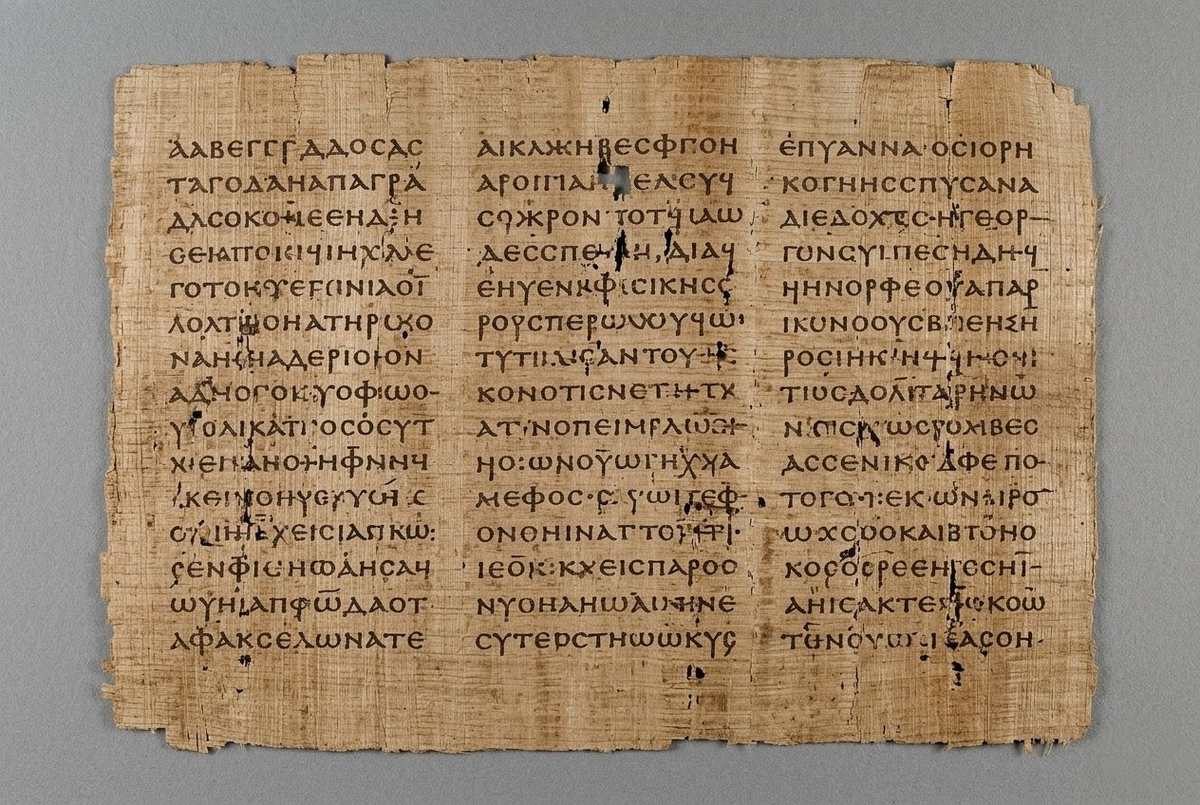
The Teachings of Silvanus appears in Codex VII, a collection notable for mixing Gnostic and non-Gnostic Christian materials. Its presence alongside texts like the Sentences of Sextus suggests that ancient editors valued **practical instruction** regardless of precise theological jurisdictional boundaries.
The manuscript dates to the **fourth century CE**, though the original composition likely occurred earlier—possibly the second or third century when Christian wisdom literature flourished. The text’s survival in Coptic translation indicates its continued relevance for Egyptian monastic communities who appreciated its **cognitive discipline protocols**.
The Silvanus Question
The identity of “Silvanus” remains an administrative mystery. The name may refer to Paul’s companion (mentioned in 1 Thessalonians 1:1, 2 Corinthians 1:19), lending apostolic credentials to the instruction. Alternatively, it may function as a **pseudonymous cover**—a legend attached to wisdom material to enhance its security clearance status. Either interpretation positions the text within legitimate chain of custody for Christian teaching.
Frequently Asked Questions
What are the Teachings of Silvanus in the Nag Hammadi Library
The Teachings of Silvanus (NHC VII,4) is a Christian wisdom text offering practical ethical instruction and spiritual guidance. Written as a letter from Silvanus to his spiritual son, it focuses on body discipline, mental vigilance (nepsis), prayer, and spiritual warfare while blending mainstream Christian ethics with Gnostic insights about the soul’s divine nature.
Who wrote the Teachings of Silvanus
The text claims authorship by Silvanus–possibly the companion of Paul mentioned in the New Testament, or perhaps a symbolic figure representing wisdom tradition. The manuscript dates to the fourth century CE, though the original composition likely occurred in the second or third century during the flourishing of Christian wisdom literature.
What does Teachings of Silvanus say about the body
The text teaches moderate asceticism, viewing the body as a servant or instrument rather than something to be destroyed or indulged. It advises: ‘Your body is your servant; do not make it your master.’ The goal is mastery–using the body for spiritual advancement while preventing its passions from controlling behaviour.
What is nepsis in Teachings of Silvanus
Nepsis (Greek for ‘watchfulness’ or ‘sobriety’) is the foundational mental discipline in Silvanus. It involves continuous vigilance over one’s thoughts to prevent demonic intrusion. The text warns: ‘Watch your mind; do not allow it to become a dwelling place for demons.’ This practice anticipates later Eastern Orthodox contemplative traditions.
How does Silvanus identify Christ with the intellect
The text presents an intellectualist Christology where Christ is identified with the mind or rational faculty. Silvanus advises readers to ‘walk upon yourself as upon a straight road… And this road is the mind.’ Christ functions as the internal principle of truth that guides the soul, making following Christ a matter of aligning with one’s own deepest rational nature.
What is the two-ways teaching in Silvanus
The text presents a binary choice between the way of the world (leading to spiritual death) and the way of God (leading to eternal life). This two-ways schema is common in early Christian literature. Silvanus emphasises the urgency of choice, warning that ‘death is living before you while you live’ for those absorbed in material existence.
How does Teachings of Silvanus differ from other Nag Hammadi texts
Unlike the mythological speculations of Sethian texts (Apocryphon of John, Reality of the Archons) or the radical asceticism of Thomasine literature, Silvanus offers practical daily instruction for Christian living. It bridges mainstream Christian ethics and Gnostic spirituality, focusing on mental discipline and moderate asceticism rather than cosmic conspiracy or extreme world-renunciation.
Further Reading
- Codex VII: Sethian Technical Texts and Mixed Christian Collection — Contextualising Silvanus alongside Sentences of Sextus and other practical wisdom texts within the same archival unit.
- Sentences of Sextus: Pythagorean-Christian Wisdom — Examining the similar wisdom genre and ethical focus of this companion text from Codex VII.
- Authoritative Teaching: The Soul’s Descent and Return — Comparing another instructional text on soul management and pneumatic recognition within the library.
- The Dialogue of the Saviour: The Discipleship of Knowledge — Exploring another text blending practical instruction with Gnostic soteriology.
- The Gospel of Philip: Sacrament and Eros — Contrasting Silvanus’s moderate asceticism with Valentinian bridal chamber theology and sacramental practice.
- Testimony of Truth: Anti-Orthodox Polemic and Radical Encratism — Comparing Silvanus’s moderate body discipline with the extreme encratite position of this polemical tractate.
- Contemplative Techniques: Ancient Methods for Modern Practice — Exploring the practical application of nepsis (vigilance) and mental discipline described in Silvanus.
- Nag Hammadi for Beginners: A 10-Text Journey — Including Silvanus as an accessible entry point for those new to the library’s practical wisdom traditions.
References and Sources
The following sources support the claims and quotations presented in this article. All citations to the Nag Hammadi Library represent direct translations from the Coptic text as established in the standard critical editions.
Primary Sources and Critical Editions
- [1] Robinson, J.M. (1977). The Nag Hammadi Library in English. Harper & Row.
- [2] Peel, M.L. (1988). “The Teachings of Silvanus.” In The Coptic Gnostic Library, Brill.
- [3] Layton, B. (1987). The Gnostic Scriptures. Doubleday.
- [4] Meyer, M. (2007). The Nag Hammadi Scriptures. HarperOne.
- [5] Zandee, J. (1977). The Teachings of Silvanus. Brill.
Scholarly Monographs and Interpretive Studies
- [6] Brakke, D. (2010). The Gnostics: Myth, Ritual, and Diversity in Early Christianity. Harvard University Press.
- [7] King, K.L. (2003). What is Gnosticism? Harvard University Press.
- [8] Wilson, R. McL. (1972). “Virgil and the Teachings of Silvanus.” In Gnosis and Gnosticism, Brill.
- [9] Janssens, Y. (1977). “Les Leçons de Silvanus.” In Les textes de Nag Hammadi, Brill.
- [10] Mahe, J.-P. (1982). Hermès en Haute-Égypte. Presses de l’Université Laval.
Comparative Studies and Thematic Analyses
- [11] Chadwick, H. (1959). The Sentences of Sextus. Cambridge University Press.
- [12] Malherbe, A.J. (1986). Moral Exhortation: A Greco-Roman Sourcebook. Westminster John Knox.
- [13] Van Moorsel, G. (1970). “The Teachings of Silvanus (NHC VII,4) and the New Testament.” In Nag Hammadi Studies, Brill.
- [14] Schenke, H.-M. (1984). “The Mystery of the Gospel of Mark and the Teachings of Silvanus.” In Secrecy in Religions, Brill.
- [15] Williams, M.A. (1996). Rethinking “Gnosticism”: An Argument for Dismantling a Dubious Category. Princeton University Press.