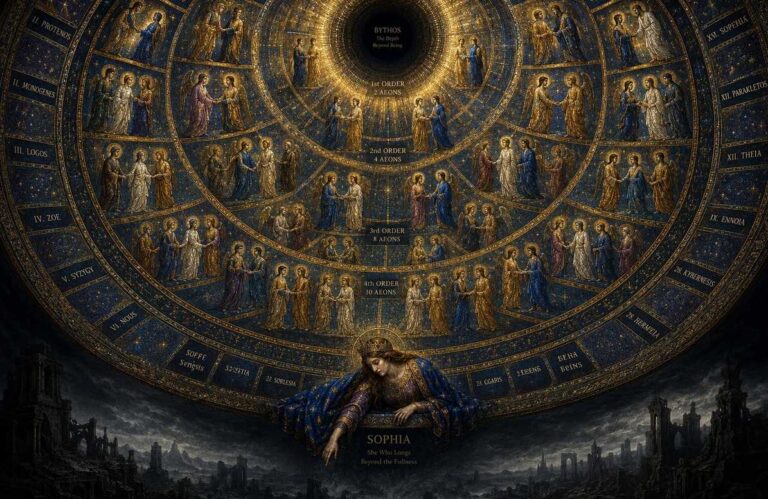
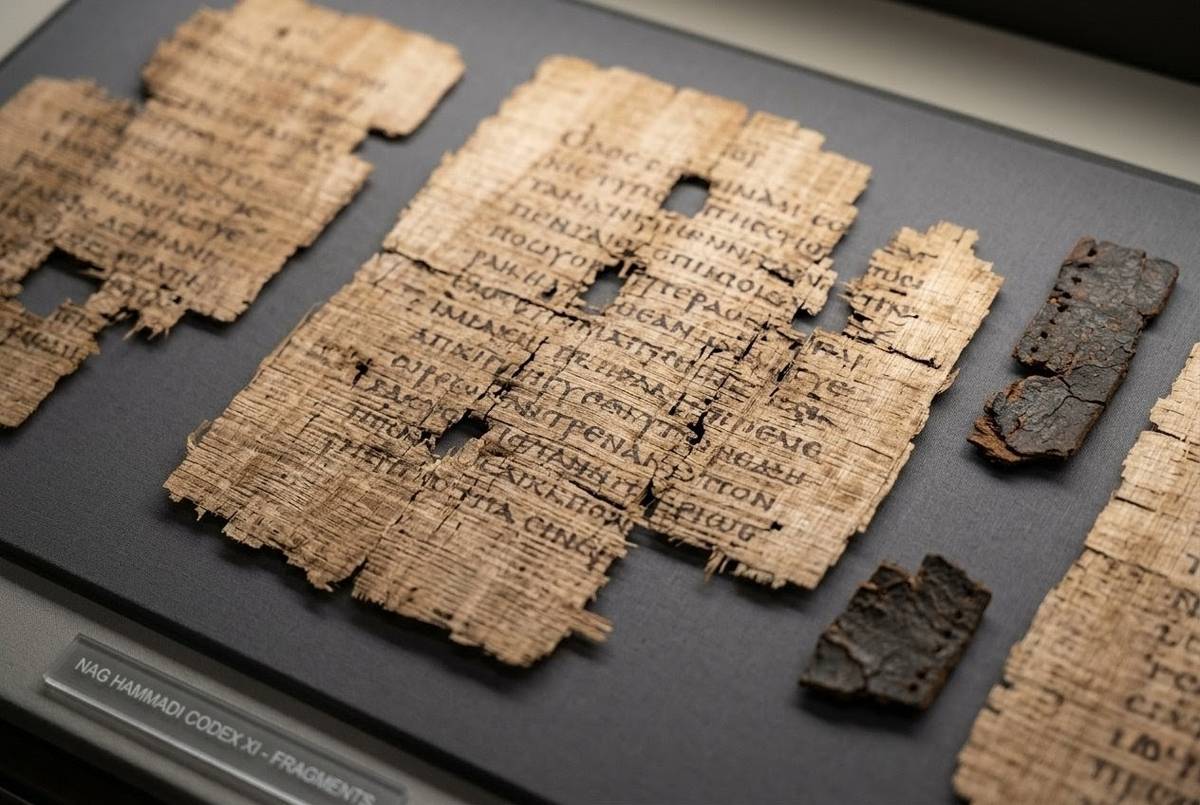
Codex XI: The Valentinian Collection
The Valentinian Treasury presents a distinct theological dialect within the Nag Hammadi Library. Where much of the corpus speaks the language of Sethian Gnosticism—cosmic hierarchies, planetary archons, violent ascent through aeonial checkpoints—Codex XI arrives like correspondence from a different continent within the same spiritual archipelago. It contains the refined, philosophically sophisticated theology of Valentinian Christianity: texts that privilege sacramental transformation over administrative escape, and ecclesiological nuance over binary cosmic warfare.
This codex is smaller than some, more fragmentary than others, yet it preserves documents of extraordinary conceptual density. Here we find the Interpretation of Knowledge, addressing spiritual gifts and community order; A Valentinian Exposition, offering systematic theology in fragmentary form; and the Testimony of Truth, a fierce polemic against orthodox corruption. Together, they reveal Valentinianism as the most intellectually successful of all Gnostic movements—a tradition that nearly captured the episcopate of Rome itself.
Contents
- Interpretation of Knowledge: Ecclesiology and Spiritual Gifts
- A Valentinian Exposition: Systematic Theology in Fragments
- Testimony of Truth: Polemic and Spiritual Autobiography
- Valentinian Distinctives: Body, Sacrament, and Nature
- The Historical Valentinus and His School
- Reading Codex XI: The Fragments as Hermeneutical Windows
- Frequently Asked Questions
- Further Reading
- References and Sources
Interpretation of Knowledge: Ecclesiology and Spiritual Gifts
What is the Interpretation of Knowledge?
The Interpretation of Knowledge (NHC XI,1) is a Valentinian treatise addressing community division and spiritual hierarchy. It employs the Pauline metaphor of the body of Christ but reinterprets it through Gnostic lenses: different members possess varying capacities for gnosis, yet all contribute to the community’s perfection. It represents Valentinianism at its most practical, offering an ecclesiology that privileges experiential knowledge over rigid hierarchical authority.
This text addresses a divided Valentinian community—some members claim superior spiritual status through possession of secret knowledge, others feel marginalised by these pretensions—and offers a sophisticated theology of spiritual gifts that anticipates Paul’s Corinthian correspondence but with distinctly Gnostic nuance. The author navigates the tension between charismatic authority and communal cohesion, arguing that gnosis manifests in diverse gradations rather than binary possession.
The central metaphor remains the body of Christ, but psychologically and cosmologically reinterpreted: “Just as the Father is unknowable, so is the Son incomprehensible” (NHC XI,1 18:35-36). The text explores how different members possess different capacities for receiving gnosis, yet all are necessary for the community’s perfection. It presents an ecclesiology—a theory of the church—that challenges orthodox hierarchical models while maintaining sacramental structure. Where Sethian texts might reject community altogether in favour of solitary ascent, the Interpretation wrestles with the problems of collective spiritual life, offering solutions that privilege experiential knowledge over administrative rank.
Primary Source Citation: “Just as the Father is unknowable, so is the Son incomprehensible. But the angels and the archons know neither the Father nor the Son. But the pneumatics know the Father and the Son” (NHC XI,1 18:33-38).
A Valentinian Exposition: Systematic Theology in Fragments
What survives here are fragments—precious, frustrating, illuminating. The text appears to have been a systematic presentation of Valentinian doctrine, possibly covering the creation myth, the fall of Sophia, the generation of the demiurge, and the saviour’s redemptive mission. We glimpse a theology that once supported elaborate ritual cycles, intricate cosmological maps, and a complex soteriology of three natures: spiritual (pneumatikos), psychic (psychikos), and material (hylikos).
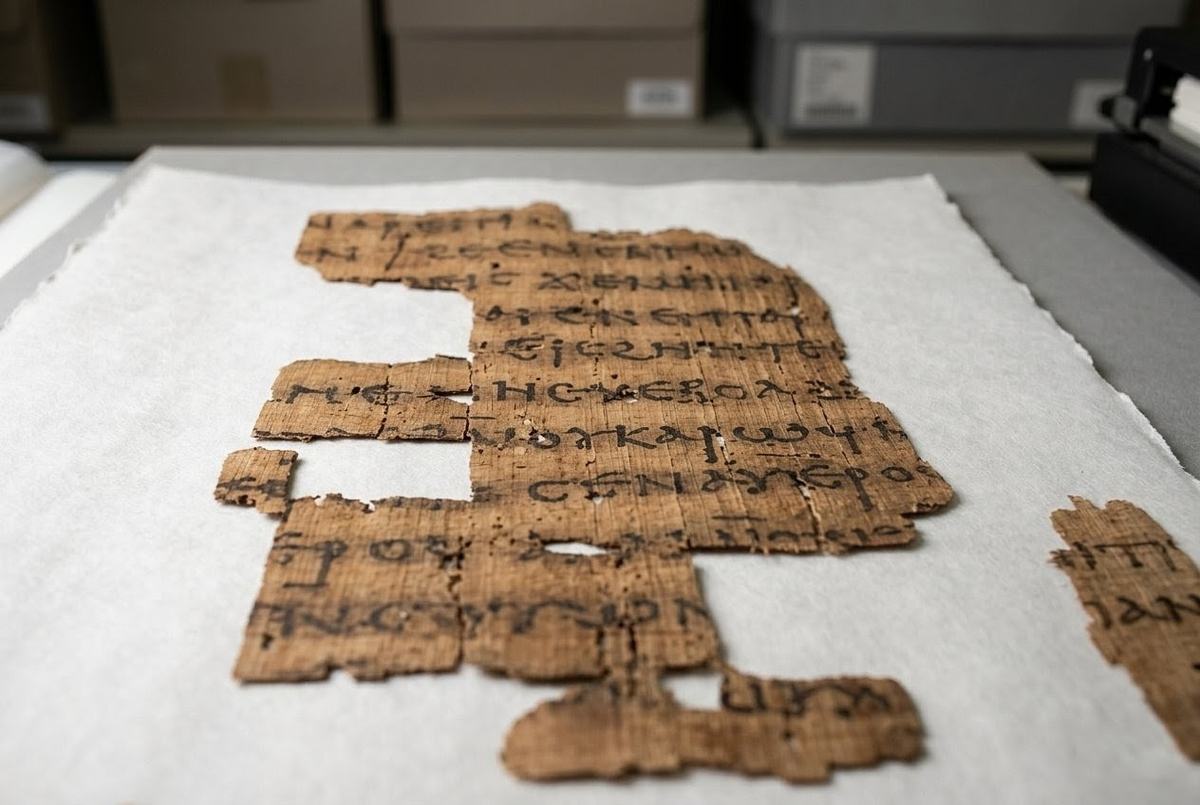
The fragments speak of “the seed of light” scattered in matter, of the Saviour’s descent “like a magnet” drawing the elect upward through affinity rather than violent extraction, and of the bridal chamber (nymphōn) where the separated soul reunites with its angelic counterpart. Even in its ruined state, the architecture of Valentinian thought remains impressive—more Platonic than Sethian, more gradualist than catastrophic, emphasising transformation over escape.
The text distinguishes between the transcendent Father, the primal Source who remains hidden, and the Son who reveals the Father’s thought. It describes the fall of Sophia not as a catastrophic rupture but as a pedagogical necessity—the passion (pathos) that becomes the template for the soul’s own journey from fragmentation to wholeness. This is theology as therapeutic process, not military campaign.
Primary Source Citation: “The seed of light is scattered in matter. And the Saviour came down like a magnet, drawing the elect upward to the place of rest” (NHC XI,2 25:15-20, reconstructed).
Testimony of Truth: Polemic and Spiritual Autobiography
If the Interpretation is measured, the Testimony of Truth (NHC XI,3) is apocalyptic—a sustained assault against the orthodox church, its bishops, its creeds, its compromised scriptures. “They do not have the divine word,” the author declares with evident contempt. “They have the mere sound of words, like the ringing of bronze” (NHC XI,3 30:25-28). This is Gnosticism as protest literature, as spiritual memoir, as conspiracy theory against the powers that have seized control of the Christian narrative.
The Testimony is also profoundly autobiographical. The author describes their own spiritual journey—persecution, withdrawal, illumination, and the acquisition of secret knowledge through direct revelation rather than institutional transmission. “I was in the pit of the abyss,” they write, “and I found the truth through the wisdom that was in me, not from any external teacher” (NHC XI,3 33:15-18). This represents the insider-outsider dynamic common to Gnostic literature, but with bitter personal intensity.
The text unmasks the orthodox church as serving the demiurgical powers—the same administrative forces that control the material world now control the religious institutions. The bishops are “administrators of the error” (NHC XI,3 31:5), the scriptures are “falsified by the powers who wish to bind humanity in ignorance” (NHC XI,3 32:10-12). The polemic is not merely theological; it is epistemological, challenging who has the authority to define truth and how that truth is transmitted.
Valentinian Distinctives: Body, Sacrament, and Nature
What marks these texts as distinctively Valentinian rather than Sethian? Several theological characteristics emerge with clarity:
Attitude toward the body: Where Sethianism often depicts matter as error, prison, or hostile territory to be escaped through violent ascent, Valentinianism offers a more nuanced anthropology. The body is limited, yes, but not intrinsically evil. It can be transformed, spiritualised, redeemed through sacramental participation. The flesh is not the enemy but the medium requiring transfiguration—a view closer to orthodox incarnational theology than Sethian docetism.
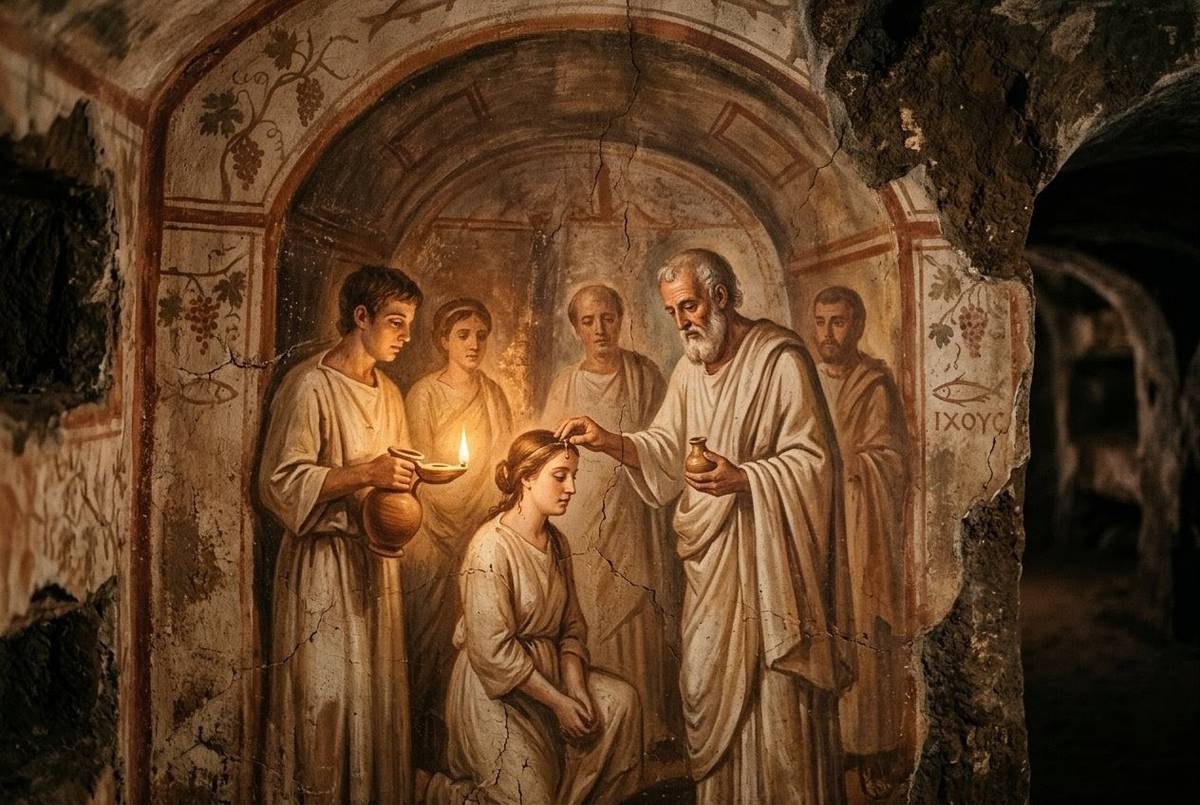
Sacramental theology: Valentinus and his followers developed elaborate rituals that would influence Christian liturgy for centuries. Baptism functions as rebirth (palingenesia), chrism (anointing) as confirmation of spiritual status, the eucharist as mystical marriage with the divine, and the apolytrōsis—the rite of redemption that frees the soul from cosmic necessity through spoken formulae and sacred marriage. These are not magical incantations but performative recognitions of spiritual reality.
The three natures: Valentinian anthropology distinguishes the spiritual (pneumatikos), who possess the divine spark and will inevitably achieve salvation through their inherent nature; the psychic (psychikos), who have soul and can choose redemption through faith and practice; and the material (hylikos), bound for dissolution because lacking the divine seed. This is not determinism but taxonomy—recognising different capacities for receiving gnosis without denying agency to the middle category.
Christology: The Valentinians developed complex theories about Christ’s composition—spiritual, psychic, and material elements combined in different proportions across different phases of his mission. This is not the docetism of some Sethian texts (where Christ only seemed to suffer) but a transformative incarnation in which Jesus gradually reveals his true nature, descending and ascending through the spheres, gathering the scattered sparks through affinity rather than conquest.
The Historical Valentinus and His School
Valentinus himself remains a shadowy but significant figure—a charismatic teacher who arrived in Rome around 140 CE, claimed apostolic lineage through Theudas (a supposed disciple of Paul), and nearly became bishop of the imperial capital. When passed over for the office, tradition says he broke with the church and founded his own school, though the historical reality was probably more gradual and complex.
Valentinianism spread through intellectual appeal rather than schism. It attracted educated converts, developed sophisticated scriptural interpretation using allegorical methods, and maintained a presence in the church for centuries—some Valentinians remained within orthodox communities, practising their “deeper” theology privately while participating in public worship. Irenaeus of Lyon, writing around 180 CE, devotes more space to refuting the Valentinians than any other Gnostic group. They were the competition—the most serious theological alternative to emerging Catholicism.
The school eventually fragmented into Eastern and Western branches, with the Italian Valentinians (headed by Ptolemy) developing more formal cosmological systems, while the Eastern school (associated with Marcus and others) emphasised numerological and liturgical complexity. Codex XI preserves the DNA of this tradition—not the mythological extravaganzas of the Sethian Apocryphon of John, but the ecclesiastical concerns, the sacramental piety, the philosophical rigour that made Valentinianism the most successful of all Gnostic movements.
Reading Codex XI: The Fragments as Hermeneutical Windows

The fragmentary state of A Valentinian Exposition is frustrating, yet it offers something complete texts cannot: the sense of a tradition partially lost, partially recovered, inviting the reader to participate in the reconstruction. We see enough to recognise the sophistication; we lack enough to feel the hunger for what has vanished. This is appropriate hermeneutically. Valentinianism itself was always about partial knowledge, about the progress from faith (pistis) to gnosis, about the recognition that the divine is both revealed and hidden, present yet requiring interpretation.
Approach this codex after encountering the Sethian material—particularly the Apocryphon of John and the Hypostasis of the Archons. The contrast illuminates both traditions. Where Sethianism thunders with cosmic warfare and violent ascent through archonic spheres, Valentinianism reasons through gradual transformation and sacramental participation. Where Sethianism rejects the body as prison, Valentinianism seeks to spiritualise it as temple.
Pay attention to the ecclesiological concerns in these texts. They were written for communities that gathered, argued, broke bread together, and struggled with questions of authority and spiritual hierarchy. The Valentinians of Codex XI were not desert hermits but urban church-goers with sophisticated theological complaints—intellectuals seeking to preserve the spiritual core of Christianity against what they perceived as the administrative calcification of orthodoxy.
Read the Testimony of Truth with your own testimony in mind. The author’s fury against orthodox corruption, their claim to secret knowledge, their sense of being marginalised by powerful institutional forces—these are not ancient curiosities but persistent recognitions. The administrative structures have changed their uniforms, but the tension between experiential knowledge and institutional authority remains as vital today as in the second century.
Frequently Asked Questions
What is Codex XI in the Nag Hammadi Library?
Codex XI is a collection of Valentinian Gnostic texts from the Nag Hammadi Library, including the Interpretation of Knowledge, A Valentinian Exposition, and the Testimony of Truth. It preserves the refined, philosophically sophisticated theology of Valentinian Christianity, distinct from the Sethian texts found in other codices.
What is the Interpretation of Knowledge about?
The Interpretation of Knowledge (NHC XI,1) is a Valentinian treatise addressing community division and spiritual hierarchy. It employs the Pauline metaphor of the body of Christ to argue that different members possess varying capacities for gnosis, yet all contribute to the community’s perfection, privileging experiential knowledge over rigid hierarchical authority.
Who was Valentinus and why is he significant?
Valentinus was a charismatic teacher who came to Rome around 140 CE, claimed apostolic lineage through Theudas, and nearly became bishop. His school developed the most intellectually successful Gnostic movement, emphasising sacramental theology, the three natures (pneumatic, psychic, hylic), and gradual spiritual transformation. Irenaeus devoted more space to refuting Valentinians than any other Gnostic group.
What are the three natures in Valentinian theology?
Valentinian anthropology distinguishes three natures: the spiritual (pneumatikos) who possess the divine spark and will inevitably be saved; the psychic (psychikos) who have soul and can choose redemption through faith and practice; and the material (hylikos) bound for dissolution. This represents a taxonomy of spiritual capacity rather than deterministic fate.
How does Valentinianism differ from Sethian Gnosticism?
Valentinianism offers a more nuanced view of the body as transformable rather than purely prison-like, emphasises sacramental participation over violent ascent, distinguishes three natures rather than binary saved/damned categories, and presents a gradualist therapeutic model versus Sethian catastrophic extraction. Valentinian Christology also differs, presenting transformative incarnation rather than pure docetism.
What is the Testimony of Truth?
The Testimony of Truth (NHC XI,3) is a polemical text attacking orthodox church authority as serving demiurgical powers. It combines fierce criticism of institutional Christianity with autobiographical narrative of spiritual persecution and illumination. The author claims direct revelation rather than institutional transmission, presenting Gnosticism as protest literature against administrative religious control.
What sacraments did Valentinians practice?
Valentinians developed elaborate rituals including baptism as rebirth (palingenesia), chrism (anointing) as confirmation, the eucharist as mystical marriage, and the apolytrosis (rite of redemption) freeing the soul from cosmic necessity. The bridal chamber (nymphon) represented the highest sacrament of spiritual union, distinct from Sethian preference for ascent through planetary spheres.
Further Reading
- Interpretation of Knowledge: Valentinian Exegesis — Extended analysis of the treatise on spiritual gifts and community order.
- Testimony of Truth: Anti-Pharisaic Polemic — Detailed examination of the polemical text attacking orthodox institutional authority.
- Codex XI: Valentinian Technical Texts — Overview of the codex structure and its placement within the Nag Hammadi Library.
- Valentinian Exposition: Cosmology and Myth — Analysis of the fragmentary systematic theology and its reconstruction.
- Apocryphon of John: Gnostic Creation Myth — The foundational Sethian text contrasting with Valentinian theology.
- Tripartite Tractate: The Valentinian System — Comprehensive exposition of Valentinian theology from Nag Hammadi Codex I.
- Gospel of Philip: Sacrament and Eros — Examination of the bridal chamber (nymphon) and Valentinian sacramental theology.
- Gnostic Schools: Sethians, Valentinians, and Hermetics — Comparative analysis of the major Gnostic traditions.
- Valentinian Sacramental Theology — Deep dive into baptism, chrism, eucharist, and the rite of redemption.
- Complete Reading Order — Master guide for navigating all 46 Nag Hammadi tractates and related texts.
References and Sources
The following sources support the claims and quotations presented in this article. All citations to the Nag Hammadi Library represent direct translations from the Coptic text as established in the standard critical editions.
Primary Sources and Critical Editions
- [1] Robinson, J.M. (1977). The Nag Hammadi Library in English. Harper & Row.
- [2] Meyer, M. (2007). The Nag Hammadi Scriptures. HarperOne.
- [3] Layton, B. (1987). The Gnostic Scriptures. Doubleday.
- [4] Peel, M.L. (1985). “The Interpretation of Knowledge (NHC XI,1).” In Nag Hammadi Codices XI, XII, XIII, ed. C.W. Hedrick. Brill.
- [5] Thomassen, E. (2006). The Spiritual Seed: The Church of the Valentinians. Brill.
Scholarly Monographs and Thematic Studies
- [6] King, K.L. (1995). Revelation of the Unknowable God: With Text, Translation, and Notes to NHC XI,3 Allogenes. Polebridge Press.
- [7] Turner, J.D. (2001). Sethian Gnosticism and the Platonic Tradition. Presses Universitaires de Louvain.
- [8] Markschies, C. (2000). Valentinus Gnosticus? Untersuchungen zur valentinianischen Gnosis. Walter de Gruyter.
- [9] Ehrman, B.D. (2013). The Apostolic Fathers. Loeb Classical Library.
- [10] Pagels, E.H. (1979). The Gnostic Gospels. Random House.
Comparative Studies and Reception History
- [11] Irenaeus of Lyon. Against Heresies (Adversus Haereses), Books I-III. Translated in The Ante-Nicene Fathers, Vol. 1. Eerdmans.
- [12] Williams, M.A. (1996). Rethinking “Gnosticism”: An Argument for Dismantling a Dubious Category. Princeton University Press.
- [13] King, K.L. (2003). What Is Gnosticism? Harvard University Press.
- [14] Logan, A.H.B. (2006). The Gnostics: Identifying an Early Christian Cult. T&T Clark.
- [15] Dunderberg, I. (2008). Beyond Gnosticism: Myth, Lifestyle, and Society in the School of Valentinus. Columbia University Press.