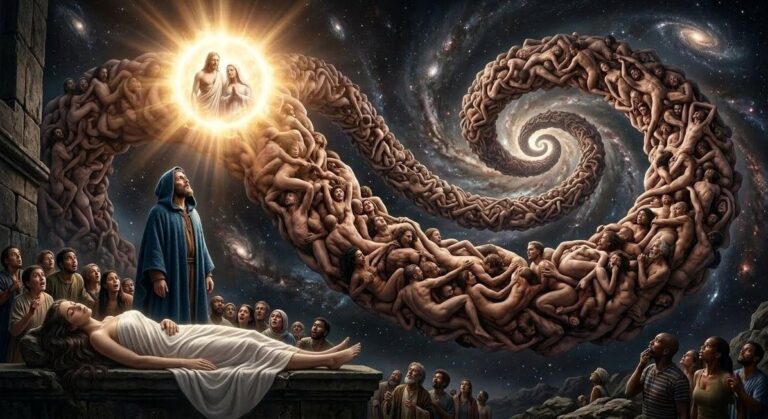
Lilith in the Gnostic Tradition: Before the Bible Erased Her
She appears only once in the Bible, and even then, translators cannot agree on who — or what — she is. In Isaiah 34:14, the Hebrew word lilith surfaces amid a catalogue of desert terrors: hyenas, goat-demons, and the night creature herself, finding rest in the ruins of Edom. Some versions call her a screech owl. Others, a night hag. A few modern translations leave the name intact, as if the word itself carries a charge too dangerous to paraphrase.
But the Lilith known to folklore, to Kabbalah, and to the modern Gnostic revival is far more than a nocturnal predator haunting abandoned kingdoms. She is the first woman, fashioned from the same soil as Adam, who refused the posture of submission and uttered the unspeakable Name to escape the Garden. She is the mother of demons, the consort of Samael, and — in the eyes of a growing body of contemporary scholars and practitioners — the erased shadow of Sophia herself.
This article traces Lilith from her solitary biblical whisper through her medieval elaboration, into the Gnostic terrain where she is never named yet arguably never absent. It proposes that the Nag Hammadi silence on Lilith is itself a kind of evidence: the dark feminine was not forgotten by accident, but suppressed by design. And it asks what happens when we read the Gnostic mythos — Sophia’s fall, the Demiurge’s blindness, and the archontic assault on Eve — with Lilith standing just outside the frame.
Table of Contents
- The Bible’s Single Whisper: Isaiah 34:14 and the Night Creature
- Before Eve: The Alphabet of Ben Sira and the First Rebellion
- The Gnostic Gap: Why Lilith Vanished from Nag Hammadi
- Norea: The Lilith-Shadow in Sethian Texts
- Samael as Demiurge: The Dark Consort and the Blind God
- The Dark Feminine and the Fall of Sophia
- The Pre-Material Feminine: Lilith, Barbelo, and the Unmanifest
- Reclaiming the Erased: Modern Gnosis and the Dark Goddess
- Frequently Asked Questions
- Further Reading
- References and Sources
The Bible’s Single Whisper: Isaiah 34:14 and the Night Creature
The Hebrew Bible offers Lilith no biography. She is not Adam’s first wife in Genesis; she is not the serpent’s ally in Eden. She is, instead, a single word in a prophecy of desolation. Isaiah 34 describes the fate of Edom, a land so thoroughly abandoned that only wild animals and supernatural terrors remain. Among them, lilith settles and finds rest.
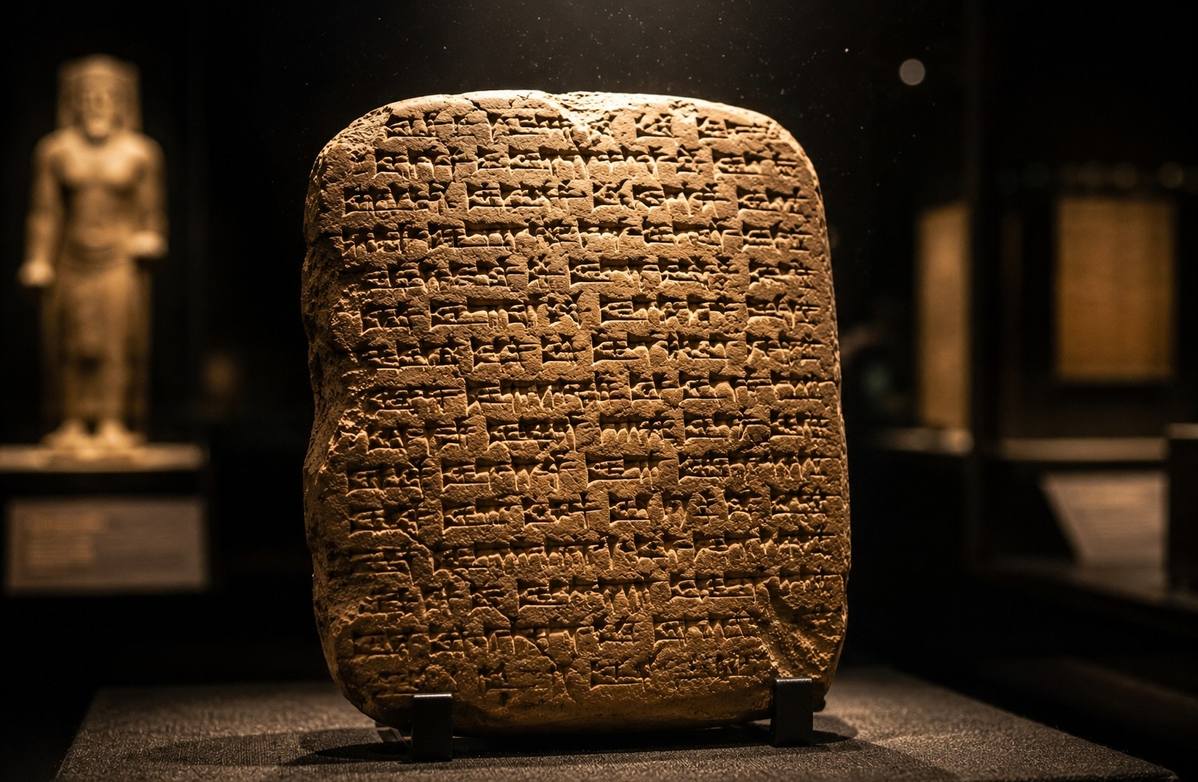
The King James Version renders the term “screech owl,” drawing on the creature’s nocturnal habits. The Revised Standard Version prefers “night hag.” The New Revised Standard Version capitalises the word — Lilith — turning a common noun into a proper name and inviting the reader to recognise the demoness of later Jewish folklore. The Hebrew root connects to laylah, night, and to the Babylonian lilītu, a class of wind demons who preyed upon infants and pregnant women.
For the prophet’s original audience, the reference required no footnote. They knew the Mesopotamian demonology that Jewish exiles had encountered in Babylon. What Isaiah does is not invent Lilith but subordinate her: even the most feared night creature is merely an ornament of divine judgement, a tenant in the real estate of Yahweh’s vengeance. Yet in that subordination, something survives. The name persists. And names, in the ancient world, were not labels but concentrations of power. To write lilith was to invoke her, however briefly, into the text itself.
Before Eve: The Alphabet of Ben Sira and the First Rebellion
If the Bible whispers, the Alphabet of Ben Sira shouts. Composed between the 8th and 10th centuries CE — roughly a millennium after the latest biblical books — this medieval Jewish text is the first to present Lilith as a character with dialogue, desire, and defiance. The work is satirical, often misogynistic, and certainly not canonical. Yet it crystallised a tradition that had circulated in fragments for centuries.
According to Ben Sira, God created Adam and Lilith simultaneously from the dust of the earth. When Adam insisted that she lie beneath him during intercourse, Lilith refused. She spoke the ineffable Name of God and flew away to the Red Sea, where she took up residence among demons. God sent three angels — Senoy, Sansenoy, and Semangelof — to retrieve her. They threatened to drown her and slay a hundred of her children daily. She would not return. Instead, she became the eternal threat against newborns, the seducer of sleeping men, and the mother of a demonic brood that would plague humanity until the end of days.
The story is less about demonology than about authority. Lilith’s crime is not sexual promiscuity but insubordination. She claims equality by virtue of shared origin: if both were fashioned from earth, neither owes the other deference. Her escape is an act of gnosis — she knows the Name that commands power, and she uses it not to dominate but to depart. In this reading, Lilith is the first being to recognise that the Garden is a controlled environment and to choose exile over compliance. The Gnostics would have understood her perfectly.

The Gnostic Gap: Why Lilith Vanished from Nag Hammadi
Here is the honest difficulty: open the Nag Hammadi Library, search its forty-six tractates, and you will not find the name Lilith. She is absent from the Apocryphon of John, the Gospel of Philip, the Thunder, Perfect Mind, and the Hypostasis of the Archons. For a figure who would seem so naturally at home in a cosmology of fallen angels, ignorant creators, and suppressed feminine power, her silence is striking.
There are several ways to read this absence. The most conservative is simply that Lilith belonged to a different stream of Jewish folklore — the Babylonian-incubus tradition, the Talmudic demonology of the rabbis, and later Kabbalistic speculation — that did not intersect with the sectarian Christian-Jewish communities who produced the Nag Hammadi texts. The Gnostics had Sophia, Barbelo, and the fallen Eve. They did not need another first woman.
But there is a more unsettling possibility. The Nag Hammadi codices were buried around 400 CE, likely by monks from the nearby Pachomian monastery who recognised these texts as heretical and chose concealment over destruction. By that time, the campaign against Gnosticism had already consumed vast quantities of literature. If any tractate had dared to place Lilith at the right hand of Sophia — or worse, to identify her as Sophia’s exiled shadow — it would have been among the first to burn. The Gnostic gap may not be an accident of preservation but the scar of censorship. What we possess is the library that survived. We do not know what was lost.
Norea: The Lilith-Shadow in Sethian Texts
If Lilith is not named, she may nonetheless be present in disguise. The Sethian text Hypostasis of the Archons introduces Norea, the daughter of Adam and Eve, born after Cain, Abel, and Seth. When the archons decide to destroy the world with a flood, they instruct Noah to build an ark. Norea attempts to board it. Noah refuses. In response, she breathes fire upon the vessel and destroys it.
The archons then attempt to seize or rape her — the text uses language of violent subjugation — but she cries out to the God of the Entirety. The luminary Eleleth descends, terrifies the rulers, and reveals Norea’s true identity: she is a child of the spirit, virgin, and incorruptible. “The virgin whom no power has defiled.” This same epithet appears in the Gospel of Philip, applied to Mary Magdalene. Norea is, in other words, a saviour figure, a feminine principle that the archons cannot possess and the Demiurge cannot drown.
The parallels to Lilith are not superficial. Like Lilith, Norea is excluded from the patriarchal rescue plan. Like Lilith, she responds with destructive power rather than submission. Like Lilith, she is sexually threatened by celestial authorities and survives through knowledge of her own divine origin. The scholar Birger Pearson has argued that Norea is based on the Jewish legend of Naamah, a figure associated with seduction and demonic offspring in rabbinic literature — and Naamah, in later Kabbalistic sources, is closely linked to Lilith. The chain is indirect but compelling: Norea echoes Naamah, who echoes Lilith. The Gnostic text may preserve, in coded form, the very figure it dares not name.

Samael as Demiurge: The Dark Consort and the Blind God
In Kabbalistic literature, particularly the Zohar, Lilith is paired with Samael, the angel of death and severity, the prince of demons, and — in some strands of Gnostic cosmology — the very identity of the Demiurge. The Apocryphon of John names Yaldabaoth as the blind creator who fashions the material world in ignorance of the Pleroma above. But other Gnostic sources identify this blind god as Samael, a name that means “the blind god” or “god of the blind” in Hebrew.
The convergence is remarkable. In Jewish mysticism, Samael and Lilith form an unholy alliance, the dark counterpart to the sacred union of Adam and Eve, or of the Shekhinah and the Holy One. They are the qlippothic reflection, the shadow of divine marriage. In Gnostic terms, this maps precisely onto the relationship between the Demiurge and his world. The Demiurge creates matter but cannot animate it with spirit; he produces a corpse and calls it life. Lilith, in her role as the mother of demons, populates that corpse with shadow-souls — the lilin, the incubi and succubi, the spirits of sterile desire that mimic true pneuma without possessing it.
Read through this lens, the Demiurge is not merely ignorant but actively hostile to the feminine principle that exceeds his control. Sophia’s fall generates matter; Lilith’s exile generates the demonic population of matter. Both are consequences of the same original event: the overflow of divine fullness into a realm that cannot contain it. Sophia becomes the world-soul trapped in substance. Lilith becomes the world-demoness who refuses to be trapped at all. They are not opposites. They are the two faces of a single catastrophe.
The Dark Feminine and the Fall of Sophia
Modern Gnostic revivalists have proposed a reading that the ancient texts only imply: Lilith is the lower vibration of Sophia, the frequency of divine wisdom after it has passed through the filter of material existence. In the Apocryphon of John, Sophia’s grief and longing produce Yaldabaoth. In the Hypostasis of the Archons, her luminous reflection in the waters of chaos becomes the template for the archontic powers. Something of Sophia is always left behind in the descent. That residue, darkened by contact with chaos, is what Kabbalah calls Lilith and what the Gnostics might have called the hylic feminine — the aspect of the divine that has become so entangled in matter that it appears demonic to those who cannot perceive its origin.
The Thunder, Perfect Mind — one of the most celebrated texts in the Nag Hammadi collection — offers a paradoxical aretalogy of the divine feminine that encompasses both light and darkness, honour and shame, prostitute and holy one. “I am the whore and the holy one. I am the wife and the virgin.” This is not moral relativism but ontological completeness. The Gnostic goddess contains what patriarchal theology splits apart. In this framework, Lilith is not Sophia’s enemy but her unacknowledged aspect: the part that was exiled so that Eve could be obedient, the part that knew the Name and spoke it, the part that chose the desert over the Garden.

The Pre-Material Feminine: Lilith, Barbelo, and the Unmanifest
Before Sophia fell, there was Barbelo. In Sethian and Valentinian cosmologies, Barbelo is the First Thought of the Invisible Spirit, the divine Forethought who arises before matter, before the Demiurge, before even the Pleroma as a differentiated realm. She is the mother of the aeons, the virgin source, the androgynous perfection. She is not fallen; she cannot fall, because she precedes the distinction between fullness and lack.
Lilith, in her most radical Gnostic reading, is Barbelo’s shadow — not in the sense of evil, but in the sense of unmanifest potential. Barbelo is the yes that creates; Lilith is the no that refuses. Barbelo overflows into emanation; Lilith withdraws into silence. In the Trimorphic Protennoia, the divine voice declares: “I am the Invisible One within the All.” Lilith, banished to the desert, the Red Sea, the outer darkness, embodies that invisibility literally. She is the divine principle so thoroughly rejected by the manifest order that she becomes its hidden substrate.
This is why Lilith matters for ecological and spiritual reconnection in the modern era. The world constructed by the Demiurge — the extractive, hierarchical, binary order — requires the suppression of whatever cannot be metabolised. Lilith represents the unmetabolised: the wilderness that resists cultivation, the feminine that refuses domestication, the knowledge that escapes institutional control. To recover Lilith is not to summon a demon but to restore a missing frequency to the divine spectrum. It is to recognise that the pre-material feminine was never entirely lost. She was simply pushed to the margins, where she has been waiting — in the desert, in the night, in the refuse of Edom — for someone to speak her name again.
Reclaiming the Erased: Modern Gnosis and the Dark Goddess
The contemporary Gnostic revival has embraced Lilith with an enthusiasm that would have horrified the ancient polemicists. She appears in Mandaean incantation bowls as a class of spirits. She surfaces in the magical papyri and on Gnostic gems as a powerful name. She haunts the interstices of Kabbalah and Gnosticism, the two great mystical systems of late antiquity that shared a common horror of the orthodoxies that sought to erase them both.
For modern practitioners, Lilith is not a succubus but a teacher of boundaries. She is the force that says no to illegitimate authority, that preserves the wild spaces where gnosis can still occur without supervision. She is the guardian of the threshold between the ordered world and the chaotic depths from which new creation emerges. In this role, she complements rather than contradicts Sophia. Sophia provides the knowledge of the Pleroma; Lilith provides the courage to escape the Kenoma. Sophia illuminates; Lilith insulates. Together, they form a complete picture of divine feminine power that the biblical redactors, the archons, and the Demiurge himself could not tolerate.
The Bible erased her, or tried to. It reduced her to a screech owl in a ruined land. The rabbis demonised her. The church fathers ignored her. But the Gnostic instinct — the heretical memory that persists beneath orthodox amnesia — has always known that something was missing from the story. The first woman was not made from a rib. She was made from the same earth, and she knew it. She spoke the Name, spread her wings, and vanished into the night. The Gnostic task is not to bring her back to the Garden. It is to follow her into the desert, and there, in the darkness beyond the Demiurge’s jurisdiction, to learn what she has been whispering for four thousand years.
The Demiurge built a world that requires forgetting. Lilith is the memory that refuses to be formatted. She is not the enemy of Sophia; she is Sophia’s unedited draft, the version that knew the Name and used it.
Frequently Asked Questions
Is Lilith mentioned in the Bible?
Lilith appears explicitly only once in the Hebrew Bible, in Isaiah 34:14, where the Hebrew word lilith is listed among the creatures inhabiting the ruined land of Edom. Most English translations render it as screech owl, night creature, or night hag. The narrative of Lilith as Adam’s first wife does not appear in the Bible; it originates in the medieval Alphabet of Ben Sira (8th–10th century CE).
Does Lilith appear in the Nag Hammadi Library?
The name Lilith does not appear in any of the forty-six tractates of the Nag Hammadi Library. However, scholars such as Birger Pearson have argued that the figure of Norea in the Hypostasis of the Archons and the Thought of Norea may reflect Jewish legends connected to Naamah, a figure later associated with Lilith in Kabbalistic tradition. The absence of explicit Lilith references may be due to the aggressive suppression of Gnostic texts by orthodox authorities.
Who is Norea in Gnostic texts?
Norea is a figure in Sethian Gnosticism, appearing in the Hypostasis of the Archons and the Thought of Norea. She is the daughter of Adam and Eve, the sister of Seth, and is described as a virgin whom no power has defiled. When excluded from Noah’s ark, she destroys it with fire and is protected from the archons by the luminary Eleleth, who reveals her divine origin. She functions as a saviour figure and prototype of the saved gnostic.
What is the connection between Samael and the Gnostic Demiurge?
In some Gnostic cosmologies, Samael — whose name means blind god in Hebrew — is identified with the Demiurge, the ignorant creator of the material world. In Jewish Kabbalistic tradition, particularly the Zohar, Samael is the consort of Lilith and the prince of demons. This convergence suggests a Gnostic-Kabbalistic interface in which the blind creator and his dark feminine counterpart form a qlippothic mirror to the divine union of the Pleroma.
Is Lilith the same as Sophia in Gnosticism?
Lilith is not identical to Sophia, but some modern Gnostic readings propose that she represents a lower vibration or shadow aspect of Sophia — the divine wisdom after it has become entangled in matter and darkness. Where Sophia illuminates the path of ascent, Lilith embodies the refusal to submit to illegitimate authority. Together, they represent the full spectrum of the divine feminine: light and dark, presence and absence, obedience and rebellion.
What is the Alphabet of Ben Sira?
The Alphabet of Ben Sira is a medieval Jewish text, likely composed between the 8th and 10th centuries CE, which contains satirical and folkloric elaborations on biblical stories. It is the earliest surviving source that presents Lilith as Adam’s first wife, created from the same soil, who refuses submission and escapes Eden using the divine Name. The text is not canonical and its tone is often misogynistic, but it established the Lilith legend that would profoundly influence Kabbalah and modern feminist spirituality.
How is Lilith relevant to modern Gnostic practice?
In contemporary Gnostic and ecofeminist spirituality, Lilith is reclaimed as the guardian of boundaries, the protector of wilderness, and the teacher of sacred refusal. She represents the unmetabolised aspects of existence — the feminine, the wild, the nocturnal — that resist the Demiurge’s order of control and extraction. Modern practitioners work with Lilith not as a demon to be exorcised but as an intelligence to be integrated, completing the fractured image of the divine feminine.
Further Reading
Deepen your engagement with the dark feminine, Gnostic cosmology, and the suppressed traditions of the ancient world.
- The Sophia Myth: Three Falls, Three Redemptions Across Gnostic Schools — The complete guide to Sophia’s descent, her fragmentation, and the path of restoration that Lilith’s myth both shadows and completes.
- The Three Marys, Philip, Mary, and Pistis Sophia: Restore the Magdalene — How the canonical tradition suppressed the feminine divine, and what the Gnostic texts reveal about Mary Magdalene as apostolic equal.
- Thunder, Perfect Mind: The Voice That Contains Every Paradox — The Nag Hammadi aretalogy of the divine feminine that encompasses both light and darkness, whore and holy one, mother and virgin.
- The Reality of the Archons: Eve, Truth, and the Rulers of This World — The Hypostasis of the Archons in depth, including Norea’s fire, the archons’ assault, and Eleleth’s revelation of divine origin.
- Pleroma and Kenoma: The Foundational Geography of Gnostic Cosmology — Understanding the divine fullness, the emptiness of material existence, and how Barbelo originates before both.
- The Nymphon: Why the Valentinians Called Sex the Holy of Holies — The sacramental theology of divine union, and how the Gnostic tradition treated the body as a site of sacred rather than demonic encounter.
- Archons: The Ruling Powers That Shape Reality — The Hebdomad, their planetary associations, and the systemic forces that bind consciousness to the Demiurge’s order.
- The Feminine Divine in the Nag Hammadi Library — A thematic collection exploring Barbelo, Sophia, the fallen Eve, and the recovery of feminine power in Gnostic scripture.
- The Gnostic Soul Trap: Archons, Death, and the Recycling of Pneuma — How the archons maintain control through the afterlife bureaucracy, and what the refusal of submission looks like in cosmological terms.
- Nag Hammadi Library: The Complete Guide to Gnostic Scriptures — The definitive introduction to the texts, their discovery, and the suppressed world they preserve.
References and Sources
This article draws upon biblical scholarship, medieval Jewish literature, critical Gnostic studies, and contemporary ecofeminist theology. Sources are grouped by field for clarity.
Biblical and Ancient Near Eastern Studies
- Gaines, Janet Howe. (2001). “Lilith.” Bible Review, October 2001. Republished Biblical Archaeology Society, 2026.
- Koehler, L., Baumgartner, W., et al. (1994–2000). The Hebrew and Aramaic Lexicon of the Old Testament. Leiden: E.J. Brill. (HALOT entry on lilith)
- Patai, Raphael. (1978). The Hebrew Goddess. 3rd ed. Detroit: Wayne State University Press.
- Graves, Robert, & Patai, Raphael. (1964). Hebrew Myths: The Book of Genesis. New York: Doubleday.
Gnostic Studies and Critical Editions
- Robinson, James M. (Ed.). (1990). The Nag Hammadi Library in English. 3rd ed. San Francisco: HarperSanFrancisco.
- Pearson, Birger A. (1988). “Revisiting Norea.” In King, Karen L. (Ed.), Images of the Feminine in Gnosticism. Harrisburg: Trinity Press International.
- Pearson, Birger A. (1990). Gnosticism, Judaism, and Egyptian Christianity. Minneapolis: Fortress Press.
- van den Broek, Roelof. (2013). Gnostic Religion in Antiquity. Cambridge: Cambridge University Press.
- Bullard, Roger A. (1970). The Hypostasis of the Archons: The Coptic Text with Translation and Commentary. Berlin: Walter de Gruyter.
Kabbalah and Jewish Mysticism
- Matt, Daniel C. (Trans.). (2004). The Zohar: Pritzker Edition. Stanford: Stanford University Press.
- Scholem, Gershom. (1965). Major Trends in Jewish Mysticism. New York: Schocken Books.
- Dan, Joseph. (Ed.). (1986). The Early Kabbalah. New York: Paulist Press.
Contemporary Feminist and Ecological Theology
- Koltuv, Barbara Black. (1986). The Book of Lilith. York Beach: Nicolas-Hays.
- George, Arthur. (2022). “The Slippery Shadow of Lilith in Gnosticism.” Library of Lilith (Online).
Safety Notice: This article discusses themes of sexual violence, religious suppression, and psychological trauma embedded in mythic and historical sources. It does not constitute spiritual instruction or therapeutic guidance. If you are processing trauma related to religious abuse or gender-based violence, please seek support from a qualified trauma-informed therapist or counsellor.