
The Language Cage: What If Your Limits Are Just Vocabulary?
What if language is the cage?
Not language in the obvious sense: grammar, vocabulary, spelling, speech. Language as the invisible architecture through which reality becomes thinkable.
The words you have do not merely describe what you see. They train what becomes easy to notice. They organise emotion. They shape memory. They tell the nervous system whether a state is danger, grief, failure, learning, fatigue, desire, shame or change.
A person with only one word for pain may experience pain as one solid wall. A person with language for grief, injury, exhaustion, longing, shock, tenderness, resentment, abandonment and fear has more doors inside the same wall. The experience may still hurt, but it is no longer a nameless mass. It has edges. It has texture. It can be approached.
Language does not create reality by itself. That would be too simple. The world is not a sentence waiting for the ego to edit it. Bodies suffer. Circumstances constrain. Trauma leaves marks. Poverty, illness, loss and injustice are real. Words do not erase them.
But language shapes the version of reality the mind can inhabit.
It tells the eye what distinctions matter. It tells the body what kind of event is happening. It gives the self its ordinary names. It can turn a temporary state into an identity. It can turn an inherited wound into a permanent law. It can also soften a prison into a process.
The cage may not be made of iron.
It may be made of inherited words.
In Plain Terms
The language cage is the idea that the words available to you shape what you can easily notice, feel, remember and imagine. Language does not completely determine reality, but it influences perception and self-description. Vague, inherited or self-limiting words can make temporary states feel permanent. More precise language can help the mind see more clearly, regulate emotion more wisely and loosen identities that were never truly fixed.
Primary Sources and Traditions Discussed
- Linguistic relativity and the weaker Sapir-Whorf tradition.
- Franz Boas, Inuit and Yupik snow vocabulary, and the debate around “words for snow”.
- Daniel Everett, Pirahã and the debate around immediacy of experience.
- Yucatec Maya and tenseless grammar.
- Ancient Egyptian Memphite Theology, Ptah, heart and tongue.
- Genesis and the creation command, “Let there be light”.
- The Gospel of John and the Logos.
- Cognitive reframing, cognitive restructuring and self-description.
- Affect labelling and the relationship between naming emotion and regulating it.
- Inner dialogue, self-talk and the nervous system.
- Gnostic and Neo-Gnostic questions of language, naming, memory, identity and direct recognition.
How to Read This Article
Read this as a guide to precision, not positive thinking. The article does not claim that words magically erase suffering or that every limit is imaginary. It asks a more careful question: where has inherited language made a temporary state feel permanent, a feeling feel like identity, or an old wound feel like reality itself?
Article Map
- Language Is Not a Wall. It Is a Lens
- The Snow You Learn to See
- Language and the Shape of Time
- The Word That Creates
- Logos: Word, Reason and Pattern
- Inner Dialogue and the Body
- When Description Becomes Identity
- Precision Dissolves the Cage
- Caging Language and Liberating Language
- A Practice for Changing the Vocabulary of the Self
- A Gnostic and Neo-Gnostic Reading
- What Are Your Limits Made Of?
- Conclusion: The Door in the Word
- Related Glossary Terms
- Read Next
- Further Reading
- Frequently Asked Questions
- References and Sources
Language Is Not a Wall. It Is a Lens
The strongest form of linguistic determinism says that language strictly limits thought. If a language has no word for something, the speaker cannot think it. This is too rigid. Human beings are more flexible than that. We can learn new distinctions. We can gesture, compare, borrow, invent and notice before we know how to name.
But the weaker and more useful insight remains: language influences habitual perception.
A word is not merely a label. It is an attentional tool. Once you have a word for something, the thing becomes easier to notice again. It can be discussed, remembered, compared and refined. Before the word arrives, the experience may still be present, but it often remains blurred.
This is why naming matters. Naming does not always create the thing, but it often stabilises the thing in consciousness. A vague ache becomes grief. A vague fear becomes shame. A vague contraction becomes resentment. A vague longing becomes homesickness, exile, desire, boredom or spiritual hunger.
Each name opens a different door.
A word is not merely a label. It is an attentional tool.
The cage begins when the available words are too few, too inherited, too crude or too absolute. The mind keeps using the same old names, so it keeps entering the same old rooms.
Language is not a wall. It is a lens. And a lens can narrow, distort, sharpen or reveal.
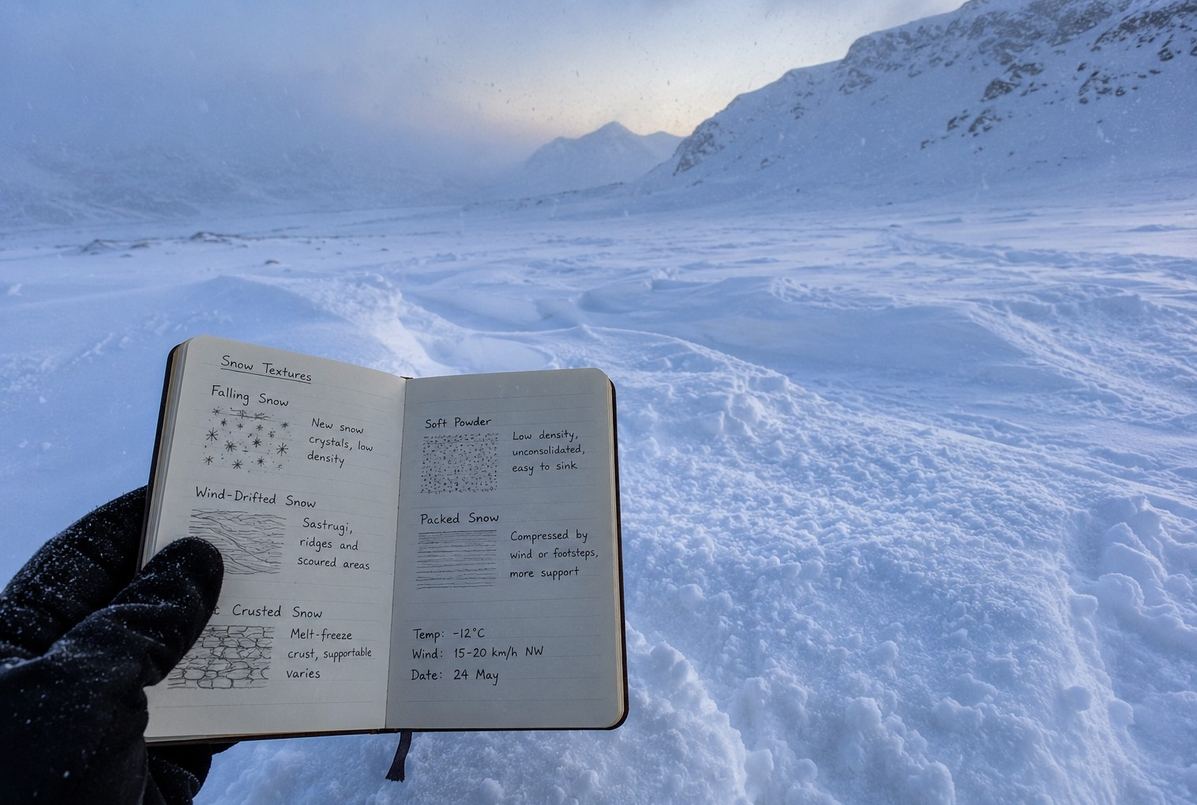
The Snow You Learn to See
The famous claim that Inuit people have “a hundred words for snow” is often repeated, and often exaggerated. The real linguistic story is more careful. Franz Boas noted different snow-related roots in Inuit languages; later writers inflated the claim; subsequent linguists criticised the myth and the sloppy way it was repeated.
Yet the corrected story is still useful. Arctic and sub-Arctic languages often develop precise vocabulary for snow, ice, weather and terrain because those distinctions matter. English also has many snow words: sleet, slush, powder, drift, frost, blizzard, crust, flurry, hail, snowpack. The issue is not a magical number. The issue is training.
A skier sees snow differently from a poet. A shepherd sees weather differently from an office worker. A herbalist sees a hedgerow differently from a person who only knows the word “weed”. A mechanic hears an engine differently from someone who only hears “noise”.
Vocabulary sharpens perception when the distinctions are practised.
This matters inwardly. If the only word you have for an inner state is “bad”, the inner world becomes blunt. If you can distinguish sadness from grief, shame from guilt, fear from dread, exhaustion from despair, alertness from anxiety and solitude from loneliness, the inner world becomes more navigable.
Vocabulary sharpens perception when the distinctions are practised.
Language and the Shape of Time
Grammar also trains attention. Some languages require speakers to place actions clearly in past, present or future. Others rely more heavily on aspect, context or adverbial markers. This does not mean that speakers of tenseless languages cannot remember the past or imagine the future. That would be a crude misunderstanding.
It means that language can make certain orientations habitual.
English constantly asks the speaker to locate action on a timeline: I went, I go, I will go. The mind becomes accustomed to arranging experience as a line. Past behind, future ahead, present as a moving point. Other languages may encode time differently, placing more emphasis on whether an action is completed, ongoing, repeated, witnessed or relevant now.
Daniel Everett’s work on the Pirahã remains debated, but it raises an important question: what happens to thought when a culture gives special weight to immediacy of experience? What happens when language, story and attention circle less around distant abstraction and more around what is directly seen, heard and lived?
The point is not to romanticise any culture. It is to notice that grammar is not neutral. It quietly teaches the mind where to place its weight.

Grammar is not neutral. It quietly teaches the mind where to place its weight.
The Word That Creates
The idea that language shapes reality is not modern. Ancient traditions often place speech, naming and word at the beginning of creation.
In the Egyptian Memphite Theology, Ptah creates through heart and tongue. The heart conceives. The tongue speaks. Thought and speech are not secondary decorations added after reality appears; they participate in the ordering of reality itself.
In Genesis, creation unfolds through command: “Let there be light.” In the Gospel of John, the Logos is placed at the beginning: Word, reason, pattern, divine intelligibility. In Vedic traditions, sacred sound is not mere vibration in the ordinary sense, but a doorway into the idea that reality is structured by sound, name, rhythm and utterance.
These traditions should not be flattened into a slogan. They do not all mean the same thing. But they share an intuition: speech is powerful because naming is not passive. To name is to call something into relation. To speak is to arrange the world before consciousness.

To name is to call something into relation.
Logos: Word, Reason and Pattern
The Greek word Logos cannot be reduced to “word”. It also means reason, account, order, principle and intelligible pattern. This matters because the language cage is not only about vocabulary. It is about the deeper architecture by which experience becomes meaningful.
Language is not simply a list of labels. It is a patterning system. It organises cause, time, identity, agency, value and relation. It tells the mind what counts as a thing, an action, a person, a problem, a failure, a destiny or a possibility.
When the inner logos is distorted, the world appears distorted. When the language of the self becomes crude, inherited or punitive, the self is forced to live inside a crude map.
Healing does not require pretending that words are magic. It requires restoring the integrity of the map.
Language is the map the nervous system uses to decide where it is.
Inner Dialogue and the Body
The words in the mind are not weightless. The body listens.
Modern psychology does not need to prove that every thought creates a chemical event in some simplistic one-to-one way. The stronger and safer claim is this: appraisal shapes emotional response. The way a person interprets a situation affects stress, attention, behaviour and bodily readiness.
If the inner voice says, “I am trapped”, the body prepares for trap. If it says, “I am under pressure and need one next step”, the body may still feel stress, but the field of action changes. The words do not erase the situation. They frame what kind of situation the nervous system believes it is in.
This is why affect labelling can help. Naming an emotion precisely is not a decorative act. It can reduce the fog around the feeling. “I am anxious” may be a beginning, but greater precision may reveal “I am uncertain”, “I feel exposed”, “I am anticipating criticism”, “I am overstimulated”, or “I need more time”. Each phrase opens a different response.
Cognitive reframing works in a similar territory. It does not ask the person to lie. It asks them to test the frame. Is this sentence accurate? Is it global when the situation is local? Is it permanent when the state is temporary? Is it identity when it is actually process?

The words do not erase the situation. They frame what kind of situation the nervous system believes it is in.
When Description Becomes Identity
Some sentences describe a state. Others trap the self inside it.
“I feel anxious” is different from “I am anxious”. “I am having a difficult day” is different from “My life is impossible”. “I made a mistake” is different from “I am a failure”. “I am grieving” is different from “I am broken”.
The difference may seem small, but the nervous system hears it. Identity language has gravity. It pulls temporary weather into the structure of the self. A feeling becomes a definition. A pattern becomes fate. A wound becomes a name.
This is how the cage is built: not only by what others call us, but by what we keep repeating after they have left the room.
Many people are living inside sentences they did not choose. Family sentences. School sentences. Class sentences. Religious sentences. Cultural sentences. Trauma sentences. Old romantic sentences. Medical sentences. Failure sentences. Shame sentences.
Some of these sentences were once attempts to survive. Some were once protective. Some were once accurate for a season. But a sentence that protected the child may imprison the adult.
Precision Dissolves the Cage
The cage is usually made of vague, global and absolute words.
- Always.
- Never.
- Everyone.
- No one.
- Impossible.
- Ruined.
- Broken.
- Stuck.
- Hopeless.
- Too late.
These words may feel powerful because they are simple. But they often erase detail. They turn a complex life into a verdict. They compress many possible responses into one locked room.
Precision does the opposite. It restores edges. It replaces “always” with “often when I am tired”. It replaces “I cannot” with “I have not yet learned how”. It replaces “I am overwhelmed” with “I am processing more than I can respond to at once”. It replaces “I am broken” with “something in me is still healing”.
This is not cosmetic. It changes the field of action. A person cannot work with “everything is impossible”. They may be able to work with “I need help with the next two steps”.
Precision is compassion with a lantern.

Precision is compassion with a lantern.
Caging Language and Liberating Language
The difference between caging language and liberating language is not positivity. It is accuracy, proportion and possibility.
| Caging Language | What It Does | More Precise Language | What It Opens |
|---|---|---|---|
| I am stuck. | Turns a state into identity. | I do not yet see the next step. | Makes inquiry possible. |
| I am broken. | Defines the self by injury. | Something in me is still healing. | Allows repair and time. |
| I always fail. | Erases exceptions. | I have repeated this pattern before. | Allows pattern recognition. |
| I cannot cope. | Predicts collapse. | I need support and smaller steps. | Invites help and scale. |
| Everything is impossible. | Globalises the problem. | This part feels difficult right now. | Localises the work. |
| I am anxious. | Turns arousal into identity. | My body is alert and needs grounding. | Creates a practical response. |
| It is too late. | Closes time. | The path is different now. | Allows altered possibility. |
A Practice for Changing the Vocabulary of the Self
Changing language begins with noticing the sentence that repeats.
Do not rush to replace it with something shiny. The aim is not affirmation theatre. The aim is truth with more room inside it.
- Catch the sentence. Write down the phrase you keep repeating: “I am stuck”, “I am too much”, “I cannot do this”, “I am failing”.
- Check the shape. Ask whether the sentence is global, absolute, inherited, identity-based or outdated.
- Find the state beneath the verdict. Is this fear, grief, shame, fatigue, uncertainty, overstimulation, loneliness, anger or need?
- Replace identity with process. Shift “I am broken” toward “I am healing slowly”. Shift “I am overwhelmed” toward “I am processing more than I can respond to at once”.
- Make it specific. Replace “everything” with the actual thing. Replace “always” with the real frequency. Replace “never” with the evidence you have.
- Add one possible action. The new sentence should open a next step, however small.
- Repeat until the body believes the precision. New language becomes real through practice, not performance.
One useful test is this: does the new sentence make you more honest and more capable at the same time? If yes, it may be liberating language. If it denies pain, flatters the ego or forces optimism, it is only another cage painted gold.
The aim is truth with more room inside it.
A Gnostic and Neo-Gnostic Reading
From a Gnostic perspective, language is double-edged.
It can awaken. It can also bind. A true name can reveal what was hidden. A false name can imprison the soul inside an inherited story. The divine spark does not disappear when language distorts perception, but it may forget itself under the weight of wrong names.
The archonic function of language is not only censorship. It is misnaming. The living self is called failure. The wounded child is called weakness. The need for rest is called laziness. The gift of solitude is called loneliness. The first movement of awakening is called madness, arrogance or danger.
False names keep the soul compliant because the world they describe seems final.
Gnosis begins when the false name cracks.
This is why direct recognition often feels wordless before it becomes speakable. First there is the seeing. Then the language arrives, if it can. Sometimes the old vocabulary cannot hold the new recognition. That is when the self must learn new speech.
Gnosis begins when the false name cracks.
The work is not to abandon language. Without language, insight may remain unshared and unstable. The work is to purify language until it becomes transparent enough for truth to pass through.
What Are Your Limits Made Of?
Some limits are real. This must be said clearly. Bodies have limits. Money has limits. Time has limits. Trauma creates real patterns. Illness is not a vocabulary error. Injustice is not a sentence that can be reframed away.
But some limits are linguistic.
They are made from old descriptions that were never re-examined. They are made from names given by frightened adults, cruel systems, exhausted parents, failed teachers, inherited religion, class shame, medical shorthand, family roles or the secret vocabulary of trauma.
“You are difficult.”
“You are too sensitive.”
“You never finish anything.”
“People like us do not do that.”
“It is too late.”
Such sentences can become architecture. They become the walls of the possible. The person may think they are seeing reality, when they are actually seeing through old language.
The question is not, “Can I say better words and escape all suffering?”
The better question is, “Which of my limits are facts, and which are sentences that have never been challenged?”
The Door in the Word
The language cage is not escaped by silence alone.
Silence can reveal the cage, but speech must often open the door. A truer word. A more precise phrase. A sentence with less inherited shame in it. A name that restores proportion. A description that leaves room for becoming.
The self does not need a vocabulary of fantasy. It needs a vocabulary of accuracy, compassion and movement.
Language can imprison when it hardens into false identity. It can liberate when it returns perception to the living complexity of what is actually happening.
You may not be stuck. You may be between maps.
You may not be broken. You may be carrying an old name for an unfinished healing.
You may not be impossible. You may be described too narrowly.
The cage may be made of words.
And words, for all their power, can be changed.
Related Glossary Terms
These terms help frame the article’s main ideas across the wider ZenithEye archive.
- The Filter in Your Mind
- The Language Parasite
- The Unsaid
- Narrative Identity
- Recognition
- Gnosis
- Counterfeit Spirit
- When Symbols Become Cages
- The Discipline of Not Interpreting Everything
- Pattern Recognition Without Paranoia
- Attention
- The Spectacle
- Mental Plane
- Phenomenology
- Symbol & Encryption
- Integration & Grounding
- Language Cage
- Vocabulary Limits
- Linguistic Relativity
- Inner Dialogue
- Self-Talk
- Cognitive Reframing
- Affect Labelling
- Creation by Word
- Logos
- Ptah
- Memphite Theology
- Shabaka Stone
- Sapir Whorf Hypothesis
- Weak Linguistic Relativity
- Self-Description
- Precision of Speech
Read Next
Continue through the language, perception and symbolic discernment route: how words filter reality, how the inner voice can become a parasite, and how recognition begins when false names lose their authority.
Further Reading
Articles from ZenithEye that explore language, perception, narrative identity, attention and the recovery of direct seeing:
- The Filter in Your Mind – How language decides what reality the mind can easily see.
- The Language Parasite – How the inner voice can hijack perception.
- The Unsaid – How meaning travels in the gaps between words.
- You Are Not What Happened to You – How narrative identity writes the self.
- The Spectacle – When reality is replaced by its representation.
- The Mental Plane Explained – Where language, thought and perception intersect.
- The Spiritual Practice of Attention – Attention as the first discipline of inner seeing.
- What Is Recognition? – The moment of direct seeing that changes everything.
- States of Knowing – What changes when consciousness loosens from ordinary filters.
- When Symbols Become Cages – How symbolic systems can open or imprison perception.
- The Uninstallation – How technology rewrites the habits of attention and thought.
Frequently Asked Questions
What is the language cage?
Does language really shape perception?
Do Inuit people really have a hundred words for snow?
Can changing self-talk change the body?
What is cognitive reframing?
What does creation by the Word mean?
How do I begin changing my vocabulary?
References and Sources
The following sources shaped the article’s framework on language, perception, creation-by-word traditions and cognitive reframing.
Language, Perception and Linguistic Relativity
- Boas, Franz. Handbook of American Indian Languages. Bureau of American Ethnology, 1911.
- Pullum, Geoffrey K. “The Great Eskimo Vocabulary Hoax”, in The Great Eskimo Vocabulary Hoax and Other Irreverent Essays on the Study of Language. University of Chicago Press, 1991.
- Woodbury, Anthony C. “Counting Eskimo Words for Snow: A Citizen’s Guide”. 1991.
- Boroditsky, Lera. Research on language, time, space, agency and thought.
- Thierry, Guillaume et al. “Unconscious Effects of Language-Specific Terminology on Preattentive Color Perception.” Proceedings of the National Academy of Sciences, 2009.
- Everett, Daniel L. “Cultural Constraints on Grammar and Cognition in Pirahã.” Current Anthropology, 2005.
- Bohnemeyer, Jürgen. The Grammar of Time Reference in Yukatek Maya. LINCOM Europa, 2002.
Ancient Word Traditions
- The Shabaka Stone and Memphite Theology, especially the creation role of Ptah’s heart and tongue.
- Genesis 1:3: “Let there be light.”
- Gospel of John 1:1-3 and the doctrine of the Logos.
- Assmann, Jan. The Search for God in Ancient Egypt. Cornell University Press, 2001.
- Allen, James P. Middle Egyptian Literature. Cambridge University Press, 2015.
Inner Dialogue, Reframing and Psychology
- Beck, Aaron T. Cognitive Therapy and the Emotional Disorders. International Universities Press, 1976.
- Ellis, Albert. Reason and Emotion in Psychotherapy. Lyle Stuart, 1962.
- Gross, James J. Research on emotion regulation and cognitive reappraisal.
- Lieberman, Matthew D. et al. Research on affect labelling and emotional regulation.
- Robson, James P. and Troutman-Jordan, Meredith. “A Concept Analysis of Cognitive Reframing.” Journal of Theory Construction and Testing, 2014.
Related ZenithEye Themes
- Language as perceptual filter.
- Narrative identity and the story of the self.
- Attention, symbol and the architecture of perception.
- Gnosis as recognition beyond inherited naming.
- Discernment between healing language and spiritual bypassing.
Safety Notice: This article discusses language, self-talk, cognitive reframing and emotional regulation. It is not medical, psychological or clinical advice. Changing vocabulary can support self-awareness and emotional regulation, but it is not a substitute for professional help. Readers experiencing severe depression, anxiety, trauma, suicidal thoughts, dissociation or overwhelming distress should seek qualified support. The article does not suggest that suffering is “just language” or that serious conditions can be solved by positive wording.
Study Note: This article treats language as a powerful lens, not an absolute prison. It rejects crude linguistic determinism and forced positivity. The aim is precision: to notice where inherited words have become false walls, and to practise language that is more accurate, compassionate and capable of carrying truth.